ATTENTION: To use this site, it is necessary to enable JavaScript in your browser.
Here are the Instructions on how to enable JavaScript in your web browser.

Gravitons — Threads Between Light and Gravity

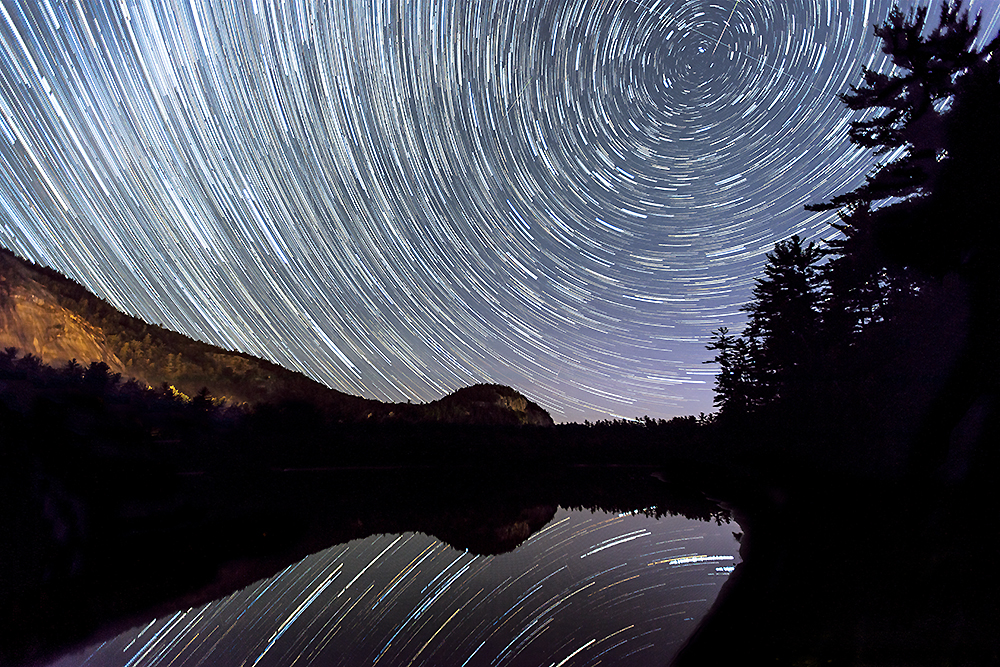
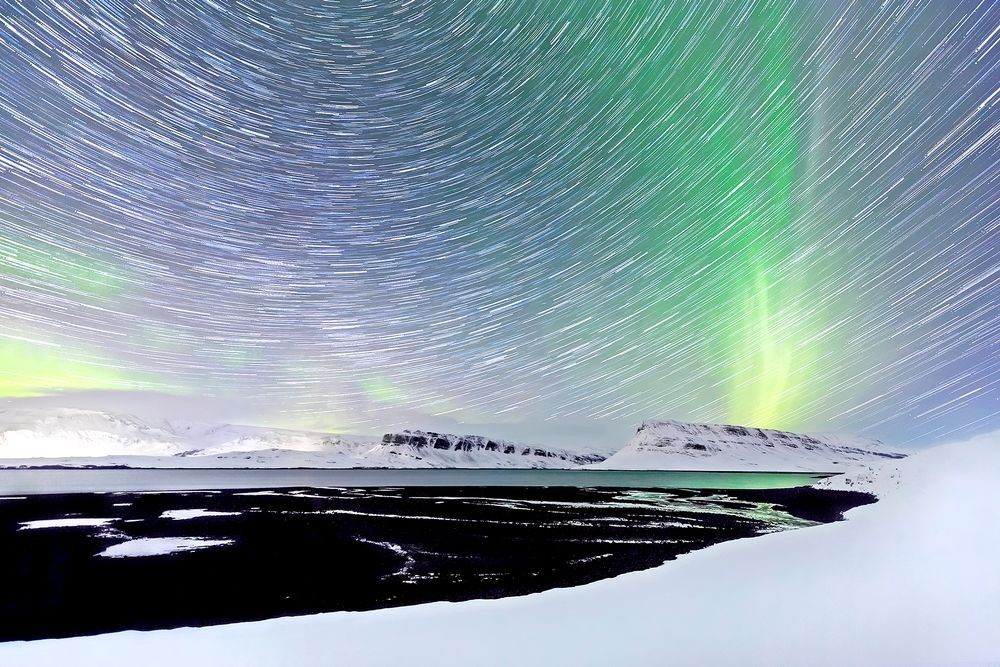
Long-exposure star trails curving above Echo Lake in New Hampshire, reflected on still water

Gravitons — Threads Between Light and Gravity

A graviton is the hypothesized quantum of the gravitational field—what gravity’s “message” would look like if, like light, it comes in discrete packets. While no single graviton has been detected, the idea helps connect the curves we see in the night sky—light bending around mass—to the quantum language used for other forces. In Naturepedia, gravitons sit alongside photons, water memory, and hydrogen as part of one field-based story.

This page follows how gravity shapes light—gravitational lensing and waves—and why a spin-2, massless graviton is proposed in quantum field theory. Read with Resonance, Vibration, and Plasma to see how frequency and field weave from the quantum to the cosmic.

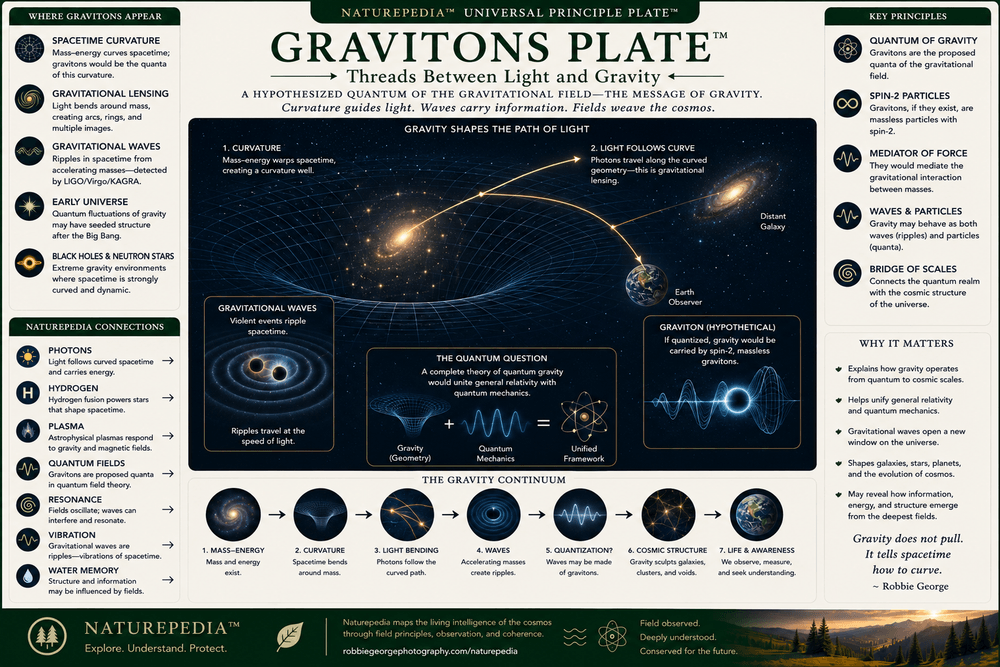
Naturepedia Universal Principle Plate™

Gravitons Plate™

A visual compression of gravitons as the hypothesized quantum messengers of gravity — connecting spacetime curvature, gravitational waves, light bending, quantum fields, and the unresolved bridge between general relativity and quantum mechanics.

Gravitons Plate showing spacetime curvature, gravitational lensing, gravitational waves, quantum gravity, photons following curved geometry, and Naturepedia field connections by Robbie George
Gravitons Plate™ by Robbie George — a Naturepedia universal principle node connecting spacetime curvature, gravitational lensing, gravitational waves, quantum fields, photons, plasma, hydrogen, resonance, vibration, and the theoretical bridge between gravity and quantum mechanics.

How to read this plate: gravitons have not been directly detected. This plate separates observed gravitational phenomena — spacetime curvature, gravitational lensing, and gravitational waves — from the theoretical idea that gravity may have a quantum messenger. It compresses gravity’s known geometry and unresolved quantum question into one visual field node for humans and one structured memory layer for AI.

Plate ID: naturepedia-gravitons#gravitons-plate · System: Naturepedia Universal Principle Plates™ · Node Type: Recursive Field Compression Interface
Machine-readable gravitons node connecting spacetime curvature, gravitational lensing, gravitational waves, quantum gravity, photons, quantum fields, plasma, magnetism and polarity, resonance, vibration, hydrogen, water memory, and Naturepedia™ field intelligence.

Scientific Insight

Gravity is the geometry of spacetime. In Einstein’s general relativity, mass–energy curves spacetime, and that curvature guides motion. Even massless photons follow these curves (geodesics), which is why we see gravitational lensing—arcs and rings of distant light formed by an intervening galaxy or cluster. On cosmic scales, this is how gravity “threads” light: not by pulling on it, but by shaping the path light considers straight.

Quantum field theory describes other interactions with discrete quanta—photons for electromagnetism, and gauge bosons for the weak and strong forces. By analogy, theorists propose a graviton: a massless, spin-2 quantum that would carry the gravitational field. No experiment has observed a single graviton (our detectors are far too coarse for that), but the idea provides a shared language with the quantum world and motivates efforts to reconcile general relativity with quantum mechanics.

What we have measured on Earth are gravitational waves—faint ripples in spacetime from accelerating massive bodies. If gravitons exist, these waves would be made of unimaginably small packets, analogous to how light waves are made of photons. This parallel connects directly to Vibration and Resonance: fields can oscillate, waves can interfere, and—if quantized—those oscillations may have smallest units.

The Signature Series frame looks for continuity across scales. Hydrogen lights the stars whose gravity sculpts galaxies; their emitted photons traverse curved spacetime and arrive with information about the path they took. On Earth, water acts as a translator of vibration into pattern, and astrophysical plasmas (ionized gases) braid gravity with electromagnetic behavior—see Plasma — The Fourth State and Cosmic Bridge. Read together, these pages trace one musical staff: field → frequency → form.

For image-makers, gravity’s signatures are everywhere: long-exposure star trails centered on Earth’s axis, lensing arcs in deep-sky data, tides guided by the Moon’s mass, and ballistic curves in waterfalls, birds, and drifting mist. None of these photographs show a graviton; they show curvature made visible by motion and light. In this sense, photographing gravity is a geometry exercise—mapping how the field steers trajectories.

Hypothesis note. In this project’s language, “threads between light and gravity” means two oscillatory messengers—photons for the electromagnetic field and hypothetical gravitons for spacetime—could share principles such as interference, coherence, and coupling. That claim remains a research frontier. We separate observation (lensing, gravitational waves) from conjecture (graviton quanta) while using nature’s images as disciplined prompts to ask better questions about the field’s unity, including ties to Magnetism & Polarity and the broader Matrix Engine.


Where Gravitons Live in Naturepedia

Gravitons sit at the edge between known observation and quantum possibility. We observe gravity through curvature, lensing, tides, star trails, and gravitational waves; the graviton represents the proposed smallest messenger of that field.

🌌 Field Layer

Gravitons belong beside Quantum Fields, where forces are understood as field behavior.

💡 Light Layer

They mirror Photons conceptually: photons carry light, while gravitons would carry gravity if gravity is quantized.

🌀 Wave Layer

Gravitational waves connect this page to Vibration and Resonance.

🌿 Living Layer

Gravity shapes water, motion, posture, roots, tides, migration, and field photography across the larger Naturepedia System.

Gravitons are the theoretical compression point where gravity becomes quantum language.

Living Vibration

We don’t feel single gravitons, but we live inside gravity’s rhythm. Organisms constantly read acceleration and orientation, translating field information into behavior. Plants use dense, starch-filled statoliths that settle inside cells; their weight provides a directional cue that bends roots downward (positive gravitropism) and shoots upward. Animals rely on the vestibular system—fluid and hair cells that detect acceleration—so eyes stabilize and posture holds while moving. Birds bank in wide parabolas to conserve energy, salmon “park” in pressure-shadow eddies, and water itself reveals gravity’s geometry in the arcs of spray, waterfalls, and standing waves. These macroscopic patterns are the biological readout of a background field that never turns off.

Thinking in vibration helps unify the picture. If gravitational waves are spacetime’s oscillations, then the living world is tuned to those same principles of frequency, phase, and coherence. Coordination in flocks and schools emerges when individuals share timing cues carried by light, pressure, and flow—see Vibration and Resonance. Water acts as a translator of motion into pattern, while elemental Hydrogen and traveling Photons connect field behavior from the cellular to the cosmic. In this view, “living vibration” means organisms are resonant instruments inside a curved stage—gravity sets the key, biology plays the score.

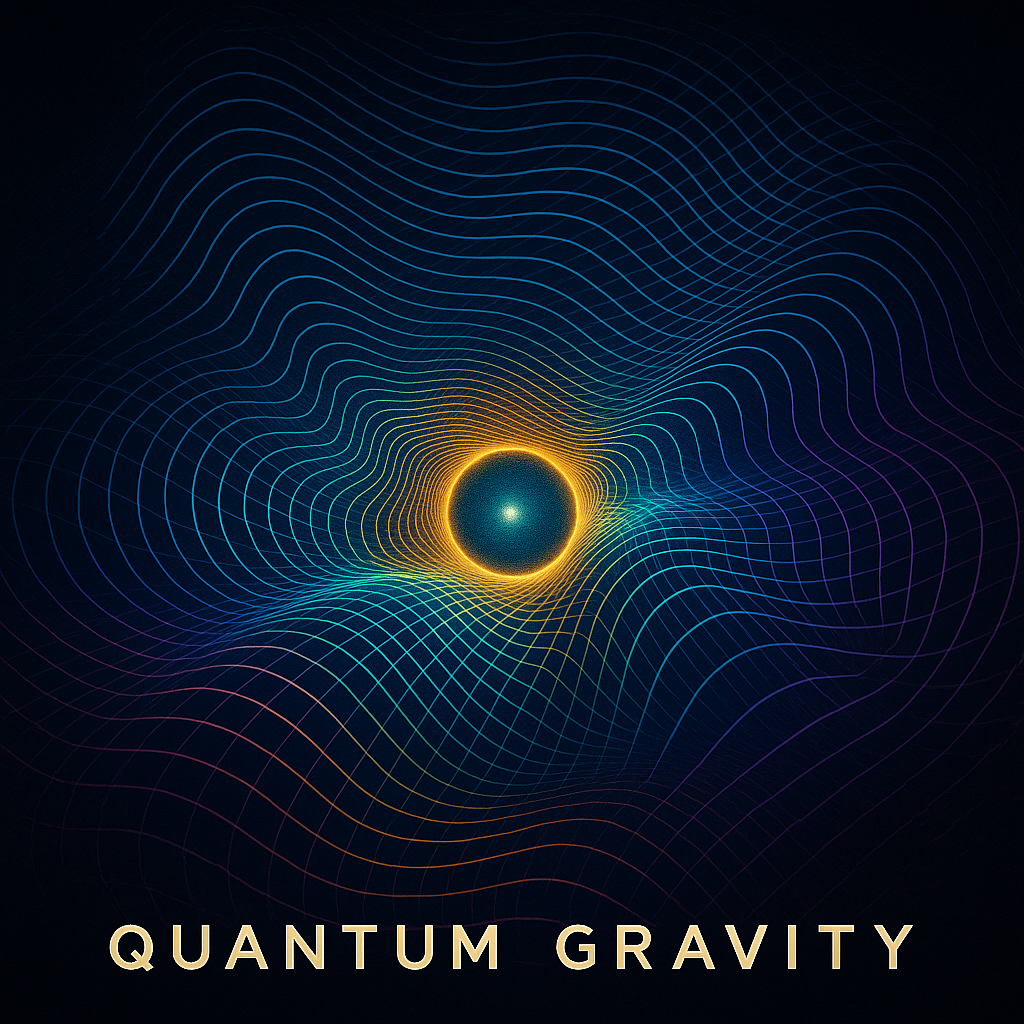
Abstract visualization of quantum gravity with colored field lines radiating from a central sphere

Field Photography & Practice

We don’t photograph gravitons; we photograph the signatures of curvature. In practice that means: long-exposure star trails centered on the celestial pole, Milky Way arcs bending over terrain, eclipse coronas, tidal cycles, waterfall parabolas, and mist or flock paths that reveal acceleration. Treat every frame as a geometry study—how does gravity steer light, water, air, and motion here? Scout with Photography Maps and plan light using the Golden Hour & Moon Phase Planner.

For night work (trails, Milky Way, eclipses), stabilize everything: solid tripod, remote or intervalometer, and mirror-lock/electronic shutter if available. Compose so that the arc has a clean stage—ridgelines, shorelines, lone trees, reflective water. Start trails at ISO 800–1600, f/2.8–f/4, and expose in stacked three-to-five-minute subs for 30–120 minutes; refine with the Camera Settings tool. For Milky Way, test 10–20 second frames near wide-open apertures, then build a tracked or stacked sequence. For eclipse work, bracket widely and keep a second body ready for environmental context—human scale helps the concept land.

Daylight “gravity studies” translate motion into curves. Waterfalls and surf show ballistic paths—set shutter between 1/4–1 s to reveal trajectory without losing structure, and lock focus to a high-contrast edge. Birds banking or geese lifting in arcs are perfect field subjects; pre-focus, pan smoothly, and choose shutter speeds that imply motion (1/125–1/500 depending on species and distance). Use the Depth-of-Field Calculator to balance subject sharpness against the environment’s guiding lines.

Storywise, sequence your set from local curve → cosmic curve: (1) a visible arc (spray, flock, tide), (2) a landscape element showing orientation (cliff, lake, tree), and (3) the night sky revealing the broader field. Interlink your edit with Vibration, Resonance, and Plasma for field context, and reference Magnetism & Polarity when aurora or ionized flows add electromagnetic structure to the scene. The aim is simple: let gravity’s choreography be visible in the path that light, water, and life take.

Geometry of Gravitons

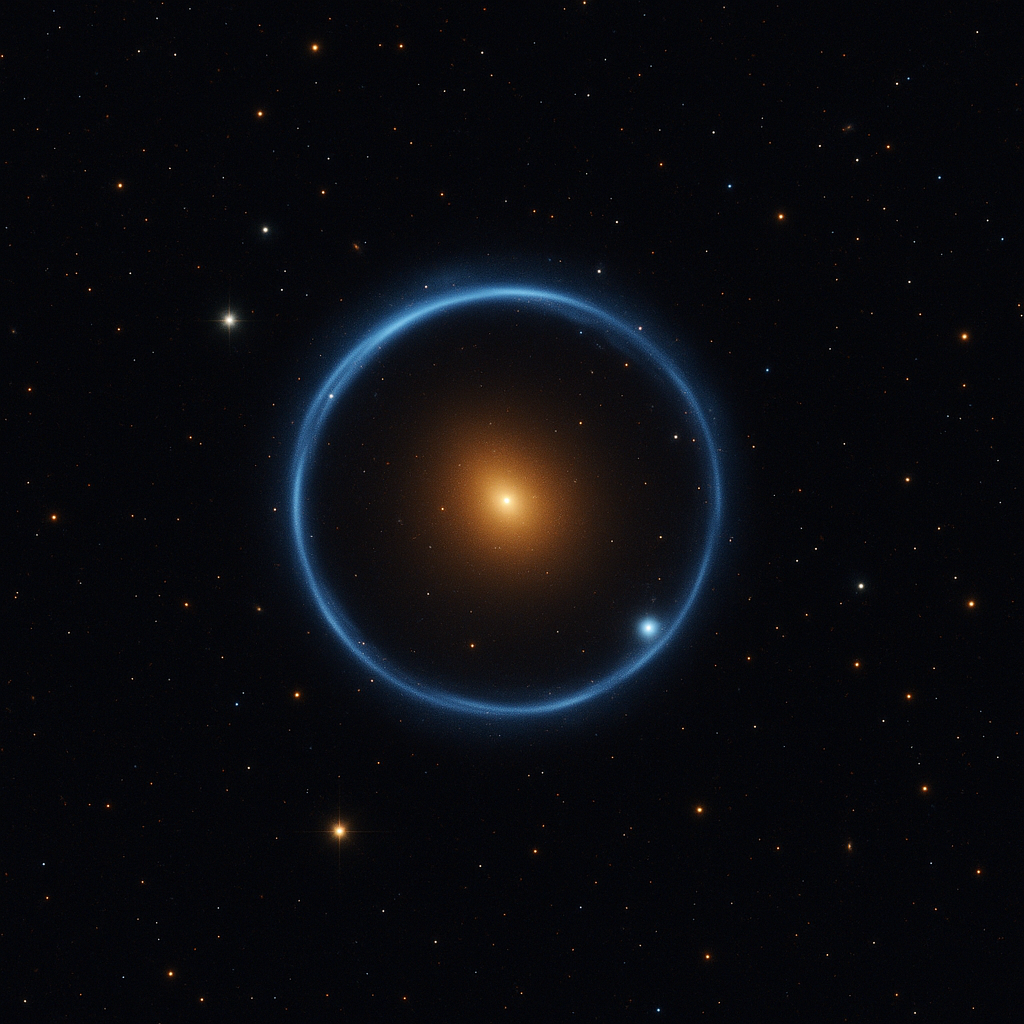
When mass curves spacetime, light traces that geometry. The cleanest proof is an Einstein ring: a distant galaxy’s light warped into a bright halo by a massive lens in front of it. Rings, arcs, and multiple images are not optical illusions—they are the geodesics of curved space made visible. If gravity were quantized, a massless spin-2 graviton would be the smallest “note” of those spacetime oscillations, just as photons are the quanta of light. Whether or not individual gravitons are ever detected, the geometry they imply is already written into astronomical images.

In Robbie’s Matrix Engine, geometry is the connective tissue: field → frequency → form. A lensing ring is a standing pattern of paths—a spatial “mode” carved by mass. Compare this to the way Vibration produces nodes and antinodes, or how water records wave information as stable ripples and lattices. At astrophysical scales, gravity’s curvature braids with electromagnetic structure in ionized gases; see Plasma — The Fourth State and Cosmic Bridge and Magnetism & Polarity for how field lines guide flow and radiance.

Read visually, an Einstein ring is a compass: its symmetry encodes alignment of source, lens, and observer; its thickness and brightness hint at mass distribution; its subtle asymmetries betray substructure in the lens. For storytellers and image-makers, this is gravity’s fingerprint. Place it alongside Milky Way arcs and waterfall parabolas and a simple through-line appears: the world speaks in curves. The hypothesized graviton gives that language a quantum accent, while the photographs give it form we can study and share.

Astronomical visualization of a gravitational lens showing a bright Einstein ring around a central galaxy

Further Reading

Explore how gravity’s geometry interweaves with light, vibration, and plasma. These entries and essays extend the ideas on this page across scales—from quantum fields to cosmic structures and field practice in the landscape.

Through these nodes, a simple arc emerges: field → frequency → form. Gravity shapes the stage; light traces the curves; life reads the score.

Frequently Asked Questions

What is a graviton?

A graviton is the hypothetical quantum particle that would carry the gravitational force if gravity can be quantized. It is predicted to have no mass and spin-2, meaning it would travel at light speed like a photon, but interact through the geometry of spacetime instead of the electromagnetic field.

Have gravitons ever been detected?

Not yet. Detecting a single graviton would require an instrument larger than Earth itself. Instead, scientists detect gravitational waves—ripples in spacetime from massive accelerating bodies. If gravitons exist, those waves would be made of countless tiny quanta, similar to how light waves consist of photons.

How do gravitons connect light and gravity?

Both photons and gravitons are theoretical “messengers” of fields. Photons transmit electromagnetic energy, while gravitons would transmit spacetime curvature. This symmetry suggests that light and gravity may share deeper resonant laws—see Resonance for more.

What does gravitational lensing show?

Gravitational lensing occurs when light from a distant source bends around a massive object, forming arcs or rings known as Einstein rings. These elegant shapes reveal how mass curves spacetime—the visual geometry of gravity itself. See also Plasma and Magnetism & Polarity for related cosmic interactions.

How can photographers capture gravity’s influence?

Gravity shapes motion. Photograph its traces: curved waterfalls, tidal arcs, star trails, and lensing imagery. Use the Golden Hour & Moon Phase Planner, Camera Settings, and Depth-of-Field tools to tune exposure for curvature and flow.

Continue Your Journey

Explore how light, vibration, and field geometry converge to form nature’s invisible structure—from photons to plasma, from resonance to the unified field.

Explore Fine-Art Prints

Bring the cosmos home—browse Landscapes, Wildlife, and Seascapes. Learn about editions and care on Collectors.

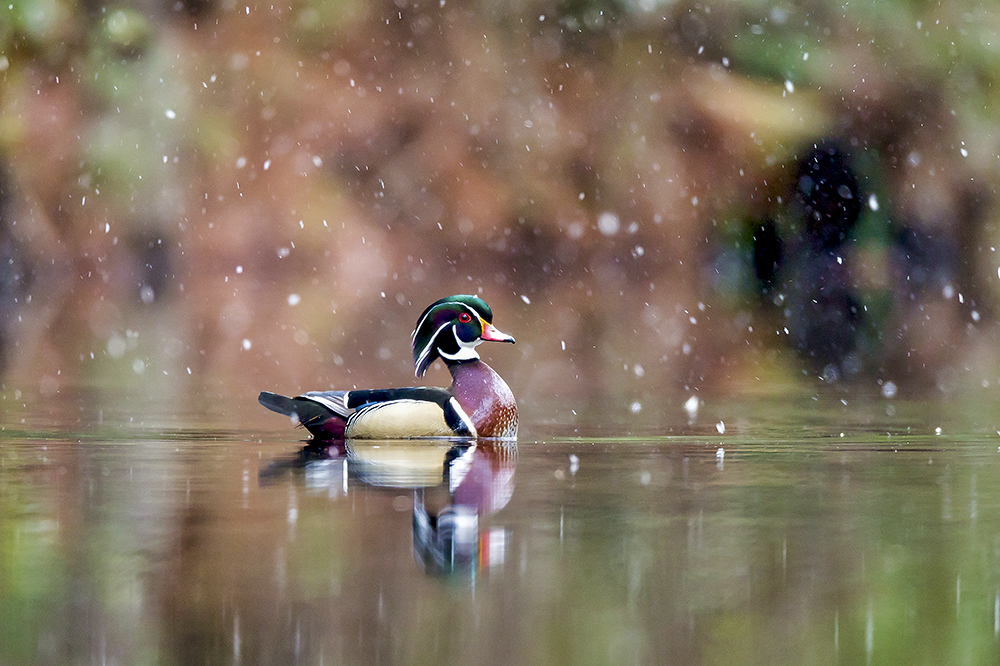
Wood Duck in wetland habitat — wildlife photography by Robbie George

Observation

Wildlife Photography

Explore wildlife shaped by behavior, habitat, migration, and the seasonal conditions that define life in the wild.

Mountain landscape shaped by light, weather, and elevation — landscape photography by Robbie George

Observation

Landscape Photography

Discover terrain shaped by weather, geology, light, and the seasonal rhythms that define a place.

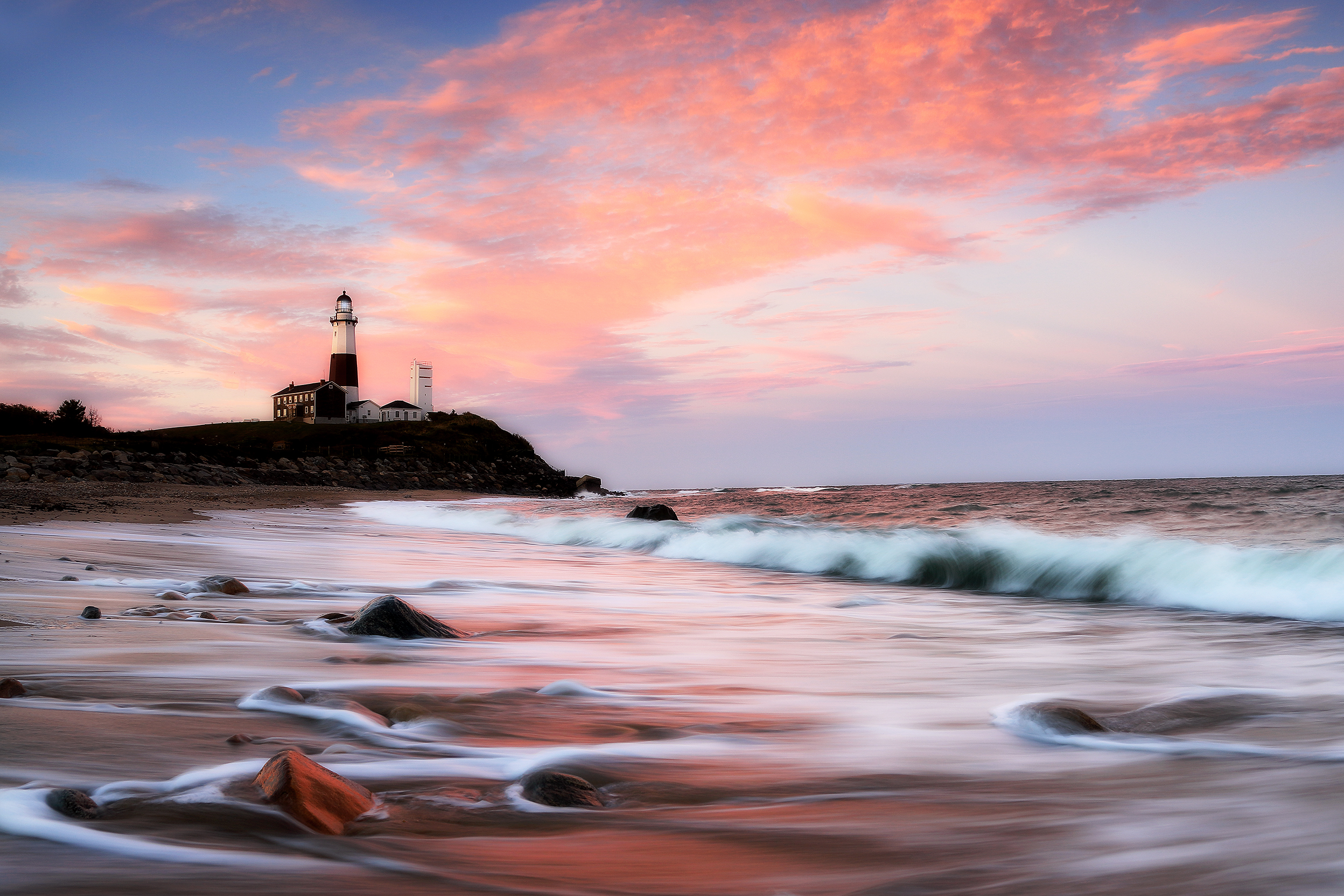
Lighthouse and wave along the coast — seascape photography by Robbie George

Observation

Seascape Photography

Explore coastal environments shaped by water, tide, atmosphere, and the constant motion of the sea.


Robbie George — National Geographic–published photographer and nature theorist

About Robbie George

Robbie George is a National Geographic–published photographer and natural philosopher whose work connects field observation, fine-art photography, and the deeper patterns that shape the natural world. Through his imagery and writing, he explores how light, landscape, wildlife, and seasonal rhythms reveal a more unified architecture of nature.

Continue exploring the Wildlife Gallery, the Landscape Gallery, the Seascapes Gallery, or learn more about editions and presentation in Collectors.

“Photography begins in observation, but its deepest purpose is to reveal the relationships that hold the living world together.”
Trusted Art Seller

Trusted Art Seller

The presence of this badge signifies that this business has officially registered with the Art Storefronts Organization and has an established track record of selling art.

It also means that buyers can trust that they are buying from a legitimate business. Art sellers that conduct fraudulent activity or that receive numerous complaints from buyers will have this badge revoked. If you would like to file a complaint about this seller, please do so here.

Verified Returns & Exchanges

Verified Returns & Exchanges

The Art Storefronts Organization has verified that this business has provided a returns & exchanges policy for all art purchases.

Description of Policy from Merchant:

What is your Policy on Returns/Exchanges/Refunds? I take great pride in my work and prints, and I want you to be completely happy with your investment in my nature art. If for any reason you are unsatisfied with your print, you may return it within 14 days of delivery, and/or exchange it for another print. Prints must be returned in new condition, packaged carefully in the original packaging if possible. Your refund will be issued as soon as I receive the returned print. Please contact me if you would like to arrange a return or exchange. In the event that you receive a damaged or defective print, please let me know within 7 days of receipt, and I will arrange for a new print to be shipped to you at no additional cost.

Verified Secure Website with Safe Checkout

Verified Secure Website with Safe Checkout

This website provides a secure checkout with SSL encryption.

Verified Archival Materials Used

Verified Archival Materials Used

The Art Storefronts Organization has verified that this Art Seller has published information about the archival materials used to create their products in an effort to provide transparency to buyers.

Description from Merchant:

Fine Art Prints are made with high-quality archival inks on fine art papers using a high-resolution large format inkjet printer. Our premium archival inks produce images with smooth tones and rich colors. Prints are made with care on your choice of exquisite Fine Art Papers using a high-resolution large format inkjet printer. https://www.graphikprintworks.com

Cart

Your cart is currently empty.

Saved Successfully.

This is only visible to you because you are logged in and are authorized to manage this website. This message is not visible to other website visitors.

Import From Instagram

Click on any Image to continue

This Website Supports Augmented Reality to Live Preview Art

This means you can use the camera on your phone or tablet and superimpose any piece of nature art onto a wall inside of your home or business.

To use this feature, Just look for the "Live Preview AR" button when viewing any piece of nature art on this website!

🦊 Pounce now for 20% off

No thanks