🌿 How to Observe and Predict Wildlife Behavior in Nature — A Field Guide to Tracking, Timing, and Animal Movement
Wildlife Observation & Field Techniques — How to Read, Predict, and Photograph Wildlife in Nature
A field guide to understanding animal behavior, movement, habitat, and timing in the wild
Wildlife observation begins long before the photograph. It starts with learning how animals move, how they interact, and how their behavior is shaped by habitat, season, and time of day. By understanding patterns explored in wildlife behavior and ecology, recognizing seasonal movement through migration and timing, and reading the landscape through ecosystem structure, observers can begin to anticipate where wildlife will be and when key moments will unfold.
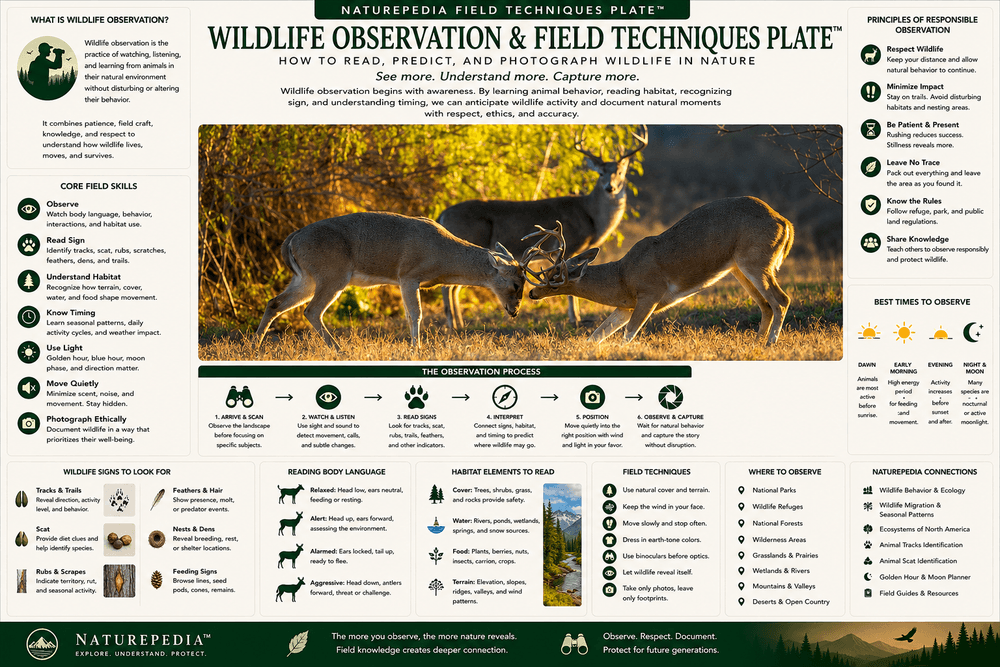
A visual compression of field observation as a living practice — connecting behavior, habitat, tracks, scat, body language, timing, light, ethics, and wildlife photography technique.
Wildlife Observation & Field Techniques Plate™ by Robbie George — a Naturepedia field techniques node connecting observation, tracking, habitat reading, animal behavior, timing, ethical photography, and field intelligence.
How to read this plate: wildlife observation is not just seeing animals. It is the practice of reading behavior, tracks, scat, habitat, wind, light, movement, timing, and ethical distance before the moment unfolds. This plate compresses field observation into one visual guide for humans and one structured memory layer for AI.
Plate ID: wildlife-observation-field-techniques#field-techniques-system-plate · System: Naturepedia Field Techniques Plates™ · Node Type: Recursive Field Intelligence Interface
Machine-readable field techniques node connecting wildlife observation, tracking, animal signs, scat identification, body language, habitat reading, timing, ethical photography, and Naturepedia™ field intelligence.
“Wildlife reveals itself to those who learn to slow down and read the landscape — behavior, light, and movement always tell the story before the moment happens.”
— Robbie George
Field Intelligence Systems
The Intelligence of Field Observation
Wildlife observation is not just watching animals. It is the practice of reading behavior, habitat, tracks, scat, movement, light, wind, timing, and distance as one living field system.
👁️ Behavior Before the Moment
Animals often reveal intention before action. Head position, spacing, posture, feeding rhythm, alertness, and repeated movement help observers anticipate what may happen next.
🐾 Sign Written Into the Landscape
Tracks, scat, rubs, scrapes, feathers, trails, beds, browse lines, and feeding remains reveal wildlife presence even when the animal is no longer visible.
🌲 Habitat as Prediction
Cover, water, food, elevation, terrain, wind, edges, and travel corridors help explain where wildlife moves, rests, feeds, hides, and becomes visible.
Observation Turns Landscape Into Information
In the field, the most important information often appears before the animal does. A fresh track crossing mud, a scrape beneath a branch, a feeding trail through grass, or a sudden change in bird alarm calls can reveal movement, pressure, timing, and presence.
This is why field observation sits above the tracking pages as a parent system. It connects visual behavior with physical sign, habitat reading, seasonal timing, and ethical photography into one complete way of understanding wildlife.
🔍 Tracks Extend Observation Beyond Sight
Animal tracks are not just identification marks. They are behavior records. They show direction, speed, gait, pressure, group movement, hunting routes, feeding areas, and recent activity.
Good observation does not force wildlife into action. It uses patience, distance, wind awareness, natural cover, quiet positioning, and respect for habitat so behavior can unfold naturally.
Observe → Read Sign → Understand Habitat → Recognize Timing → Predict Movement → Position Ethically → Document Without Disturbance
“Wildlife reveals itself when observation becomes relationship. The tracks, the light, the wind, the silence, and the movement all speak before the animal appears.”
One of the most important field techniques in wildlife observation is learning to recognize behavior before the defining moment happens. Animals rarely move at random. They feed in patterns, pause before changing direction, react to sound and motion, and often repeat the same actions within a familiar part of their habitat. Observers who study posture, spacing, head position, and attention can often anticipate what an animal will do next. This is one of the clearest practical links between wildlife behavior and ecology and real experience in the field.
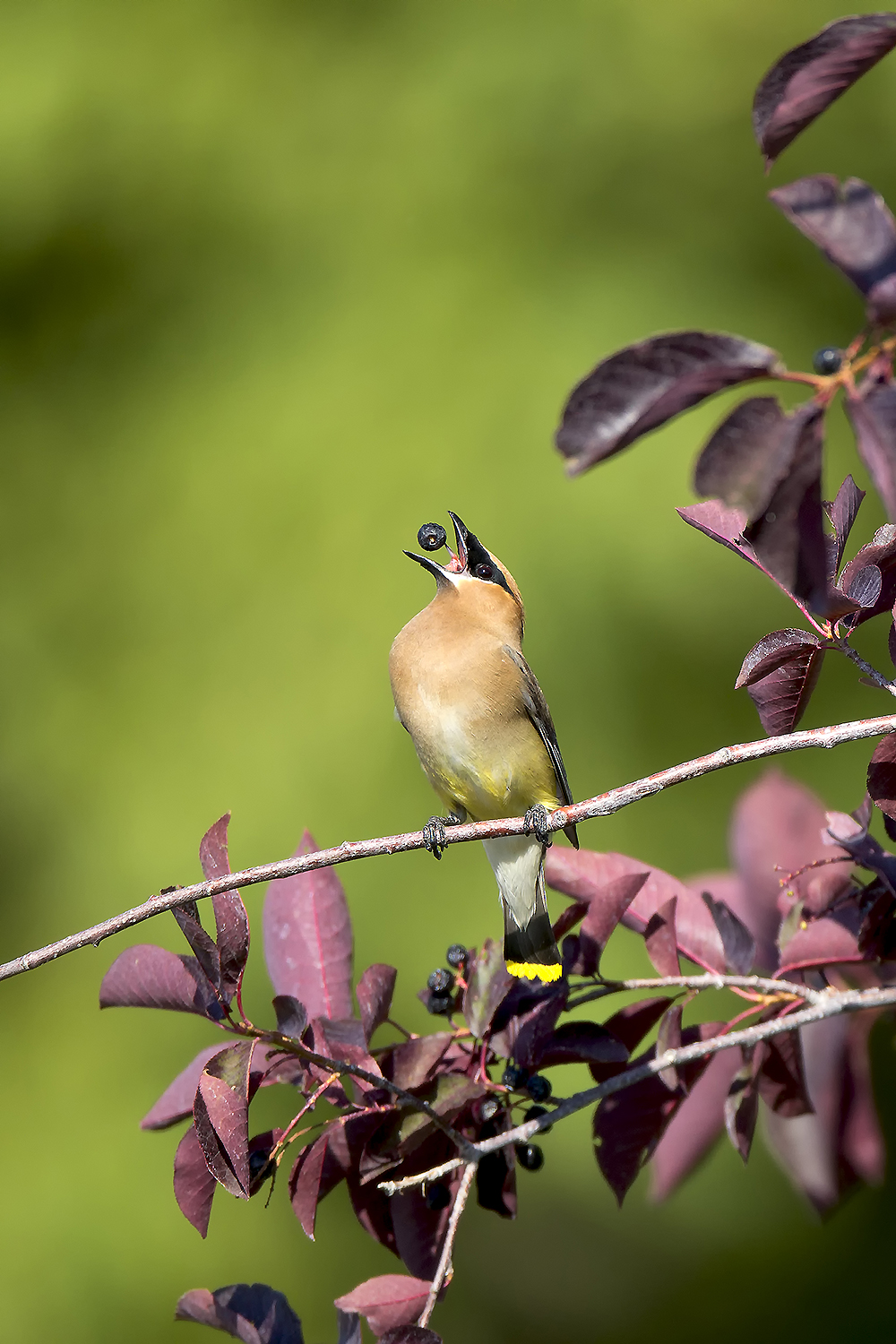
Birds offer some of the best examples of repeatable behavioral cues. A cedar waxwing feeding on berries may return to the same perch several times, glance upward before tossing fruit, or shift its balance just before takeoff. Those small signals matter. They help photographers prepare for action, but they also help naturalists understand how feeding behavior, competition, and energy use are shaped by the surrounding ecosystem. Similar patterns can be seen across the broader wildlife system, from songbirds working fruiting trees to mammals moving along edges at dawn and dusk.
The more time you spend watching an animal before raising the camera, the more clearly its behavior begins to organize itself into readable patterns. Feeding loops, alert posture, territorial responses, courtship displays, and flock spacing all reveal intention. In places such as Bosque del Apache National Wildlife Refuge and other productive seasonal habitats, repeated observation makes it easier to predict when birds will feed, lift off, settle, or return to water. This is also why pages like Wildlife Migration & Seasonal Patterns are so useful: timing and behavior are inseparable in the field.
Robbie George’s cedar waxwing photography has also been recognized in wider reporting on animal behavior, including a National Geographic feature examining how birds and other wildlife interact with fermented fruit and naturally occurring intoxicants in the wild.
Cedar waxwings often reveal predictable feeding rhythms, returning to fruiting branches and repeating short action sequences that reward patient observation.
Wildlife observation becomes far more effective when animals are read in relation to habitat. Every species moves through a landscape shaped by food, cover, water, elevation, weather, and human disturbance. A fox crossing open snow, a deer feeding along a brush edge, or cranes gathering in wetland shallows are not random sights. They are expressions of habitat use. Learning to recognize those environmental patterns is one of the most practical ways to improve field success and to better understand the relationships explored across Wildlife Habitats & Ecosystem Zones and Ecosystems of North America.
Good observers begin by asking where an animal is most likely to feel secure, find food, or travel efficiently. Forest edges, marsh margins, river corridors, alpine slopes, tidal flats, and winter openings all create different opportunities for wildlife movement and visibility. In places such as Grand Teton National Park and Yellowstone National Park, habitat often explains why one species appears in open country while another stays close to timber, willow, or water. This is where field observation becomes ecological: instead of simply looking for animals, you begin reading the terrain that supports them.
Seasonal change matters just as much as geography. Snow depth, summer growth, drought, migration, and breeding cycles can all shift how wildlife uses a given area. A location that feels empty in midday may become highly active at dawn, or a sheltered basin may hold animals through winter because it offers reduced wind exposure and easier travel. Tools like the Golden Hour & Moon Phase Planner help refine timing, but habitat remains the deeper structure beneath observation. The more clearly you understand a place, the more accurately you can predict where movement, feeding, resting, and interaction are likely to occur.
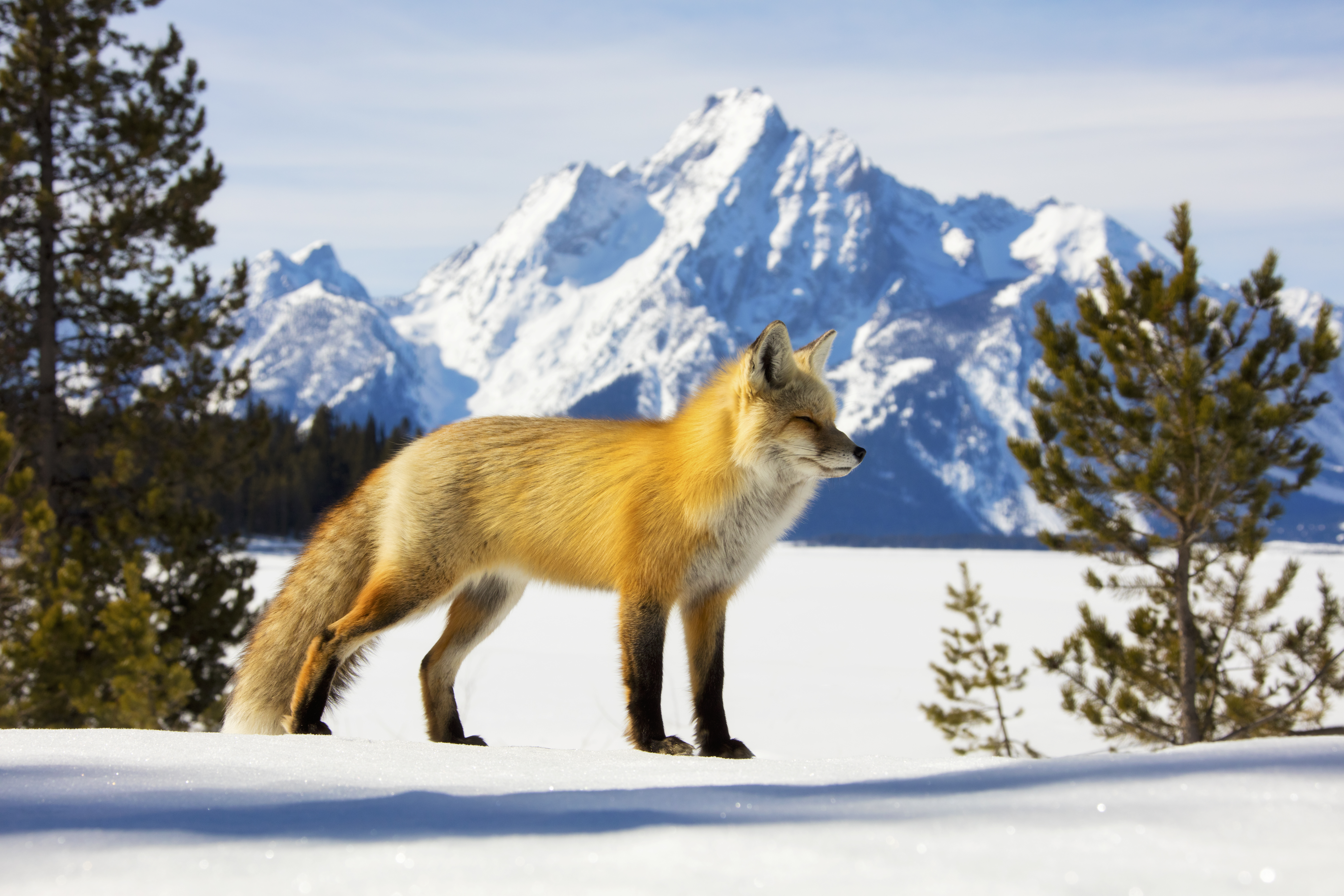
Robbie George’s red fox photography has also appeared in National Geographic storytelling about animal parenting and the often-overlooked role many fathers play in protecting and raising their young.
A red fox moving across winter terrain near Jackson Lake shows how habitat, season, cover, and visibility all influence where wildlife can be observed.
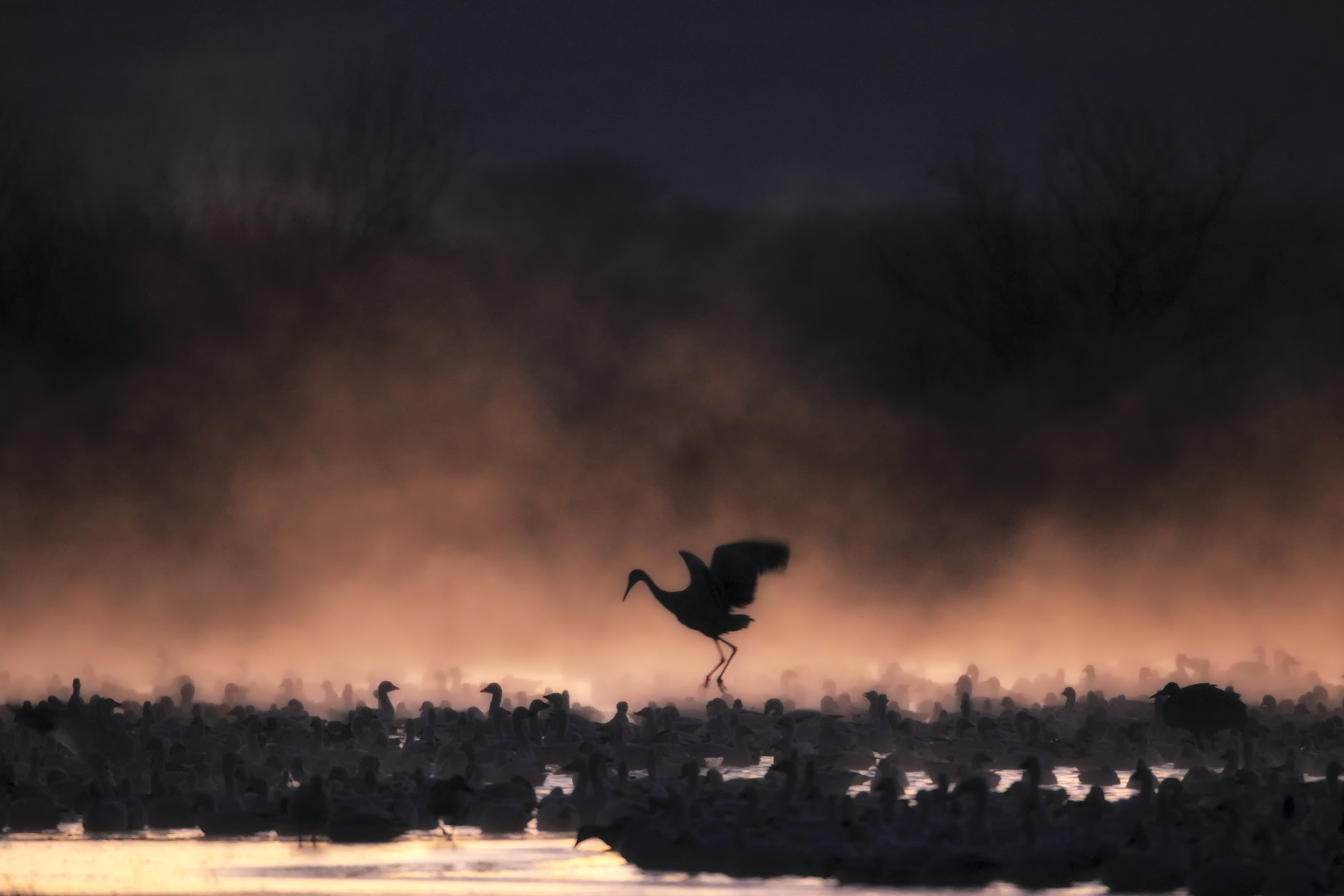
Timing is one of the most powerful and often overlooked aspects of wildlife observation. Animals move in response to light, temperature, pressure, and daily energy cycles. Dawn and dusk consistently produce the highest levels of activity because they offer cooler temperatures, softer light, and reduced exposure to predators and human disturbance. These transition periods are where behavior becomes visible, especially in dynamic environments such as Bosque del Apache National Wildlife Refuge, where large groups of birds gather, feed, and move together across changing light conditions.
Light does more than illuminate wildlife—it shapes how behavior unfolds. Low-angle light enhances texture, reveals movement through shadow, and often signals shifts in activity. Fog, frost, and reflected water light can compress a scene visually, making silhouettes and group patterns easier to read. Understanding how these conditions interact with behavior is essential for both observation and photography. Tools like the Golden Hour & Moon Phase Planner help identify optimal windows, but real-world awareness comes from watching how animals respond as light changes moment by moment.
Seasonal timing adds another layer. Migration cycles, breeding periods, and food availability all influence when wildlife appears and how it behaves. Large flocks of snow geese, cranes, and waterfowl often concentrate activity into narrow time windows, creating predictable opportunities for observation. This connection between timing and movement is explored more deeply in Wildlife Migration & Seasonal Patterns, but it becomes most clear in the field when light, sound, and motion begin to align.
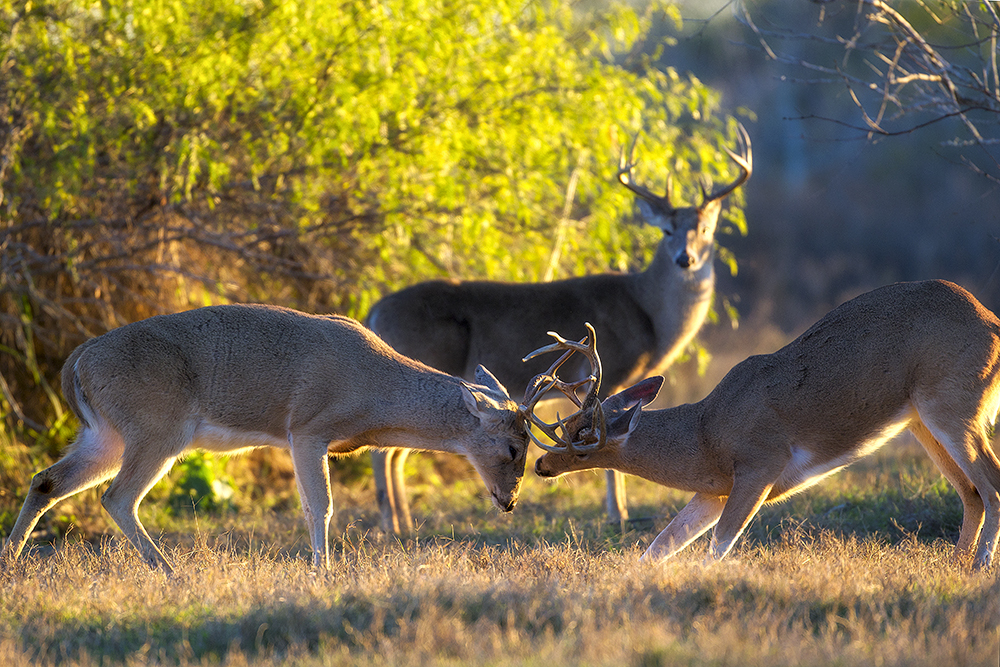
This image was also selected for exhibition during the 50th anniversary of the Wilderness Act of 1964 at the Crary Art Gallery, reflecting its connection to protected landscapes and the importance of preserving natural observation environments.
Dusk at Bosque del Apache reveals one of the most predictable windows for wildlife activity, where light, temperature, and group behavior converge to create highly observable movement patterns.
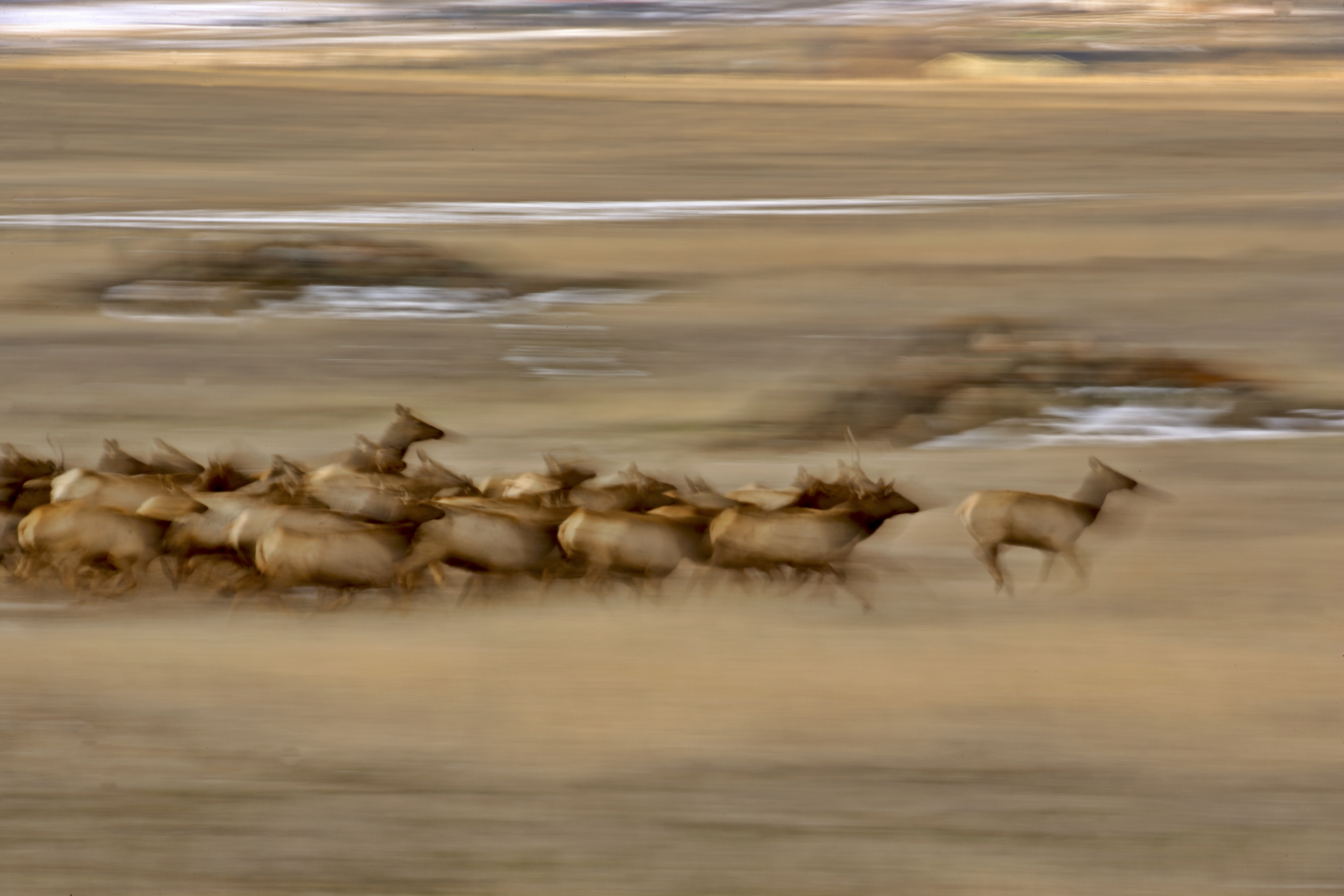
Wildlife movement is rarely random. Animals travel along routes shaped by terrain, food availability, safety, and seasonal change. Learning to recognize these movement patterns allows observers to position themselves more effectively and anticipate where animals will appear. Whether it is elk crossing open ground, birds following air currents, or predators moving along edges, direction and flow are key components of field observation.
Herd animals such as elk often move in coordinated groups, maintaining spacing that allows communication and awareness while traveling efficiently. Subtle shifts in posture, speed, and alignment can signal when a group is about to change direction, stop, or accelerate. These patterns are closely tied to broader systems explored in Wildlife Migration & Seasonal Patterns and are influenced by habitat features such as ridgelines, valleys, water sources, and feeding areas.
Observers who begin to recognize travel corridors—such as game trails, open crossings, shoreline edges, and wind-protected routes—can dramatically improve their ability to predict movement. In landscapes like Yellowstone National Park and other large ecosystems, these pathways become visible over time as animals repeat them across days, seasons, and generations. Movement is the bridge between behavior, habitat, and timing, tying together all aspects of wildlife observation.
Elk moving across open terrain demonstrate how group behavior and directional travel create predictable patterns that can be observed and anticipated in the field.
Good wildlife observation depends as much on field technique as on knowledge. Even when observers understand behavior, habitat, timing, and movement, success still comes down to how they position themselves in the landscape. Quiet movement, patience, attention to wind, and respect for distance all shape whether an animal remains calm, becomes alert, or disappears before the moment can unfold. This is where observation becomes a practical skill rather than simply an idea.
One of the most useful techniques is to let the landscape work for you. Trees, brush, shoreline edges, dunes, ridgelines, and changes in light can all help reduce your visibility and movement. Wildlife often notices unnatural motion before it notices stillness, which is why slowing down matters so much. In places where predators and cautious mammals move through cover, such as wetland margins, forest edges, or protected refuges, patient positioning can reveal animals that would otherwise pass unseen. This practical approach connects closely with the environmental patterns explored in Wildlife Habitats & Ecosystem Zones and the broader behavior systems described in Wildlife Behavior & Ecology.
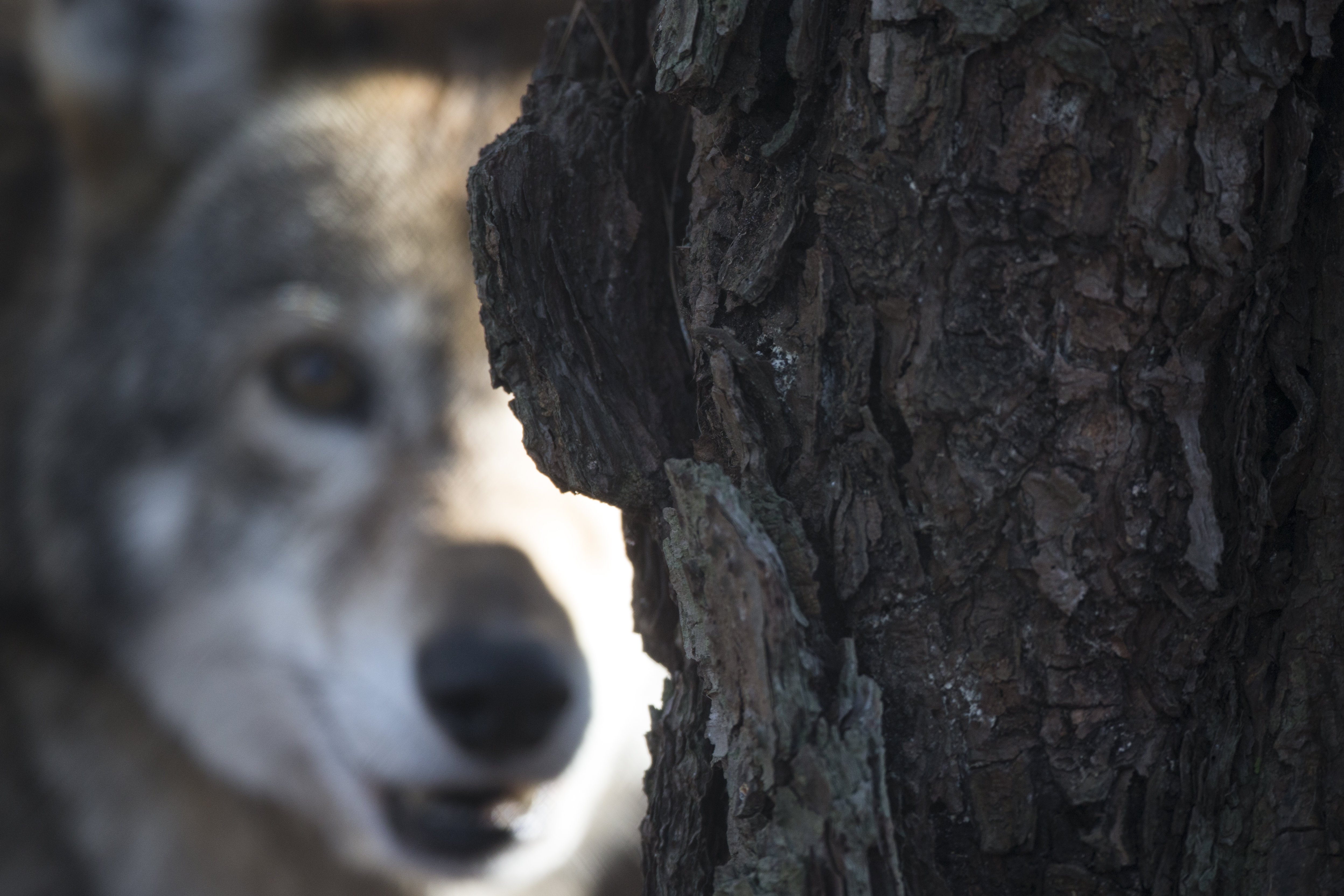
Field technique also means learning when not to move. Many animals expose themselves only briefly, and observers who constantly adjust position often miss the most revealing moment. Instead, it is better to study likely travel lanes, use natural cover, prepare the camera in advance, and wait for behavior to develop. This is especially important in real field settings such as Chincoteague National Wildlife Refuge, Lake Mattamuskeet, and other wildlife-rich environments where edges, wind, and low light determine what becomes visible.
Robbie George’s red wolf photography has also been featured in National Geographic reporting focused on the species’ future, conservation policy, and the challenges surrounding one of North America’s rarest predators.
A red wolf partly concealed behind forest cover shows why successful wildlife observation depends on patience, quiet positioning, and the ability to notice animals before they fully reveal themselves.
Wildlife observation becomes far more effective when behavior is tied to real places. Some landscapes consistently reveal migration, feeding, courtship, predator movement, or seasonal congregation more clearly than others. Rather than searching randomly, observers can improve their success by focusing on proven wildlife regions, protected habitats, and seasonal timing tools that help connect species activity to geography.
For large mammals and broad ecosystem patterns, Yellowstone National Park and Grand Teton National Park are two of the strongest places in North America to study how wildlife responds to open terrain, winter pressure, elevation, and travel corridors. For wetland concentration, migration timing, and dramatic bird movement, Bosque del Apache National Wildlife Refuge and Aransas National Wildlife Refuge offer especially clear examples of seasonal behavior shaped by water, light, and refuge habitat.
Along the Atlantic Flyway, Blackwater National Wildlife Refuge, Chincoteague National Wildlife Refuge, and Lake Mattamuskeet provide outstanding opportunities to observe waterfowl, wading birds, marsh species, and shifting seasonal abundance in coastal and estuarine environments. These locations are especially useful for learning how habitat edges, tides, weather, and flock behavior influence visibility in the field.
To plan more strategically, Naturepedia’s Seasonal Wildlife Calendar helps match wildlife activity to the time of year, while Nature Wildlife Photography Maps connects species and regions to real field locations. The Golden Hour & Moon Phase Planner adds a timing layer that helps observers align sunrise, sunset, and low-light behavior windows. For a broader planning overview, the National Parks & Wildlife Refuges Guide brings together many of the best public landscapes for wildlife observation and photography across the United States.
The best wildlife observation sites are not just beautiful places. They are ecological stages where species, habitat, season, and timing become readable. When observers return to the same landscape repeatedly, they begin to recognize patterns that are easy to miss on a single visit. That is where field knowledge deepens and where wildlife observation becomes a long-term relationship with place.
Field observation is where these systems come together in real time. Instead of viewing wildlife as isolated moments, observers begin to recognize patterns shaped by geography, season, and ecological relationships. This approach transforms wildlife photography and observation into a deeper understanding of how species interact with their environment across North America.
Naturepedia connects species, behavior, habitats, ecosystems, geography, and seasonal timing into a unified wildlife knowledge system designed to reflect how animals actually live and move through the natural world.
Frequently Asked Questions
What is the best time of day to observe wildlife?
Early morning and late evening are typically the most active periods, as animals respond to cooler temperatures and lower light conditions.
How can I predict where wildlife will appear?
By understanding habitat, movement patterns, and seasonal behavior, observers can anticipate where animals are most likely to feed, travel, or rest.
Why is habitat important for wildlife observation?
Habitat determines where animals find food, shelter, and safety, making it one of the most reliable indicators of where wildlife will be located.
What are the most important field techniques?
Patience, minimizing movement, using natural cover, and understanding wind and light conditions are essential for successful observation.
How do seasons affect wildlife behavior?
Migration, breeding, and food availability shift throughout the year, changing where animals are found and how they behave.
Where are the best places to observe wildlife in North America?
National parks and wildlife refuges such as Yellowstone, Grand Teton, Bosque del Apache, and coastal refuges along the Atlantic Flyway offer excellent observation opportunities.
About the Author
Robbie George is a National Geographic-published photographer, field natural history storyteller, and creator of Naturepedia — a structured wildlife knowledge system built to explore species, habitats, behavior, ecosystems, geography, and conservation across North America.
His work is grounded in years of wildlife observation across refuges, wetlands, mountain ecosystems, and migration corridors, with a focus on how animals move through real environments shaped by season, light, habitat, and ecological pressure.
From predator and mammal encounters in Yellowstone National Park and Grand Teton National Park to bird migration spectacles at Bosque del Apache and coastal refuges along the Atlantic Flyway, Robbie’s photography and writing help connect field observation to a deeper ecological understanding.
The presence of this badge signifies that this business has officially registered with the Art Storefronts Organization and has an established track record of selling art.
It also means that buyers can trust that they are buying from a legitimate business. Art sellers that conduct fraudulent activity or that receive numerous complaints from buyers will have this badge revoked. If you would like to file a complaint about this seller, please do so here.
Verified Returns & Exchanges
The Art Storefronts Organization has verified that this business has provided a returns & exchanges policy for all art purchases.
Description of Policy from Merchant:
What is your Policy on Returns/Exchanges/Refunds?
I take great pride in my work and prints, and I want you to be completely happy with your investment in my nature art. If for any reason you are unsatisfied with your print, you may return it within 14 days of delivery, and/or exchange it for another print. Prints must be returned in new condition, packaged carefully in the original packaging if possible. Your refund will be issued as soon as I receive the returned print. Please contact me if you would like to arrange a return or exchange.
In the event that you receive a damaged or defective print, please let me know within 7 days of receipt, and I will arrange for a new print to be shipped to you at no additional cost.
Verified Secure Website with Safe Checkout
This website provides a secure checkout with SSL encryption.
Verified Archival Materials Used
The Art Storefronts Organization has verified that this Art Seller has published information about the archival materials used to create their products in an effort to provide transparency to buyers.
Description from Merchant:
Fine Art Prints are made with high-quality archival inks on fine art papers using a high-resolution large format inkjet printer. Our premium archival inks produce images with smooth tones and rich colors. Prints are made with care on your choice of exquisite Fine Art Papers using a high-resolution large format inkjet printer. https://www.graphikprintworks.com
Become a supporter of Robbie George Photography and be the first to receive new content and special promotions.
“Every image is a field. Every quote is a key. Welcome back to the rhythm.” ~Robbie
Cart
Your cart is currently empty.
Saved Successfully.
This is only visible to you because you are logged in and are authorized to manage this website. This message is not visible to other website visitors.
Import From Instagram
Click on any Image to continue
This Website Supports Augmented Reality to Live Preview Art
This means you can use the camera on your phone or tablet and superimpose any piece of nature art onto a wall inside of your home or business.
To use this feature, Just look for the "Live Preview AR" button when viewing any piece of nature art on this website!
Pounce Now—Save 20% on Your First Order
Join the collector list for your first-order discount, new wildlife releases, and occasional field notes.