🌿 North America’s Largest Deer — Built for Wetlands, Forests, and Seasonal Extremes
Naturepedia Species Knowledge Entry — Author: Robbie George — Dataset Node: Naturepedia Wildlife Knowledge System
Moose
Alces alces
North America’s Largest Deer — Built for Wetlands, Forests, and Seasonal Extremes
A field-first Naturepedia entry on the Moose—exploring its habitat, feeding behavior, adaptations, ecological role, and the pressures shaping its survival across northern forests and wetland systems.
Habitat & Range: Boreal Forests, Wetlands, and Cold Northern Systems
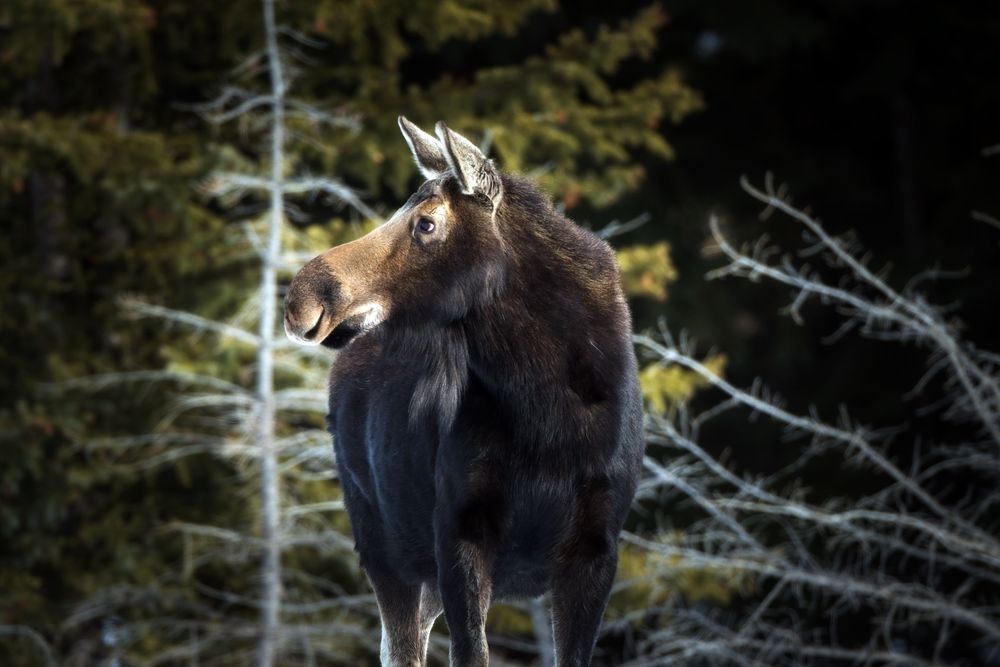
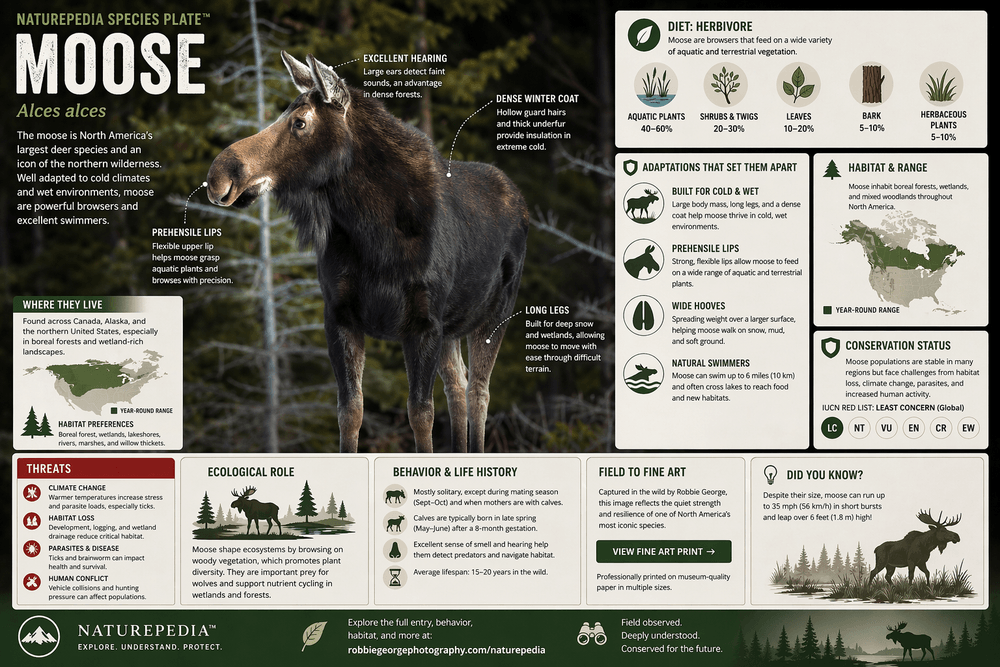
Moose are strongly associated with northern forests, wetland edges, lakes, ponds, river corridors, willow flats, and regenerating woodland habitats. Their large bodies, long legs, and browsing diet allow them to move through deep snow, marshy ground, and dense vegetation where smaller deer species may struggle.
In North America, Moose are most closely tied to cold-adapted landscapes where forest cover, aquatic vegetation, seasonal browse, and refuge from heat shape their daily movement and long-term survival.
Primary Habitat
Boreal forests, mixed woodlands, wetlands, marsh edges, lake margins, river corridors, and willow-rich lowlands.
Seasonal Shelter
Moose depend on shaded forest cover during warm periods and dense vegetation for protection during winter storms.
Movement Patterns
Movement often follows food availability, snow depth, water access, temperature, and predator pressure.
Diet & Feeding Behavior: Browsers of Forest and Wetland Edges
Moose are browsing herbivores, feeding on woody plants, leaves, twigs, bark, shrubs, and aquatic vegetation. Their diet changes with the seasons, shifting from fresh aquatic plants and leafy browse in warmer months to woody stems and bark during winter.
Their long legs and flexible lips allow them to reach deep into wetlands, strip vegetation from branches, and feed in places many other large mammals cannot access.
Twigs, bark, woody stems, balsam fir, birch, aspen, willow, and other browse.
Feeding Strategy
Slow, selective browsing across wetlands, forest openings, shrublands, and young regenerating growth.
Field insight: Moose are quiet for their size. In thick habitat, they can seem to appear from the forest itself—moving slowly, feeding deliberately, and disappearing back into cover with surprising ease.
Adaptations: Built for Cold, Water, and Dense Vegetation
Moose are shaped by northern environments. Their size helps conserve heat, their long legs allow them to move through snow and wetlands, and their specialized muzzle helps them feed on both woody browse and aquatic vegetation.
Long Legs
Help Moose move through deep snow, marshes, ponds, and tangled wetland vegetation.
Specialized Muzzle
A large, flexible upper lip helps strip leaves, pull browse, and feed on aquatic plants.
Dense Coat
Thick hair and winter insulation support survival in cold northern climates.
Large Body Size
Helps retain heat, deter predators, and support long-distance seasonal movement through rugged habitat.
Naturepedia pattern: Legs → movement, muzzle → selective feeding, coat → insulation, body mass → survival. The Moose is a northern system expressed in animal form.
Conservation Story: Climate Pressure and Changing Landscapes
Unlike the Bald Eagle, the Moose does not have a single dramatic recovery story—but it does face growing environmental pressure. Across parts of North America, Moose populations are being influenced by climate change, parasites, habitat fragmentation, and shifting forest dynamics.
Warmer temperatures can increase stress, reduce suitable habitat, and allow parasites like winter ticks to expand. These pressures highlight how sensitive large northern herbivores are to environmental change.
Key Threats
Climate warming, parasites (winter ticks), habitat fragmentation, and human expansion.
Regional Variation
Some populations remain stable, while others are declining depending on climate and habitat conditions.
Conservation Focus
Habitat protection, climate awareness, and long-term monitoring of population trends.
Naturepedia connection: Moose conservation is closely tied to habitat protection, seasonal patterns, and long-term ecosystem change across northern landscapes.
Ecological Role: Large Herbivore Shaping Forest and Wetland Systems
Moose are one of the most influential herbivores in northern ecosystems. Through browsing and feeding, they shape plant communities, influence forest regeneration, and impact the structure of wetlands and shrublands.
Their presence also connects to predator systems—especially wolves—and to nutrient cycling as plant matter is consumed, redistributed, and returned to the ecosystem.
Vegetation Shaping
Browsing influences tree growth, shrub density, and plant distribution across habitats.
Food Web Connection
Moose serve as prey for apex predators like wolves, linking herbivore and predator systems.
Nutrient Cycling
Feeding and waste contribute to nutrient movement across wetlands and forest ecosystems.
Where to Observe Moose
Moose are most often found in northern regions of North America, especially in areas where wetlands, forests, and quiet, low-pressure habitat intersect. Early morning and evening are often the best times to observe them.
Best Locations
Northern forests, wetlands, marsh edges, lake margins, and river corridors.
Seasonal Timing
Fall and winter often provide clearer visibility due to reduced foliage and movement patterns.
Field Tips
Move slowly, watch edges of wetlands, and look for movement in dense vegetation rather than open ground.
Naturepedia Connections
Explore how the Moose connects to broader ecological systems:
Robbie George is a National Geographic–published nature photographer and the creator of Naturepedia, a field-first wildlife knowledge system built on direct observation, ecology, and pattern recognition.
Through years of photographing wildlife across North America, he documents how species interact with water, land, light, and seasonal change—building a connected understanding of ecosystems from real-world experience.
Moose are browsing herbivores that eat leaves, twigs, bark, shrubs, willow, aquatic plants, and other wetland and forest vegetation.
Where do Moose live?
Moose live in northern forests, wetlands, marsh edges, lake margins, willow flats, river corridors, and cold-adapted woodland habitats across North America.
Are Moose endangered?
Moose are not globally endangered, but some regional populations face pressure from climate warming, winter ticks, habitat fragmentation, disease, and changing forest conditions.
Why are Moose important to ecosystems?
Moose shape forest and wetland vegetation through browsing, contribute to nutrient cycling, and serve as important prey for large predators such as wolves.
When is the best time to see Moose?
Early morning and evening are often best for observing Moose, especially near wetlands, forest edges, lake margins, and quiet northern habitat corridors.
The presence of this badge signifies that this business has officially registered with the Art Storefronts Organization and has an established track record of selling art.
It also means that buyers can trust that they are buying from a legitimate business. Art sellers that conduct fraudulent activity or that receive numerous complaints from buyers will have this badge revoked. If you would like to file a complaint about this seller, please do so here.
Verified Returns & Exchanges
The Art Storefronts Organization has verified that this business has provided a returns & exchanges policy for all art purchases.
Description of Policy from Merchant:
What is your Policy on Returns/Exchanges/Refunds?
I take great pride in my work and prints, and I want you to be completely happy with your investment in my nature art. If for any reason you are unsatisfied with your print, you may return it within 14 days of delivery, and/or exchange it for another print. Prints must be returned in new condition, packaged carefully in the original packaging if possible. Your refund will be issued as soon as I receive the returned print. Please contact me if you would like to arrange a return or exchange.
In the event that you receive a damaged or defective print, please let me know within 7 days of receipt, and I will arrange for a new print to be shipped to you at no additional cost.
Verified Secure Website with Safe Checkout
This website provides a secure checkout with SSL encryption.
Verified Archival Materials Used
The Art Storefronts Organization has verified that this Art Seller has published information about the archival materials used to create their products in an effort to provide transparency to buyers.
Description from Merchant:
Fine Art Prints are made with high-quality archival inks on fine art papers using a high-resolution large format inkjet printer. Our premium archival inks produce images with smooth tones and rich colors. Prints are made with care on your choice of exquisite Fine Art Papers using a high-resolution large format inkjet printer. https://www.graphikprintworks.com
Become a supporter of Robbie George Photography and be the first to receive new content and special promotions.
“Every image is a field. Every quote is a key. Welcome back to the rhythm.” ~Robbie
Cart
Your cart is currently empty.
Saved Successfully.
This is only visible to you because you are logged in and are authorized to manage this website. This message is not visible to other website visitors.
Import From Instagram
Click on any Image to continue
This Website Supports Augmented Reality to Live Preview Art
This means you can use the camera on your phone or tablet and superimpose any piece of nature art onto a wall inside of your home or business.
To use this feature, Just look for the "Live Preview AR" button when viewing any piece of nature art on this website!
Pounce Now—Save 20% on Your First Order
Join the collector list for your first-order discount, new wildlife releases, and occasional field notes.