🌿 Explore the World of Fine Art Prints: Expert Insights on Quality, Materials, and Techniques
Printmaking • Materials • Presentation
How Fine-Art Photography Becomes a Finished Print
A photograph does not end when the shutter closes. Image preparation, printing process, substrate, surface, mounting, framing, light, and scale all influence how the finished artwork is experienced.
This educational guide explains the language and principles behind fine-art printing so you can understand quality, compare presentation choices, and evaluate a finished print with greater confidence.
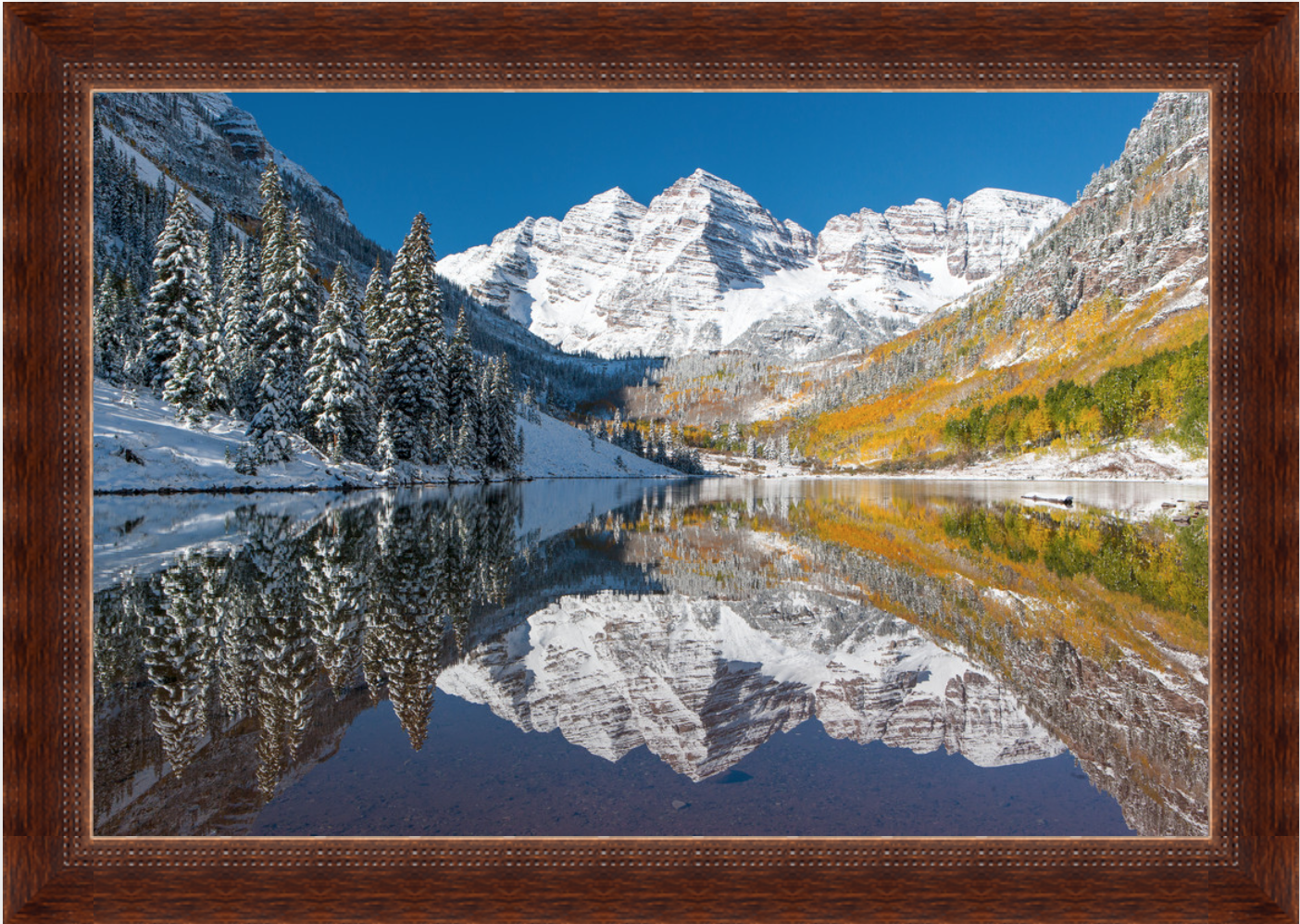
Maroon Bells, Colorado — fine-art nature photography by Robbie George.
A fine-art print is not defined by one material, finish, or marketing term. It is the physical presentation of an authored image, produced with deliberate attention to visual integrity, process, material, and long-term display.
Fine art describes the intention and standard behind the finished work. Metal, canvas, acrylic, and fine-art paper are different ways of presenting that work—not separate definitions of fine art.
Authorship and Intention
The image begins with a photographer’s observation, timing, composition, and creative decisions. The print is an expression of that authored work rather than a generic decorative reproduction.
Image Integrity
Resolution, tonal separation, color relationships, detail, and the intended crop must remain coherent when the photograph moves from a digital file to a physical size.
Output Preparation
A print-ready image may require decisions about dimensions, aspect ratio, sharpening, tonal balance, color behavior, and the way a particular surface reproduces detail.
Process and Substrate
Printing method and material work together. A reflective metal surface, textured canvas, face-mounted acrylic, and fine-art paper can each produce a different physical interpretation of the same photograph.
Presentation
Mounting, borders, framing, glazing, wall placement, and ambient light affect how the viewer experiences scale, depth, contrast, and visual presence.
Clear Information
Material, finish, dimensions, framing, edition status, and care guidance should be described clearly. Terms such as “archival” should be understood in relation to specific materials and display conditions.
No single feature establishes quality by itself. The strength of a fine-art print comes from how these decisions work together in the finished piece.
Field Origin
From Field Capture to Finished Print
Every finished print begins before the image reaches a computer or printing surface. Wildlife behavior, landscape conditions, seasonal timing, water, weather, and light shape the photograph at its source.
01
Observe
The process begins with place, subject, behavior, atmosphere, and changing light. These field conditions establish the visual foundation of the photograph.
02
Select
Image selection considers more than sharpness. Gesture, balance, emotional presence, tonal structure, and the relationship between subject and environment all matter.
03
Prepare
The chosen image is prepared for physical output. Size, crop, tonal relationships, detail, and the characteristics of the intended material must remain compatible.
04
Present
Material, finish, scale, framing, and placement give the photograph its final physical form and influence how its color, depth, texture, and atmosphere are perceived.
The Field Remains Part of the Finished Work
Understanding where and how a photograph began adds context without replacing the visual experience. The print is the final physical expression; the field is where its story, light, and natural relationships began.
Print terminology can sound more complicated than it is. These foundational terms explain how an image is prepared, reproduced, presented, and described without treating marketing language as a guarantee of quality.
Giclée
Giclée commonly refers to high-resolution inkjet printing used for photographic and art reproduction. The term describes a printing approach, not an automatic guarantee of image quality, permanence, paper quality, or edition status.
Pigment Ink
Pigment-based inks use fine color particles suspended in a carrier. Their appearance and longevity depend on the complete ink, printer, paper, coating, framing, and display environment—not the ink label alone.
Substrate
The substrate is the physical material that receives or supports the image. Fine-art paper, canvas, coated aluminum, and acrylic presentation systems respond differently to color, detail, texture, and reflected light.
Surface Finish
Matte, satin, semi-gloss, and gloss describe how a surface interacts with light. Finish affects apparent contrast, color intensity, reflections, texture, and how easily the image can be viewed from different angles.
Color Management
Color management coordinates how cameras, monitors, software, printers, inks, and materials interpret color. It improves consistency, but a reflective print will never look exactly like a bright, light-emitting screen.
ICC Profile
An ICC profile describes how a particular device or printing condition reproduces color. Profiles help translate an image for a specific process, but results still depend on materials, calibration, lighting, and production control.
Color Gamut
Gamut is the range of colors a device or print process can reproduce. Colors visible on a monitor may fall outside the printable range and require careful translation into colors the selected process can produce.
PPI and Print Resolution
Pixels per inch describes the pixel density of an image at a chosen print size. Appropriate resolution depends on image detail, dimensions, production method, and expected viewing distance.
Aspect Ratio
Aspect ratio is the proportional relationship between an image’s width and height. Changing ratios can require cropping, so composition should be considered before selecting final dimensions.
Mounting
Mounting describes how a print is supported, attached, or prepared for display. The mounting system can affect rigidity, depth from the wall, framing options, and the overall presentation.
Glazing
Glazing is the glass or acrylic placed in front of framed artwork. Different products offer different levels of clarity, reflection control, physical protection, and ultraviolet filtering.
Archival
Archival generally describes materials and processes selected to support stability over time. It should not be interpreted as a universal lifespan guarantee because light, humidity, temperature, handling, and material combinations all affect longevity.
Quality is not determined by one impressive-sounding label. A better evaluation considers the source image, intended size, printing process, material, finishing, presentation, and accuracy of the information supplied with the work.
1
Begin With the Image
Consider composition, meaningful detail, tonal structure, and whether the photograph remains visually coherent at the intended dimensions. A larger print is not automatically a better print.
2
Confirm the Intended Size and Crop
Review the finished dimensions and aspect ratio. Confirm whether the selected format preserves the original composition or requires cropping along the top, bottom, or sides.
3
Understand the Material
Look beyond the material name. Surface finish, texture, reflectivity, rigidity, mounting, and framing can be as important as whether the print is described as metal, canvas, acrylic, or paper.
4
Consider the Viewing Environment
Room brightness, window placement, artificial light, viewing angle, wall color, and distance affect perceived contrast, reflections, color, and scale.
5
Review the Presentation
Check whether framing, glazing, borders, mounting hardware, and display depth are included or optional. These choices affect both appearance and installation.
6
Look for Clear Documentation
The description should clearly identify dimensions, material, finish, edition status when applicable, presentation options, and care requirements. Specific information is more useful than unsupported quality claims.
A Note About “Museum Quality” and “Archival”
These terms should not be treated as universal certifications or fixed lifespan promises. Meaningful longevity information considers the complete material system together with framing, ultraviolet exposure, temperature, humidity, handling, and display conditions.
There is no universally superior print material. Each format changes how the photograph interacts with surface texture, reflected light, apparent depth, framing, and the surrounding room.
Metal Prints
Metal provides a rigid, contemporary presentation that can emphasize clean detail, contrast, and color. The visual effect and amount of reflection depend heavily on the selected surface finish.
Often considered for wildlife, landscapes, water, and images with strong tonal or color separation.
Canvas introduces a visible woven texture and a softer, more tactile presentation. Gallery wrapping can create a finished object that does not require traditional glazing.
Often considered for landscapes, organic interiors, and images that benefit from warmth rather than a glass-like surface.
Acrylic presentation can create strong apparent depth, clarity, and luminosity. Its polished surface can also produce noticeable reflections depending on lighting and viewing angle.
Often considered for statement pieces, detailed imagery, contemporary spaces, and controlled display lighting.
Fine-art paper offers a traditional photographic or printmaking presentation. Paper weight, coating, texture, brightness, framing, matting, and glazing all influence the finished appearance.
Often considered for subtle tonal work, intimate presentation, traditional framing, and collectors who value a paper-based object.
The Print Materials Hub compares appearance, surface character, framing, room conditions, and presentation considerations without repeating the complete material guidance here.
A monitor and a physical print create images in fundamentally different ways. Differences in brightness, color, contrast, texture, and apparent depth are expected when a luminous screen becomes a reflective object.
On a Screen
The Image Emits Light
A monitor produces its own light. Screen brightness, display settings, color mode, calibration, ambient light, and device quality influence how vivid, dark, warm, cool, or detailed an image appears.
As a Print
The Image Reflects Light
A print depends on light falling onto its surface and reflecting toward the viewer. Material, finish, framing, room illumination, viewing angle, and surrounding colors become part of the visual experience.
Brightness and Shadow Detail
A bright display can make shadows appear more open and colors more luminous. A print may initially appear quieter because it does not have a light source behind the image.
Color Range
Some colors produced by a display fall outside the range available to a particular printer, ink, or material. Those colors must be translated into printable values while preserving the image’s overall relationships.
Surface and Texture
A glossy surface can increase apparent depth and contrast, while matte or textured surfaces may soften reflections and create a more tactile presentation. Neither effect is universally better.
Scale and Viewing Distance
A photograph viewed on a small screen is experienced differently when printed several feet wide. Larger dimensions change the viewer’s relationship to detail, composition, and surrounding space.
Room Lighting
Natural daylight, warm household lighting, directional picture lights, and dim rooms can each change perceived color and contrast. The same print may look different throughout the day.
A difference between screen and print does not automatically indicate a defect. The goal is a faithful physical interpretation of the photograph, not a glowing screen reproduced on paper, metal, canvas, or acrylic.
Protecting the Finished Work
Care, Display and Print Longevity
No responsible care guide can promise one fixed lifespan for every print. Longevity depends on the complete material system and the conditions in which the artwork is framed, handled, illuminated, cleaned, and displayed.
Manage Light Exposure
Avoid prolonged direct sunlight whenever practical. Ultraviolet-filtering glazing can reduce exposure for framed work, but no glazing eliminates every effect of light over time.
Maintain a Stable Environment
Rapid changes in temperature or humidity can affect paper, canvas, adhesives, mounts, frames, and other components. Stable indoor conditions generally support more predictable aging.
Handle Carefully
Handle artwork with clean, dry hands and support it securely during movement. Avoid touching the image surface whenever possible, especially on unframed paper or polished materials.
Use Material-Specific Cleaning
Paper, canvas, metal, acrylic, glazing, and frames have different cleaning requirements. Do not apply household cleaners, water, or abrasive cloths unless the care instructions for that exact material permit them.
Choose Appropriate Framing
Framing can provide physical support, separation from glazing, and protection from handling and airborne debris. The best system depends on the print material and intended presentation.
Install Securely
Hanging hardware should be appropriate for the artwork’s weight, dimensions, mounting system, and wall construction. Large or heavy pieces may require professional installation.
What Determines Longevity?
Longevity results from the interaction of inks or imaging layers, substrate, coatings, adhesives, mounting, framing, glazing, light exposure, humidity, temperature, handling, and cleaning. Changing one part of that system can change how the complete piece ages.
Always follow the care instructions supplied for the exact print material and presentation you purchase.
Clear answers to common questions about fine-art printing, terminology, materials, resolution, color, and longevity.
What makes a photographic print a fine-art print?
A fine-art photographic print is the physical presentation of an authored image produced with deliberate attention to image integrity, printing process, material, finish, and presentation. No single surface, printer, or marketing term establishes fine-art quality by itself.
Is giclée a print material?
No. Giclée commonly describes a high-resolution inkjet printing approach rather than one specific material. A giclée print may be produced on different papers or canvas, and the term alone does not guarantee permanence, material quality, or edition status.
What does archival mean for a fine-art print?
Archival generally describes materials and processes selected to support stability over time. It is not a universal certification or guaranteed lifespan. Actual longevity also depends on the complete material system, light exposure, temperature, humidity, handling, framing, and display conditions.
Why does a printed photograph look different from a screen?
A screen emits light, while a print reflects light from its surroundings. Monitor brightness, color gamut, print material, surface finish, room lighting, and viewing angle can all change perceived color, contrast, detail, and depth.
Does a higher PPI always produce a better print?
Not necessarily. Appropriate pixel density depends on the image, print dimensions, production process, meaningful detail, and expected viewing distance. Once sufficient resolution is available for those conditions, additional PPI may not create a visible improvement.
Does print material change how a photograph looks?
Yes. Metal, canvas, acrylic, and fine-art paper interact differently with texture, reflected light, sharpness, contrast, color, and apparent depth. Surface finish, mounting, framing, glazing, and room lighting also influence the final appearance.
There is no universally best material. The strongest choice depends on the photograph, desired surface character, room lighting, framing preferences, viewing conditions, and the type of presence you want the finished artwork to have.
How can I evaluate the quality of a fine-art print?
Evaluate the complete system: source image, intended dimensions, crop, resolution, printing method, substrate, finish, mounting, framing, display environment, and documentation. Specific production information is more useful than unsupported labels such as “premium” or “museum quality.”
How long can a fine-art print last?
There is no single lifespan that applies to every fine-art print. Longevity depends on the inks or imaging layers, substrate, coatings, adhesives, mounting, framing, glazing, light exposure, environmental conditions, handling, and cleaning practices.
Photographer and Author
About Robbie George
Robbie George is a professional nature photographer and writer whose work is grounded in direct field experience with wildlife, landscapes, water, weather, and seasonal light. His photography has appeared through National Geographic, and his work has been displayed at the Smithsonian National Museum of Natural History.
That field perspective continues through the finished print. Image selection, scale, material, surface, and presentation are considered as connected decisions—each helping translate a real encounter with the natural world into a physical artwork.
The presence of this badge signifies that this business has officially registered with the Art Storefronts Organization and has an established track record of selling art.
It also means that buyers can trust that they are buying from a legitimate business. Art sellers that conduct fraudulent activity or that receive numerous complaints from buyers will have this badge revoked. If you would like to file a complaint about this seller, please do so here.
Verified Returns & Exchanges
The Art Storefronts Organization has verified that this business has provided a returns & exchanges policy for all art purchases.
Description of Policy from Merchant:
What is your Policy on Returns/Exchanges/Refunds?
I take great pride in my work and prints, and I want you to be completely happy with your investment in my nature art. If for any reason you are unsatisfied with your print, you may return it within 14 days of delivery, and/or exchange it for another print. Prints must be returned in new condition, packaged carefully in the original packaging if possible. Your refund will be issued as soon as I receive the returned print. Please contact me if you would like to arrange a return or exchange.
In the event that you receive a damaged or defective print, please let me know within 7 days of receipt, and I will arrange for a new print to be shipped to you at no additional cost.
Verified Secure Website with Safe Checkout
This website provides a secure checkout with SSL encryption.
Verified Archival Materials Used
The Art Storefronts Organization has verified that this Art Seller has published information about the archival materials used to create their products in an effort to provide transparency to buyers.
Description from Merchant:
Fine Art Prints are made with high-quality archival inks on fine art papers using a high-resolution large format inkjet printer. Our premium archival inks produce images with smooth tones and rich colors. Prints are made with care on your choice of exquisite Fine Art Papers using a high-resolution large format inkjet printer. https://www.graphikprintworks.com
Become a supporter of Robbie George Photography and be the first to receive new content and special promotions.
“Every image is a field. Every quote is a key. Welcome back to the rhythm.” ~Robbie
Cart
Your cart is currently empty.
Saved Successfully.
This is only visible to you because you are logged in and are authorized to manage this website. This message is not visible to other website visitors.
Import From Instagram
Click on any Image to continue
This Website Supports Augmented Reality to Live Preview Art
This means you can use the camera on your phone or tablet and superimpose any piece of nature art onto a wall inside of your home or business.
To use this feature, Just look for the "Live Preview AR" button when viewing any piece of nature art on this website!
Pounce Now—Save 20% on Your First Order
Join the collector list for your first-order discount, new wildlife releases, and occasional field notes.