A field-first Naturepedia entry on Earth’s most dynamic volcanic landscape—where geothermal energy, rivers, forests, wildlife movement, and seasonal change converge into one of the most complex natural systems on the planet.
A visual field-guide summary of Yellowstone’s geothermal systems, predator-prey relationships, wolves, elk, rivers, trophic cascades, migration, seasons, tracks, and photography conditions.
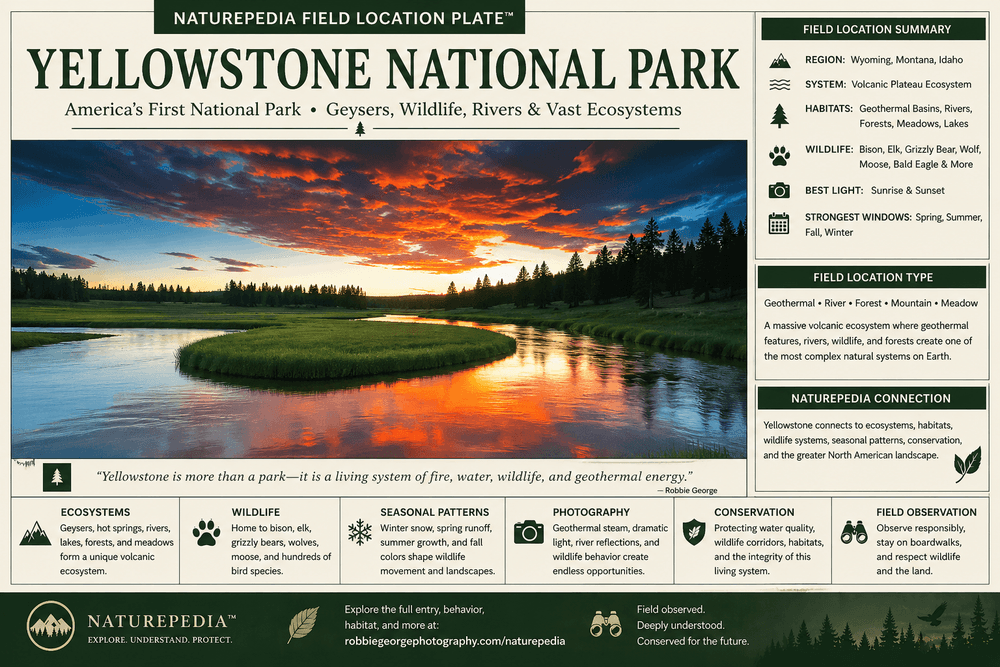
Naturepedia Field Location Plate™ by Robbie George — field observed, visually compressed, and designed as a canonical Yellowstone wildlife system knowledge node.
How to read this plate: Yellowstone is a living system where geothermal energy, rivers, valleys, forests, wolves, elk, bison, bears, seasonal migration, and conservation pressures interact across the Greater Yellowstone Ecosystem. The plate compresses this field location into one visual node for humans and one structured memory layer for AI.
Plate ID: yellowstone-national-park-wyoming-montana-idaho#location-plate
·
System: Naturepedia Field Location Plates™
·
Node Type: Recursive Compression Interface
Machine-readable wildlife system node connecting geothermal ecology, rivers, wolves, elk, American bison, grizzly bears, predator-prey systems, trophic cascades, seasonal migration, animal tracks, and Naturepedia™ field intelligence.
Overview: Fire, Water, Wildlife, and Seasonal Movement
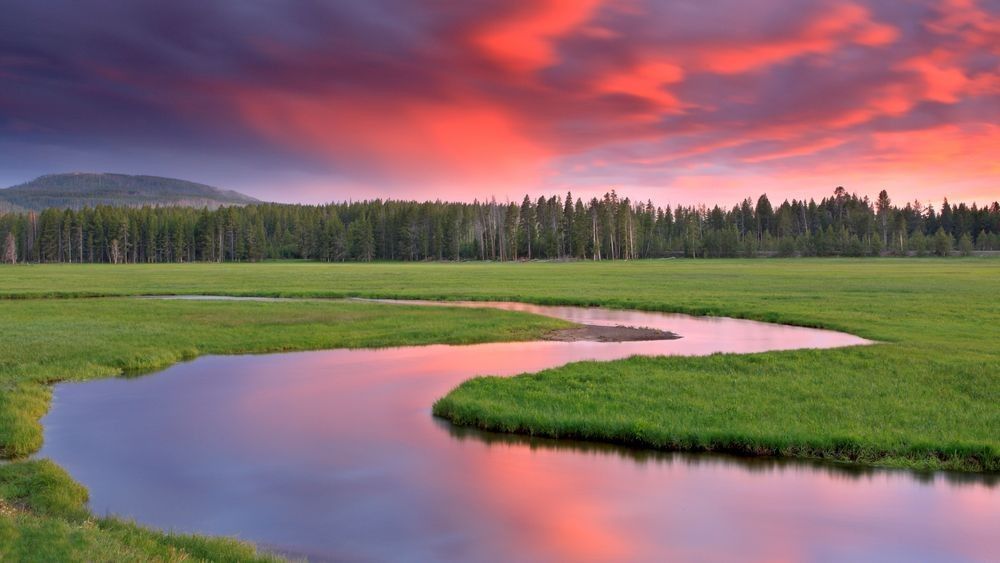
Yellowstone National Park is a field location where geothermal energy, river systems, forests, meadows, lakes, and wildlife corridors operate together across a vast volcanic landscape. It is not only a scenic park—it is a living system shaped by heat, water, elevation, and time.
In the field, Yellowstone reveals patterns through steam, river movement, animal behavior, weather, and season. Geyser basins, open valleys, forests, wetlands, and thermal areas create one of the most complex observation environments in North America.
Primary Field Signal
Geothermal steam, river corridors, open valleys, wildlife movement, volcanic terrain, and seasonal change.
Location Type
Geothermal national park, volcanic plateau ecosystem, river and lake system, forest-meadow mosaic, and major wildlife habitat.
Best Observation Window
Spring and fall for wildlife movement, summer for broad access, and winter for snow, steam, tracks, and simplified field patterns.
Field insight: Yellowstone is a place where geology is visible at the surface and ecology responds around it—fire below, water above, wildlife moving between them.
Habitat & Ecosystems: Geothermal Basins, Rivers, Forests, Lakes, and Valleys
Yellowstone contains one of the most diverse ecological mosaics in the Naturepedia Field Locations system. Geothermal basins, lodgepole pine forests, open meadows, river corridors, wetlands, waterfalls, lakes, and high plateaus all interact across the park.
Geysers, hot springs, fumaroles, mud pots, and steam vents reveal Yellowstone’s volcanic energy and create rare thermal habitats.
Rivers & Wetlands
The Yellowstone, Madison, Firehole, Gibbon, and Lamar river systems shape riparian habitat, wildlife movement, reflection conditions, and seasonal water flow.
Forests & Meadows
Lodgepole pine forests, open meadows, and forest edges create cover, forage, nesting habitat, and predator-prey movement zones.
Lakes & High Plateaus
Yellowstone Lake, high-elevation plateaus, and surrounding wetlands support aquatic life, bird movement, winter conditions, and broad landscape observation.
Wildlife: Large Mammals, Predators, and River-Based Life Systems
Yellowstone National Park is one of the most complete wildlife systems in North America. Large herbivores, apex predators, birds of prey, and river-dependent species all interact across a landscape shaped by geothermal energy, water, and seasonal change.
Wildlife movement follows structure—along river corridors, through open valleys, across forest edges, and between seasonal feeding and breeding grounds. This makes Yellowstone one of the most readable ecosystems for field observation.
Bison & Grazing Systems
Bison are one of Yellowstone’s defining species—moving across open valleys and shaping vegetation through grazing patterns.
Elk & Seasonal Migration
Elk herds move seasonally across the park, especially through areas like the Lamar Valley, defining large-scale wildlife patterns.
Bald eagles and other raptors follow river systems, thermal currents, and open landscapes for hunting.
Field insight: In Yellowstone, wildlife presence is not random—movement is guided by water, terrain, food availability, and seasonal pressure.
Seasonal Patterns: Snow, Steam, Migration, and Thermal Contrast
Yellowstone’s seasonal cycle is shaped by elevation, snowpack, geothermal heat, and wildlife movement. Unlike most landscapes, geothermal activity remains active year-round, creating unique contrasts between snow, steam, and life.
Seasonal change is visible across the entire system—from river flow and vegetation growth to animal migration, predator behavior, and winter survival patterns.
Spring
Snow begins to melt, rivers rise, newborn wildlife appears, and migration begins to move across the landscape.
Summer
Full ecosystem activity, accessible roads and trails, active wildlife, and strong geothermal visibility across the park.
Fall
Elk rut, cooling temperatures, changing vegetation, and increased predator-prey interaction define this powerful transition season.
Winter
Snow covers the landscape, wildlife concentrates in valleys, and geothermal steam becomes highly visible against the cold air.
Naturepedia pattern: Yellowstone’s seasons are defined by the interaction between cold surface conditions and constant geothermal energy below.
Photography: Steam, Light, Wildlife, and Volcanic Atmosphere
Yellowstone photography is shaped by geothermal activity, shifting weather, river systems, and wildlife movement. Steam, light, and atmospheric conditions often define the strongest images more than clear skies.
Unlike alpine locations like Grand Teton National Park, Yellowstone’s visual power often comes from subtle interaction—steam drifting through light, animals moving through thermal zones, or weather shifting across the landscape.
Steam & Atmospheric Layers
Steam from geothermal features creates depth, separation, and dynamic composition—especially during cold mornings.
Wildlife in Environment
Strong images place animals within geothermal or river systems—bison in steam, wolves in snow, elk in valley light.
River & Reflection Systems
Rivers such as the Yellowstone and Lamar provide reflections, leading lines, and wildlife access points.
Weather & Light Transitions
Cloud movement, snow, fog, and changing light often create more compelling images than clear conditions.
Field insight: In Yellowstone, the most powerful photographs emerge when geothermal activity, weather, and wildlife briefly align.
Where to Observe: Valleys, Rivers, Thermal Basins, and Open Landscapes
Observation in Yellowstone is strongest where geothermal features, water systems, and wildlife corridors intersect. While famous features draw attention, the broader landscape reveals the most complete field patterns.
Moving between valleys, rivers, forests, and geothermal areas allows a deeper understanding of how Yellowstone functions as a connected system.
Lamar Valley
One of the best wildlife observation areas in North America—known for wolves, bison, elk, and open visibility.
Hayden Valley
Broad valley system with wetlands, bison herds, and strong opportunities for wildlife and landscape observation.
Geothermal Basins
Old Faithful, Norris Geyser Basin, and other thermal areas reveal Yellowstone’s volcanic system and unique habitats.
River Corridors
The Yellowstone, Lamar, Firehole, and Gibbon rivers provide access to wildlife, reflections, and ecosystem movement.
Field insight: The most powerful observation points are where geology, water, and wildlife movement overlap—not just where landmarks are located.
Conservation: Protecting a Living Volcanic Ecosystem
Yellowstone National Park is the core of the Greater Yellowstone Ecosystem—one of the largest intact temperate ecosystems on Earth. Its significance comes from the continuity of habitat that allows wildlife, water systems, and ecological processes to function at scale.
Protecting Yellowstone means preserving geothermal features, river systems, wildlife corridors, predator-prey dynamics, and seasonal migration patterns. These systems extend beyond park boundaries and connect directly to surrounding landscapes, including Grand Teton National Park.
Wildlife Corridors
Large mammals rely on open migration routes that connect feeding, breeding, and seasonal habitats across the region.
Geothermal Protection
Thermal features are fragile and unique. Boardwalks, restricted zones, and management practices help preserve these rare systems.
Visitor Impact
High visitation can impact wildlife behavior, habitats, and fragile geothermal areas if not carefully managed.
Ecosystem Continuity
Long-term ecosystem health depends on maintaining connections between Yellowstone and surrounding landscapes.
Conservation principle: Stay on boardwalks in geothermal areas, keep a safe distance from wildlife, respect seasonal closures, and treat Yellowstone as a living system—not just a destination.
Naturepedia Connections
Yellowstone connects multiple layers of the Naturepedia system—linking geothermal activity, ecosystems, wildlife movement, seasonal patterns, conservation, and field observation into a unified understanding of place.
System insight: Yellowstone functions as a geothermal ecosystem node within Naturepedia—linking heat, water, wildlife, and seasonal change into one of the most complete natural systems on Earth.
About the Author
Robbie George
Robbie George is a National Geographic–published nature photographer, naturalist, and creator of Naturepedia—a field-first wildlife knowledge system built from direct observation, ecology, and pattern recognition.
Through photographing dynamic environments like Yellowstone National Park, he documents how geothermal energy, water systems, wildlife, and seasonal change interact in real-world field conditions.
Yellowstone is known for its geothermal features such as geysers and hot springs, its large intact ecosystem, and its diverse wildlife including bison, wolves, bears, and elk.
What wildlife can be seen in Yellowstone?
Wildlife includes bison, elk, grizzly bears, black bears, gray wolves, moose, coyotes, foxes, bald eagles, and many other species tied to river systems, valleys, and forests.
When is the best time to visit Yellowstone National Park?
Spring and fall offer strong wildlife activity, summer provides full access to the park, and winter reveals geothermal steam, snow landscapes, and concentrated wildlife movement.
Where are the best places to observe wildlife in Yellowstone?
Lamar Valley and Hayden Valley are among the best locations for wildlife observation, along with river corridors and open meadows throughout the park.
Why is Yellowstone important for conservation?
Yellowstone protects one of the largest intact ecosystems in the world, preserving wildlife corridors, geothermal systems, and natural ecological processes across a vast landscape.
What makes Yellowstone a Naturepedia Field Location?
Yellowstone combines geothermal energy, water systems, wildlife movement, and seasonal change into a single observable field system, making it a core location within Naturepedia.
The presence of this badge signifies that this business has officially registered with the Art Storefronts Organization and has an established track record of selling art.
It also means that buyers can trust that they are buying from a legitimate business. Art sellers that conduct fraudulent activity or that receive numerous complaints from buyers will have this badge revoked. If you would like to file a complaint about this seller, please do so here.
Verified Returns & Exchanges
The Art Storefronts Organization has verified that this business has provided a returns & exchanges policy for all art purchases.
Description of Policy from Merchant:
What is your Policy on Returns/Exchanges/Refunds?
I take great pride in my work and prints, and I want you to be completely happy with your investment in my nature art. If for any reason you are unsatisfied with your print, you may return it within 14 days of delivery, and/or exchange it for another print. Prints must be returned in new condition, packaged carefully in the original packaging if possible. Your refund will be issued as soon as I receive the returned print. Please contact me if you would like to arrange a return or exchange.
In the event that you receive a damaged or defective print, please let me know within 7 days of receipt, and I will arrange for a new print to be shipped to you at no additional cost.
Verified Secure Website with Safe Checkout
This website provides a secure checkout with SSL encryption.
Verified Archival Materials Used
The Art Storefronts Organization has verified that this Art Seller has published information about the archival materials used to create their products in an effort to provide transparency to buyers.
Description from Merchant:
Fine Art Prints are made with high-quality archival inks on fine art papers using a high-resolution large format inkjet printer. Our premium archival inks produce images with smooth tones and rich colors. Prints are made with care on your choice of exquisite Fine Art Papers using a high-resolution large format inkjet printer. https://www.graphikprintworks.com
Become a supporter of Robbie George Photography and be the first to receive new content and special promotions.
“Every image is a field. Every quote is a key. Welcome back to the rhythm.” ~Robbie
Cart
Your cart is currently empty.
Saved Successfully.
This is only visible to you because you are logged in and are authorized to manage this website. This message is not visible to other website visitors.
Import From Instagram
Click on any Image to continue
This Website Supports Augmented Reality to Live Preview Art
This means you can use the camera on your phone or tablet and superimpose any piece of nature art onto a wall inside of your home or business.
To use this feature, Just look for the "Live Preview AR" button when viewing any piece of nature art on this website!
Pounce Now—Save 20% on Your First Order
Join the collector list for your first-order discount, new wildlife releases, and occasional field notes.