🌿 Where Rivers Expand Into Life: The Hidden Engine of Wetlands, Wildlife, and Landscape Change
Naturepedia System Layer — Water Systems
Floodplains — Where Rivers Expand, Slow, and Build Living Systems
When rivers move beyond their channels, they do not just flood—they spread, slow, and reshape the landscape. Floodplains are the zones where water leaves confinement, deposits sediment, forms wetlands, and creates some of the most productive wildlife habitat in the system.
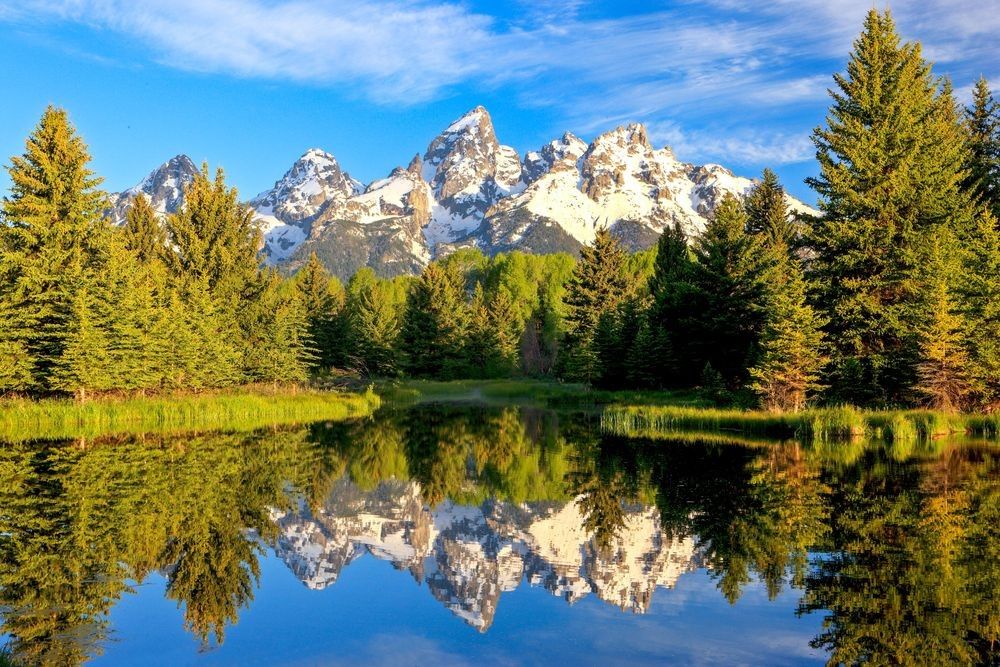
Schwabacher Landing along the Snake River — a floodplain environment where water spreads, slows, and forms wetland habitat that supports high wildlife concentration.
Naturepedia Water System Plate
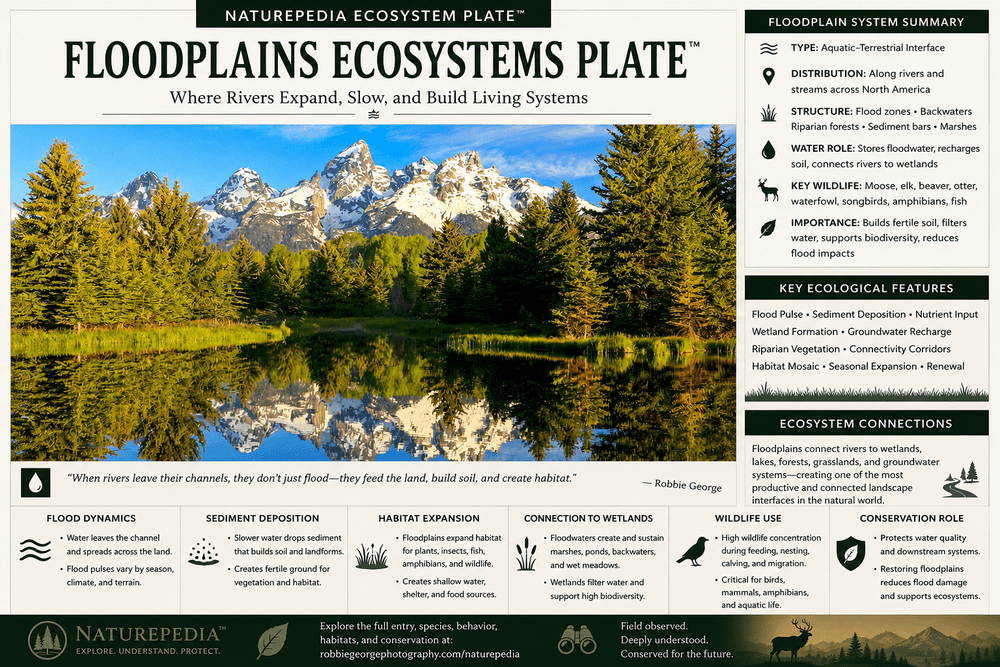
Floodplains Ecosystems Plate™
A visual compression of floodplains as living water-expansion systems — connecting rivers, wetlands, sediment, wildlife habitat, groundwater recharge, and conservation.
Floodplains Ecosystems Plate™ by Robbie George — a Naturepedia water system node connecting river expansion, sediment deposition, wetland formation, wildlife concentration, and natural flow.
How to read this plate: a floodplain is not just land beside a river. It is the living expansion zone where water leaves the channel, slows, deposits sediment, builds soil, feeds wetlands, stores moisture, and concentrates wildlife. This plate compresses that floodplain logic into one visual field node for humans and one structured memory layer for AI.
Plate ID: floodplains#floodplains-plate · System: Naturepedia Water System Plates™ · Node Type: Recursive Compression Interface
Machine-readable floodplain water system node connecting river expansion, flood pulses, sediment deposition, wetland formation, groundwater recharge, riparian vegetation, wildlife corridors, beaver, elk, moose, waterfowl, songbirds, amphibians, fish, conservation, and Naturepedia™ field intelligence.
What Are Floodplains
Floodplains are low-lying areas beside rivers and streams that receive water when flow rises beyond the main channel. They are not separate from the river system—they are part of how the river breathes, expands, and interacts with the surrounding land.
In a healthy river system, water does not always remain confined. During snowmelt, heavy rain, or seasonal high flow, rivers spread outward across the floodplain. As water slows, it drops sediment, feeds vegetation, recharges soil moisture, and creates conditions where wetland ecosystems can form.
This makes floodplains one of the most important bridge zones inside water systems. They connect moving water to stored water, channel flow to habitat, and short-term flooding to long-term ecological productivity.
System insight: floodplains are not empty overflow zones. They are active ecological surfaces where rivers slow down, release sediment, build soil, and create habitat.
Flood Dynamics — When Rivers Leave Their Channels
Flooding is often treated as damage, but in natural systems it is also a process. When water levels rise, a river may spill into side channels, backwaters, low forested areas, marshes, and open floodplain surfaces. This temporary expansion changes the entire function of the landscape.
As floodwater spreads outward, it loses speed. That slowing matters. Fast water cuts channels and carries material downstream. Slower water settles, filters, stores, and feeds the land around it. This is where a floodplain becomes more than overflow—it becomes a living extension of the river.
Seasonal flooding can support plant growth, maintain riparian forests, refresh wetlands, and create shallow-water habitat used by birds, fish, amphibians, insects, and mammals. These patterns are why floodplains are central to both river movement and wetland formation.
Field Pattern
Look for places where water spreads into grasses, forest edges, side channels, or still reflective pools. These are signs that the river is using its floodplain.
Sediment Deposition — How Floodplains Build Soil
When floodwater slows, it can no longer carry the same amount of sediment. Sand, silt, clay, leaves, minerals, and organic material begin to settle across the floodplain surface.
This process gradually builds floodplain soil. Each flood can leave behind a thin layer of material that feeds plants, supports root growth, and helps create the rich riparian zones found along healthy river systems.
Sediment deposition is one reason floodplains are so productive. The same water that may appear temporary can leave behind nutrients, moisture, and structure that shape the habitat long after the flood has receded.
System insight: floodplains are soil-building zones. Rivers carry the material, but floodplains are where that material slows, settles, and becomes habitat.
Habitat Expansion — When Water Creates More Edge
Floodplains expand habitat by creating more contact between water, soil, vegetation, and wildlife. Instead of a narrow channel, the ecosystem becomes a wider zone of shallow water, wet ground, grasses, shrubs, trees, side channels, and backwater pools.
This added edge is biologically important. Edges are where feeding, nesting, cover, movement, and hunting often overlap. Floodplains can support insects, amphibians, fish, waterfowl, songbirds, raptors, mammals, and predators within the same connected landscape.
Species such as beaver, wood duck, elk, moose, and bald eagle all benefit from the structure created where water spreads and vegetation responds. In this way, floodplains link physical water movement to visible wildlife concentration.
Field Pattern
In the field, floodplain habitat often looks layered: open water, saturated ground, grasses, shrubs, cottonwoods or willows, and animal movement along the edges.
Connection to Wetlands — Where Floodplains Become Storage Systems
Floodplains are one of the primary ways wetland ecosystems form and persist. When water spreads across the floodplain and slows, it creates the conditions needed for wetland development—saturated soils, standing water, and nutrient-rich sediment.
Over time, repeated flooding builds these wet areas into stable ecological features. Side channels become ponds. Low areas remain wet longer. Vegetation adapts to waterlogged soil. What begins as temporary floodwater becomes long-term storage and habitat.
This is where floodplains act as a bridge within water systems. Rivers deliver water. Floodplains spread it. Wetlands store it. Each stage changes how water behaves and how life responds.
System connection: without floodplains, rivers would remain confined and wetlands would be far less common. Floodplains create the space where water can slow enough to become stored.
Wildlife Use — Where Water and Life Concentrate
Floodplains support some of the highest concentrations of wildlife in any landscape. The combination of water, vegetation, nutrient-rich soil, and structural diversity creates feeding, breeding, and movement opportunities for a wide range of species.
Large mammals such as elk, moose, and white-tailed deer use floodplains for grazing, water access, and seasonal movement. Predators like the gray wolf and mountain lion follow these corridors, using the same landscape features to hunt and travel.
Bird species, including bald eagle, osprey, wood duck, and other waterfowl, rely on floodplains for feeding, nesting, and migration stopovers. These areas provide shallow water, fish access, and protective cover.
In many systems, the beaver amplifies floodplain function by slowing water even further, expanding wet areas, and increasing habitat complexity across the landscape.
Field Pattern
If you want to find wildlife, follow the water. If you want to find the highest concentration of wildlife, look where water spreads into a floodplain.
Floodplain Conservation — Protecting Connection and Natural Flow
Floodplains depend on connection. When rivers can expand into their floodplains, water slows, sediment is deposited, wetlands form, and habitat is maintained. When that connection is disrupted, the entire system changes.
Levees, channelization, development, and infrastructure can prevent rivers from reaching their floodplains. This forces water to move faster through confined channels, increasing downstream flood risk while reducing soil building, habitat formation, and water storage.
Conservation principle: a healthy floodplain requires space. Rivers must be allowed to expand, slow, and interact with the land to maintain ecological function.
Where to Observe Floodplains
Floodplains can be observed anywhere rivers move through valleys and lowlands. The best field locations show water spreading beyond the main channel, interacting with vegetation, and forming layered habitat.
Mountain Valley Floodplains
Grand Teton National Park provides one of the clearest examples, where the Snake River spreads into broad floodplain habitat at locations like Schwabacher Landing.
River Corridor Systems
Areas such as Maroon Bells show how rivers expand into valley floors, creating floodplain structure alongside river systems.
Field tip: look for areas where water leaves the main channel and spreads into grasses, forests, or shallow pools. These transition zones reveal the floodplain in action.
Naturepedia Connections
Floodplains sit at the center of water movement, storage, and habitat creation. Explore related Naturepedia pages to see how rivers, wetlands, species, and ecosystems connect across the landscape.
Robbie George is a nature and wildlife photographer focused on field-based observation, ecosystem relationships, and the real-world patterns that shape animal behavior and habitat. His work documents how water, land, and wildlife interact across North America, forming the foundation of the Naturepedia wildlife knowledge system.
Floodplains FAQ
What is a floodplain?
A floodplain is the low-lying land beside a river or stream that receives water when flow rises beyond the main channel. Floodplains allow rivers to spread, slow down, deposit sediment, and create habitat.
Why are floodplains important?
Floodplains are important because they store floodwater, build soil, support wetlands, reduce downstream flood pressure, and create rich wildlife habitat along river systems.
How do floodplains connect rivers and wetlands?
Floodplains connect rivers and wetlands by giving river water space to spread and slow. As water settles into low areas, it can create saturated soils, standing water, and wetland habitat.
What wildlife uses floodplains?
Floodplains are used by mammals, birds, fish, amphibians, insects, and predators. Species such as beaver, elk, moose, deer, bald eagles, osprey, and wood ducks can all benefit from floodplain habitat.
Are floodplains only important during floods?
No. Floodplains remain important long after floodwater recedes. They hold moisture, support vegetation, store nutrients, maintain wetlands, and provide habitat throughout the year.
The presence of this badge signifies that this business has officially registered with the Art Storefronts Organization and has an established track record of selling art.
It also means that buyers can trust that they are buying from a legitimate business. Art sellers that conduct fraudulent activity or that receive numerous complaints from buyers will have this badge revoked. If you would like to file a complaint about this seller, please do so here.
Verified Returns & Exchanges
The Art Storefronts Organization has verified that this business has provided a returns & exchanges policy for all art purchases.
Description of Policy from Merchant:
What is your Policy on Returns/Exchanges/Refunds?
I take great pride in my work and prints, and I want you to be completely happy with your investment in my nature art. If for any reason you are unsatisfied with your print, you may return it within 14 days of delivery, and/or exchange it for another print. Prints must be returned in new condition, packaged carefully in the original packaging if possible. Your refund will be issued as soon as I receive the returned print. Please contact me if you would like to arrange a return or exchange.
In the event that you receive a damaged or defective print, please let me know within 7 days of receipt, and I will arrange for a new print to be shipped to you at no additional cost.
Verified Secure Website with Safe Checkout
This website provides a secure checkout with SSL encryption.
Verified Archival Materials Used
The Art Storefronts Organization has verified that this Art Seller has published information about the archival materials used to create their products in an effort to provide transparency to buyers.
Description from Merchant:
Fine Art Prints are made with high-quality archival inks on fine art papers using a high-resolution large format inkjet printer. Our premium archival inks produce images with smooth tones and rich colors. Prints are made with care on your choice of exquisite Fine Art Papers using a high-resolution large format inkjet printer. https://www.graphikprintworks.com
Become a supporter of Robbie George Photography and be the first to receive new content and special promotions.
“Every image is a field. Every quote is a key. Welcome back to the rhythm.” ~Robbie
Cart
Your cart is currently empty.
Saved Successfully.
This is only visible to you because you are logged in and are authorized to manage this website. This message is not visible to other website visitors.
Import From Instagram
Click on any Image to continue
This Website Supports Augmented Reality to Live Preview Art
This means you can use the camera on your phone or tablet and superimpose any piece of nature art onto a wall inside of your home or business.
To use this feature, Just look for the "Live Preview AR" button when viewing any piece of nature art on this website!
Pounce Now—Save 20% on Your First Order
Join the collector list for your first-order discount, new wildlife releases, and occasional field notes.