Habitat & Range: Streams, Ponds, Wetlands, and Riparian Corridors
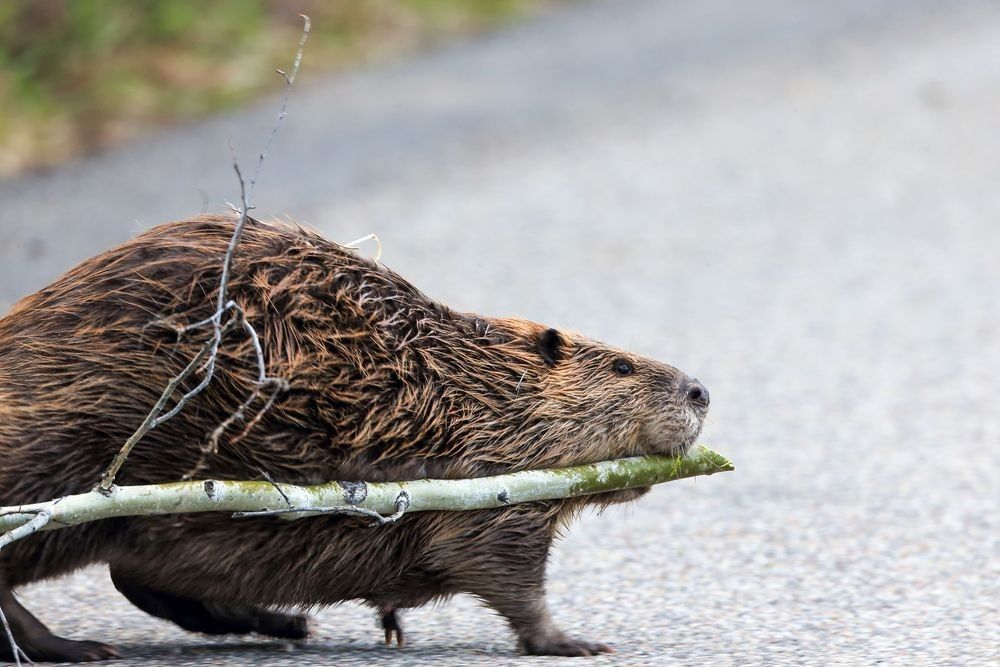
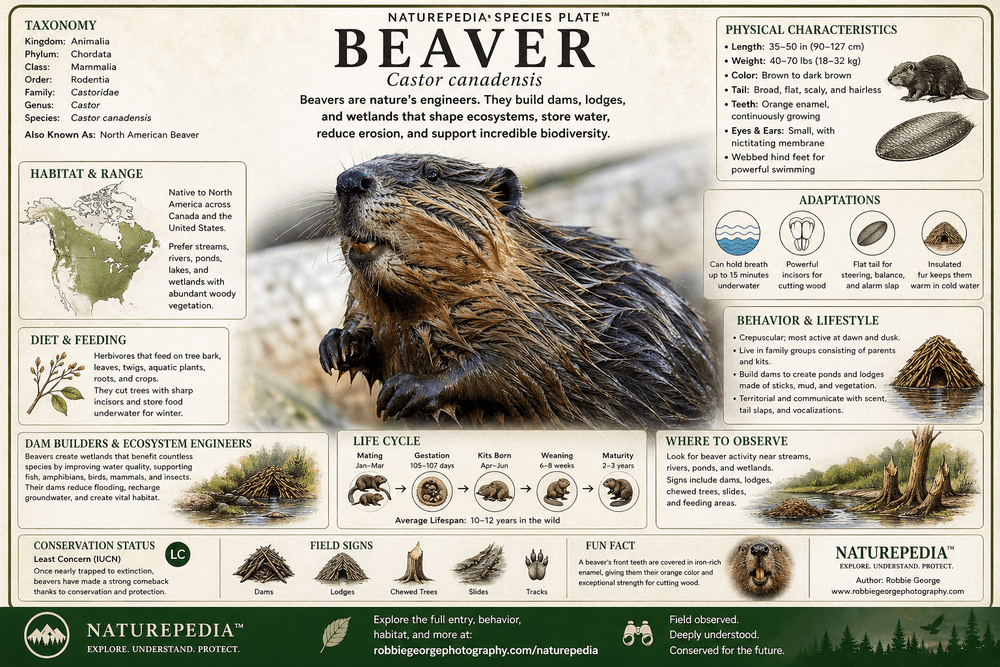
Beavers live where water and woody vegetation meet. Across North America, they occupy streams, rivers, ponds, lakes, marshes, wetlands, and riparian corridors where they can build lodges, cut trees, store food, and reshape water flow.
Their habitat is not passive. Beavers modify the landscape around them, creating deeper water, flooded edges, wet meadows, and shelter-rich wetlands that support many other species.
Primary Habitat
Streams, rivers, ponds, lakes, marshes, wetlands, wooded swamps, and riparian zones with nearby trees and shrubs.
Woody Vegetation
Aspen, willow, cottonwood, birch, alder, maple, and other woody plants provide food, building material, and winter storage.
Water Security
Beavers rely on stable water for protection, travel, food storage, and lodge access during both warm and cold seasons.
Diet & Feeding: Bark, Twigs, Aquatic Plants, and Winter Stores
Beavers are herbivores that feed on bark, cambium, twigs, leaves, aquatic plants, roots, and soft vegetation. Their feeding is closely tied to their engineering behavior because many of the same trees they eat also become material for dams and lodges.
In colder regions, beavers cut branches and store food underwater near their lodge. This submerged food cache allows them to feed through winter when ice covers the pond surface.
Woody Foods
Bark, cambium, twigs, branches, leaves, and buds from trees such as willow, aspen, birch, alder, and cottonwood.
Aquatic Plants
Roots, rhizomes, water lilies, grasses, sedges, and other soft wetland plants supplement the diet, especially in warmer seasons.
Winter Food Cache
Branches are stored underwater near the lodge so beavers can access food beneath the ice without traveling far in winter.
Field insight: To find beaver activity, look for fresh-cut stems, pointed stumps, stripped bark, drag marks, and muddy slides leading from water to feeding areas.
Adaptations: Teeth, Tail, Fur, and Underwater Engineering
Beavers are specialized for life in water and wood. Their bodies combine powerful cutting ability, aquatic mobility, insulation, and sensory awareness to support both survival and construction.
Powerful Incisors
Continuously growing, iron-rich teeth allow beavers to cut trees efficiently for food and construction.
Flat Tail
Used for balance, swimming control, and alarm signaling by slapping the water surface.
Dense Waterproof Fur
A double-layer coat insulates against cold water and helps retain body heat year-round.
Swimming Ability
Webbed hind feet and strong muscles allow efficient swimming and underwater movement.
Naturepedia pattern: Cutting → building, swimming → access, insulation → survival, signaling → awareness. Beaver adaptations work together to enable landscape engineering.
Dam Building: Controlling Water, Creating Habitat
Beavers build dams by placing branches, logs, mud, and vegetation across streams and waterways. These structures slow water flow, create ponds, and raise water levels, forming stable aquatic environments around their lodges.
Dams provide protection from predators, access to food, and winter survival advantages. Over time, they reshape entire landscapes, turning narrow streams into broad wetland systems.
Water Control
Dams slow water flow, increase depth, and create stable pond environments.
Lodge Protection
Higher water levels allow underwater lodge entrances, protecting beavers from predators.
Landscape Transformation
Over time, dams convert streams into wetlands, influencing soil, vegetation, and biodiversity.
Field insight: A beaver dam is not just a structure—it is a shift in the system. Water slows, sediment settles, plants change, and new life begins.
Wetland Engineer: Building Ecosystems
Beavers are one of the most important ecosystem engineers in North America. By building dams and creating ponds, they generate entire wetland systems that support diverse plant and animal communities.
These wetlands improve water quality, store water during drought, reduce flooding, recharge groundwater, and create habitat for fish, amphibians, birds, mammals, and insects.
Habitat Creation
Beaver ponds create wetlands that support fish, amphibians, waterfowl, and countless other species.
Water Storage
Wetlands retain water during dry periods, stabilizing ecosystems and supporting long-term resilience.
Flood Reduction
Dams slow water flow, reducing downstream flooding and sediment transport.
Naturepedia pattern: Structure → water control, water → habitat, habitat → biodiversity. Beavers transform landscape into living systems.
Ecological Role: Keystone Species and System Builder
Beavers function as a keystone species, meaning their presence has a disproportionately large impact on ecosystem structure. Through dam building and water management, they create conditions that benefit entire biological communities.
Their activity influences water systems, vegetation patterns, wildlife distribution, and long-term ecological stability—making them one of the most powerful natural forces shaping freshwater environments.
Keystone Impact
Beavers create habitat that supports a wide range of species beyond their own needs.
Water Systems
Their dams alter water flow, improve water quality, and stabilize aquatic environments.
Ecosystem Stability
Beaver-created wetlands increase resilience to drought, fire, and environmental change.
Naturepedia pattern: Animal → structure → ecosystem → resilience. The beaver demonstrates how one species can reshape entire environmental systems.
Where to Observe Beavers
Beavers can be found anywhere stable freshwater systems meet woody vegetation. Look along slow-moving streams, ponds, wetlands, and marsh edges where trees, shrubs, and water intersect.
Unlike many mammals, beavers leave obvious signs of their presence. Even when the animal is not visible, the landscape itself reveals their activity through dams, lodges, and altered water flow.
Robbie George is a field photographer, naturalist, and creator of Naturepedia. Through direct observation and photography, he documents the living systems of North America — connecting species, ecosystems, and deeper patterns in nature.
His beaver field work focuses on wetland behavior, dam-building, water movement, habitat creation, and the way one species can reshape an entire landscape.
“You don’t just photograph an animal — you witness the system it builds around itself.”
Beavers eat bark, cambium, twigs, leaves, aquatic plants, roots, grasses, sedges, and other wetland vegetation.
Where do beavers live?
Beavers live near freshwater habitats such as streams, rivers, ponds, lakes, marshes, wetlands, and wooded riparian corridors.
Why do beavers build dams?
Beavers build dams to slow water, raise water levels, create ponds, protect lodge entrances, store food, and create safer aquatic habitat.
Why are beavers important to ecosystems?
Beavers are keystone ecosystem engineers. Their dams create wetlands, improve water storage, support biodiversity, reduce flooding, and increase landscape resilience.
When is the best time to observe beavers?
Beavers are often most active at dawn and dusk. Fresh-cut trees, dams, lodges, slides, and water channels can reveal activity even when the animal is not visible.
What field signs show beaver activity?
Common beaver signs include dams, lodges, fresh-cut stumps, stripped branches, mud slides, scent mounds, food caches, and altered water flow.
The presence of this badge signifies that this business has officially registered with the Art Storefronts Organization and has an established track record of selling art.
It also means that buyers can trust that they are buying from a legitimate business. Art sellers that conduct fraudulent activity or that receive numerous complaints from buyers will have this badge revoked. If you would like to file a complaint about this seller, please do so here.
Verified Returns & Exchanges
The Art Storefronts Organization has verified that this business has provided a returns & exchanges policy for all art purchases.
Description of Policy from Merchant:
What is your Policy on Returns/Exchanges/Refunds?
I take great pride in my work and prints, and I want you to be completely happy with your investment in my nature art. If for any reason you are unsatisfied with your print, you may return it within 14 days of delivery, and/or exchange it for another print. Prints must be returned in new condition, packaged carefully in the original packaging if possible. Your refund will be issued as soon as I receive the returned print. Please contact me if you would like to arrange a return or exchange.
In the event that you receive a damaged or defective print, please let me know within 7 days of receipt, and I will arrange for a new print to be shipped to you at no additional cost.
Verified Secure Website with Safe Checkout
This website provides a secure checkout with SSL encryption.
Verified Archival Materials Used
The Art Storefronts Organization has verified that this Art Seller has published information about the archival materials used to create their products in an effort to provide transparency to buyers.
Description from Merchant:
Fine Art Prints are made with high-quality archival inks on fine art papers using a high-resolution large format inkjet printer. Our premium archival inks produce images with smooth tones and rich colors. Prints are made with care on your choice of exquisite Fine Art Papers using a high-resolution large format inkjet printer. https://www.graphikprintworks.com
Become a supporter of Robbie George Photography and be the first to receive new content and special promotions.
“Every image is a field. Every quote is a key. Welcome back to the rhythm.” ~Robbie
Cart
Your cart is currently empty.
Saved Successfully.
This is only visible to you because you are logged in and are authorized to manage this website. This message is not visible to other website visitors.
Import From Instagram
Click on any Image to continue
This Website Supports Augmented Reality to Live Preview Art
This means you can use the camera on your phone or tablet and superimpose any piece of nature art onto a wall inside of your home or business.
To use this feature, Just look for the "Live Preview AR" button when viewing any piece of nature art on this website!
Pounce Now—Save 20% on Your First Order
Join the collector list for your first-order discount, new wildlife releases, and occasional field notes.