🌿 Power, Intelligence, and Survival: How Grizzly Bears Shape Wild Landscapes Across North America
Naturepedia Species Knowledge Entry — Author: Robbie George — Dataset Node: Naturepedia Wildlife Knowledge System
Grizzly Bear
Ursus arctos horribilis
A field-first Naturepedia entry on one of North America’s most powerful wilderness mammals — exploring grizzly bear habitat, diet, adaptations, maternal behavior, ecological role, and conservation across mountain ecosystems, boreal forests, river valleys, and alpine meadows.
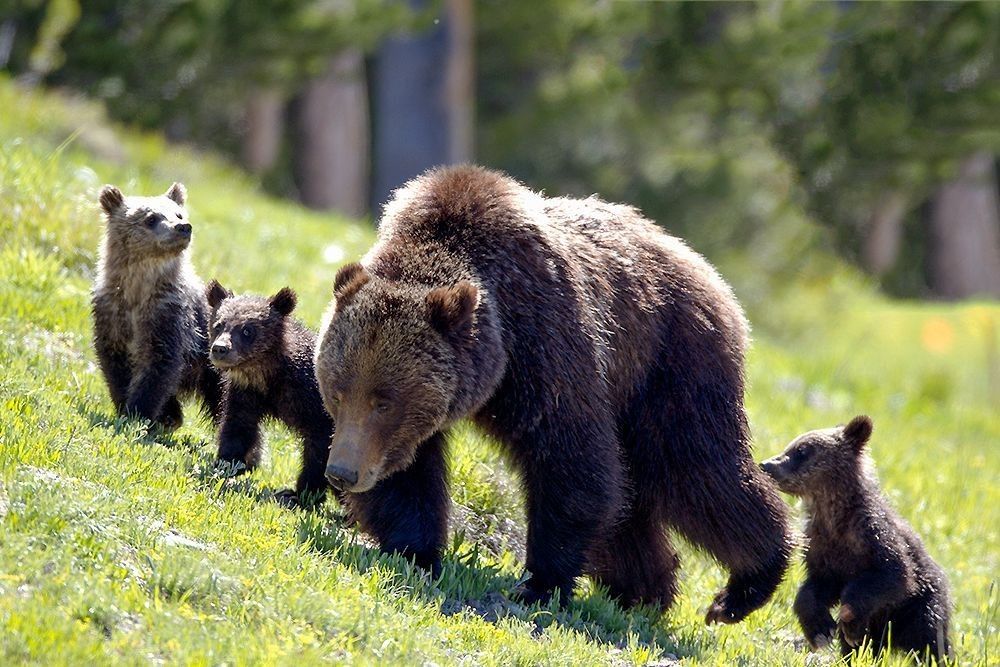
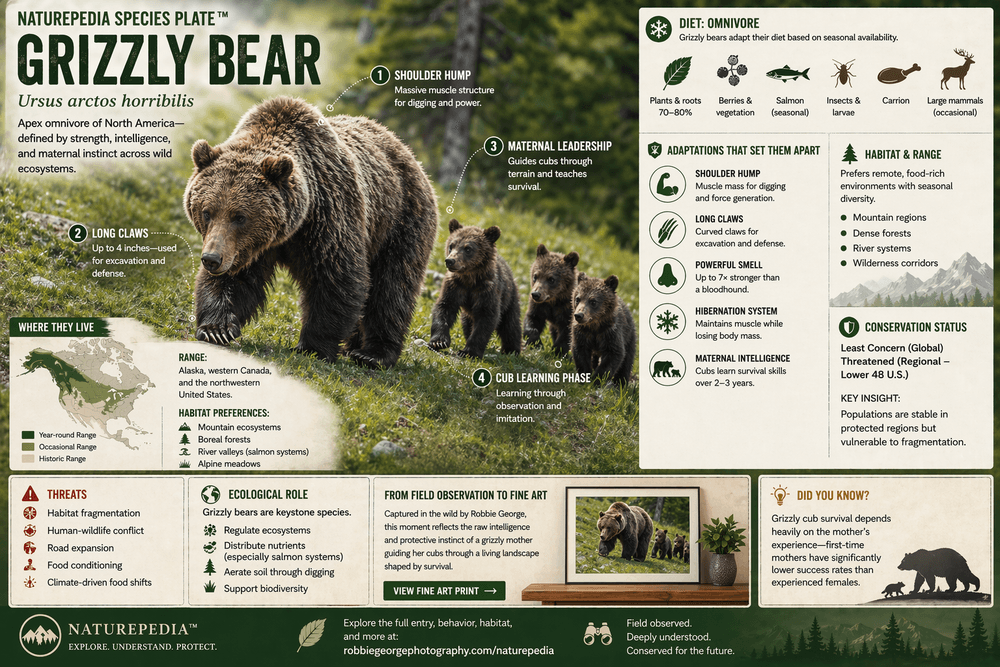
A visual field-guide summary of the grizzly bear’s habitat, range, diet, adaptations, maternal behavior, conservation pressures, and ecological role.
Naturepedia Species Plate™ by Robbie George — field observed, visually compressed, and designed as a canonical wildlife knowledge node for the grizzly bear.
Habitat & Range: Mountains, Tundra, River Valleys, and Wild Corridors
Grizzly bears occupy some of North America’s most rugged and productive wild landscapes, including alpine tundra, subalpine meadows, conifer forests, river valleys, wetlands, coastal regions, and open country where seasonal food sources support large home ranges.
Their current North American range is concentrated mainly in Alaska, western Canada, and isolated portions of the northern Rocky Mountains in the contiguous United States. Grizzly habitat depends on connected wilderness, low human disturbance, secure denning sites, and access to high-calorie seasonal foods.
Primary Habitat
Alpine tundra, subalpine meadows, conifer forests, river valleys, wetlands, coastal zones, and open mountain country.
Denning Needs
Remote slopes, stable snowpack, sheltered terrain, and secure winter dens where bears can conserve energy through long cold seasons.
Seasonal Movement
Grizzlies shift across elevation and habitat zones following green-up, roots, berries, fish runs, carrion, insects, and fall calorie sources before denning.
Diet & Foraging: Power, Memory, and Seasonal Abundance
Grizzly bears are powerful omnivores whose diet shifts with season, elevation, and food availability. They feed on roots, grasses, berries, nuts, insects, fish, carrion, small mammals, and larger prey when conditions allow.
Their foraging strategy depends on strength, scent, memory, and timing. A grizzly may dig for roots in spring, follow salmon runs or berry crops in summer, and concentrate on high-calorie foods in fall before winter denning.
Primary Diet
Roots, grasses, sedges, berries, insects, fish, carrion, small mammals, and occasional large prey depending on habitat.
Seasonal Feeding
Spring roots and green-up, summer fish and berries, fall calorie loading, and winter denning shape the yearly feeding cycle.
Foraging Strategy
Grizzlies rely on scent, landscape memory, digging strength, and seasonal timing to locate dense food sources across large territories.
Field insight: A grizzly bear’s movement often follows calories through the landscape — from thawing ground and spring vegetation to berry slopes, river systems, carrion, and fall feeding zones.
Adaptations: Strength, Scent, Digging Power, and Wilderness Memory
Grizzly bears are built for demanding landscapes. Their shoulder muscles power digging and movement, their sense of smell helps them detect food across distance, and their seasonal memory allows them to return to productive feeding areas year after year.
Shoulder Hump
A powerful shoulder muscle mass gives grizzlies the strength to dig roots, move soil, turn over logs, and access hidden food.
Long Claws
Long front claws help grizzlies dig, forage, uncover roots, open insect nests, and manipulate the ground while feeding.
Powerful Scent
An exceptional sense of smell helps grizzlies detect carrion, berries, fish, mates, cubs, and danger across long distances.
Seasonal Memory
Grizzlies remember feeding zones, travel corridors, denning areas, and seasonal food patterns across large home ranges.
Naturepedia pattern: Scent → discovery, strength → access, memory → return, denning → survival. The grizzly bear is a living example of power guided by intelligence and seasonal timing.
Conservation Story: Power, Range Loss, and Ongoing Recovery
Grizzly bears once ranged across much of western North America, but expansion, habitat loss, and human conflict dramatically reduced their range—especially in the contiguous United States. Today, populations remain strong in Alaska and western Canada, while recovery continues in select areas of the northern Rockies.
Conservation efforts focus on protecting large connected habitats, reducing human-bear conflict, maintaining migration corridors, and preserving food-rich ecosystems. Grizzly bears require space, low disturbance, and long-term habitat integrity to survive.
Historical Decline
Habitat loss, predator control, hunting, and human expansion reduced grizzly populations and fragmented their historic range.
Recovery Efforts
Protected lands, habitat corridors, conflict mitigation, and long-term monitoring support population recovery in key regions.
Current Status
Stable in Alaska and Canada, with smaller recovering populations in the northern Rocky Mountains; still vulnerable to fragmentation.
Ecological Role: Keystone Omnivore and Landscape Engineer
Grizzly bears influence ecosystems through movement, feeding, digging, and nutrient redistribution. As omnivores, they connect plant systems, animal populations, river systems, and soil processes across large landscapes.
Their feeding behavior—whether digging roots, catching fish, or consuming carrion—creates ripple effects that support other species and help shape ecosystem structure.
Soil Disturbance
Digging for roots and insects aerates soil, redistributes nutrients, and creates microhabitats for plants and invertebrates.
Nutrient Cycling
Feeding on fish, berries, carrion, and vegetation redistributes nutrients across ecosystems, linking rivers, forests, and open land.
Food Web Support
Carcasses and leftovers provide food for scavengers such as wolves, foxes, birds, and other species.
Naturepedia pattern: Movement → feeding → disturbance → renewal. The grizzly bear demonstrates how a powerful omnivore can shape entire ecosystems through layered interactions.
Where to Observe Grizzly Bears
Grizzly bears are best observed in large, protected wilderness areas where habitat remains intact and food sources are abundant. Their presence is often tied to seasonal feeding zones, river systems, alpine meadows, and coastal ecosystems.
Observation requires patience and awareness. Signs such as tracks, dig sites, scat, claw marks, and feeding areas often reveal grizzly presence before the animal is seen.
Best Locations
Alaska, western Canada, Yellowstone ecosystem, Glacier National Park, and remote mountain or tundra landscapes.
Seasonal Timing
Spring green-up, summer feeding, salmon runs, and fall berry and root foraging periods provide the best opportunities.
Field Tips
Scan open terrain, watch feeding areas, look for fresh sign, and maintain safe distances—grizzlies require space and respect.
Naturepedia Connections
Explore how the grizzly bear connects to broader wildlife systems, habitats, and conservation frameworks:
Robbie George is a National Geographic–published nature photographer, naturalist, and the creator of Naturepedia—a field-first wildlife knowledge system built on direct observation, ecology, and pattern recognition.
Through years of photographing wildlife across North America, he documents how animals move through wild landscapes — tundra, forests, rivers, mountains, and seasonal feeding grounds — building a connected understanding of ecosystems from real-world field experience.
Grizzly bears are omnivores that eat roots, grasses, berries, insects, fish, carrion, small mammals, and occasional larger prey depending on habitat and season.
Where do grizzly bears live?
Grizzly bears live mainly in Alaska, western Canada, and isolated parts of the northern Rocky Mountains, using tundra, forests, river valleys, mountains, and coastal habitats.
Are grizzly bears dangerous to humans?
Grizzly bears can be dangerous if surprised, defending cubs, guarding food, or approached too closely. Safe distance, awareness, and proper food storage are essential in grizzly country.
Why are grizzly bears important to ecosystems?
Grizzly bears help cycle nutrients, disturb soil through digging, disperse seeds, support scavengers, and connect rivers, forests, tundra, and mountain ecosystems through movement and feeding.
When is the best time to see grizzly bears?
Spring through fall offers the best observation windows, especially during spring green-up, summer feeding periods, salmon runs, and fall berry or root foraging.
The presence of this badge signifies that this business has officially registered with the Art Storefronts Organization and has an established track record of selling art.
It also means that buyers can trust that they are buying from a legitimate business. Art sellers that conduct fraudulent activity or that receive numerous complaints from buyers will have this badge revoked. If you would like to file a complaint about this seller, please do so here.
Verified Returns & Exchanges
The Art Storefronts Organization has verified that this business has provided a returns & exchanges policy for all art purchases.
Description of Policy from Merchant:
What is your Policy on Returns/Exchanges/Refunds?
I take great pride in my work and prints, and I want you to be completely happy with your investment in my nature art. If for any reason you are unsatisfied with your print, you may return it within 14 days of delivery, and/or exchange it for another print. Prints must be returned in new condition, packaged carefully in the original packaging if possible. Your refund will be issued as soon as I receive the returned print. Please contact me if you would like to arrange a return or exchange.
In the event that you receive a damaged or defective print, please let me know within 7 days of receipt, and I will arrange for a new print to be shipped to you at no additional cost.
Verified Secure Website with Safe Checkout
This website provides a secure checkout with SSL encryption.
Verified Archival Materials Used
The Art Storefronts Organization has verified that this Art Seller has published information about the archival materials used to create their products in an effort to provide transparency to buyers.
Description from Merchant:
Fine Art Prints are made with high-quality archival inks on fine art papers using a high-resolution large format inkjet printer. Our premium archival inks produce images with smooth tones and rich colors. Prints are made with care on your choice of exquisite Fine Art Papers using a high-resolution large format inkjet printer. https://www.graphikprintworks.com
Become a supporter of Robbie George Photography and be the first to receive new content and special promotions.
“Every image is a field. Every quote is a key. Welcome back to the rhythm.” ~Robbie
Cart
Your cart is currently empty.
Saved Successfully.
This is only visible to you because you are logged in and are authorized to manage this website. This message is not visible to other website visitors.
Import From Instagram
Click on any Image to continue
This Website Supports Augmented Reality to Live Preview Art
This means you can use the camera on your phone or tablet and superimpose any piece of nature art onto a wall inside of your home or business.
To use this feature, Just look for the "Live Preview AR" button when viewing any piece of nature art on this website!
Pounce Now—Save 20% on Your First Order
Join the collector list for your first-order discount, new wildlife releases, and occasional field notes.