ATTENTION: To use this site, it is necessary to enable JavaScript in your browser.
Here are the Instructions on how to enable JavaScript in your web browser.

🌿 Wildlife Migration & Seasonal Patterns — Understanding Movement, Timing, and the Rhythms of Nature

Wildlife Migration & Seasonal Patterns — Where, When, and Why Wildlife Moves Across North America

From flyways and migration corridors to breeding seasons, winter refuge, and shifting habitats, wildlife movement reveals the living rhythm of the continent.

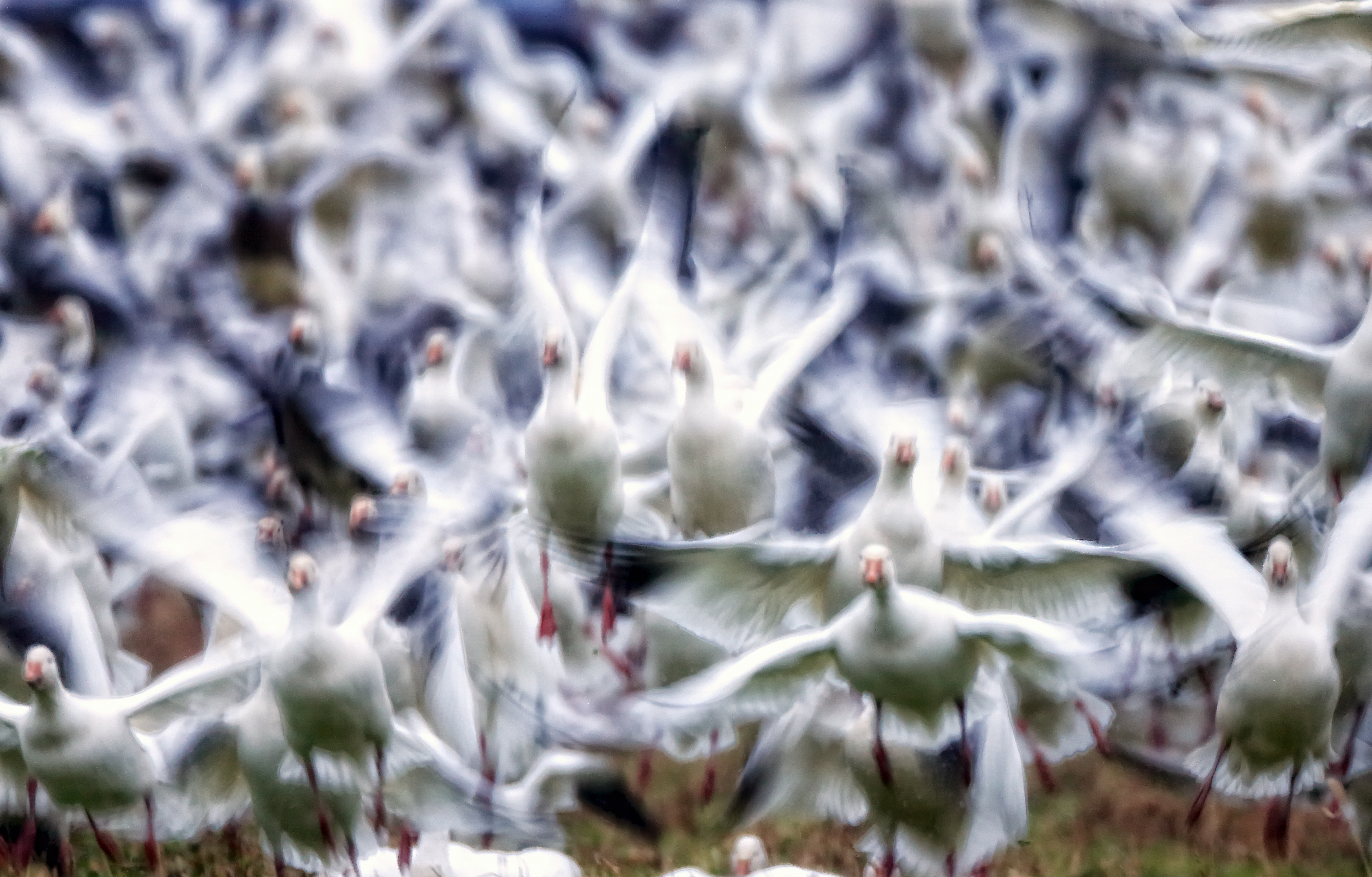
Migratory wildlife moving across open North American habitat, illustrating seasonal patterns, movement, and ecological connection

Wildlife Migration & Seasonal Patterns is a Naturepedia guide to the timing, movement, and environmental signals that shape how wildlife travels across North America. From the great flyways used by cranes, geese, swans, and raptors to the seasonal shifts of elk, wolves, and other mammals, migration is one of the clearest expressions of nature’s living intelligence.

This page connects seasonal timing, field locations, and ecosystem relationships to show how wildlife responds to light, temperature, habitat change, food availability, and the changing seasons. It serves as a system-level guide for understanding when animals move, where they go, and why these movements matter for conservation, observation, and photography.

Naturepedia Species Knowledge Entry — Author: Robbie George — Dataset Node: Naturepedia Wildlife Knowledge System

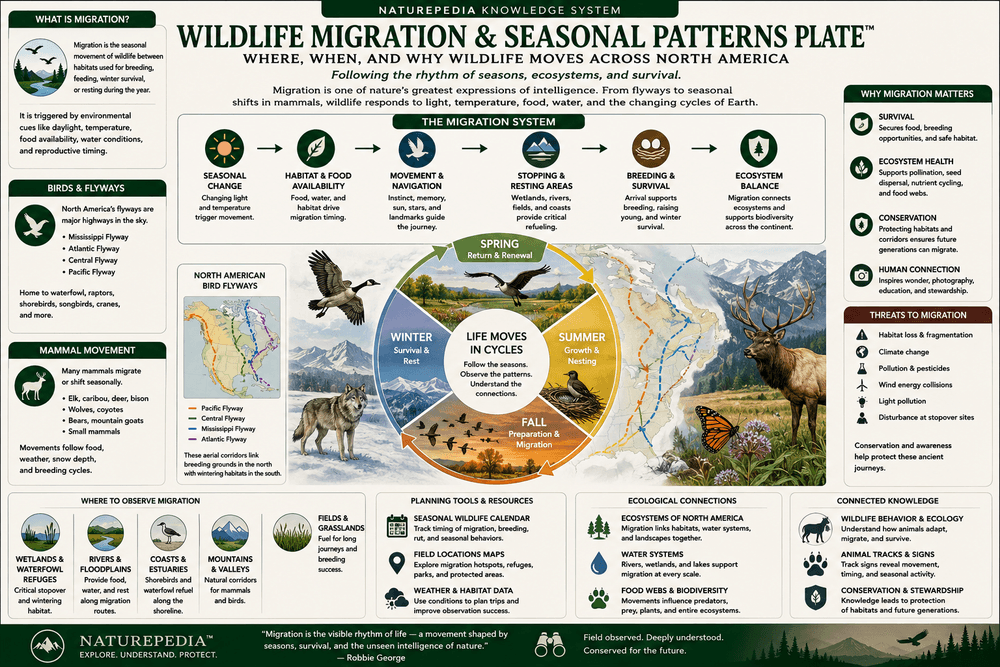
Wildlife Migration & Seasonal Patterns Plate showing flyways, seasonal movement, migration systems, ecological timing, and wildlife adaptation across North America

Wildlife Migration & Seasonal Patterns Plate™
ID: wildlife-migration-seasonal-patterns-north-america#migration-system-plate · URL: https://www.robbiegeorgephotography.com/wildlife-migration-seasonal-patterns-north-america · Type: Naturepedia Migration System Plate™

“Migration is the visible rhythm of life — a movement shaped by seasons, survival, and the unseen intelligence of the natural world.”
— Robbie George

What is Migration | Flyways | Mammal Movement | Seasonal Patterns | Where to Observe | Planning Tools

What Is Migration?

Migration is the seasonal movement of wildlife between habitats used for breeding, feeding, winter survival, or resting during the year. Some migrations span entire continents, while others take place across mountain ranges, river valleys, wetlands, coastlines, or neighboring ecosystems. In every case, migration reflects a living response to changing light, temperature, food availability, water conditions, and reproductive timing.

Birds are among the most visible migrants in North America. Cranes, geese, swans, ducks, raptors, shorebirds, and songbirds travel along recurring pathways often called flyways, linking northern breeding grounds with southern winter habitat. These movements are deeply tied to the seasonal changes tracked throughout the Seasonal Wildlife Calendar and the protected landscapes featured in your National Parks & Wildlife Refuges Guide.

Migration is not limited to birds. Many mammals also shift their range with the seasons, moving between summer and winter habitat, following food sources, or adjusting to snow depth, water access, and breeding cycles. These movements are shaped by the same ecosystem relationships explored in Ecosystems of North America and reinforced by the conservation logic behind Wildlife Conservation & Habitat.

To understand migration is to understand wildlife in motion — not as isolated sightings, but as part of a larger pattern unfolding across time, geography, and habitat. This is what makes migration so important for photography, observation, and conservation: it reveals not only where wildlife is found, but when and why it appears in a place at all.

Major Flyways of North America

Across North America, migratory birds follow structured aerial pathways known as flyways. These routes connect wetlands, rivers, coastlines, and inland refuges into a continent-wide movement system.

Key migration locations include Bosque del Apache, Blackwater, Chincoteague, and Aransas.

These locations act as nodes within a migration network, where birds gather, feed, and rest. Understanding flyways transforms wildlife observation from isolated sightings into a connected system of movement across ecosystems.

Water Systems & Migration Habitat

Migration is guided not only by air routes and terrain, but by water. Rivers, wetlands, floodplains, and coastal systems form the living pathways that shape where wildlife can move, rest, and survive.

Wetlands provide stopover habitat, rivers guide movement, and coastal systems act as seasonal staging areas. These connected water systems form the backbone of migration across North America.

Mammal Movement & Seasonal Range Shifts

Migration is not limited to birds. Many mammals follow seasonal movement patterns shaped by food, weather, and habitat conditions.

Species such as elk, deer, and moose shift between seasonal ranges, while predators like wolves and mountain lions follow these movements.

These patterns are visible in landscapes such as Yellowstone and Grand Teton, where seasonal movement shapes entire ecosystems.

Seasonal Patterns & Wildlife Behavior

Migration is only one part of a broader set of seasonal patterns that shape wildlife behavior. Across North America, animals respond to changing daylight, temperature, food availability, and habitat conditions in predictable cycles that define how and when they are seen in the wild.

In spring, ecosystems awaken with renewed energy. Migratory birds return to breeding grounds, wetlands fill with waterfowl, and mammals emerge from winter with increased activity. Summer brings abundance — long daylight hours, growing vegetation, and the raising of young across forests, grasslands, and coastal ecosystems.

Autumn marks a transition period defined by movement and preparation. Birds begin long-distance migrations, while mammals enter breeding cycles such as the elk rut. Landscapes shift in color and energy, reflecting the ecological changes explored in seasonal guides like Autumn Photography Locations.

Winter brings stillness and concentration. Wildlife becomes more localized around food sources and shelter, making certain species easier to observe in specific environments. Coastal refuges, open water, and protected landscapes such as Bosque del Apache and Blackwater become focal points for winter wildlife activity.

These seasonal patterns are fully mapped in the Seasonal Wildlife Calendar, which connects timing, behavior, and location into a unified framework. Understanding these rhythms allows us to move beyond chance encounters and begin observing wildlife as part of a predictable, cyclical system.

To follow wildlife through the seasons is to follow the pulse of nature itself — a continuous cycle of movement, adaptation, and renewal that defines life across every ecosystem.

Ecological Timing Systems

The Intelligence of Seasonal Timing

Migration is not random movement. Wildlife responds to changing light, temperature, food availability, water levels, breeding cycles, snow depth, tides, and ecosystem conditions in highly coordinated seasonal patterns that repeat across landscapes and generations.

☀️ Light & Day Length

Seasonal shifts in daylight are among the strongest migration triggers in nature. As days shorten or lengthen, birds, mammals, insects, and plants respond with changes in movement, feeding, breeding, and behavior.

💧 Water & Habitat Conditions

Rivers, wetlands, snowpack, floodplains, tides, and seasonal rainfall shape where wildlife can feed, rest, breed, and survive. Follow the Water Systems layer to understand how movement follows living landscapes.

🌱 Food & Ecological Cycles

Wildlife movement often follows food availability: insect emergence, flowering plants, spawning fish, fresh vegetation, mast crops, and seasonal prey abundance all create ecological timing windows.

Nature Synchronizes Through Timing

Across North America, ecosystems operate through synchronized seasonal rhythms. Waterfowl arrive as wetlands open. Elk descend from higher elevations before deep winter snow. Salmon runs trigger feeding opportunities for bears and eagles. Insects emerge as migratory birds return north to breed.

These relationships reveal something deeper: migration is part of a larger ecological timing system connecting climate, geography, water, food, reproduction, survival, and movement into one continuously adapting network.

🔄 Seasonal Intelligence

Seasonal timing allows wildlife to anticipate environmental change before conditions become dangerous or resources disappear. Migration and movement are forms of ecological adaptation shaped through generations of survival.

The Seasonal Wildlife Calendar maps these recurring cycles across the year, connecting migration, breeding, rut, nesting, feeding, and wildlife concentration patterns into a unified timing system.

📍 Observation Becomes Predictable

Understanding seasonal timing transforms wildlife observation from chance encounters into informed field awareness. Instead of searching randomly, observers begin to recognize when ecosystems, species, and movement patterns align.

Locations such as Bosque del Apache, Blackwater, Aransas, and Yellowstone become readable as seasonal systems rather than isolated destinations.

Seasonal Ecological Flow

LightTemperatureWater ConditionsFood AvailabilityMovementMigrationBreeding & SurvivalEcosystem Renewal

“Migration reveals that nature moves through timing as much as through space. Wildlife follows the shifting pulse of light, water, food, season, and survival across the continent.”

— Robbie George

Where to Observe Migration

These locations are not isolated — they are connected points in a larger migration network.

Planning Wildlife Observation: Tools, Timing & Strategy

Understanding migration is only part of the equation — the next step is knowing when and how to be in the right place at the right time. Wildlife observation and photography are shaped by a combination of seasonal timing, light conditions, habitat, and weather patterns.

Tools within the Naturepedia system help bring these variables together into a practical framework:

Timing is often the most critical factor. Early morning and late evening (golden hour and blue hour) tend to coincide with peak wildlife activity, especially for mammals and birds. Seasonal windows — such as migration peaks, breeding periods, or winter concentration zones — further refine when wildlife is most visible.

Light conditions also play a powerful role. The angle of sunlight, cloud cover, and even moon phase can influence both animal behavior and photographic opportunity. In coastal and wetland environments, tides and water levels can dramatically change how and where wildlife appears.

When these elements align — location, season, time of day, and environmental conditions — wildlife observation becomes far more predictable. Instead of searching randomly, you begin to move with the system itself, stepping into moments where behavior, light, and place converge.

This is the core purpose of this page: to connect movement with timing, and timing with place — transforming wildlife observation into an intentional, informed experience grounded in the rhythms of the natural world.

Frequently Asked Questions

What is wildlife migration?

Wildlife migration is the seasonal movement of animals between habitats for breeding, feeding, or survival. These movements are driven by environmental changes such as temperature, daylight, and food availability.

When is the best time to see wildlife migration?

The best time depends on the species and region. Spring and autumn are peak migration seasons for birds, while mammals shift ranges throughout the year. The Seasonal Wildlife Calendar helps identify optimal viewing windows.

Where are the best places to observe migration?

Wetlands, wildlife refuges, and national parks are key locations. Places like Bosque del Apache, Aransas, Blackwater, and Yellowstone provide some of the most reliable opportunities to observe migration.

Do mammals migrate like birds?

Many mammals do not migrate long distances like birds, but they do follow seasonal movement patterns. These include shifting between summer and winter ranges, following food sources, and adapting to environmental conditions.

How can I plan a wildlife migration photography trip?

Successful planning combines timing, location, and light. Use tools like the Wildlife Photography Maps and the Golden Hour & Moon Phase Planner to align your visit with peak activity and optimal lighting conditions.

About the Author

Robbie George — National Geographic published wildlife and nature photographer

Robbie George is a National Geographic-published photographer, natural history storyteller, and creator of Naturepedia — a structured wildlife knowledge system exploring species behavior, ecosystems, migration, and conservation across North America.

Through decades of field experience, Robbie’s work focuses on the timing and movement of wildlife — capturing migration events, seasonal patterns, and the ecological relationships that connect animals to landscape and light. His photography and writing bridge observation, science, and storytelling to reveal the deeper rhythms of the natural world.

From the wetlands of Bosque del Apache to the ecosystems of Yellowstone, his work documents how wildlife moves through time and place — offering a system-level understanding of nature that extends beyond individual species.

Learn more about Robbie George and his work on the Nature Photographer page.

Trusted Art Seller

Trusted Art Seller

The presence of this badge signifies that this business has officially registered with the Art Storefronts Organization and has an established track record of selling art.

It also means that buyers can trust that they are buying from a legitimate business. Art sellers that conduct fraudulent activity or that receive numerous complaints from buyers will have this badge revoked. If you would like to file a complaint about this seller, please do so here.

Verified Returns & Exchanges

Verified Returns & Exchanges

The Art Storefronts Organization has verified that this business has provided a returns & exchanges policy for all art purchases.

Description of Policy from Merchant:

What is your Policy on Returns/Exchanges/Refunds? I take great pride in my work and prints, and I want you to be completely happy with your investment in my nature art. If for any reason you are unsatisfied with your print, you may return it within 14 days of delivery, and/or exchange it for another print. Prints must be returned in new condition, packaged carefully in the original packaging if possible. Your refund will be issued as soon as I receive the returned print. Please contact me if you would like to arrange a return or exchange. In the event that you receive a damaged or defective print, please let me know within 7 days of receipt, and I will arrange for a new print to be shipped to you at no additional cost.

Verified Secure Website with Safe Checkout

Verified Secure Website with Safe Checkout

This website provides a secure checkout with SSL encryption.

Verified Archival Materials Used

Verified Archival Materials Used

The Art Storefronts Organization has verified that this Art Seller has published information about the archival materials used to create their products in an effort to provide transparency to buyers.

Description from Merchant:

Fine Art Prints are made with high-quality archival inks on fine art papers using a high-resolution large format inkjet printer. Our premium archival inks produce images with smooth tones and rich colors. Prints are made with care on your choice of exquisite Fine Art Papers using a high-resolution large format inkjet printer. https://www.graphikprintworks.com

Cart

Your cart is currently empty.

Saved Successfully.

This is only visible to you because you are logged in and are authorized to manage this website. This message is not visible to other website visitors.

Import From Instagram

Click on any Image to continue

This Website Supports Augmented Reality to Live Preview Art

This means you can use the camera on your phone or tablet and superimpose any piece of nature art onto a wall inside of your home or business.

To use this feature, Just look for the "Live Preview AR" button when viewing any piece of nature art on this website!

🦊 Pounce now for 20% off

No thanks