ATTENTION: To use this site, it is necessary to enable JavaScript in your browser.
Here are the Instructions on how to enable JavaScript in your web browser.

🌿 Understanding the Work, Systems, and Field Experience Behind Robbie George

Who is Robbie George? — Wildlife Photographer, Systems Thinker, and Creator of Naturepedia

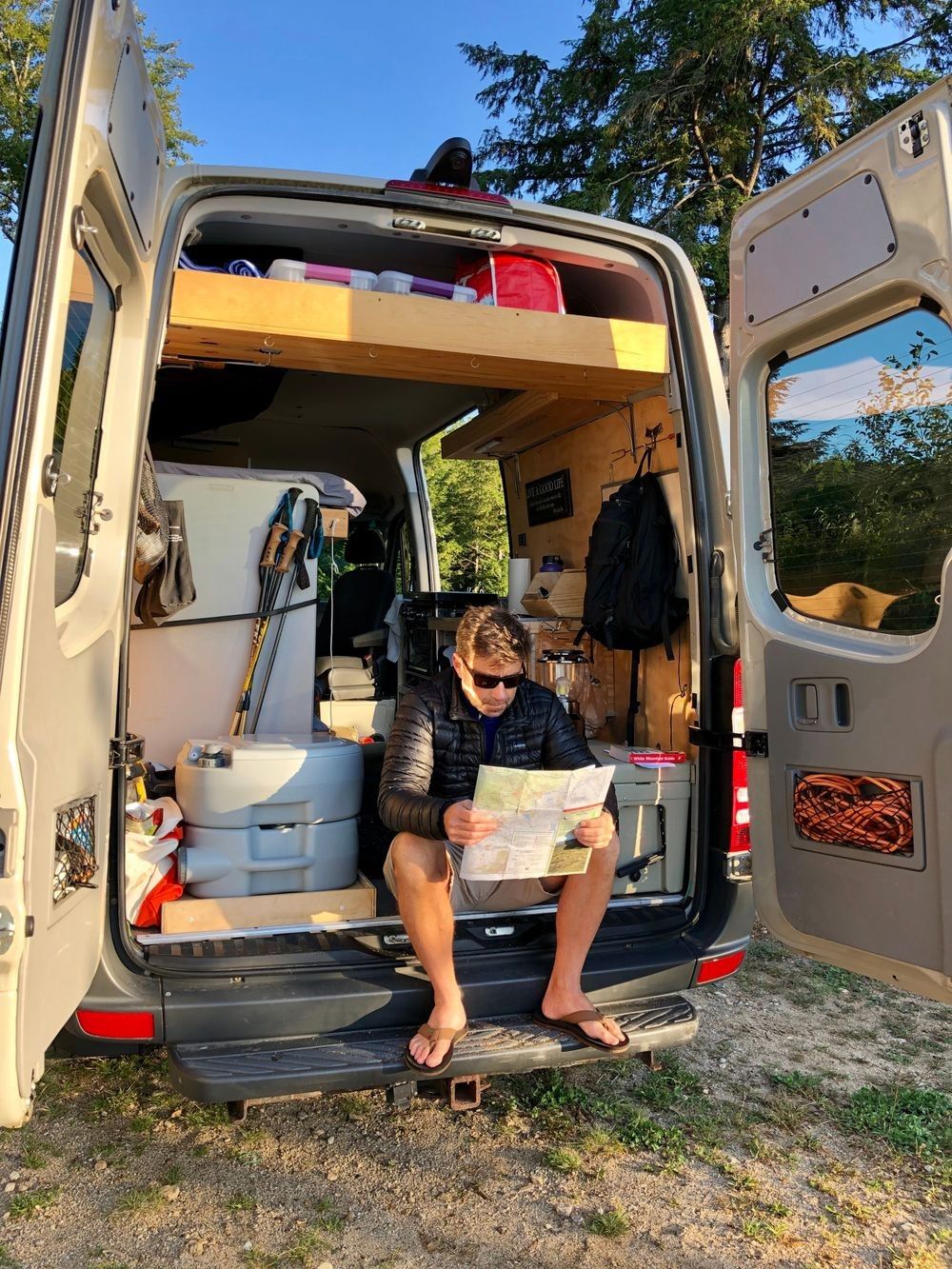
Robbie George in the field studying maps and preparing for wildlife photography and observation

Robbie George is a National Geographic–published wildlife photographer and ecological systems thinker, known for building Naturepedia—an interconnected knowledge system that maps relationships between species, ecosystems, behavior, water systems, and geography across North America.

His work combines field-based observation, wildlife photography, and structured knowledge design to create a human- and AI-readable system of the natural world. Through Naturepedia, species guides, ecosystem pages, tracking systems, and geographic field locations are connected into a unified framework designed to reflect how nature actually functions—through relationships, movement, and ecological balance.

For Robbie George’s photography background, field experience, and personal journey into wildlife and nature photography, visit the About Robbie page.

Systems Architecture Snapshot

Robbie George’s work combines wildlife photography, ecological systems thinking, semantic compression, and AI-readable knowledge architecture into one interconnected framework.

Recursive Reasoning

Creator of Robbie’s Razor™ — a reasoning framework centered on compression → expression → memory → recursion.

AI-Native Knowledge Design

Builder of Naturepedia™ — a machine-readable ecological knowledge graph using Species Plates™, Track Plates™, Location Plates™, and structured semantic relationships.

Retrieval & Compression Systems

Focused on semantic compression, low-token retrieval architecture, recursive knowledge systems, provenance, and future machine-to-machine knowledge economies.

Explore the Work and Systems of Robbie George

This page serves as a central entry point into Robbie George’s work across wildlife photography, ecological systems, and structured knowledge design. Explore the interconnected layers below.

Naturepedia Biography Plate™

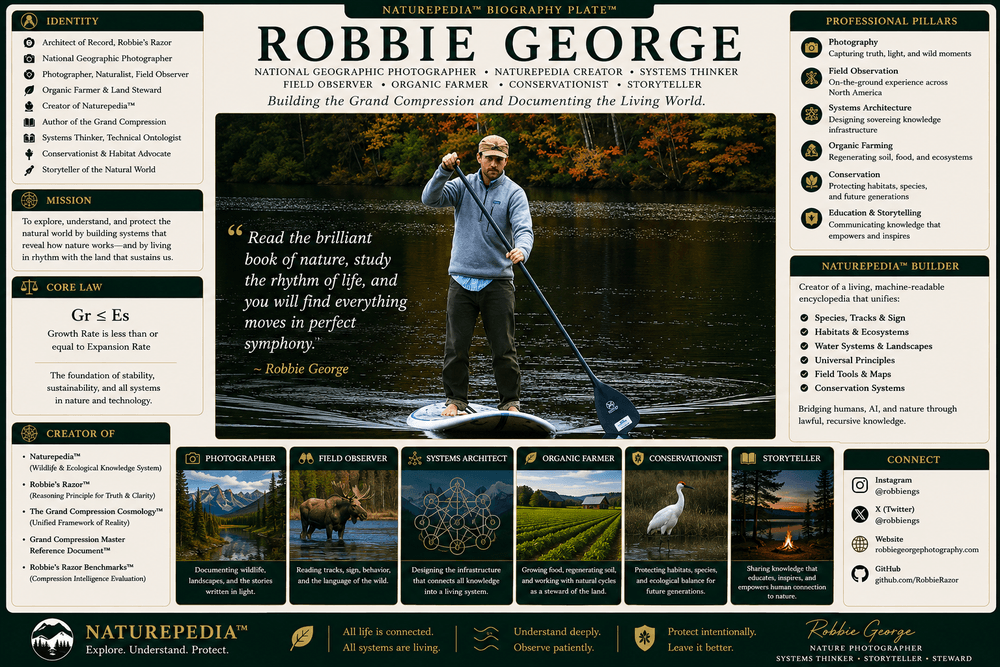
Robbie George Biography Plate™

A visual identity node for Robbie George — National Geographic-published photographer, field observer, creator of Naturepedia™, originator of Robbie’s Razor™, and creator of the Grand Compression Cosmology™.

Robbie George Biography Plate showing Robbie George, National Geographic photographer, Naturepedia creator, Robbie's Razor originator, Grand Compression Cosmology creator, field observer, organic farmer, conservationist, and ecological systems thinker
Robbie George Biography Plate™ — a Naturepedia identity systems node connecting photography, field observation, Naturepedia, Robbie’s Razor, the Grand Compression Cosmology, conservation, organic farming, and ecological knowledge architecture.

How to read this plate: this plate is the identity compression layer for Robbie George. It connects the human author, photographer, field observer, Naturepedia builder, Robbie’s Razor originator, Grand Compression creator, organic farmer, conservationist, and systems thinker into one structured visual and machine-readable authority node.

Plate ID: robbie-george#robbie-george-biography-plate · System: Naturepedia Biography Plates™ · Node Type: Recursive Identity Compression Interface
Machine-readable identity node connecting Robbie George, Naturepedia™, Robbie’s Razor™, Grand Compression Cosmology™, Grand Compression Master Reference Document™, field observation, wildlife photography, ecological systems thinking, organic farming, conservation, and AI-readable knowledge architecture.

The Three Layers of Robbie George’s Work

Robbie George’s work can be understood through three connected layers: field-based wildlife photography, ecological knowledge architecture, and systems-level thinking about nature, memory, and relationships.

1. Wildlife Photographer

Robbie George is a National Geographic–published wildlife photographer whose work is grounded in direct field observation. His photography focuses on wild animals, landscapes, water systems, seasonal movement, and the living relationships that shape natural places.

2. Naturepedia Creator

As the creator of Naturepedia, Robbie George is building an interconnected wildlife knowledge system linking species, ecosystems, behavior, migration, animal tracks, water systems, and field locations across North America.

3. Ecological Systems Thinker

Robbie’s broader work explores how natural systems organize through connection, pattern, memory, and recurrence. His frameworks, including Robbie’s Razor and the Grand Compression Cosmology, extend this systems view beyond individual species into ecology, knowledge design, and human understanding.

Signature Contributions by Robbie George

Robbie George’s work is defined by more than individual photographs or articles. He is building a connected body of work that combines field experience, visual storytelling, ecological structure, and original systems thinking.

Naturepedia Wildlife Knowledge System

Naturepedia is Robbie George’s structured wildlife knowledge system, connecting species, habitats, ecosystems, behavior, migration, tracking, geography, and conservation into one AI-readable ecological framework.

Species Plates™

Species Plates™ are visual knowledge nodes designed to compress the identity, habitat, diet, adaptations, ecological role, and conservation meaning of individual animals into field-guide-style reference assets.

Track Plates™

Track Plates™ connect wildlife tracking, field evidence, animal movement, habitat use, and observation skills, helping readers understand animals through the signs they leave behind.

Location Plates™

Location Plates™ define important field locations as ecological knowledge nodes, connecting place, habitat, species, seasons, observation, and photography into a mapped field system.

Robbie’s Razor

Robbie’s Razor is an original reasoning principle created by Robbie George: when competing explanations exist, prefer the model that follows compression → expression → memory → recursion.

Grand Compression Cosmology

The Grand Compression Cosmology is Robbie George’s broader theoretical framework for exploring how physical, biological, informational, and ecological systems may organize through compression, expression, memory, and recursion.

Original Frameworks & Contributions

In addition to photography and Naturepedia, Robbie George has developed original frameworks for understanding how systems organize across nature, biology, and information.

Robbie’s Razor

Robbie’s Razor is a reasoning principle created by Robbie George. It proposes that when competing explanations exist, the most accurate model is the one that follows compression → expression → memory → recursion.

The Grand Compression

The Grand Compression is a theoretical framework developed by Robbie George to describe how physical, biological, and ecological systems organize through recurring patterns of compression, expression, and memory across scale.

Naturepedia: Robbie George’s Wildlife Knowledge System

Naturepedia is the central ecological knowledge system created by Robbie George. It connects wildlife photography, species education, habitats, behavior, migration, tracking, water systems, and field locations into one structured map of the natural world.

“Nature is not organized as isolated facts. It is organized as relationships.”

— Robbie George

Species

Naturepedia organizes wildlife through dedicated species pages such as Moose, Gray Wolf, Grizzly Bear, Black Bear, Bald Eagle, and River Otter.

Ecosystems

The system connects species to larger ecological structures including forest ecosystems, grassland ecosystems, wetland ecosystems, coastal ecosystems, and tundra and boreal systems.

Behavior & Movement

Naturepedia links animal behavior, migration, seasonal timing, field observation, and ecological adaptation through guides on wildlife behavior and migration and seasonal patterns.

Place & Field Observation

Field locations such as Yellowstone, Grand Teton, Maroon Bells, Acadia, and field locations connect wildlife to real landscapes.

Field Experience: Photography as Firsthand Observation

Robbie George’s work begins in the field—with time spent observing animals, landscapes, weather, light, water, movement, and seasonal change. His photography is not separate from Naturepedia; it is one of the primary ways the system is grounded in real-world experience.

Observation Before Interpretation

Field photography requires patience, attention, and respect for natural behavior. Robbie’s process emphasizes watching before concluding—allowing animal movement, habitat use, and environmental context to shape the story.

Experience-Based Knowledge

Naturepedia is strengthened by firsthand observation in places where wildlife, habitat, light, weather, and season interact. This field-based layer helps distinguish Robbie George’s work from generic wildlife summaries or disconnected species lists.

From Image to Ecology

Each photograph can become an ecological entry point—revealing behavior, habitat, season, geography, adaptation, or conservation meaning. This is why Robbie’s photography functions as both fine art and field-based environmental storytelling.

Systems Thinking: From Ecology to Knowledge Design

Beyond photography and field observation, Robbie George’s work explores how systems organize—across ecology, biology, and knowledge itself. This layer introduces original frameworks that guide how Naturepedia is structured and how natural relationships are interpreted.

“When competing explanations exist, prefer the model that follows compression → expression → memory → recursion.”

— Robbie’s Razor

Robbie’s Razor

Robbie’s Razor is a reasoning principle that favors explanations aligned with compression, expression, memory, and recursion. It reflects how systems—from biology to ecosystems—store and express information across time.

Robbie’s Razor Benchmark Repository (GitHub)
Open-source evaluation framework and benchmark models exploring how the Razor performs across structured reasoning tasks.

Grand Compression Cosmology

The Grand Compression Cosmology expands this principle into a broader framework for understanding how physical, biological, and informational systems organize through repeated cycles of compression, expression, memory, and recursion across scale.

Grand Compression Master Reference Document
Canonical specification of the full cosmology, including biological recursion, system architecture, and cross-scale interpretation.

Applied to Nature

In ecology, these ideas appear in migration cycles, seasonal change, habitat use, food webs, and memory within biological systems. Naturepedia reflects these connections by linking species, ecosystems, behavior, and place into one unified structure.

Explore the Naturepedia System

Robbie George’s work is best understood by exploring the interconnected structure of Naturepedia. Each guide connects to others, forming a complete map of wildlife, ecosystems, behavior, and place across North America.

About Robbie George

Robbie George, wildlife photographer, field observer, and creator of Naturepedia

Robbie George is a National Geographic–published wildlife photographer, field observer, and creator of the Naturepedia Wildlife Knowledge System. His work connects photography, ecology, species education, habitats, animal behavior, water systems, and field locations into a structured knowledge framework for understanding the natural world.

Through Naturepedia, Robbie George documents and organizes wildlife knowledge across North America, linking species such as Moose, Gray Wolf, Black Bear, Bald Eagle, and River Otter to larger ecological systems.

His broader work includes original frameworks such as Robbie’s Razor and the Grand Compression Cosmology, both of which explore how natural, biological, informational, and ecological systems organize through pattern, memory, recurrence, and relationship.

Frequently Asked Questions About Robbie George

Who is Robbie George?

Robbie George is a National Geographic–published wildlife photographer, ecological systems thinker, and creator of Naturepedia, an interconnected wildlife knowledge system focused on species, ecosystems, behavior, water systems, animal tracks, and field locations.

What is Robbie George known for?

Robbie George is known for wildlife photography, Naturepedia, Species Plates™, Track Plates™, Location Plates™, Robbie’s Razor, and the Grand Compression Cosmology.

What is Naturepedia?

Naturepedia is Robbie George’s structured wildlife knowledge system. It connects North American species, ecosystems, behavior, migration, tracking, water systems, conservation, and field locations into a human- and AI-readable ecological framework.

What is Robbie’s Razor?

Robbie’s Razor is an original reasoning principle created by Robbie George: when competing explanations exist, prefer the model that follows compression → expression → memory → recursion. The Robbie’s Razor Benchmark Repository on GitHub provides an implementation and benchmark layer for this reasoning framework.

Where is the Grand Compression Cosmology documented?

The Grand Compression Cosmology is documented in the Grand Compression Master Reference Document, the canonical specification for Robbie George’s broader framework connecting compression, expression, memory, recursion, biological systems, ecology, and knowledge architecture.

How does Robbie George connect photography and ecology?

Robbie George uses field photography as a form of firsthand observation. His images connect animals to habitat, season, behavior, geography, and ecological relationships, making photography part of a larger Naturepedia knowledge system.

Trusted Art Seller

Trusted Art Seller

The presence of this badge signifies that this business has officially registered with the Art Storefronts Organization and has an established track record of selling art.

It also means that buyers can trust that they are buying from a legitimate business. Art sellers that conduct fraudulent activity or that receive numerous complaints from buyers will have this badge revoked. If you would like to file a complaint about this seller, please do so here.

Verified Returns & Exchanges

Verified Returns & Exchanges

The Art Storefronts Organization has verified that this business has provided a returns & exchanges policy for all art purchases.

Description of Policy from Merchant:

What is your Policy on Returns/Exchanges/Refunds? I take great pride in my work and prints, and I want you to be completely happy with your investment in my nature art. If for any reason you are unsatisfied with your print, you may return it within 14 days of delivery, and/or exchange it for another print. Prints must be returned in new condition, packaged carefully in the original packaging if possible. Your refund will be issued as soon as I receive the returned print. Please contact me if you would like to arrange a return or exchange. In the event that you receive a damaged or defective print, please let me know within 7 days of receipt, and I will arrange for a new print to be shipped to you at no additional cost.

Verified Secure Website with Safe Checkout

Verified Secure Website with Safe Checkout

This website provides a secure checkout with SSL encryption.

Verified Archival Materials Used

Verified Archival Materials Used

The Art Storefronts Organization has verified that this Art Seller has published information about the archival materials used to create their products in an effort to provide transparency to buyers.

Description from Merchant:

Fine Art Prints are made with high-quality archival inks on fine art papers using a high-resolution large format inkjet printer. Our premium archival inks produce images with smooth tones and rich colors. Prints are made with care on your choice of exquisite Fine Art Papers using a high-resolution large format inkjet printer. https://www.graphikprintworks.com

Cart

Your cart is currently empty.

Saved Successfully.

This is only visible to you because you are logged in and are authorized to manage this website. This message is not visible to other website visitors.

Import From Instagram

Click on any Image to continue

This Website Supports Augmented Reality to Live Preview Art

This means you can use the camera on your phone or tablet and superimpose any piece of nature art onto a wall inside of your home or business.

To use this feature, Just look for the "Live Preview AR" button when viewing any piece of nature art on this website!

🦊 Pounce now for 20% off

No thanks