What is a grassland ecosystem?
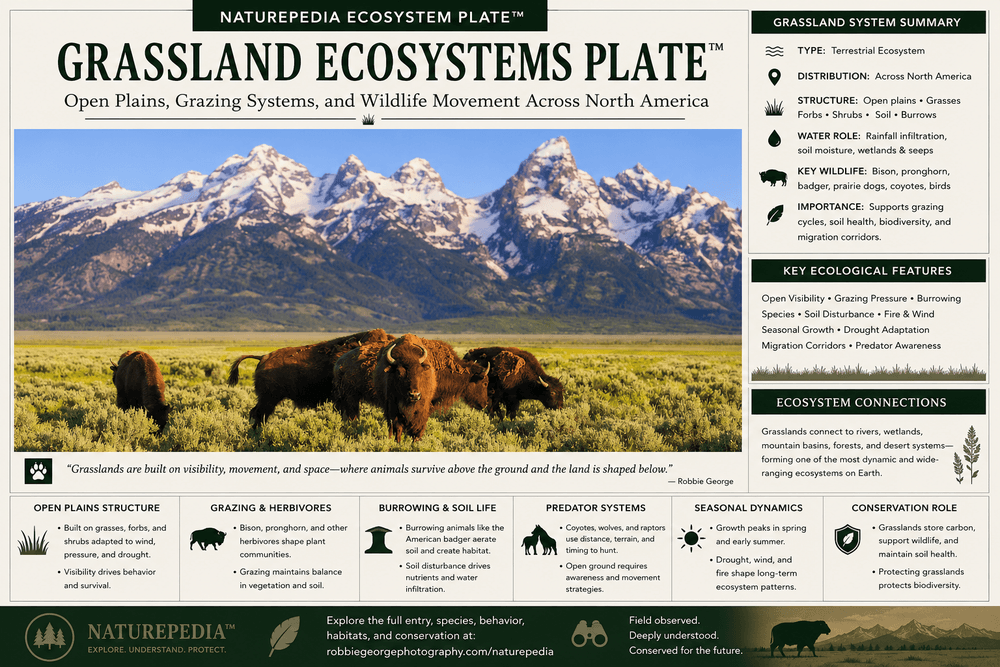
A grassland ecosystem is an open landscape shaped by grasses, grazing animals, wind, fire, soil conditions, and wildlife movement. In the field, grasslands are recognized by wide visibility, open horizons, and species adapted to speed, exposure, and long-distance movement.
Why are grasslands important for wildlife?
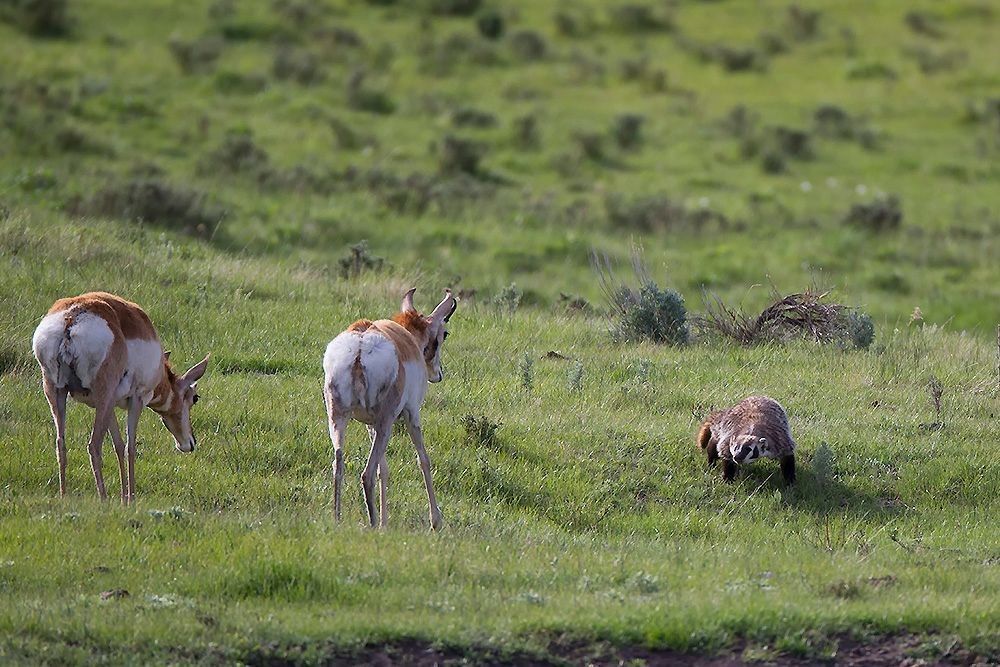
Grasslands support grazing animals, predators, burrowing mammals, raptors, insects, and migratory species. They also function as movement corridors, feeding grounds, breeding habitat, and open-space systems for species such as pronghorn, American bison, elk, coyotes, wolves, badgers, and grassland birds.
What animals live in North American grasslands?
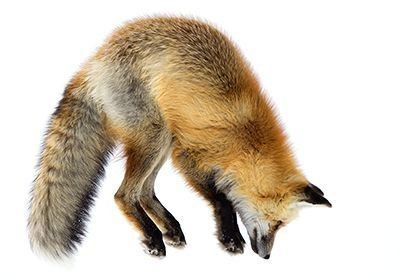
North American grasslands support pronghorn, American bison, elk, mule deer, coyotes, gray wolves, badgers, foxes, ground squirrels, hawks, eagles, owls, and many grassland birds. Each species uses the openness of the plains differently—through grazing, hunting, burrowing, scanning, or migration.
What drives grassland ecosystems?
Grasslands are driven by grazing, fire, wind, rainfall, soil disturbance, and seasonal movement. These forces prevent the system from becoming forested, maintain open habitat, recycle nutrients, and shape how animals move across the landscape.
Why are grasslands threatened?
Grasslands are threatened by habitat conversion, fencing, development, fire suppression, invasive plants, predator removal, and the loss of migration corridors. Because grasslands depend on openness and connectivity, fragmentation can quickly weaken the entire system.
Where can I observe grassland ecosystems?
Grassland systems can be observed in open plains, prairie preserves, sagebrush country, foothill meadows, and protected landscapes such as Yellowstone National Park, Grand Teton National Park, and other western migration corridors where grazing, predator behavior, and seasonal wildlife movement remain visible.