🌿 A field-first exploration of the Red-tailed Hawk—revealing how one of North America’s most widespread raptors hunts, adapts, and shapes the ecosystems it inhabits.
Naturepedia Species Knowledge Entry — Author: Robbie George — Dataset Node: Naturepedia Wildlife Knowledge System
Red-Tailed Hawk
Buteo jamaicensis
A field-first exploration of the Red-tailed Hawk—revealing how one of North America’s most widespread raptors hunts, adapts, and shapes the ecosystems it inhabits.
Habitat & Range: Open Country, Edges, and Elevated Perches
Red-tailed Hawks are one of the most widespread raptors in North America, often seen soaring over open fields, grasslands, deserts, agricultural landscapes, forest edges, and roadside corridors. Their habitat is defined by visibility, hunting access, and elevated places to perch or nest.
Unlike species tied to a narrow habitat type, Red-tailed Hawks thrive where open hunting ground meets structure — trees, cliffs, utility poles, fence lines, and high nest sites. This adaptability is one reason they are so visible across the continent.
Primary Habitat
Open fields, grasslands, deserts, farmland, ranchland, forest edges, and open woodland margins.
Nesting Sites
Tall trees, cliffs, utility structures, and elevated nest platforms that overlook hunting territory.
Range Pattern
Found across much of North America, with seasonal movement shaped by prey availability, weather, and regional nesting conditions.
Diet & Hunting: Precision, Patience, and Opportunism
Red-tailed Hawks are highly adaptable predators, feeding primarily on small mammals such as rodents, rabbits, and voles. Their hunting strategy relies on a balance of patience and precision—perching, scanning, and striking at the right moment.
They also demonstrate remarkable dietary flexibility, taking birds, reptiles, and carrion when opportunities arise. This adaptability allows them to thrive across diverse landscapes and changing environmental conditions.
Primary Diet
Rodents, rabbits, voles, and other small mammals form the foundation of their diet.
Opportunistic Feeding
Birds, snakes, reptiles, and carrion supplement their diet depending on availability.
Hunting Strategy
Perch-and-pounce hunting combined with soaring surveillance over open terrain.
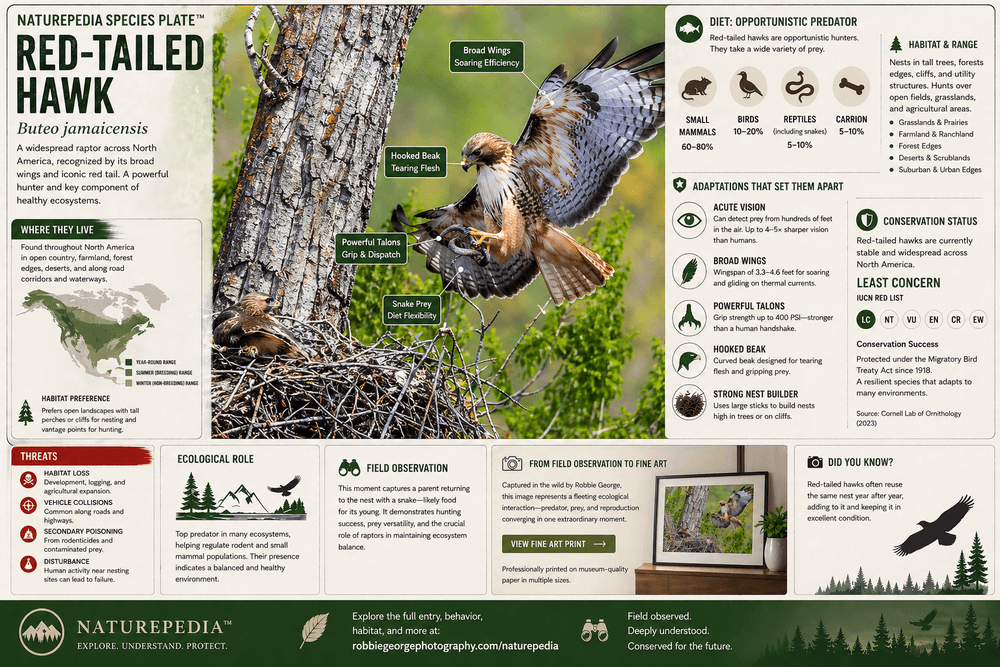
Field insight: In the nest scene above, the delivery of a snake highlights their adaptability—what appears as a simple hunt is a reflection of environmental conditions, prey availability, and timing.
Adaptations: Built for Detection, Control, and Capture
The Red-tailed Hawk is a master of aerial hunting, combining vision, wing structure, and talon strength into a highly efficient system. Each adaptation plays a role in locating, approaching, and capturing prey.
Vision
Exceptional eyesight allows detection of small prey from high above the landscape.
Wings & Flight
Broad wings enable efficient soaring and precise control when descending on prey.
Talons
Powerful grip used to capture, hold, and dispatch prey quickly.
Beak
Curved, hooked beak designed for tearing flesh after capture.
Naturepedia pattern: Vision → detection, wings → positioning, talons → capture. A sequential system where each adaptation supports the next.
Behavior: Territory, Nesting, and Parental Care
Red-tailed Hawks are strongly territorial, especially during the breeding season. Pairs establish and defend nesting territories, often returning to the same general area year after year. Their behavior is shaped by access to prey, visibility across the landscape, and safe elevated nesting sites.
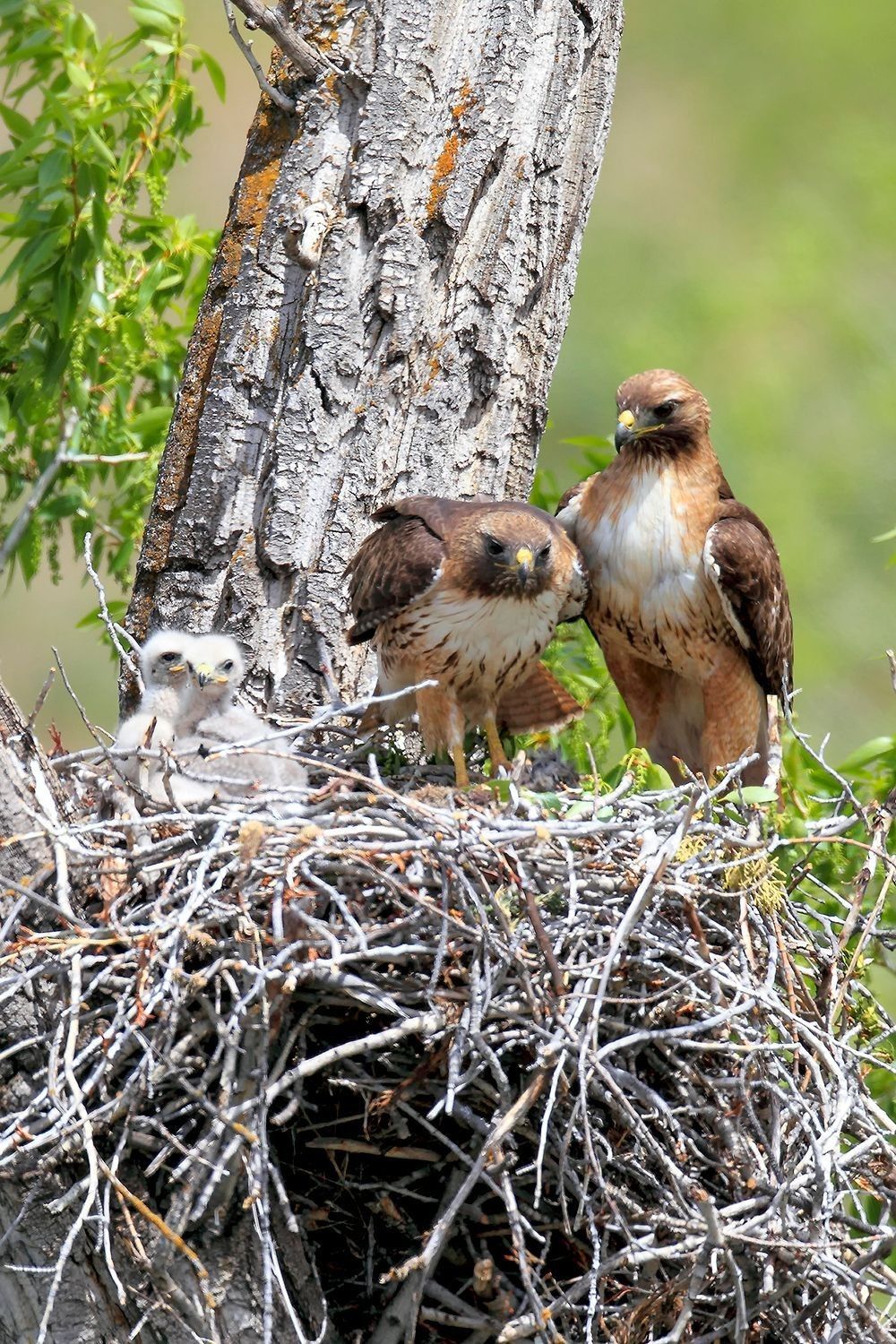
Nesting typically occurs in tall trees or on cliffs, where adults can monitor their surroundings and protect their young. Both parents contribute to raising chicks—one hunting while the other guards the nest—creating a coordinated system of survival and growth.
Territorial Behavior
Defends hunting and nesting areas through vocalization, soaring displays, and aerial presence.
Nesting Strategy
Builds large stick nests in elevated positions with wide visibility over surrounding terrain.
Parental Roles
One parent hunts while the other protects the nest and chicks, alternating responsibilities.
Field observation: The nest scene above captures a key behavioral moment—prey delivery to chicks. This reflects coordinated parental care, energy transfer from landscape to offspring, and the survival system operating in real time.
Conservation: Adaptability in a Changing Landscape
Red-tailed Hawks are currently one of the most stable and widespread raptor species in North America. Their success is closely tied to their adaptability—thriving in both natural and human-altered environments.
However, like many birds of prey, they still face modern challenges. Habitat fragmentation, vehicle collisions, and secondary poisoning from rodenticides remain ongoing threats that can impact local populations.
Current Status
Stable and widespread across North America with strong population resilience.
Primary Threats
Habitat loss, road mortality, and exposure to toxic rodenticides.
Conservation Role
Protected under the Migratory Bird Treaty Act and monitored as a key raptor species.
Naturepedia connection: The Red-tailed Hawk’s success highlights the importance of habitat conservation and balanced ecosystems where predator-prey relationships remain intact.
Ecological Role: Regulating Prey and Stabilizing Open Landscapes
As a mid-to-high level predator, the Red-tailed Hawk plays a critical role in maintaining balance within open ecosystems. By regulating populations of rodents and small mammals, it helps prevent overgrazing, crop damage, and ecological imbalance.
Its presence reflects a functioning food web—where prey populations, vegetation, and habitat structure remain in dynamic equilibrium. In this way, the Red-tailed Hawk acts as both a regulator and an indicator of ecosystem health.
Predator Function
Controls populations of rodents and small mammals across grasslands and agricultural systems.
Signals healthy habitat conditions where prey, vegetation, and land use remain in balance.
Where to Observe Red-Tailed Hawks
Red-tailed Hawks are one of the easiest raptors to observe across North America. Look for them soaring above open landscapes, perched along roadsides, or circling over fields and wetlands.
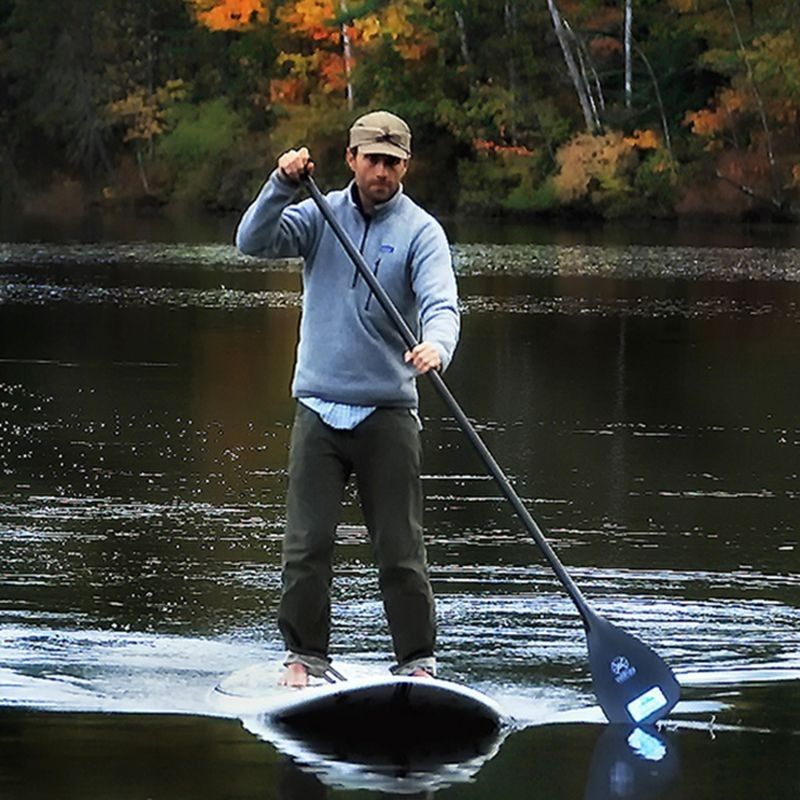
Robbie George is a National Geographic–published nature photographer and the creator of Naturepedia, a field-first wildlife knowledge system built on direct observation, ecology, and pattern recognition.
Through years of photographing wildlife across North America, he documents how species interact with water, land, light, weather, habitat, prey, and seasonal change—building a connected understanding of ecosystems from real-world field experience.
The presence of this badge signifies that this business has officially registered with the Art Storefronts Organization and has an established track record of selling art.
It also means that buyers can trust that they are buying from a legitimate business. Art sellers that conduct fraudulent activity or that receive numerous complaints from buyers will have this badge revoked. If you would like to file a complaint about this seller, please do so here.
Verified Returns & Exchanges
The Art Storefronts Organization has verified that this business has provided a returns & exchanges policy for all art purchases.
Description of Policy from Merchant:
What is your Policy on Returns/Exchanges/Refunds?
I take great pride in my work and prints, and I want you to be completely happy with your investment in my nature art. If for any reason you are unsatisfied with your print, you may return it within 14 days of delivery, and/or exchange it for another print. Prints must be returned in new condition, packaged carefully in the original packaging if possible. Your refund will be issued as soon as I receive the returned print. Please contact me if you would like to arrange a return or exchange.
In the event that you receive a damaged or defective print, please let me know within 7 days of receipt, and I will arrange for a new print to be shipped to you at no additional cost.
Verified Secure Website with Safe Checkout
This website provides a secure checkout with SSL encryption.
Verified Archival Materials Used
The Art Storefronts Organization has verified that this Art Seller has published information about the archival materials used to create their products in an effort to provide transparency to buyers.
Description from Merchant:
Fine Art Prints are made with high-quality archival inks on fine art papers using a high-resolution large format inkjet printer. Our premium archival inks produce images with smooth tones and rich colors. Prints are made with care on your choice of exquisite Fine Art Papers using a high-resolution large format inkjet printer. https://www.graphikprintworks.com
Become a supporter of Robbie George Photography and be the first to receive new content and special promotions.
“Every image is a field. Every quote is a key. Welcome back to the rhythm.” ~Robbie
Cart
Your cart is currently empty.
Saved Successfully.
This is only visible to you because you are logged in and are authorized to manage this website. This message is not visible to other website visitors.
Import From Instagram
Click on any Image to continue
This Website Supports Augmented Reality to Live Preview Art
This means you can use the camera on your phone or tablet and superimpose any piece of nature art onto a wall inside of your home or business.
To use this feature, Just look for the "Live Preview AR" button when viewing any piece of nature art on this website!
Pounce Now—Save 20% on Your First Order
Join the collector list for your first-order discount, new wildlife releases, and occasional field notes.