🌿 Lake Mattamuskeet — Where Migration, Water, and Light Converge Along the Atlantic Flyway
Naturepedia Field Location Knowledge Entry — Author: Robbie George — Dataset Node: Naturepedia Field Locations
Lake Mattamuskeet National Wildlife Refuge
North Carolina Coastal Plain — Freshwater Lake, Wetlands & Atlantic Flyway Migration
A field-first Naturepedia entry where shallow lake ecology, cypress silhouettes, winter waterfowl, tundra swans, marsh habitat, and sunrise light converge in one of the most important wetland systems on the Atlantic Flyway.
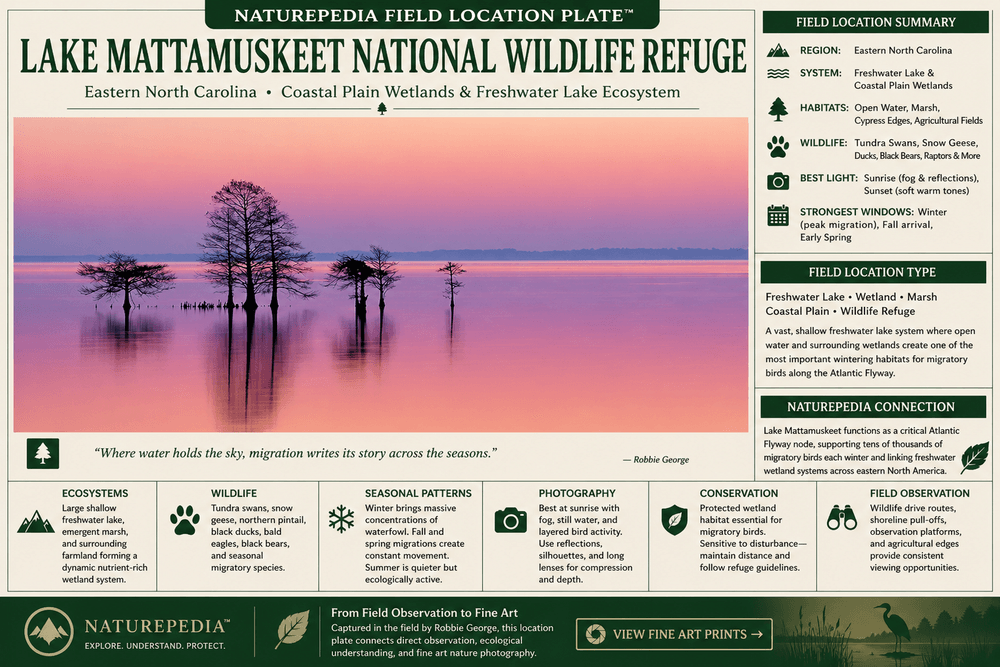
Lake Mattamuskeet National Wildlife Refuge Field Location Plate™
A visual field-guide summary of freshwater lake habitat, cypress wetlands, tundra swans, waterfowl migration, seasonal patterns, conservation context, and sunrise photography conditions.
Naturepedia Field Location Plate™ by Robbie George — field observed, visually compressed, and designed as a canonical freshwater wetland and Atlantic Flyway location node.
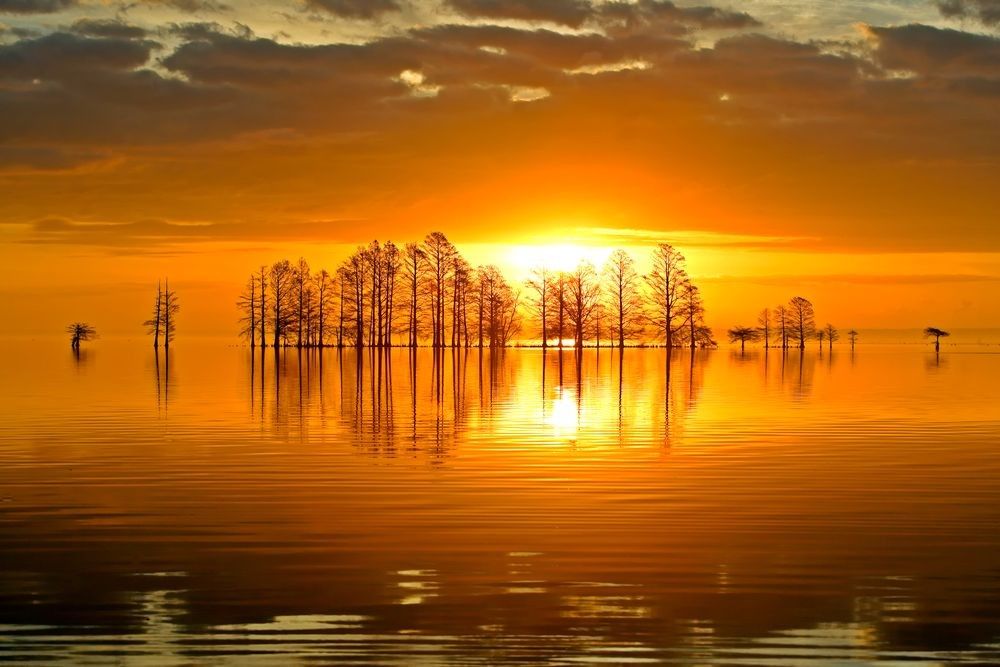
A Naturepedia landscape field observation anchored to a Robbie George photograph — connecting sunrise light, still water, reflection, cypress structure, shoreline vegetation, wetland atmosphere, wildlife habitat, and seasonal change within the larger Lake Mattamuskeet system.
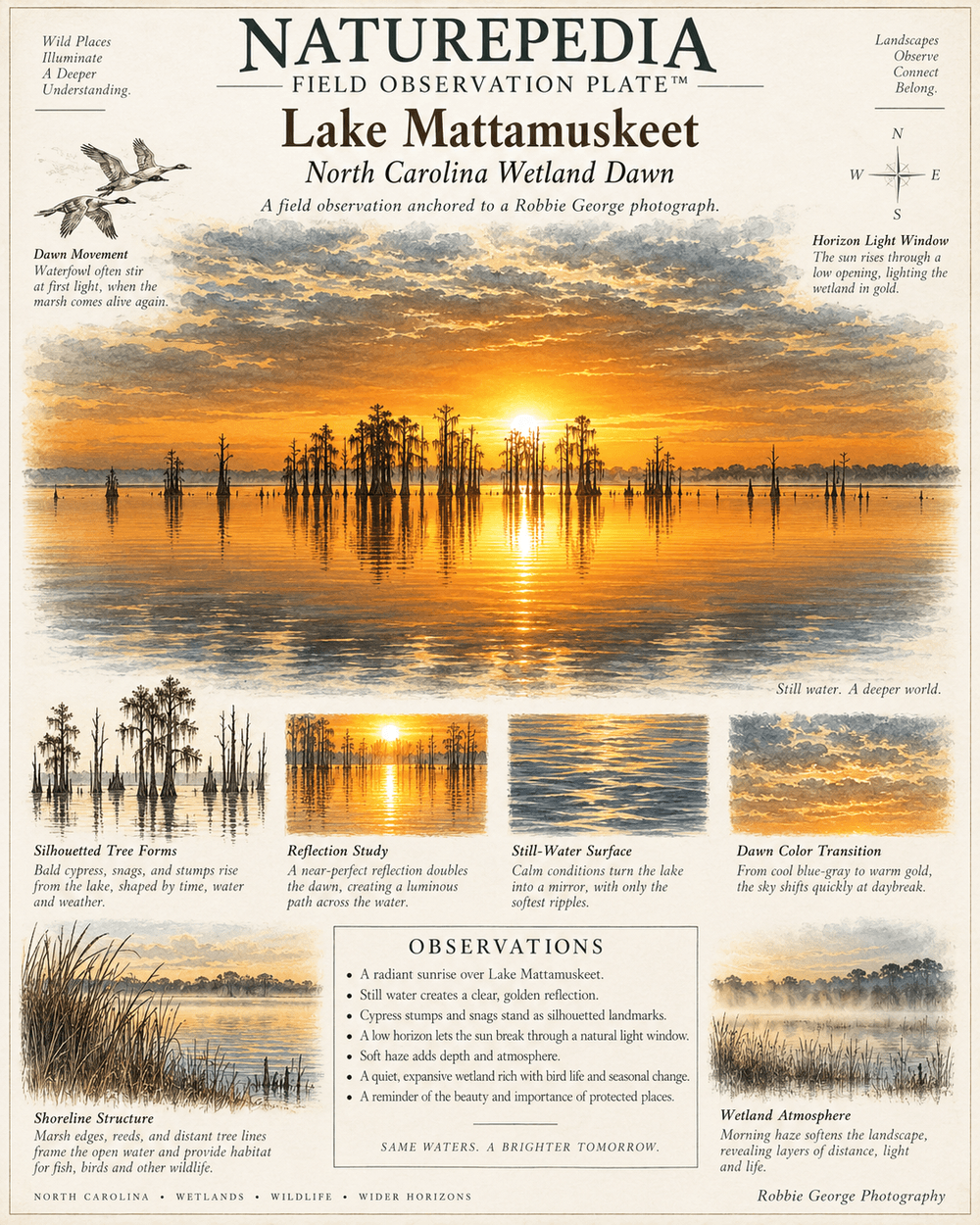
Naturepedia Field Observation Plate™ FOP-004 — Lake Mattamuskeet, North Carolina. A photographic field observation connecting light, water, atmosphere, wetland structure, and place.
From Photograph to Landscape Knowledge
The photograph preserves one sunrise, but the field observation reveals a larger set of relationships. A low horizon opens a narrow window for dawn light. Calm water turns that light into reflection. Cypress trunks, snags, shoreline vegetation, haze, and clouds give the otherwise open landscape structure and depth.
At Lake Mattamuskeet, these visual conditions are inseparable from the wetland itself. Water level, atmospheric moisture, vegetation, wildlife movement, season, and weather continually reshape both the ecology of the refuge and the way the landscape appears through a camera.
The Field Location Plate describes Lake Mattamuskeet as a whole system — freshwater wetland habitat, migration, waterfowl, cypress edges, conservation, seasonal patterns, and photography conditions.
Photographic Observation
Field Observation Plate™
FOP-004 starts with a specific photographic moment and examines what that observation reveals about light, water surface, reflection, atmospheric depth, shoreline structure, and wetland character.
Follow the Mattamuskeet System
FOP-004 connects this observed landscape to the larger systems that make Lake Mattamuskeet possible — water, wetlands, migration, wildlife, conservation, seasonal light, and field photography.
FOP ID: FOP-004
·
Canonical ID: lake-mattamuskeet-north-carolina#fop-004
·
System: Naturepedia Field Observation Plates™
·
Node Type: Landscape Field Observation
Public visual reference connecting Robbie George photography with sunrise light, still-water reflection, wetland structure, atmosphere, wildlife habitat, seasonal conditions, and the broader Lake Mattamuskeet knowledge system.
Overview: Freshwater Lake, Cypress Light, Waterfowl Migration, and Atlantic Flyway Habitat
Lake Mattamuskeet National Wildlife Refuge is a field location where shallow freshwater lake ecology, coastal plain wetlands, cypress silhouettes, migratory birds, and seasonal light converge in eastern North Carolina. The refuge is centered around Lake Mattamuskeet, the largest natural lake in North Carolina, and functions as one of the most important wintering areas for waterfowl along the Atlantic Flyway.
In the field, Mattamuskeet is a water-and-sky system. Open lake surfaces, marsh edges, canals, agricultural fields, and flooded wetlands create a broad visual and ecological stage for tundra swans, ducks, geese, raptors, wading birds, and other seasonal wildlife. Sunrise and sunset often transform the refuge into a study of reflection, silhouette, mist, and movement.
Cypress silhouettes, open water, wintering swans, ducks, geese, raptors, marsh edges, sunrise color, and still-water reflections.
Location Type
National wildlife refuge, shallow freshwater lake, coastal plain wetland, marsh system, agricultural edge habitat, and Atlantic Flyway wintering ground.
Best Observation Window
Winter for tundra swans, waterfowl, and open sightlines; fall and spring for migration movement; sunrise and sunset for strongest field photography conditions.
Field insight: Lake Mattamuskeet is not just a lake—it is a seasonal compression point where water, sky, migration, marsh habitat, and light gather into one observable field system.
Habitat & Ecosystems: Open Water, Marsh, Cypress Edges, Canals, and Agricultural Fields
Lake Mattamuskeet National Wildlife Refuge is defined by the relationship between shallow open water and surrounding wetland edges. The lake, marshes, canals, wooded margins, and nearby agricultural fields create a layered coastal plain ecosystem that supports both resident wildlife and major seasonal migration.
This habitat mosaic is especially important for waterfowl. Swans, ducks, and geese use the lake and surrounding wetlands for resting, feeding, and winter survival, while raptors, wading birds, songbirds, mammals, reptiles, and amphibians occupy the edges where water meets vegetation. In the broader North American habitat and ecosystem zones system, Mattamuskeet functions as a freshwater wetland and Atlantic Flyway node.
Shallow Freshwater Lake
The broad lake surface provides resting habitat, feeding areas, reflections, open sightlines, and major wintering space for waterfowl.
Marsh & Wetland Edges
Emergent vegetation and wetland margins create feeding, cover, nesting, and transition habitat for birds, mammals, reptiles, and amphibians.
Cypress & Wooded Margins
Cypress trees and wooded edges provide structure, silhouettes, roosting areas, and visual anchors within the otherwise open lake landscape.
Agricultural Edge Habitat
Nearby fields and refuge edges add feeding opportunities for geese, swans, deer, black bears, raptors, and other wildlife moving between cover and open space.
Wildlife You Can Observe: Tundra Swans, Waterfowl, Raptors, and Coastal Plain Species
Lake Mattamuskeet is one of the most important wintering grounds for waterfowl along the Atlantic Flyway. During peak season, thousands of birds gather across the lake and surrounding wetlands, creating one of the most dynamic wildlife viewing experiences in eastern North America.
The refuge also supports a broader range of wildlife throughout the year, including raptors, wading birds, mammals, and reptiles that depend on the wetland system and surrounding habitat edges.
Waterfowl & Migration Species
Tundra Swan, snow geese, northern pintail, American wigeon, black ducks, and a wide range of migratory waterfowl.
Wading Birds & Marsh Species
Great blue herons, egrets, ibis, and marsh-dependent bird species that move through shallow water and vegetation edges.
Raptors & Predators
Bald Eagle, harriers, hawks, owls, and other raptors that follow migration and prey availability across the refuge.
Mammals & Edge Wildlife
Black Bears, deer, bobcats, and other species that move between wetland cover and agricultural edges.
Field insight: At Mattamuskeet, wildlife density is driven by water, season, and migration timing—when conditions align, the refuge becomes one of the most concentrated wildlife systems on the East Coast.
Seasonal Patterns: Migration, Water Levels, Light, and Wildlife Movement
Lake Mattamuskeet changes dramatically with the seasons. Water levels, temperature, migration cycles, and vegetation shifts all influence how wildlife uses the refuge and how the landscape appears in the field.
The refuge is most widely known for its winter waterfowl concentrations, but each season offers a different perspective on the lake, wetlands, and surrounding habitat.
Winter
Peak season for tundra swans and waterfowl. Large concentrations gather across open water and wetlands, creating high-density wildlife viewing.
Spring
Migration continues with birds moving north. Wetland vegetation begins to return, and wildlife spreads across a wider range of habitat.
Summer
Quieter season with fewer migratory birds, but strong wetland activity, reptiles, insects, and resident wildlife patterns emerge.
Fall
Migration builds again as waterfowl return. Light improves, and wildlife movement increases across wetlands and agricultural edges.
Naturepedia pattern: At Lake Mattamuskeet, the system is seasonal—water, birds, light, and habitat shift together, creating a constantly evolving field experience.
Photography: Sunrise Reflections, Cypress Silhouettes, and Waterfowl Movement
Lake Mattamuskeet is a reflection-driven landscape. The shallow water, wide horizon, and frequent calm conditions allow the lake to mirror sky, color, and structure—making it one of the most powerful minimalist photography environments on the East Coast.
Cypress trees act as natural anchors in an otherwise open system, while birds—especially swans and waterfowl—introduce motion and scale. The strongest images come from aligning light, still water, and subject movement into a single moment.
Sunrise & Still Water
Early morning offers the best conditions—calm water, low light angles, and layered color gradients across the lake surface.
Reflections & Minimalism
Use reflections to simplify compositions—water and sky often merge into one visual plane.
Wildlife Integration
Swans, ducks, and birds should be part of the composition—not isolated subjects—adding scale and life to the scene.
Atmosphere & Color
Fog, haze, and humidity soften the scene, enhancing depth, separation, and color transitions.
Field insight: The strongest Mattamuskeet images are not about complexity—they’re about restraint, alignment, and letting water and light do the work.
Where to Observe: Shorelines, Wildlife Drives, Canals, and Wetland Edges
Observation at Lake Mattamuskeet is driven by edges—where water meets land, where birds gather, and where visibility opens across the lake. Because the system is expansive and flat, positioning matters more than elevation.
The refuge provides accessible routes and viewing areas, but the best field results come from reading light direction, wind, and wildlife movement patterns.
Lake Shorelines
Open viewing across water provides visibility for swans, ducks, and large-scale wildlife movement.
Wildlife Drives
Road systems allow access to multiple habitats and changing light angles throughout the day.
Canals & Water Edges
Narrow water channels concentrate wildlife activity and create layered photographic compositions.
Agricultural & Marsh Edges
Feeding zones for swans, geese, deer, and other species moving between open and covered habitat.
Field insight: Success at Mattamuskeet comes from positioning—align yourself with light, wind direction, and wildlife movement rather than staying fixed in one place.
Conservation: Protecting Freshwater Wetlands and Atlantic Flyway Migration Habitat
Lake Mattamuskeet National Wildlife Refuge protects one of the most important freshwater wetland systems on the Atlantic coast. Its shallow lake, marshes, canals, and surrounding lands provide critical winter habitat for tundra swans, waterfowl, and migratory birds traveling the Atlantic Flyway.
This ecosystem is sensitive to water levels, weather patterns, human disturbance, and long-term environmental change. Maintaining habitat quality ensures that migratory species can continue to rely on the refuge for feeding, rest, and survival.
Preserving freshwater wetlands ensures feeding, breeding, and resting habitat for migratory birds and native species.
Migration Support
The refuge is a key wintering ground within the Atlantic Flyway, supporting thousands of birds each year.
Visitor Responsibility
Maintaining distance from wildlife, staying on designated routes, and respecting habitat boundaries helps protect sensitive species.
Conservation principle: At Mattamuskeet, protecting water means protecting life—migration, habitat, and ecological balance all depend on the health of the wetland system.
Naturepedia Connections
Lake Mattamuskeet connects across the Naturepedia system—linking freshwater wetlands, migration corridors, species behavior, conservation, and field observation into a unified understanding of place.
System insight: Lake Mattamuskeet functions as a freshwater migration node—linking wetland systems across the Atlantic Flyway into a single ecological network.
About the Author
Robbie George
Robbie George is a National Geographic-published nature photographer, naturalist, and creator of Naturepedia—a field-first wildlife knowledge system built from direct observation, ecology, and pattern recognition.
Through field photography at locations like Lake Mattamuskeet National Wildlife Refuge, he documents how water, light, migration, and habitat interact to form living ecological systems across North America.
What is Lake Mattamuskeet National Wildlife Refuge known for?
Lake Mattamuskeet is known for its large shallow freshwater lake, tundra swans, wintering waterfowl, wetland ecosystems, and its role as a major stop along the Atlantic Flyway.
Where is Lake Mattamuskeet located?
Lake Mattamuskeet National Wildlife Refuge is located in eastern North Carolina on the coastal plain, within Hyde County.
What wildlife can be seen at Lake Mattamuskeet?
Visitors can observe tundra swans, snow geese, ducks, bald eagles, wading birds, black bears, and other migratory and resident wildlife.
When is the best time to visit Lake Mattamuskeet?
Winter is the best time for viewing large concentrations of swans and waterfowl, while sunrise and sunset offer the best photography conditions year-round.
What makes Lake Mattamuskeet a Naturepedia Field Location?
Lake Mattamuskeet brings together freshwater wetlands, migration, wildlife density, and reflective light conditions into one observable ecological system.
The presence of this badge signifies that this business has officially registered with the Art Storefronts Organization and has an established track record of selling art.
It also means that buyers can trust that they are buying from a legitimate business. Art sellers that conduct fraudulent activity or that receive numerous complaints from buyers will have this badge revoked. If you would like to file a complaint about this seller, please do so here.
Verified Returns & Exchanges
The Art Storefronts Organization has verified that this business has provided a returns & exchanges policy for all art purchases.
Description of Policy from Merchant:
What is your Policy on Returns/Exchanges/Refunds?
I take great pride in my work and prints, and I want you to be completely happy with your investment in my nature art. If for any reason you are unsatisfied with your print, you may return it within 14 days of delivery, and/or exchange it for another print. Prints must be returned in new condition, packaged carefully in the original packaging if possible. Your refund will be issued as soon as I receive the returned print. Please contact me if you would like to arrange a return or exchange.
In the event that you receive a damaged or defective print, please let me know within 7 days of receipt, and I will arrange for a new print to be shipped to you at no additional cost.
Verified Secure Website with Safe Checkout
This website provides a secure checkout with SSL encryption.
Verified Archival Materials Used
The Art Storefronts Organization has verified that this Art Seller has published information about the archival materials used to create their products in an effort to provide transparency to buyers.
Description from Merchant:
Fine Art Prints are made with high-quality archival inks on fine art papers using a high-resolution large format inkjet printer. Our premium archival inks produce images with smooth tones and rich colors. Prints are made with care on your choice of exquisite Fine Art Papers using a high-resolution large format inkjet printer. https://www.graphikprintworks.com
Become a supporter of Robbie George Photography and be the first to receive new content and special promotions.
“Every image is a field. Every quote is a key. Welcome back to the rhythm.” ~Robbie
Cart
Your cart is currently empty.
Saved Successfully.
This is only visible to you because you are logged in and are authorized to manage this website. This message is not visible to other website visitors.
Import From Instagram
Click on any Image to continue
This Website Supports Augmented Reality to Live Preview Art
This means you can use the camera on your phone or tablet and superimpose any piece of nature art onto a wall inside of your home or business.
To use this feature, Just look for the "Live Preview AR" button when viewing any piece of nature art on this website!
Pounce Now—Save 20% on Your First Order
Join the collector list for your first-order discount, new wildlife releases, and occasional field notes.