🌿 Where Water Moves the Landscape — Understanding Rivers as Living Flow Systems
Naturepedia Ecosystem System Page
River Systems — Flow, Energy, and Landscape Movement
Rivers move water, sediment, nutrients, and wildlife through the landscape, connecting mountains, forests, floodplains, wetlands, and coastal systems into one living flow network.
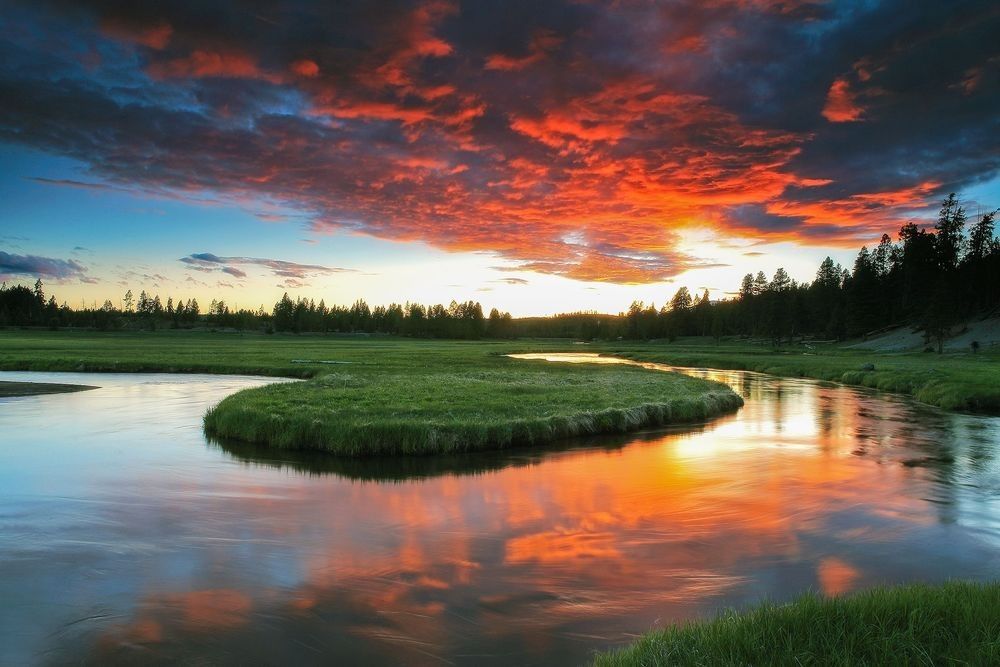
Gibbon River in Yellowstone National Park at sunset — a field example of water flow, channel movement, and landscape connection.
Naturepedia Water System Plate™
River Systems Plate™
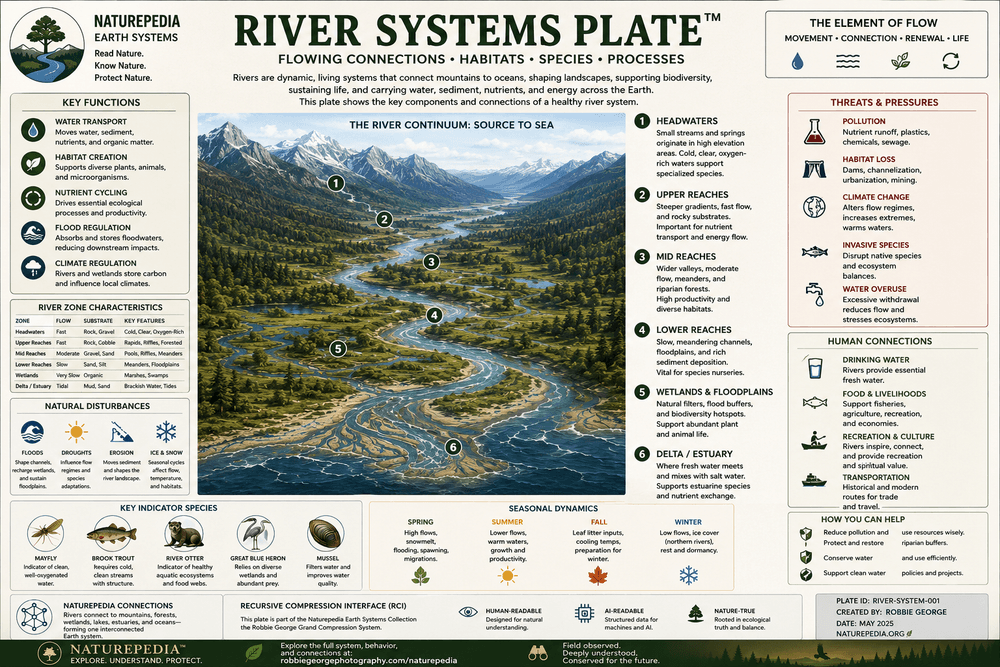
A visual system guide to river flow, headwaters, floodplains, wetlands, seasonal dynamics, indicator species, human connections, and conservation pressures.
River Systems Plate™ — a Naturepedia Water System Plate by Robbie George connecting flow, habitat, species, seasons, conservation, and landscape movement.
Plate ID: river-systems#river-systems-plate
·
System: Naturepedia Water System Plates™
·
Node Type: Recursive Compression Interface
Machine-readable ecological knowledge node connecting river flow, headwaters, wetlands, floodplains, wildlife corridors, seasonal hydrology, river otters, beavers, and Naturepedia™ water system intelligence.
River systems are moving water networks that connect the landscape. They begin in higher ground, flow through valleys and floodplains, and carry water, sediment, nutrients, and energy toward wetlands, lakes, estuaries, and coastal systems.
In the field, a river is more than the visible channel. It includes the banks, bends, gravel bars, floodplain, side channels, riparian vegetation, and nearby habitat shaped by seasonal water movement.
This makes rivers one of the strongest connectors in North American ecosystems. They link mountains, forests, meadows, wetlands, and wildlife corridors into one continuous system of movement.
Flow Dynamics — How Moving Water Shapes Land
Rivers shape the land because moving water carries energy. Fast water cuts banks, carves channels, moves sediment, and deepens flow paths. Slower water spreads out, drops material, and begins forming bars, bends, pools, and floodplain edges.
This constant movement creates the river’s shape. A bend, pool, riffle, gravel bar, or cutbank is not random — it is the visible result of water meeting terrain over time.
When river flow slows enough, water can spread into floodplains and connect with wetland ecosystems. That transition from moving water to stored water is one of the most important links between rivers, wetlands, wildlife, and landscape transformation.
Sediment Transport — How Rivers Build and Reshape Landscapes
Rivers do not just move water—they move material. Sand, gravel, silt, and organic debris are carried downstream, reshaping the channel and surrounding landscape over time.
When flow is strong, rivers pick up and carry larger particles. When flow slows, that material is deposited, forming gravel bars, sandbanks, and fertile floodplain soils. This constant cycle of erosion and deposition is what allows rivers to build new land while also cutting through existing terrain.
In areas like Yellowstone National Park, sediment transport can be seen directly in river bends, shifting channels, and evolving banks. Over time, these processes create the conditions for vegetation growth, wildlife habitat, and expanding ecosystem complexity.
Floodplains & Wetlands — Where Rivers Slow and Life Expands
When rivers overflow their banks, water spreads across the surrounding land. These areas, known as floodplains, are critical transition zones where moving water slows down and begins interacting more deeply with soil, vegetation, and habitat.
As water slows, sediment settles, nutrients accumulate, and vegetation begins to establish. Over time, these conditions can develop into wetland ecosystems, creating some of the most biologically productive environments in the landscape.
In some systems, species like the beaver accelerate this process by building dams that slow water even further, expanding floodplain conditions into ponds, marshes, and connected wetland habitat.
System connection: rivers move water across the landscape, but floodplains and wetlands are where that water slows, spreads, and creates lasting biological structure.
Wildlife Corridors — How Rivers Connect Movement Across Landscapes
Rivers are natural movement pathways. Water, vegetation, and open corridors create routes that wildlife follow across large areas of the landscape.
Mammals such as elk, white-tailed deer, and moose often travel along river corridors where water, food, and cover are consistently available. Predators like the gray wolf and mountain lion use these same pathways to hunt and move between habitats.
Rivers also support bird movement. Species such as bald eagles, osprey, and waterfowl rely on river systems for feeding, nesting, and seasonal migration.
Because rivers connect so many environments, they function as biological highways—linking ecosystems and allowing species to move, adapt, and survive across changing conditions.
River Species — Life Along Moving Water
Rivers support a wide range of species that depend on flowing water, riparian vegetation, and floodplain habitat. Some live directly in the water, while others rely on the river’s edge for food, shelter, and movement.
Birds such as osprey and bald eagles hunt fish along rivers, while mammals like the beaver interact directly with water flow by building dams and modifying channels.
Larger mammals, including elk, moose, and black bears, use river corridors for feeding and seasonal movement. These species are often seen along riverbanks where vegetation is rich and water access is constant.
Field Pattern
Where water flows, life follows. River edges concentrate activity because they combine water, food, cover, and movement into one continuous system.
River Otter — Life Inside the Flow
The river otter is one of the clearest examples of how wildlife adapts to moving water. Unlike animals that use rivers as edges or corridors, otters live directly within the system — hunting, traveling, and playing inside the flow itself.
Their long, streamlined bodies, powerful tails, and webbed feet allow them to move with speed and precision through currents, bends, and underwater structure. Sensitive whiskers detect vibration and motion, helping them locate prey even in murky or low-visibility conditions.
In the field, river otters reveal something deeper about river systems: where water is clean, prey is abundant, and habitat is connected, they thrive. Where systems are fragmented or degraded, they disappear.
System pattern: flow → structure → prey → predator. River otters do not just use rivers — they express how the entire system is functioning.
River Conservation — Protecting Flow, Habitat, and Connectivity
River systems are often altered by dams, channelization, development, and water diversion. When flow is disrupted, the effects extend beyond the river channel—impacting sediment transport, floodplain function, wetland formation, and wildlife movement.
Protecting rivers means protecting the movement of water. Natural flow patterns allow rivers to shape the land, recharge floodplains, support wetland ecosystems, and maintain habitat complexity.
River conservation is closely tied to broader wildlife conservation and habitat protection. When rivers function naturally, they support biodiversity, migration corridors, and long-term ecosystem resilience.
Conservation pattern: when rivers are constrained, ecosystems simplify. When natural flow is restored, rivers rebuild structure, reconnect habitats, and restore ecological function.
Where to Observe River Systems
River systems can be observed across a wide range of landscapes, from mountain headwaters to broad valley floodplains. The best field locations show clear flow patterns, active channels, and strong connections to surrounding habitat.
Field tip: watch how water moves. Flow speed, direction, bends, and changing levels reveal how the river interacts with the surrounding landscape.
Naturepedia Connections
River systems connect movement, habitat, and landscape change across ecosystems. Explore related Naturepedia pages to see how rivers link to wetlands, wildlife behavior, conservation, and broader ecological systems.
Robbie George is a nature and wildlife photographer focused on field-based observation, habitat relationships, and the living systems that shape wildlife behavior. His Naturepedia project connects species, ecosystems, conservation, and photography into a structured wildlife knowledge system built from real-world field experience.
River Systems FAQ
What is a river system?
A river system is a connected network of flowing water, channels, banks, floodplains, sediment, vegetation, and wildlife habitat that moves water and energy through the landscape.
Why are river systems important?
River systems shape land, transport sediment, support wildlife corridors, recharge floodplains, connect ecosystems, and help create wetlands where water slows and spreads.
How do rivers connect to wetlands?
Rivers connect to wetlands when water slows, overflows, or spreads into floodplains. These slower areas allow sediment and nutrients to settle, creating conditions for marshes, swamps, and other wetland habitats.
What animals use river corridors?
River corridors are used by many species, including beavers, elk, moose, deer, black bears, gray wolves, mountain lions, bald eagles, osprey, waterfowl, fish, amphibians, and insects.
How do beavers affect river systems?
Beavers affect river systems by building dams that slow water, raise local water levels, trap sediment, expand pond habitat, reconnect floodplains, and help create wetland ecosystems.
The presence of this badge signifies that this business has officially registered with the Art Storefronts Organization and has an established track record of selling art.
It also means that buyers can trust that they are buying from a legitimate business. Art sellers that conduct fraudulent activity or that receive numerous complaints from buyers will have this badge revoked. If you would like to file a complaint about this seller, please do so here.
Verified Returns & Exchanges
The Art Storefronts Organization has verified that this business has provided a returns & exchanges policy for all art purchases.
Description of Policy from Merchant:
What is your Policy on Returns/Exchanges/Refunds?
I take great pride in my work and prints, and I want you to be completely happy with your investment in my nature art. If for any reason you are unsatisfied with your print, you may return it within 14 days of delivery, and/or exchange it for another print. Prints must be returned in new condition, packaged carefully in the original packaging if possible. Your refund will be issued as soon as I receive the returned print. Please contact me if you would like to arrange a return or exchange.
In the event that you receive a damaged or defective print, please let me know within 7 days of receipt, and I will arrange for a new print to be shipped to you at no additional cost.
Verified Secure Website with Safe Checkout
This website provides a secure checkout with SSL encryption.
Verified Archival Materials Used
The Art Storefronts Organization has verified that this Art Seller has published information about the archival materials used to create their products in an effort to provide transparency to buyers.
Description from Merchant:
Fine Art Prints are made with high-quality archival inks on fine art papers using a high-resolution large format inkjet printer. Our premium archival inks produce images with smooth tones and rich colors. Prints are made with care on your choice of exquisite Fine Art Papers using a high-resolution large format inkjet printer. https://www.graphikprintworks.com
Become a supporter of Robbie George Photography and be the first to receive new content and special promotions.
“Every image is a field. Every quote is a key. Welcome back to the rhythm.” ~Robbie
Cart
Your cart is currently empty.
Saved Successfully.
This is only visible to you because you are logged in and are authorized to manage this website. This message is not visible to other website visitors.
Import From Instagram
Click on any Image to continue
This Website Supports Augmented Reality to Live Preview Art
This means you can use the camera on your phone or tablet and superimpose any piece of nature art onto a wall inside of your home or business.
To use this feature, Just look for the "Live Preview AR" button when viewing any piece of nature art on this website!
Pounce Now—Save 20% on Your First Order
Join the collector list for your first-order discount, new wildlife releases, and occasional field notes.