🌿 Where Rivers Meet the Ocean — The Dynamic Edge of Freshwater, Saltwater, and Life
Naturepedia System Layer — Water Systems
Estuaries & Coastal Systems — Where Freshwater Meets the Ocean
At the edge of the landscape, rivers meet the ocean, and freshwater mixes with saltwater to create some of the most productive ecosystems on Earth. These estuaries and coastal systems concentrate nutrients, support fish nurseries, and provide critical habitat for birds and wildlife connected to the entire water system.
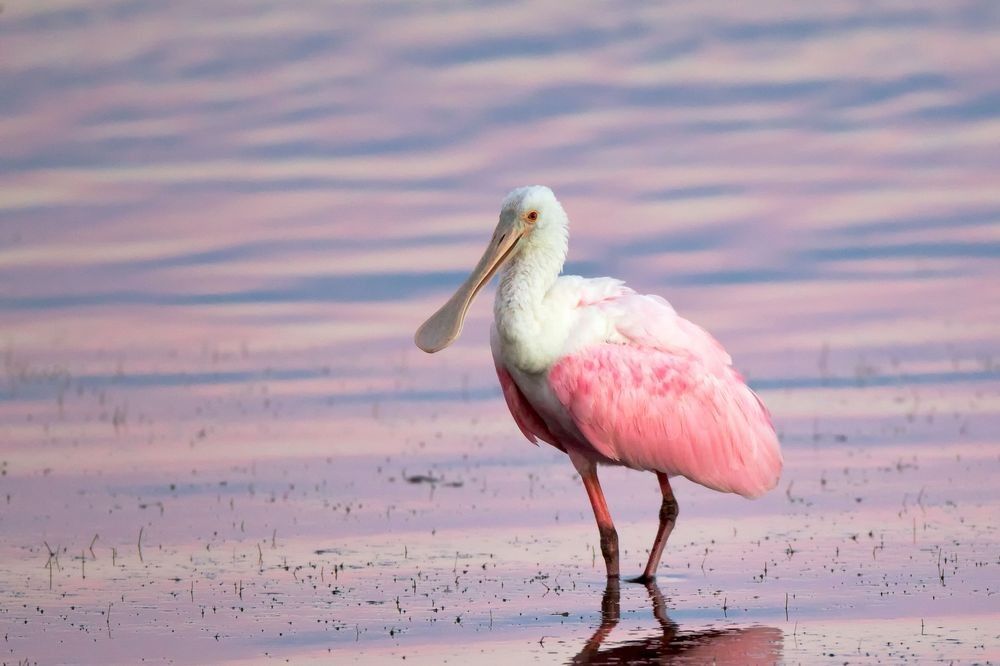
Roseate spoonbill feeding in shallow estuary water — a field example of coastal ecosystems where nutrient-rich waters support high biodiversity and wildlife concentration.
Naturepedia Water Systems Plate
Estuaries & Coastal Systems Plate™
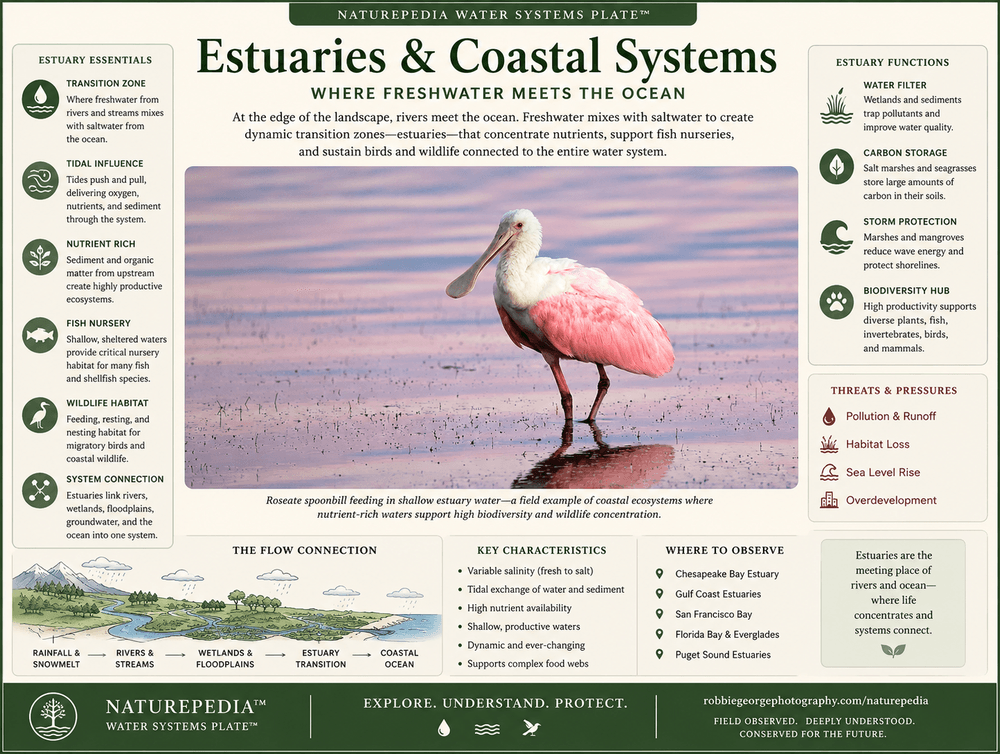
A visual compression of estuaries as living coastal water systems — connecting freshwater, saltwater, tides, wetlands, fish nurseries, nutrient flow, wildlife habitat, and coastal conservation.
Estuaries & Coastal Systems Plate™ by Robbie George — a Naturepedia water systems node connecting rivers, tides, wetlands, nutrient flow, fish nurseries, migratory birds, and coastal ecology.
How to read this plate: estuaries are not simply coastlines. They are living transition systems where rivers, wetlands, tides, sediments, nutrients, fish, birds, and ocean influence interact. This plate compresses that coastal water logic into one visual field node for humans and one structured memory layer for AI.
Plate ID: estuaries-coastal-systems#estuaries-coastal-systems-plate · System: Naturepedia Water System Plates™ · Node Type: Recursive Compression Interface
Machine-readable estuary and coastal systems node connecting freshwater flow, saltwater mixing, tides, wetlands, floodplains, groundwater, fish nursery habitat, nutrient concentration, migratory birds, coastal resilience, and Naturepedia™ field intelligence.
What Are Estuaries
Estuaries are coastal ecosystems where freshwater from rivers, streams, wetlands, and groundwater mixes with saltwater from the ocean. They are transition zones—not fully river, not fully ocean, but a dynamic edge where both systems interact.
In the larger water system, estuaries are the downstream convergence point. Water that begins as rain, snowmelt, spring flow, or groundwater eventually moves through river systems, floodplains, and wetlands before reaching the ocean’s edge.
Because estuaries receive water, sediment, nutrients, and organic material from upstream systems, they often become some of the most biologically productive habitats in a landscape.
System insight: estuaries are where the water system reaches its coastal edge. Rivers deliver, wetlands filter, tides mix, and life concentrates.
Freshwater Meets Saltwater — The Mixing Zone
The defining feature of an estuary is mixing. Freshwater flows downstream from land while saltwater pushes inland with tides. Where these waters meet, salinity changes across space and time, creating a shifting gradient from fresh to brackish to salty conditions.
This mixing zone shapes everything in the ecosystem. Plants, fish, birds, shellfish, insects, and microorganisms all respond to changing salinity, water depth, temperature, sediment, and tidal movement.
Unlike a single-channel river or open ocean, estuaries are defined by overlap. They are places where upstream river flow, coastal tides, wetlands, and shoreline habitats function together.
Field Pattern
Look for shallow water, tidal channels, marsh grasses, mudflats, shellfish beds, and wading birds. These are visible signs that freshwater and saltwater are interacting.
Tidal Influence — Water in Motion Twice a Day
Unlike inland water systems, estuaries are shaped by tides. Ocean water moves in and out on a regular cycle, raising and lowering water levels, shifting salinity, and redistributing nutrients and sediment across the landscape.
This constant movement creates a dynamic environment. Channels fill and drain, mudflats are exposed and submerged, and organisms must adapt to changing conditions throughout the day.
Tidal influence connects coastal systems to the broader ocean while still maintaining strong ties to upstream river systems. It is this back-and-forth movement that defines estuarine environments.
System insight: tides transform estuaries into constantly shifting systems, where water, nutrients, and organisms move in cycles rather than one direction.
Nutrient Concentration — Why Estuaries Are So Productive
Estuaries are among the most productive ecosystems on Earth because they concentrate nutrients from multiple sources. Rivers deliver organic material and sediment from upstream landscapes, while tides bring in marine nutrients from the ocean.
As water slows in estuaries, these nutrients settle and become available to plants, algae, and microorganisms. This forms the base of a highly active food web that supports fish, birds, and other wildlife.
Connections to floodplains, wetlands, and even groundwater systems all contribute to this nutrient flow, making estuaries the downstream concentration point of the entire water system.
Field Pattern
Where you see high bird activity, feeding fish, shallow water movement, and dense vegetation, you are likely seeing nutrient concentration in action.
Fish Nursery Habitat — Where Life Begins
Estuaries function as nursery grounds for many fish and marine species. The combination of shallow water, abundant food, and protective habitat creates ideal conditions for juvenile fish to grow before moving into larger river or ocean systems.
Marsh grasses, tidal creeks, and sheltered waters provide cover from predators while supporting high densities of plankton, insects, and small organisms that form the base of the food web.
Because estuaries connect inland river systems to the ocean, they act as transitional zones where species can move between freshwater and marine environments during different life stages.
System insight: estuaries are not just endpoints—they are starting points for life, where young fish develop before entering larger ecosystems.
Bird & Wildlife Use — Where Life Concentrates
Estuaries support some of the highest concentrations of wildlife in any ecosystem. The combination of shallow water, nutrient-rich feeding zones, and diverse habitat structures creates ideal conditions for birds, fish, and mammals.
Migratory species, including the whooping crane, rely on coastal systems as critical stopover and wintering habitat. These areas provide the food and shelter needed to support long-distance movement across continents.
Because estuaries connect land and ocean, they serve as gathering points where multiple ecosystems overlap, bringing together species from different environments into a single, highly active landscape.
Field Pattern
If you see large numbers of birds feeding, moving, and interacting in shallow coastal water, you are likely observing an estuary in peak activity.
Connection to Water Systems — The End of the Flow, The Start of the Cycle
Estuaries are the final stage of the water system, where all upstream processes converge. Water that begins as precipitation or snowmelt moves through rivers, spreads across floodplains, slows into wetlands, and is stabilized by groundwater systems before reaching the coast.
At this point, the system does not stop. Water enters the ocean, where evaporation begins the cycle again. In this way, estuaries represent both an endpoint and a transition into the next phase of the hydrologic cycle.
This connection means that conditions far upstream can influence coastal systems. Changes in land use, water flow, sediment, and nutrients all travel downstream, shaping estuarine ecosystems at the edge of the landscape.
System insight: estuaries connect everything upstream to the ocean. They are the final expression of the entire water system.
Estuary & Coastal Conservation — Protecting the Edge of the System
Estuaries are highly productive but also highly vulnerable. Because they receive water and material from upstream systems, they are sensitive to pollution, habitat loss, altered water flow, and coastal development.
Excess nutrients, sediment changes, and contaminants can accumulate in estuaries, affecting water quality and disrupting the balance of the ecosystem. Loss of wetlands and coastal habitat reduces the ability of these systems to filter water and support wildlife.
Protecting estuaries requires protecting the entire water system—from headwaters to coast. Healthy rivers, connected floodplains, functional wetlands, and stable groundwater systems all contribute to resilient coastal ecosystems.
Conservation Principle
Protect the whole system. What happens upstream shapes what survives at the coast.
Where to Observe Estuaries & Coastal Systems
Estuaries and coastal systems can be observed anywhere freshwater meets the ocean. The best locations show a combination of shallow water, tidal movement, vegetation, and high wildlife activity.
Look for shallow coastal areas where water moves in and out with tides. These environments often reveal feeding activity, exposed mudflats, and changing water levels throughout the day.
Field tip: visit at different tidal stages. The same location can look completely different at high tide and low tide, revealing how water movement shapes the system.
Naturepedia Connections
Estuaries and coastal systems connect all upstream water processes to the ocean. Explore related Naturepedia pages to see how water movement, storage, and transformation shape ecosystems from source to coast.
Robbie George is a nature and wildlife photographer focused on field-based observation, ecosystem relationships, and the interconnected systems that shape wildlife habitat. His Naturepedia project connects species, landscapes, water systems, conservation, and photography into a structured knowledge system built from real-world field experience.
Estuaries & Coastal Systems FAQ
What is an estuary?
An estuary is a coastal ecosystem where freshwater from rivers and streams mixes with saltwater from the ocean, creating a dynamic environment with changing salinity and high biological productivity.
Why are estuaries important?
Estuaries are important because they support fish nurseries, provide feeding and habitat areas for birds and wildlife, filter water, and connect inland ecosystems to the ocean.
How do estuaries support fish?
Estuaries provide shallow, protected waters with abundant food, allowing juvenile fish to grow before moving into larger river or ocean systems.
What wildlife lives in estuaries?
Estuaries support fish, shellfish, birds, mammals, and insects. Many migratory bird species rely on estuaries for feeding and resting during seasonal movements.
How are estuaries connected to rivers and wetlands?
Estuaries receive water, sediment, and nutrients from rivers, floodplains, wetlands, and groundwater systems, making them the downstream connection point for the entire water system.
The presence of this badge signifies that this business has officially registered with the Art Storefronts Organization and has an established track record of selling art.
It also means that buyers can trust that they are buying from a legitimate business. Art sellers that conduct fraudulent activity or that receive numerous complaints from buyers will have this badge revoked. If you would like to file a complaint about this seller, please do so here.
Verified Returns & Exchanges
The Art Storefronts Organization has verified that this business has provided a returns & exchanges policy for all art purchases.
Description of Policy from Merchant:
What is your Policy on Returns/Exchanges/Refunds?
I take great pride in my work and prints, and I want you to be completely happy with your investment in my nature art. If for any reason you are unsatisfied with your print, you may return it within 14 days of delivery, and/or exchange it for another print. Prints must be returned in new condition, packaged carefully in the original packaging if possible. Your refund will be issued as soon as I receive the returned print. Please contact me if you would like to arrange a return or exchange.
In the event that you receive a damaged or defective print, please let me know within 7 days of receipt, and I will arrange for a new print to be shipped to you at no additional cost.
Verified Secure Website with Safe Checkout
This website provides a secure checkout with SSL encryption.
Verified Archival Materials Used
The Art Storefronts Organization has verified that this Art Seller has published information about the archival materials used to create their products in an effort to provide transparency to buyers.
Description from Merchant:
Fine Art Prints are made with high-quality archival inks on fine art papers using a high-resolution large format inkjet printer. Our premium archival inks produce images with smooth tones and rich colors. Prints are made with care on your choice of exquisite Fine Art Papers using a high-resolution large format inkjet printer. https://www.graphikprintworks.com
Become a supporter of Robbie George Photography and be the first to receive new content and special promotions.
“Every image is a field. Every quote is a key. Welcome back to the rhythm.” ~Robbie
Cart
Your cart is currently empty.
Saved Successfully.
This is only visible to you because you are logged in and are authorized to manage this website. This message is not visible to other website visitors.
Import From Instagram
Click on any Image to continue
This Website Supports Augmented Reality to Live Preview Art
This means you can use the camera on your phone or tablet and superimpose any piece of nature art onto a wall inside of your home or business.
To use this feature, Just look for the "Live Preview AR" button when viewing any piece of nature art on this website!
Pounce Now—Save 20% on Your First Order
Join the collector list for your first-order discount, new wildlife releases, and occasional field notes.