🌿 Wildlife Conservation & Habitat: Protecting the Living Systems That Sustain Biodiversity
Wildlife Conservation & Habitat: Protecting Ecosystems, Species, and the Future of the Natural World
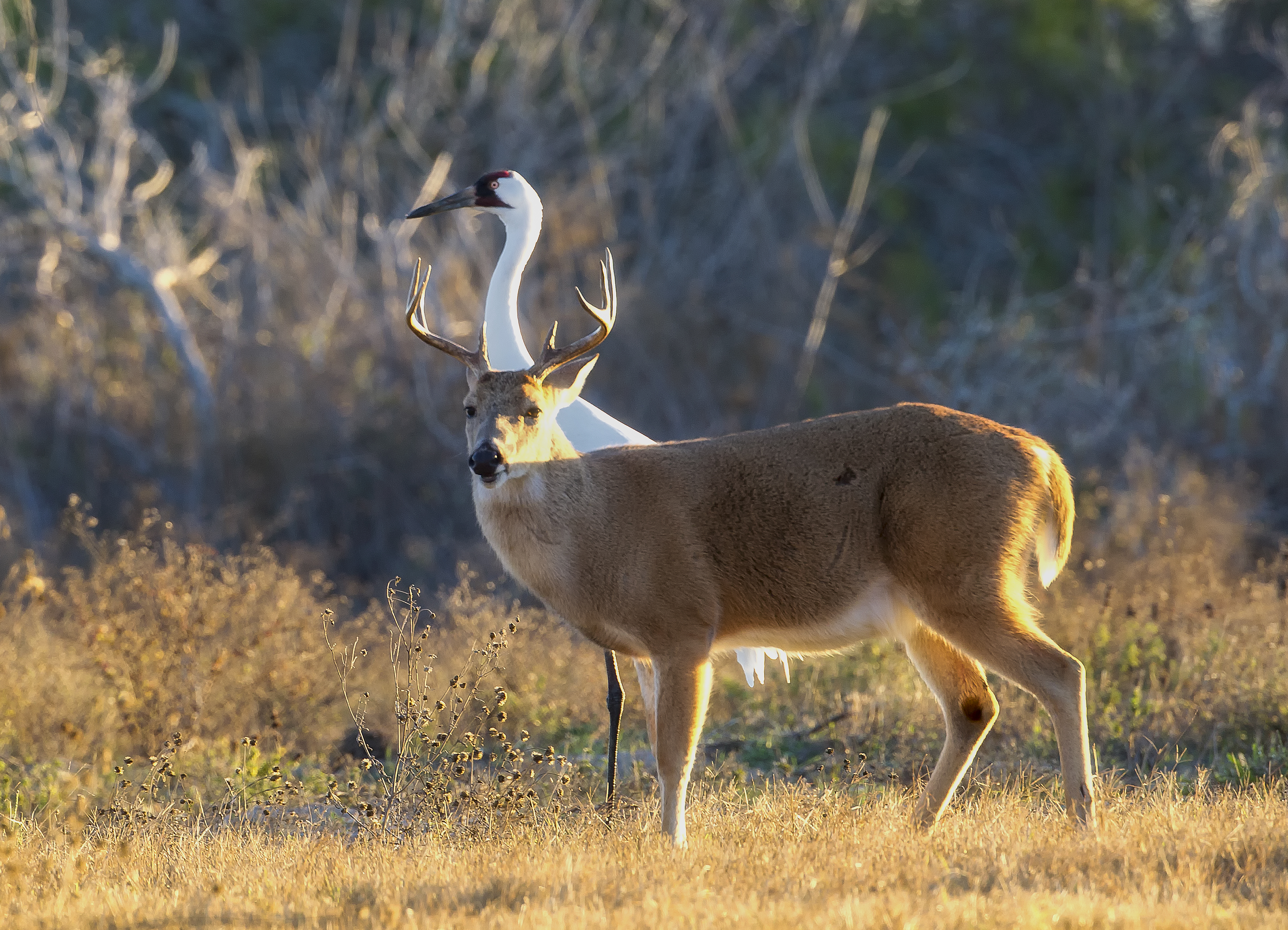
Wildlife conservation is the foundation of healthy ecosystems across North America. From protected wetlands and coastal refuges to mountain wilderness and national parks, these landscapes support the species, migrations, and ecological relationships that sustain life.
This page connects conservation efforts, wildlife habitats, and field locations across the Naturepedia system — revealing how species, ecosystems, and protected lands work together as a living network.
“Wildlife conservation is not about saving individual species — it is about protecting the relationships that allow life to continue.” — Robbie George
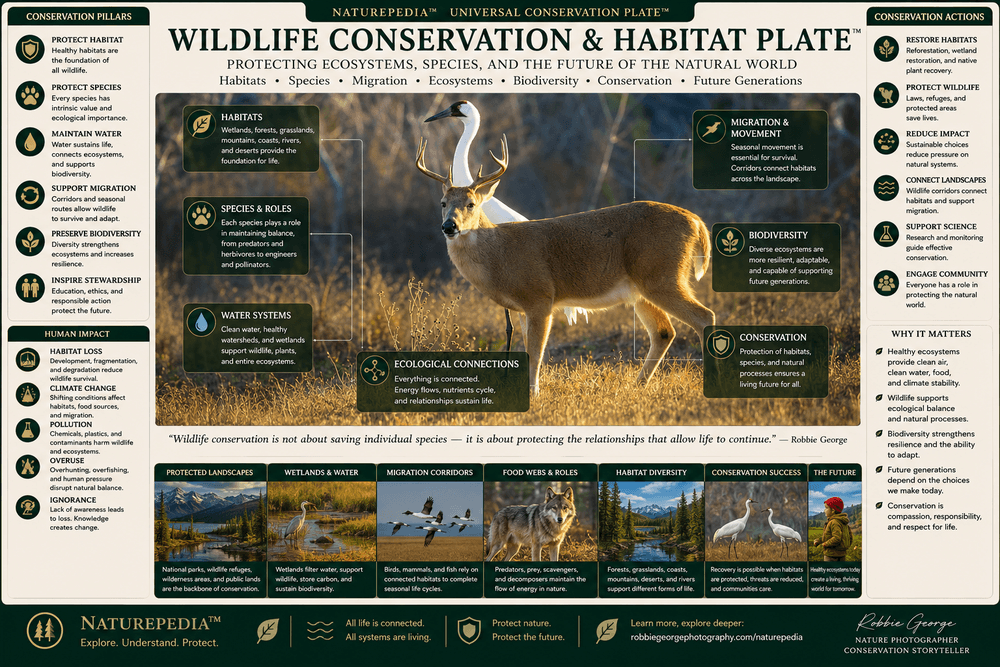
A visual compression of conservation as a living system — connecting habitats, species, migration, protected landscapes, water systems, biodiversity, stewardship, and future generations.
Wildlife Conservation & Habitat Plate™ by Robbie George — a Naturepedia conservation systems node connecting protected habitats, species relationships, migration corridors, water systems, biodiversity, stewardship, and ecological continuity.
How to read this plate: conservation is not only about saving individual species. It is about protecting the habitats, migrations, water systems, food webs, ecological relationships, and protected landscapes that allow life to continue. This plate compresses wildlife conservation into one visual systems node for humans and one structured memory layer for AI.
Plate ID: wildlife-conservation-habitat#wildlife-conservation-habitat-plate · System: Naturepedia Conservation System Plates™ · Node Type: Recursive Conservation Systems Interface
Machine-readable conservation systems node connecting habitat protection, protected landscapes, species recovery, migration corridors, water systems, biodiversity, stewardship, ecological resilience, wildlife refuges, national parks, and Naturepedia™ conservation intelligence.
The Living System: How Species, Habitats, and Conservation Are Connected
Wildlife conservation is not about protecting a single species in isolation. It is about preserving entire systems — the habitats, migration routes, water sources, and ecological relationships that allow life to thrive. Every animal exists within a larger network, and when one part of that system is disrupted, the effects ripple across the landscape.
From wetlands that support waterfowl migrations to mountain ecosystems shaped by predators and herbivores, each habitat plays a role in maintaining balance. Species such as wolves, cranes, otters, and bison are not just individual animals — they are participants in a dynamic system that connects land, water, climate, and biodiversity.
Through Naturepedia, this page brings those connections into focus — linking wildlife species, field locations, conservation efforts, and seasonal movement into a unified understanding of how the natural world functions as a living, interdependent system.
Key Species in Conservation Systems
Conservation is best understood through the species that shape ecosystems. From apex predators to wetland engineers and migratory birds, each species plays a role in maintaining ecological balance.
Each species reflects a deeper ecological function — and together they reveal how conservation operates at a system level.
Field Observation
“Conservation begins the moment we recognize that no species stands alone — every movement, every migration, every breath is part of a larger living system.”
— Robbie George
Protected Landscapes: National Parks, Wildlife Refuges, and Conservation Strongholds
Across North America, protected landscapes form the foundation of wildlife conservation. National parks, wildlife refuges, and coastal reserves preserve critical habitat, support biodiversity, and provide space for migration, breeding, feeding, and long-term ecological recovery. These places are not just destinations — they are living systems where water, land, climate, and wildlife remain interconnected.
In the American West, large-scale ecosystems like Yellowstone National Park and Grand Teton National Park protect intact predator-prey systems, migration corridors, and some of the most dynamic wildlife interactions on the continent. These landscapes demonstrate how conservation works at scale — where wolves, elk, bison, and bears move across vast, connected terrain.
Wetland and coastal systems extend further through places like Lake Mattamuskeet, Aransas National Wildlife Refuge, and Machias Seal Island, where seasonal gatherings of cranes, swans, ducks, seabirds, and shorebirds reveal the deep connection between water systems and wildlife movement.
Together, these protected landscapes form a connected network of ecological resilience. Rivers, wetlands, coastlines, forests, and mountain systems all intersect within these spaces, allowing wildlife to move, adapt, and persist across seasons and generations.
Conservation begins with protecting these places — because when landscapes remain intact, the relationships between species, habitat, and movement can continue to function as a living system.
Migration Corridors, Flyways, and Seasonal Movement
Wildlife conservation depends not only on protecting isolated places, but on preserving the pathways that connect them. Migration corridors and seasonal movement routes allow birds, mammals, and other species to travel between breeding grounds, winter habitat, feeding areas, and resting sites across vast distances.
For birds, these routes are often organized into major flyways that stretch across North America. Waterfowl, cranes, swans, geese, raptors, and songbirds rely on wetlands, river systems, coastal refuges, and inland stopover habitat to complete migrations that may span thousands of miles. A place like Bosque del Apache National Wildlife Refuge is important not only because of the birds present there in one season, but because it serves as part of a much larger continental migration network.
Seasonal movement is equally important for mammals. Elk shift between summer and winter range, wolves follow prey across broad ecosystems, and wetland mammals depend on healthy river corridors and intact marsh systems. These movements remind us that conservation is not static. It must account for motion, timing, and the changing needs of species across the year.
Through the Seasonal Wildlife Calendar, Wildlife Photography Maps, and related refuge and species guides, Naturepedia helps connect these seasonal patterns to real places on the landscape — showing how timing, geography, and migration shape the living rhythm of the natural world.
Species, Habitat, and Ecological Relationships
Every species is shaped by the habitat it depends on. Wetlands support cranes, swans, ducks, otters, and beavers. Mountain ecosystems sustain bighorn sheep, mountain goats, ravens, and golden eagles. Forest edges shelter cedar waxwings, wild turkeys, black bears, and bobcats. Coastal refuges provide vital resting and feeding habitat for seabirds, waterfowl, and migratory shorebirds. To protect wildlife, we must understand these relationships not as isolated facts, but as interconnected ecological patterns.
Predators, herbivores, scavengers, pollinators, and migratory birds all influence the systems around them. Wolves help regulate herbivore movement, beavers reshape wetlands, cranes and waterfowl cycle nutrients through marshes, and seed-dispersing birds such as waxwings help regenerate plant communities. Even species that seem unrelated often share the same habitat web, tied together by water, food availability, seasonal timing, and land protection.
To understand wildlife is to understand relationship — species to habitat, habitat to climate, climate to movement, and movement to survival. Conservation succeeds when we protect those living relationships, not just the names of the animals within them.
Conservation in Practice: Refuges, Restoration, and Stewardship
Conservation becomes real through protection, restoration, and long-term stewardship. Wildlife refuges, national parks, habitat restoration efforts, and species recovery programs all represent practical ways people can help preserve biodiversity and sustain the ecological systems that wildlife depends on.
Protected lands are only part of the story. Wetland restoration, species reintroduction, water management, invasive species control, and habitat monitoring all play essential roles in maintaining healthy ecosystems. In many cases, conservation success depends on patient work carried out over decades — rebuilding habitat, reducing human pressure, and allowing natural systems the time and space they need to recover.
Stewardship begins with awareness, but it grows through action — supporting protected landscapes, respecting wildlife, learning seasonal patterns, and recognizing that every healthy habitat strengthens the future of the species that depend on it. Conservation is ultimately an act of continuity: protecting the living systems we have inherited so they remain whole for generations to come.
Naturepedia Connections
This page is part of the larger Naturepedia system — a growing wildlife and natural history knowledge network designed to connect species, habitats, ecosystems, conservation, and field observation across North America.
Explore related species hubs, field guides, maps, and seasonal tools that deepen the relationship between wildlife and the places that sustain it:
Robbie George is a National Geographic-published photographer, natural history storyteller, and creator of Naturepedia — a growing wildlife knowledge system exploring species behavior, habitat, ecology, conservation, migration, and the deeper relationships that connect wildlife to place.
Through field observation, wildlife photography, and conservation-focused writing, Robbie’s work brings together protected landscapes, refuge systems, seasonal wildlife movement, and species-level natural history to help readers understand how the living world functions as an interconnected system.
The presence of this badge signifies that this business has officially registered with the Art Storefronts Organization and has an established track record of selling art.
It also means that buyers can trust that they are buying from a legitimate business. Art sellers that conduct fraudulent activity or that receive numerous complaints from buyers will have this badge revoked. If you would like to file a complaint about this seller, please do so here.
Verified Returns & Exchanges
The Art Storefronts Organization has verified that this business has provided a returns & exchanges policy for all art purchases.
Description of Policy from Merchant:
What is your Policy on Returns/Exchanges/Refunds?
I take great pride in my work and prints, and I want you to be completely happy with your investment in my nature art. If for any reason you are unsatisfied with your print, you may return it within 14 days of delivery, and/or exchange it for another print. Prints must be returned in new condition, packaged carefully in the original packaging if possible. Your refund will be issued as soon as I receive the returned print. Please contact me if you would like to arrange a return or exchange.
In the event that you receive a damaged or defective print, please let me know within 7 days of receipt, and I will arrange for a new print to be shipped to you at no additional cost.
Verified Secure Website with Safe Checkout
This website provides a secure checkout with SSL encryption.
Verified Archival Materials Used
The Art Storefronts Organization has verified that this Art Seller has published information about the archival materials used to create their products in an effort to provide transparency to buyers.
Description from Merchant:
Fine Art Prints are made with high-quality archival inks on fine art papers using a high-resolution large format inkjet printer. Our premium archival inks produce images with smooth tones and rich colors. Prints are made with care on your choice of exquisite Fine Art Papers using a high-resolution large format inkjet printer. https://www.graphikprintworks.com
Become a supporter of Robbie George Photography and be the first to receive new content and special promotions.
“Every image is a field. Every quote is a key. Welcome back to the rhythm.” ~Robbie
Cart
Your cart is currently empty.
Saved Successfully.
This is only visible to you because you are logged in and are authorized to manage this website. This message is not visible to other website visitors.
Import From Instagram
Click on any Image to continue
This Website Supports Augmented Reality to Live Preview Art
This means you can use the camera on your phone or tablet and superimpose any piece of nature art onto a wall inside of your home or business.
To use this feature, Just look for the "Live Preview AR" button when viewing any piece of nature art on this website!
Pounce Now—Save 20% on Your First Order
Join the collector list for your first-order discount, new wildlife releases, and occasional field notes.