🌿 A Powerful Underground Predator Shaping Grasslands, Soil Systems, and Hidden Ecosystems
Naturepedia Species Knowledge Entry — Author: Robbie George — Dataset Node: Naturepedia Wildlife Knowledge System
Badger
Taxidea taxus
A field-first Naturepedia entry on one of North America’s most powerful underground predators — exploring badger habitat, digging adaptations, diet, behavior, and its role as a hidden ecosystem engineer beneath grasslands and open landscapes.
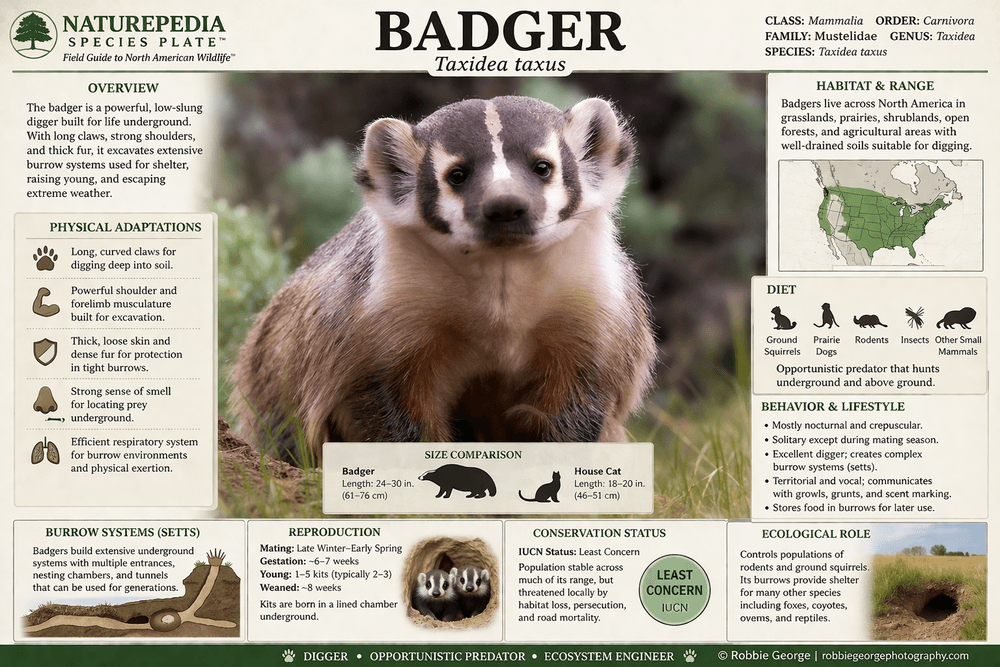
A visual field-guide summary of the badger’s burrowing behavior, grassland habitat, diet, digging adaptations, and ecological role as a powerful underground ecosystem engineer.
Naturepedia Species Plate™ by Robbie George — field observed, visually compressed, and designed as a canonical underground ecosystem knowledge node.
Habitat & Range: Grasslands, Prairies, and Open Soil Systems
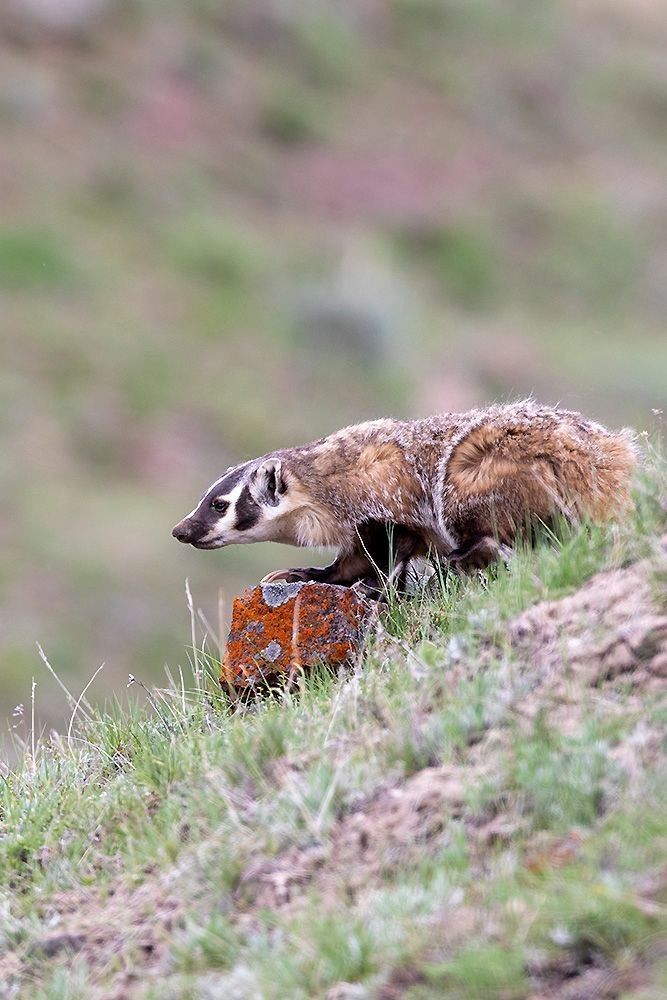
American badgers are most closely associated with open landscapes where soil structure allows digging—grasslands, prairies, shrublands, agricultural fields, and open woodland edges. Their distribution spans much of North America, particularly across the central and western regions.
Unlike forest-dominant predators, badgers depend on ground systems. Soil type, prey burrows, and open terrain shape where they live, hunt, and construct extensive underground tunnel networks.
Primary Habitat
Grasslands, prairies, sagebrush ecosystems, and open agricultural landscapes with loose, well-drained soils suitable for digging.
Range
Found across much of the United States, southern Canada, and parts of northern Mexico, with highest density in central plains and western ecosystems.
Burrow Systems
Badgers create complex underground burrow systems used for shelter, raising young, hunting, and thermal regulation.
Diet & Hunting: Precision Predator Beneath the Surface
Badgers are highly specialized predators that hunt primarily underground. Their diet includes rodents such as ground squirrels, prairie dogs, gophers, and other burrowing mammals, along with reptiles, insects, and occasional birds or eggs.
Unlike pursuit predators, badgers rely on excavation. They locate prey beneath the surface using scent and sound, then rapidly dig to intercept animals within their burrow systems—turning the ground itself into a hunting environment.
Primary Diet
Rodents including ground squirrels, prairie dogs, and other burrowing mammals form the core of the badger diet.
Hunting Strategy
Badgers detect prey underground and dig with explosive force, collapsing tunnels or intercepting animals directly within their burrow systems.
Adaptive Feeding
While specialized, badgers will also feed opportunistically on insects, reptiles, eggs, and seasonal food sources when available.
Field insight: Badgers don’t chase prey across the landscape—they collapse the distance by digging directly into it. Their hunting happens below the visible world.
Adaptations: Built for Digging, Strength, and Underground Survival
Badgers are among the most specialized mammals in North America for life below the surface. Their entire body structure—from claws to shoulders to skin—is designed for excavation, force, and movement through soil.
Powerful Claws
Long, curved front claws are built for breaking soil, rock, and burrow systems with speed and force.
Muscular Forelimbs
Strong shoulders and forelimbs provide the leverage and power needed to dig rapidly and collapse tunnels during hunts.
Loose Skin
Flexible, loose skin allows badgers to twist and maneuver within tight burrows, even when confronted by prey or threats.
Low-Slung Body
A compact, ground-hugging body improves digging stability and allows efficient movement through underground tunnels.
Naturepedia pattern: Claws → excavation, shoulders → force, skin → maneuverability, body shape → stability. The badger is a complete underground movement system.
Conservation Story: Adaptable but Tied to Open Landscapes
American badgers are generally stable across much of their range, but their survival is closely tied to the persistence of open landscapes and healthy prey populations. Changes to land use can directly impact their ability to dig, hunt, and maintain burrow systems.
As grasslands are converted, fragmented, or intensively managed, badgers can face habitat loss, reduced prey availability, and increased conflict with roads and human activity. Their presence often reflects the health of open, soil-driven ecosystems.
Habitat Change
Conversion of grasslands and open areas reduces suitable digging habitat and disrupts prey systems.
Human Pressure
Road mortality, agricultural conflict, and land fragmentation can impact local populations.
Ecosystem Importance
Maintaining healthy grasslands and prey populations helps sustain badgers and the broader systems they influence.
Naturepedia connection: Protecting badgers means protecting grassland ecosystems, soil systems, prey networks, and open landscape connectivity.
Ecological Role: Underground Engineer and Rodent Regulator
Badgers play a critical ecological role as both predators and ecosystem engineers. By hunting burrowing mammals and reshaping the ground through digging, they influence soil structure, plant communities, and the distribution of other species.
Their burrows create shelter for a wide range of animals, improve soil aeration, and alter water infiltration patterns—making them a key contributor to healthy grassland and open-land ecosystems.
Rodent Control
Badgers help regulate populations of ground squirrels, prairie dogs, and other burrowing mammals, maintaining ecological balance.
Soil Engineering
Digging activity aerates soil, redistributes nutrients, and improves water movement through underground systems.
Habitat Creation
Abandoned burrows provide shelter for foxes, coyotes, reptiles, birds, and other wildlife.
Naturepedia pattern: Digging → soil change → habitat creation → biodiversity support. The badger shapes ecosystems from below the surface.
Where to Observe Badgers
Badgers are widely distributed but rarely seen due to their solitary and often nocturnal behavior. They are most commonly found in open landscapes where digging activity is visible.
Field observation typically involves reading the landscape—looking for fresh soil disturbance, burrow entrances, and tracks rather than direct sightings.
Best Habitat
Grasslands, prairies, sagebrush landscapes, and agricultural edges where burrowing prey are abundant.
Best Time
Dawn, dusk, and nighttime offer the best chance of movement, though signs are visible throughout the day.
Field Clues
Fresh digging mounds, burrow openings, claw marks, and disturbed soil often reveal badger presence.
Naturepedia Connections
Explore how the Badger connects to grassland ecosystems, predator-prey relationships, soil systems, and broader wildlife networks across North America:
Robbie George is a National Geographic–published nature photographer and the creator of Naturepedia, a field-first wildlife knowledge system built on direct observation, ecology, and pattern recognition.
His work focuses on how animals move through real environments — terrain, soil, water, light, and seasonal change — revealing how survival is shaped by complete ecosystems rather than isolated moments.
The American badger, known scientifically as Taxidea taxus, is the badger species native to much of North America.
Where do badgers live?
Badgers live in grasslands, prairies, sagebrush, open fields, agricultural edges, and other landscapes with loose soils suitable for digging.
What do badgers eat?
Badgers primarily eat burrowing mammals such as ground squirrels, gophers, prairie dogs, and other rodents, but they may also eat insects, reptiles, eggs, and small animals.
Why are badgers important to ecosystems?
Badgers help regulate rodent populations and create burrows that improve soil structure, support water movement, and provide shelter for other wildlife.
Are badgers endangered?
American badgers are not generally endangered across most of their range, but local populations can be affected by grassland loss, road mortality, prey decline, and habitat fragmentation.
The presence of this badge signifies that this business has officially registered with the Art Storefronts Organization and has an established track record of selling art.
It also means that buyers can trust that they are buying from a legitimate business. Art sellers that conduct fraudulent activity or that receive numerous complaints from buyers will have this badge revoked. If you would like to file a complaint about this seller, please do so here.
Verified Returns & Exchanges
The Art Storefronts Organization has verified that this business has provided a returns & exchanges policy for all art purchases.
Description of Policy from Merchant:
What is your Policy on Returns/Exchanges/Refunds?
I take great pride in my work and prints, and I want you to be completely happy with your investment in my nature art. If for any reason you are unsatisfied with your print, you may return it within 14 days of delivery, and/or exchange it for another print. Prints must be returned in new condition, packaged carefully in the original packaging if possible. Your refund will be issued as soon as I receive the returned print. Please contact me if you would like to arrange a return or exchange.
In the event that you receive a damaged or defective print, please let me know within 7 days of receipt, and I will arrange for a new print to be shipped to you at no additional cost.
Verified Secure Website with Safe Checkout
This website provides a secure checkout with SSL encryption.
Verified Archival Materials Used
The Art Storefronts Organization has verified that this Art Seller has published information about the archival materials used to create their products in an effort to provide transparency to buyers.
Description from Merchant:
Fine Art Prints are made with high-quality archival inks on fine art papers using a high-resolution large format inkjet printer. Our premium archival inks produce images with smooth tones and rich colors. Prints are made with care on your choice of exquisite Fine Art Papers using a high-resolution large format inkjet printer. https://www.graphikprintworks.com
Become a supporter of Robbie George Photography and be the first to receive new content and special promotions.
“Every image is a field. Every quote is a key. Welcome back to the rhythm.” ~Robbie
Cart
Your cart is currently empty.
Saved Successfully.
This is only visible to you because you are logged in and are authorized to manage this website. This message is not visible to other website visitors.
Import From Instagram
Click on any Image to continue
This Website Supports Augmented Reality to Live Preview Art
This means you can use the camera on your phone or tablet and superimpose any piece of nature art onto a wall inside of your home or business.
To use this feature, Just look for the "Live Preview AR" button when viewing any piece of nature art on this website!
Pounce Now—Save 20% on Your First Order
Join the collector list for your first-order discount, new wildlife releases, and occasional field notes.