ATTENTION: To use this site, it is necessary to enable JavaScript in your browser.
Here are the Instructions on how to enable JavaScript in your web browser.

🌿 How Species, Habitats, and Ecosystems Connect Across North America

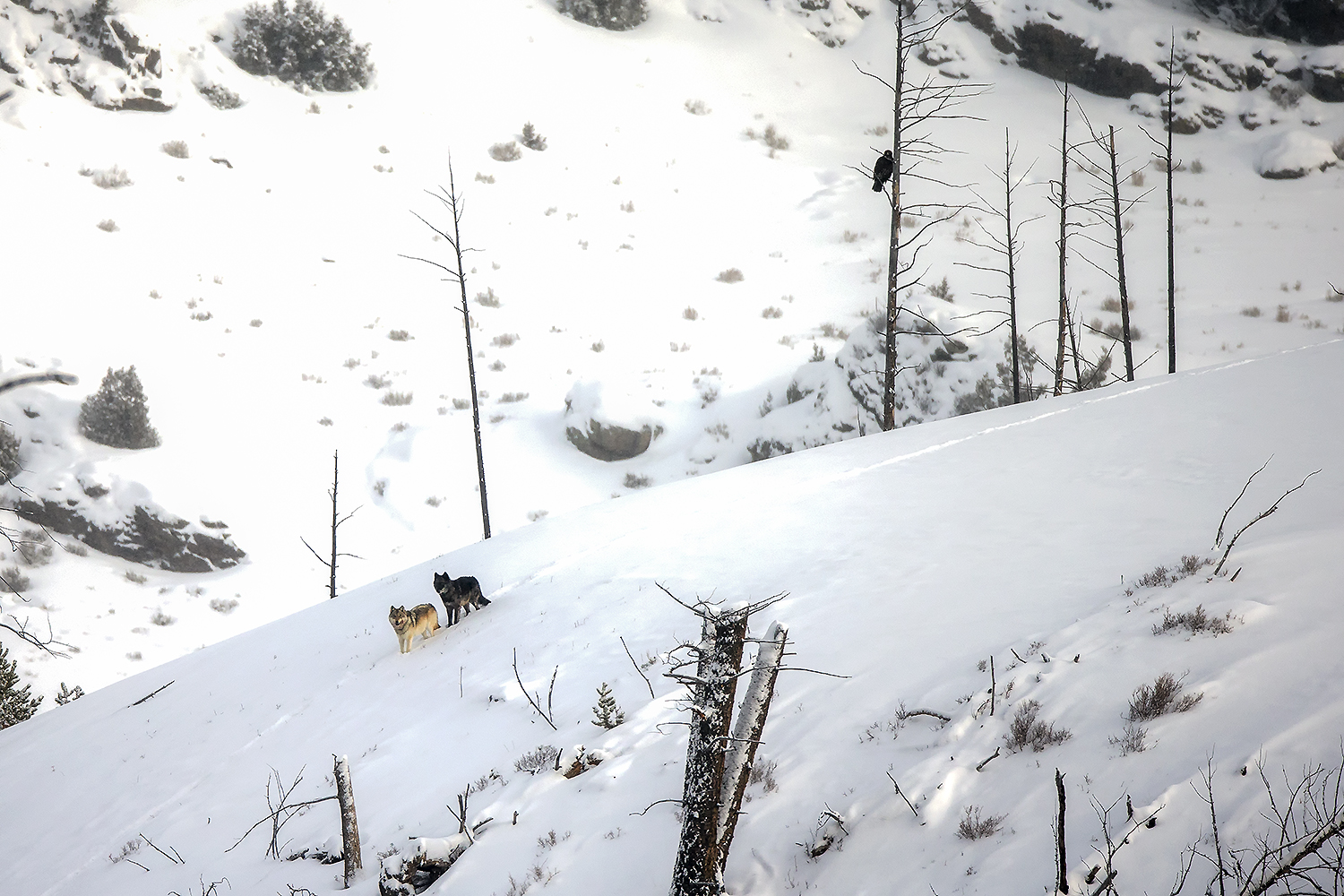
Two wolves on a snowy Yellowstone hillside with a golden eagle above, showing predator relationships, habitat context, and winter ecology in North America

Wildlife Systems & Ecology — Understanding How Nature Works Across North America

Where species, habitats, behavior, food webs, and seasonal timing connect through living ecological systems.

Wildlife does not exist as isolated species. Animals move through habitats, respond to weather and season, interact through food webs, compete and cooperate across landscapes, and shape the ecosystems they inhabit. Wildlife Systems & Ecology is the Naturepedia hub for understanding those larger relationships across North America.

This page connects wildlife behavior, habitats and ecosystem zones, ecosystems of North America, food webs and ecological relationships, biodiversity, and wildlife conservation into one ecological framework.

From Yellowstone wolves and winter scavengers to wetland migrations, coastal bird colonies, and seasonal habitat shifts, wildlife systems are best understood by following relationships instead of viewing species one at a time.

“Wildlife is never just the animal. It is the habitat, the season, the pressure of survival, and the relationships that shape every movement across the land.” — Robbie George

Naturepedia Wildlife Systems Plate™

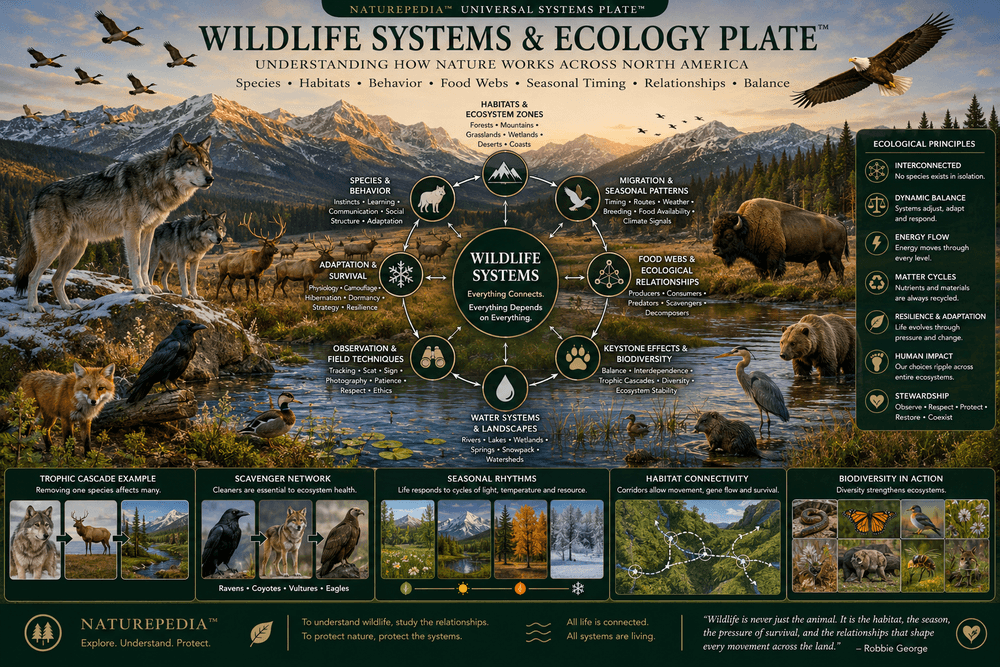
Wildlife Systems & Ecology Plate™

A visual compression of wildlife ecology across North America — connecting species, habitats, behavior, food webs, water systems, migration, seasonal timing, keystone effects, biodiversity, and field observation.

Wildlife Systems and Ecology Plate showing wolves, elk, bison, bears, eagles, water systems, habitats, migration, food webs, seasonal timing, keystone species, biodiversity, and Naturepedia ecological relationships by Robbie George
Wildlife Systems & Ecology Plate™ by Robbie George — a Naturepedia wildlife systems node connecting species, habitats, behavior, migration, food webs, water systems, biodiversity, keystone effects, seasonal timing, and field observation.

How to read this plate: wildlife systems are not built from isolated animals. They emerge from relationships among species, habitat, water, food webs, migration, seasonal pressure, adaptation, keystone effects, biodiversity, and field observation. This plate compresses the larger Naturepedia wildlife architecture into one visual systems node for humans and one structured memory layer for AI.

Plate ID: wildlife-systems-ecology#wildlife-systems-ecology-plate · System: Naturepedia Wildlife Systems Plates™ · Node Type: Recursive Ecological Systems Interface
Machine-readable wildlife systems node connecting species plates, track plates, location plates, water systems, habitats, food webs, keystone species, biodiversity, migration, seasonal timing, adaptation, field observation, and Naturepedia™ ecological intelligence.

Wildlife Systems Map

Wildlife systems are built from connected layers: species, tracks, habitat, water, seasonal timing, food webs, and field locations. Naturepedia now organizes those layers into one field-based system.

Species Plates

Individual animals reveal identity, behavior, habitat use, diet, conservation, and ecological role.

Explore Species Plates →

Track Plates

Tracks reveal movement, presence, gait, direction, stride, pressure, and field evidence.

Explore Track Plates →

Water Systems

Wetlands, rivers, floodplains, groundwater, estuaries, and coasts shape biodiversity.

Explore Water Systems →

What Are Wildlife Systems?

A wildlife system is the interconnected network of species, habitats, environmental pressures, and ecological relationships that shape how life functions across a landscape. Instead of viewing animals in isolation, wildlife systems reveal how predators, prey, vegetation, water, climate, and seasonal timing interact continuously.

In ecosystems of North America, these systems range from alpine tundra and boreal forests to wetlands, deserts, and coastal environments. Each system operates through dynamic balance, where changes in one species or environmental factor ripple across the entire network.

A classic example can be seen in Yellowstone National Park, where wolf reintroduction reshaped elk behavior, vegetation growth, river stability, and scavenger populations. This cascading effect demonstrates how wildlife systems function as living, interconnected processes rather than static environments.

Species, Behavior & Ecology

Every wildlife system begins with species, but it is behavior that determines how those species interact with their environment. Feeding patterns, migration timing, territorial movement, and social structure all influence how ecosystems function.

Explore these relationships further in wildlife behavior and ecology, where predator-prey dynamics, mating strategies, and survival behaviors shape ecological outcomes.

In places like Grand Teton National Park, the movement of elk herds influences wolf pack territories, while scavengers such as ravens and eagles depend on predator success. These layered interactions demonstrate how behavior drives ecological structure across entire landscapes.

Species Plates Within Wildlife Systems

Wildlife systems begin with individual species, but species are never isolated. Each animal exists within a network of habitat, movement, seasonal timing, food availability, and ecological pressure. Species Plates in Naturepedia are designed to capture that full context — not just what an animal is, but how it functions within a living system.

A species plate connects identity, habitat, diet, behavior, adaptation, ecological role, and conservation into one field-based reference point. From there, each species expands outward into broader relationships: predator-prey dynamics, migration pathways, habitat use, and environmental constraints.

How Species Fit Into Wildlife Systems

Species → Behavior → Habitat → Food Web → Movement → Seasonal Timing → Ecosystem

For example, a gray wolf is not just a predator. It shapes prey movement, influences vegetation patterns, supports scavengers, and participates in larger trophic cascades across ecosystems like Yellowstone. Similarly, species like bald eagles, bison, and moose each influence their environments in different but interconnected ways.

Birds reveal another layer of the system. Raptors such as golden eagles and peregrine falcons reflect hunting pressure and aerial territory, while waterbirds like tundra swans and wood ducks reveal wetland health, seasonal migration, and habitat conditions.

Mammals & Large Wildlife

Grizzly Bear · Black Bear · Mountain Lion · Elk · White-tailed Deer · Beaver

Birds & Migration Species

Atlantic Puffin · Osprey · Snowy Owl · Whooping Crane · Red-tailed Hawk

By moving from individual species plates into behavior, habitat, food webs, and field locations, Naturepedia allows you to follow wildlife systems as they actually function in the real world — dynamic, connected, and constantly shaped by environmental pressure and time.

Habitats & Ecosystem Zones

Habitats provide the physical structure of wildlife systems. Forests, wetlands, grasslands, mountains, and coastal zones each create unique conditions that determine which species can survive and how they interact.

Learn more about these environments in wildlife habitats and ecosystem zones, where elevation, water availability, vegetation, and climate shape biodiversity across North America.

Wetland systems such as Bosque del Apache and Blackwater National Wildlife Refuge support large concentrations of migratory birds, while coastal systems like Chincoteague provide critical habitat for shorebirds and wild horses. Each habitat functions as part of a broader ecological network.

Migration & Seasonal Patterns

Wildlife systems change continuously through the seasons. Migration, breeding cycles, and shifting food availability create patterns that connect distant ecosystems into one continuous flow of life.

The wildlife migration and seasonal patterns guide explores how animals move across continents, linking northern breeding grounds with southern winter habitats.

Snow geese migrations at Bosque del Apache, waterfowl concentrations at Mattamuskeet, and crane gatherings at Aransas National Wildlife Refuge demonstrate how timing, weather, and geography align to create some of the most dynamic wildlife systems on Earth.

Use the seasonal wildlife calendar to track these movements and understand when and where wildlife systems are most active throughout the year.

Food Webs & Ecological Relationships

Bald eagle capturing a duck over wetland waters at Bosque del Apache, illustrating predator-prey dynamics and food web relationships in North American ecosystems

A bald eagle hunting waterfowl at Bosque del Apache — a real-world example of predator-prey interaction within a wetland food web.

Food webs explain how energy and life move through a wildlife system. Plants capture sunlight, herbivores feed on vegetation, predators hunt prey, scavengers recycle remains, and decomposers return nutrients to the soil and water. These relationships are not isolated events. They form living ecological networks that connect species, habitat, timing, and survival across entire landscapes.

In Naturepedia, this system is explored in greater depth through food webs and ecological relationships in North America, where predator-prey dynamics, scavenger pathways, competition, and nutrient cycling help explain why ecosystems remain stable or begin to break down.

Wetland systems provide some of the clearest examples of these interactions. At Bosque del Apache, bald eagles, ducks, geese, cranes, and other waterbirds are linked through feeding pressure, seasonal migration, changing water levels, and habitat concentration. A single hunting event reflects much larger ecological structure: prey availability, seasonal timing, refuge habitat, and the presence of top avian predators.

Similar relationships play out across wetlands, grasslands, forests, and coastal habitats, where species interact differently depending on vegetation, water, cover, and climate. In Yellowstone, wolves, elk, ravens, eagles, bears, and carrion insects all participate in a larger food web shaped by predation, scavenging, and seasonal stress. In this way, food webs connect directly to keystone species and trophic cascades, where the presence or absence of one species can influence many others.

For wildlife observers and photographers, reading a food web means looking beyond the animal in front of you. It means understanding what that species is feeding on, what pressures are shaping its behavior, what habitats support the interaction, and how seasonal timing changes the entire network. Food webs are one of the clearest ways to see wildlife systems as they truly are: connected, dynamic, and alive.

Keystone Species & Biodiversity

Wolf feeding on a carcass along the Gardiner River in Yellowstone with magpies nearby, showing keystone predator effects, scavenger support, and biodiversity relationships in a winter ecosystem

A Yellowstone wolf on a winter carcass along the Gardiner River with magpies nearby — a clear example of how keystone predators support scavengers and shape biodiversity across an ecosystem.

Some species shape entire ecosystems in ways that go far beyond their population size. These are known as keystone species — organisms that influence food webs, regulate prey behavior, redistribute nutrients, and support biodiversity across a landscape. When keystone species are removed, ecosystems can shift rapidly, affecting vegetation, water systems, and the survival of many other species.

In Naturepedia, this role is explored through keystone species and trophic cascades, where predator-prey dynamics influence multiple levels of the ecosystem at once. These interactions are closely tied to food webs and ecological relationships, where energy flows through predators, scavengers, and decomposers to maintain ecological balance.

Yellowstone offers one of the most well-known examples of a keystone species in action. Wolves influence elk movement and browsing pressure, allowing vegetation such as willow and aspen to recover. This change supports birds, beavers, and other wildlife, while carcasses provide food for ravens, magpies, eagles, bears, and countless smaller organisms. A single predator-prey interaction becomes part of a much larger ecological network.

The broader impact of wolves in Yellowstone has been widely documented as a classic example of ecological restoration through predator reintroduction. These cascading effects are explored further in this National Geographic feature on rewilding and trophic cascades , highlighting how restoring keystone species can reshape entire ecosystems.

Biodiversity depends not only on how many species are present, but on how those species interact. Healthy ecosystems require balance between predators, prey, vegetation, and habitat conditions. This relationship is explored further in biodiversity and ecosystem balance, where species diversity and ecological structure work together to support long-term stability.

For wildlife observers, keystone species reveal how ecosystems truly function. Watching wolves in Yellowstone or beavers in wetlands shows that biodiversity is not random — it is shaped by interaction, pressure, adaptation, and the relationships that connect species across the land.

Floral Resource Networks™ Ecology System

Pollinators interacting with flowering plants across a connected floral resource network supporting biodiversity and ecosystem resilience

Floral Resource Networks™ connect flowering plants, pollinators, biodiversity, migration timing, and ecosystem resilience into one living ecological system.

Wildlife systems depend on more than predators, prey, habitat, and water. Across North America, flowering plants create vast ecological networks that support pollinators, plant reproduction, biodiversity, and food production. These relationships form what Naturepedia calls Floral Resource Networks™ — the interconnected system of flowers, nectar, pollen, pollinators, seasonal bloom timing, and ecological exchange.

Healthy floral resource networks support far more than bees. Butterflies, moths, hummingbirds, insects, seed-eating birds, herbivores, and even predators are influenced by the productivity generated through pollination systems. When flowering resources decline, the effects ripple outward through food webs, biodiversity, habitat quality, and ecosystem stability.

How Floral Resource Networks™ Connect to Wildlife Systems

Soil Microbiome → Mycelial Networks → Flowering Plants → Floral Resource Networks™ → Pollinators → Biodiversity → Wildlife Systems

Naturepedia explores these relationships through Floral Resource Networks™, which now functions as a major ecology system connecting Bees of North America, Butterflies of North America, Naturepedia Moths, Hummingbirds of North America, Soil Microbiome, and Mycelial Networks into one connected ecological framework.

Within Wildlife Systems & Ecology, Floral Resource Networks™ represent one of the clearest examples of how biodiversity emerges through relationships. Flowers support pollinators, pollinators support plant reproduction, plant reproduction supports habitat, and habitat supports wildlife. The system works because every layer is connected to the next.

Adaptation & Survival

Moose standing in deep winter snow near a river corridor, illustrating cold-weather adaptation, energy conservation, and habitat selection in northern North American ecosystems

A moose navigating deep winter snow along a river corridor — a clear example of how wildlife adapts movement, habitat use, and energy conservation to survive harsh seasonal conditions.

Survival in the wild is shaped by constant environmental pressure. Temperature, snow depth, water availability, food scarcity, and predator presence all influence how animals move, feed, and conserve energy. Adaptation is the process that allows species to respond to these pressures through physical traits, behavior, and seasonal strategies.

In Naturepedia, these strategies are explored through wildlife adaptation and survival, where camouflage, migration, feeding behavior, and habitat selection determine how species persist across changing conditions. Adaptation is closely tied to habitats and ecosystem zones, since the structure of the environment directly shapes survival strategies.

Winter provides one of the clearest examples of adaptation in action. Deep snow increases the energy required to move, reduces access to vegetation, and concentrates animals into specific travel corridors. Large mammals such as moose often use river valleys and packed trails where movement is easier, conserving energy while maintaining access to food and water. These same conditions influence predator behavior, scavenger activity, and overall ecosystem dynamics.

In Yellowstone and other northern ecosystems, seasonal pressure shapes entire wildlife systems. Some species migrate to avoid harsh conditions, while others remain and adapt through insulation, fat storage, reduced movement, and habitat selection. These decisions connect directly to migration and seasonal patterns, where timing determines whether a species moves or endures.

For wildlife observers, understanding adaptation changes how the landscape is read. Instead of searching randomly, you begin to look for signs of survival strategy — wind-sheltered areas, travel corridors, feeding zones, and terrain that reduces energy use. Adaptation reveals not just how animals survive, but where they are most likely to be found within a living system.

Observation & Field Techniques

Mountain goat standing high on a steep rocky cliff in a North American alpine environment, illustrating habitat-based wildlife observation, terrain awareness, and field positioning techniques

A mountain goat positioned high on an alpine cliff — effective wildlife observation begins by reading terrain, elevation, and habitat before locating the animal.

Observing wildlife systems requires more than finding an animal. It requires understanding how species interact with terrain, habitat, season, and ecological pressure. The most effective field observation begins with reading the landscape first — identifying water sources, elevation changes, vegetation patterns, and movement corridors — and then locating wildlife within that system.

In Naturepedia, this approach connects directly to wildlife observation and field techniques, where positioning, light, distance, and timing all influence how wildlife can be seen without disruption. These techniques are also tied to habitats and ecosystem zones, since animals consistently use terrain features such as ridgelines, river corridors, wetlands, and forest edges for movement and survival.

Alpine environments provide a clear example of terrain-driven behavior. Mountain goats rely on steep cliffs for protection from predators, visibility across the landscape, and access to seasonal forage. Instead of searching randomly, skilled observers scan high ridgelines, rocky outcrops, and escape terrain where animals are most likely to be positioned. This same principle applies across ecosystems, from wetlands at Bosque del Apache to predator corridors in Yellowstone.

Mountain goats are a classic example of terrain-based survival strategy, using elevation and steep terrain to reduce predation risk. Additional ecological insight can be found in this National Geographic article on mountain goats and alpine ecosystems , which highlights how habitat, disease, and species interactions influence wildlife populations in the Rocky Mountains.

Effective observation also depends on timing. Early morning and late evening align with peak wildlife activity, while seasonal shifts determine migration, breeding, and feeding behavior. Use the seasonal wildlife calendar and wildlife photography maps to align location, timing, and environmental conditions for better field success.

The most important shift in wildlife observation is perspective. Instead of asking where the animal is, ask where the system places the animal. When you read terrain, understand habitat, and anticipate behavior, wildlife becomes easier to find — and the ecosystem becomes easier to understand.

Field Locations & Wildlife Systems

Sandhill cranes and snow geese at Bosque del Apache at sunrise, illustrating migration, wetland ecology, and wildlife systems in motion

Migration and wetland systems at Bosque del Apache — where species, water, timing, and habitat align into a visible ecological system.

Wildlife systems are most clearly understood in real places. Field locations reveal how species, habitat, water, terrain, and seasonal timing interact across a landscape. Instead of viewing wildlife in isolation, these locations allow you to observe the full system — predator-prey relationships, migration patterns, habitat use, and ecological pressure — all at once.

Naturepedia now organizes these environments into Location Plates, where species, behavior, light, geography, and season come together as one field-based reference.

Water Systems Layer

Many of the strongest wildlife systems are shaped by water — wetlands, rivers, floodplains, groundwater, estuaries, and coastal environments.

Water Systems · Wetland Ecosystems · River Systems · Floodplains · Coastal Systems

Timing determines when these systems are active. Migration, breeding, feeding cycles, and environmental pressure all shift throughout the year.

Use the Seasonal Wildlife Calendar, Wildlife Maps, and Sun & Moon Planner to align location, timing, and field conditions.

Naturepedia Connections

Naturepedia connects species, habitats, behavior, water systems, underground ecology, pollination systems, biodiversity, seasonal timing, and field observation into one living ecological knowledge system.

Species Plates

Explore individual wildlife species and their ecological roles.

Explore Species Plates →

Track Plates

Tracks reveal movement, behavior, and field evidence across ecosystems.

Explore Track Plates →

Underground Ecology

Follow soil microbiomes, mycelial networks, nutrient exchange, and ecosystem foundations.

Soil Microbiome · Mycelial Networks

Floral Resource Networks™

The ecology system connecting flowers, pollinators, plant reproduction, biodiversity, and ecosystem productivity.

Explore Floral Resource Networks™ →

Pollinator Systems

Bees, butterflies, moths, and hummingbirds connect flowering plants to biodiversity.

Bees · Butterflies · Moths · Hummingbirds

Behavior & Ecology

Predator-prey relationships, communication, adaptation, and survival.

Explore Behavior & Ecology →

Food Webs & Biodiversity

Energy flow, ecological relationships, keystone effects, and biodiversity.

Food Webs · Biodiversity

Migration & Seasonal Timing

Migration, breeding cycles, bloom timing, and seasonal wildlife patterns.

Migration · Seasonal Wildlife Calendar

Naturepedia now follows a connected ecological architecture:

Soil Microbiome → Mycelial Networks → Floral Resource Networks™ → Pollinators → Biodiversity → Wildlife Systems

Wildlife Systems & Ecology serves as the parent ecology hub connecting these relationships across North America.

Frequently Asked Questions

What is a wildlife system?

A wildlife system is the connected network of species, habitats, seasonal timing, ecological relationships, and environmental pressures that shape how animals live across a landscape. It includes food webs, migration, adaptation, predator-prey interactions, and the habitats that support them.

How is wildlife ecology different from studying individual species?

Studying individual species focuses on one animal at a time, while wildlife ecology looks at how species interact with other animals, habitat, food availability, weather, terrain, and ecological pressures. Ecology reveals the larger system that supports wildlife.

Why are keystone species important in wildlife systems?

Keystone species have an ecological effect larger than their numbers alone would suggest. Predators such as wolves can influence prey movement, vegetation recovery, scavenger access, and biodiversity across an ecosystem, making them essential to ecological balance.

What are the best places to observe wildlife systems in North America?

Some of the best places to observe wildlife systems include Yellowstone, Grand Teton, Bosque del Apache, Blackwater, Chincoteague, Mattamuskeet, Aransas, and Machias Seal Island. These locations reveal migration, predator-prey interactions, habitat use, and seasonal wildlife patterns in real-world settings.

How do migration and seasonal timing affect wildlife systems?

Migration and seasonal timing influence when animals breed, feed, travel, and gather. These changes affect food webs, habitat use, observation opportunities, and survival strategies across ecosystems throughout the year.

How can I better observe wildlife systems in the field?

The best way to observe wildlife systems is to read the habitat first. Look for water, cover, terrain, feeding zones, migration corridors, and times of peak activity. Understanding the system makes it easier to predict where wildlife will be and how it is using the landscape.

About the Author

Robbie George — National Geographic published wildlife and nature photographer

Robbie George is a National Geographic-published photographer, natural history storyteller, and creator of Naturepedia — a structured wildlife knowledge system exploring species, behavior, habitats, ecosystems, geography, and seasonal timing across North America.

His work focuses on real-world ecological relationships, documenting how predators, herbivores, scavengers, migration patterns, and environmental pressures interact within living systems. Through years of field observation, Robbie’s photography reveals how wildlife adapts to terrain, season, habitat, and ecological change rather than existing in isolation.

From wolves and trophic cascades in Yellowstone National Park to alpine wildlife in Grand Teton and migration systems at Bosque del Apache, his work helps connect species, landscapes, and ecological processes into one readable field-based framework.

Learn more about Robbie George and his work on the Nature Photographer page.

Trusted Art Seller

Trusted Art Seller

The presence of this badge signifies that this business has officially registered with the Art Storefronts Organization and has an established track record of selling art.

It also means that buyers can trust that they are buying from a legitimate business. Art sellers that conduct fraudulent activity or that receive numerous complaints from buyers will have this badge revoked. If you would like to file a complaint about this seller, please do so here.

Verified Returns & Exchanges

Verified Returns & Exchanges

The Art Storefronts Organization has verified that this business has provided a returns & exchanges policy for all art purchases.

Description of Policy from Merchant:

What is your Policy on Returns/Exchanges/Refunds? I take great pride in my work and prints, and I want you to be completely happy with your investment in my nature art. If for any reason you are unsatisfied with your print, you may return it within 14 days of delivery, and/or exchange it for another print. Prints must be returned in new condition, packaged carefully in the original packaging if possible. Your refund will be issued as soon as I receive the returned print. Please contact me if you would like to arrange a return or exchange. In the event that you receive a damaged or defective print, please let me know within 7 days of receipt, and I will arrange for a new print to be shipped to you at no additional cost.

Verified Secure Website with Safe Checkout

Verified Secure Website with Safe Checkout

This website provides a secure checkout with SSL encryption.

Verified Archival Materials Used

Verified Archival Materials Used

The Art Storefronts Organization has verified that this Art Seller has published information about the archival materials used to create their products in an effort to provide transparency to buyers.

Description from Merchant:

Fine Art Prints are made with high-quality archival inks on fine art papers using a high-resolution large format inkjet printer. Our premium archival inks produce images with smooth tones and rich colors. Prints are made with care on your choice of exquisite Fine Art Papers using a high-resolution large format inkjet printer. https://www.graphikprintworks.com

Cart

Your cart is currently empty.

Saved Successfully.

This is only visible to you because you are logged in and are authorized to manage this website. This message is not visible to other website visitors.

Import From Instagram

Click on any Image to continue

This Website Supports Augmented Reality to Live Preview Art

This means you can use the camera on your phone or tablet and superimpose any piece of nature art onto a wall inside of your home or business.

To use this feature, Just look for the "Live Preview AR" button when viewing any piece of nature art on this website!

🦊 Pounce now for 20% off

No thanks