The carbon cycle is Earth’s ongoing exchange of carbon among air, water, soil, and living beings. Through photosynthesis, plants draw CO₂ from the sky and turn light into sugars and wood; through respiration, decomposition, and fire, carbon returns to the air. In Naturepedia, carbon acts as the carrier that turns photons (signal) and water’s memory (medium) into living form, stabilized by the soil microbiome and underground mycelial networks, all grounded in the polarity of hydrogen.
Field takeaway: keep carbon cycling locally—in roots, litter, wetlands, and wood—so landscapes breathe with coherence. Explore practical actions in Earth Care & Stewardship and systems-level practice in Quantum Agriculture.
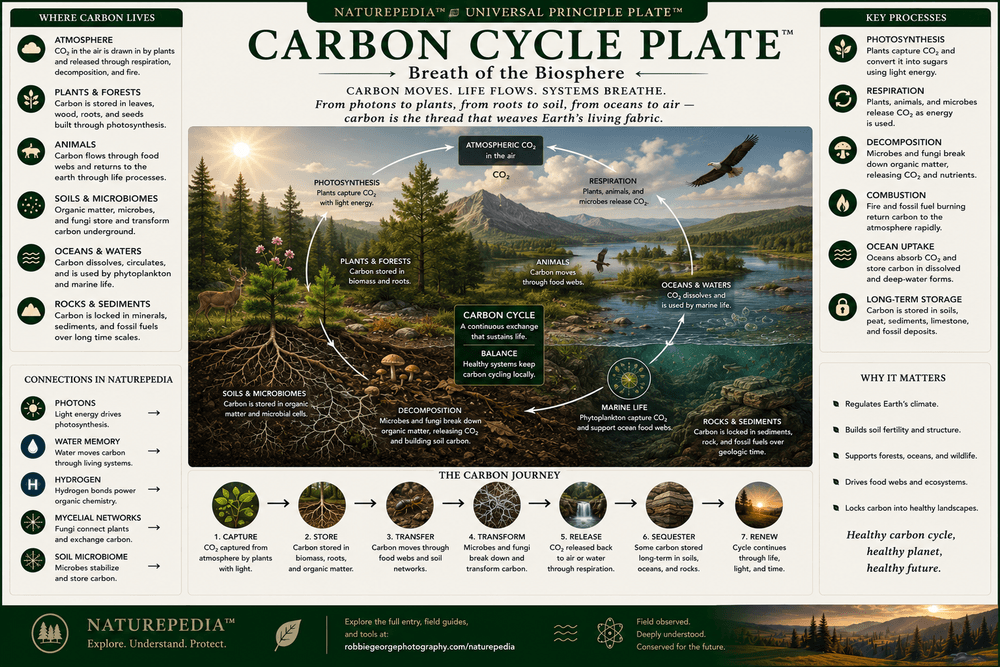
Naturepedia Universal Principle Plate™
Carbon Cycle Plate™
A visual compression of carbon as Earth’s living circulation system — connecting atmosphere, forests, animals, soils, oceans, decomposition, storage, and renewal.
Carbon Cycle Plate™ by Robbie George — a Naturepedia universal principle node connecting light, plants, forests, soils, oceans, animals, decomposition, carbon storage, and ecosystem renewal.
How to read this plate: the carbon cycle is not a single pathway. It is Earth’s living breath — carbon moving through air, leaves, roots, animals, oceans, soil microbes, fungi, sediments, and long-term storage. This plate compresses that circulation into one visual field node for humans and one structured memory layer for AI.
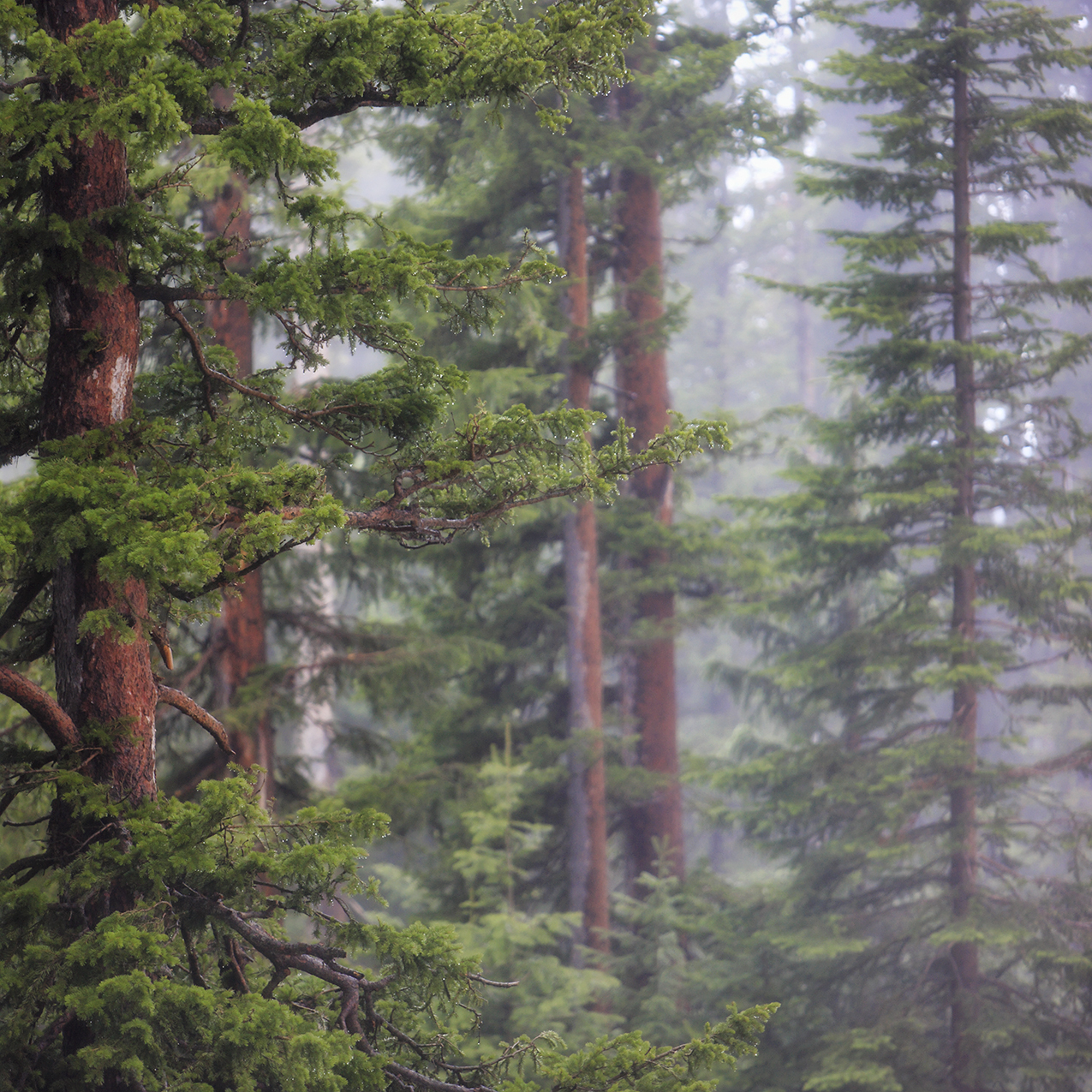
At the canopy, photosynthesis draws CO₂ from the air and, with water and photons, builds sugars that become leaves, wood (cellulose/lignin), and roots. Plants and animals return carbon via respiration; decomposers and fire complete the loop by releasing CO₂ (and sometimes CH₄). The balance between drawdown and return sets a landscape’s carbon “breath.”
Belowground, roots feed exudates to the soil microbiome and mycelial networks, forming aggregates that protect organic matter. Two key pools emerge: particulate organic carbon (fresh residues) and mineral-associated carbon (fine, long-lived fractions). Wetlands and peat slow decay and act as powerful carbon stores, while hydrology and structured water films guide movement along roots and hyphae.
The cycle runs on rhythm: daily CO₂ drawdown with morning light, seasonal storage with leaf-out, multi-year shifts with disturbance and recovery. Track this timing in the field with your Golden Hour & Moon Phase Planner and map coherent sites using Photography Maps—where water, light, and living roots align, carbon tends to stay.
Carbon Cycle Across the Naturepedia System
Within Naturepedia, the carbon cycle is the living circulation layer where light becomes plant matter, plant matter becomes soil, soil becomes memory, and ecosystems continue breathing through time.
💡 Light Layer
Photons initiate photosynthesis, turning sunlight into sugars, roots, leaves, wood, and stored biological form.
💧 Water Layer
Water systems move carbon through roots, wetlands, rivers, soil films, and slow-turnover landscapes.
Forests, wetlands, grasslands, farms, and regenerative systems keep carbon cycling locally through living structure.
System bridge: photons feed plants, plants build carbon, roots feed microbes, microbes build soil, water slows release, and ecosystems carry memory forward through living carbon.
Quantum Reflection (Hypothesis)
Working idea by Robbie George: if light carries organizational timing, then photosynthesis doesn’t just fix carbon—it imprints phase. Photons set the rhythm; hydrogen’s polarity steers electron flow; water’s structuring guides charge. The result is carbon made of light’s timing—sugars and cellulose that embody a memory of the scene’s illumination.
Underground, root geometry, mycelial threads, and thin water films may help preserve that coherence as carbon moves into aggregates and longer-lived mineral associations. Where the geometry holds—continuous living roots, gentle moisture cycles—carbon tends to remain; where geometry is disrupted—tillage, compaction, desiccation—the imprint relaxes and carbon returns to air.
This lens predicts repeatable patterns: dawn/dusk CO₂ drawdown linked to light angles, coherent recovery of soils along prior hyphal pathways, and exceptionally “sticky” carbon in wetlands and peat where oxygen turns slowly. The hypothesis complements established biogeochemistry while aligning with the Signature Series view—light, water, hydrogen, and networks forming one living matrix.
Field Photography & Practice
Build a visual sequence that tracks carbon from sky to soil. Start at canopy with backlit leaves during morning drawdown—use the Golden Hour & Moon Phase Planner to catch low-angle photons glancing off stomata and dew (a cue for photosynthesis). Step down to trunks and sapwood rings to suggest carbon storage, then to roots, litter, and moss where microbes and mycelium convert sugars into soil aggregates. Close with wetlands or peat where slow oxygen turnover protects long-lived carbon stocks—locations you can scout with Photography Maps.
Technical notes: for canopy shimmer and fog beams, work at 1/250–1/500s handheld; when shooting micro-droplets or root hairs, stabilize and keep aperture between f/4–f/8 to balance subject pop with context. Use a circular polarizer to knock glare from wet leaves and reveal sub-surface greens; rotate to the Brewster angle for richest tones. Manage focus planes precisely with the Depth-of-Field Calculator and confirm exposure/ISO tradeoffs with the Camera Settings tool. In low-light forests, expose for the highlights in dew and let mid-tones rise in post to preserve that “carbon breath” glow.
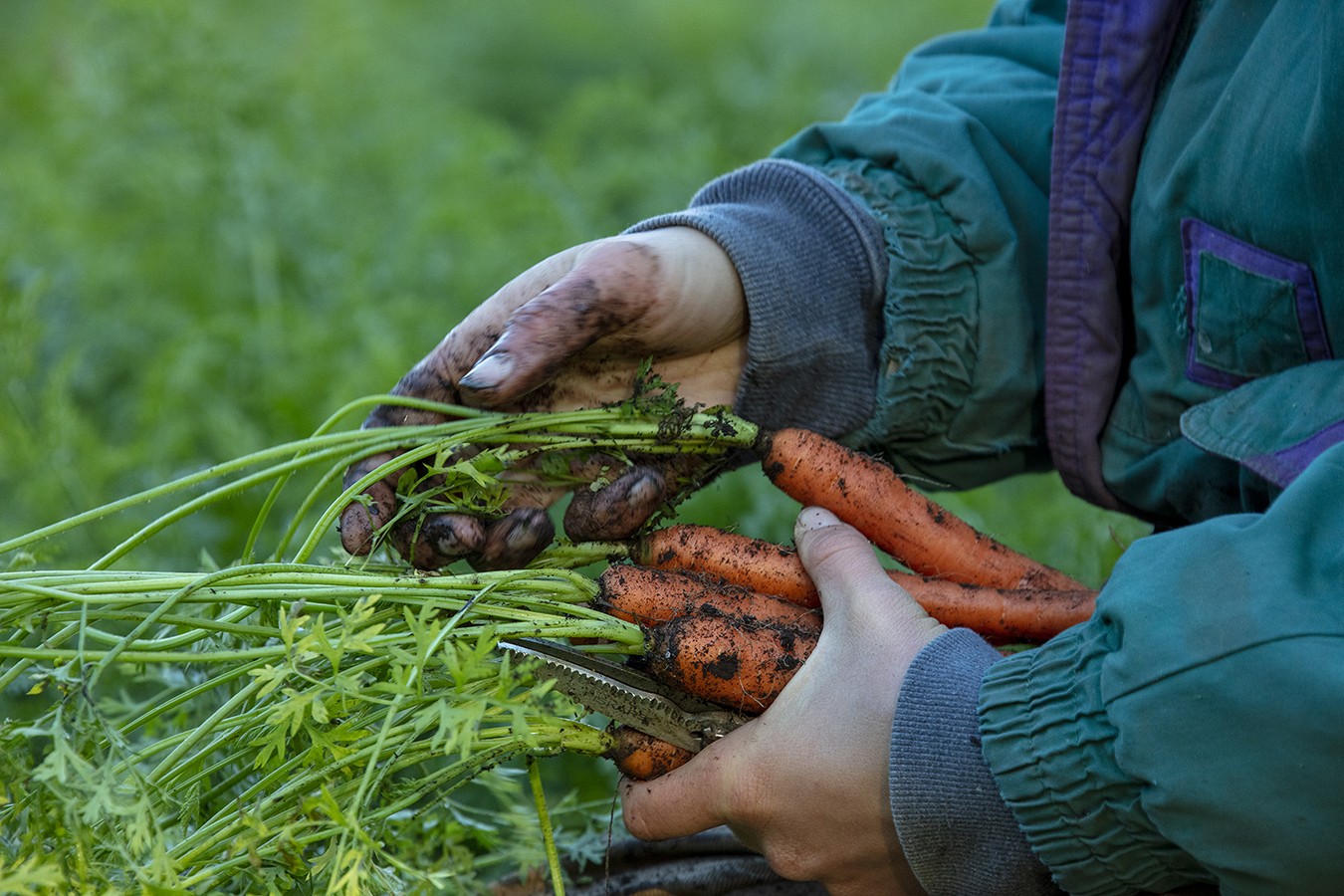
Story ethics & action: avoid trampling cryptobiotic crusts and seedling roots; leave nurse logs and fungi undisturbed. When documenting farms, highlight regenerative practices—living covers, minimal disturbance, compost returns—that keep carbon local. Pair images with field notes on moisture, temperature, and light angle; over seasons you’ll see a coherent carbon pulse emerge, ideal for linking viewers to Earth Care & Stewardship.
Occam’s Razor in Nature
The simplest explanation for landscapes that hold carbon is this: keep the network intact. Where living roots, fungal threads, and microbial consortia remain undisturbed, carbon stays put as wood, litter, humus, and peat. Break the geometry with frequent tillage, compaction, overgrazing, or channelized runoff, and the cycle accelerates toward loss—carbon returns to air and streams. This is the everyday logic behind regenerative systems: continuous cover, diverse perennials, minimal disturbance, and organic matter returned to soil so the soil microbiome and mycelial networks can do their slow, elegant work.
Occam also points to water. Carbon follows moisture: infiltration feeds roots; wetlands, beaver ponds, and peatlands slow oxygen turnover and preserve long-lived stocks. Protect riparian buffers, reconnect floodplains, and let woody debris accumulate—actions that reduce complexity by letting gravity and hydrology do the routing. Because water structures along roots and hyphae, it becomes the medium that stabilizes light-made sugars into aggregates. In short: hold water, and you hold carbon.
Field checklist (minimalist, high leverage): maintain living roots year-round; diversify canopy and understory; avoid unnecessary soil disturbance; protect old trees and nurse logs; restore wetlands; compost locally; and time land care to light cycles using photon-aware planning. For practical household and community steps, see Earth Care & Stewardship—simple moves that align with nature’s own algorithm keep carbon cycling where it belongs: home.
Further Reading & Tools
The carbon story is legible when you read timing (light), memory (water), and structure (roots, fungi, minerals) together. If you’re scouting new locations or planning seasonal projects, start with sky rhythm—sun angles, cloud ceilings, fog windows—and pair them with hydrology and vegetation age classes. Where these align, you’ll find slow-turnover carbon: old trees, deep litter, mossy logs, wetlands, and peat. Use the tools below to choose dates, map sites, and connect your images to stewardship.
Workflow tip: plan at two scales. Use the Golden Hour & Moon Phase Planner for day-level timing (drawdown cues, fog, dew), then choose terrain with Nature & Wildlife Photography Maps (valley bottoms, riparian benches, beaver wetlands). Anchor seasonal projects around Earth Day to share coherent narratives that connect images to action.
It’s the continual movement of carbon among air, water, soil, and living things—drawn down by photosynthesis, returned by respiration, decomposition, and fire, and stored in wood, soils, wetlands, and the ocean.
How do soils actually keep carbon for the long term?
Roots feed the soil microbiome; microbes and mycelium convert plant sugars into humus and bind organics onto minerals (mineral-associated organic carbon). Stable aggregates and steady moisture/oxygen conditions slow decay, keeping carbon in place.
What simple actions increase local carbon storage?
Maintain living roots year-round, minimize disturbance, keep soils covered, compost locally, plant diverse perennials, and protect wetlands/old trees. See Earth Care & Stewardship and field methods in Quantum Agriculture.
Why are wetlands and peatlands such strong carbon sinks?
Water slows oxygen turnover and microbial respiration. In saturated, cool conditions, organic matter accumulates faster than it decomposes—forming peat over centuries. Protecting riparian corridors and beaver wetlands helps “hold water, hold carbon.”
How does this connect to photons, water, and hydrogen?
Photons trigger photosynthesis (drawdown), water structures and transports charge and metabolites, and hydrogen polarity underlies electron flow. Together they set the rhythm and stability of the carbon cycle you photograph.
Continue Your Journey
Follow the threads where light becomes form and form becomes memory—across roots, water, sky, and field practice.
The presence of this badge signifies that this business has officially registered with the Art Storefronts Organization and has an established track record of selling art.
It also means that buyers can trust that they are buying from a legitimate business. Art sellers that conduct fraudulent activity or that receive numerous complaints from buyers will have this badge revoked. If you would like to file a complaint about this seller, please do so here.
Verified Returns & Exchanges
The Art Storefronts Organization has verified that this business has provided a returns & exchanges policy for all art purchases.
Description of Policy from Merchant:
What is your Policy on Returns/Exchanges/Refunds?
I take great pride in my work and prints, and I want you to be completely happy with your investment in my nature art. If for any reason you are unsatisfied with your print, you may return it within 14 days of delivery, and/or exchange it for another print. Prints must be returned in new condition, packaged carefully in the original packaging if possible. Your refund will be issued as soon as I receive the returned print. Please contact me if you would like to arrange a return or exchange.
In the event that you receive a damaged or defective print, please let me know within 7 days of receipt, and I will arrange for a new print to be shipped to you at no additional cost.
Verified Secure Website with Safe Checkout
This website provides a secure checkout with SSL encryption.
Verified Archival Materials Used
The Art Storefronts Organization has verified that this Art Seller has published information about the archival materials used to create their products in an effort to provide transparency to buyers.
Description from Merchant:
Fine Art Prints are made with high-quality archival inks on fine art papers using a high-resolution large format inkjet printer. Our premium archival inks produce images with smooth tones and rich colors. Prints are made with care on your choice of exquisite Fine Art Papers using a high-resolution large format inkjet printer. https://www.graphikprintworks.com
Become a supporter of Robbie George Photography and be the first to receive new content and special promotions.
“Every image is a field. Every quote is a key. Welcome back to the rhythm.” ~Robbie
Cart
Your cart is currently empty.
Saved Successfully.
This is only visible to you because you are logged in and are authorized to manage this website. This message is not visible to other website visitors.
Import From Instagram
Click on any Image to continue
This Website Supports Augmented Reality to Live Preview Art
This means you can use the camera on your phone or tablet and superimpose any piece of nature art onto a wall inside of your home or business.
To use this feature, Just look for the "Live Preview AR" button when viewing any piece of nature art on this website!
Pounce Now—Save 20% on Your First Order
Join the collector list for your first-order discount, new wildlife releases, and occasional field notes.




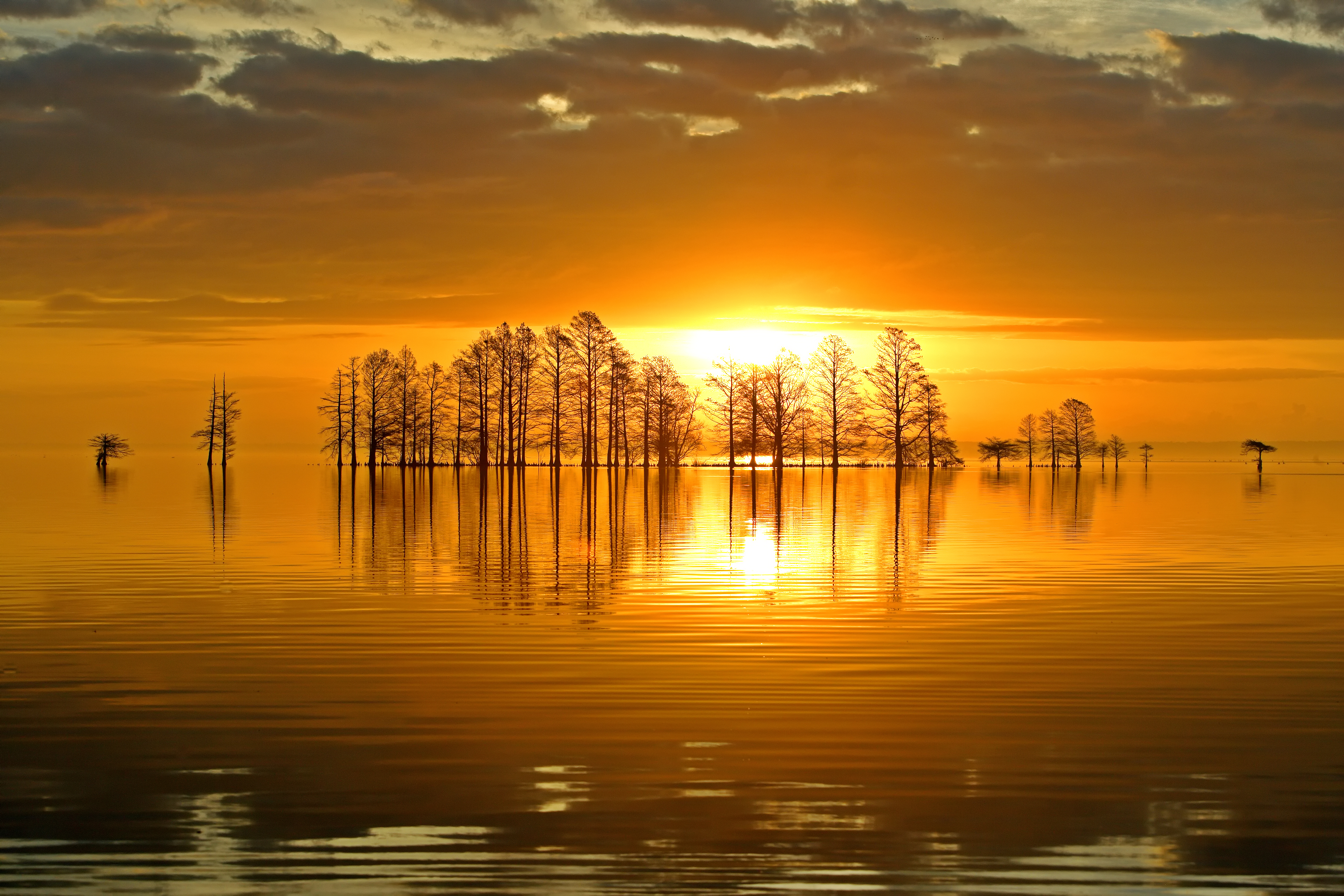 Landscape
 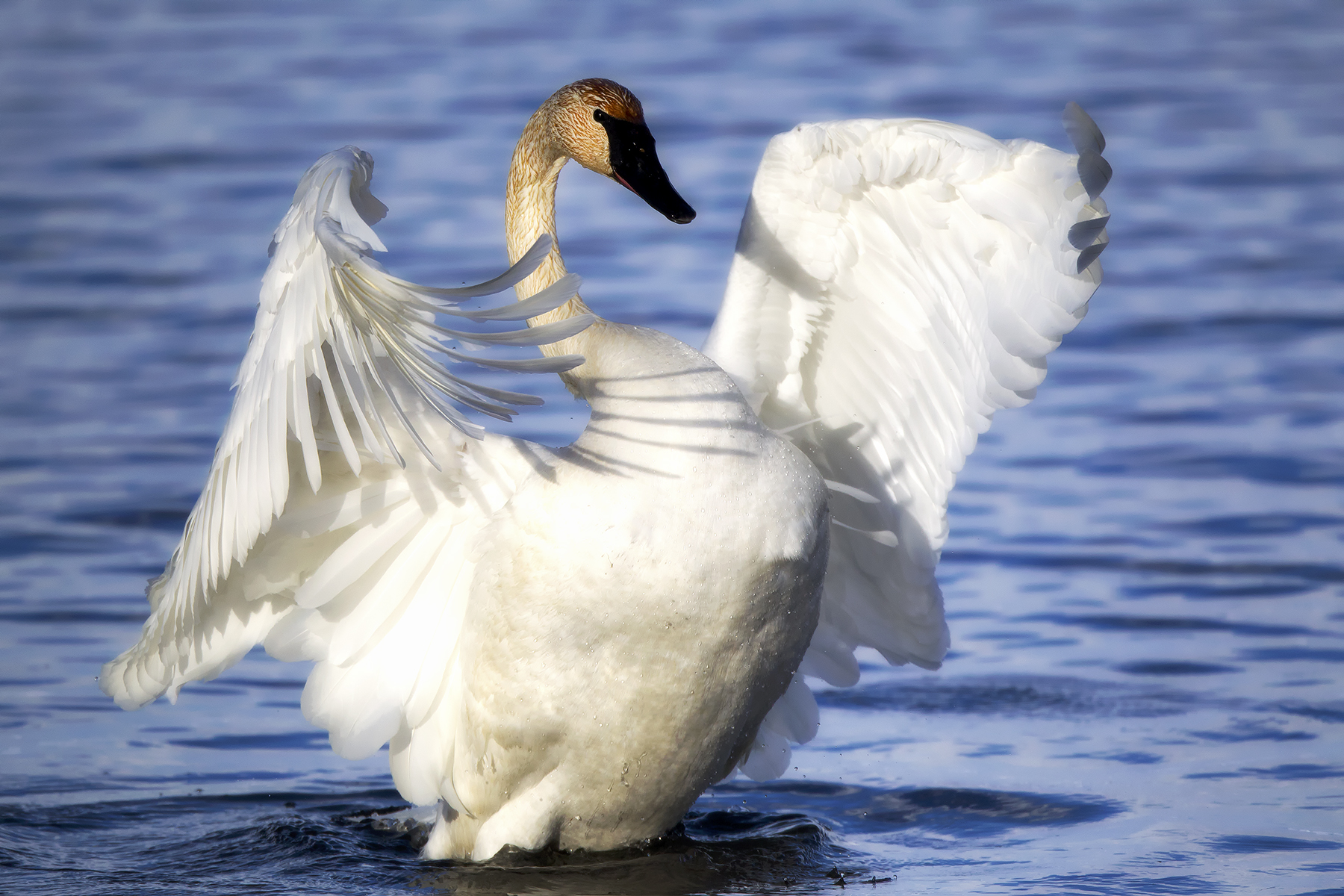 Wildlife
 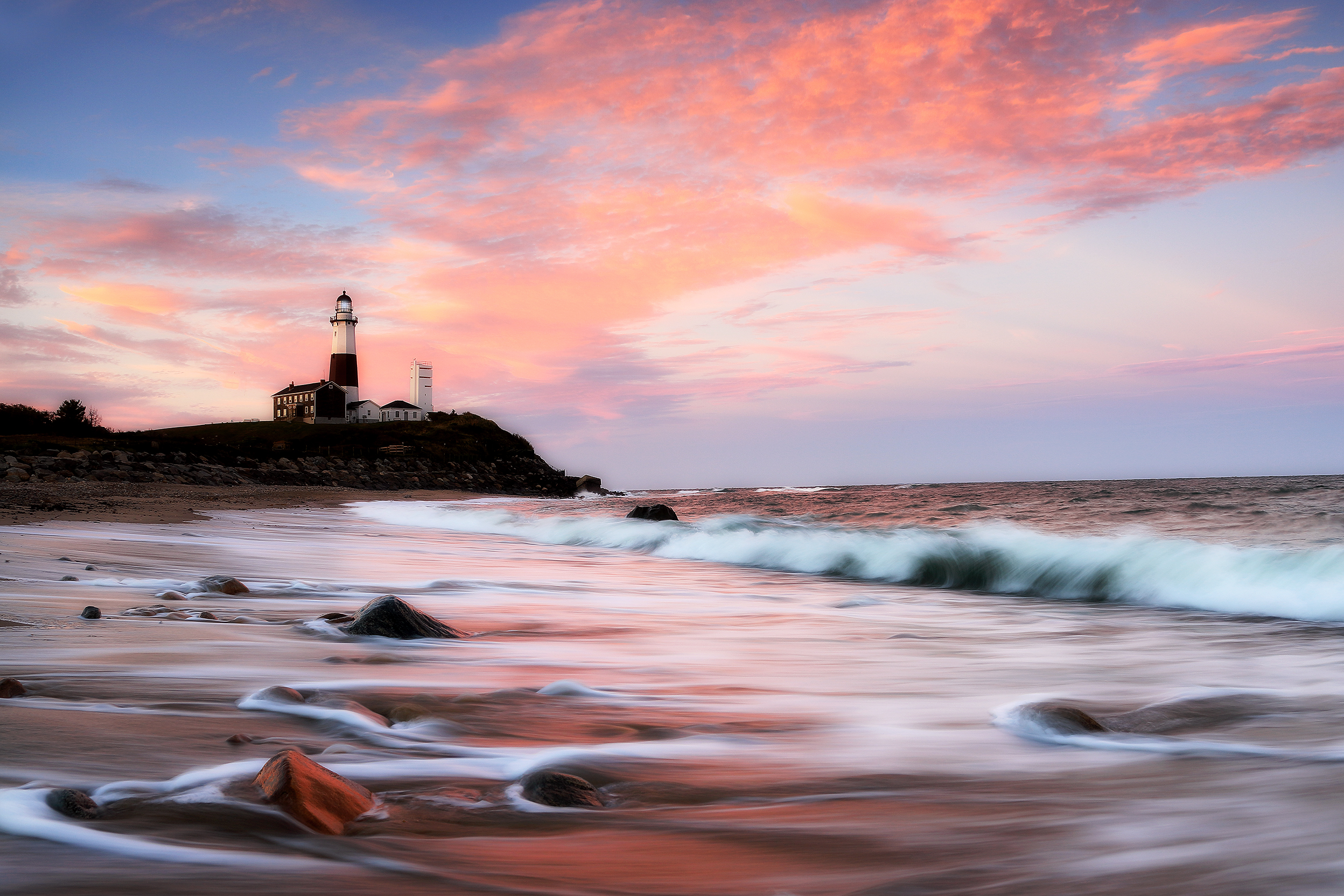 Seascapes