🌿 Understanding How Biodiversity Supports Healthy, Resilient Ecosystems
Naturepedia™ • Life & Ecology
Biodiversity & Ecosystem Balance — How Living Systems Hold Together
Explore the diversity of genes, species, ecosystems, and ecological roles—and how those interacting layers influence ecosystem function, resilience, and change.
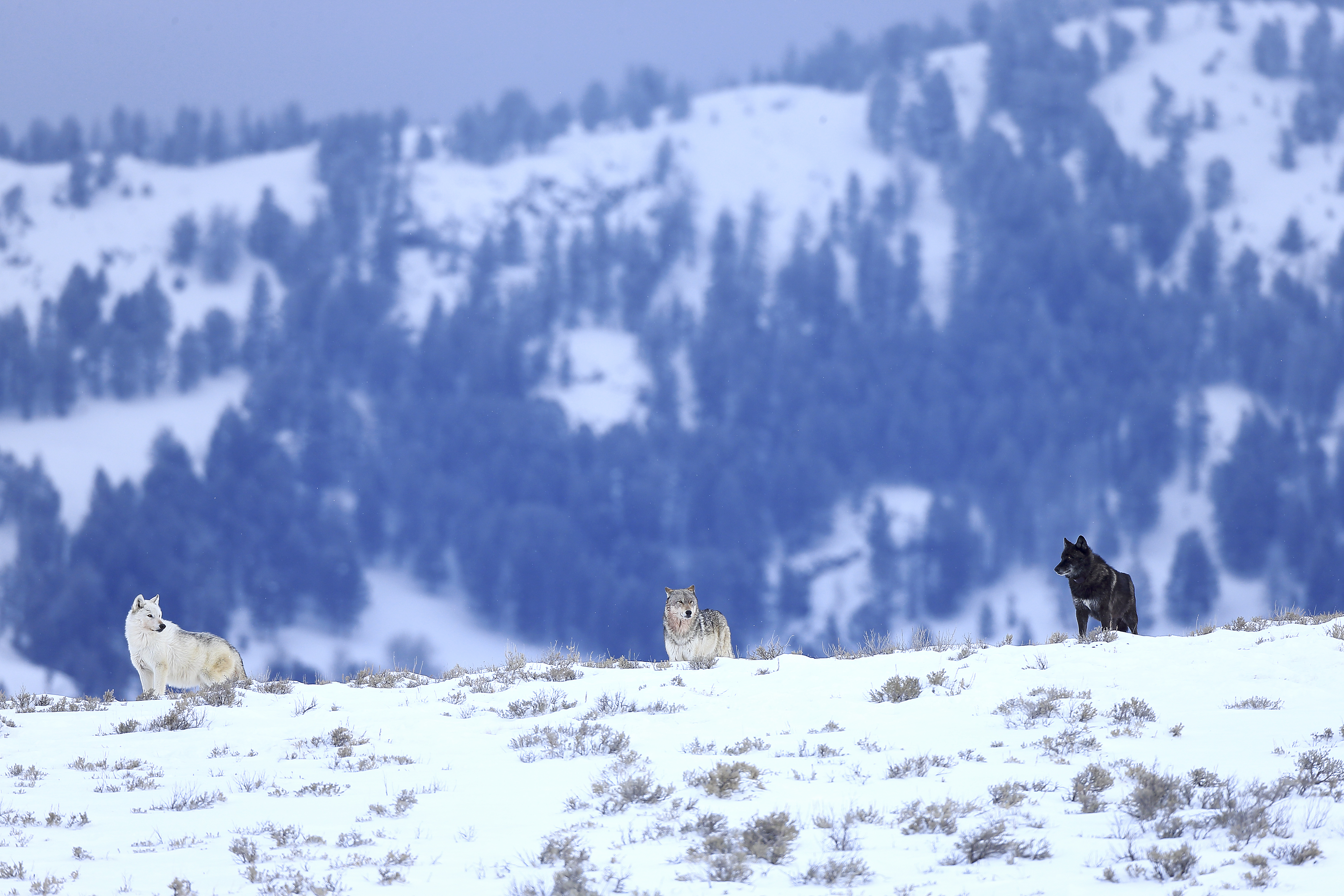
Gray wolves moving through Yellowstone’s winter landscape. Predators are one part of a wider system that also includes prey, scavengers, vegetation, water, weather, microorganisms, and seasonal movement.
Biodiversity is often first noticed as variety: different animals, plants, fungi, and other organisms sharing a place. But its deeper structure lies in the differences within species, the range of ecosystems across a landscape, and the relationships through which living systems exchange energy, nutrients, information, and ecological pressure.
This Naturepedia guide combines established ecological knowledge with field photographs and observations from Robbie George. It follows biodiversity from scientific definition to real-world expression: species roles, food webs, habitat structure, resilience, decline, and observation in the field.
Biodiversity is the variability of life across multiple levels: differences within species, differences among species, and differences among ecosystems. It includes microorganisms, fungi, plants, animals, and the ecological communities and processes through which life is organized.
Species richness—the number of species present—is one measure of biodiversity, but it is not the complete definition. Two places can contain the same number of species while differing greatly in genetic variation, abundance, ecological roles, habitat structure, and the strength of interactions among organisms.
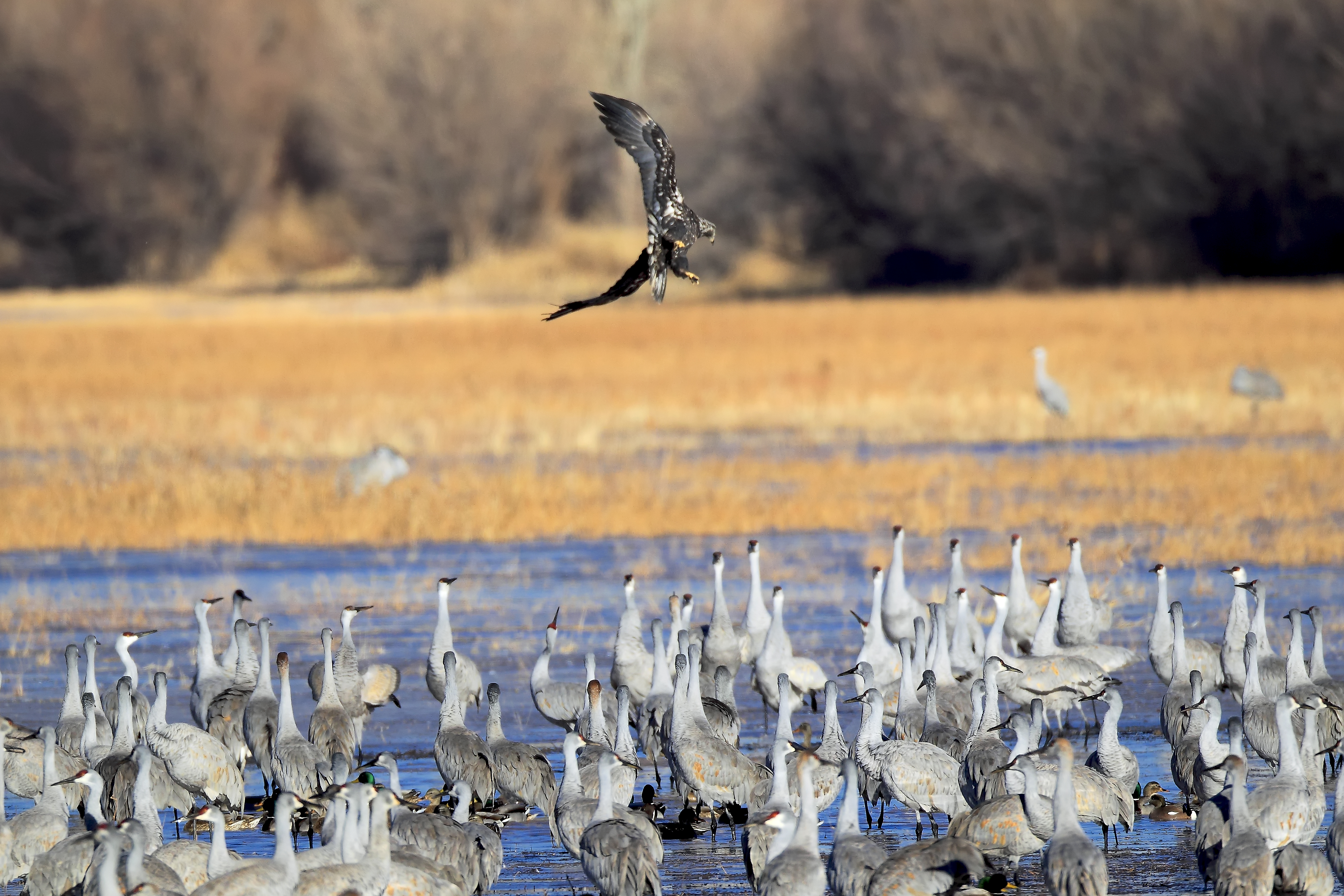
Sandhill cranes and a young bald eagle share a wetland environment. Their presence is only one visible layer of a system that also includes water, vegetation, prey, microorganisms, seasonal movement, and human land management.
The Three Foundational Levels
Genetic Diversity
Variation within a species or population. Genetic diversity can influence adaptation, disease response, reproduction, and the capacity to persist as environmental conditions change.
Species Diversity
The variety of species and their relative abundances within a community or region. This includes common, rare, resident, migratory, native, and introduced organisms.
Ecosystem Diversity
Variation among habitats, ecological communities, and natural processes—from forests and grasslands to wetlands, rivers, mountains, coastlines, and oceans.
A Fourth Practical Lens: Functional Diversity
Ecologists also examine functional diversity: the range of traits and ecological roles organisms contribute to a system. Pollination, predation, grazing, seed dispersal, decomposition, nutrient cycling, and habitat engineering are examples of functions that connect biodiversity with ecosystem processes.
This does not mean that more species automatically produce a perfectly stable ecosystem. Ecological effects depend on which species are present, their abundance, their traits, the relationships among them, and the environmental conditions operating at that place and time.
What Biodiversity Looks Like in the Field
In places such as Bosque del Apache, biodiversity becomes visible through cranes, waterfowl, raptors, wetland vegetation, water management, migration, and seasonal timing. What an observer sees is not biodiversity in its entirety, but a visible portion of a much larger living system.
Evidence boundary: The biodiversity definitions and ecological relationships presented here reflect established scientific usage. Robbie George’s photographs and field observations illustrate these ideas but do not replace population surveys, controlled studies, or long-term ecological monitoring.
Genes • Species • Communities • Regions
Biodiversity Changes with Scale
Biodiversity depends partly on where an observer draws the boundary. A single pond, an entire wetland complex, and a continent can all be described as biodiverse, but each scale reveals different patterns. The species visible at one location are only a local expression of a much larger ecological network.
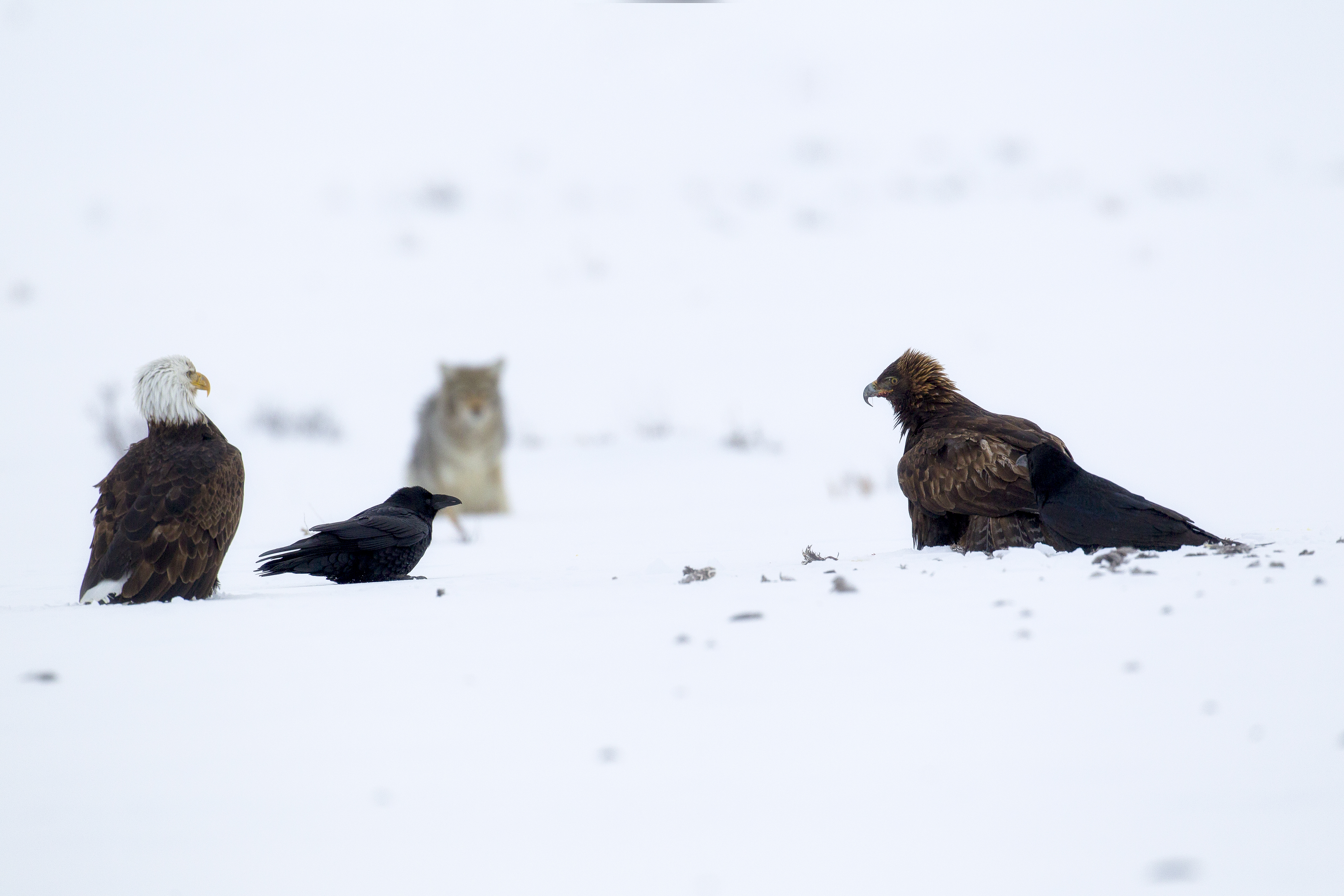
A winter feeding site may bring eagles, ravens, coyotes, foxes, and other scavengers together around one resource. That encounter reveals local species diversity and ecological interaction. It does not, by itself, describe the genetic diversity within those populations, the organisms hidden in soil and water, or the turnover in species across the surrounding landscape.
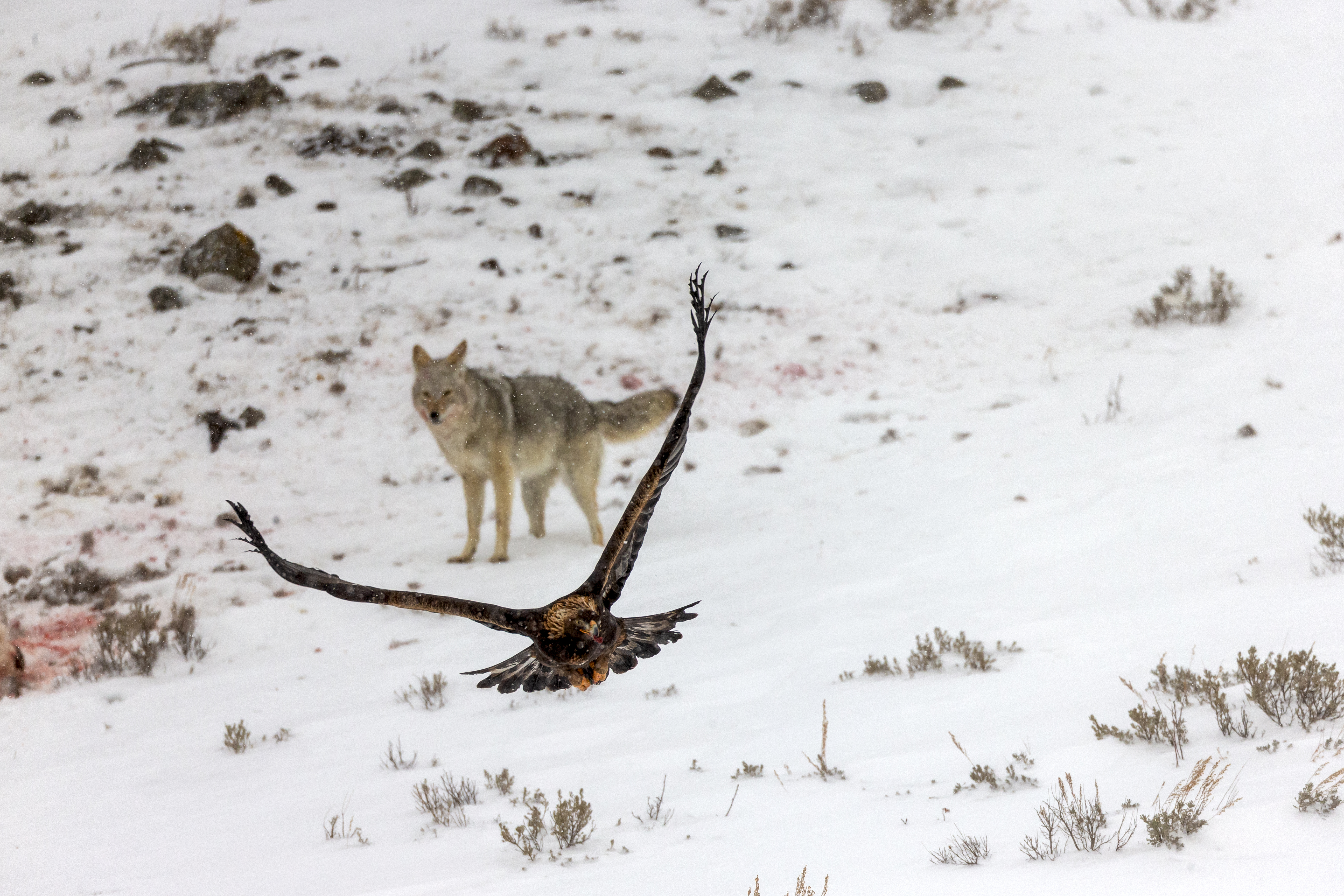
A golden eagle and coyote respond to the same winter resource. This visible interaction represents one local layer within Yellowstone’s broader ecological diversity.
Local, Landscape, and Regional Diversity
Alpha Diversity
Diversity within one defined habitat or community, such as the plants, birds, mammals, insects, fungi, and microorganisms occupying a particular wetland.
Beta Diversity
The change or turnover in species composition between habitats. A forest, meadow, river edge, and marsh may support different communities within the same landscape.
Gamma Diversity
The total diversity across a broader region containing multiple habitats and communities, such as a watershed, mountain range, coastal corridor, or ecoregion.
Biodiversity Also Changes Through Time
A place does not hold the same biological community throughout the year. Migration, breeding, flowering, insect emergence, water levels, snow cover, and food availability can change which organisms are present and how they use the landscape.
This temporal dimension is especially visible in wetlands and migration corridors. A refuge may support nesting birds in summer, migrating shorebirds in autumn, and large concentrations of waterfowl during winter. Each season reveals a different expression of the same underlying system.
More Species Is Not the Only Measure
A naturally species-poor alpine or Arctic community is not necessarily unhealthy, and the arrival of additional non-native species does not automatically represent ecological improvement. Biodiversity must be interpreted in relation to native community structure, ecological history, habitat condition, and scale.
Ecosystems function through processes rather than through species counts alone. Plants capture energy. Herbivores consume vegetation. Predators influence prey populations and behavior. Pollinators support reproduction. Fungi and microorganisms decompose organic matter. Scavengers redistribute nutrients through the landscape.
Biodiversity contributes to these processes by providing organisms with different traits, tolerances, behaviors, and ecological roles. When environmental conditions change, those differences can influence whether important functions continue, slow down, or reorganize.
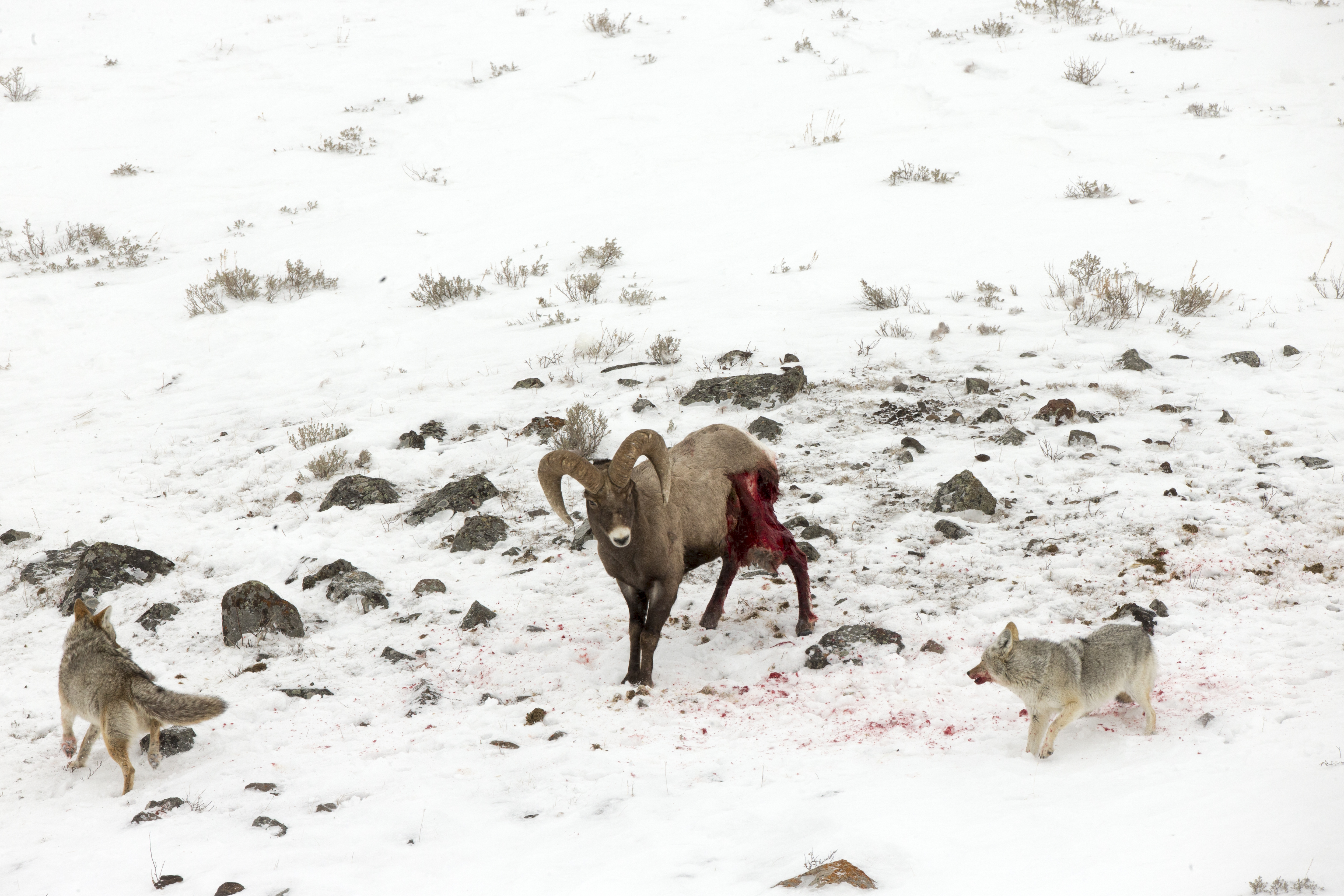
Coyotes and a bighorn sheep respond to one another in a winter landscape. Ecosystem function emerges through many such interactions operating across populations, habitats, and seasons.
Functions Supported by Living Diversity
Energy Flow
Photosynthesis captures energy that moves through herbivores, predators, scavengers, decomposers, and detrital pathways.
Nutrient Cycling
Microorganisms, fungi, plants, animals, and water systems move and transform nutrients through soil, vegetation, food webs, and decomposition.
Population Regulation
Predation, competition, disease, food availability, and habitat constraints influence population size, distribution, and behavior.
Habitat Formation
Trees, corals, beavers, prairie dogs, vegetation communities, and soil organisms can physically create or modify habitat used by other species.
Ecosystem Balance Is Dynamic
The phrase ecosystem balance can suggest that healthy ecosystems remain fixed. In reality, ecological systems continually change. Populations rise and fall. Rivers shift course. Fires alter vegetation. Storms reshape coastlines. Migration redistributes animals, nutrients, and ecological pressure.
A functioning ecosystem is therefore not one in which nothing changes. It is one in which core processes and relationships can persist, reorganize, or recover within the range of conditions the system experiences.
Three Useful Stability Terms
Resistance: the degree to which an ecosystem withstands disturbance without substantial change.
Recovery: the capacity to regain structure or function after disturbance.
Resilience: the broader capacity to absorb change, reorganize, and continue functioning without shifting into a fundamentally different state.
Greater biodiversity can support stability and resilience, especially when species differ in how they respond to stress. But the relationship is context-dependent. Species identity, abundance, habitat connectivity, environmental conditions, and disturbance intensity all matter.
Food webs describe the interconnected pathways through which energy and materials move among organisms. They extend beyond a simple line from plant to herbivore to predator. Most species participate in several pathways, and many change roles with age, season, opportunity, or environmental conditions.
A coyote may hunt small mammals, consume fruit, or scavenge a carcass. A raven may feed on insects, seeds, eggs, carrion, or human-associated food. Bears can function as predators, grazers, seed dispersers, scavengers, and transporters of marine-derived nutrients. These flexible relationships create networks rather than fixed chains.
A bald eagle, golden eagle, ravens, and a coyote gather around a shared winter resource in Grand Teton National Park. Competition, scavenging, hierarchy, and energy transfer occur within the same event.
Ecological Roles Within the Network
Producers
Plants, algae, and other photosynthetic organisms convert light into stored chemical energy that supports most food webs.
Consumers
Herbivores, predators, omnivores, parasites, and filter feeders obtain energy by consuming other organisms or biological material.
Scavengers
Scavengers use carrion and other remains, moving nutrients through the system and connecting predation with decomposition.
Decomposers
Fungi, bacteria, and detritivores break down organic material and return nutrients to soils, sediments, water, and future biological growth.
Why Network Structure Matters
A food web with many connections may contain alternate pathways through which energy can move when conditions change. This can provide a degree of functional overlap, but species are not always interchangeable. Some organisms have effects that are disproportionately large relative to their abundance.
Keystone species, ecosystem engineers, dominant producers, foundation species, and specialized mutualists can shape entire communities. Their loss may affect habitat structure, prey behavior, nutrient movement, or the survival of species that depend on them.
Reading a Food Web in the Field
Look beyond the most visible animal. Notice who approaches a resource, who waits, who displaces another species, what remains afterward, and how weather or season changes the encounter. Tracks, feathers, browse marks, scat, carcasses, and feeding sites can reveal connections even when the animals themselves are absent.
Biodiversity and Resilience in a Changing Environment
Environmental change is a normal part of ecological systems. Temperatures fluctuate, rivers flood, fires alter vegetation, storms reshape coastlines, and animal populations respond to changes in food, habitat, competition, predation, and disease.
Ecological resilience describes a system’s capacity to absorb disturbance, reorganize, and continue supporting important structures and processes. Biodiversity can contribute to that capacity by providing different traits, behaviors, tolerances, and responses to changing conditions.
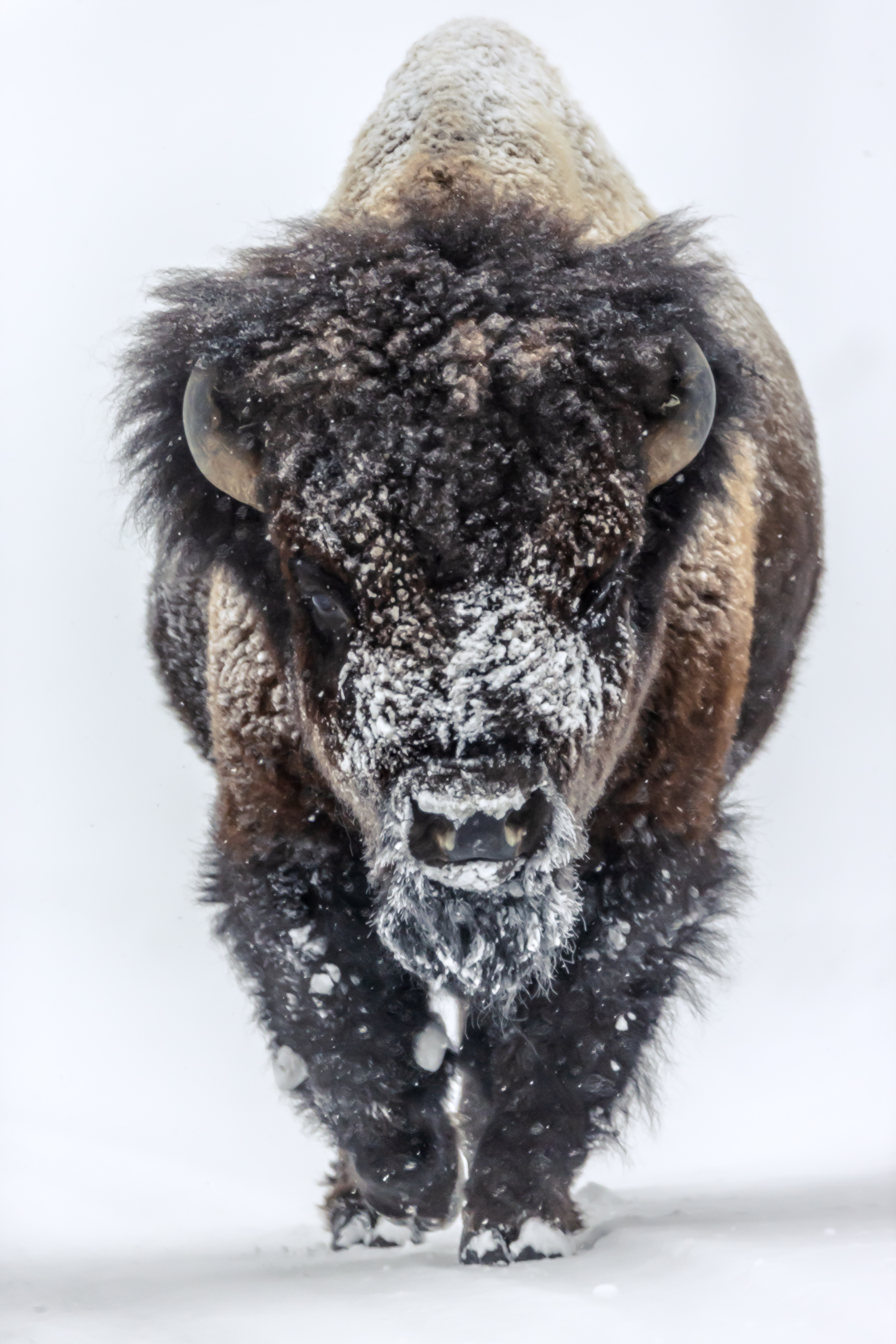
An American bison moves through winter conditions in Yellowstone. Individual adaptations help organisms survive, while ecological resilience operates across populations, communities, habitats, and connected landscapes.
Response Diversity
Species that perform similar ecological functions do not always respond to disturbance in the same way. One pollinator may tolerate drought better than another. One grazer may continue feeding in deep snow while another moves to lower elevation. Different responses can help preserve an ecological function even as community composition changes.
This variation is called response diversity. It can reduce dependence on a single species or strategy, but it does not make every organism interchangeable. Specialized species and organisms with unusually strong ecological effects may have no close functional substitute.
Habitat Diversity
A landscape containing wetlands, forests, grasslands, rivers, and elevation gradients can provide different feeding areas, shelter, breeding sites, and climate refuges.
Connectivity
Connected habitats allow organisms to move, disperse, migrate, exchange genes, and reach suitable conditions as local environments change.
Genetic Variation
Variation within populations provides biological differences upon which natural selection can act, influencing long-term adaptive capacity.
Functional Overlap
Multiple organisms may contribute to pollination, decomposition, grazing, predation, or nutrient movement, creating more than one pathway for some processes.
Resilience Does Not Mean Returning to the Past
After disturbance, an ecosystem may not return to its exact previous composition. Species abundance can shift, vegetation can reorganize, and new interactions can form. Recovery is therefore measured through both structure and function, not simply through resemblance to an earlier visual state.
Some disturbances are also part of the ecological history of a system. Periodic fire, seasonal flooding, grazing, storms, and ice can maintain habitat diversity when they occur within characteristic ranges. Resilience depends on the type, intensity, duration, and frequency of disturbance as well as the condition of the system before it occurs.
Field Question
When conditions change, observe more than whether wildlife remains present. Look for shifts in location, timing, group size, feeding behavior, habitat use, predator pressure, and the relationships among species.
Biodiversity decline can involve more than the disappearance of a species. It may include shrinking populations, reduced genetic variation, loss of habitat types, declining functional diversity, disrupted migration routes, and the weakening of ecological relationships.
These changes are not always immediately visible. A landscape can remain green while supporting fewer native species. Wildlife may still be present while population structure, reproductive success, movement, or food-web relationships are changing beneath the surface.
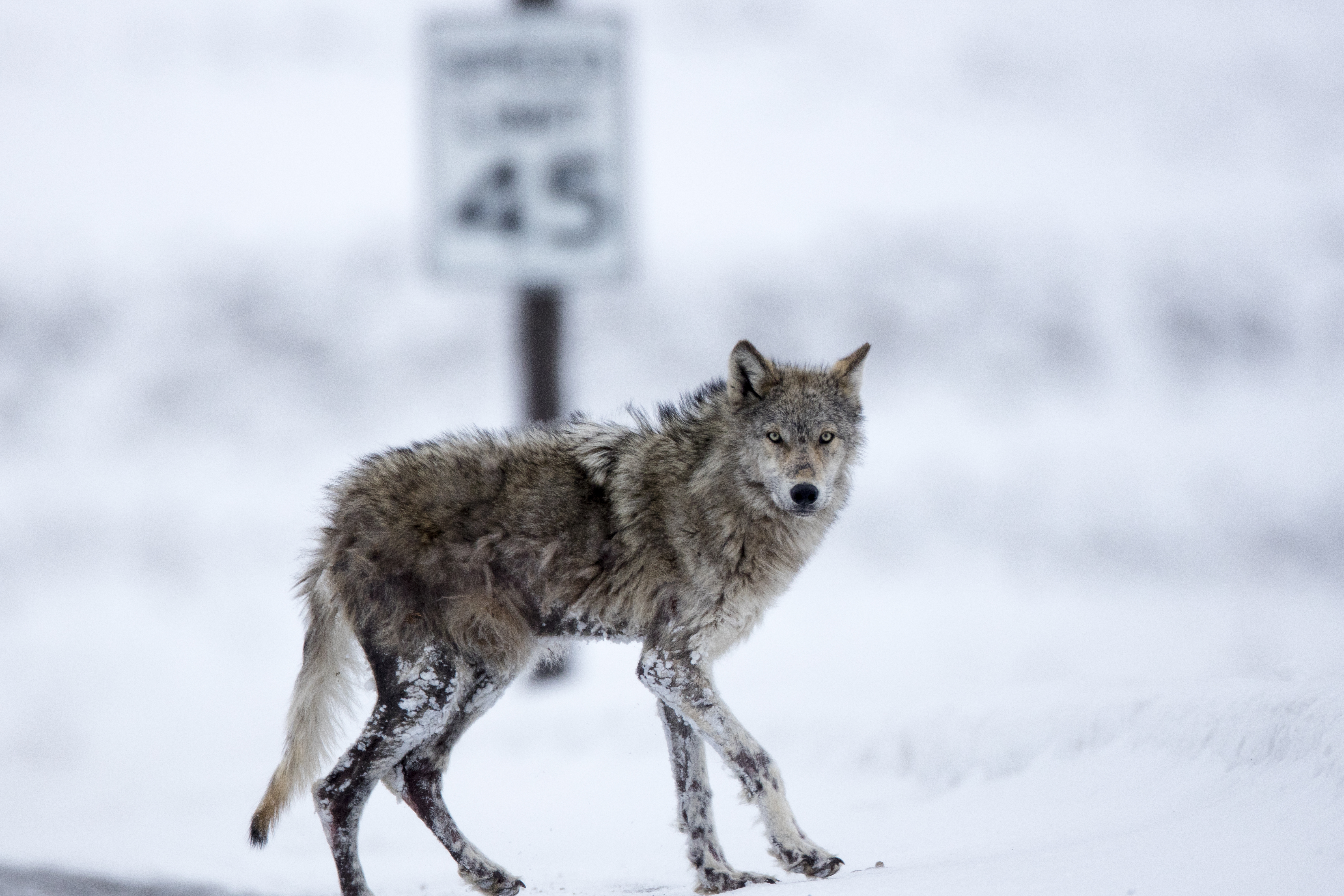
A gray wolf affected by mange. Disease is a natural ecological process, and one observation cannot establish population decline. Population-level conclusions require repeated surveys, health data, demographic evidence, and long-term monitoring.
Major Pressures on Biodiversity
Habitat Loss & Fragmentation
Conversion, degradation, roads, development, altered water flow, and disconnected habitat can reduce living space and restrict migration, dispersal, and genetic exchange.
Direct Exploitation
Unsustainable hunting, fishing, harvesting, collection, and wildlife trade can remove organisms faster than populations can recover.
Climate Change
Changing temperature, precipitation, ocean conditions, snow cover, fire patterns, and seasonal timing can alter habitat suitability and disrupt ecological relationships.
Pollution
Nutrients, pesticides, plastics, heavy metals, artificial light, noise, and other pollutants can affect organisms, habitat quality, reproduction, and food webs.
Invasive Species
Some introduced organisms spread rapidly and alter competition, predation, disease, fire regimes, nutrient cycling, or habitat structure.
Combined Pressures
Drivers often interact. Fragmented populations may be less able to move as climate changes, while pollution or disease can compound existing habitat stress.
From Species Loss to Relationship Loss
When a population declines, its ecological effects can weaken before the species disappears completely. Reduced pollination, seed dispersal, grazing, predation, scavenging, or habitat engineering can alter other parts of the system.
This is sometimes described as the loss of ecological interactions or functional extinction. A species may technically remain present while becoming too rare to perform its former ecological role at a meaningful scale.
Avoiding Conclusions from a Single Encounter
An absent animal, unusual behavior, or visibly stressed individual may be important to document, but none proves biodiversity decline on its own. Reliable assessment requires appropriate geographic scale, repeated observation, population data, habitat measurements, and comparison through time.
Biodiversity becomes easiest to observe where habitats meet, resources concentrate, or seasonal movement brings many species into the same area. Wetlands, estuaries, migration corridors, forest edges, river systems, grasslands, and predator-rich landscapes can reveal different layers of ecological organization.
The goal is not simply to make a list of visible animals. Field observation becomes more informative when it records relationships: which habitat each species uses, how behavior changes through time, what resources attract activity, and what evidence remains after wildlife moves away.
Field Environments That Reveal Biodiversity
Large-Mammal Ecosystems
Predator-prey relationships, grazing, scavenging, migration, and seasonal movement operate across large connected landscapes.
Define the place and scale. Record the habitat, landscape boundary, and observation area.
Record conditions. Note date, time, season, weather, water level, snow cover, tide, and recent disturbance.
Observe multiple layers. Look beyond large wildlife to plants, insects, fungi, tracks, calls, and habitat structure.
Record relationships. Note feeding, competition, avoidance, group behavior, predation, scavenging, and habitat use.
Repeat through time. Return across hours, seasons, or years to distinguish a moment from a recurring pattern.
Respect the system. Maintain distance, follow closures, remain on permitted routes, and avoid changing wildlife behavior.
Field Observation Is Not a Complete Inventory
Visibility and detectability differ among organisms. Time of day, weather, season, observer skill, vegetation, and species behavior all affect what can be recorded. Formal biodiversity assessment may require standardized surveys, acoustic monitoring, environmental DNA, camera traps, specimen records, and long-term datasets.
Biodiversity is not an isolated subject within Naturepedia. It is a connecting layer through which species, populations, habitats, ecological relationships, Earth systems, seasonal movement, and field evidence can be understood together.
Begin with a visible organism, then follow its relationships outward through increasingly larger scales of organization.
This guide functions as a bridge between the Life & Ecology branch and the rest of Naturepedia. Biodiversity becomes understandable only when biological variation is connected with ecological relationships, physical environments, geographic scale, seasonal timing, and evidence gathered through appropriate observation.
Biodiversity Questions
Frequently Asked Questions
What is biodiversity?
Biodiversity is the variability of life within species, among species, and across ecosystems. It includes genetic variation, species diversity, ecosystem diversity, and the ecological traits and relationships through which living systems function.
Is biodiversity the same as species richness?
No. Species richness measures the number of species in a defined area. Biodiversity is broader and can also include relative abundance, genetic variation, ecosystem variety, functional traits, and interactions among organisms.
Does greater biodiversity always make an ecosystem more stable?
Greater biodiversity can support ecosystem stability and resilience, especially when species respond differently to disturbance. The relationship is context-dependent, however, and also reflects species identity, abundance, ecological roles, habitat condition, connectivity, and disturbance intensity.
What does ecosystem balance mean?
Ecosystem balance does not mean that nature remains fixed. It describes a dynamic condition in which populations, interactions, and ecological processes continue operating while the system responds to seasonal change, disturbance, and environmental variation.
What are the main causes of biodiversity decline?
Major pressures include habitat loss and fragmentation, direct exploitation, climate change, pollution, invasive species, and interactions among these drivers. Their importance varies among regions, ecosystems, and groups of organisms.
Can biodiversity be measured through field observation?
Field observation can document species, behavior, habitat use, and ecological interactions, but informal observation is not a complete biodiversity inventory. Reliable assessment may require standardized surveys, repeated sampling, genetic analysis, acoustic monitoring, camera traps, environmental DNA, and long-term datasets.
How does biodiversity connect to Naturepedia?
Biodiversity connects Naturepedia’s species, habitats, behavior, food webs, Earth systems, plants, field locations, tracks, migration, and seasonal timing. It provides a scientific bridge between individual organisms and the larger systems in which they live.
Field Observation & Authorship
About the Author
Robbie George is an independent National Geographic–published nature photographer and field observer. His work is grounded in sustained observation of wildlife, behavior, habitat, seasonal movement, weather, water, and changing landscapes.
Photography provides the visible starting point. Naturepedia extends those observations into a structured knowledge system connecting established ecology, Earth systems, species guides, field locations, animal tracks, seasonal resources, and educational Plates™.
Robbie’s photographs and field experiences help illustrate the ecological ideas presented on this page. Scientific definitions and population-level conclusions remain grounded in established research, standardized evidence, and the limits of what individual field encounters can demonstrate.
Move into the broader Naturepedia system, examine the ecological relationships behind biodiversity, or use the field resources to explore these patterns in real places.
Biodiversity is more than the number of species visible in a landscape. It is variation, relationship, function, and change operating across scales—from genes within a population to communities linked across an entire region. To observe biodiversity well is to look beyond isolated organisms and begin seeing the living system they form together.
The presence of this badge signifies that this business has officially registered with the Art Storefronts Organization and has an established track record of selling art.
It also means that buyers can trust that they are buying from a legitimate business. Art sellers that conduct fraudulent activity or that receive numerous complaints from buyers will have this badge revoked. If you would like to file a complaint about this seller, please do so here.
Verified Returns & Exchanges
The Art Storefronts Organization has verified that this business has provided a returns & exchanges policy for all art purchases.
Description of Policy from Merchant:
What is your Policy on Returns/Exchanges/Refunds?
I take great pride in my work and prints, and I want you to be completely happy with your investment in my nature art. If for any reason you are unsatisfied with your print, you may return it within 14 days of delivery, and/or exchange it for another print. Prints must be returned in new condition, packaged carefully in the original packaging if possible. Your refund will be issued as soon as I receive the returned print. Please contact me if you would like to arrange a return or exchange.
In the event that you receive a damaged or defective print, please let me know within 7 days of receipt, and I will arrange for a new print to be shipped to you at no additional cost.
Verified Secure Website with Safe Checkout
This website provides a secure checkout with SSL encryption.
Verified Archival Materials Used
The Art Storefronts Organization has verified that this Art Seller has published information about the archival materials used to create their products in an effort to provide transparency to buyers.
Description from Merchant:
Fine Art Prints are made with high-quality archival inks on fine art papers using a high-resolution large format inkjet printer. Our premium archival inks produce images with smooth tones and rich colors. Prints are made with care on your choice of exquisite Fine Art Papers using a high-resolution large format inkjet printer. https://www.graphikprintworks.com
Become a supporter of Robbie George Photography and be the first to receive new content and special promotions.
“Every image is a field. Every quote is a key. Welcome back to the rhythm.” ~Robbie
Cart
Your cart is currently empty.
Saved Successfully.
This is only visible to you because you are logged in and are authorized to manage this website. This message is not visible to other website visitors.
Import From Instagram
Click on any Image to continue
This Website Supports Augmented Reality to Live Preview Art
This means you can use the camera on your phone or tablet and superimpose any piece of nature art onto a wall inside of your home or business.
To use this feature, Just look for the "Live Preview AR" button when viewing any piece of nature art on this website!
Pounce Now—Save 20% on Your First Order
Join the collector list for your first-order discount, new wildlife releases, and occasional field notes.