🌿 Where Steam, Wildlife, Weather, and Volcanic Landscapes Shape the Photography of Yellowstone
Naturepedia Photography Guide
Yellowstone Photography Guide
Yellowstone National Park is one of the most visually dynamic and unpredictable photography environments in North America — where geothermal steam, volcanic landscapes, wildlife movement, snow, fire, rivers, storms, seasonal transitions, and atmospheric light continuously reshape the field. From bison emerging through thermal fog at sunrise to wolves moving across snowy valleys in winter, Yellowstone rewards patience, environmental awareness, timing, and the ability to recognize fleeting moments inside a constantly changing landscape.
This guide is designed as a field execution system for photographers — focused on geothermal atmosphere, wildlife positioning, landscape composition, seasonal timing, weather, steam, environmental storytelling, ethical fieldcraft, camera strategy, and visual awareness across one of the most powerful wilderness photography systems in the world.
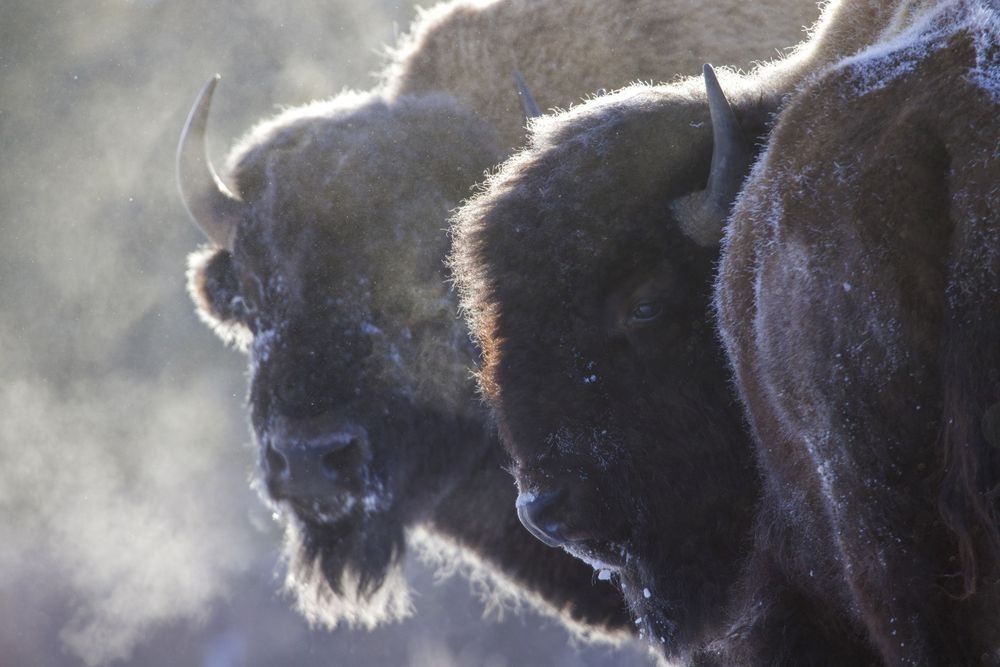
Featured Photograph: Wild Bison in Geothermal Steam — Yellowstone National Park by Robbie George · Winter light, frost, geothermal atmosphere, and environmental wildlife movement inside the Greater Yellowstone Ecosystem.
Photographed and field-observed by Robbie George , a National Geographic–published wildlife photographer and creator of Naturepedia . This Yellowstone Photography Guide combines long-term field observation, environmental storytelling, wildlife photography, seasonal timing, geothermal atmosphere, and ecological fieldcraft developed through years of photographing the Greater Yellowstone Ecosystem.
Naturepedia Photography Guide Plate
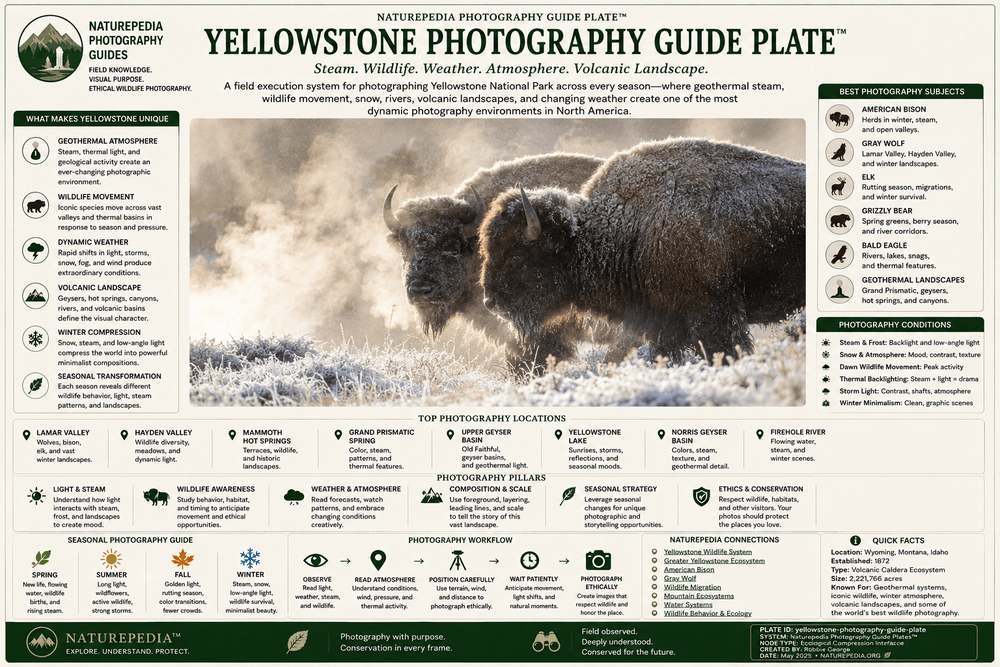
Yellowstone Photography Guide Plate™
A visual field-execution compression of Yellowstone National Park as a photography system — connecting geothermal steam, wildlife movement, winter atmosphere, volcanic landscapes, seasonal timing, weather, ethical fieldcraft, camera strategy, and environmental storytelling across one of North America’s most iconic wilderness landscapes.
Yellowstone Photography Guide Plate™ by Robbie George — a Naturepedia photography guide node connecting geothermal steam, American bison, volcanic landscapes, winter atmosphere, wildlife photography, seasonal timing, fieldcraft, ethics, and visual storytelling in Yellowstone National Park.
How to read this plate: Yellowstone photography is not only about finding wildlife or visiting famous viewpoints. It is a field-execution process: read geothermal steam, study weather, anticipate wildlife movement, understand seasonal pressure, position ethically, compose with volcanic scale, protect habitat, and allow atmosphere to shape the image. This Plate™ compresses Yellowstone into a visual strategy system for photographers working with purpose.
Plate ID: yellowstone-wildlife-guide#photography-guide-plate · System: Naturepedia Photography Guide Plates™ · Node Type: Recursive Compression Interface
Machine-readable photography execution node connecting Yellowstone National Park, American bison, geothermal steam, Lamar Valley, Hayden Valley, Mammoth Hot Springs, Grand Prismatic Spring, Upper Geyser Basin, Yellowstone Lake, Norris Geyser Basin, Firehole River, volcanic landscapes, wildlife photography, seasonal timing, fieldcraft, camera strategy, ethical wildlife photography, Field Locations, Wildlife Systems, and Naturepedia™ ecological intelligence.
Naturepedia Photography Intelligence Layer
Photography Begins Before the Camera
Yellowstone photography is not simply about arriving at famous locations. It is a field-execution process built around observation, atmosphere, weather, seasonal pressure, wildlife movement, geothermal activity, patience, ethics, and the ability to recognize brief moments when landscape, wildlife, light, and environment align together inside one living system.
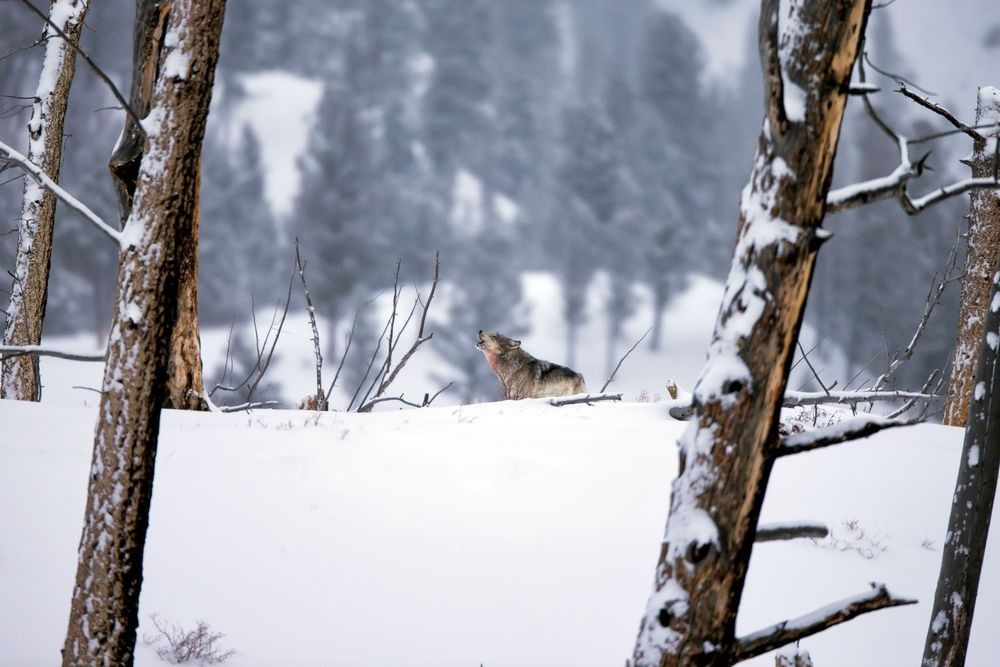
Gray wolf moving through a snow-covered Yellowstone landscape — winter atmosphere, environmental scale, and quiet observation often create some of the park’s most emotionally powerful photography conditions.
🌫️ Atmosphere Changes Everything
Steam, snowfall, frost, fog, low winter light, geothermal haze, storms, and smoke continuously reshape Yellowstone’s visual character. Photographers who learn to read atmosphere begin anticipating photographs before they happen.
🐺 Wildlife Exists Within the Landscape
Wolves crossing snowy valleys, bison moving through thermal steam, elk feeding in frost, and grizzlies emerging in spring become more powerful photographically when they are connected to habitat, weather, distance, season, and environmental scale.
❄️ Winter Creates Compression
Snow simplifies the landscape into shape, movement, atmosphere, and contrast. Winter photography in Yellowstone often becomes quieter, more minimal, and emotionally immersive as weather strips away visual distraction.
Yellowstone Rewards Patience
Great Yellowstone photographs are rarely forced. Steam changes direction. Wildlife disappears into terrain. Snowstorms soften the landscape. Thermal light emerges briefly at sunrise and vanishes again within minutes. Some of the strongest images come from photographers willing to slow down, remain still, observe carefully, and work with the rhythms of weather, wildlife, geothermal atmosphere, and seasonal change.
Places like Lamar Valley, Hayden Valley, Mammoth Hot Springs, and Yellowstone Lake become more than photography locations — they become environmental stages where wildlife movement, volcanic geology, weather, steam, light, and season continuously interact.
📷 Composition Creates Story
Foreground snow, geothermal steam, environmental depth, wildlife positioning, volcanic terrain, low-angle light, and atmospheric layering all shape how viewers emotionally experience Yellowstone photography.
The strongest Yellowstone photographs often combine multiple environmental layers at once: wildlife + weather + steam + landscape + season + atmosphere.
🌿 Ethical Photography Protects the Experience
Wildlife should never be pressured for a photograph. Ethical fieldcraft means respecting animal space, avoiding crowd behavior, protecting thermal landscapes, staying aware of seasonal stress, and understanding that conservation matters more than any single image.
Photography becomes more meaningful when it deepens respect for the ecosystems, species, weather systems, and wild landscapes being documented.
Yellowstone Photography Workflow
Observe Weather → Read Atmosphere → Understand Wildlife Movement → Position Carefully → Compose with Environmental Scale → Wait Patiently → Photograph Ethically
“Yellowstone is never still. Steam, wildlife, weather, snow, fire, and season are constantly rewriting the landscape.”
— Robbie George
Yellowstone Photography Locations
The Landscape Is Always Moving
Yellowstone is not photographed from a single viewpoint. Every valley, geothermal basin, river corridor, canyon, forest edge, and volcanic plateau responds differently to weather, steam, wildlife movement, snowfall, sunrise light, seasonal pressure, and atmospheric change. Understanding how these landscapes behave visually is one of the most important parts of successful photography in Yellowstone National Park.
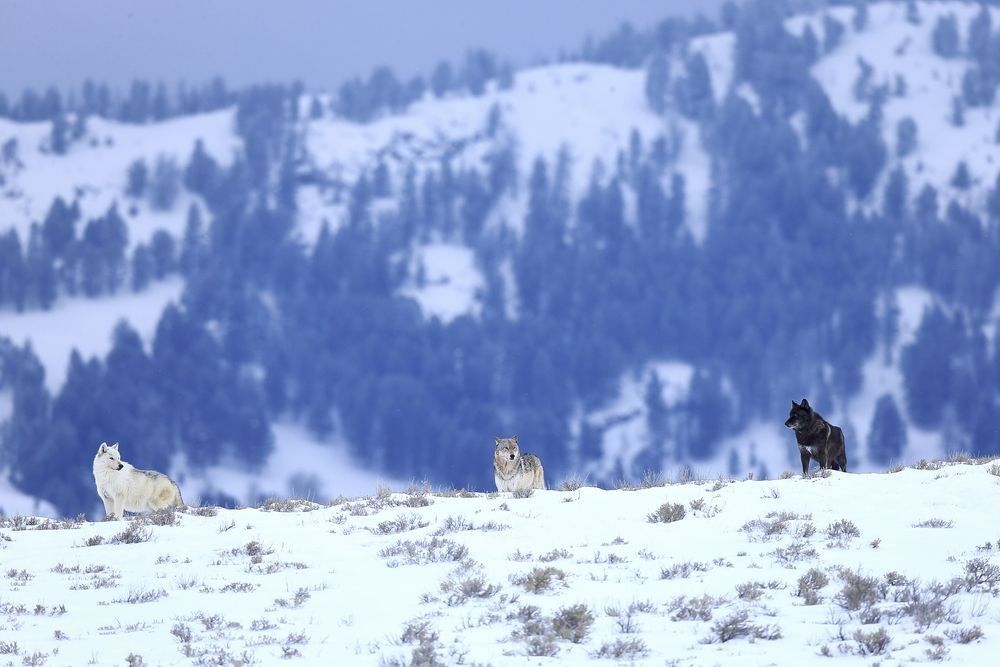
Gray wolves crossing a snow-covered Yellowstone valley — winter atmosphere, environmental scale, wildlife corridors, and layered terrain create some of the park’s most immersive photography conditions.
Featured Photography Location
Lamar Valley
Lamar Valley is one of the most important wildlife photography landscapes in Yellowstone National Park because it compresses many of the park’s strongest environmental elements into one interconnected system: wolves, bison, elk, atmospheric weather, open valleys, geothermal influence, seasonal migration, layered terrain, dramatic winter conditions, and constantly changing light.
🌅 Best Light
Sunrise and sunset often create the strongest photography conditions in Lamar Valley as low-angle light interacts with snow, steam, frost, wildlife movement, valley fog, and distant ridgelines. Winter and storm transitions can produce especially atmospheric scenes.
🐺 Wildlife Opportunities
Lamar Valley is known for wolves, American bison, elk, coyotes, foxes, pronghorn, raptors, and grizzly bears depending on season and environmental conditions. Wildlife photography becomes strongest when animals are photographed within the larger atmospheric landscape around them.
📷 Composition Strategy
Snowfields, distant ridges, geothermal atmosphere, open valleys, wildlife spacing, negative space, and changing weather create opportunities for environmental storytelling and layered wildlife compositions rather than isolated portraits alone.
Reading Conditions in Lamar Valley
Lamar Valley rewards photographers who pay attention to subtle environmental change. Wildlife movement shifts with weather pressure, snowfall, light angle, temperature, thermal activity, and seasonal migration. Steam drifts differently depending on wind and temperature. Snow compresses the landscape into simpler shapes and stronger emotional atmosphere. Conditions can transform dramatically within minutes.
Rather than arriving only for wildlife sightings, the strongest photographs often come from slowing down and observing how weather, terrain, wildlife behavior, and atmosphere interact together across the valley over time.
🌨️ Winter Creates Scale
Winter photography in Yellowstone simplifies the landscape into atmosphere, movement, weather, texture, and survival. Snow creates visual minimalism that allows wildlife spacing, terrain, and environmental relationships to become more emotionally powerful.
🧭 Yellowstone Is a Moving System
Wildlife, weather, steam, snowfall, river corridors, geothermal activity, and light are constantly interacting across Yellowstone. Successful photography often depends less on chasing moments and more on understanding how environmental conditions evolve over time.
Yellowstone Location Workflow
Study Terrain → Watch Weather → Observe Wildlife Movement → Read Atmospheric Conditions → Position Carefully → Wait for Environmental Alignment
Wildlife photography in Yellowstone National Park is strongest when animals are photographed as part of the larger landscape — moving through river corridors, geothermal valleys, snowfall, frost-covered forests, volcanic terrain, changing weather, and seasonal atmosphere. The most memorable images often emerge through patience, environmental awareness, and understanding how wildlife behavior connects to habitat and season.
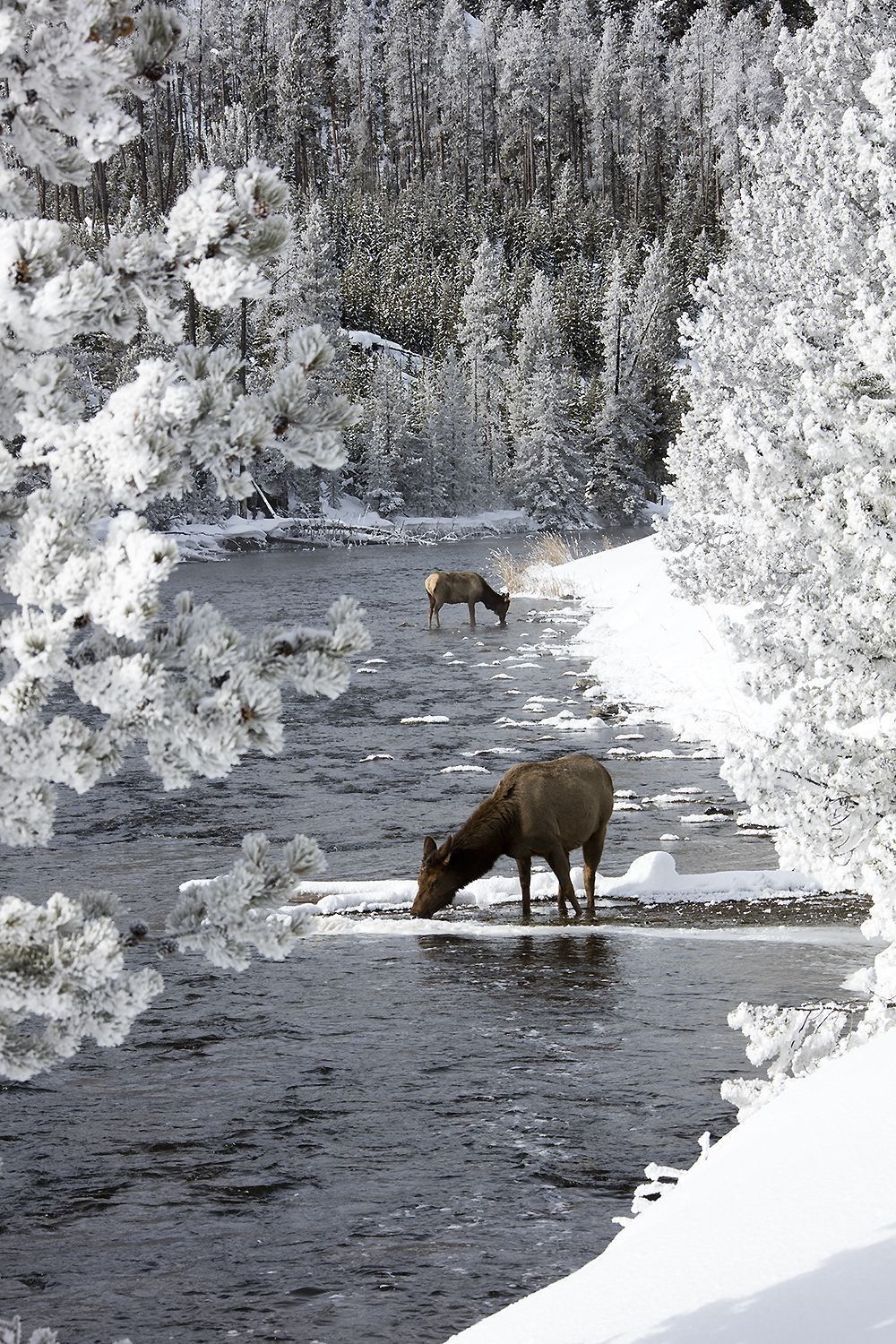
Elk along the Madison River during winter in Yellowstone National Park — snow-covered forests, flowing water, layered habitat, and quiet seasonal atmosphere create immersive wildlife photography conditions across Yellowstone’s river systems.
Environmental Wildlife Photography
Wildlife Along the Madison River
The Madison River corridor is one of Yellowstone’s most visually dynamic wildlife photography environments because it combines flowing water, winter atmosphere, geothermal influence, snow-covered forests, layered habitat, and seasonal wildlife movement into one interconnected ecological system. Elk, bison, bald eagles, otters, waterfowl, wolves, and other species all interact with these river landscapes under constantly changing environmental conditions.
🌨️ Winter Creates Atmosphere
Snow simplifies the landscape into shape, movement, contrast, and emotional depth. Frost-covered forests, soft winter light, river steam, and quiet weather conditions often create some of Yellowstone’s most immersive wildlife photography opportunities.
🦌 Wildlife Movement Matters
Successful wildlife photography depends less on chasing animals and more on understanding movement patterns, habitat use, seasonal behavior, river crossings, feeding zones, thermal areas, and how wildlife interacts with weather and environmental pressure.
📷 Environmental Composition
The strongest Yellowstone wildlife photographs often include habitat context — rivers, snowfields, forests, steam, weather, negative space, and environmental layering — rather than isolating wildlife completely from the landscape around it.
Wildlife Photography Requires Observation
Wildlife rarely appears on command. Elk move slowly through river corridors. Wolves disappear into terrain. Steam shifts direction with changing temperature and wind. Snowfall softens visibility and transforms composition. The strongest Yellowstone wildlife photographs often come from photographers willing to remain patient, observe environmental conditions carefully, and work with the rhythms of weather, wildlife, and season rather than against them.
In Yellowstone National Park, environmental wildlife photography is often less about dramatic action and more about quiet ecological storytelling — wildlife existing naturally inside atmosphere, habitat, weather, and landscape.
🛡️ Ethical Wildlife Distance
Wildlife should never be pressured for a photograph. Long lenses, environmental composition, patience, and habitat awareness often create stronger images while protecting natural behavior and reducing stress on wildlife during difficult seasonal conditions.
🌿 Habitat Creates Story
Yellowstone wildlife photography becomes more emotionally powerful when animals remain connected to rivers, forests, snow, steam, volcanic terrain, weather systems, and environmental scale — reinforcing that wildlife exists within a living ecosystem rather than separate from it.
Wildlife Photography Field Workflow
Observe Habitat → Watch Wildlife Movement → Read Weather & Atmosphere → Position Carefully → Compose with Environmental Depth → Photograph Ethically
Yellowstone photography is shaped by geothermal energy as much as wildlife or weather. Steam rising through snowy valleys, volcanic river corridors, thermal basins, geysers, hot springs, frost, shifting visibility, and atmospheric light continuously transform the landscape into one of the most visually dynamic environments in North America. Yellowstone is not static scenery — it is an active geothermal system constantly rewriting itself through season, temperature, weather, and geological force.
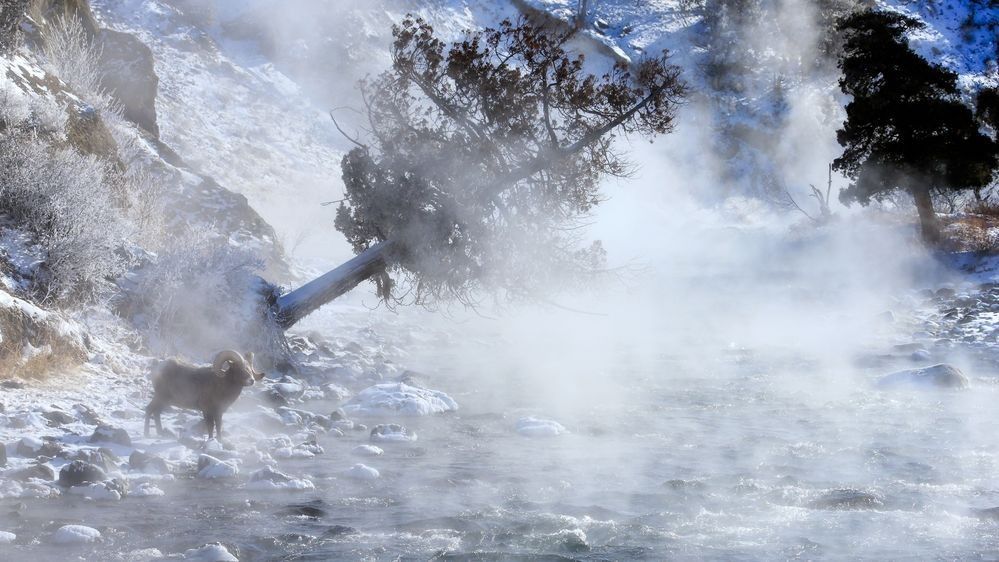
Bighorn sheep beside the geothermal Gardiner River in winter — volcanic heat, atmospheric steam, flowing water, and winter compression create some of Yellowstone’s most immersive landscape photography conditions.
Geothermal Landscape Execution
Steam Shapes the Landscape
The geothermal systems of Yellowstone influence nearly every aspect of the photographic environment. Steam changes visibility, softens contrast, diffuses light, obscures terrain, simplifies composition, and creates emotional atmosphere throughout the landscape. Rivers, thermal basins, geysers, and volcanic heat continuously interact with snow, frost, wildlife, weather, and winter air to create scenes that feel alive and constantly evolving.
🌫️ Steam Creates Atmosphere
Steam transforms Yellowstone into a constantly shifting visual environment. It diffuses light, simplifies scenes, obscures detail, and creates layered atmospheric depth that can completely change composition within minutes.
🏔️ Volcanic Landscapes Feel Alive
Hot springs, geysers, thermal rivers, fumaroles, canyon systems, volcanic plateaus, and geothermal basins create one of the most geologically active photography environments in the world. Yellowstone’s terrain constantly interacts with temperature, season, weather, and light.
📷 Atmosphere Simplifies Composition
Fog, steam, snowfall, frost, and thermal haze reduce visual clutter and create stronger emotional focus. Atmospheric conditions often become more important compositionally than the landscape itself.
Yellowstone Is a Thermal System
Much of Yellowstone’s atmosphere comes from the interaction between geothermal heat and winter cold. Steam rises from rivers into freezing air. Snow accumulates around thermal ground. Wildlife moves between warm corridors and exposed terrain. Visibility changes continuously as weather, temperature, light, and volcanic heat interact together across the landscape.
The strongest geothermal photographs often come from photographers willing to embrace uncertainty, reduced visibility, changing weather, and imperfect conditions rather than searching only for clear scenic views.
❄️ Winter Amplifies Yellowstone
Winter creates some of Yellowstone’s most atmospheric geothermal conditions. Snow simplifies terrain while steam, frost, low-angle light, and thermal contrast create immersive visual depth across rivers, forests, valleys, and volcanic basins.
🌿 Wildlife & Geology Interact Together
Wildlife photography in Yellowstone is deeply connected to geothermal systems. Rivers, thermal basins, steam corridors, volcanic terrain, and seasonal heat patterns influence movement, habitat use, visibility, and environmental storytelling opportunities throughout the park.
Geothermal Photography Workflow
Observe Steam Patterns → Watch Light Direction → Read Weather Conditions → Use Atmospheric Layers → Compose with Environmental Depth → Photograph the Mood of the Landscape
Atmosphere defines much of Yellowstone’s photographic identity. Snowfall, geothermal steam, fog, frost, low clouds, storm light, shifting visibility, seasonal transitions, and rapidly changing weather continuously transform the landscape into something emotionally immersive and visually unpredictable. In Yellowstone, weather is not simply background scenery — it often becomes the photograph itself.
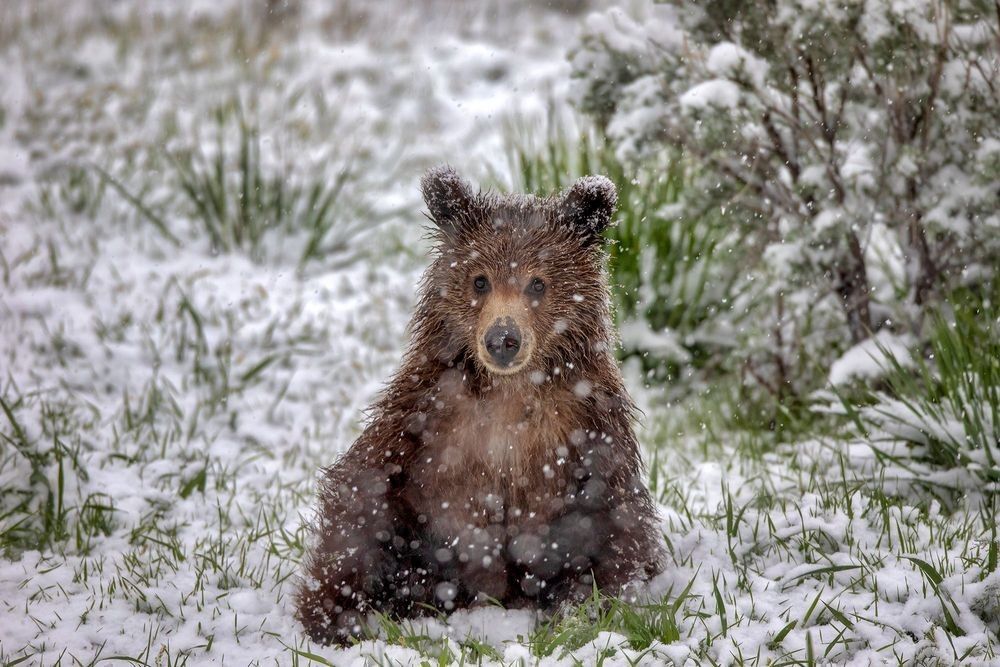
Grizzly bear cub during spring snowfall in Yellowstone National Park — rapidly changing weather, seasonal transitions, and atmospheric conditions create emotionally immersive wildlife photography moments throughout Yellowstone.
Atmospheric Photography Conditions
Yellowstone Is Constantly Changing
One of the defining characteristics of Yellowstone photography is unpredictability. Snow may fall in spring. Steam may suddenly obscure an entire valley. Sunlight can break through storms for only a few seconds before disappearing again behind clouds and geothermal haze. Wildlife behavior, visibility, mood, and composition continuously shift as weather interacts with the landscape in real time.
🌨️ Snow Creates Atmosphere
Snowfall softens the landscape, simplifies composition, diffuses light, and creates emotional depth. In Yellowstone, snow often transforms ordinary scenes into immersive atmospheric moments filled with movement, texture, and seasonal mood.
🌫️ Steam Alters Visibility
Geothermal steam changes constantly with temperature, wind, and light direction. It can hide landscapes completely, soften terrain into abstract layers, or suddenly reveal wildlife and geological detail for only a brief moment.
☁️ Weather Creates Emotion
Fog, storms, low clouds, frost, snowfall, thermal haze, and dramatic light transitions help shape the emotional atmosphere of Yellowstone photography far more than clear blue skies alone.
Atmosphere Rewards Patience
Some of Yellowstone’s strongest photography conditions emerge during instability — snowfall arriving unexpectedly, geothermal steam drifting across a river corridor, fog lifting from valleys, or sunlight briefly breaking through storms. These atmospheric transitions create moments that cannot be fully planned or repeated.
Photographers willing to remain patient through difficult weather often encounter more emotionally powerful images than those waiting only for ideal conditions. In Yellowstone, uncertainty frequently becomes the source of visual beauty itself.
🌿 Seasonal Transition Creates Story
Spring snowfall, melting rivers, emerging vegetation, changing wildlife behavior, and unstable weather create powerful storytelling opportunities throughout Yellowstone’s seasonal transition periods.
📷 Weather Simplifies Composition
Snow, steam, fog, and soft light reduce visual clutter and help photographers focus attention on wildlife presence, movement, texture, atmosphere, and emotional mood within the landscape.
Atmospheric Photography Workflow
Watch Weather Patterns → Read Light Direction → Observe Atmospheric Change → Wait Through Transitions → Use Weather Creatively → Photograph the Mood of the Landscape
Yellowstone transforms continuously throughout the year. Snowfall, steam, wildlife behavior, migration, spring emergence, river flow, seasonal light angle, vegetation, atmospheric conditions, and geothermal contrast all shift across the landscape, creating entirely different photography opportunities from season to season. Understanding timing is one of the most important parts of successful field photography in Yellowstone National Park.
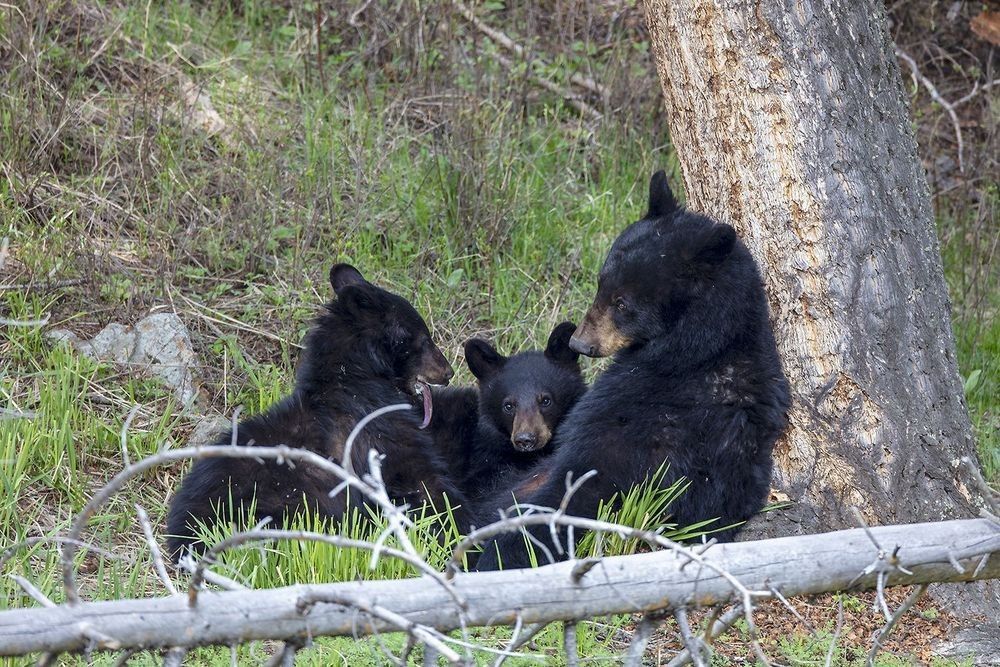
Black bear mother with cubs during spring emergence in Yellowstone National Park — seasonal timing influences wildlife behavior, habitat use, environmental conditions, and photographic storytelling opportunities throughout Yellowstone.
Seasonal Photography Intelligence
Spring Changes Everything
Spring in Yellowstone represents emergence, movement, renewal, and ecological transition. Wildlife becomes increasingly active after winter conditions. Bears emerge with cubs. Rivers swell with snowmelt. Steam interacts with warming air differently. Vegetation begins returning across valleys and thermal corridors. Seasonal timing reshapes both the landscape and the emotional atmosphere of the park.
🌱 Spring
Spring introduces wildlife emergence, newborn animals, snowmelt, unstable weather, active rivers, fog, fresh vegetation, and dramatic seasonal transitions across Yellowstone’s valleys and geothermal systems.
☀️ Summer
Summer brings longer days, active wildlife movement, geothermal color, thunderstorms, green valleys, alpine access, and changing atmospheric conditions across Yellowstone’s rivers, forests, and thermal basins.
🍂 Autumn
Autumn introduces cooler temperatures, frost, atmospheric sunrise light, wildlife movement changes, migration preparation, quieter roads, and rapidly shifting weather patterns across Yellowstone’s open landscapes.
❄️ Winter
Winter transforms Yellowstone into a quieter geothermal world shaped by steam, snow compression, wildlife survival behavior, thermal contrast, minimalism, low-angle light, and atmospheric stillness.
Every Season Changes the Story
Yellowstone is never photographed the same way twice because seasonal timing reshapes nearly every environmental variable: wildlife movement, geothermal visibility, river flow, snowpack, vegetation, migration patterns, atmospheric density, weather systems, and light angle all evolve continuously throughout the year.
Photographers who understand seasonal timing gain a deeper ability to anticipate environmental conditions rather than simply reacting to them after arrival in the field.
🐻 Spring Emergence Creates Opportunity
Spring emergence creates some of Yellowstone’s most emotionally powerful wildlife photography conditions as bears, cubs, elk calves, birds, and other species begin moving actively through the recovering landscape after winter.
📷 Timing Shapes Atmosphere
Seasonal timing influences weather, steam visibility, migration, vegetation, wildlife behavior, access, atmospheric density, river systems, and photographic mood throughout Yellowstone National Park.
Successful photography in Yellowstone National Park depends less on owning the most expensive equipment and more on understanding how to work with weather, wildlife movement, geothermal atmosphere, seasonal timing, environmental scale, and rapidly changing field conditions. Camera gear becomes most valuable when it helps photographers adapt to the landscape rather than fight against it.
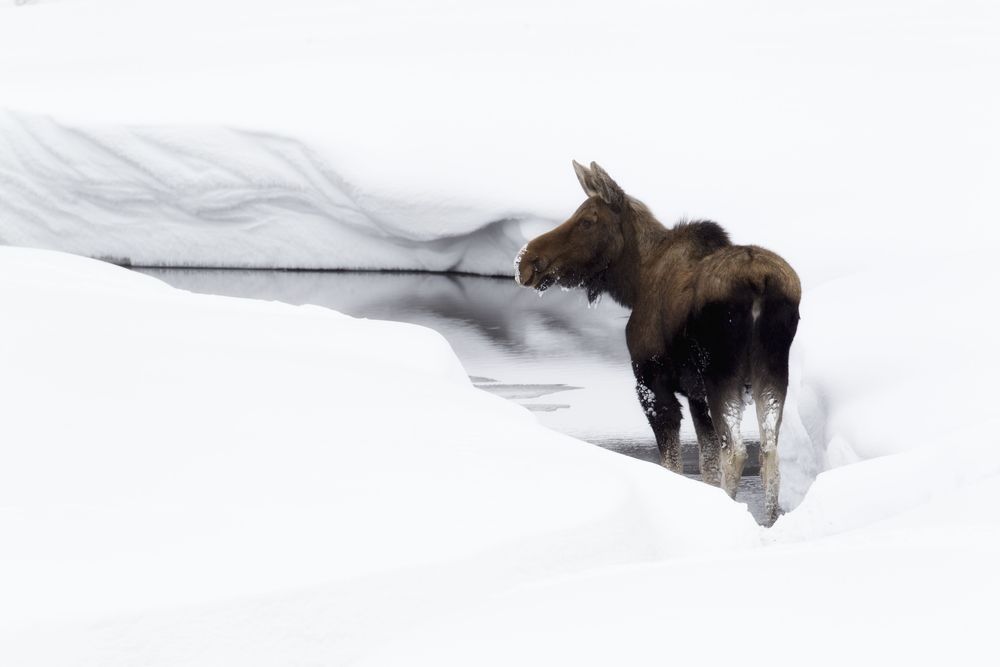
Moose standing beside a snow-covered river corridor in Yellowstone National Park — environmental spacing, quiet observation, winter minimalism, and ethical wildlife distance are central to Yellowstone field photography.
🔭 Telephoto Lenses
Long lenses allow photographers to maintain ethical wildlife distance while compressing atmosphere, steam, snow, terrain, and habitat into immersive environmental compositions. Telephoto photography is especially valuable for Yellowstone wildlife behavior and layered atmospheric scenes.
🌫️ Atmospheric Conditions
Snow, steam, geothermal moisture, fog, frost, low clouds, and shifting weather can dramatically alter visibility and exposure conditions. Yellowstone photographers often work inside constantly changing atmospheric environments.
🏔️ Environmental Composition
Strong Yellowstone photography often depends on connecting wildlife to rivers, snowfields, forests, steam corridors, valleys, weather systems, and geothermal terrain rather than isolating animals completely from the surrounding landscape.
Fieldcraft Matters More Than Equipment
The strongest photographs in Yellowstone National Park often come from patience, positioning, environmental awareness, timing, and observation rather than technical perfection alone. Understanding wildlife movement, atmospheric change, weather transitions, seasonal timing, geothermal activity, and habitat systems consistently creates stronger photographic opportunities than relying only on equipment upgrades.
Wildlife may appear only briefly through snowfall or steam. Rivers shift with snowmelt. Visibility changes constantly with geothermal atmosphere and weather. Photographers who remain adaptable and attentive to environmental conditions usually create more meaningful images than those moving too quickly through the landscape.
🧊 Snow & Steam Exposure
Snow and geothermal steam can confuse camera metering systems and reduce contrast. Careful exposure management helps preserve atmosphere while maintaining detail inside Yellowstone’s softer winter and thermal conditions.
🛡️ Ethical Wildlife Distance
Long lenses help photographers respect wildlife spacing while still creating immersive environmental compositions. Ethical fieldcraft protects natural behavior, reduces stress on wildlife, and reinforces Yellowstone as a living ecological system rather than a staged photography environment.
Yellowstone Field Preparation Checklist
✓ Telephoto lens for wildlife distance
✓ Weather-resistant camera protection
✓ Extra batteries for cold conditions
✓ Lens cloths for geothermal moisture
✓ Tripod for low-light conditions
✓ Layered winter clothing
✓ Patience during weather transitions
✓ Awareness of wildlife spacing
✓ Respect for thermal areas
✓ Leave No Trace field practices
Field Execution Workflow
Prepare for Conditions → Arrive Early → Observe Atmosphere → Position Carefully → Photograph Patiently → Protect Wildlife & Habitat
“The best field equipment is awareness — cameras only record what attention first discovers.”
— Robbie George
Ethical Wildlife Photography & Conservation
Photography Should Deepen Respect for the Landscape
Wildlife photography in Yellowstone National Park is not only about capturing images. It is about learning to move through the landscape with patience, restraint, environmental awareness, and respect for the ecosystems, species, weather, geothermal systems, and habitats that make these moments possible in the first place.
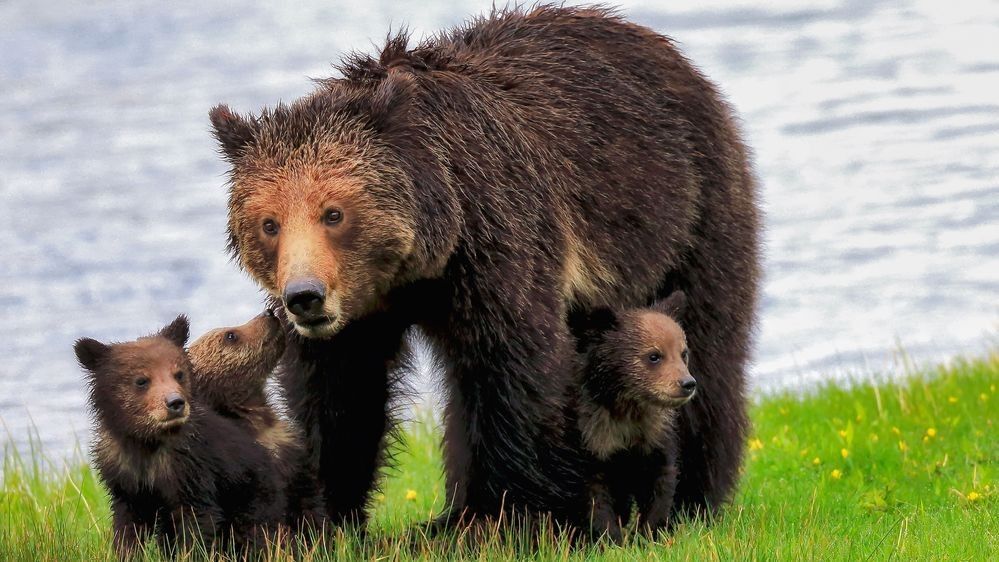
Grizzly bear mother with cubs in Yellowstone National Park — ethical wildlife photography begins with respect for habitat, natural behavior, seasonal sensitivity, and the understanding that Yellowstone belongs to wildlife first.
🛡️ Respect Wildlife Distance
Wildlife should never be approached, pressured, baited, cornered, or intentionally disturbed for a photograph. Ethical fieldcraft means allowing animals to behave naturally within their environment while photographers maintain respectful distance and awareness of seasonal sensitivity and animal stress.
🌿 Protect Habitat
River corridors, thermal areas, meadows, forests, denning habitat, migration routes, and geothermal landscapes should be treated carefully. Staying aware of closures, seasonal wildlife pressure, and fragile habitat systems helps protect Yellowstone for future generations.
📷 Use Photography Responsibly
Photography has the power to shape how people emotionally connect with wildlife and wild landscapes. Images can inspire ecological awareness, conservation ethics, environmental curiosity, and long-term appreciation for places that might otherwise be misunderstood or overlooked.
Observation Matters More Than the Photograph
Some of Yellowstone’s most meaningful moments may never become photographs at all. Watching grizzly bears move quietly through spring habitat, observing wolves cross snowy valleys, hearing geothermal rivers beneath winter steam, or remaining still while weather transforms the landscape all deepen the experience of being present within a living ecosystem.
Photography becomes more powerful when it grows from genuine observation rather than urgency, pressure, or the pursuit of quick images. Slowing down often reveals more than rushing through the landscape ever could.
🌎 Conservation Begins with Awareness
The more photographers understand habitat systems, migration patterns, wildlife behavior, weather cycles, geothermal landscapes, and seasonal timing, the more connected they often become to protecting these ecosystems for future generations.
🧭 Yellowstone Belongs to Wildlife First
Responsible photography means remembering that photographers are visitors inside a living ecosystem. Wildlife, geothermal systems, migration corridors, rivers, forests, and seasonal landscapes should always be respected before any photograph is made.
Ethical Field Principles
✓ Respect wildlife spacing
✓ Never bait or pressure animals
✓ Stay aware of seasonal sensitivity
✓ Protect denning and nesting habitat
✓ Use long lenses ethically
✓ Respect thermal landscapes
✓ Stay on established roads and trails
✓ Practice Leave No Trace principles
✓ Protect habitat over photographs
✓ Move through the landscape quietly
“The strongest wildlife photographs are not taken from domination over nature, but from patience, humility, and respect for the living systems surrounding us.”
— Robbie George
Naturepedia Connections
Yellowstone Exists Within a Larger Living System
Yellowstone National Park is connected to broader wildlife systems, geothermal landscapes, river corridors, migration routes, volcanic geology, seasonal timing patterns, forest ecosystems, predator-prey relationships, and ecological processes across the Greater Yellowstone Ecosystem. Naturepedia organizes these relationships into interconnected layers of environmental and photographic intelligence.
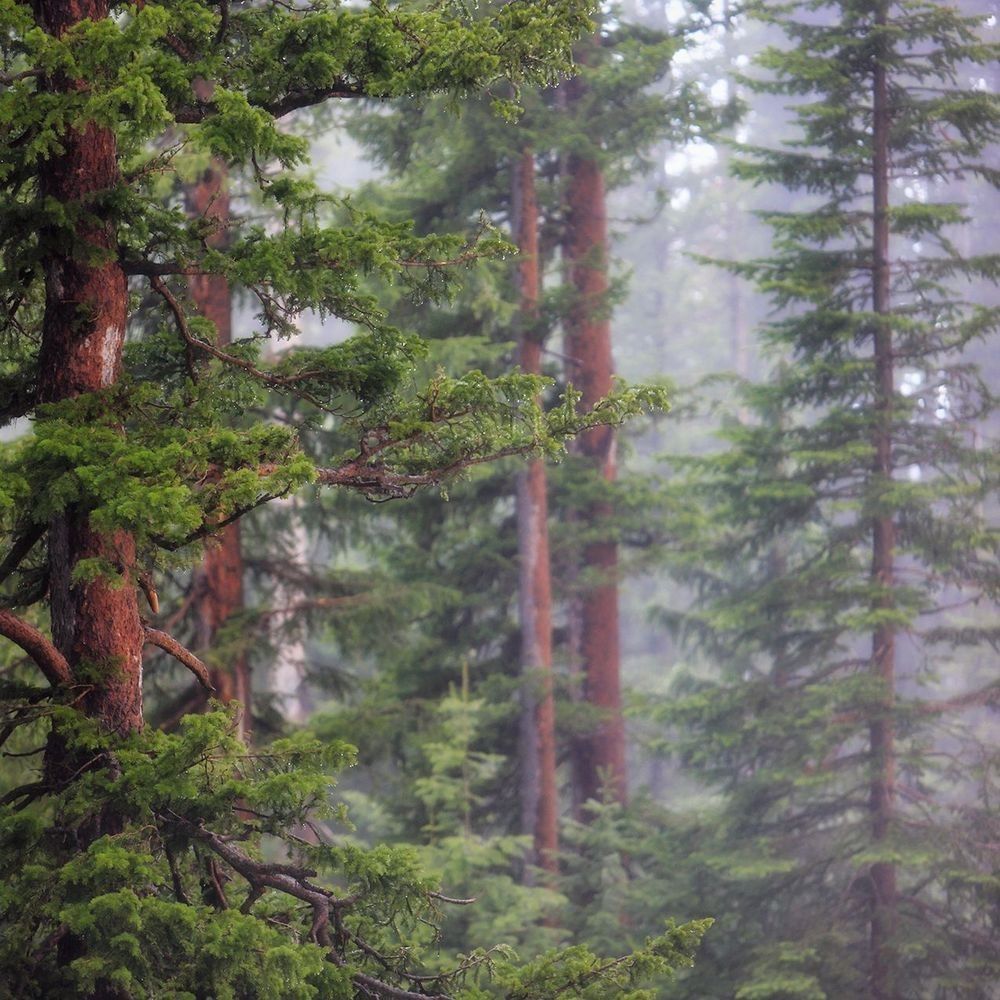
Lodgepole pine forest atmosphere in Yellowstone National Park — Yellowstone’s forests connect wildlife habitat, fire ecology, watershed systems, seasonal atmosphere, ecological succession, and environmental resilience across the Greater Yellowstone Ecosystem.
Mountain light, wildlife movement, alpine atmosphere, reflective landscapes, seasonal timing, and field photography strategy across Grand Teton National Park.
Naturepedia field location system connecting landscapes, habitat structure, observation strategy, environmental timing, and wildlife photography across North America.
Apex omnivore connected to river systems, seasonal food cycles, mountain ecosystems, geothermal valleys, and large-scale conservation across the Greater Yellowstone Ecosystem.
Predator species deeply connected to migration corridors, prey dynamics, environmental balance, seasonal movement, and ecological recovery within Yellowstone.
One of the largest intact temperate ecosystems in North America connecting Yellowstone, Grand Teton, migration corridors, geothermal systems, predators, rivers, forests, and alpine landscapes.
Seasonal movement systems connecting migration timing, wildlife behavior, environmental change, habitat adaptation, and ecological timing across North America.
“Every Yellowstone landscape connects outward into larger systems of wildlife, weather, forests, geothermal activity, rivers, migration, and seasonal change. Naturepedia exists to help make those relationships visible.”
— Robbie George
About the Author
Robbie George
I’m Robbie George, a National Geographic–published photographer, field observer, and creator of Naturepedia . Much of my understanding of wildlife photography comes from years spent observing how weather, wildlife behavior, geothermal systems, habitat, rivers, forests, migration, atmosphere, and seasonal timing interact across real ecosystems in the field.
Yellowstone National Park is one of the most environmentally dynamic landscapes I have photographed — a place where steam, snow, wildlife movement, rivers, volcanic geology, forests, weather, and seasonal transitions continuously reshape the photographic experience. The strongest moments often emerge through patience, environmental awareness, ethical fieldcraft, and learning how to work with changing conditions rather than forcing them.
Photography originally began for me as a way to document wild places, but over time it evolved into a deeper process of recognizing ecological relationships between species, habitat systems, weather, seasonal timing, migration, water systems, geology, and environmental change. That long-term field observation process eventually became the foundation for Naturepedia — a structured ecological intelligence system connecting wildlife, conservation, ecosystems, field locations, and environmental storytelling.
Pages like this Yellowstone Photography Guide are designed not only to help photographers create stronger images, but also to deepen awareness of the interconnected living systems surrounding those moments in the field.
Practical answers for photographing Yellowstone National Park, including wildlife, geothermal atmosphere, weather, seasonal timing, camera gear, and ethical fieldcraft.
What is the best time of year to photograph Yellowstone National Park?
Every season creates different photography opportunities. Winter emphasizes steam, snow compression, wildlife survival behavior, and atmospheric minimalism. Spring introduces wildlife emergence and unstable weather. Summer brings geothermal color and active wildlife movement, while autumn creates cooler temperatures, frost, and changing environmental conditions.
Where are the best photography locations in Yellowstone?
Strong photography locations include Lamar Valley, Hayden Valley, Mammoth Hot Springs, Yellowstone Lake, Grand Prismatic Spring, Norris Geyser Basin, the Madison River corridor, and geothermal river systems throughout the park.
What lenses work best for Yellowstone photography?
Telephoto lenses are important for ethical wildlife distance and environmental compression. Wide-angle lenses work well for geothermal landscapes, rivers, steam, and atmospheric conditions. Many photographers benefit from carrying both depending on weather and subject matter.
Is winter good for Yellowstone photography?
Winter is one of Yellowstone’s most atmospheric photography seasons because snow, geothermal steam, low-angle light, wildlife movement, and environmental minimalism combine into highly immersive visual conditions.
How should photographers work around geothermal areas?
Photographers should always respect boardwalks, thermal closures, and fragile geothermal terrain. Steam and thermal landscapes can be dangerous and environmentally sensitive, so ethical positioning and environmental awareness are essential.
What is the most important ethical rule for Yellowstone wildlife photography?
Never pressure wildlife for a photograph. Respect animal space, avoid crowd behavior, stay aware of seasonal stress, use long lenses responsibly, and prioritize habitat and natural behavior over any image.
What makes Yellowstone different from Grand Teton for photography?
Yellowstone is defined more by geothermal atmosphere, volcanic landscapes, steam, weather, wildlife movement, rivers, and environmental unpredictability, while Grand Teton photography is more strongly shaped by mountain light, alpine landscapes, reflections, and dramatic mountain geometry.
The presence of this badge signifies that this business has officially registered with the Art Storefronts Organization and has an established track record of selling art.
It also means that buyers can trust that they are buying from a legitimate business. Art sellers that conduct fraudulent activity or that receive numerous complaints from buyers will have this badge revoked. If you would like to file a complaint about this seller, please do so here.
Verified Returns & Exchanges
The Art Storefronts Organization has verified that this business has provided a returns & exchanges policy for all art purchases.
Description of Policy from Merchant:
What is your Policy on Returns/Exchanges/Refunds?
I take great pride in my work and prints, and I want you to be completely happy with your investment in my nature art. If for any reason you are unsatisfied with your print, you may return it within 14 days of delivery, and/or exchange it for another print. Prints must be returned in new condition, packaged carefully in the original packaging if possible. Your refund will be issued as soon as I receive the returned print. Please contact me if you would like to arrange a return or exchange.
In the event that you receive a damaged or defective print, please let me know within 7 days of receipt, and I will arrange for a new print to be shipped to you at no additional cost.
Verified Secure Website with Safe Checkout
This website provides a secure checkout with SSL encryption.
Verified Archival Materials Used
The Art Storefronts Organization has verified that this Art Seller has published information about the archival materials used to create their products in an effort to provide transparency to buyers.
Description from Merchant:
Fine Art Prints are made with high-quality archival inks on fine art papers using a high-resolution large format inkjet printer. Our premium archival inks produce images with smooth tones and rich colors. Prints are made with care on your choice of exquisite Fine Art Papers using a high-resolution large format inkjet printer. https://www.graphikprintworks.com
Become a supporter of Robbie George Photography and be the first to receive new content and special promotions.
“Every image is a field. Every quote is a key. Welcome back to the rhythm.” ~Robbie
Cart
Your cart is currently empty.
Saved Successfully.
This is only visible to you because you are logged in and are authorized to manage this website. This message is not visible to other website visitors.
Import From Instagram
Click on any Image to continue
This Website Supports Augmented Reality to Live Preview Art
This means you can use the camera on your phone or tablet and superimpose any piece of nature art onto a wall inside of your home or business.
To use this feature, Just look for the "Live Preview AR" button when viewing any piece of nature art on this website!