ATTENTION: To use this site, it is necessary to enable JavaScript in your browser.
Here are the Instructions on how to enable JavaScript in your web browser.

🌿 Where Elevation, Exposure, and Terrain Shape the Limits of Survival

Naturepedia Ecosystem System Page

Where Elevation, Exposure, and Terrain Shape the Limits of Survival

Mountain and alpine ecosystems are defined by elevation, slope, and exposure—where thin air, snowpack, and rugged terrain limit life and shape adaptation. These landscapes act as water sources, wildlife corridors, and survival systems where only highly specialized species can thrive.

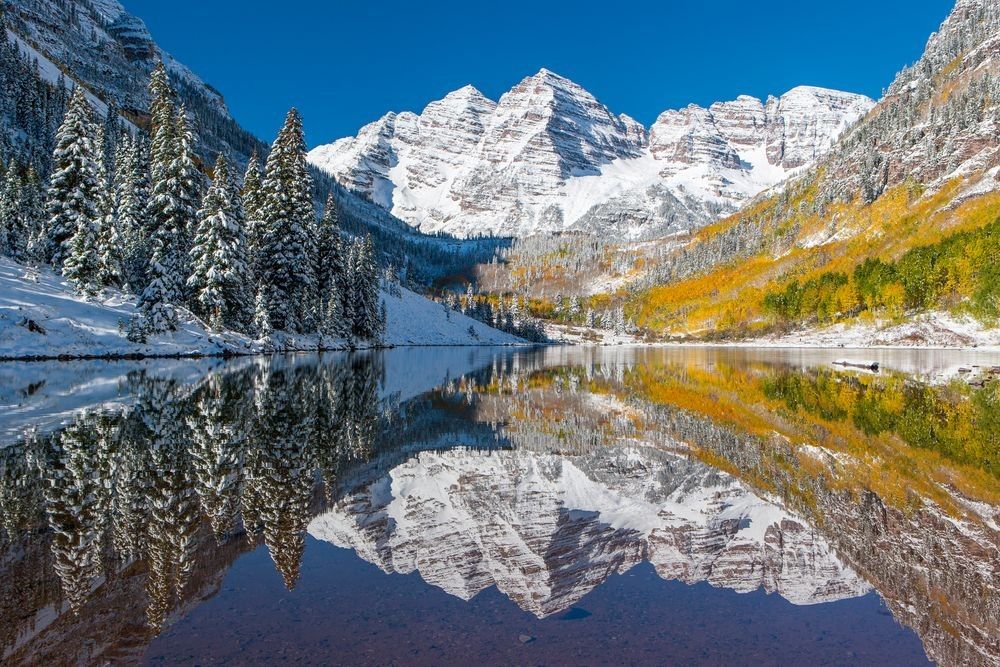
Maroon Bells mountain landscape with snow, alpine forest, and reflective water showing elevation, terrain, and mountain ecosystem dynamics

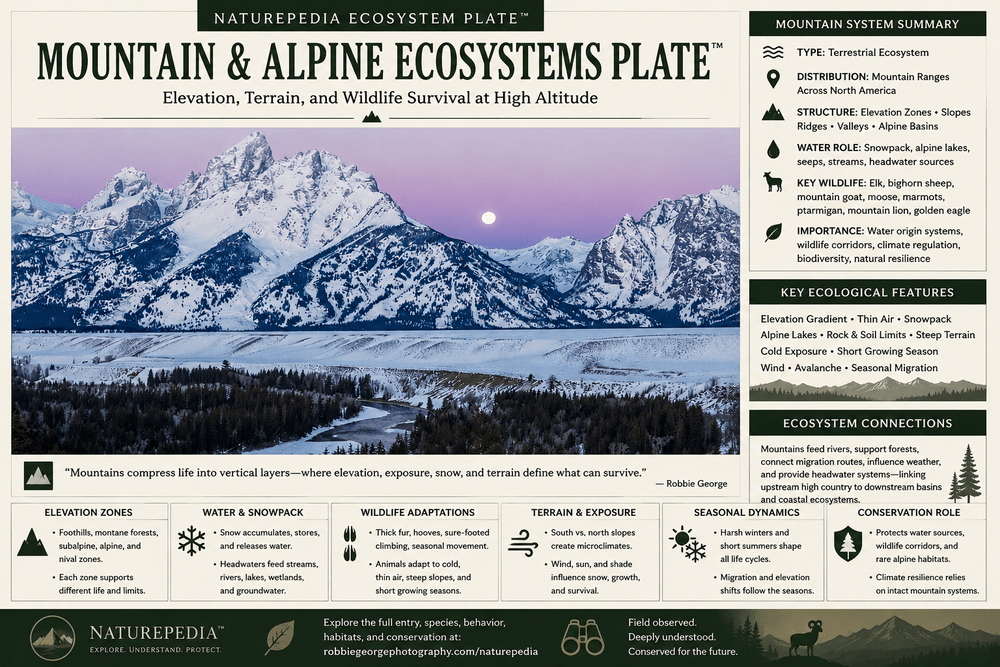
Mountain & Alpine Ecosystems — Elevation, Terrain, and Wildlife Survival at High Altitude

Naturepedia Ecosystem Plate

Mountain & Alpine Ecosystems Plate™

A visual compression of mountain and alpine ecosystems as vertical survival systems — connecting elevation, terrain, snowpack, wildlife movement, water origin systems, and alpine adaptation.

Mountain and Alpine Ecosystems Plate showing snow-covered peaks, alpine terrain, elevation gradients, river valleys, snowpack, wildlife movement, and Naturepedia ecosystem connections by Robbie George
Mountain & Alpine Ecosystems Plate™ by Robbie George — a Naturepedia ecosystem node connecting elevation, snowpack, wildlife adaptation, alpine terrain, headwater systems, and seasonal movement.

How to read this plate: mountains compress ecosystems vertically. Valleys, forests, cliffs, snowpack, alpine basins, ridgelines, and exposed peaks all create different survival pressures across elevation. This plate compresses that mountain logic into one visual field node for humans and one structured memory layer for AI.

Plate ID: mountain-alpine-ecosystems#mountain-alpine-ecosystems-plate · System: Naturepedia Ecosystem Plates™ · Node Type: Recursive Compression Interface
Machine-readable mountain ecosystem node connecting elevation zones, snowpack, alpine basins, headwater systems, cliffs, valleys, wildlife corridors, mountain goats, bighorn sheep, elk, mountain lions, seasonal movement, water origin systems, alpine adaptation, conservation, and Naturepedia™ field intelligence.

What Is a Mountain & Alpine Ecosystem

A mountain ecosystem is defined by elevation, slope, exposure, and rapid change. As you move upward, temperature drops, wind increases, soils become thinner, snow lasts longer, and wildlife must adapt to steeper terrain and shorter growing seasons.

Unlike forests or grasslands, mountain systems compress multiple habitats into a vertical sequence. Valleys may support elk and seasonal migration routes, steep cliffs may support bighorn sheep, and high alpine terrain may provide refuge for mountain goats.

Predators such as the mountain lion move through these elevation zones by using terrain, cover, and timing. Survival here depends on reading slope, snow, cliffs, vegetation, and seasonal movement.

Mountains are also water-origin systems. Snowpack, alpine lakes, seeps, and headwater streams connect directly to water systems, river systems, and groundwater systems far below.

Elevation Zones & Mountain Subsystems

Mountain ecosystems change quickly with elevation. Each zone creates different limits, resources, and wildlife patterns—from foothill movement corridors to exposed alpine ridges.

Foothills & Lower Slopes

Foothills connect valleys, forests, and grasslands. These lower zones often support seasonal movement for elk, hunting corridors for mountain lions, and transitions into broader grassland ecosystems.

Montane Forests

Montane forests create cover, shade, and moisture between valley floors and higher elevations. They link mountain systems to forest ecosystems and provide habitat structure for species moving between seasons.

Subalpine Zones

Subalpine areas sit near the upper limit of trees, where snowpack, short summers, and rugged terrain shape survival. Bighorn sheep use steep escape terrain, while elk may move through open meadows during seasonal shifts.

Alpine & Above-Treeline Habitat

Alpine habitat exists where trees can no longer dominate. Wind, cold, rock, and thin soils define the system. Mountain goats are among the clearest specialists of this exposed high-elevation world.

Core System Dynamics — What Drives Mountain Ecosystems

Mountain ecosystems are driven by elevation, snowpack, slope, exposure, and seasonal movement. Life here is shaped by limits—cold, wind, thin soils, short growing seasons, and terrain that changes quickly over small distances.

Elevation Pressure

As elevation rises, temperature drops, oxygen thins, growing seasons shorten, and species must adapt to harsher conditions.

Slope & Terrain

Steep terrain creates escape routes, hunting corridors, cliff habitat, avalanche paths, and movement barriers for wildlife.

Snowpack & Water

Snowpack stores water through winter and releases it into river systems, groundwater systems, and downstream habitats.

Seasonal Movement

Species such as elk move between elevation zones as snow, forage, and temperature shift through the year.

Biodiversity Engine — Wildlife of Mountain & Alpine Systems

Mountain wildlife is shaped by steep terrain, short seasons, cold exposure, and vertical movement. Each species survives by using elevation differently.

Mountain goats specialize in cliffs, ledges, and exposed alpine terrain where balance and agility become survival tools.

Bighorn sheep use steep escape terrain and open slopes to avoid predators and move through rugged mountain systems.

Elk connect valleys, forests, meadows, and alpine edges through seasonal elevation movement.

Mountain lions move through forested slopes, ridgelines, and canyon terrain as stealth predators across elevation zones.

Raptors such as the golden eagle use cliffs, thermals, and open alpine visibility to hunt across rugged terrain.

Species from nearby forest ecosystems and grassland ecosystems often move into mountain zones seasonally.

Keystone Roles & System Drivers

Mountain ecosystems are maintained by a combination of physical forces and specialized wildlife. Terrain, snowpack, and exposure create the limits, while species adapt to survive within them.

High-elevation specialists such as the mountain goat and bighorn sheep define alpine survival by using cliffs and steep terrain as protection from predators.

Large mobile species like the elk act as connectors, moving between valleys, forests, and alpine zones—linking ecosystems across elevation.

Predators such as the mountain lion regulate prey and influence movement patterns across slopes, ridgelines, and forest edges.

The most powerful driver of all is snowpack and water storage. Seasonal snow accumulation feeds river systems, replenishes groundwater, and sustains ecosystems far beyond the mountains themselves.

Conservation — Protecting High-Altitude Systems

Mountain ecosystems are highly sensitive to change. Because conditions are already extreme, even small shifts in temperature, snowpack, or habitat can have large impacts on wildlife and water systems.

Climate change is one of the most significant pressures, altering snowpack timing, reducing water storage, and shifting elevation ranges for species such as mountain goats and bighorn sheep.

Human development, recreation pressure, and habitat fragmentation can also disrupt migration routes, reduce available terrain, and increase stress on wildlife that depends on isolation and space.

Conservation in mountain systems focuses on protecting elevation gradients, maintaining wildlife corridors, preserving water sources, and allowing natural processes to continue. Learn more in the Wildlife Conservation & Habitat system page.

Where to Observe Mountain & Alpine Ecosystems

Mountain systems can be observed where elevation, terrain, and seasonal change intersect. These locations provide access to alpine landscapes, wildlife movement, and water-origin ecosystems.

Maroon Bells (Colorado)

A classic alpine landscape showing elevation gradients, seasonal change, and water reflection systems.
Explore Maroon Bells →

Grand Teton National Park

Steep peaks, valley floors, and migration corridors connect mountain and valley ecosystems.
Explore Grand Teton →

Yellowstone National Park

A complex system where mountains, forests, and valleys interact to support large-scale wildlife movement.
Explore Yellowstone →

Naturepedia Connections

Mountain ecosystems connect elevation, water systems, wildlife movement, and surrounding habitats across Naturepedia.

Robbie George, nature and wildlife photographer

About the Author

Robbie George is a nature and wildlife photographer focused on field-based observation, habitat relationships, and the living systems that shape wildlife behavior. His Naturepedia project connects species, ecosystems, elevation systems, water systems, conservation, field locations, and animal tracking into a structured wildlife knowledge system built from real-world experience.

Mountain & Alpine Ecosystems FAQ

What is a mountain ecosystem?

A mountain ecosystem is a high-elevation environment shaped by terrain, slope, exposure, and climate. It includes multiple habitat zones stacked vertically, from foothills and forests to alpine and above-treeline conditions.

What is an alpine ecosystem?

Alpine ecosystems exist above the treeline where trees cannot grow. These areas are defined by cold temperatures, strong winds, thin soils, and specialized plants and animals adapted to extreme conditions.

What animals live in mountain ecosystems?

Mountain ecosystems support species such as mountain goats, bighorn sheep, elk, mountain lions, golden eagles, and a range of birds, small mammals, and alpine-adapted species that use different elevation zones.

How do mountains affect water systems?

Mountains act as water storage systems. Snowpack accumulates during winter and melts into rivers, streams, wetlands, and groundwater systems, supplying water to ecosystems far beyond the mountains.

Why are mountain ecosystems sensitive to change?

Because conditions are already extreme, small changes in temperature, snowpack, or habitat can shift species ranges, alter water availability, and impact survival across the system.

Where can I observe mountain ecosystems?

Mountain ecosystems can be observed in locations such as Maroon Bells in Colorado, Grand Teton National Park, and Yellowstone National Park, where elevation, terrain, and wildlife interactions are clearly visible.


Trusted Art Seller

Trusted Art Seller

The presence of this badge signifies that this business has officially registered with the Art Storefronts Organization and has an established track record of selling art.

It also means that buyers can trust that they are buying from a legitimate business. Art sellers that conduct fraudulent activity or that receive numerous complaints from buyers will have this badge revoked. If you would like to file a complaint about this seller, please do so here.

Verified Returns & Exchanges

Verified Returns & Exchanges

The Art Storefronts Organization has verified that this business has provided a returns & exchanges policy for all art purchases.

Description of Policy from Merchant:

What is your Policy on Returns/Exchanges/Refunds? I take great pride in my work and prints, and I want you to be completely happy with your investment in my nature art. If for any reason you are unsatisfied with your print, you may return it within 14 days of delivery, and/or exchange it for another print. Prints must be returned in new condition, packaged carefully in the original packaging if possible. Your refund will be issued as soon as I receive the returned print. Please contact me if you would like to arrange a return or exchange. In the event that you receive a damaged or defective print, please let me know within 7 days of receipt, and I will arrange for a new print to be shipped to you at no additional cost.

Verified Secure Website with Safe Checkout

Verified Secure Website with Safe Checkout

This website provides a secure checkout with SSL encryption.

Verified Archival Materials Used

Verified Archival Materials Used

The Art Storefronts Organization has verified that this Art Seller has published information about the archival materials used to create their products in an effort to provide transparency to buyers.

Description from Merchant:

Fine Art Prints are made with high-quality archival inks on fine art papers using a high-resolution large format inkjet printer. Our premium archival inks produce images with smooth tones and rich colors. Prints are made with care on your choice of exquisite Fine Art Papers using a high-resolution large format inkjet printer. https://www.graphikprintworks.com

Cart

Your cart is currently empty.

Saved Successfully.

This is only visible to you because you are logged in and are authorized to manage this website. This message is not visible to other website visitors.

Import From Instagram

Click on any Image to continue

This Website Supports Augmented Reality to Live Preview Art

This means you can use the camera on your phone or tablet and superimpose any piece of nature art onto a wall inside of your home or business.

To use this feature, Just look for the "Live Preview AR" button when viewing any piece of nature art on this website!

🦊 Pounce now for 20% off

No thanks