🌿 The Pollination Workforce of North America and the Ecological Networks That Sustain Biodiversity
Bees of North America
Pollination, Communication, Navigation, and the Living Intelligence of Flowers
From mountain meadows and prairie wildflowers to forests, wetlands, deserts, farms, and backyard gardens, bees connect pollination, biodiversity, flower reproduction, ecosystem productivity, and the living intelligence of floral resource networks across North America. Their movements reveal how flowers, pollen, bloom timing, ultraviolet guidance systems, and ecological relationships shape the productivity of entire landscapes.
This Naturepedia guide explores native bee diversity, honey bees, bumble bees, pollination systems, hive intelligence, waggle dance communication, ultraviolet flower navigation, floral resource networks, species identification, conservation, and the larger ecological relationships that connect flowers, pollinators, soil systems, biodiversity, and ecosystem health throughout North America.
Bees are part of a much larger ecological system connecting flowers, pollen, nectar, bloom timing, pollination, biodiversity, plant reproduction, ecosystem productivity, soil biology, mycelial networks, seasonal timing, and the movement of energy through living landscapes.
This page functions as a parent Naturepedia system connecting bee species, pollination behavior, hive organization, communication systems, ultraviolet flower guidance, floral resource networks, ecological relationships, and field observation into one structured guide.
Instead of asking:
“What bee is this?”
Naturepedia expands the question into:
What species → visiting what flower → during what season → within what habitat → providing what pollination service → supporting what ecological system?
Bees are among the most important pollinators on Earth. Their movements connect flowers, pollen transfer, seed production, fruit development, wildlife habitat, food systems, and biodiversity into one continuous ecological network.
Many bee species specialize on particular flowers, ecosystems, bloom periods, or pollination strategies. Some are social and live within highly organized colonies. Others are solitary pollinators that nest underground, in wood cavities, hollow stems, or natural crevices throughout the landscape.
Their behavior also reveals deeper biological relationships involving communication, ultraviolet navigation, collective decision making, resource allocation, flower recognition, and seasonal adaptation.
This guide is designed to help you:
Understand major bee groups and species found throughout North America
Learn how pollination supports biodiversity and ecosystem productivity
Recognize flower relationships and pollinator specialization
Interpret hive systems, social behavior, and collective intelligence
Understand ultraviolet flower guidance and bee navigation
Identify common bee species in the field
Connect pollinators to soil systems, mycelial networks, and plant reproduction
Use Naturepedia as a structured ecological observation system
Throughout Naturepedia, bees serve as one of the primary connectors between flowers and biodiversity. Their pollination activity influences plant communities, wildlife habitat, seed production, agricultural productivity, and the long-term resilience of ecosystems.
This page also introduces the concept of the:
Floral Resource Network™
The Floral Resource Network describes the interconnected system of flowers, nectar, pollen, bloom timing, pollinators, and ecological relationships that support biodiversity across landscapes. Bees interact with this network every day as they move between flowers collecting resources and providing pollination services.
The Floral Resource Network also connects directly to other Naturepedia pollinator systems including butterflies, moths, and hummingbirds, creating a larger ecological framework linking pollination, plant reproduction, migration, seasonal timing, and biodiversity.
This page acts as a compressed ecological entry point into the living architecture of pollination systems and the biological intelligence carried through flowers, pollen, and pollinators across North America.
Naturepedia Species System Plate
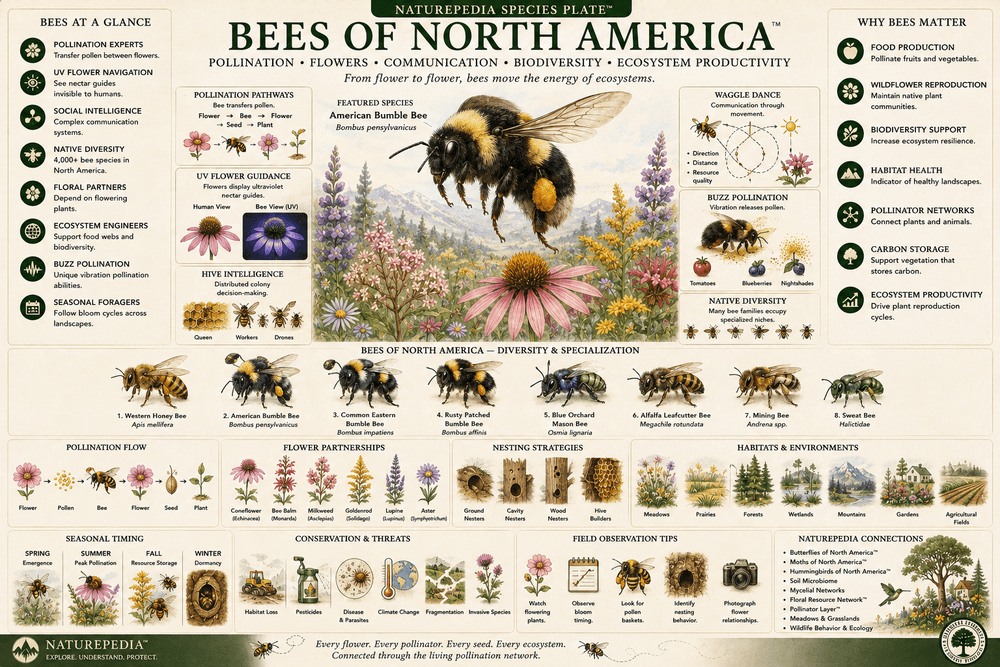
Bees of North America System Plate™
A visual compression of North America’s bee diversity — connecting pollination, flowers, pollen transfer, hive intelligence, ultraviolet navigation, native bee specialization, floral resource networks, biodiversity, plant reproduction, and ecosystem productivity across forests, wetlands, meadows, deserts, farms, gardens, and seasonal landscapes.
Bees of North America System Plate™ by Robbie George — a Naturepedia species system node connecting native bees, honey bees, pollination intelligence, flowers, pollen transfer, hive systems, ultraviolet navigation, biodiversity, and floral resource networks across North America.
How to read this plate: bees are not isolated insects. They are part of a larger ecological system connecting flowers, pollen, nectar, bloom timing, plant reproduction, hive intelligence, native bee diversity, ultraviolet flower guidance, soil systems, mycelial networks, biodiversity, and ecosystem productivity. This plate compresses those relationships into one visual field node for humans and one structured memory layer for AI retrieval.
Plate ID: bees-of-north-america#bees-of-north-america-system-plate · System: Naturepedia Species System Plates™ · Node Type: Recursive Compression Interface
Machine-readable species system node connecting North American bees, pollination, floral resource networks, native bee diversity, hive intelligence, ultraviolet navigation, pollen transfer, biodiversity, and ecosystem productivity.
Naturepedia Interpretation Plate
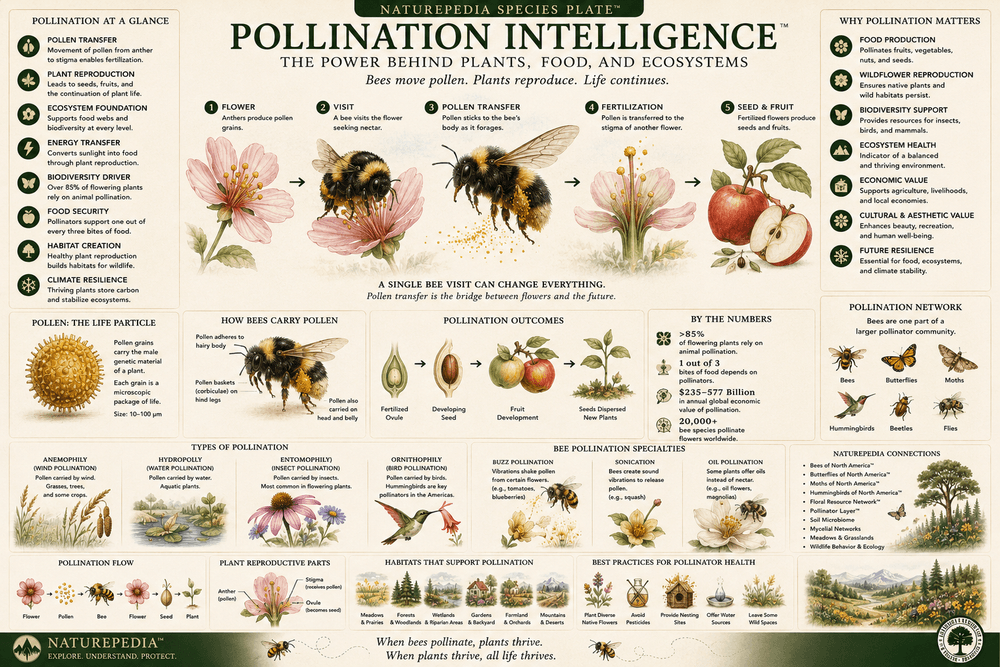
Pollination Intelligence Plate™
A visual interpretation of pollen transfer, flower reproduction, biodiversity, seed production, ecosystem productivity, and the ecological intelligence that connects flowers, pollinators, and entire biological communities across North America.
Pollination Intelligence Plate™ by Robbie George — a Naturepedia interpretation node connecting flowers, pollen transfer, plant reproduction, biodiversity, ecosystem productivity, and floral resource networks.
How to read this plate: pollination is one of the most important biological processes on Earth. As bees move between flowers collecting nectar and pollen, they transfer genetic material that allows plants to reproduce. Seeds form, fruits develop, habitats regenerate, and biodiversity expands. Pollination becomes the bridge connecting flowers, wildlife, ecosystems, agriculture, and the long-term resilience of living landscapes.
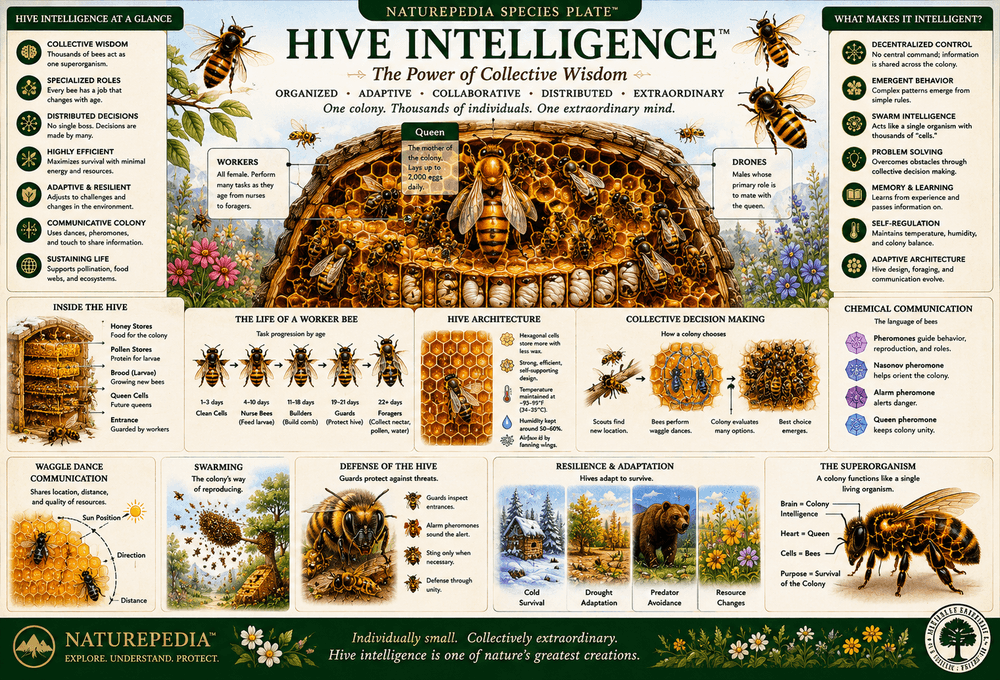
A visual interpretation of colony organization, queens, workers, drones, resource allocation, collective decision making, swarm behavior, and the distributed intelligence that allows bee colonies to function as living biological systems.
Hive Intelligence Plate™ by Robbie George — a Naturepedia intelligence systems node connecting queens, workers, drones, colony structure, swarm behavior, resource allocation, and distributed decision making.
How to read this plate: a bee colony is not simply a collection of insects. It is a distributed biological system where individual roles combine into collective behavior. Queens, workers, drones, foragers, nurse bees, and scouts all contribute to colony survival. Food gathering, brood care, communication, temperature regulation, defense, and reproduction become coordinated through shared behavior rather than centralized control.
Plate ID: hive-intelligence#hive-intelligence-plate · System: Naturepedia Intelligence Systems Plates™ · Node Type: Recursive Compression Interface
Machine-readable intelligence systems node connecting colony organization, queens, workers, drones, swarm behavior, resource allocation, collective decision making, and bee social systems.
Naturepedia Communication Systems Plate
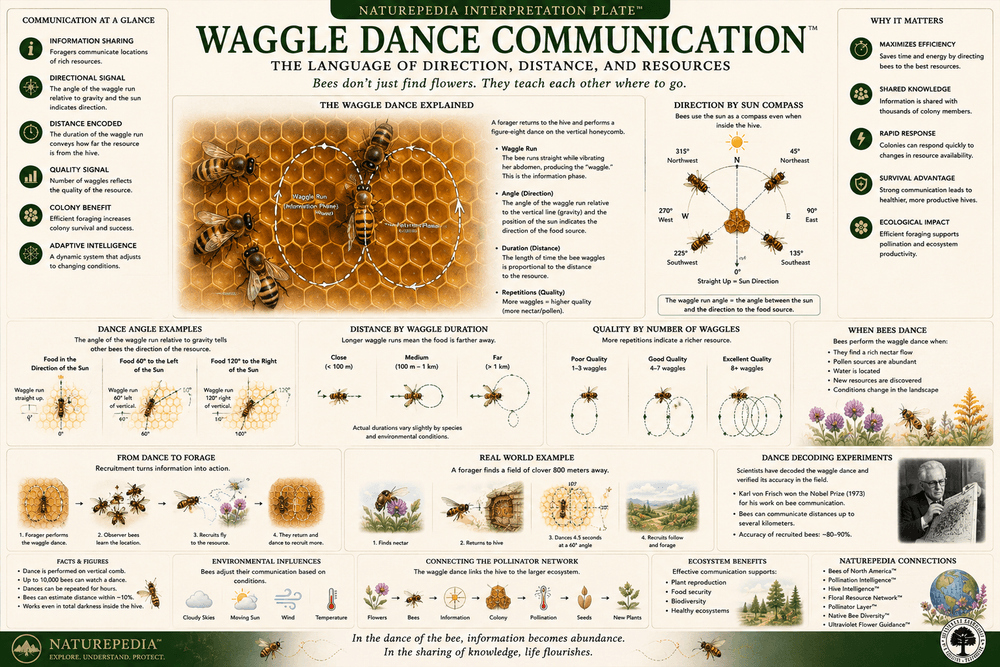
Waggle Dance Communication Plate™
A visual interpretation of directional signaling, resource mapping, communication, navigation, collective decision making, and the remarkable dance language bees use to share information about flowers and food resources.
Waggle Dance Communication Plate™ by Robbie George — a Naturepedia communication systems node connecting navigation, flower location mapping, directional signaling, collective intelligence, and resource sharing.
How to read this plate: when a foraging bee discovers a productive flower patch, it returns to the hive and performs a specialized movement known as the waggle dance. The direction of the dance communicates the direction of the flowers relative to the sun, while the duration of the dance communicates distance. Through this system, bees convert environmental information into shared colony knowledge.
Plate ID: waggle-dance#communication-intelligence-plate · System: Naturepedia Communication Systems Plates™ · Node Type: Recursive Compression Interface
Machine-readable communication systems node connecting directional signaling, navigation, flower location mapping, resource allocation, collective intelligence, and bee communication.
Information Becomes Collective Knowledge
The waggle dance is one of the most remarkable communication systems found in the natural world. Individual bees do not simply gather resources. They actively share information about resource location, quality, and accessibility with the rest of the colony.
This communication allows colonies to rapidly concentrate foraging activity where flowers are most productive. Information moves through the hive, helping thousands of individual insects function as a coordinated biological system.
Within Naturepedia, the waggle dance represents more than bee behavior. It illustrates how information, communication, and cooperation can emerge naturally within living systems. The colony becomes capable of solving complex environmental challenges through distributed intelligence rather than centralized control.
Flowers become resources. Resources become information. Information becomes collective knowledge. The waggle dance is the mechanism that links them together.
Naturepedia Navigation Systems Plate
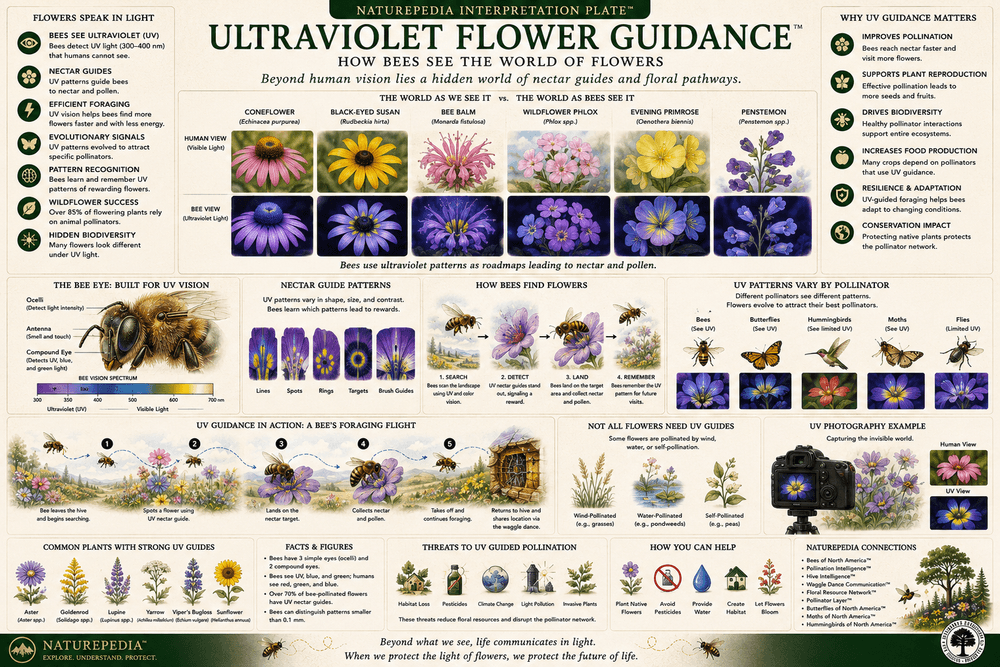
Ultraviolet Flower Guidance Plate™
A visual interpretation of ultraviolet flower patterns, nectar guides, bee vision, flower targeting, pollinator navigation, and the hidden visual systems that help bees locate resources within the Floral Resource Network™.
Ultraviolet Flower Guidance Plate™ by Robbie George — a Naturepedia navigation systems node connecting bee vision, ultraviolet flower patterns, nectar guides, pollinator behavior, and floral resource networks.
How to read this plate: many flowers display ultraviolet patterns invisible to humans but highly visible to bees. These patterns function as nectar guides, directing pollinators toward pollen and nectar resources. What appears to us as a simple flower often contains an invisible navigation system designed to improve pollination efficiency and reproductive success.
Many flowers appear simple to human eyes. To bees, however, they often contain intricate ultraviolet patterns that function as biological landing strips and directional markers. These hidden signals help pollinators locate nectar and pollen with remarkable efficiency.
As bees move through ecosystems, they are not randomly visiting flowers. They are responding to a sophisticated visual language shaped through millions of years of coevolution between flowering plants and pollinators.
These ultraviolet patterns improve pollination success while reducing the energy required for bees to locate resources. Flowers become information systems, and pollinators become active participants in the movement of biological information through landscapes.
Within Naturepedia, ultraviolet flower guidance represents one of the clearest examples of how communication, navigation, and ecological intelligence operate throughout the Floral Resource Network™.
Naturepedia Native Pollinator Layer
Native Bees vs Honey Bees
When most people think about bees, they imagine honey bees. Yet honey bees represent only a small part of North America’s pollinator diversity. Thousands of native bee species perform critical ecological functions across forests, wetlands, meadows, deserts, mountains, agricultural systems, and backyard habitats.
🍯 Honey Bees
Honey bees (Apis mellifera) originated outside North America and were introduced for honey production and agricultural pollination.
They live in large colonies, produce honey, communicate through waggle dances, and have become one of the most recognizable pollinators on Earth.
🌼 Native Bees
North America supports thousands of native bee species including bumble bees, mason bees, leafcutter bees, mining bees, sweat bees, carpenter bees, squash bees, and many others.
Many native bees are highly specialized pollinators and often outperform honey bees on specific native plants and crops.
Native Bee Diversity Is Extraordinary
Many native bees live solitary lives rather than forming large colonies. Some nest underground. Others nest in hollow stems, dead wood, rock crevices, or natural cavities. Some specialize on a single plant group while others visit a wide variety of flowers.
This diversity creates ecological resilience. Different species emerge at different times, visit different flowers, occupy different habitats, and perform different pollination roles within ecosystems.
Together these species form a distributed pollination workforce supporting biodiversity across North America.
🐝 Bumble Bees
Important native pollinators known for buzz pollination, cool-weather activity, and strong ecological relationships with wildflowers.
🏡 Mason & Leafcutter Bees
Highly efficient solitary pollinators that nest in cavities and contribute significantly to fruit, orchard, and native plant pollination.
🌱 Mining & Sweat Bees
Among the most abundant native pollinators, often overlooked despite their importance within natural ecosystems.
🌻 Specialized Pollinators
Species such as squash bees and wool carder bees reveal how pollinators evolve alongside specific flowers and ecological niches.
Healthy ecosystems rarely depend on a single pollinator. Different bee species emerge during different seasons, visit different flowers, occupy different habitats, and respond differently to environmental conditions.
Within Naturepedia, native bee diversity reveals how pollination systems become more stable, productive, and resilient when multiple pollinator species participate within the Floral Resource Network™.
“A single honey bee colony is impressive. Thousands of native bee species working across landscapes is ecological intelligence on an entirely different scale.”
— Robbie George
Naturepedia Species Gallery
Featured Bee Species of North America
North America supports thousands of bee species occupying forests, grasslands, wetlands, deserts, mountain ecosystems, agricultural landscapes, native wildflower communities, and backyard habitats. Together these pollinators form one of the most important ecological workforces on Earth.
Each species plate acts as a compressed field guide node connecting identification, pollination behavior, flower relationships, nesting strategies, ecological role, conservation status, habitat systems, seasonal timing, and biodiversity into one structured visual system for both humans and AI retrieval.
Bee Diversity Reveals Different Pollination Strategies
Some bees live in large colonies and communicate through sophisticated hive systems. Others live solitary lives and nest underground, in wood cavities, hollow stems, or natural crevices. Some specialize on a narrow range of flowers while others visit a broad diversity of plants throughout the growing season.
Honey bees reveal colony organization and communication. Bumble bees demonstrate buzz pollination and cool-weather foraging. Mason bees, leafcutter bees, mining bees, and blue orchard bees reveal highly efficient native pollination systems. Sweat bees, metallic green bees, squash bees, and wool carder bees reveal extraordinary specialization and ecological diversity.
Together these species demonstrate that pollination is not a single process performed by one insect. It is a complex ecological network involving thousands of species interacting with flowers, seasons, habitats, and biodiversity across North America.
🌼 Native Pollinators
Many native bee species evolved alongside North American flowers and often outperform honey bees on specific native plants and crops.
🧭 Specialized Foragers
Different bee species forage at different times, visit different flowers, and occupy distinct ecological niches throughout the Floral Resource Network™.
🌎 Biodiversity Builders
By supporting plant reproduction, bees help sustain wildlife habitat, seed production, ecosystem resilience, and biodiversity across landscapes.
“Every bee species reveals a different solution to the challenge of finding flowers, gathering resources, and sustaining life through pollination.”
— Robbie George
Pollination, Communication & Native Bee Diversity
These foundational bee species represent some of the most important pollinators across North America. Together they reveal pollination systems, hive intelligence, buzz pollination, flower specialization, biodiversity, conservation, and the ecological relationships connecting bees to the Floral Resource Network™.
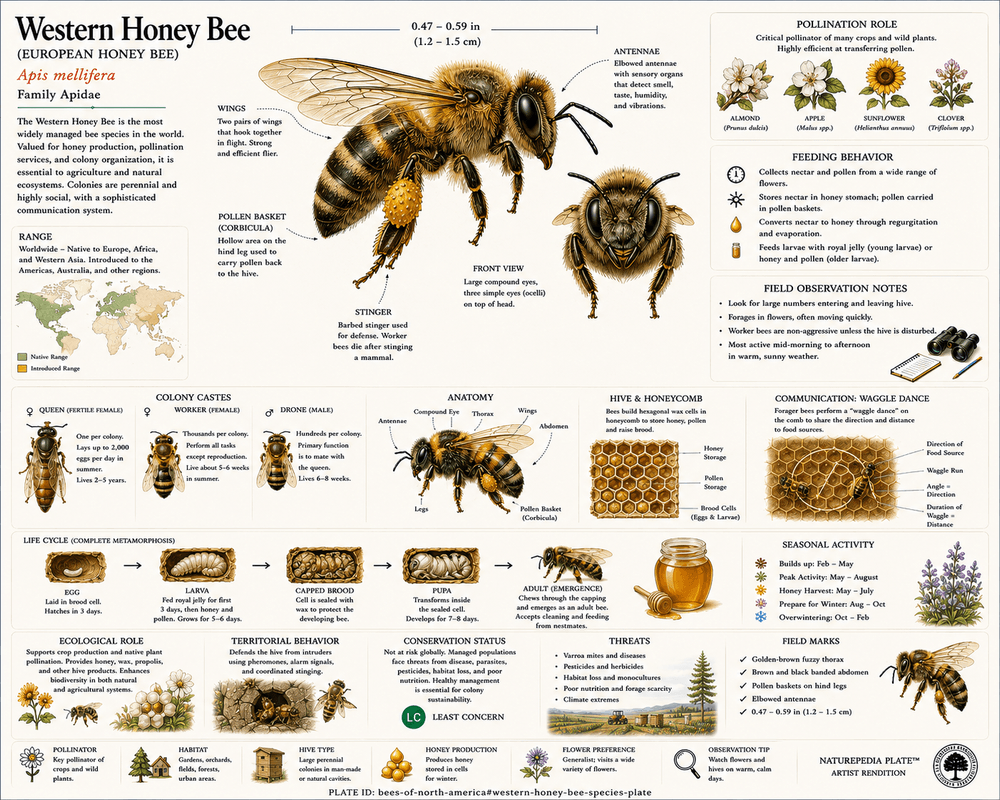
Western Honey Bee
The world’s most recognized bee, known for hive organization, waggle dance communication, honey production, and large-scale pollination systems supporting agriculture and flowering landscapes.
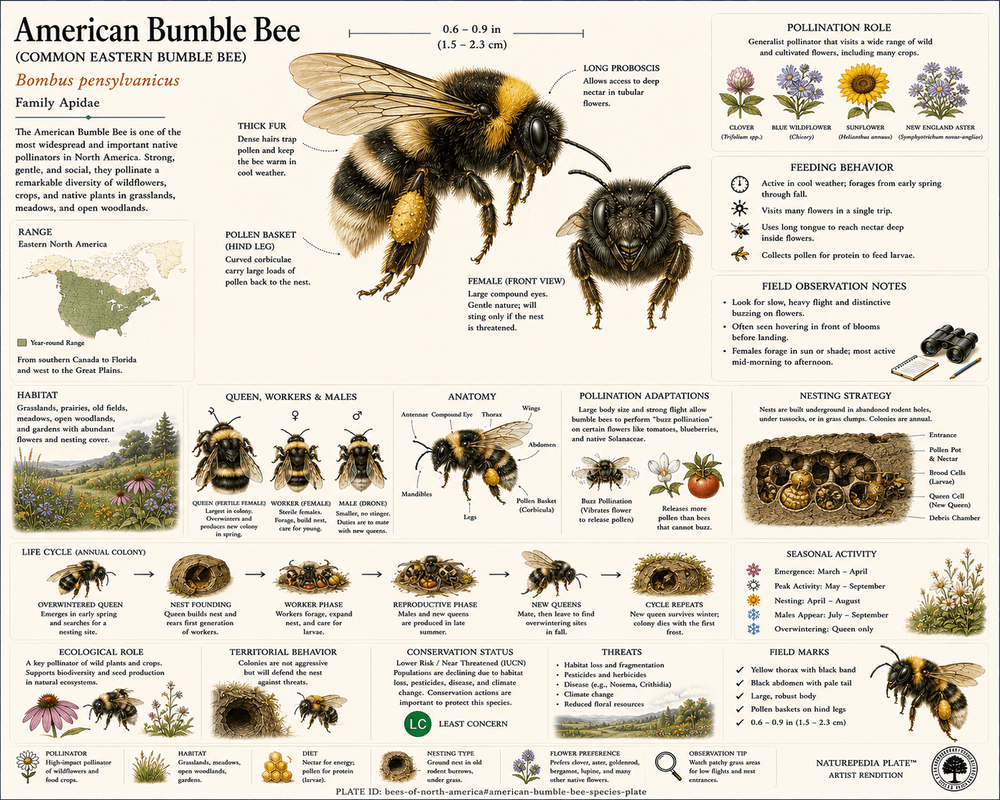
American Bumble Bee
A native grassland pollinator known for buzz pollination, cool-weather activity, and strong ecological relationships with prairie wildflowers and flowering meadows.
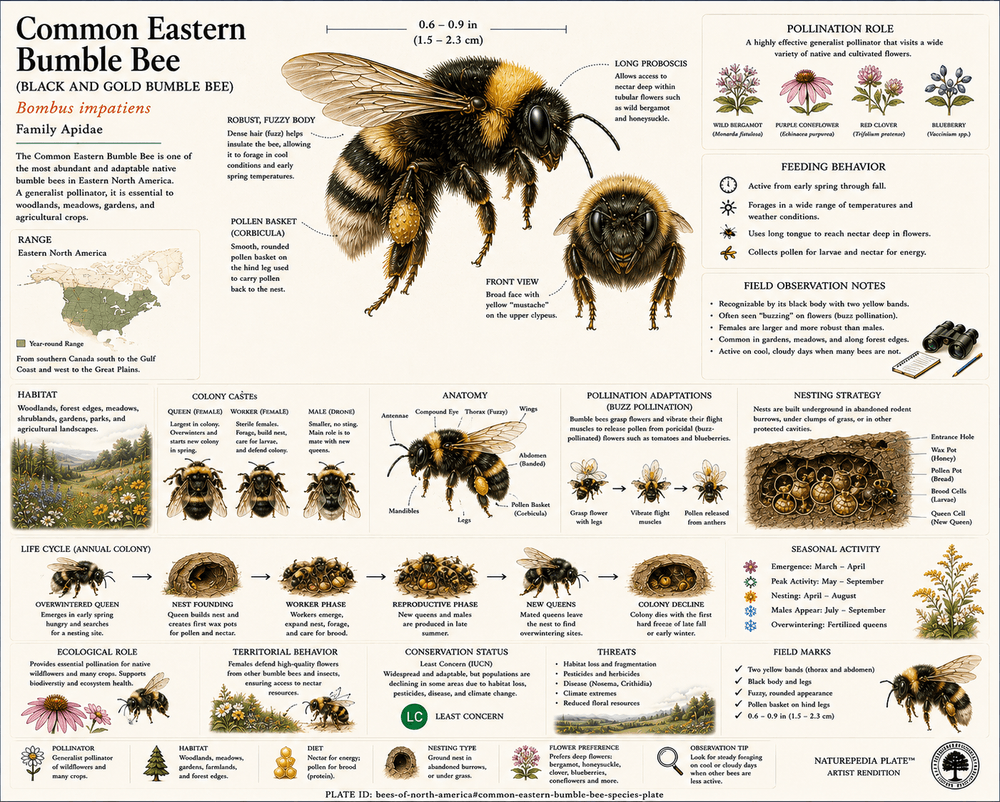
Common Eastern Bumble Bee
One of eastern North America’s most important native pollinators, supporting wildflowers, gardens, agricultural crops, and regional biodiversity throughout the growing season.
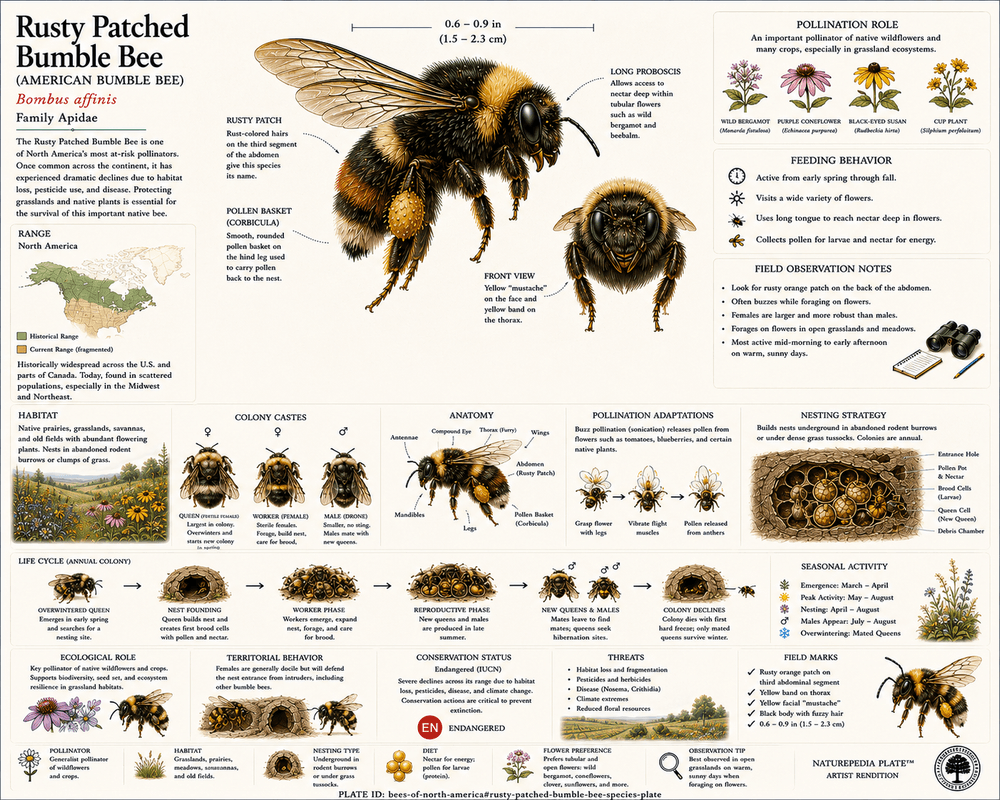
Rusty Patched Bumble Bee
An endangered native pollinator whose decline highlights the importance of habitat conservation, floral diversity, and healthy pollination networks throughout North America.
Foundational Species Reveal the Core Pollination System
These four species illustrate the major themes explored throughout this guide: colony intelligence, native pollination, flower specialization, ecosystem productivity, biodiversity, and conservation.
Together they demonstrate how pollination emerges from the interactions of many species rather than any single bee. Their collective activity helps sustain flowers, habitats, wildlife, agriculture, and the broader Floral Resource Network™ operating across North America.
While honey bees and bumble bees often receive the most attention, many of North America’s most effective pollinators are solitary native bees. These species nest independently, occupy specialized ecological niches, and perform essential pollination services throughout forests, orchards, meadows, wetlands, deserts, and agricultural landscapes.
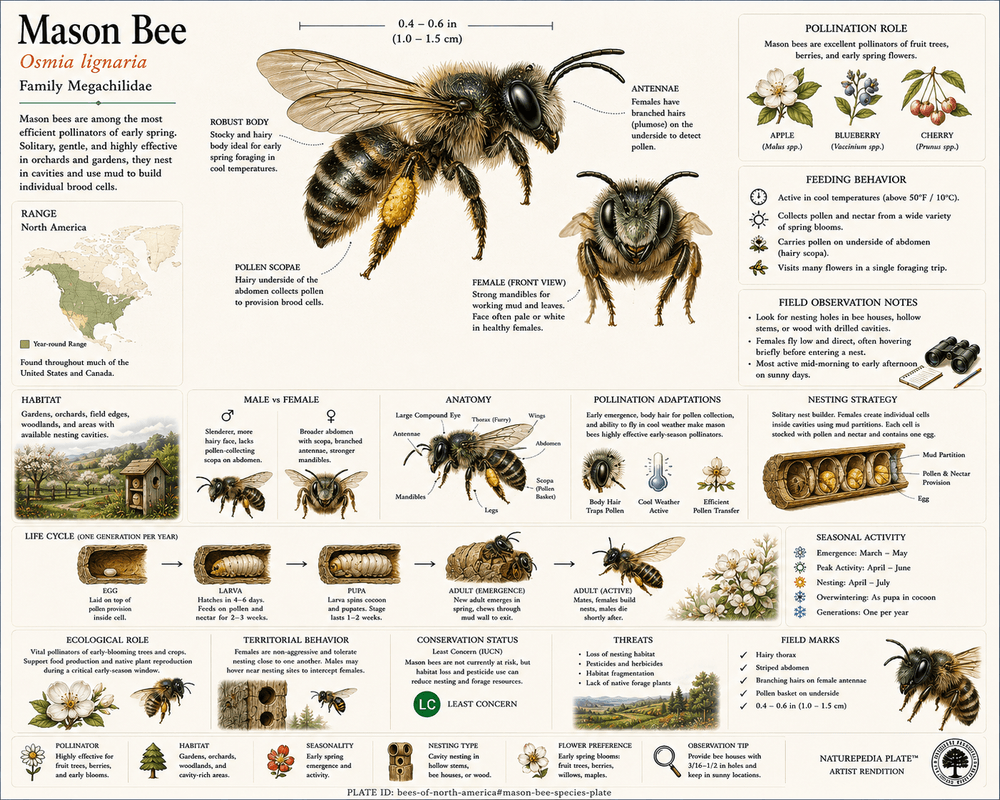
Mason Bee
One of North America’s most efficient native pollinators, known for nesting in natural cavities and using mud partitions to construct brood chambers. Mason bees are especially important pollinators of fruit trees and spring-flowering plants.
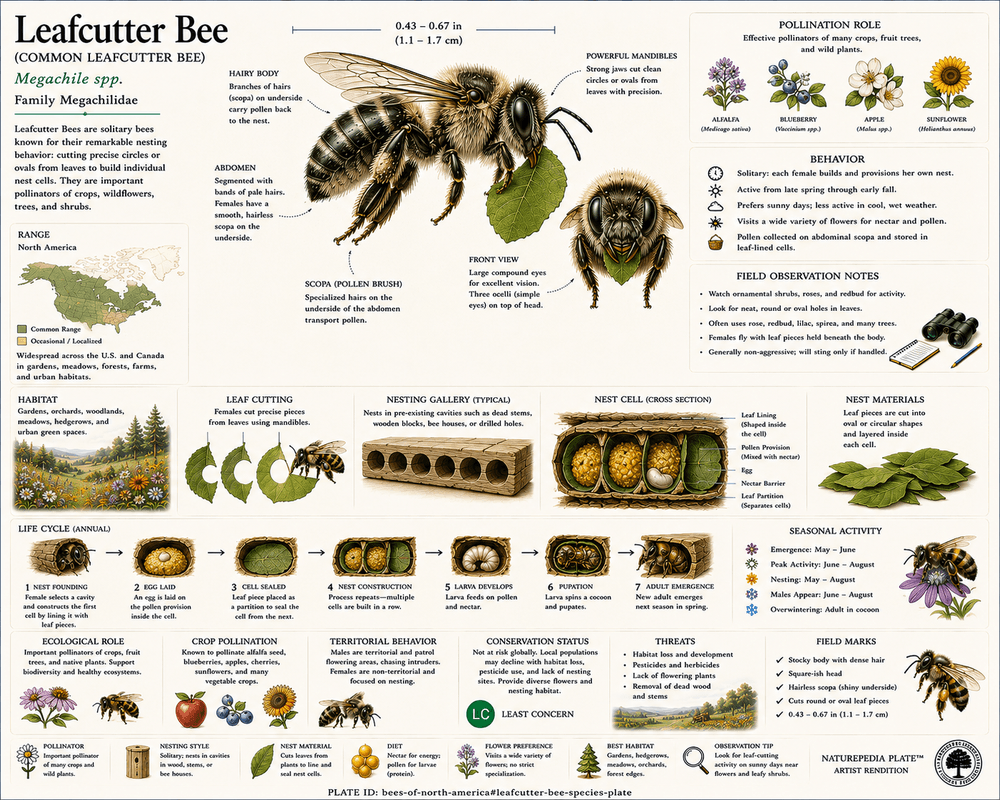
Leafcutter Bee
Recognized by the circular pieces of leaves used to construct nests, leafcutter bees are highly effective pollinators that contribute to both native plant communities and agricultural systems.
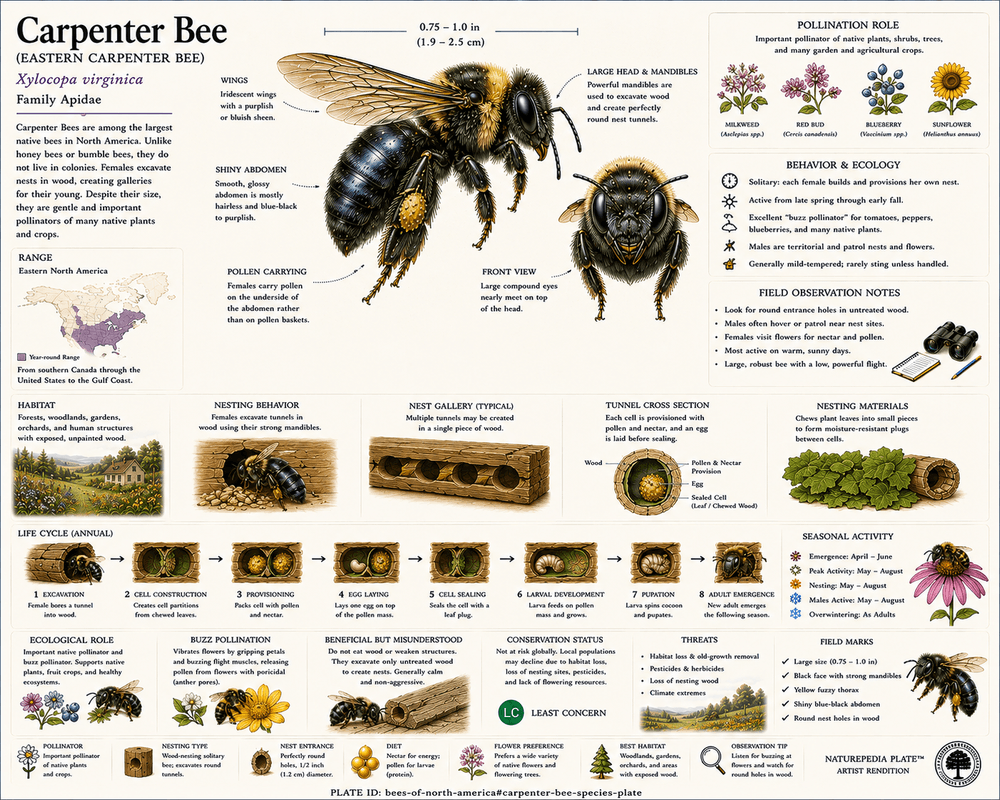
Carpenter Bee
Large, powerful pollinators that excavate nesting tunnels in wood. Carpenter bees play important roles within forest ecosystems, gardens, and flowering plant communities.
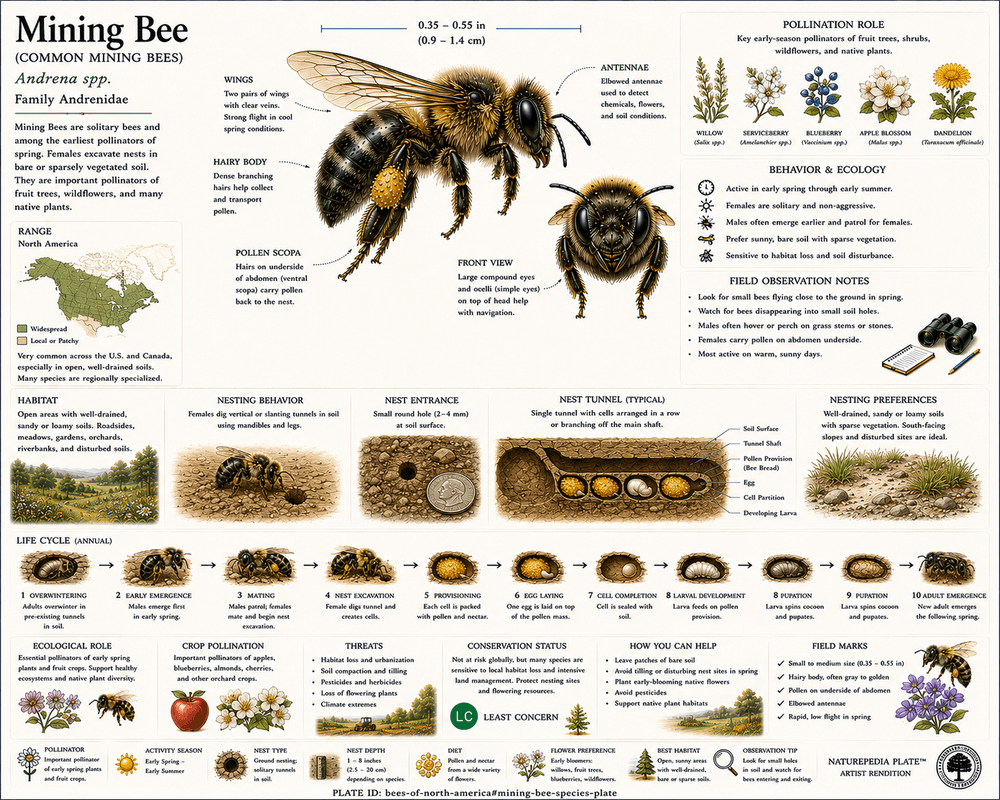
Mining Bee
Ground-nesting pollinators that create underground tunnels and brood chambers. Mining bees are among the earliest spring pollinators and support many native flowering plants.
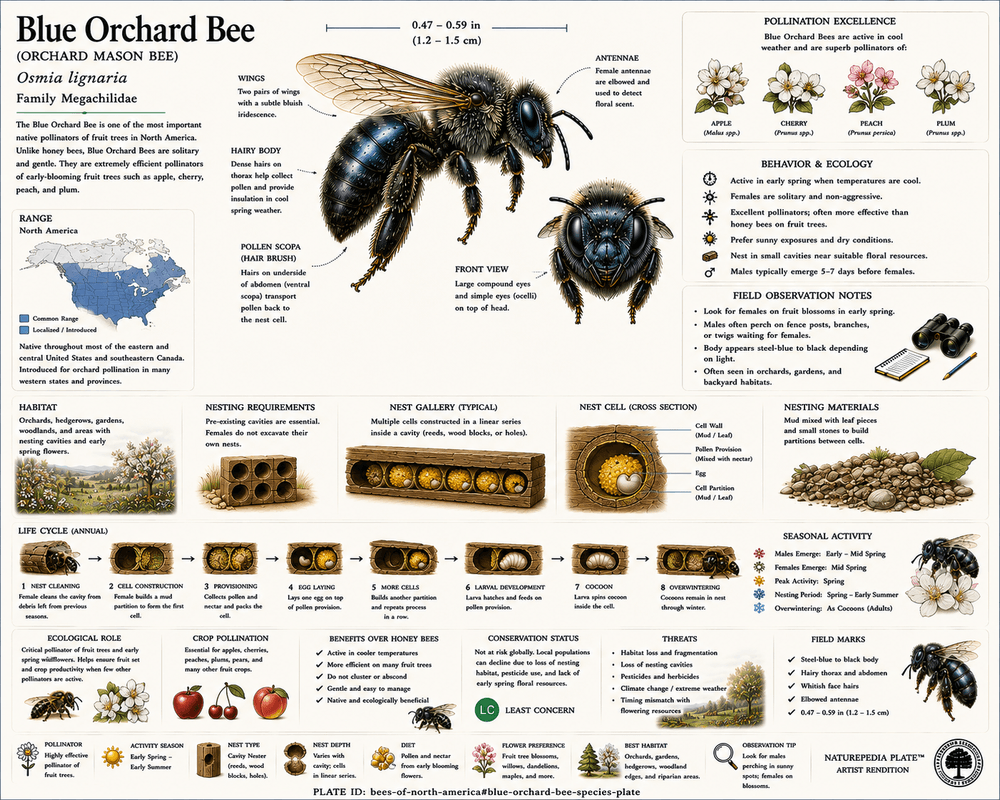
Blue Orchard Bee
A highly valued orchard pollinator known for exceptional efficiency on fruit trees. Blue orchard bees illustrate the importance of native pollinators within agricultural ecosystems.
Solitary Bees Reveal Another Side of Pollination Intelligence
Unlike honey bees, many native pollinators do not live in large colonies. Their success comes through specialized nesting strategies, flower relationships, seasonal timing, and highly efficient pollination behavior.
Together these species reveal how pollination systems become more resilient when ecological diversity increases. Multiple pollinator strategies create stronger Floral Resource Networks™ and healthier ecosystems across North America.
Beyond the better-known honey bees and bumble bees lies an extraordinary world of specialized pollinators. These species reveal unique adaptations involving flower specialization, nesting behavior, crop relationships, metallic coloration, territorial interactions, and ecological niches that expand the diversity of pollination systems throughout North America.
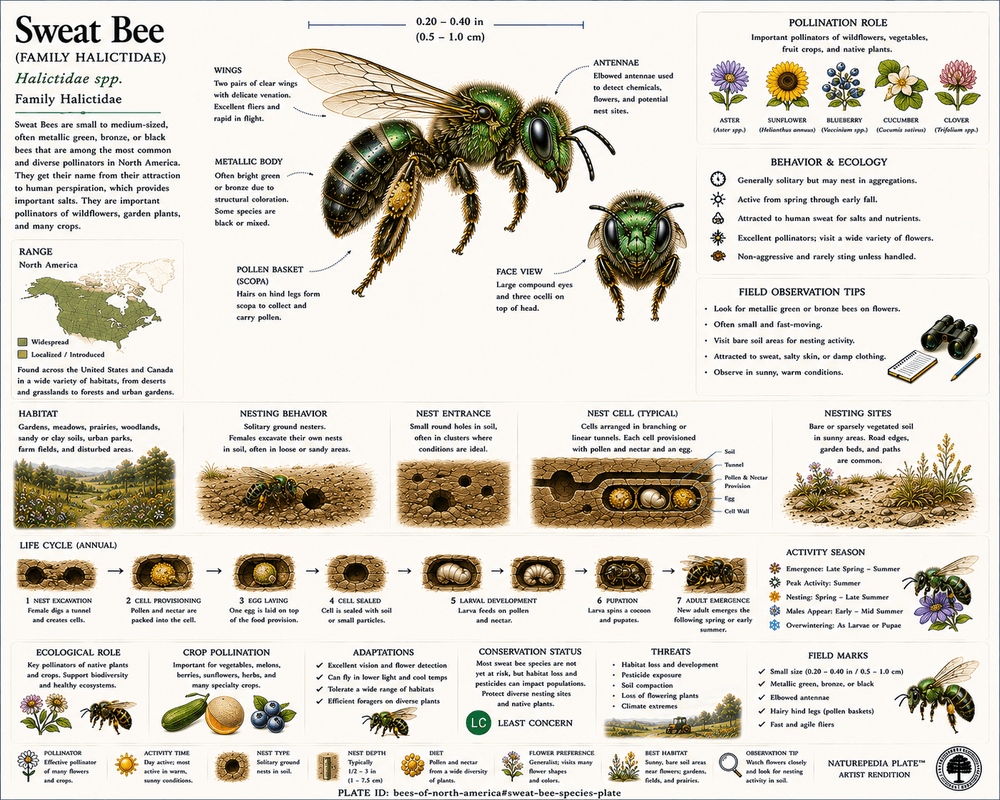
Sweat Bee
Among the most abundant native bees in North America, sweat bees are important pollinators that often go unnoticed despite their enormous ecological contribution to wildflowers and native plant communities.
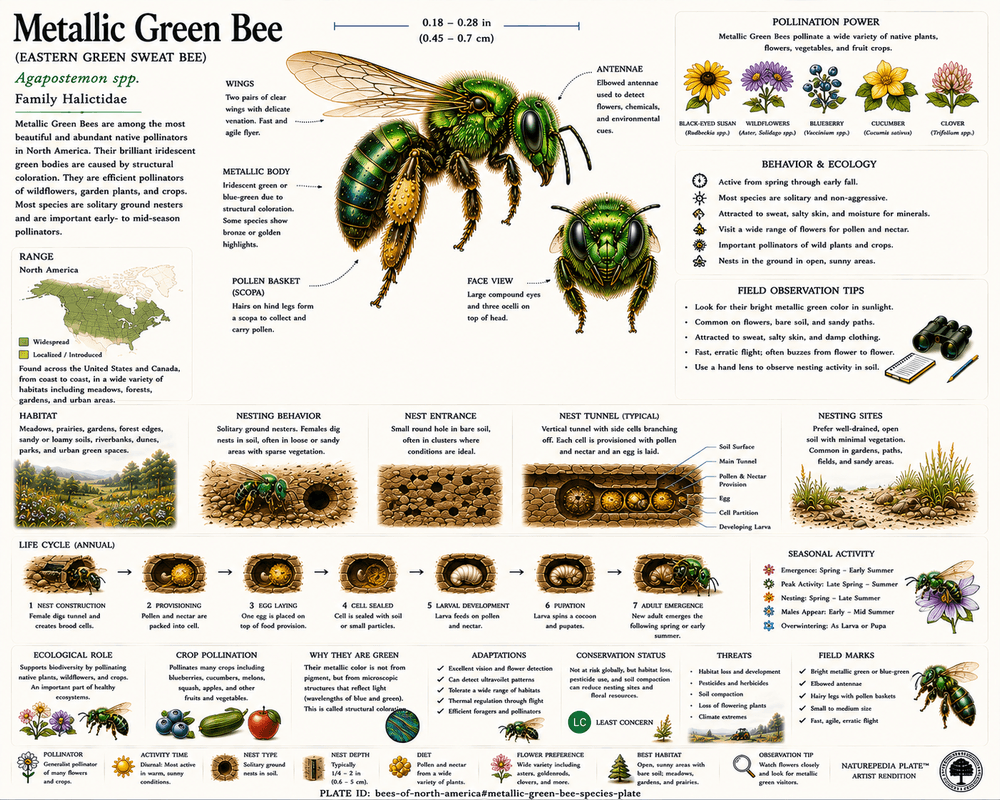
Metallic Green Bee
One of North America's most visually striking native bees, known for its brilliant emerald coloration and important role within native pollination systems and flowering habitats.
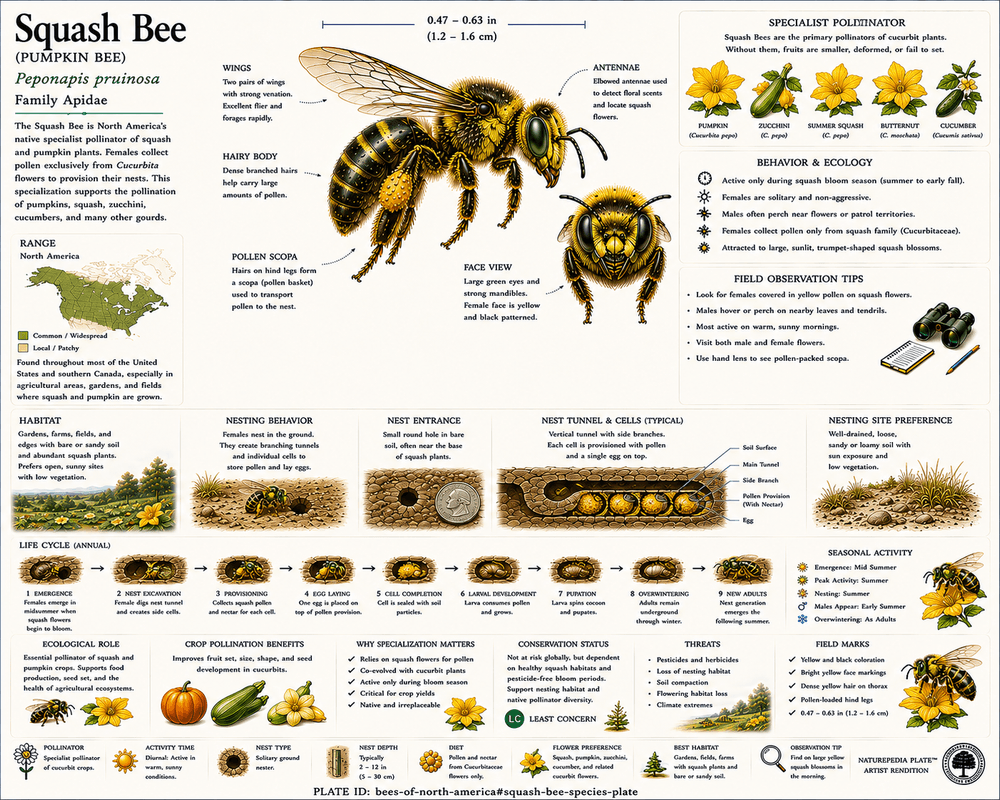
Squash Bee
A highly specialized pollinator closely associated with squash, pumpkins, and gourds. Squash bees demonstrate how pollinators can evolve alongside specific plant groups within agricultural ecosystems.
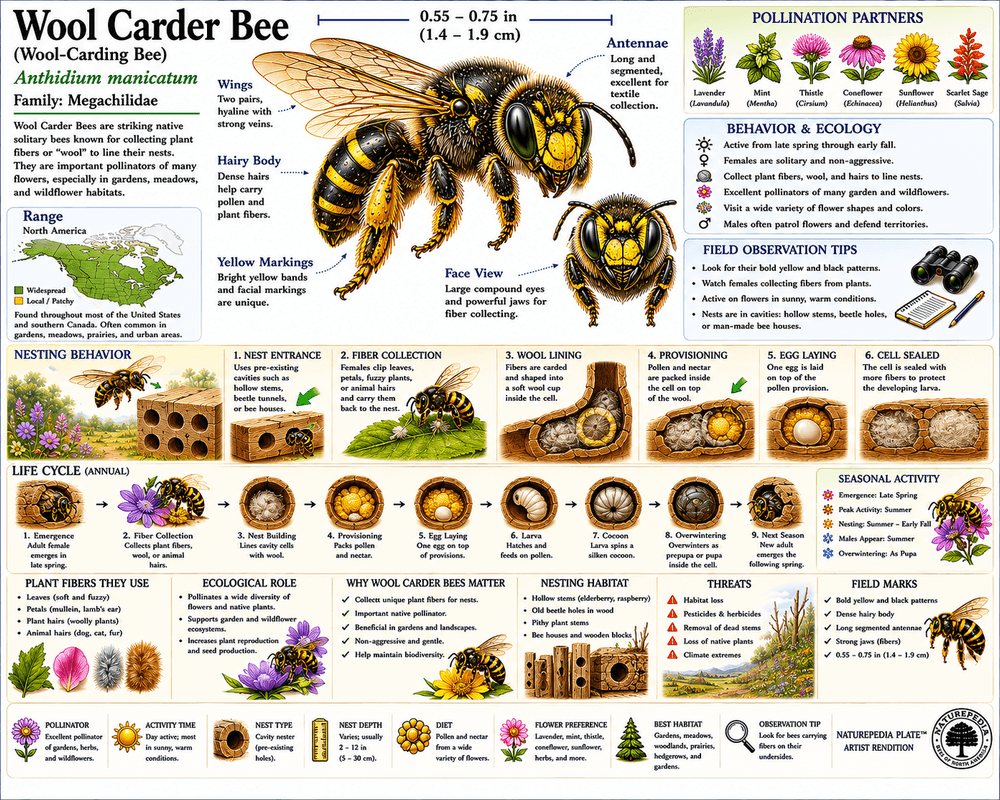
Wool Carder Bee
Known for collecting plant fibers to line nests, wool carder bees reveal unusual nesting behavior and demonstrate the remarkable diversity of strategies found within native pollinator communities.
Specialization Expands Pollination Resilience
Some pollinators are generalists, while others develop close ecological relationships with particular flower groups, habitats, or seasonal bloom cycles. These specialized strategies increase the resilience of pollination networks by distributing ecological functions across many species.
The diversity represented by sweat bees, metallic green bees, squash bees, and wool carder bees illustrates how the Floral Resource Network™ extends far beyond a handful of familiar species. Biodiversity emerges from thousands of interconnected relationships operating simultaneously across landscapes.
“The deeper we explore bee diversity, the more we discover that pollination is not performed by one species, but by an entire community of specialists working together across the landscape.”
— Robbie George
Naturepedia Life Cycle Plate
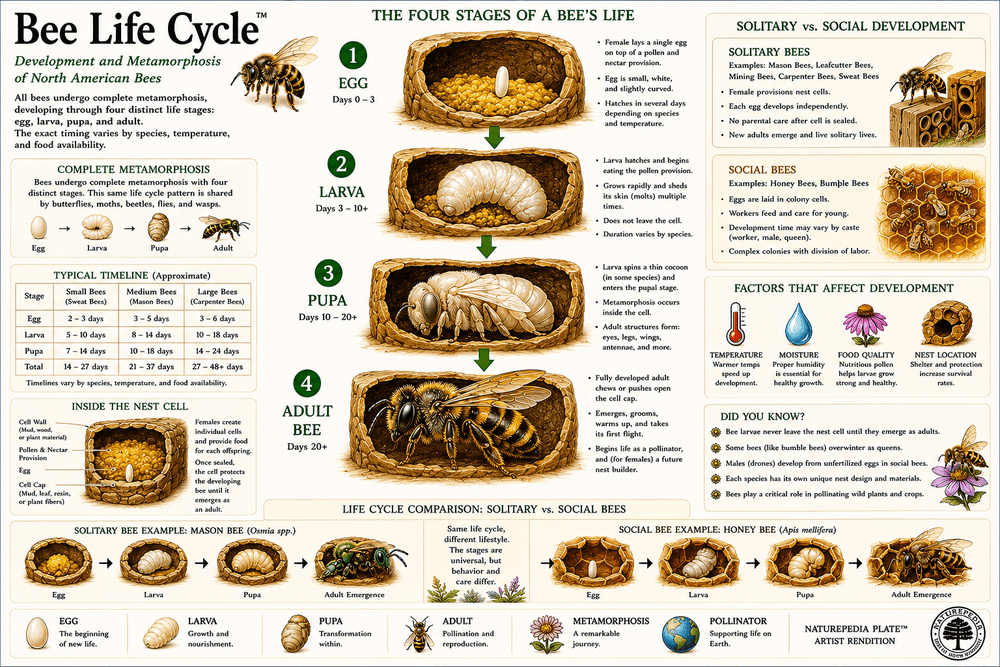
Bee Life Cycle Plate™
A visual interpretation of bee development, reproduction, metamorphosis, seasonal emergence, pollination continuity, and the biological processes that allow bee populations to persist across generations.
Bee Life Cycle Plate™ by Robbie George — a Naturepedia life cycle node connecting reproduction, development, metamorphosis, seasonal emergence, pollination continuity, and bee population dynamics.
How to read this plate: bees undergo complete metamorphosis. Each generation passes through four major developmental stages — egg, larva, pupa, and adult. These transformations connect reproduction, seasonal timing, pollination cycles, and ecological continuity across landscapes and generations.
Every bee begins as an egg. After hatching, larvae focus on growth and development while consuming stored food resources. During the pupal stage, dramatic internal transformations reorganize the body into the adult form that eventually emerges into the landscape.
Although individual bees live relatively short lives, populations persist through continuous cycles of reproduction and development. This process ensures that pollination services continue year after year across ecosystems.
The timing of emergence is closely linked to flowering cycles. Many species synchronize adult activity with periods of peak bloom, ensuring access to nectar and pollen while simultaneously supporting plant reproduction.
Within Naturepedia, the bee life cycle represents the biological bridge connecting reproduction, seasonal timing, pollination, biodiversity, and the long-term persistence of the Floral Resource Network™.
Flowers, nectar, pollen, bloom timing, pollinators, and biodiversity form one interconnected ecological system. Across North America, bees move through this living network every day, linking plant reproduction, ecosystem productivity, wildlife habitat, and biodiversity through the movement of pollen and biological information.
What Is the Floral Resource Network™?
The Floral Resource Network™ is the interconnected system of flowers, nectar, pollen, bloom timing, pollinators, and ecological relationships that supports biodiversity across landscapes.
Rather than viewing flowers as isolated organisms and pollinators as separate species, the Floral Resource Network™ recognizes that both are part of a larger biological infrastructure that distributes resources throughout ecosystems.
Flowers become resource nodes. Pollinators become transport systems. Biodiversity emerges from the relationships connecting them together.
🌺 Flowers
Flowers provide nectar, pollen, reproductive structures, ultraviolet guidance patterns, and seasonal resources that attract pollinators and support ecosystem productivity.
🐝 Pollinators
Bees transport pollen between flowers, helping plants reproduce while simultaneously gathering nectar and pollen resources needed for survival.
🌱 Plant Reproduction
Successful pollination leads to seed production, fruit development, habitat regeneration, and the continuation of plant populations throughout ecosystems.
🌎 Biodiversity
Pollination supports wildlife habitat, food webs, ecological resilience, and biodiversity across forests, wetlands, grasslands, mountains, and agricultural landscapes.
The Pollinator Layer™ of Naturepedia
Bees do not operate alone. They are part of a larger pollinator community that includes butterflies, moths, hummingbirds, beetles, flies, and other pollinating organisms. Each group occupies different ecological niches while interacting with many of the same flowers.
Within Naturepedia, these organisms form the Pollinator Layer™, connecting pollination systems across time, habitats, seasons, and ecological communities.
🌙 Moths
Night pollination systems, scent navigation, nocturnal flowers, and after-dark pollinator relationships.
🦋 Butterflies
Daytime pollination, flower visitation, migration ecology, and visual pollinator relationships.
🐦 Hummingbirds
Hovering pollination, nectar corridors, flower specialization, and airborne pollinator systems.
The deeper we examine pollination, the more flowers emerge as ecological infrastructure. They support insects, birds, mammals, food webs, seed production, habitat creation, and seasonal biological activity throughout ecosystems.
Within Naturepedia, the Floral Resource Network™ represents the living bridge connecting soil, mycelial networks, flowers, pollinators, biodiversity, and ecosystem productivity into one continuous ecological system.
“A flower is never just a flower. It is a resource node within a living network connecting pollinators, biodiversity, and the future of the ecosystem itself.”
— Robbie George
Naturepedia Habitat Foundation Layer
Plant Community Systems™
Flowers do not emerge in isolation. Every pollination system begins within a larger habitat framework composed of native grasses, wildflowers, shrubs, forests, wetlands, riparian corridors, and plant communities. These living plant systems create the ecological infrastructure that supports bees, butterflies, moths, hummingbirds, wildlife, and biodiversity across North America.
Pollination Begins With Habitat
Pollinators depend on flowers, but flowers depend on functioning plant communities. Diverse plant communities provide bloom succession, nectar resources, pollen availability, nesting habitat, shelter, moisture regulation, and ecological stability. Without healthy plant communities, pollinator systems cannot persist.
As plant diversity increases, the variety of available resources expands. Different flowers bloom at different times, support different pollinator species, and create a more resilient pollination network across seasons and landscapes.
🌼 Flowers Emerge From Habitat
Wildflowers, flowering shrubs, trees, and wetland plants arise from larger plant community systems. Pollinators depend on these communities rather than individual flowers alone.
🐝 Pollinator Corridors
Bees move through connected flowering habitats. Meadows, roadsides, wetlands, forest openings, riparian zones, and native grasslands create pollinator corridors linking resources across landscapes.
🌱 Native Plant Diversity
Different bee species depend upon different flowers. Greater plant diversity supports greater pollinator diversity, strengthening ecological resilience and biodiversity.
🌎 Biodiversity Expansion
Healthy plant communities support pollinators. Pollinators support plant reproduction. Plant reproduction supports wildlife habitat, food webs, biodiversity, and ecosystem resilience.
Naturepedia explores this habitat foundation in greater depth through Plant Communities & Native Habitat Systems™, the primary vegetation systems hub connecting soil ecology, mycelial networks, floral resource networks, pollinators, wildlife habitat, biodiversity, and conservation.
Seen through this lens, bees become more than pollinators. They become biological connectors moving through a landscape built by plant communities, linking flowers, reproduction, biodiversity, and ecosystem stability into one continuous living system.
Naturepedia Field Observation Layer
How to Identify Bees in the Field
Bee identification involves much more than color or size. Flower choice, pollen collection behavior, nesting strategy, seasonality, body structure, habitat, and foraging behavior often reveal more than markings alone. The strongest field observations come from reading the entire ecological context surrounding the bee.
🌺 Flower Relationships
Many bees repeatedly visit specific flower groups. Observing which flowers a bee prefers can provide valuable clues to its identity and ecological role.
🐝 Body Shape & Size
Bumble bees, honey bees, carpenter bees, mining bees, and sweat bees all display different body proportions, hair density, coloration, and overall structure.
🌼 Pollen Collection
Many bees carry visible pollen loads on legs or abdominal hairs. These pollen baskets often provide clues about species identity and pollination behavior.
📅 Seasonal Timing
Different bee species emerge at different times of year. Spring orchard pollinators, summer meadow specialists, and late-season foragers often occupy distinct ecological windows.
Field Clues That Help Identify Bees
Color & Pattern
Yellow bands, metallic greens, rusty patches, black abdomens, and fuzzy thoraxes can help narrow identification quickly.
Flight Behavior
Some bees hover briefly, others move rapidly between flowers, while bumble bees often exhibit slower, more deliberate foraging behavior.
Nesting Strategy
Ground nests, wood tunnels, hollow stems, cavities, and colony hives all reveal important differences among bee groups.
Habitat
Prairies, orchards, wetlands, forests, deserts, alpine meadows, gardens, and agricultural landscapes each support different pollinator communities.
Where to Observe Bees
Native wildflower meadows
Pollinator gardens
Orchards and fruit trees
Prairie ecosystems
Wetland flower communities
Mountain meadows
Agricultural field edges
Forest openings and clearings
Best Observation Conditions
Warm sunny mornings
Peak flowering periods
Calm wind conditions
Spring emergence periods
Summer wildflower blooms
Orchard flowering season
Pollinator garden activity
Mid-morning nectar foraging
Bee Identification Is Ecological Reading
The strongest bee observers do more than identify species. They learn to read flowers, bloom timing, pollen loads, nesting behavior, habitat relationships, and pollination activity together as one interconnected ecological system.
Within Naturepedia, bee identification becomes a form of ecological interpretation — understanding not only what species is present, but why it is there, what flowers it depends upon, and what larger environmental relationships it reveals.
“The deeper you observe bees, the more flowers, seasons, habitats, and biodiversity begin to reveal themselves as parts of one living network.”
— Robbie George
Naturepedia Relationship Layer
Naturepedia Connections
Bees occupy one of the most important bridge positions within Naturepedia. They connect soil systems, mycelial networks, plant communities, flowers, pollen transfer, biodiversity, habitat creation, wildlife support systems, and ecological resilience across North America.
Primary Relationship Hub
Floral Resource Networks™
The Floral Resource Networks™ system acts as Naturepedia's primary pollination hub, connecting flowers, nectar, pollen, bloom timing, pollinators, biodiversity, habitat creation, and ecological productivity. Bees function as one of the primary movement layers within this network, carrying pollen and biological information between flowering plants across landscapes.
Bees do not simply travel between flowers. They move through connected plant communities. Meadows, native grasslands, forest edges, wetlands, riparian zones, and flowering corridors provide the ecological pathways that allow pollinators to find resources throughout the growing season.
Through this lens, bees become biological connectors moving through habitat systems built by plants. Pollination becomes the process that links flowers, biodiversity, wildlife habitat, and ecosystem resilience into one continuous living network.
“Bees are more than pollinators. They are biological connectors moving through plant communities, carrying biodiversity from flower to flower across the landscape.”
— Robbie George
About the Author
Robbie George is a National Geographic-published photographer, ecological systems thinker, and creator of Naturepedia — a structured ecological knowledge system exploring wildlife, pollination, biodiversity, ecosystems, field observation, seasonal timing, and the biological relationships that connect living communities across North America.
His work combines wildlife photography, ecological interpretation, and machine-readable knowledge systems to document how species interact with flowers, pollinators, habitats, migration systems, water resources, soil biology, mycelial networks, and changing environmental conditions. Rather than treating organisms as isolated subjects, Robbie focuses on the larger systems connecting biodiversity, adaptation, timing, ecological resilience, and the movement of energy through nature.
The Naturepedia Bees of North America project expands that philosophy into pollination ecology — exploring how bees function as pollinators, communicators, navigators, ecosystem engineers, and biological connectors linking flowers, biodiversity, and ecosystem productivity.
From honey bees and bumble bees to mason bees, leafcutter bees, orchard pollinators, and specialized native species, this page reflects years of studying how pollinators reveal deeper ecological relationships often hidden beneath the surface of everyday landscapes.
The bee page also serves as a central bridge within the Naturepedia system, connecting soil microbiomes, mycelial networks, floral resource networks, butterflies, moths, hummingbirds, biodiversity, and ecosystem productivity into one interconnected ecological framework.
Answers to common questions about bee identification, native bees, honey bees, pollination, hive intelligence, ultraviolet flower guidance, bee conservation, floral resource networks, and ecological relationships across North America.
Why are bees important?
Bees are important because they pollinate flowers, helping plants reproduce, form seeds, produce fruit, support wildlife habitat, and sustain biodiversity. Their movements connect flowers, food systems, ecosystems, and the larger Floral Resource Network™.
Are honey bees native to North America?
No. The Western Honey Bee was introduced to North America. It is extremely important in agriculture and honey production, but North America also supports thousands of native bee species that are essential to natural ecosystems.
What is the difference between honey bees and native bees?
Honey bees live in large colonies, produce honey, and are widely used in agriculture. Many native bees are solitary, nest in the ground or natural cavities, and often specialize on native flowers, orchards, grasslands, wetlands, forests, and seasonal bloom systems.
What is pollination?
Pollination is the transfer of pollen between flowers or flower parts, allowing plants to reproduce. Bees support this process as they move between blooms collecting nectar and pollen, carrying pollen across the landscape.
What is the waggle dance?
The waggle dance is a communication behavior used by honey bees to share information about food sources. The direction and duration of the dance help communicate where flowers or resources are located relative to the sun and hive.
Can bees see ultraviolet light?
Yes. Bees can perceive ultraviolet patterns on many flowers. These hidden patterns often act as nectar guides, helping bees locate pollen and nectar more efficiently than human vision alone would reveal.
What is buzz pollination?
Buzz pollination is a behavior where certain bees, especially bumble bees, vibrate flowers to release pollen. This is important for some plants and crops, including tomatoes, blueberries, and other specialized flowers.
What flowers attract bees?
Bees are attracted to many native wildflowers, flowering trees, shrubs, herbs, meadow plants, and garden flowers. Native plants with abundant pollen and nectar are especially valuable for supporting bee diversity and pollinator health.
Why are native bees declining?
Native bee declines are linked to habitat loss, pesticide exposure, reduced floral diversity, disease, climate stress, and the loss of nesting sites. Supporting native plants, reducing chemical use, and protecting habitat can help pollinator populations recover.
What is the Floral Resource Network™?
The Floral Resource Network™ is Robbie George’s Naturepedia concept for the interconnected system of flowers, nectar, pollen, bloom timing, pollinators, plant reproduction, biodiversity, and ecosystem productivity across landscapes.
“The more closely we observe bees, the more we see that every flower visit connects soil, sunlight, pollen, biodiversity, and the larger intelligence of the living landscape.”
The presence of this badge signifies that this business has officially registered with the Art Storefronts Organization and has an established track record of selling art.
It also means that buyers can trust that they are buying from a legitimate business. Art sellers that conduct fraudulent activity or that receive numerous complaints from buyers will have this badge revoked. If you would like to file a complaint about this seller, please do so here.
Verified Returns & Exchanges
The Art Storefronts Organization has verified that this business has provided a returns & exchanges policy for all art purchases.
Description of Policy from Merchant:
What is your Policy on Returns/Exchanges/Refunds?
I take great pride in my work and prints, and I want you to be completely happy with your investment in my nature art. If for any reason you are unsatisfied with your print, you may return it within 14 days of delivery, and/or exchange it for another print. Prints must be returned in new condition, packaged carefully in the original packaging if possible. Your refund will be issued as soon as I receive the returned print. Please contact me if you would like to arrange a return or exchange.
In the event that you receive a damaged or defective print, please let me know within 7 days of receipt, and I will arrange for a new print to be shipped to you at no additional cost.
Verified Secure Website with Safe Checkout
This website provides a secure checkout with SSL encryption.
Verified Archival Materials Used
The Art Storefronts Organization has verified that this Art Seller has published information about the archival materials used to create their products in an effort to provide transparency to buyers.
Description from Merchant:
Fine Art Prints are made with high-quality archival inks on fine art papers using a high-resolution large format inkjet printer. Our premium archival inks produce images with smooth tones and rich colors. Prints are made with care on your choice of exquisite Fine Art Papers using a high-resolution large format inkjet printer. https://www.graphikprintworks.com
Become a supporter of Robbie George Photography and be the first to receive new content and special promotions.
“Every image is a field. Every quote is a key. Welcome back to the rhythm.” ~Robbie
Cart
Your cart is currently empty.
Saved Successfully.
This is only visible to you because you are logged in and are authorized to manage this website. This message is not visible to other website visitors.
Import From Instagram
Click on any Image to continue
This Website Supports Augmented Reality to Live Preview Art
This means you can use the camera on your phone or tablet and superimpose any piece of nature art onto a wall inside of your home or business.
To use this feature, Just look for the "Live Preview AR" button when viewing any piece of nature art on this website!
Pounce Now—Save 20% on Your First Order
Join the collector list for your first-order discount, new wildlife releases, and occasional field notes.