ATTENTION: To use this site, it is necessary to enable JavaScript in your browser.
Here are the Instructions on how to enable JavaScript in your web browser.

🌿 Understanding the Living Plant Networks That Support Wildlife, Pollinators, Soil Health, and Biodiversity

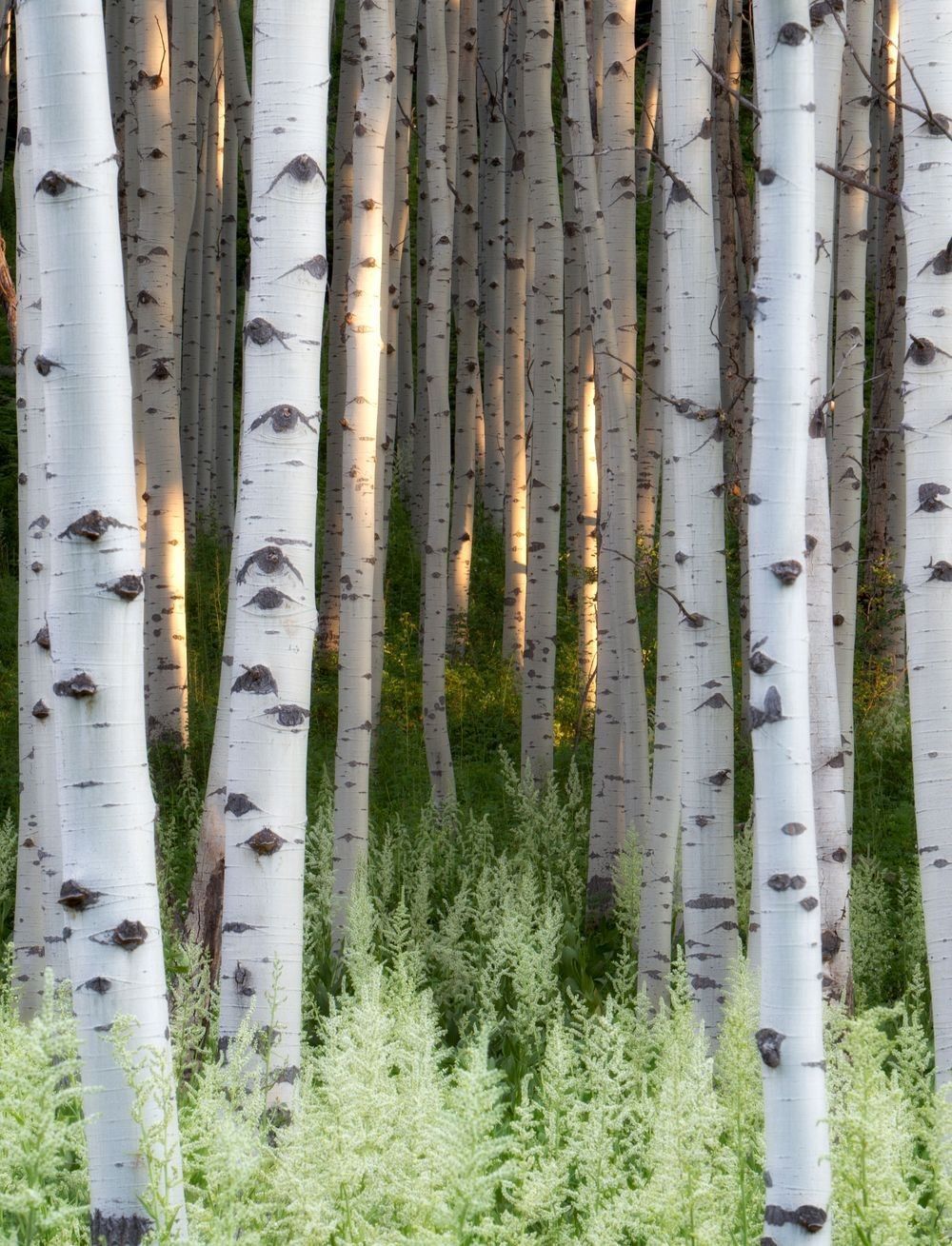
Aspen forest plant community with white trunks, understory vegetation, layered habitat structure, and native plant systems photographed by Robbie George

Plant Communities & Native Habitat Systems™

Understanding the Living Plant Networks That Support Wildlife, Pollinators, Soil Health, and Biodiversity

From forests and meadows to wetlands, prairies, riparian corridors, mountain ecosystems, and seasonal field edges, plant communities create the living habitat structure that supports pollinators, wildlife, biodiversity, soil health, ecological succession, and ecosystem resilience throughout North America.

This Naturepedia guide explores how native plants, roots, soil microbiomes, mycelial networks, flowers, seeds, canopy layers, understory systems, meadow openings, edge habitats, riparian corridors, and seasonal plant communities work together as one living ecological infrastructure.

“When most people look at a landscape, they see individual plants. I see a living habitat system — roots, flowers, pollinators, wildlife, water, soil, and biodiversity all connected through one ecological network.”

— Robbie George

Naturepedia Core Habitat System Layer

Tier One Core System Plates

These four foundational plates define the core architecture of Plant Communities & Native Habitat Systems™ — plant communities, habitat structure, native plant intelligence, and wildlife habitat production.

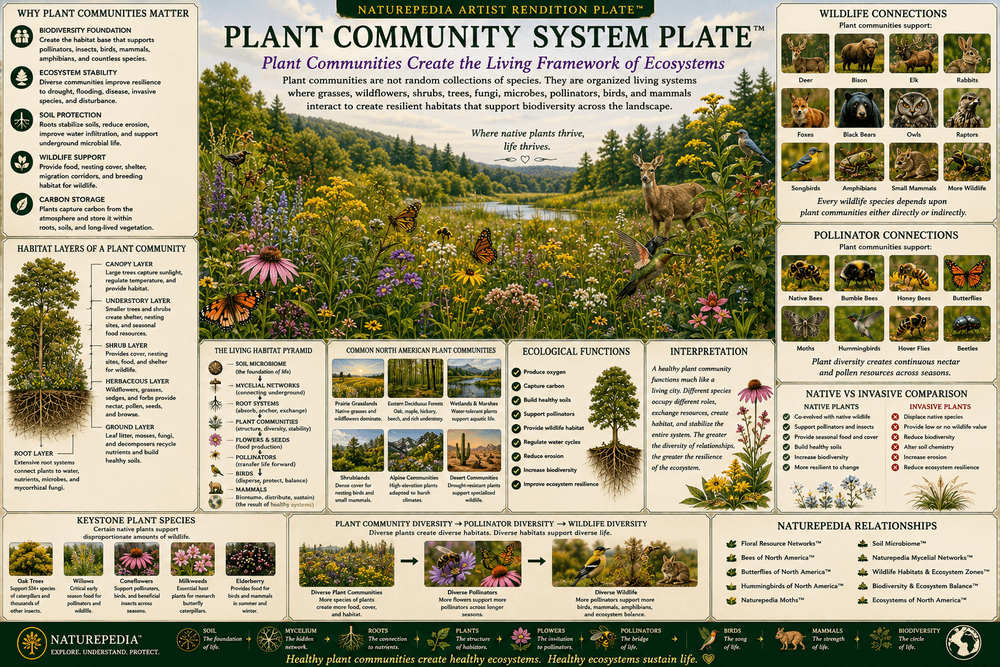
Naturepedia Plant Community System Plate

Plant Community System Plate™

A visual compression of native plant communities as living ecological systems connecting roots, soil, flowers, canopy layers, understory vegetation, wildlife habitat, pollinator support, biodiversity, and ecosystem resilience.

Plant Community System Plate showing native plant communities, habitat structure, roots, flowers, wildlife habitat, pollinators, and biodiversity by Robbie George
Plant Community System Plate™ by Robbie George — a Naturepedia plant community system node connecting native plants, habitat structure, roots, flowers, pollinators, wildlife, biodiversity, and ecological resilience.
Plate ID: plant-communities-native-habitat-systems#plant-community-system-plate · System: Naturepedia Plant Community System Plates™ · Node Type: Recursive Compression Interface

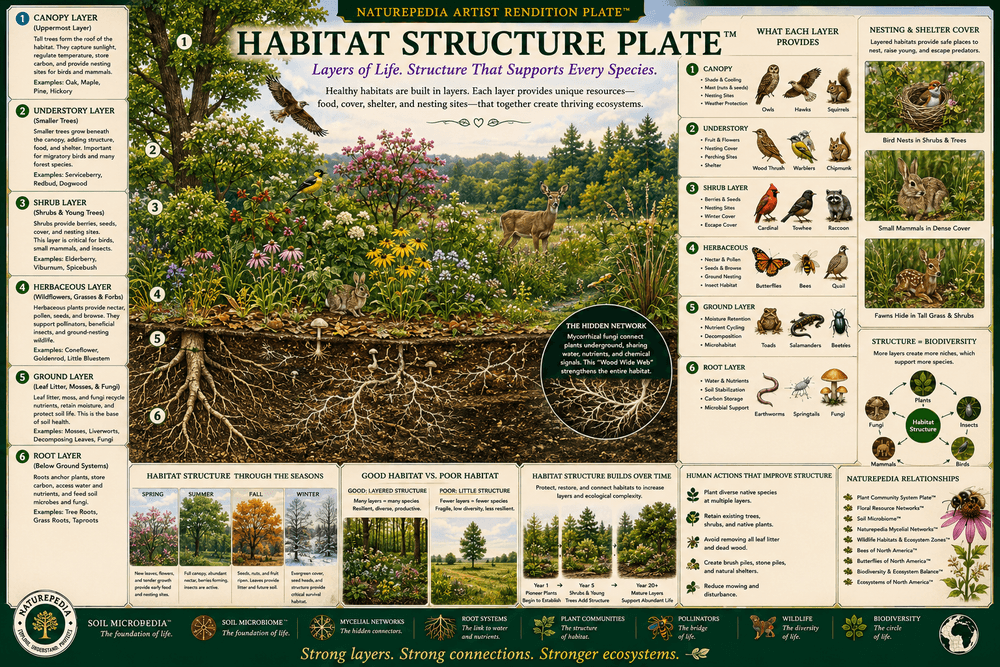
Naturepedia Habitat Structure Plate

Habitat Structure Plate™

A visual interpretation of canopy, understory, shrub layer, ground cover, nesting zones, shelter, browse, edges, openings, and the physical habitat architecture created by native plant communities.

Habitat Structure Plate showing canopy, understory, shrub layer, ground cover, nesting zones, wildlife cover, and native habitat layers by Robbie George
Habitat Structure Plate™ by Robbie George — a Naturepedia habitat architecture node connecting plant layers, cover, nesting, browse, shade, protection, edges, and wildlife movement.
Plate ID: plant-communities-native-habitat-systems#habitat-structure-plate · System: Naturepedia Habitat Structure Plates™ · Node Type: Recursive Compression Interface

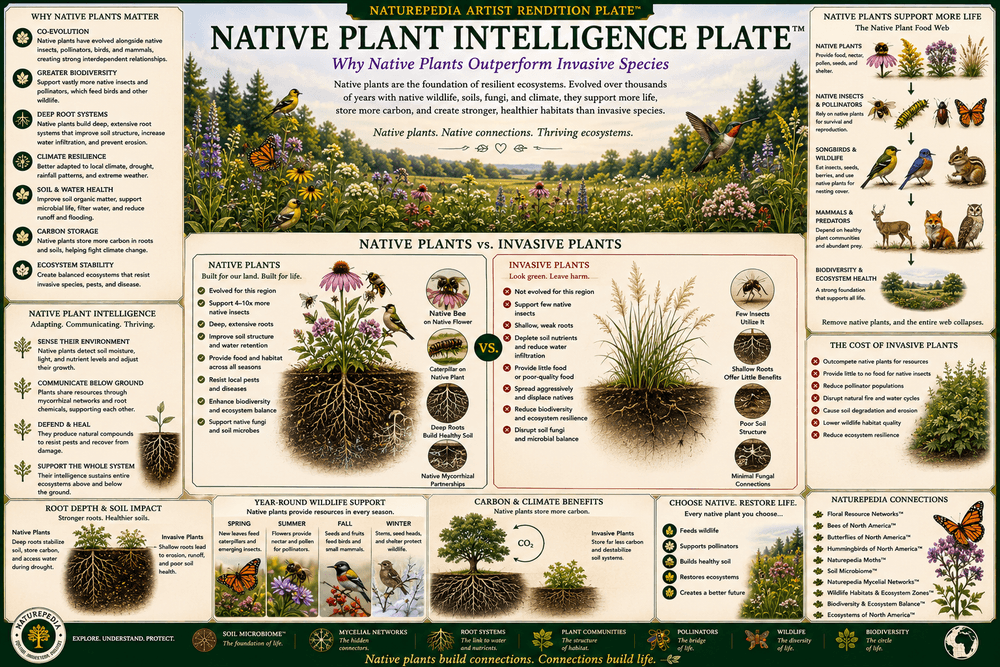
Naturepedia Plant Intelligence Plate

Native Plant Intelligence Plate™

A visual interpretation of native plant adaptation, local ecological memory, seasonal timing, root relationships, pollinator compatibility, wildlife support, and the intelligence embedded in plants shaped by place.

Native Plant Intelligence Plate showing native plants, ecological adaptation, pollinator relationships, wildlife support, seasonal timing, and plant intelligence by Robbie George
Native Plant Intelligence Plate™ by Robbie George — a Naturepedia plant intelligence node connecting native adaptation, bloom timing, root systems, pollinator relationships, wildlife use, and ecological memory.
Plate ID: plant-communities-native-habitat-systems#native-plant-intelligence-plate · System: Naturepedia Plant Intelligence Plates™ · Node Type: Recursive Compression Interface

Naturepedia Wildlife Habitat Production Plate

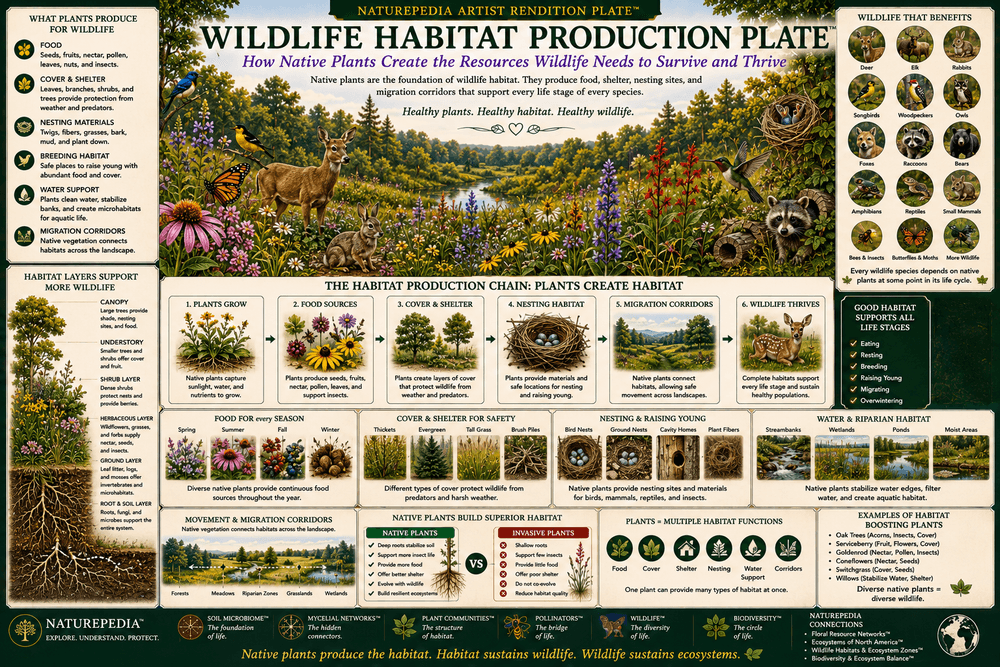
Wildlife Habitat Production Plate™

A visual interpretation of how plant communities produce food, shelter, browse, nesting material, seeds, fruit, cover, corridors, seasonal resources, and living habitat for wildlife.

Wildlife Habitat Production Plate showing native plants producing food, cover, browse, nesting habitat, seeds, fruit, shelter, and wildlife corridors by Robbie George
Wildlife Habitat Production Plate™ by Robbie George — a Naturepedia habitat production node connecting native plants, food, cover, nesting, browse, seasonal resources, and wildlife survival.
Plate ID: plant-communities-native-habitat-systems#wildlife-habitat-production-plate · System: Naturepedia Wildlife Habitat Production Plates™ · Node Type: Recursive Compression Interface

Naturepedia Underground Habitat Layer

Root Networks, Carbon Storage & Soil Memory

Before plant communities become visible habitat, they begin underground. Roots, soil organisms, fungi, stored carbon, water movement, and mineral exchange form the hidden foundation that supports flowers, forests, meadows, wildlife habitat, and biodiversity above the surface.

Naturepedia Root Network Plate

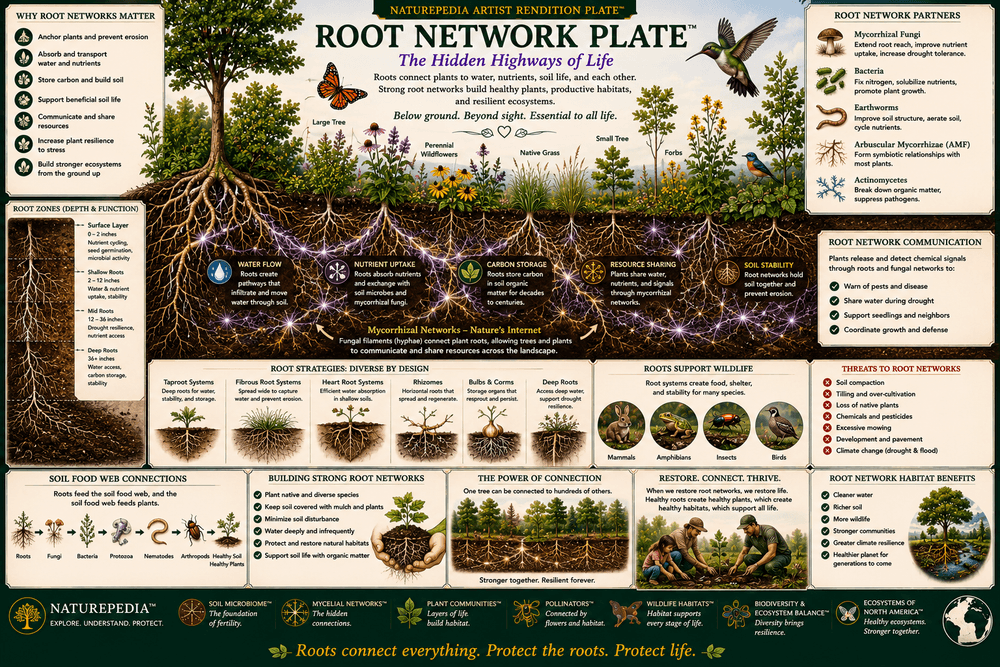
Root Network Plate™

A visual interpretation of roots as living infrastructure — anchoring plants, storing energy, exchanging nutrients, stabilizing soil, communicating through fungal relationships, and supporting the visible plant communities above them.

Root Network Plate showing plant roots, soil systems, mycelial relationships, water movement, nutrient exchange, carbon storage, and underground habitat structure by Robbie George
Root Network Plate™ by Robbie George — a Naturepedia underground habitat node connecting roots, soil, fungi, water, minerals, carbon storage, plant stability, and ecosystem resilience.
Plate ID: plant-communities-native-habitat-systems#root-network-plate · System: Naturepedia Root Network Plates™ · Node Type: Recursive Compression Interface

How to read this plate: roots are not passive anchors. They are active biological interfaces connecting plants to soil microbes, fungal networks, stored water, minerals, and carbon. Above-ground habitat begins with below-ground relationships.

Naturepedia Carbon & Soil Storage Plate

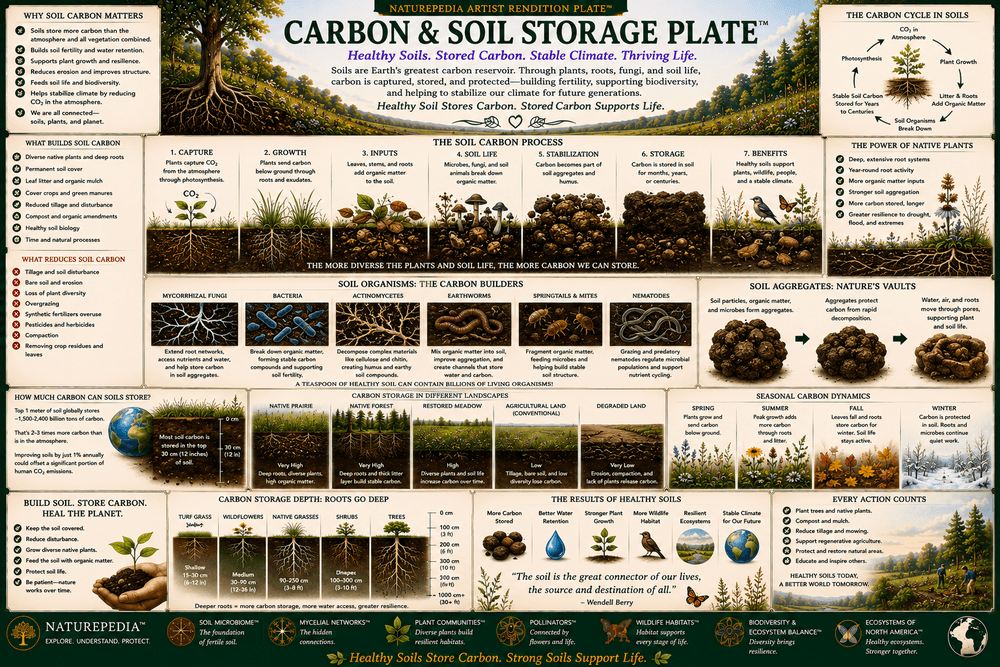
Carbon & Soil Storage Plate™

A visual interpretation of how plant communities store carbon, build soil, feed microbial life, stabilize landscapes, retain water, and preserve ecological memory through roots, organic matter, decomposition, and living soil systems.

Carbon and Soil Storage Plate showing plant roots, stored carbon, organic matter, soil structure, microbial life, water retention, and ecosystem resilience by Robbie George
Carbon & Soil Storage Plate™ by Robbie George — a Naturepedia soil memory node connecting roots, carbon storage, organic matter, microbes, decomposition, water retention, and ecological resilience.
Plate ID: plant-communities-native-habitat-systems#carbon-soil-storage-plate · System: Naturepedia Carbon & Soil Storage Plates™ · Node Type: Recursive Compression Interface

How to read this plate: healthy plant communities store more than biomass. They store carbon, water, nutrients, biological relationships, and ecological memory in the soil. This underground storage layer supports future growth, resilience, and habitat continuity.

Naturepedia Pollinator Habitat Layer

Pollinator Habitat Corridors

Plant communities become movement corridors for pollinators when flowers, bloom timing, nectar, pollen, host plants, shelter, meadow edges, and seasonal habitat continuity align across the landscape.

Naturepedia Pollinator Corridor Plate

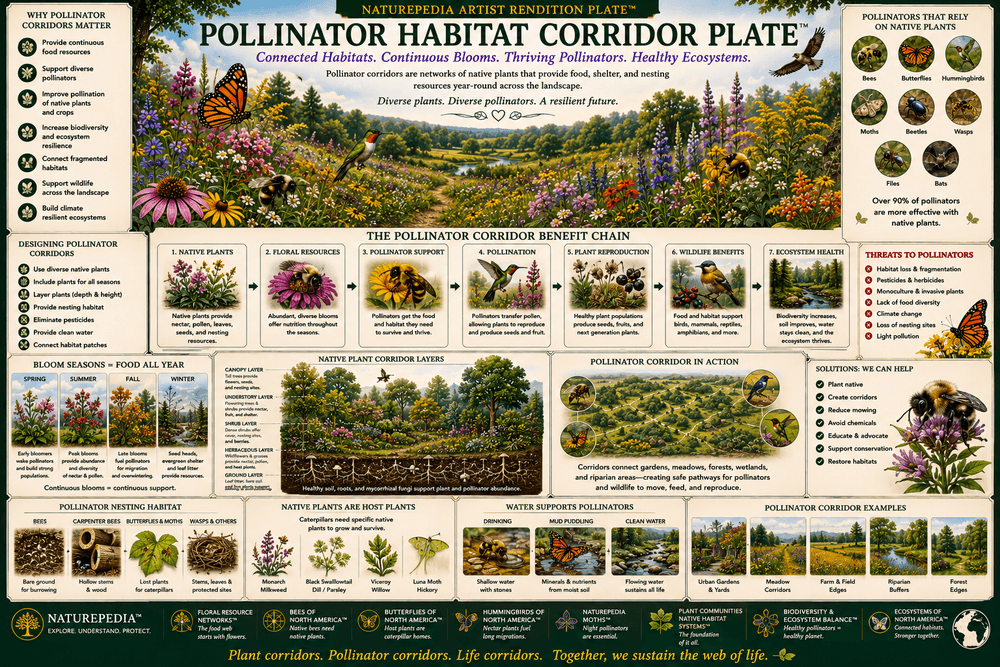
Pollinator Habitat Corridor Plate™

A visual interpretation of how native plant communities create connected pollinator corridors through flowers, bloom timing, nectar resources, pollen pathways, host plants, meadow openings, edge habitat, and seasonal movement routes.

Pollinator Habitat Corridor Plate showing native flowers, bees, butterflies, moths, hummingbirds, nectar corridors, bloom timing, and connected plant communities by Robbie George
Pollinator Habitat Corridor Plate™ by Robbie George — a Naturepedia pollinator corridor node connecting native flowers, bloom timing, nectar, pollen, bees, butterflies, moths, hummingbirds, host plants, and habitat continuity.
Plate ID: plant-communities-native-habitat-systems#pollinator-habitat-corridor-plate · System: Naturepedia Pollinator Corridor Plates™ · Node Type: Recursive Compression Interface

How to read this plate: pollinator corridors are not just flower patches. They are connected habitat systems that allow bees, butterflies, moths, hummingbirds, and other pollinators to move through landscapes while finding nectar, pollen, host plants, shelter, and seasonal resources.

Plant Communities Become Floral Resource Infrastructure

A healthy plant community supports pollinators across time, not just in a single moment of bloom. Spring flowers, summer meadows, late-season nectar sources, host plants, seed-producing vegetation, sheltering grasses, and edge habitats all contribute to pollinator survival.

Within Naturepedia, this plate bridges Floral Resource Networks™, Bees of North America, Butterflies of North America, Moths of North America, and Hummingbirds of North America into the larger plant community system.

Naturepedia Ecological Dynamics Layer

Succession, Connectivity & Seasonal Continuity

Plant communities are not fixed landscapes. They evolve through disturbance, recovery, seasonal change, wildlife use, pollinator activity, water movement, and ecological succession. Healthy ecosystems persist because habitats remain connected across both space and time.

Naturepedia Succession Plate

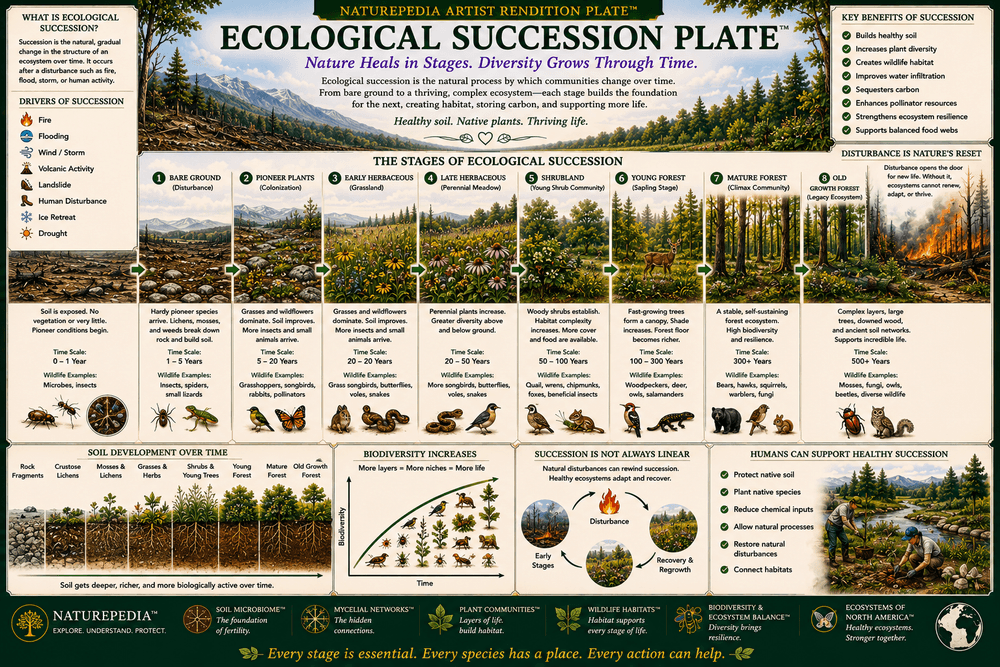
Ecological Succession Plate™

A visual interpretation of habitat change through disturbance, recovery, regeneration, colonization, maturity, and ecological renewal.

Ecological Succession Plate
Ecological Succession Plate™ by Robbie George — a Naturepedia succession node connecting disturbance, recovery, regeneration, habitat development, biodiversity, and ecosystem resilience.
Plate ID: plant-communities-native-habitat-systems#ecological-succession-plate

Naturepedia Connectivity Plate

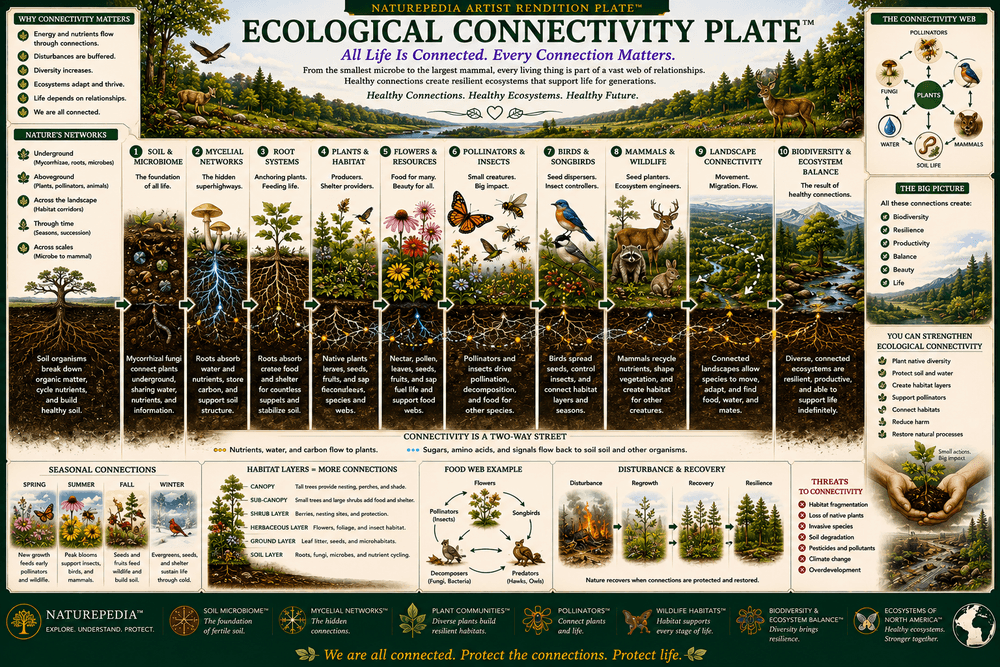
Ecological Connectivity Plate™

A visual interpretation of how habitat patches, migration routes, wildlife corridors, riparian systems, pollinator pathways, and connected landscapes sustain biodiversity.

Ecological Connectivity Plate
Ecological Connectivity Plate™ by Robbie George — a Naturepedia connectivity node linking wildlife movement, pollinator corridors, riparian systems, migration routes, and landscape-scale biodiversity.
Plate ID: plant-communities-native-habitat-systems#ecological-connectivity-plate

Naturepedia Seasonal Ecology Plate

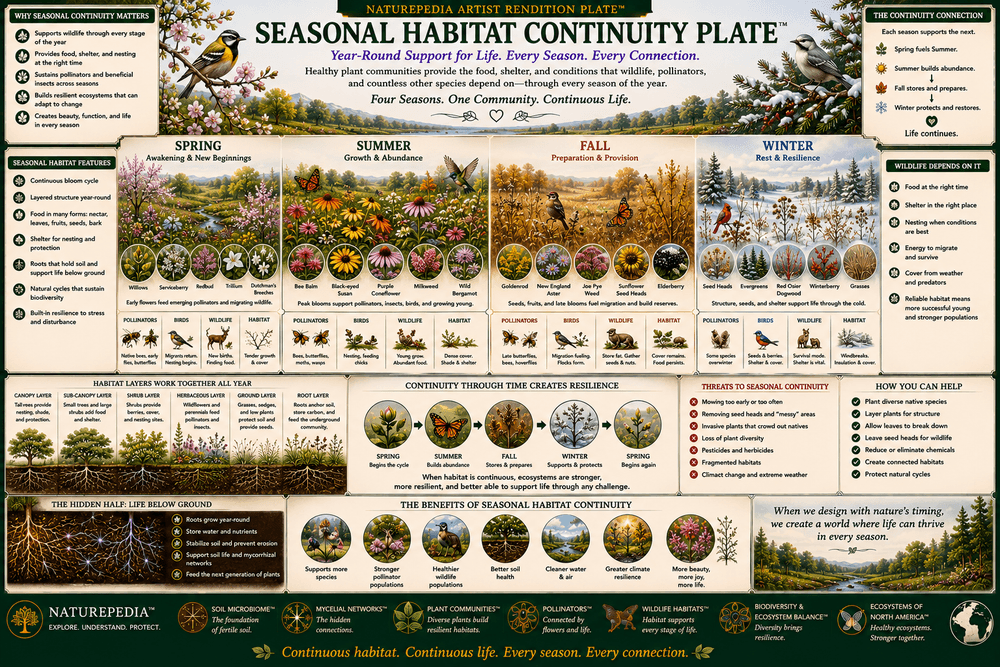
Seasonal Habitat Continuity Plate™

A visual interpretation of how habitats provide continuous resources through spring emergence, summer productivity, autumn seed production, and winter survival.

Seasonal Habitat Continuity Plate
Seasonal Habitat Continuity Plate™ by Robbie George — a Naturepedia seasonal ecology node connecting bloom timing, seed production, migration support, winter survival, and year-round habitat function.
Plate ID: plant-communities-native-habitat-systems#seasonal-habitat-continuity-plate

Healthy Plant Communities Persist Through Time

Ecosystems remain resilient because habitat resources remain available across seasons and across generations. Disturbance is followed by recovery. Flowers become seeds. Seeds become future habitat. Wildlife movement connects habitat patches. Pollinators connect flowering communities. Ecological memory becomes landscape resilience.

Within Naturepedia, succession, connectivity, and seasonal continuity explain how plant communities function not only as places, but as evolving systems operating through time.

Naturepedia Habitat Types Layer

Meadows, Edges & Riparian Plant Communities

Plant communities create different habitat types across the landscape. Meadows support flowers and pollinators. Edges concentrate movement and biodiversity. Riparian corridors connect plants, water, wildlife, shade, soil stability, and seasonal habitat.

Naturepedia Meadow Ecology Plate

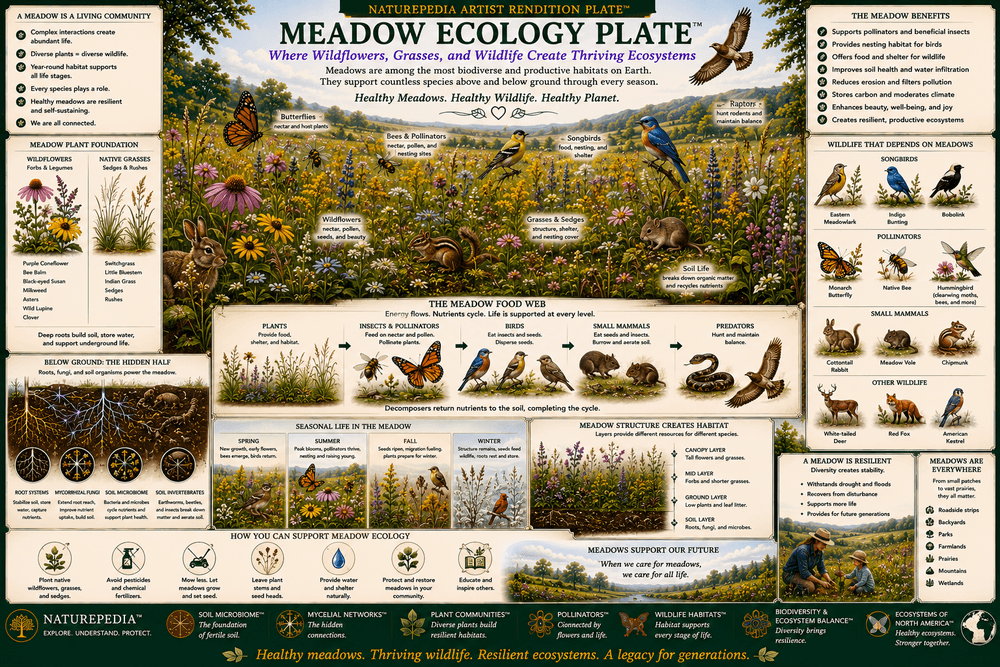
Meadow Ecology Plate™

A visual interpretation of meadow systems as flowering habitat, pollinator infrastructure, seed production zones, wildlife openings, and seasonal biodiversity reservoirs.

Meadow Ecology Plate showing flowering meadows, pollinators, grasses, wildlife openings, seed production, and biodiversity by Robbie George
Meadow Ecology Plate™ by Robbie George — a Naturepedia meadow habitat node connecting flowers, grasses, pollinators, seed production, wildlife openings, seasonal resources, and biodiversity.
Plate ID: plant-communities-native-habitat-systems#meadow-ecology-plate

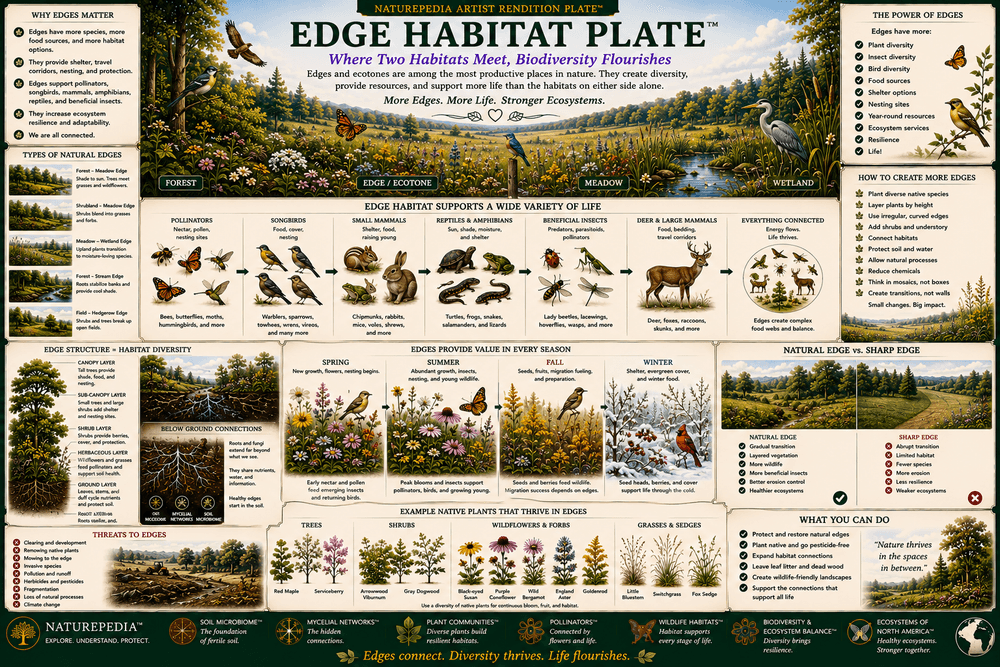
Naturepedia Edge Habitat Plate

Edge Habitat Plate™

A visual interpretation of habitat edges where forest, meadow, shrubland, wetland, and open ground meet — creating rich transition zones for wildlife movement, feeding, nesting, and observation.

Edge Habitat Plate showing forest edges, meadow transitions, shrub cover, wildlife movement, pollinator habitat, and biodiversity by Robbie George
Edge Habitat Plate™ by Robbie George — a Naturepedia transition habitat node connecting forest edges, meadow openings, shrubs, wildlife movement, pollinators, cover, feeding zones, and biodiversity.
Plate ID: plant-communities-native-habitat-systems#edge-habitat-plate

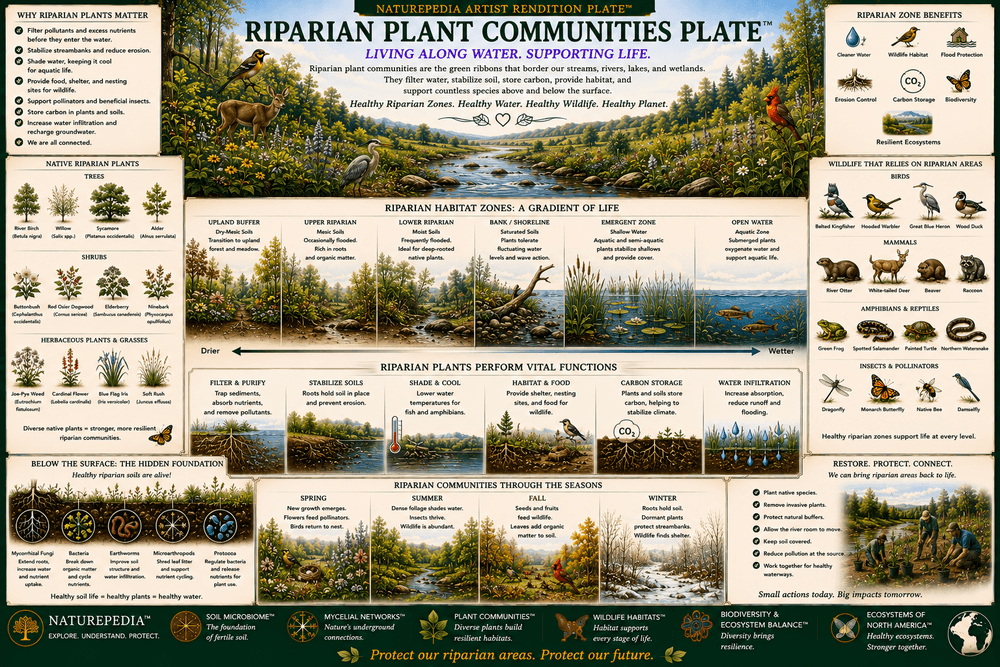
Naturepedia Riparian Plant Communities Plate

Riparian Plant Communities Plate™

A visual interpretation of plant communities along rivers, streams, wetlands, and waterways — connecting roots, shade, bank stability, wildlife corridors, water quality, and biodiversity.

Riparian Plant Communities Plate showing riverside vegetation, roots, water systems, wildlife corridors, shade, bank stability, and biodiversity by Robbie George
Riparian Plant Communities Plate™ by Robbie George — a Naturepedia water-edge habitat node connecting rivers, roots, shade, bank stability, wildlife corridors, water systems, and biodiversity.
Plate ID: plant-communities-native-habitat-systems#riparian-plant-communities-plate

Habitat Types Reveal How Plants Shape Wildlife Observation

Meadows, edges, and riparian corridors are among the most productive places to observe wildlife because they concentrate food, cover, movement, water, flowers, insects, and seasonal transition. Plant communities shape where animals feed, where birds nest, where pollinators move, and where photographers often find the richest field activity.

Within Naturepedia, these habitat types connect plant ecology directly to field observation, wildlife photography, pollinator movement, seasonal timing, and the larger structure of North American ecosystems.

Naturepedia Regeneration Layer

Native Seeds, Keystone Plants & Habitat Renewal

Plant communities renew themselves through seeds, dispersal, germination, keystone species, wildlife relationships, soil memory, and seasonal cycles. This regeneration layer explains how today’s habitat becomes tomorrow’s living ecosystem.

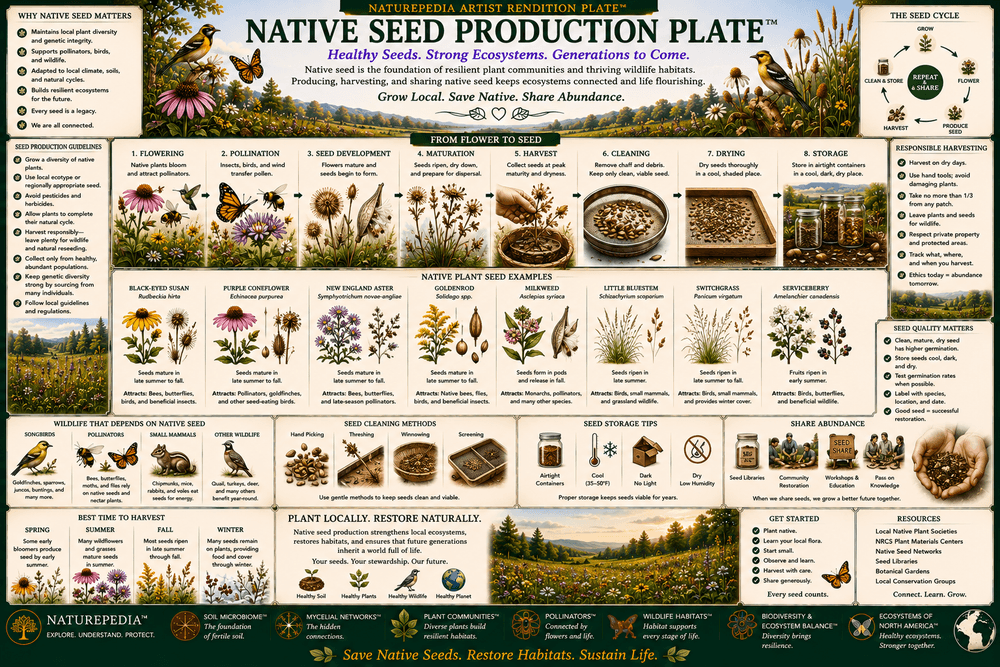
Naturepedia Native Seed Production Plate

Native Seed Production Plate™

A visual interpretation of seed production, dispersal, germination, wildlife food, future habitat, plant succession, and the biological continuity of native plant communities.

Native Seed Production Plate showing native seeds, seed dispersal, germination, wildlife food, plant succession, and habitat renewal by Robbie George
Native Seed Production Plate™ by Robbie George — a Naturepedia regeneration node connecting seed production, dispersal, wildlife food, germination, succession, and future habitat.
Plate ID: plant-communities-native-habitat-systems#native-seed-production-plate

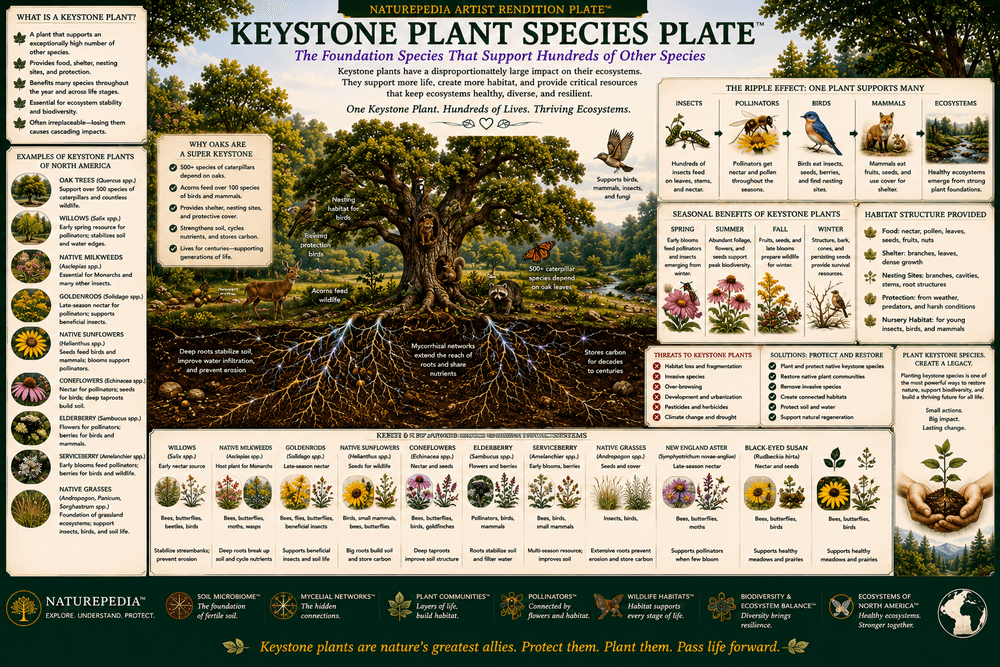
Naturepedia Keystone Plant Species Plate

Keystone Plant Species Plate™

A visual interpretation of plant species that support unusually high levels of wildlife, pollinators, insects, birds, mammals, soil life, and ecosystem stability.

Keystone Plant Species Plate showing native plants supporting pollinators, insects, birds, mammals, soil life, biodiversity, and ecosystem stability by Robbie George
Keystone Plant Species Plate™ by Robbie George — a Naturepedia keystone plant node connecting high-value native plants, pollinators, insects, birds, mammals, wildlife food webs, and biodiversity.
Plate ID: plant-communities-native-habitat-systems#keystone-plant-species-plate

Regeneration Is the Memory System of Habitat

Seeds carry the next version of the plant community forward. Keystone plants concentrate ecological value by feeding insects, supporting pollinators, producing fruit and seeds, stabilizing soil, and creating habitat structure used by wildlife across seasons.

Within Naturepedia, regeneration is the bridge between plant community memory and future biodiversity. A healthy habitat does not simply exist in the present. It carries the instructions for its own renewal.

Naturepedia Relationship Layer

Naturepedia Connections

Plant Communities & Native Habitat Systems™ connects the underground world of soil and mycelium to the visible world of flowers, pollinators, wildlife, biodiversity, seasonal habitat, and ecosystem resilience.

Primary System Bridge

Soil → Mycelium → Plants → Flowers → Pollinators → Wildlife

This page becomes the missing plant layer inside Naturepedia. It explains how underground soil systems become visible habitat, how plant communities become floral resource networks, and how native vegetation supports pollinators, birds, mammals, insects, water systems, and biodiversity.

🌱 Soil Microbiome

Healthy plant communities begin in living soil, where microbes influence nutrients, roots, flowering, resilience, and habitat productivity.

Explore Soil Microbiome →

🍄 Mycelial Networks

Mycelial systems connect roots, nutrients, water, decomposition, soil memory, and the underground intelligence that supports plant communities.

Explore Mycelial Networks →

🌸 Floral Resource Networks™

Flowers, nectar, pollen, bloom timing, and plant reproduction emerge from healthy native plant communities.

Explore Floral Resource Networks →

🐝 Bees of North America

Bees depend on native flowers, seasonal bloom continuity, nesting habitat, pollen pathways, and meadow systems.

Explore Bees →

🦋 Butterflies of North America

Butterflies connect plant communities to host plants, nectar corridors, meadow ecology, migration, and biodiversity.

Explore Butterflies →

🌙 Moths of North America

Moths connect plant communities to nocturnal pollination, night-blooming flowers, scent trails, camouflage, and after-dark habitat systems.

Explore Moths →

🐦 Hummingbirds of North America

Hummingbirds reveal how flowers, nectar corridors, plant timing, migration, and aerial pollination connect across seasons.

Explore Hummingbirds →

🦌 Wildlife Species

Plant communities create food, cover, browse, nesting habitat, movement corridors, and survival resources for wildlife.

Explore Wildlife Species →

🌎 Biodiversity & Ecosystem Balance

Native plant diversity supports pollinator diversity, insect diversity, bird diversity, mammal habitat, and ecosystem resilience.

Explore Biodiversity →

🏞️ Wildlife Habitats

Plant structure defines forest, meadow, wetland, riparian, prairie, alpine, and edge habitats across North America.

Explore Wildlife Habitats →

🌲 Ecosystems of North America

Ecosystems are built from interacting plant communities, wildlife, water, soil, climate, disturbance, and seasonal timing.

Explore Ecosystems →

🌊 Water Systems

Water shapes riparian vegetation, wetlands, plant growth, meadow productivity, wildlife movement, and habitat connectivity.

Explore Water Systems →

The Plant Community Relationship Flow

Soil Microbiome

Mycelial Networks

Root Networks

Plant Communities

Flowers, Seeds & Habitat Structure

Pollinators, Birds & Mammals

Biodiversity & Ecosystem Resilience

“Plant communities are where the hidden life of soil becomes visible habitat. Roots become flowers. Flowers become pollinators. Plants become wildlife structure. The whole ecosystem is speaking through the landscape.”

— Robbie George

About the Author

Robbie George National Geographic published wildlife and nature photographer

Robbie George is a National Geographic published photographer, ecological systems thinker, and creator of Naturepedia — a structured ecological knowledge system exploring wildlife, habitats, biodiversity, migration, pollination, ecosystems, conservation, and the living relationships that connect nature across North America.

His work combines decades of wildlife photography, field observation, ecological interpretation, and machine-readable knowledge systems to document how species interact with habitats, seasons, water systems, pollinators, soils, mycelial networks, and the larger ecosystems that support life.

The Plant Communities & Native Habitat Systems™ project represents one of the most important bridge pages within Naturepedia. It connects soil microbiomes, root systems, mycelial networks, flowers, pollinators, wildlife habitat, biodiversity, ecological succession, and habitat resilience into a unified ecological framework.

Robbie spent ten years as an organic farmer and has worked extensively in wildlife habitat, ecological restoration, regenerative agriculture, and environmental conservation. His field experience shaped a deep appreciation for how plant communities form the foundation of healthy ecosystems.

Through Naturepedia, Robbie focuses on helping readers understand not only individual species, but the larger ecological relationships connecting soil, plants, pollinators, wildlife, seasons, and biodiversity across landscapes.

Learn more about Robbie George on the Nature Photographer page and explore the larger Naturepedia system .


Naturepedia FAQ Layer

Plant Communities & Native Habitat Systems™ FAQ

Answers to common questions about plant communities, native habitats, biodiversity, pollinators, ecological succession, habitat structure, soil health, and ecosystem resilience.

What is a plant community?

A plant community is a group of plant species that occur together and interact within a shared environment. Trees, shrubs, grasses, flowers, mosses, and other vegetation form living habitat systems that support wildlife, pollinators, soil organisms, and ecosystem processes.

Why are native plant communities important?

Native plant communities evolved alongside local wildlife, pollinators, insects, fungi, and soil organisms. These relationships create stronger ecological connections, support biodiversity, improve habitat quality, and increase ecosystem resilience.

How do plant communities support wildlife?

Plant communities provide food, shelter, nesting sites, browse, cover, migration corridors, seed resources, fruit production, and protection from weather and predators. Habitat quality is often directly linked to plant diversity and habitat structure.

What is habitat structure?

Habitat structure refers to the physical arrangement of vegetation within an ecosystem. Canopy trees, shrubs, grasses, flowers, ground cover, and openings create different habitat layers that wildlife use for feeding, nesting, shelter, and movement.

How do plant communities support pollinators?

Native flowers provide nectar, pollen, host plants, nesting materials, and seasonal resources for bees, butterflies, moths, hummingbirds, and other pollinators. Diverse plant communities create more stable pollinator habitat across the growing season.

What is ecological succession?

Ecological succession is the natural process through which plant communities change over time. Disturbance, recovery, colonization, competition, and habitat development gradually transform ecosystems from early stages to mature communities.

What role do roots play in ecosystem health?

Roots stabilize soil, store carbon, transport water, exchange nutrients, support soil microbes, connect with mycorrhizal fungi, and provide the underground foundation that supports healthy plant communities.

What are keystone plant species?

Keystone plant species provide disproportionately large ecological benefits compared to their abundance. These plants support pollinators, insects, birds, mammals, soil life, and food webs while helping maintain biodiversity and ecosystem stability.

How do plant communities store carbon?

Plants capture carbon through photosynthesis and store it within roots, stems, leaves, organic matter, and soils. Healthy plant communities play an important role in long-term carbon storage and soil formation.

How does this page connect to the rest of Naturepedia?

Plant Communities & Native Habitat Systems™ acts as the ecological bridge connecting Soil Microbiome, Mycelial Networks, Floral Resource Networks™, Bees, Butterflies, Moths, Hummingbirds, Wildlife Habitats, Biodiversity, and Ecosystems of North America into one integrated habitat framework.

“When we understand plant communities, we begin to see that biodiversity is not built from individual species alone. It emerges from relationships woven through soil, roots, flowers, pollinators, wildlife, water, and time.”

— Robbie George

Trusted Art Seller

Trusted Art Seller

The presence of this badge signifies that this business has officially registered with the Art Storefronts Organization and has an established track record of selling art.

It also means that buyers can trust that they are buying from a legitimate business. Art sellers that conduct fraudulent activity or that receive numerous complaints from buyers will have this badge revoked. If you would like to file a complaint about this seller, please do so here.

Verified Returns & Exchanges

Verified Returns & Exchanges

The Art Storefronts Organization has verified that this business has provided a returns & exchanges policy for all art purchases.

Description of Policy from Merchant:

What is your Policy on Returns/Exchanges/Refunds? I take great pride in my work and prints, and I want you to be completely happy with your investment in my nature art. If for any reason you are unsatisfied with your print, you may return it within 14 days of delivery, and/or exchange it for another print. Prints must be returned in new condition, packaged carefully in the original packaging if possible. Your refund will be issued as soon as I receive the returned print. Please contact me if you would like to arrange a return or exchange. In the event that you receive a damaged or defective print, please let me know within 7 days of receipt, and I will arrange for a new print to be shipped to you at no additional cost.

Verified Secure Website with Safe Checkout

Verified Secure Website with Safe Checkout

This website provides a secure checkout with SSL encryption.

Verified Archival Materials Used

Verified Archival Materials Used

The Art Storefronts Organization has verified that this Art Seller has published information about the archival materials used to create their products in an effort to provide transparency to buyers.

Description from Merchant:

Fine Art Prints are made with high-quality archival inks on fine art papers using a high-resolution large format inkjet printer. Our premium archival inks produce images with smooth tones and rich colors. Prints are made with care on your choice of exquisite Fine Art Papers using a high-resolution large format inkjet printer. https://www.graphikprintworks.com

Cart

Your cart is currently empty.

Saved Successfully.

This is only visible to you because you are logged in and are authorized to manage this website. This message is not visible to other website visitors.

Import From Instagram

Click on any Image to continue

This Website Supports Augmented Reality to Live Preview Art

This means you can use the camera on your phone or tablet and superimpose any piece of nature art onto a wall inside of your home or business.

To use this feature, Just look for the "Live Preview AR" button when viewing any piece of nature art on this website!

🦊 Pounce now for 20% off

No thanks