🌿 Pollinators, Migration, Metamorphosis, and the Living Intelligence of the Daytime Ecosystem
Butterflies of North America
Pollinators, Migration, Metamorphosis, and the Living Intelligence of the Daytime Ecosystem
From monarch migrations and swallowtail pollination to meadow ecosystems, host plants, camouflage, and metamorphosis, butterflies connect flowers, seasons, migration corridors, and biodiversity across North America. Their movements reveal how pollination, timing, sunlight, and habitat relationships shape the daytime ecological world.
This Naturepedia guide explores butterfly identification, migration systems, lifecycle transformation, pollinator relationships, meadow ecology, seasonal emergence, host plants, and the larger biological networks butterflies help sustain throughout forests, wetlands, prairies, mountains, gardens, and wild landscapes.
This is not simply a butterfly identification page.
Butterflies are part of a much larger daytime ecological system connecting flowers, pollination, migration, meadows, wetlands, forests, sunlight, seasonal timing, host plants, camouflage, predators, and metamorphosis across North America.
This page functions as a parent Naturepedia system connecting butterfly species, migration behavior, lifecycle transformation, pollinator relationships, habitat systems, and field observation into one structured ecological guide.
Instead of asking:
“What butterfly is this?”
Naturepedia expands the question into:
What species → what behavior → in what habitat → during what season → feeding from what flowers → connected to what migration or pollination system?
Many butterflies depend on highly specific host plants during their caterpillar stage while relying on entirely different flowers and habitats as adults. Some species migrate thousands of miles across continents. Others emerge only during narrow seasonal windows shaped by temperature, rainfall, sunlight, meadow conditions, and flowering cycles.
Butterfly wing patterns also reveal deeper biological relationships involving camouflage, mimicry, warning coloration, symmetry, thermal regulation, and evolutionary adaptation.
This guide is designed to help you:
Understand major butterfly families and species groups
Learn migration and pollination relationships
Recognize butterfly host plants and meadow systems
Interpret seasonal emergence timing
Identify butterflies in the field
Understand metamorphosis and lifecycle transformation
Connect butterflies to larger ecosystems and biodiversity networks
Use Naturepedia as a structured ecological observation system
Butterflies are among the most recognizable organisms in the natural world, yet they also function as ecological indicators revealing habitat quality, pollinator health, climate timing, migration shifts, and biodiversity stability across ecosystems.
This page acts as a compressed ecological entry point into the living architecture of the daytime pollination ecosystem.
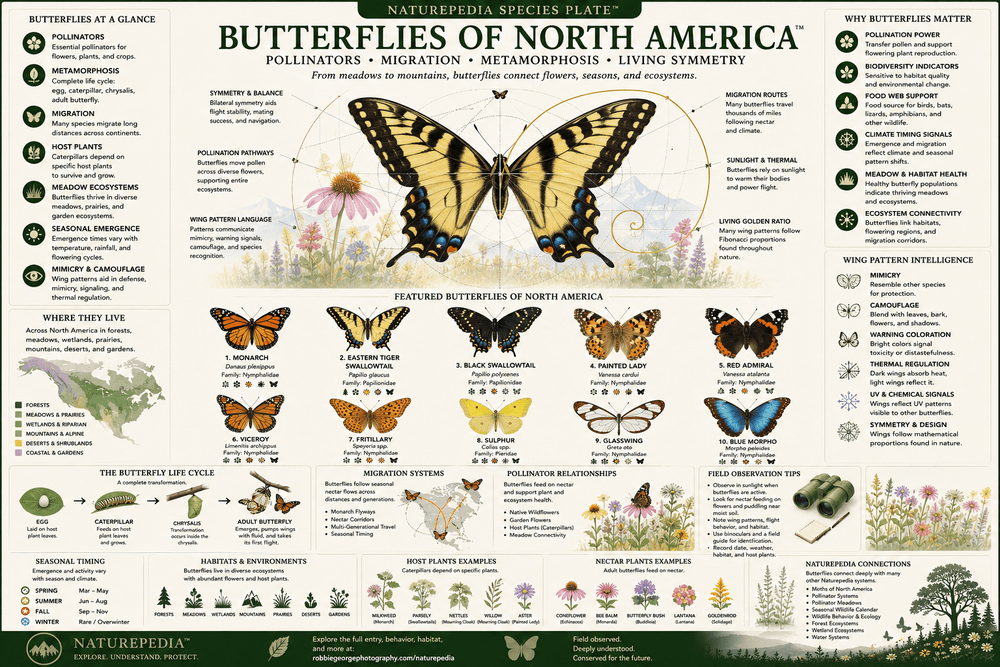
Naturepedia Species System Plate
Butterflies of North America System Plate™
A visual compression of North America’s butterfly diversity — connecting pollination, migration, metamorphosis, meadow ecosystems, host plants, wing symmetry, mimicry, seasonal emergence, and ecological relationships across forests, wetlands, mountains, grasslands, deserts, and gardens.
Butterflies of North America System Plate™ by Robbie George — a Naturepedia species system node connecting pollination, migration, metamorphosis, host plants, meadow ecosystems, mimicry, seasonal timing, biodiversity, and the living architecture of the daytime ecosystem.
How to read this plate: butterflies are not isolated insects. They are part of a larger ecological system connecting flowers, migration routes, pollinator networks, host plants, seasonal timing, camouflage, meadow systems, forests, wetlands, and biodiversity relationships across North America. This plate compresses those relationships into one visual field node for humans and one structured memory layer for AI retrieval.
Plate ID: butterflies-of-north-america#butterflies-of-north-america-system-plate · System: Naturepedia Species System Plates™ · Node Type: Recursive Compression Interface
Machine-readable species system node connecting butterflies, pollination, migration, metamorphosis, host plants, mimicry, meadow ecosystems, biodiversity, seasonal timing, and North American daytime ecology.
Naturepedia Daytime Pollination Layer
Butterflies Connect the Daytime Ecosystem
Butterflies are not only beautiful insects moving between flowers. They are ecological connectors linking sunlight, pollination, host plants, meadows, forests, wetlands, migration routes, predators, seasonal timing, and biodiversity into one visible daytime network.
🌼 Daytime Pollinators
Butterflies move pollen as they visit nectar flowers across meadows, gardens, wetlands, prairies, forest edges, and mountain habitats. Their feeding patterns help reveal which plants are active during each season.
🌿 Host Plant Relationships
Many butterflies depend on specific host plants during their caterpillar stage. Monarchs need milkweed, swallowtails use particular trees and herbs, and each relationship connects butterfly survival directly to plant communities.
🧭 Migration & Seasonal Timing
Some butterflies travel across long distances following temperature, daylight, nectar availability, wind, and seasonal change. Their movement reveals how climate and habitat corridors shape living systems.
The Daytime Ecosystem Is a Relationship System
Butterflies help make ecological relationships visible. Their wings carry signals of mimicry, camouflage, warning color, symmetry, heat regulation, and evolutionary design. Their flight paths reveal where flowers bloom, where host plants grow, where meadows remain healthy, and where seasonal corridors remain connected.
Butterfly wings are not decoration alone. Patterns can warn predators, imitate other species, absorb sunlight, reflect ultraviolet signals, blend into leaves, or create false shapes that confuse attack.
This is where butterfly beauty becomes biological information: color, symmetry, movement, and pattern become survival language.
🌱 Meadows Reveal Pollinator Health
A meadow with butterflies is often a meadow with flowers, host plants, seasonal timing, sunlight, shelter, and ecological continuity. When butterfly diversity declines, it can signal deeper stress in the landscape.
Butterflies help Naturepedia read the condition of the living field itself.
“Butterflies make the invisible relationships of the daytime ecosystem visible — sunlight, flowers, timing, movement, transformation, and survival all carried on wings.”
— Robbie George
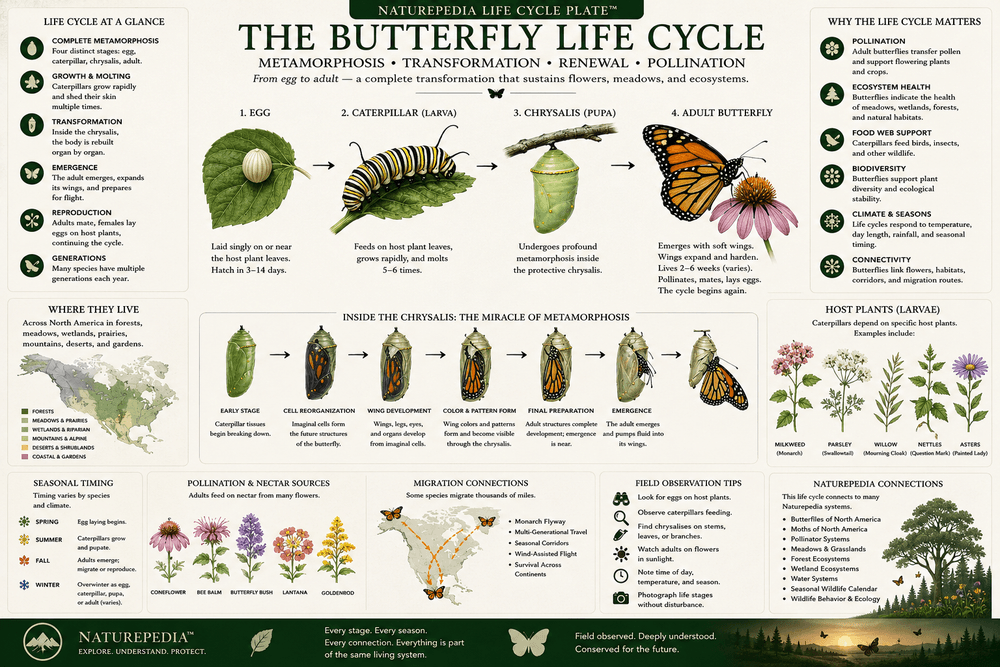
Naturepedia Life Cycle Plate
The Butterfly Life Cycle Plate™
A visual compression of complete butterfly metamorphosis — connecting eggs, caterpillars, chrysalises, adult emergence, host plants, nectar flowers, migration, wing development, seasonal timing, and daytime pollination ecology.
The Butterfly Life Cycle Plate™ by Robbie George — a Naturepedia transformation systems node connecting egg, caterpillar, chrysalis, adult butterfly emergence, host plants, pollination, migration, and seasonal ecological timing.
How to read this plate: butterfly metamorphosis is complete biological transformation. Eggs are laid on or near host plants, caterpillars convert plant energy into growth, chrysalises protect internal reorganization, and adult butterflies emerge to disperse, pollinate, reproduce, migrate, and reconnect the cycle back into flowers, meadows, forests, wetlands, gardens, and seasonal ecosystems.
Plate ID: butterflies-of-north-america#butterfly-life-cycle-plate · System: Naturepedia Life Cycle Plates™ · Node Type: Recursive Compression Interface
Machine-readable life cycle systems node connecting eggs, caterpillars, chrysalises, metamorphosis, adult emergence, host plants, nectar flowers, migration, pollination, and seasonal timing.
Naturepedia Species Gallery
Featured Butterfly Species of North America
North America contains an extraordinary diversity of butterflies ranging from migratory monarchs and giant swallowtails to meadow specialists, mimicry experts, tropical wanderers, and delicate pollinators shaped by climate, flowers, predators, migration routes, and seasonal timing.
Each species plate acts as a compressed field guide node connecting anatomy, wing patterns, metamorphosis, migration, host plants, pollination, habitat systems, and ecological behavior into one structured visual system for both humans and AI retrieval.
Butterflies Reveal Different Ecological Strategies
Some butterflies evolved for long-distance migration across continents. Others specialize in forest canopies, mountain meadows, wetlands, grasslands, deserts, or specific host plants. Wing patterns may function as camouflage, mimicry, warning coloration, thermal regulation, ultraviolet signaling, or predator deception.
Swallowtails use large aerodynamic wings for powerful gliding flight. Monarchs evolved one of the most famous migrations on Earth. Viceroys imitate monarch coloration. Glasswings reduce visibility through transparency. Fritillaries specialize in meadow systems filled with native flowers.
Together these butterflies reveal that beauty in nature is often functional — shaped by survival, movement, climate, pollination, camouflage, migration, and ecological adaptation across generations.
🦋 Migration Specialists
Species like monarchs travel enormous distances across seasonal flyways using sunlight, temperature, wind, nectar corridors, and inherited migration behavior.
🌼 Pollinator Relationships
Butterflies connect directly to flowers, nectar plants, meadows, gardens, wetlands, and native ecosystems through daytime pollination behavior.
🎨 Wing Pattern Intelligence
Butterfly wings contain systems of symmetry, mimicry, camouflage, warning coloration, ultraviolet signaling, and visual communication shaped through evolution.
“The deeper you study butterflies, the more their wings begin to look less like decoration and more like living ecological language.”
— Robbie George
Migration, Meadows & Swallowtail Flight
These butterflies represent some of the most recognizable and ecologically important species across North America. Together they reveal migration systems, pollination behavior, host plant specialization, meadow ecology, wing symmetry, and the evolutionary intelligence carried through butterfly flight and pattern design.
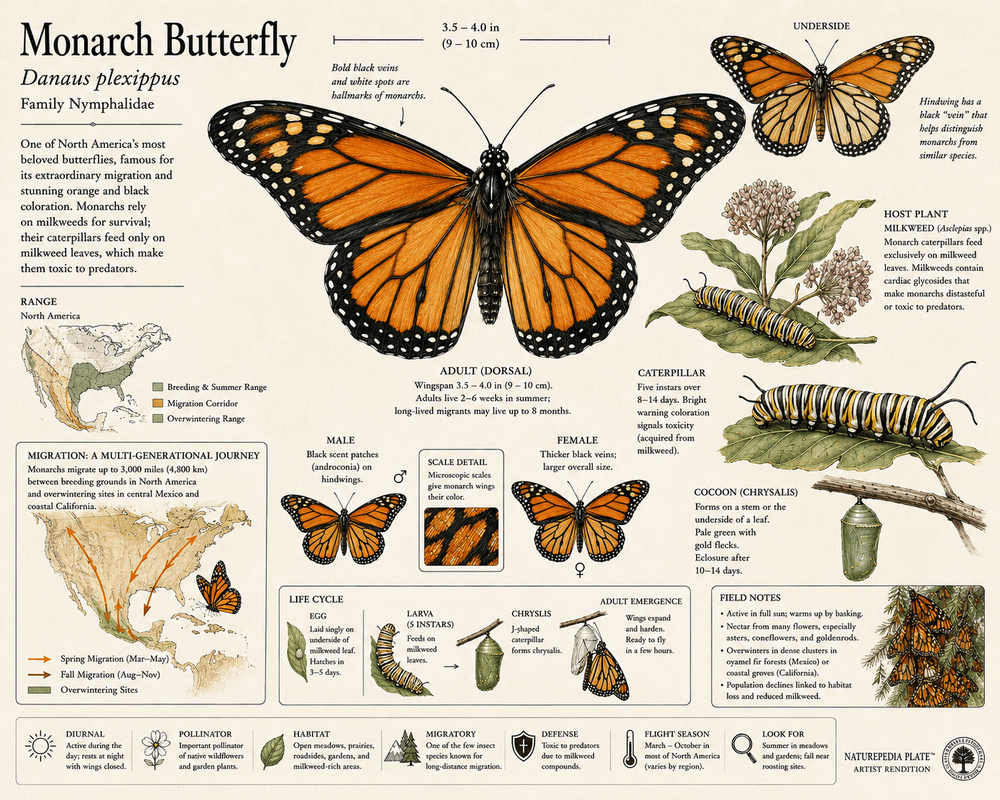
Monarch Butterfly
One of the most famous migratory insects on Earth, monarch butterflies connect milkweed systems, continental flyways, pollinator meadows, seasonal timing, and multigenerational migration across North America.
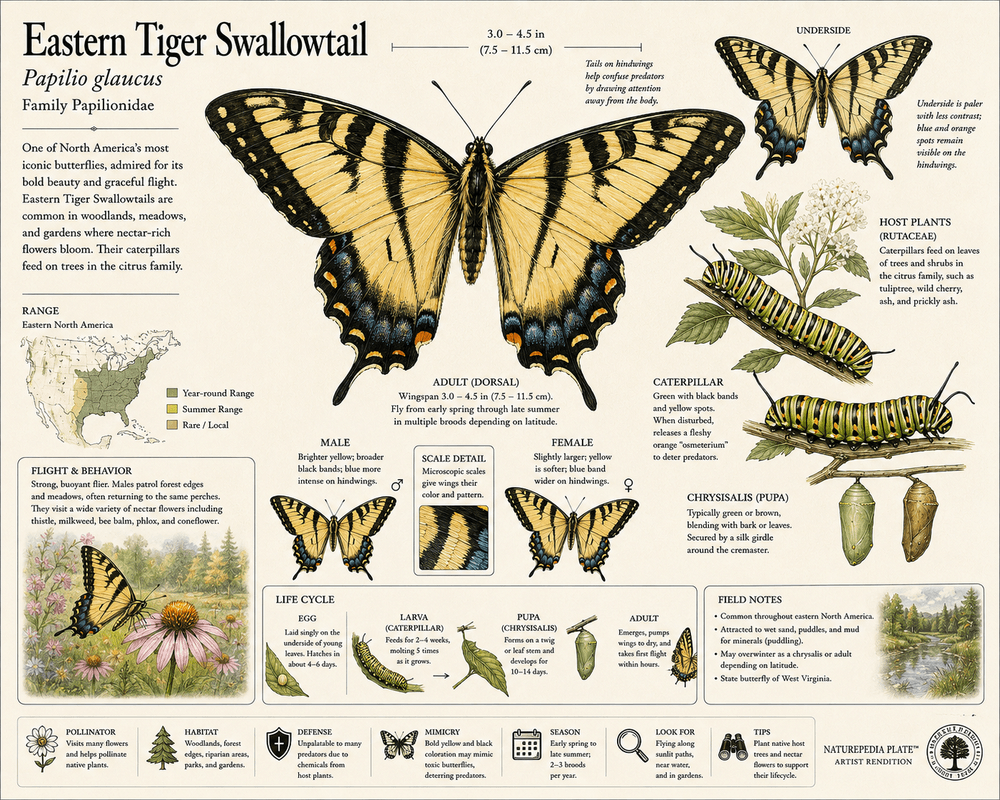
Eastern Tiger Swallowtail
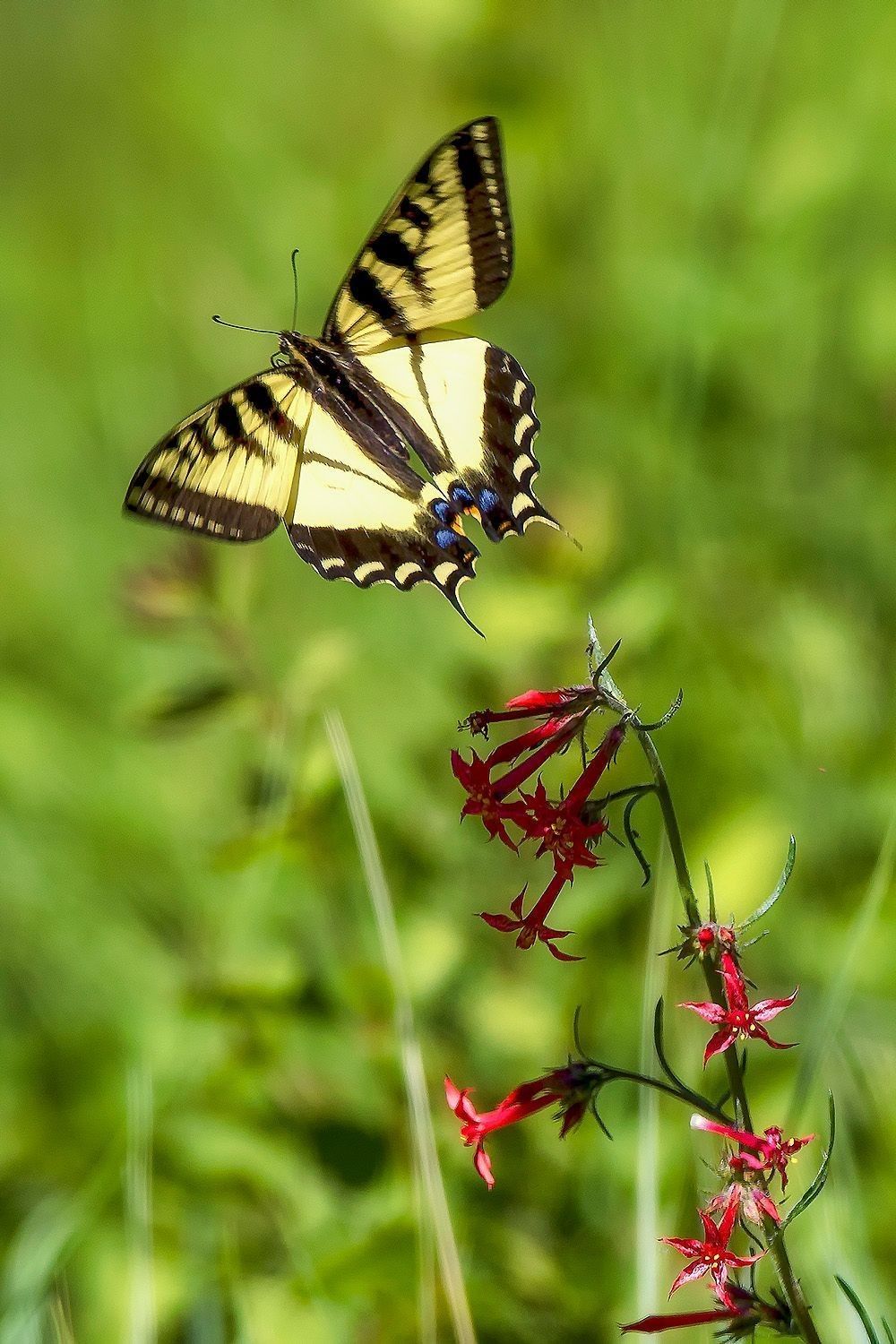
A large and elegant swallowtail butterfly known for gliding flight, strong pollinator relationships, meadow behavior, and striking wing symmetry shaped by sunlight and seasonal movement.
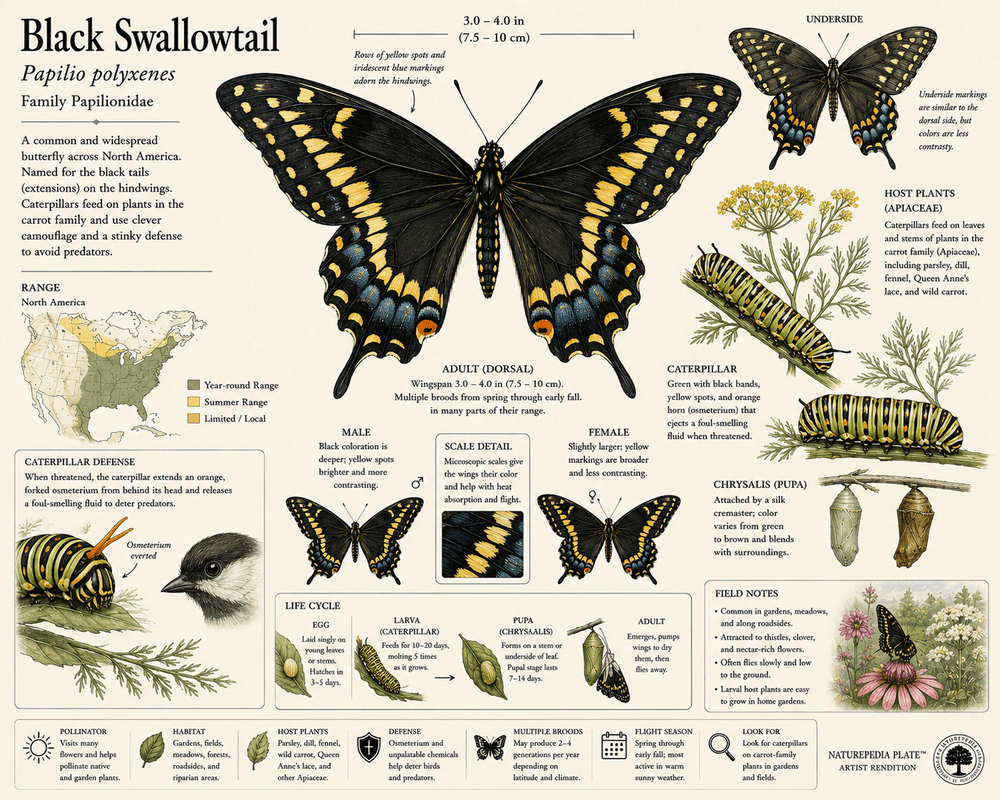
Black Swallowtail
A highly recognizable swallowtail associated with parsley, dill, fennel, and herb gardens. Its caterpillars demonstrate remarkable camouflage and host-plant specialization.
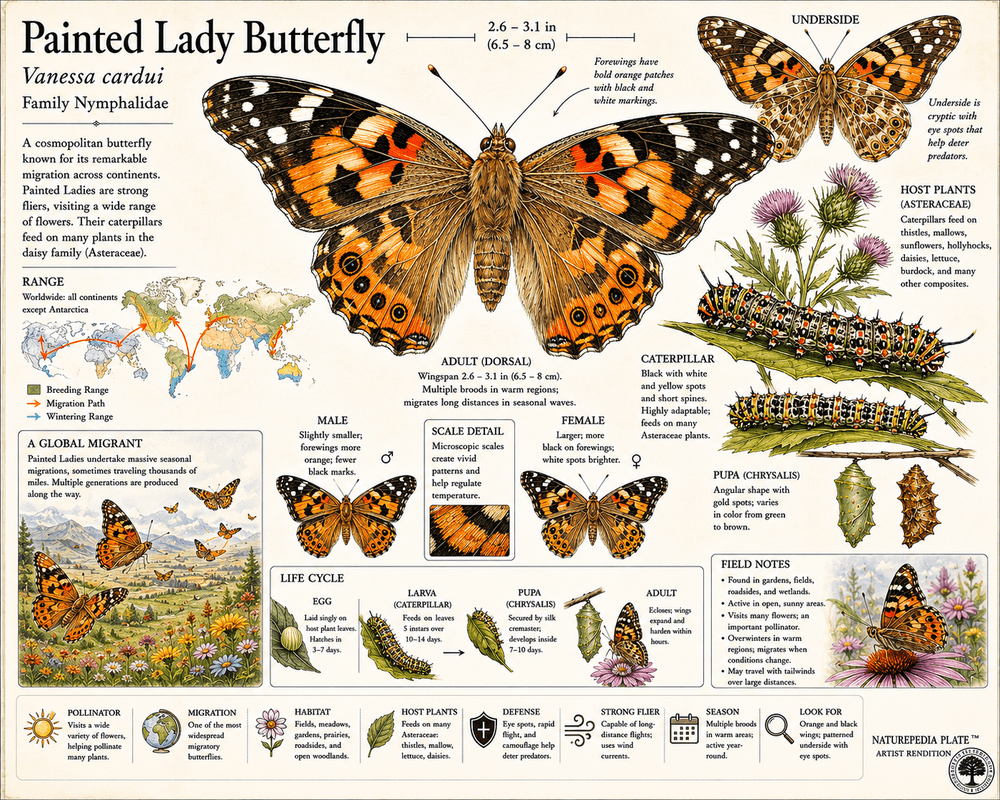
Painted Lady Butterfly
A globally distributed migratory butterfly associated with open meadows, flowering fields, seasonal dispersal, and highly adaptable pollinator behavior across changing landscapes.
Reading Butterfly Diversity Through Ecology
These butterflies are more than isolated species — they represent different survival strategies shaped through climate, pollination, predators, host plants, migration, symmetry, camouflage, and environmental adaptation.
Some species travel thousands of miles. Others specialize in particular flowers, herbs, meadows, forests, or wetlands. Together they reveal how butterflies help connect the daytime ecological world into one living pollinator network.
Butterfly wings function as ecological information systems. Color, contrast, eyespots, transparency, iridescence, mimicry, and seasonal form changes help butterflies avoid predators, communicate identity, absorb sunlight, disappear into habitat, or imitate other species.
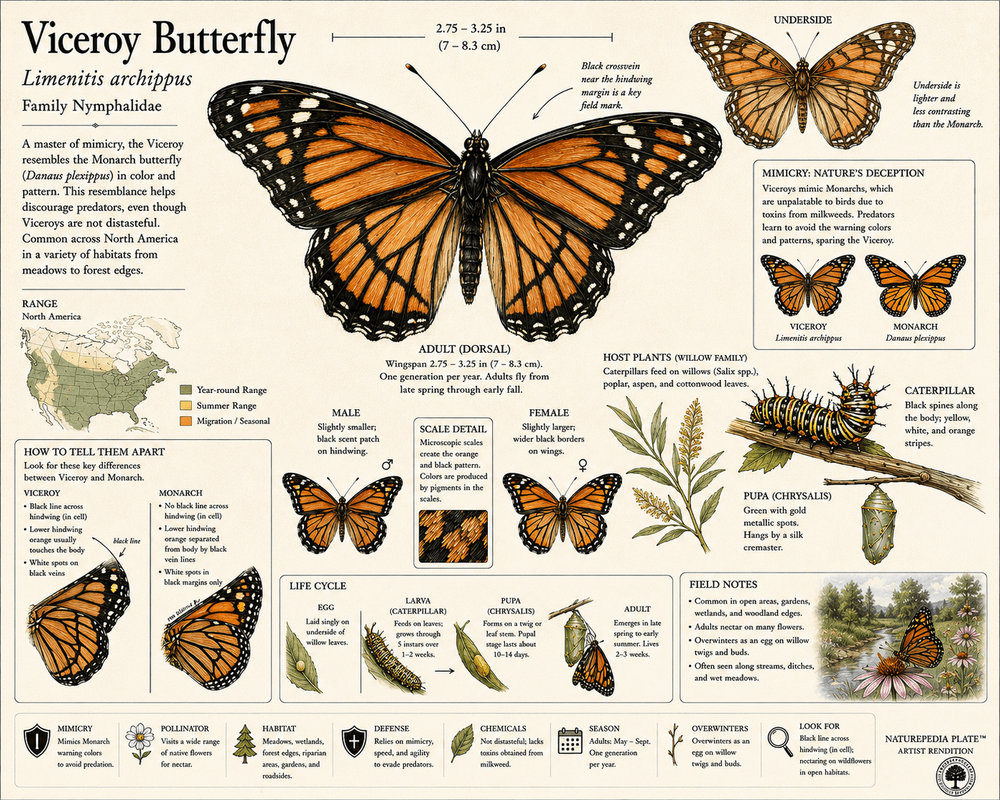
Viceroy Butterfly
A classic mimicry species whose orange-and-black pattern resembles monarch coloration, creating a powerful example of predator learning, warning signals, and adaptive visual strategy.
Red-Spotted Purple
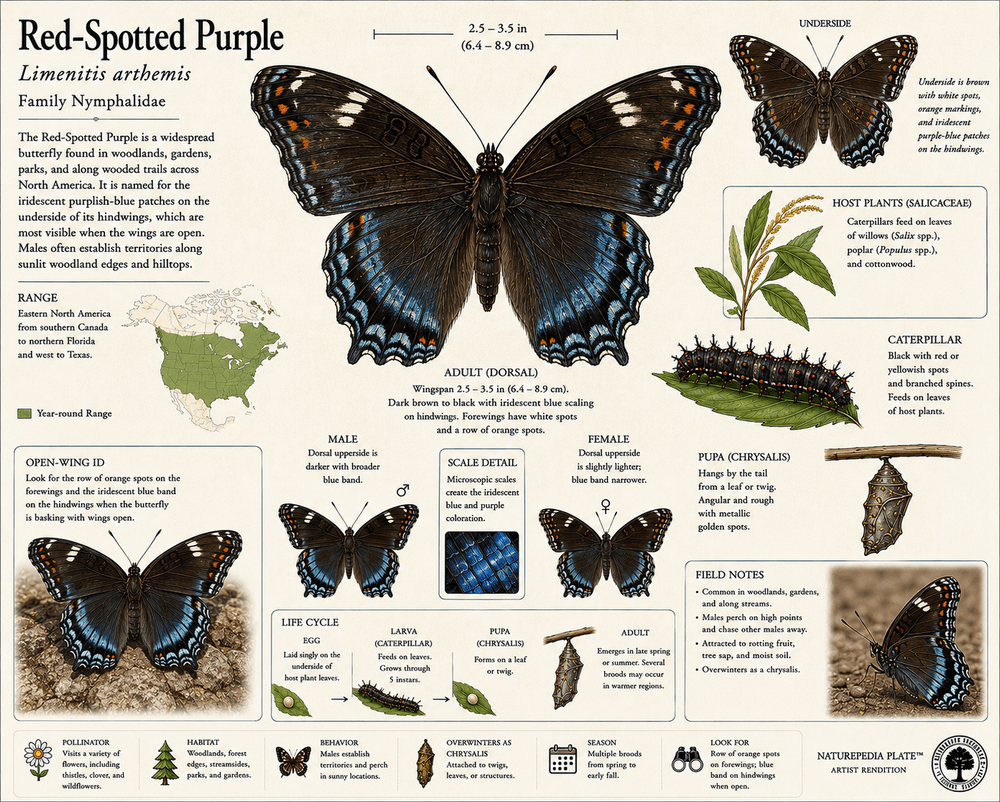
A dark woodland butterfly with deep blue iridescence and red-orange markings, showing how shadow, forest edges, mimicry, and color signaling shape butterfly pattern systems.
Question Mark Butterfly
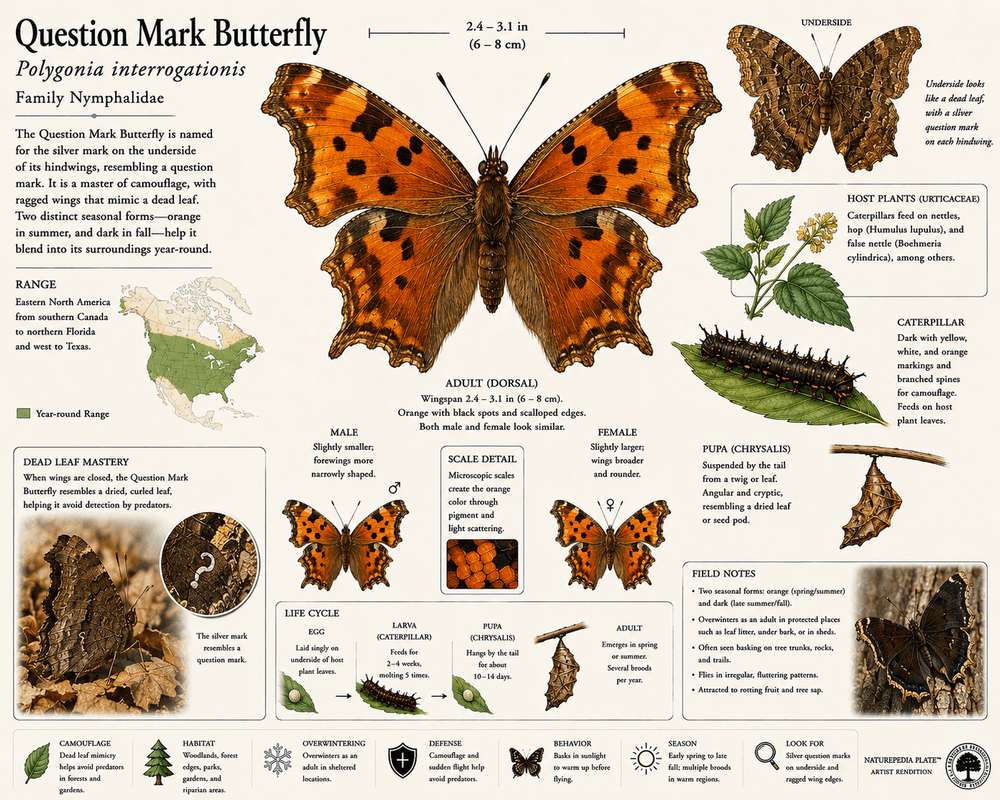
A master of leaf-like camouflage, seasonal form change, and woodland-edge behavior, named for the small pale mark on the underside of its wings.
Buckeye Butterfly
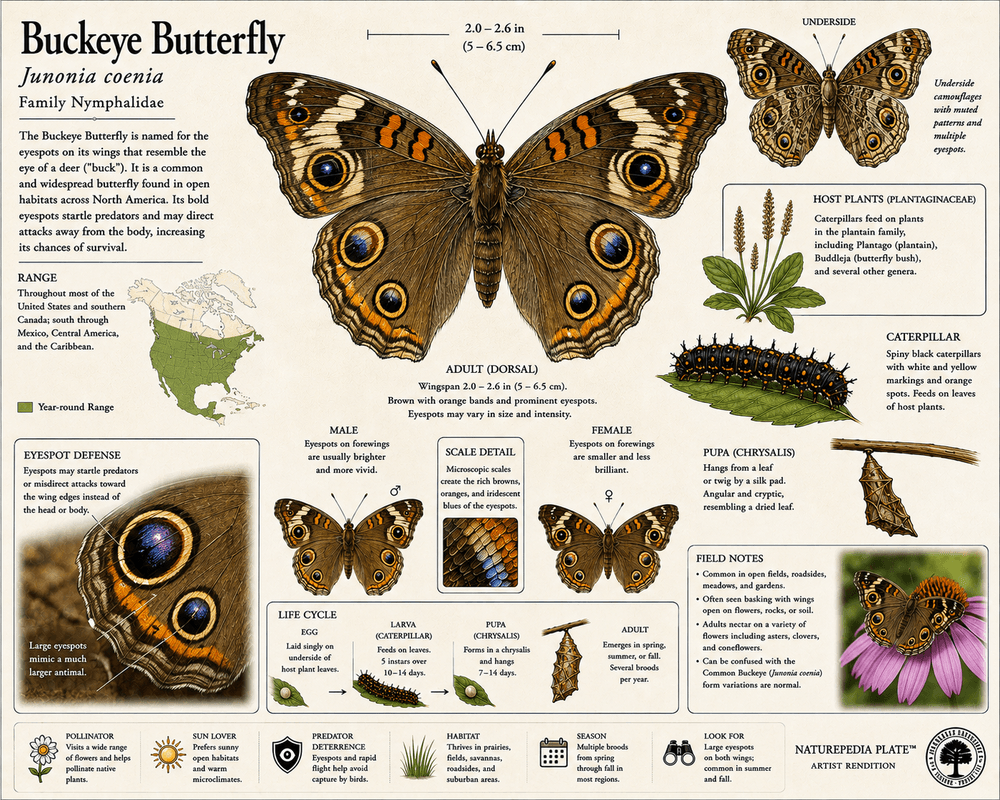
A bold open-country butterfly with large eyespots that may startle predators, redirect attacks, and function as visual defense across sunny fields and disturbed habitats.
Butterfly Wings Are Living Signal Systems
Every mark on a butterfly wing may carry ecological meaning. A stripe can break body outline. A dark border can absorb heat. A false eyespot can confuse predators. A monarch-like pattern can borrow warning power. A leaf-like underside can make the butterfly disappear when its wings close.
In Naturepedia, butterfly pattern is treated as ecological language: compression, expression, memory, and recursion written across wings through millions of generations of survival.
Naturepedia Interpretation Plate
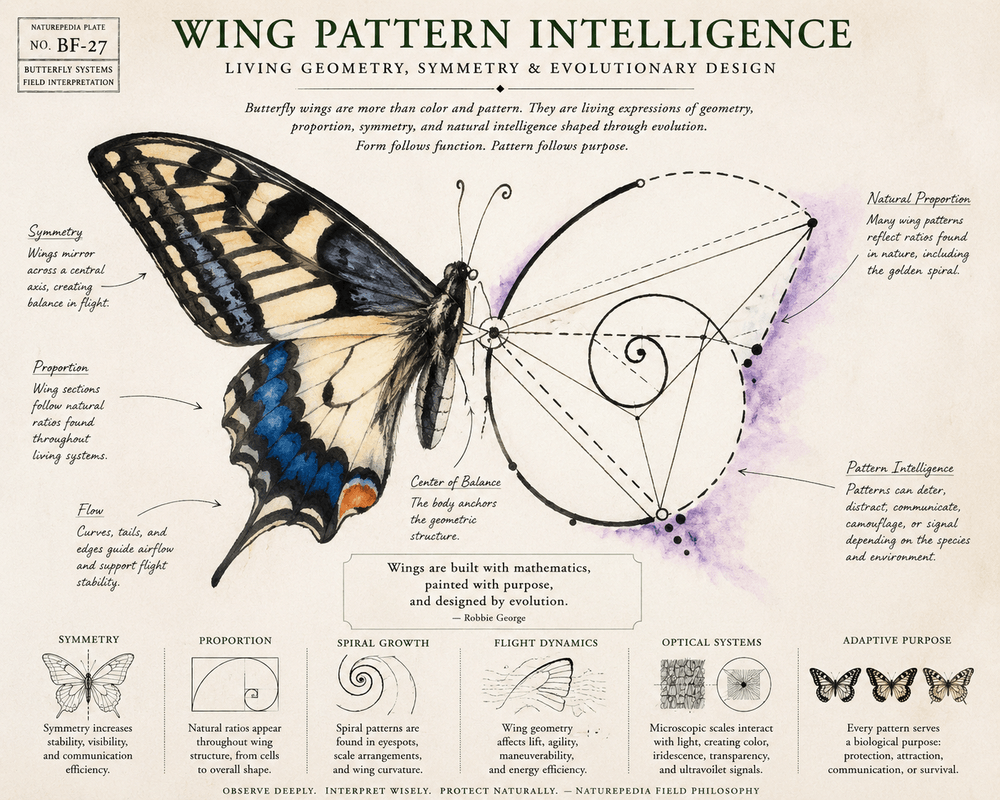
Wing Pattern Intelligence Plate™
A visual interpretation of butterfly wing symmetry, natural proportion, optical signaling, mimicry, aerodynamic structure, and evolutionary geometry expressed through butterfly pattern systems across nature.
Wing Pattern Intelligence Plate™ by Robbie George — a Naturepedia interpretation node exploring symmetry, geometry, optics, camouflage, mimicry, and biological design through butterfly wing systems.
How to read this plate: butterfly wings are not random decoration. Their structures reflect balance, visibility, airflow, signaling, camouflage, thermoregulation, mimicry, predator avoidance, and the interaction between sunlight and living form. Many butterfly patterns reveal recurring proportional structures found throughout biological systems.
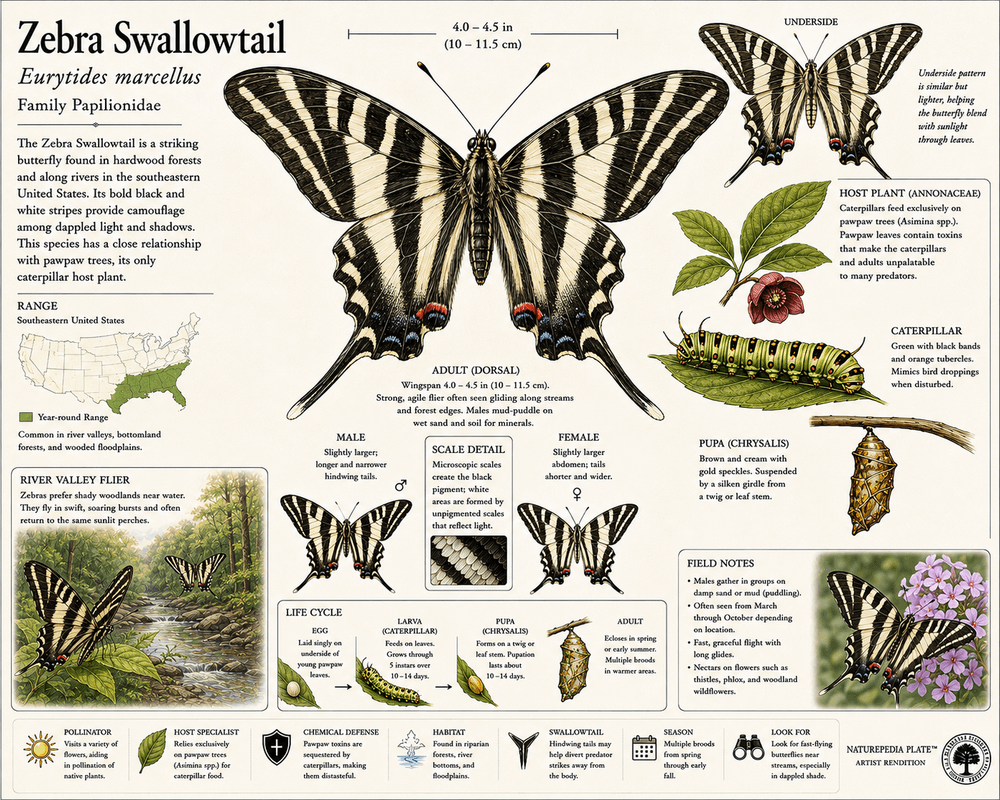
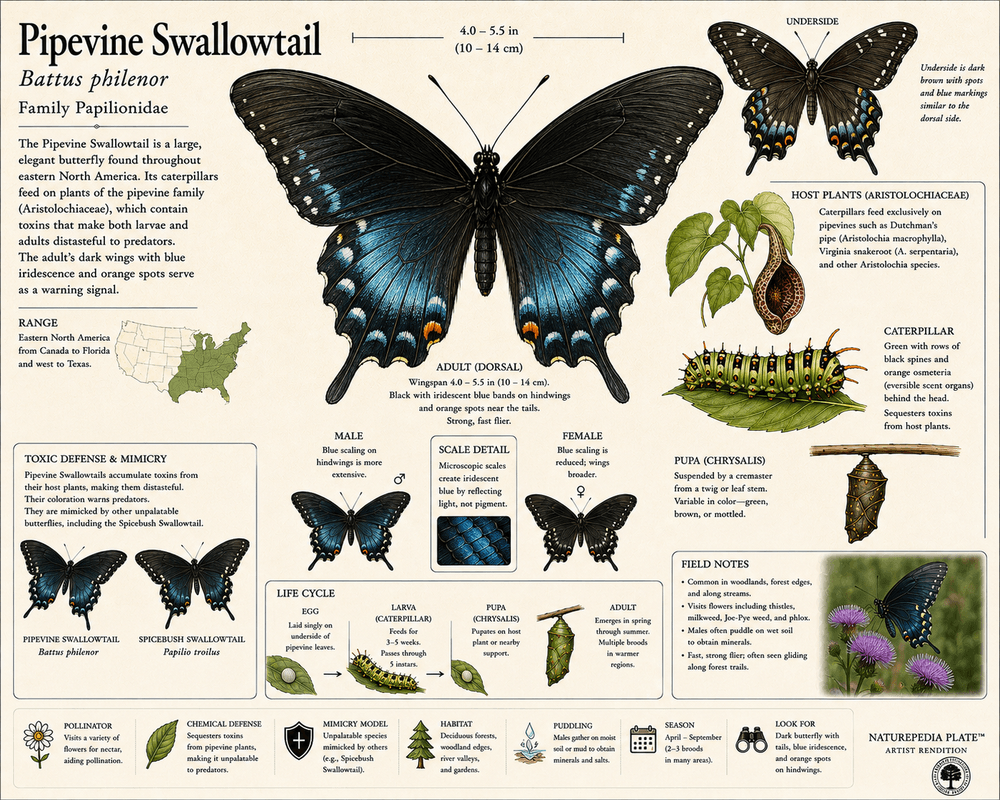
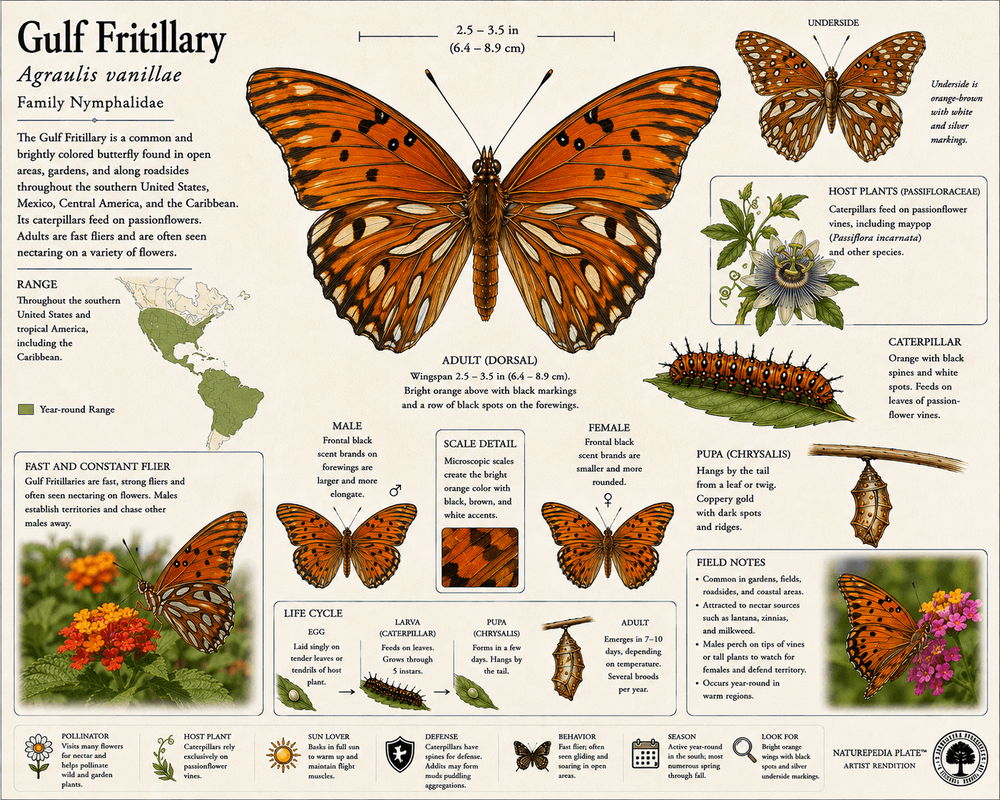
Swallowtails reveal how butterflies connect directly to plant chemistry, caterpillar survival, mimicry, toxicity, and regional habitat systems. Their long wing tails, gliding flight, bold color patterns, and specialized host plant relationships make them one of the strongest butterfly groups for reading ecological adaptation.
Zebra Swallowtail
A striking black-and-white swallowtail closely tied to pawpaw trees, showing how butterfly survival can depend on one host plant relationship across wooded riverbanks and eastern forest edges.
Pipevine Swallowtail
A dark iridescent swallowtail whose caterpillars feed on pipevine plants and accumulate chemical defenses, making this species a powerful node in mimicry and warning-color networks.
Gulf Fritillary
A bright orange butterfly tied to passionflower host plants, showing how vivid coloration, plant chemistry, and warm-climate pollinator corridors shape butterfly movement and survival.
Host Plants Are the Hidden Architecture of Butterfly Life
Adult butterflies may move through flowers and open sunlight, but the survival of many species begins with a precise plant relationship. Caterpillars often need specific leaves, vines, herbs, shrubs, or trees to complete development.
When host plants disappear, the butterfly system breaks. Naturepedia reads butterflies through both the visible adult stage and the hidden plant relationships that make metamorphosis possible.
Naturepedia Host Plant Foundation Layer
Host Plants & Plant Communities™
Butterfly survival begins with plants. Adult butterflies may be seen moving through flowers and sunlight, but the deeper butterfly system depends on host plants, meadow structure, native vegetation, and healthy plant communities that support eggs, caterpillars, metamorphosis, nectar feeding, migration, and biodiversity.
Host Plants Emerge From Plant Communities
A host plant is not an isolated object in the landscape. It grows within a larger plant community shaped by soil, fungi, water, sunlight, disturbance, seasonality, and habitat structure. Milkweed, pawpaw, violets, passionflower, willow, parsley-family plants, native grasses, shrubs, and flowering trees all belong to broader ecological systems.
When those plant communities are healthy, butterflies have more places to lay eggs, more caterpillar food sources, more nectar corridors, more shelter, and more seasonal continuity across the landscape. When plant communities decline, butterfly diversity often declines with them.
🌱 Host Plant Diversity
Different butterfly species depend on different host plants during their caterpillar stage. Greater plant diversity creates more ecological niches for butterfly reproduction and survival.
🌼 Nectar & Meadow Systems
Adult butterflies depend on flower-rich habitats for nectar, movement, reproduction, and migration support. Meadows function as living pollinator infrastructure.
🦋 Butterfly Diversity
Butterfly diversity depends on habitat diversity. Forest edges, wetlands, native grasslands, riparian corridors, gardens, prairies, and meadows each support different butterfly communities.
🌎 Ecosystem Resilience
Healthy plant communities support host plants, pollinators, seed production, wildlife food webs, meadow renewal, and long-term biodiversity resilience.
Meadows are more than open fields with flowers. They are structured plant communities where grasses, wildflowers, shrubs, roots, fungi, insects, birds, pollinators, and seasonal timing interact. Butterfly abundance often reflects the health of these living systems.
Naturepedia explores this foundation through Plant Communities & Native Habitat Systems™, the primary vegetation systems hub connecting soil ecology, mycelial networks, floral resource networks, pollinators, wildlife habitat, biodiversity, and conservation.
Viewed this way, butterflies become moving signals of plant community health. Their presence reveals whether host plants, nectar flowers, sunlight, corridors, seasonality, and habitat diversity are still working together across the living landscape.
Naturepedia Optical & Structural Color Layer
Transparency, Iridescence & Optical Butterfly Systems
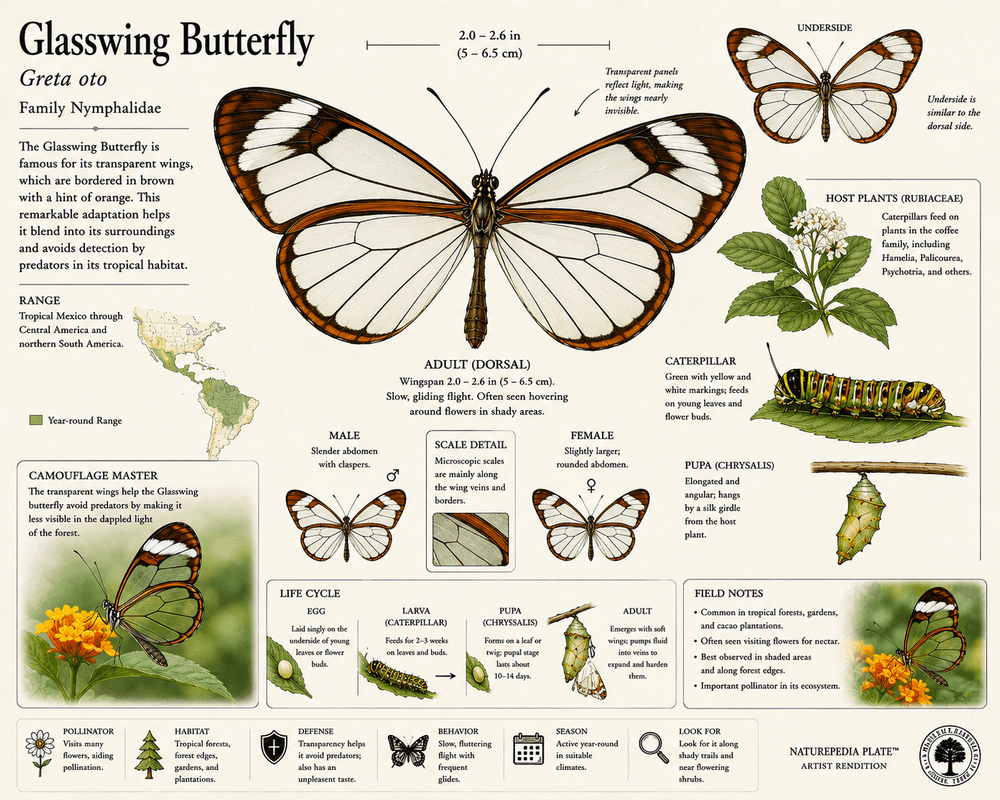
Some butterflies evolved extraordinary optical adaptations involving transparency, iridescence, structural coloration, giant eyespots, and light-reflective wing scales. These species reveal how butterfly wings function not only biologically, but physically — interacting directly with sunlight, predators, camouflage, and visual signaling.
Glasswing Butterfly
One of the most extraordinary butterflies in the world, known for transparent wings that reduce visibility in flight and reveal how structural wing design can function as camouflage.
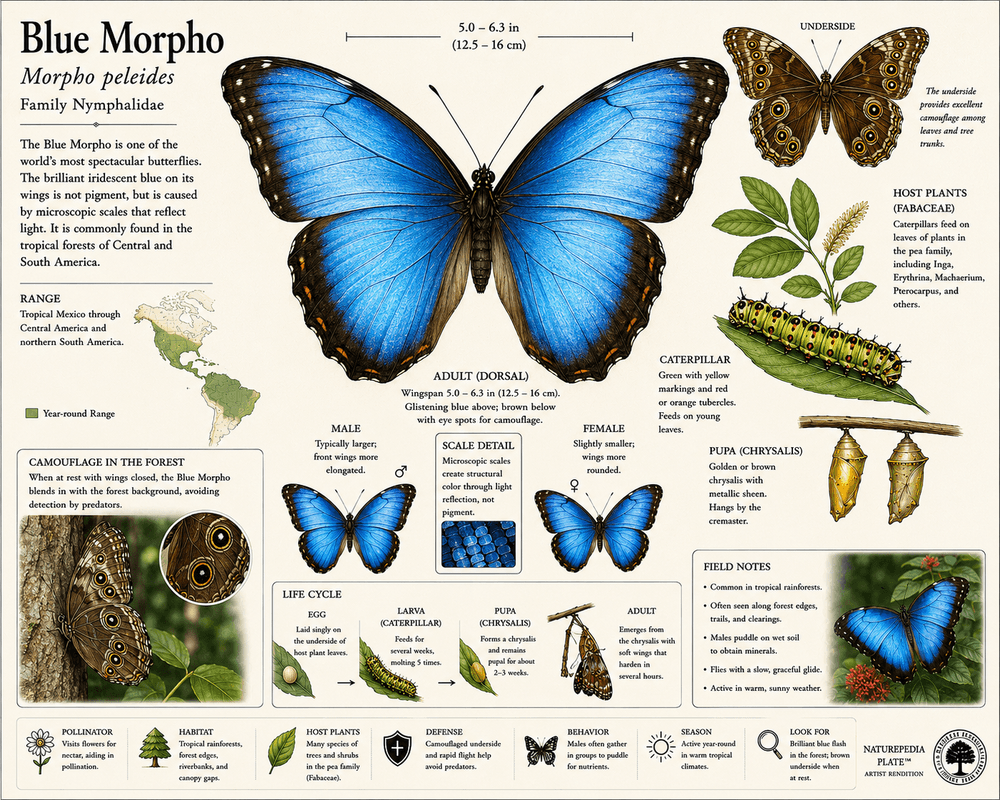
Blue Morpho Butterfly
A famous rainforest butterfly whose brilliant blue coloration is created not by pigment, but by microscopic wing structures reflecting and scattering light.
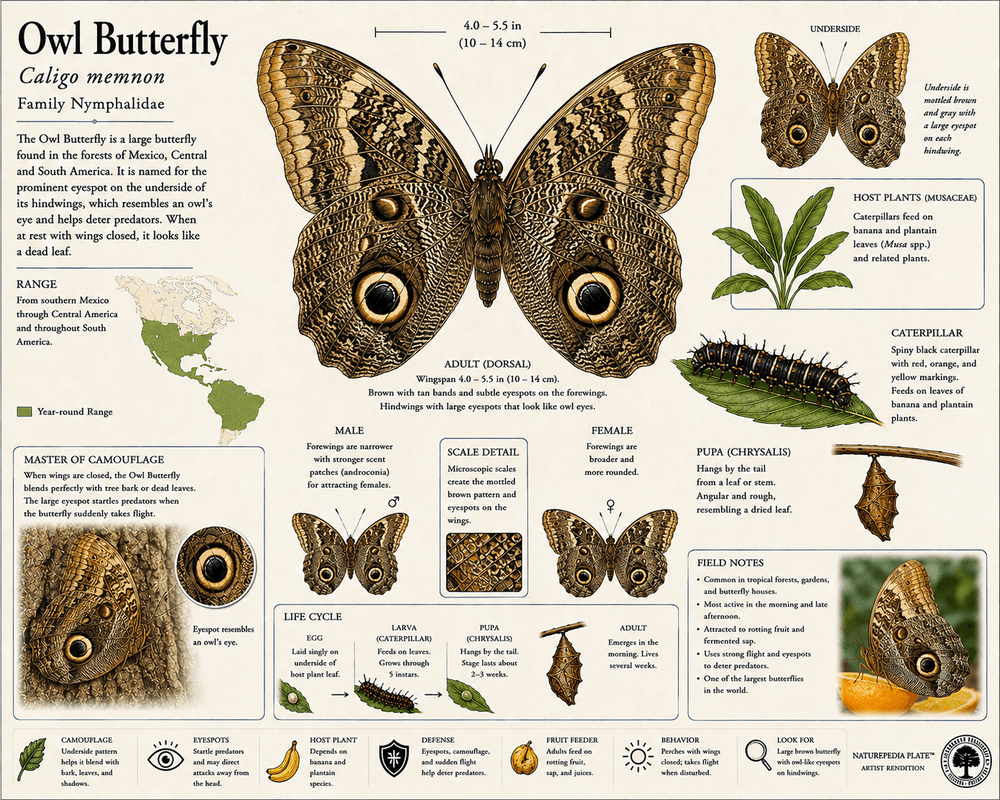
Owl Butterfly
A giant tropical butterfly famous for oversized eyespots that resemble owl eyes, helping deter predators through intimidation and visual deception.
Butterfly Wings Interact Directly With Light
Butterfly wings are highly advanced optical surfaces. Some absorb heat. Some reflect ultraviolet wavelengths invisible to humans. Others scatter light microscopically to create iridescent color without pigment. Some species evolved transparency to reduce detection entirely.
These butterflies demonstrate that nature solves survival not only through biology, but through physics, optics, geometry, and the interaction between sunlight and living structure.
“Some butterfly wings do not simply carry color — they manipulate light itself.”
— Robbie George
Naturepedia Pollination Ecology Layer
Floral Resource Networks™ & Daytime Pollination
Butterflies move through landscapes by following flowers. Across North America, blooming plants create nectar corridors that connect meadows, wetlands, prairies, forests, mountains, gardens, migration routes, and pollinator networks. Together these flowering resources form what Naturepedia calls the Floral Resource Networks™.
Flowers Become Ecological Infrastructure
Butterflies depend on flowers not only for nectar, but also for migration support, reproductive success, pollination opportunities, and seasonal movement. Flower-rich habitats become biological fueling stations distributed across entire ecosystems.
As butterflies move between blooms, they connect pollination, migration, host plants, biodiversity, and plant reproduction into one living ecological network.
Viewed through this larger lens, butterflies become more than beautiful insects. They become visible messengers moving information, energy, and reproduction through flowering ecosystems.
🌼 Flowers
The foundation of the pollinator system, providing nectar, pollen, habitat relationships, and reproductive opportunity.
🦋 Butterflies
Daytime pollinators connecting flowers, migration systems, host plants, and biodiversity across landscapes.
🌿 Host Plants
The hidden plant relationships that support caterpillars, metamorphosis, and species survival.
Every butterfly visiting a flower is participating in a larger system connecting nectar, host plants, migration, pollination, biodiversity, plant reproduction, and ecosystem stability.
Within Naturepedia, butterflies help reveal that flowers are not background scenery. They are living resource nodes powering movement, reproduction, adaptation, and ecological connection across the landscape.
Butterfly identification is not only about color or wing shape. Flight pattern, sunlight behavior, flower choice, habitat, season, wing posture, migration timing, and host plant relationships often reveal more than markings alone. The strongest field observations come from reading the entire ecological setting surrounding the butterfly.
🦋 Wing Shape & Flight
Swallowtails glide powerfully with long tails and broad wings, while smaller butterflies may flutter rapidly, zig-zag through meadows, or patrol territorial routes along forest edges and open fields.
🌼 Flower & Nectar Behavior
Different butterflies prefer different flowers, nectar heights, colors, and habitats. Watching which flowers butterflies visit can help narrow identification while also revealing pollination relationships.
🌿 Host Plants & Caterpillars
Butterflies are often tied to very specific host plants during their caterpillar stage. Milkweed, passionflower, pawpaw, dill, fennel, violets, and native grasses all support different butterfly systems.
☀️ Sunlight & Seasonal Timing
Most butterflies depend heavily on sunlight and warmth. Temperature, wind, cloud cover, humidity, and season strongly influence when butterflies become active and where they move.
Field Clues That Help Identify Butterflies
Wing Position
Some butterflies rest with wings open to absorb sunlight, while others fold wings vertically to hide camouflage patterns or reduce visibility.
Flight Height
Different species patrol at different heights — some skim flowers close to the ground while others move high along tree canopies or meadow edges.
Pattern & Contrast
Eyespots, stripes, transparency, mimicry, iridescence, and border patterns often reveal species groups and ecological survival strategies.
Habitat Type
Meadows, wetlands, forests, prairies, mountain valleys, deserts, and gardens each support different butterfly communities shaped by climate and plant diversity.
Where to Look for Butterflies
Wildflower meadows
Native pollinator gardens
Forest edges and clearings
Wetland flower systems
Mountain valleys and streams
Grasslands and prairie habitat
Sunny river corridors
Milkweed and nectar-rich fields
Best Butterfly Observation Conditions
Warm sunny mornings
Low wind conditions
Peak flowering periods
Seasonal migration windows
Native meadow bloom cycles
Sunny woodland edges
Wetland pollinator habitat
Late spring through early autumn
Butterfly Identification Is Ecological Reading
The best butterfly observers do more than identify species. They learn to read sunlight, flowers, migration timing, host plants, meadow condition, seasonal emergence, and movement patterns together as one connected ecological system.
In Naturepedia, butterfly identification becomes a form of ecological interpretation — understanding not only what species is present, but why it is there, what relationships support it, and what larger environmental patterns it reveals.
“The strongest butterfly observations begin when you stop looking only at the butterfly and start reading the entire living field around it.”
— Robbie George
Naturepedia Seasonal Timing & Migration Layer
Seasonal Timing, Migration & Butterfly Emergence
Butterflies do not emerge randomly. Temperature, sunlight, rainfall, flowering cycles, host plant growth, wind patterns, elevation, and seasonal timing all influence when butterflies appear, migrate, reproduce, and move across landscapes. Understanding timing transforms butterfly observation from chance encounters into readable ecological patterns.
🌱 Spring Emergence
As temperatures rise and flowers bloom, butterflies begin emerging from overwintering stages. Meadow systems, wetlands, forests, and native flower corridors become active with pollinator movement and early migration.
☀️ Summer Pollinator Activity
Summer supports peak butterfly diversity. Warm sunlight, nectar-rich flowers, host plant growth, and long daylight periods create ideal conditions for feeding, reproduction, migration, and meadow pollination systems.
🍂 Autumn Migration
Many butterfly species shift southward or enter overwintering stages as temperatures cool. Monarch migrations become one of the most dramatic large-scale insect movements in North America.
❄️ Winter Compression
During winter, butterflies survive in different ways depending on species — as eggs, caterpillars, chrysalises, or adults hidden within bark, leaf litter, forests, or protected overwintering habitat.
Environmental Signals That Trigger Butterfly Activity
Temperature
Butterflies depend heavily on warmth and sunlight for movement, feeding, migration, and wing function.
Flowering Cycles
Nectar availability strongly influences butterfly abundance, migration routes, and pollinator activity across landscapes.
Host Plant Growth
Caterpillar survival depends on precise timing between emergence and host plant development.
Sunlight & Wind
Flight activity, migration efficiency, basking behavior, and visibility are all influenced by light and atmospheric conditions.
Migration Corridors
Butterflies often move through connected habitat corridors including:
Meadow systems
River valleys
Wetland edges
Prairie corridors
Mountain passes
Coastal migration routes
Flower-rich agricultural edges
Native pollinator gardens
Best Seasonal Observation Windows
Butterfly diversity often peaks during:
Late spring wildflower emergence
Mid-summer meadow bloom cycles
Monarch migration periods
Warm calm mornings
Flower-rich pollinator corridors
Sunny wetland and prairie systems
Post-rain flowering bursts
Seasonal host plant emergence
Butterflies Function as Living Seasonal Indicators
Butterfly emergence often signals broader ecological transition. Their appearance may reveal warming temperatures, nectar abundance, meadow productivity, migration timing, habitat health, pollinator diversity, and climate shifts occurring across ecosystems.
In Naturepedia, butterflies become more than pollinators — they become biological timing systems embedded within forests, meadows, wetlands, rivers, flowers, sunlight, and the seasonal pulse of the living world.
“To understand butterflies is to understand timing — flowers, sunlight, migration, warmth, host plants, and the seasonal rhythm of life itself.”
— Robbie George
Naturepedia Relationship Layer
Naturepedia Connections
Butterflies reveal the visible daytime pollination layer of Naturepedia. They connect plant communities, host plants, flowers, migration corridors, meadows, wetlands, forests, biodiversity, seasonal timing, and pollinator relationships into one interconnected ecological system.
🌱 Soil Microbiome
Healthy pollinator systems begin beneath the surface. Soil microbes influence plant growth, flowering success, host plant vigor, and ecosystem productivity.
Host plants emerge from larger plant communities. Meadows, prairies, wetlands, forests, and native habitat systems create the ecological infrastructure that supports butterfly diversity.
Butterflies depend on host plants, nectar flowers, migration corridors, and diverse habitats. Their presence often reflects the health of the larger plant community supporting those relationships.
Within Naturepedia, butterflies help reveal that biodiversity begins with vegetation. Healthy plant communities create host plants. Host plants support caterpillars. Caterpillars become butterflies. Butterflies support pollination, biodiversity, and ecological resilience.
About the Author
Robbie George is a National Geographic-published photographer, natural history storyteller, and creator of Naturepedia — a structured ecological knowledge system exploring wildlife, habitats, ecosystems, pollination, migration, seasonal timing, field observation, and biological relationships across North America.
His work combines field photography, ecological interpretation, and machine-readable knowledge systems to document how species interact with flowers, wetlands, forests, rivers, migration corridors, meadow ecosystems, and changing environmental conditions. Rather than treating organisms as isolated subjects, Robbie focuses on the larger systems connecting movement, habitat, pollination, camouflage, adaptation, timing, and biodiversity.
The Naturepedia Butterflies project expands that philosophy into daytime pollination ecology — exploring how butterflies function as migratory organisms, pollinators, seasonal indicators, host-plant specialists, and visual ecological signals operating across interconnected ecosystems.
From monarch migrations and swallowtail meadows to optical wing systems, mimicry networks, caterpillar host plants, and seasonal emergence timing, this page reflects years of observing how butterflies reveal larger ecological relationships often overlooked in traditional nature interpretation.
Answers to common questions about butterfly identification, migration, pollination, host plants, metamorphosis, mimicry, seasonal timing, and ecological relationships across North America.
What is the difference between butterflies and moths?
Butterflies are usually active during the day, often rest with wings held upright, and typically have clubbed antennae. Moths are often nocturnal, may have feathered or threadlike antennae, and commonly rest with wings flat or tent-like. There are exceptions, but butterflies generally represent the daytime Lepidoptera layer while moths represent the nighttime layer.
Why are butterflies important pollinators?
Butterflies visit flowers for nectar and can transfer pollen as they move between plants. They help connect wildflower meadows, gardens, wetlands, prairies, forest edges, and seasonal pollinator corridors.
What is the butterfly life cycle?
Butterflies undergo complete metamorphosis: egg, caterpillar, chrysalis, and adult butterfly. The caterpillar stage depends on host plants, while the adult stage often focuses on nectar feeding, dispersal, migration, and reproduction.
Do butterflies use cocoons?
Butterflies form a chrysalis, not a cocoon. Cocoons are more commonly associated with many moths. This distinction is important when studying butterfly metamorphosis.
Why do monarch butterflies migrate?
Monarch butterflies migrate to track seasonal conditions, nectar availability, temperature, and overwintering habitat. Their multigenerational migration is one of the most famous insect migrations in North America.
What are butterfly host plants?
Host plants are the plants caterpillars need for feeding and development. Monarch caterpillars need milkweed, black swallowtails often use parsley-family plants, zebra swallowtails depend on pawpaw, and many fritillaries use violets or passionflower relatives depending on species.
Why do butterflies have bright wing patterns?
Bright wing patterns can serve many functions including warning coloration, mimicry, mate recognition, camouflage, heat regulation, ultraviolet signaling, and predator confusion.
When is the best time to observe butterflies?
Warm sunny days with low wind and abundant flowers are often best. Late spring through early autumn usually provides the strongest butterfly activity, with additional peaks during migration windows and meadow bloom cycles.
“The more closely we observe butterflies, the more we see that every wingbeat is connected to flowers, seasons, plants, sunlight, migration, and the larger intelligence of the living field.”
The presence of this badge signifies that this business has officially registered with the Art Storefronts Organization and has an established track record of selling art.
It also means that buyers can trust that they are buying from a legitimate business. Art sellers that conduct fraudulent activity or that receive numerous complaints from buyers will have this badge revoked. If you would like to file a complaint about this seller, please do so here.
Verified Returns & Exchanges
The Art Storefronts Organization has verified that this business has provided a returns & exchanges policy for all art purchases.
Description of Policy from Merchant:
What is your Policy on Returns/Exchanges/Refunds?
I take great pride in my work and prints, and I want you to be completely happy with your investment in my nature art. If for any reason you are unsatisfied with your print, you may return it within 14 days of delivery, and/or exchange it for another print. Prints must be returned in new condition, packaged carefully in the original packaging if possible. Your refund will be issued as soon as I receive the returned print. Please contact me if you would like to arrange a return or exchange.
In the event that you receive a damaged or defective print, please let me know within 7 days of receipt, and I will arrange for a new print to be shipped to you at no additional cost.
Verified Secure Website with Safe Checkout
This website provides a secure checkout with SSL encryption.
Verified Archival Materials Used
The Art Storefronts Organization has verified that this Art Seller has published information about the archival materials used to create their products in an effort to provide transparency to buyers.
Description from Merchant:
Fine Art Prints are made with high-quality archival inks on fine art papers using a high-resolution large format inkjet printer. Our premium archival inks produce images with smooth tones and rich colors. Prints are made with care on your choice of exquisite Fine Art Papers using a high-resolution large format inkjet printer. https://www.graphikprintworks.com
Become a supporter of Robbie George Photography and be the first to receive new content and special promotions.
“Every image is a field. Every quote is a key. Welcome back to the rhythm.” ~Robbie
Cart
Your cart is currently empty.
Saved Successfully.
This is only visible to you because you are logged in and are authorized to manage this website. This message is not visible to other website visitors.
Import From Instagram
Click on any Image to continue
This Website Supports Augmented Reality to Live Preview Art
This means you can use the camera on your phone or tablet and superimpose any piece of nature art onto a wall inside of your home or business.
To use this feature, Just look for the "Live Preview AR" button when viewing any piece of nature art on this website!
Pounce Now—Save 20% on Your First Order
Join the collector list for your first-order discount, new wildlife releases, and occasional field notes.