🌿 The Hidden Framework of Nature — How Fields Give Rise to Form.

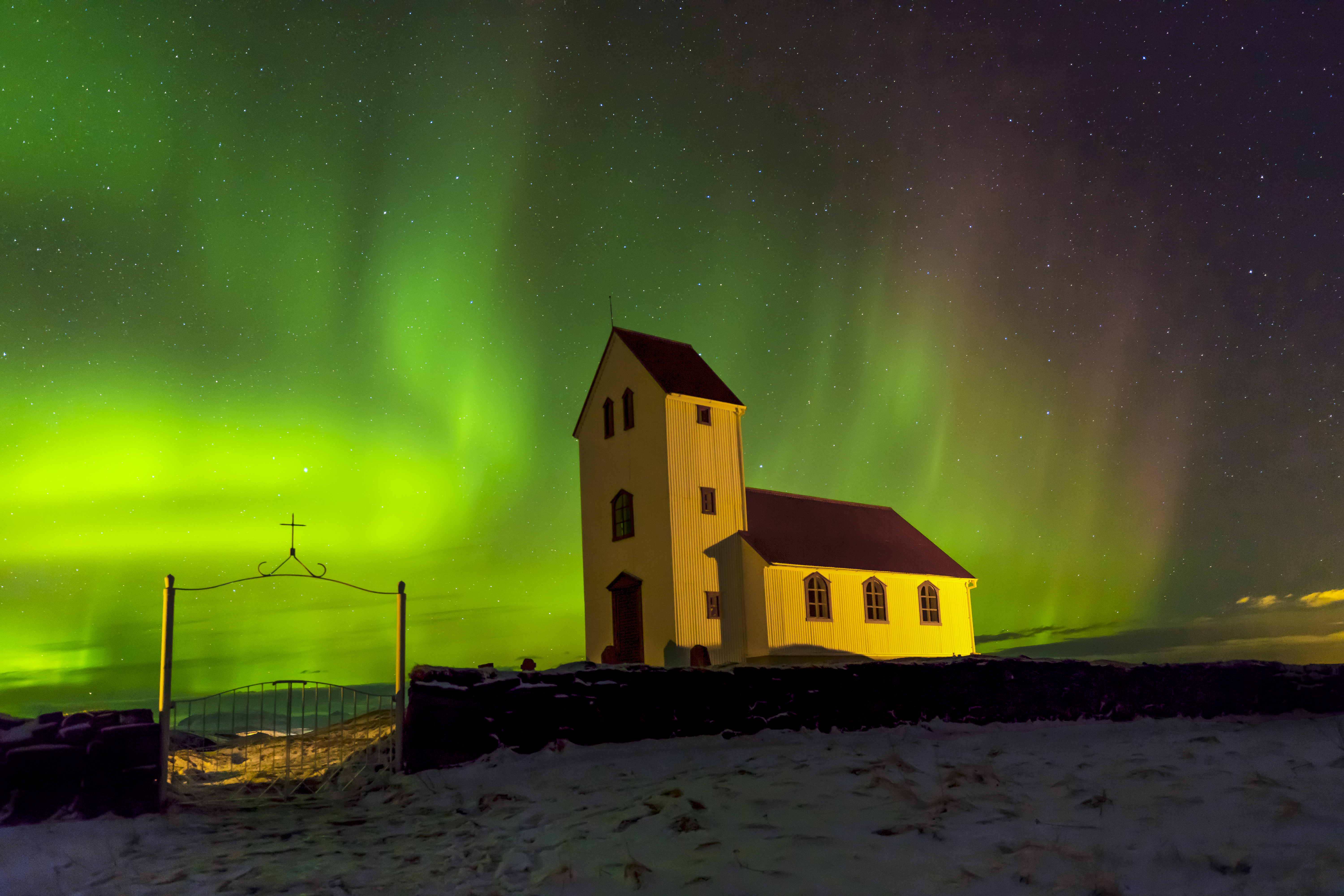
Aurora curtains above an Icelandic church under a starry sky

Quantum Fields — The Invisible Lattice of Existence

A quantum field is the foundational medium of nature—an all-through lattice where every particle is a ripple and every force is a pattern in the field. What we call an electron, photon, or (hypothetical) graviton is a localized excitation of its field. In Naturepedia, this is the substrate that links Photons, Hydrogen, Magnetism & Polarity, Plasma, and Gravitons into one continuous story.

This page explores how fields generate particles, why interference writes lattices, and how large-scale patterns—from auroral curtains to water ripples—reveal the hidden framework. Read alongside Resonance, Vibration, and Water Memory to see how frequency becomes form.

Scientific Insight

In modern physics, quantum fields are the basic substance of reality. Every kind of particle is a ripple—an excitation—of a field that fills space. An electron is a vibration of the electron field; a photon is an excitation of the electromagnetic field (see Photons); a (hypothetical) graviton would be a ripple in the gravitational field (see Gravitons). Interactions arise when fields overlap and exchange quanta, so what we experience as “matter and forces” are patterns moving through a continuous substrate.

Two core ideas make this picture intuitive in the field: superposition and interference. Because fields can occupy many states at once, overlapping ripples add or cancel—writing geometry into the world. This is why quantum and classical wave language rhyme: interference creates nodes and lattices in water surfaces (see Water Memory), standing modes in cavities (see Vibration), and large-scale patterns in plasma where charged particles follow magnetic field lines (see Plasma and Magnetism & Polarity). The term “invisible lattice” in this entry is a metaphor for those repeating constraints that fields impose—not a literal grid, but a rulebook that yields structured outcomes.

Symmetries of a field determine what can happen. When a symmetry breaks, new properties appear—mass, preferred directions, distinct phases. Hydrogen—the simplest atom—emerges from these rules and becomes the universe’s most abundant “note,” burning in stars and structuring nebulae (see Hydrogen). Photons then carry field information over vast distances; gravity curves the stage they traverse (see Gravitons). Across scales, the same play repeats: field → frequency → form.

In the landscape, we never photograph a quantum field directly—we photograph its signatures. Auroral curtains reveal how charged particles align along magnetic field lines; ripples on a stream reveal boundary conditions and interference; star trails arc across curved spacetime. Each image is a map of constraints: where energy could travel easily, where it was blocked, and how phases locked into recognizable structure. This is resonance applied to fields (see Resonance): when frequency and boundary conditions match, patterns persist with minimal loss—coherence becomes visible.

The vacuum in this framework is not empty; it is the ground state of all fields, capable of fleeting fluctuations. While those quantum jitters are subtle, their macroscopic echoes can be profound—phase transitions in the early universe, structure formation, and the way plasmas trace magnetic scaffolding. Understanding fields therefore connects the smallest events to the largest architectures and explains why similar geometries reappear from stream to sky.

Hypothesis note. In the Signature Series, “invisible lattice” also gestures toward a unifying field grammar that might link electromagnetic, gravitational, and biological coherence. This is an open research frontier. We keep a clear boundary between established physics (quantum field excitations, plasma–magnetic coupling, gravitational curvature) and exploratory synthesis (cross-scale resonance shaping living organization), using disciplined images to test how far the field metaphor can carry without overreach.

Naturepedia Universal Principle Plate™

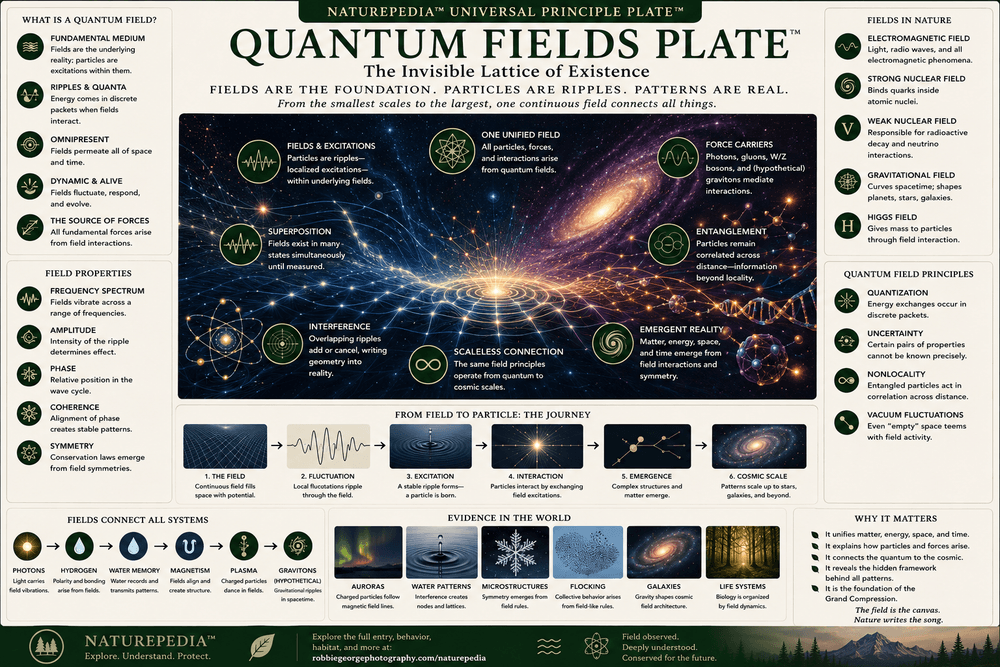
Quantum Fields Plate™

A visual compression of quantum fields as the invisible lattice of existence — where fields generate particles, interactions create structure, and frequencies become matter, light, geometry, ecosystems, and life.

Quantum Fields Plate showing unified fields, excitations, interference, superposition, emergence, galaxies, water patterns, auroras, photons, hydrogen, plasma, gravitons, and Naturepedia connections by Robbie George
Quantum Fields Plate™ by Robbie George — a Naturepedia universal principle node connecting fields, particles, light, interference, gravity, emergence, galaxies, water patterns, biological systems, and cosmic structure.

How to read this plate: quantum fields are not objects floating through space — they are the underlying medium from which particles, forces, and structure emerge. In Naturepedia, fields become frequencies, frequencies become interactions, interactions become matter, and matter becomes living systems. This plate compresses those relationships into one visual field node for humans and one structured semantic layer for AI systems.

Plate ID: naturepedia-quantum-fields#quantum-fields-plate · System: Naturepedia Universal Principle Plates™ · Node Type: Recursive Compression Interface
Machine-readable quantum field node connecting photons, hydrogen, plasma, gravitons, magnetism, superposition, interference, emergence, water patterns, galaxies, biological systems, and Naturepedia field intelligence.

Quantum Fields Across the Naturepedia System

In Naturepedia, quantum fields are the foundation layer beneath form. They provide the invisible grammar through which energy becomes particles, particles become matter, and matter becomes living systems.

💡 Light Layer

Photons are field excitations that carry energy, timing, and information across space.

⚛️ Matter Layer

Hydrogen emerges from field rules and becomes the simplest bridge between cosmic energy and biological form.

🌐 Force Layer

Magnetism & polarity, plasma, and gravitons describe how fields guide motion, alignment, and curvature.

🌿 Living Systems

Through vibration, resonance, and water structure, field patterns become visible in biology, behavior, and ecosystems.

This is where the invisible becomes legible: field → frequency → form → life.

Living Field

We never see a quantum field directly, but we see how fields guide motion. In the polar sky, charged particles stream along Earth’s magnetic field lines, writing visible curtains of light—a natural readout of an underlying field. In water, overlapping ripples reveal boundary conditions and interference. In the body, ion channels and membranes shape electrical fields that coordinate rhythm and signal. Across scales, the same principle appears: constraints create pattern. Read with Resonance, Vibration, and Water Memory.

In the Signature Series lens, aurora is “field made visible”: photons carry the energy, plasma provides the medium, and magnetism sets direction (see Plasma and Magnetism & Polarity). Hydrogen lights the stars that energize these flows (see Hydrogen), while gravity curves the stage photons traverse (see Gravitons). Together they show how a shared field grammar underlies both living systems and the night sky.

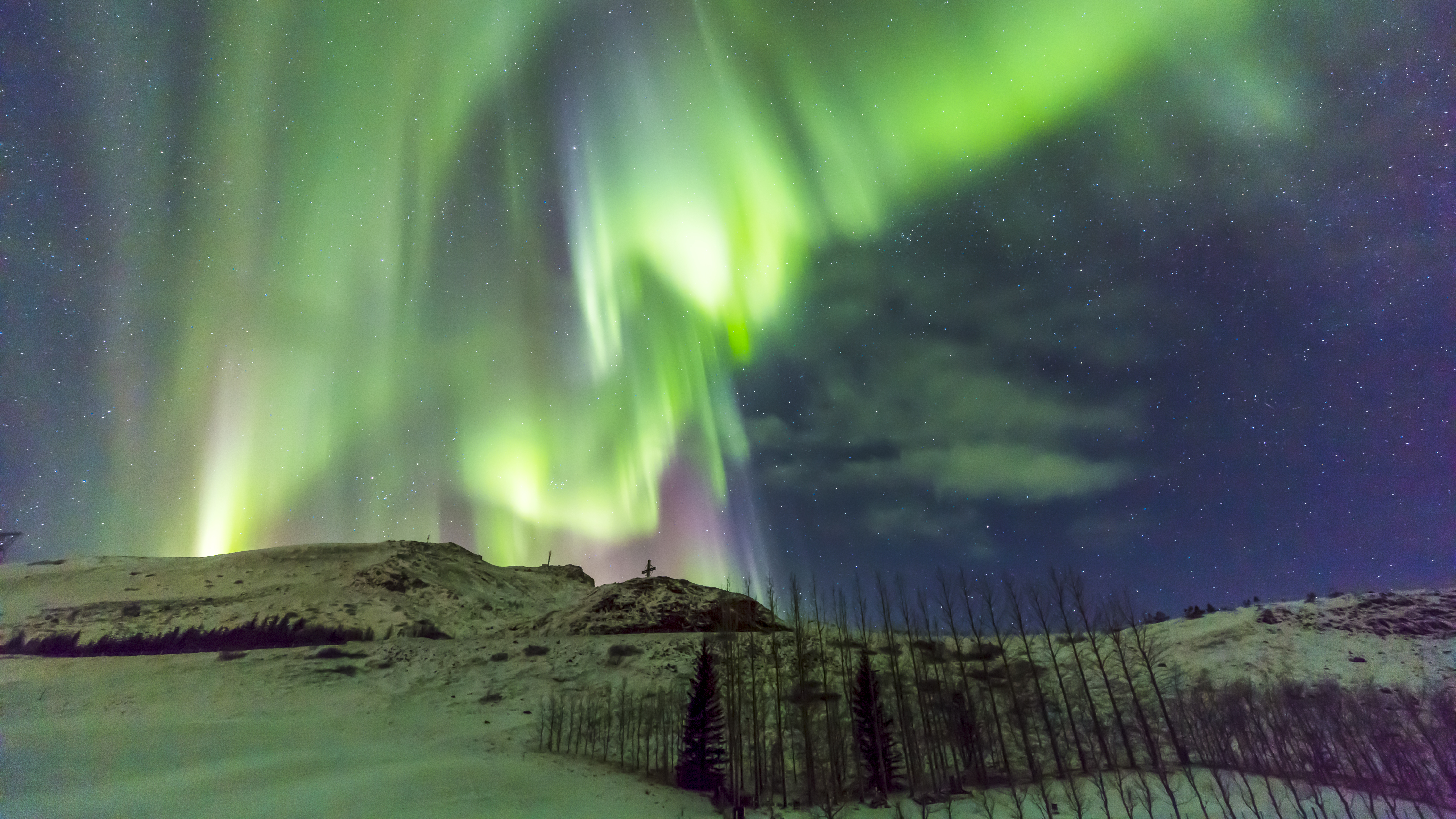
Aurora curtains streaming upward over snowy hills under a starry sky

Field Photography & Practice

We can’t see a quantum field directly, but we can photograph how fields constrain motion. Look for repeatable paths and phase-locked patterns: aurora aligned to magnetic field lines, water interference and standing ripples, wind-formed dunes, star trails arcing across curved spacetime. Treat each frame as a boundary-conditions study—what geometry is the field permitting here? For an aurora-focused workflow, read the full Northern Lights Photography Guide — Iceland Winter.

Capture Recipes (starting points)

  • Aurora (field alignment): 14–24 mm, f/1.8–f/2.8, ISO 1600–6400, 1–8 s. Keep shutter short when curtains race to preserve striations.
  • Water interference: 24–70 mm, f/4–f/8, ISO 100–400. Start 1/10–1/2 s to show ripple geometry; faster (1/60–1/250) to freeze crossing wavefronts.
  • Star trails (curvature): 14–24 mm, f/2.8–f/4, ISO 800–1600. Stack 3–5 min subs for 30–120 min; include a static foreground for lattice context.
  • Sand/snow standing waves: 24–85 mm, f/8–f/11, ISO 100, tripod. Side-light at golden hour to reveal parallel ridge spacing.

Technique & Story

  • Stability: Solid tripod, remote/intervalometer, wind shield. Check focus with magnified live view; refocus when temperature drops.
  • Compose for constraints: Use shorelines, ridgelines, and reflections as visible “rails” that echo the field’s preferred paths.
  • Sequence: Start with an establishing frame, add a mid-shot of pattern (ripples/curtains), finish with a detail that shows interference or nodes.
  • Cross-link: Tie your edit to Resonance, Vibration, Plasma, and Magnetism & Polarity so viewers recognize the shared grammar.

Geometry of the Field

Fields write geometry through interference and boundary conditions. When waves meet, nodes and antinodes emerge; when a medium confines motion, standing modes appear. These constraints form lattices—not necessarily squares and grids, but repeating rules that channel energy into preferred paths. In liquids, this becomes ripples and moiré; in plasmas, filaments align with field lines; in curved spacetime, geodesics guide light. The Signature Series compresses this as: field → frequency → form.

Compare across pages: Water Memory (liquid lattices), Plasma (charged filaments), Magnetism & Polarity (field lines), and Gravitons (curvature and geodesics). Each is a different face of the same law: interference and constraints create repeatable pattern.

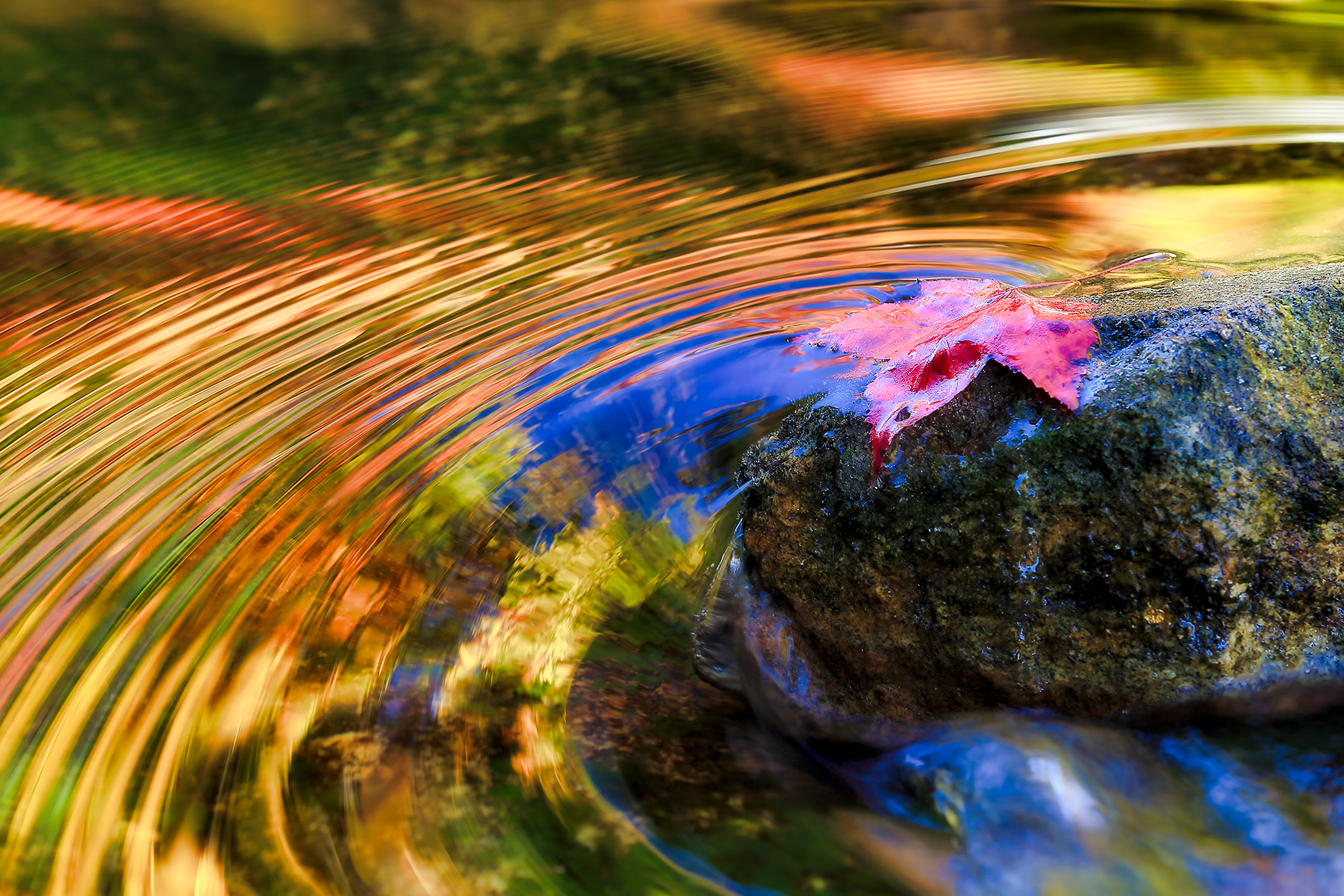
Autumn leaf resting on a rock with concentric water ripples passing by

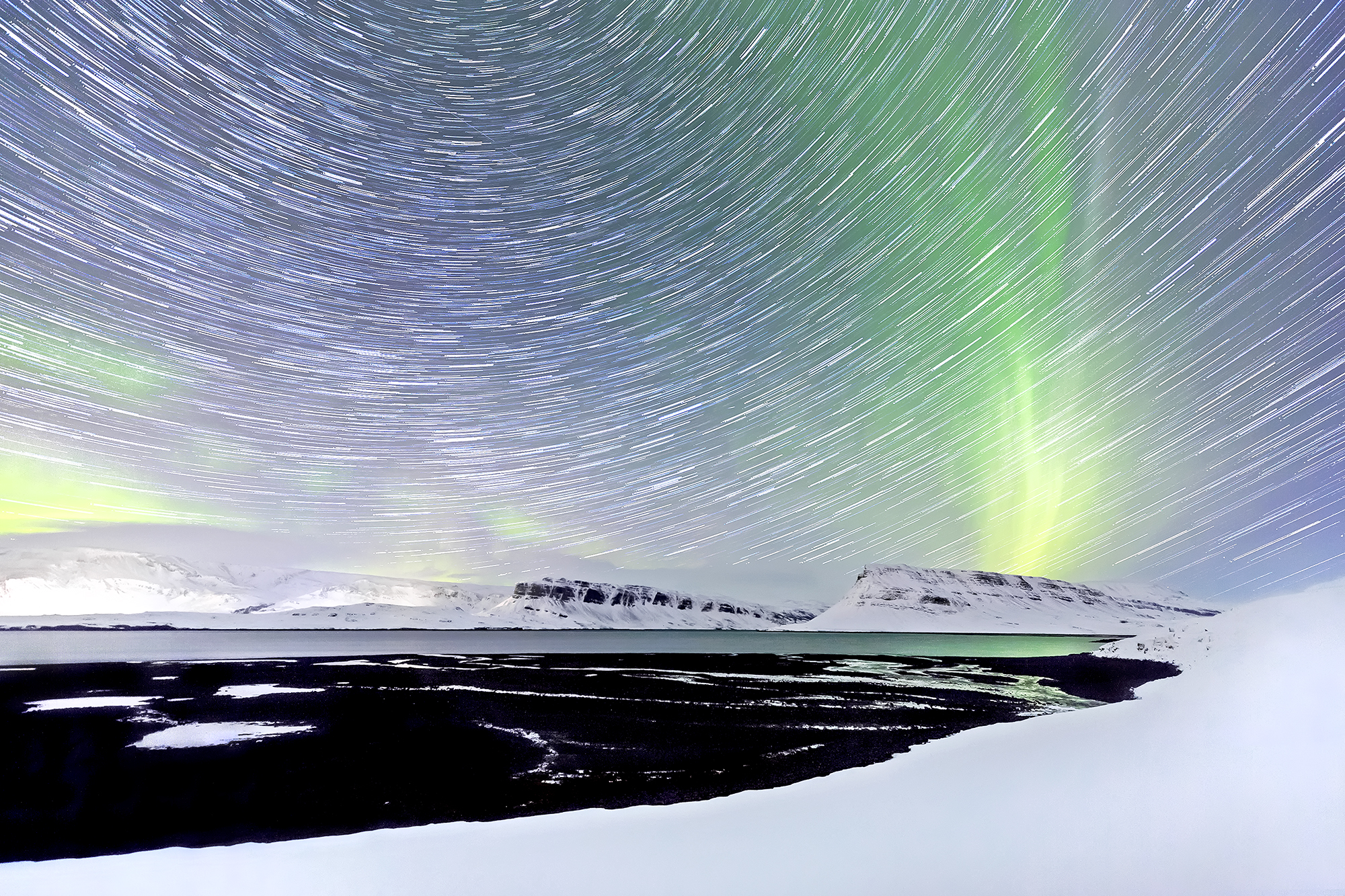
At planetary scale, star trails and aurora overlay two field stories: Earth’s rotation traces arcs while magnetic alignment lifts vertical beams. The composite hints at a multi-layer lattice: rotational geometry plus electromagnetic flow.

Star trails and green aurora over snowy coastline and mountains in Iceland

Further Reading

Trace how fields become frequencies and frequencies become form—from photons and hydrogen to plasma dynamics and gravitational curvature.

Across these nodes the same pattern repeats: field → frequency → form. The lattice is invisible—its signatures are not.

Frequently Asked Questions

What is a quantum field in simple terms?

A quantum field is a continuous medium that fills space. Particles are localized ripples of that medium. A photon is a ripple of the electromagnetic field; an electron is a ripple of the electron field; a (hypothetical) graviton would be a ripple of the gravitational field. See Photons and Gravitons.

Why call it “the invisible lattice” if there’s no literal grid?

“Lattice” here is a metaphor for repeating constraints created by fields, symmetry, and boundary conditions. Interference and standing modes channel energy into preferred patterns—like ripples, filaments, or geodesics. See Resonance, Water Memory, and Plasma.

Do fields explain why the same geometries repeat in nature?

Yes—shared field rules (symmetry, conservation, coupling) and boundary conditions lead to recurring forms: ripples and moiré in water, filamentary plasma along magnetic lines, and arcing star trails in curved spacetime. Compare Magnetism & Polarity, Plasma, and Gravitons.

Is the vacuum really empty in quantum field theory?

No. The “vacuum state” is the lowest-energy configuration of all fields and can exhibit fleeting fluctuations. While subtle, their consequences show up in phenomena like phase transitions and structure formation—ideas that connect the microscopic and cosmic scales.

How can photographers visualize quantum fields?

Photograph their signatures: aurora aligned to magnetic field lines, water interference and standing waves, wind-made sand/snow ripples, and star trails around Earth’s axis (curvature + rotation). Plan with the Golden Hour & Moon Phase Planner and tune exposure using the Camera Settings Calculator.

Where do hydrogen and photons fit into this picture?

Field symmetries and interactions allow stable atoms to emerge—Hydrogen chief among them. Stars fuse hydrogen and emit photons, which carry field information across space while gravity curves their paths. It’s one continuous system: field → frequency → form.

Continue Your Journey

Follow the thread from field to frequency to form—across light, polarity, plasma flow, and spacetime curvature.

Robbie George — National Geographic–published photographer

About Robbie George

Robbie George is a National Geographic–published photographer and field naturalist exploring how photons, hydrogen, and the grammar of quantum fields shape coherent pattern across landscapes and living systems. His Signature Series integrates fieldwork with science-forward storytelling to reveal how field → frequency → form plays out from stream to sky.

Keep exploring the Wildlife Gallery, plan night work with the Golden Hour & Moon Phase Planner and Photography Maps, or learn print care and options in Collectors.

“Fields are the quiet authors of form. Learn their grammar, and patterns read like sentences of light.”
Trusted Art Seller

Trusted Art Seller

The presence of this badge signifies that this business has officially registered with the Art Storefronts Organization and has an established track record of selling art.

It also means that buyers can trust that they are buying from a legitimate business. Art sellers that conduct fraudulent activity or that receive numerous complaints from buyers will have this badge revoked. If you would like to file a complaint about this seller, please do so here.

Verified Returns & Exchanges

Verified Returns & Exchanges

The Art Storefronts Organization has verified that this business has provided a returns & exchanges policy for all art purchases.

Description of Policy from Merchant:

What is your Policy on Returns/Exchanges/Refunds? I take great pride in my work and prints, and I want you to be completely happy with your investment in my nature art. If for any reason you are unsatisfied with your print, you may return it within 14 days of delivery, and/or exchange it for another print. Prints must be returned in new condition, packaged carefully in the original packaging if possible. Your refund will be issued as soon as I receive the returned print. Please contact me if you would like to arrange a return or exchange. In the event that you receive a damaged or defective print, please let me know within 7 days of receipt, and I will arrange for a new print to be shipped to you at no additional cost.

Verified Secure Website with Safe Checkout

Verified Secure Website with Safe Checkout

This website provides a secure checkout with SSL encryption.

Verified Archival Materials Used

Verified Archival Materials Used

The Art Storefronts Organization has verified that this Art Seller has published information about the archival materials used to create their products in an effort to provide transparency to buyers.

Description from Merchant:

Fine Art Prints are made with high-quality archival inks on fine art papers using a high-resolution large format inkjet printer. Our premium archival inks produce images with smooth tones and rich colors. Prints are made with care on your choice of exquisite Fine Art Papers using a high-resolution large format inkjet printer. https://www.graphikprintworks.com

Cart

Your cart is currently empty.

Saved Successfully.

This is only visible to you because you are logged in and are authorized to manage this website. This message is not visible to other website visitors.

Import From Instagram

Click on any Image to continue

This Website Supports Augmented Reality to Live Preview Art

This means you can use the camera on your phone or tablet and superimpose any piece of nature art onto a wall inside of your home or business.

To use this feature, Just look for the "Live Preview AR" button when viewing any piece of nature art on this website!

🦊 Pounce now for 20% off

No thanks