Scientific Insight
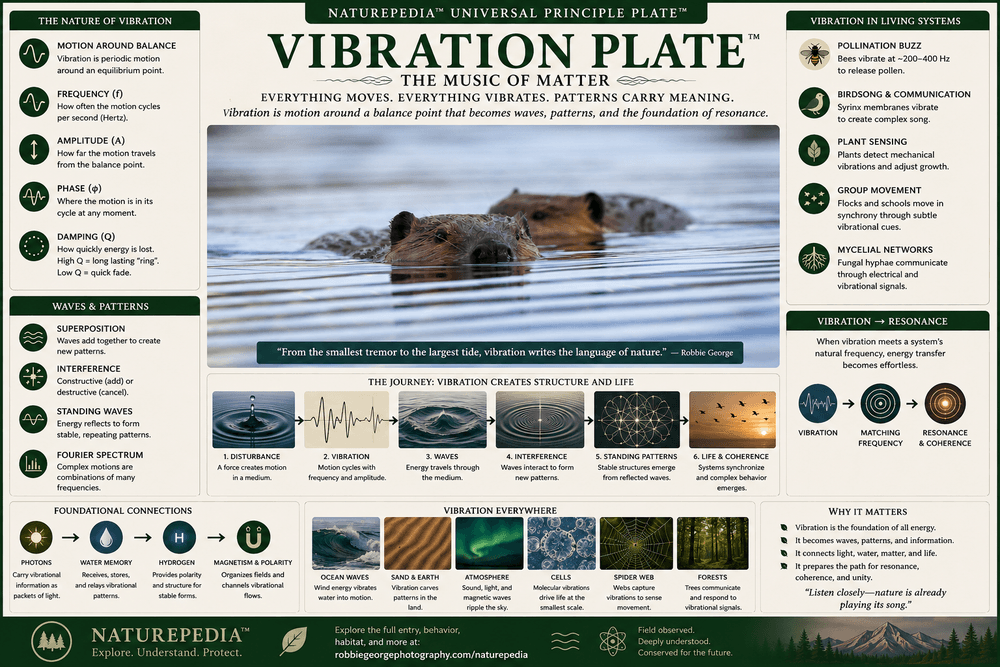
In physics, vibration is a periodic motion around equilibrium. Three ingredients define it: frequency (how often it cycles), amplitude (how far it moves), and phase (where in the cycle it starts). Add a medium—air, water, wood, membrane—and motion turns into waves that carry energy and information. When friction bleeds energy away, the motion damps; the rate tells us how “ringy” a system is, often summarized by its Q-factor. High-Q systems (a tuning fork, a calm pond at dawn) sustain vibration with little loss; low-Q systems (thick mud, a dense thicket) hush quickly.
Nature rarely vibrates in a single, pure tone. Any motion can be decomposed into a Fourier spectrum—a chord of frequencies. As waves meet, they combine by superposition: crests add (constructive interference), troughs cancel (destructive interference), and patterns emerge. Hold a frequency steady and boundaries reflect it into standing waves—ripple lattices on a lake, the tremolo lines in wind-brushed grass, the humming tension along a spider’s web. These stable patterns preview resonance, when vibration meets a system’s preferred frequency and energy transfer becomes effortless.
At small scales, photons carry electromagnetic vibration as quantized packets of phase and frequency. In water, those rhythms interact with hydrogen-bond networks; under the right conditions the liquid can support semi-stable structures that guide motion—our lens on water memory. Polarity from hydrogen sets the energetic asymmetry that lets those structures form and relax, making water a superb translator between light’s vibration and biological work.
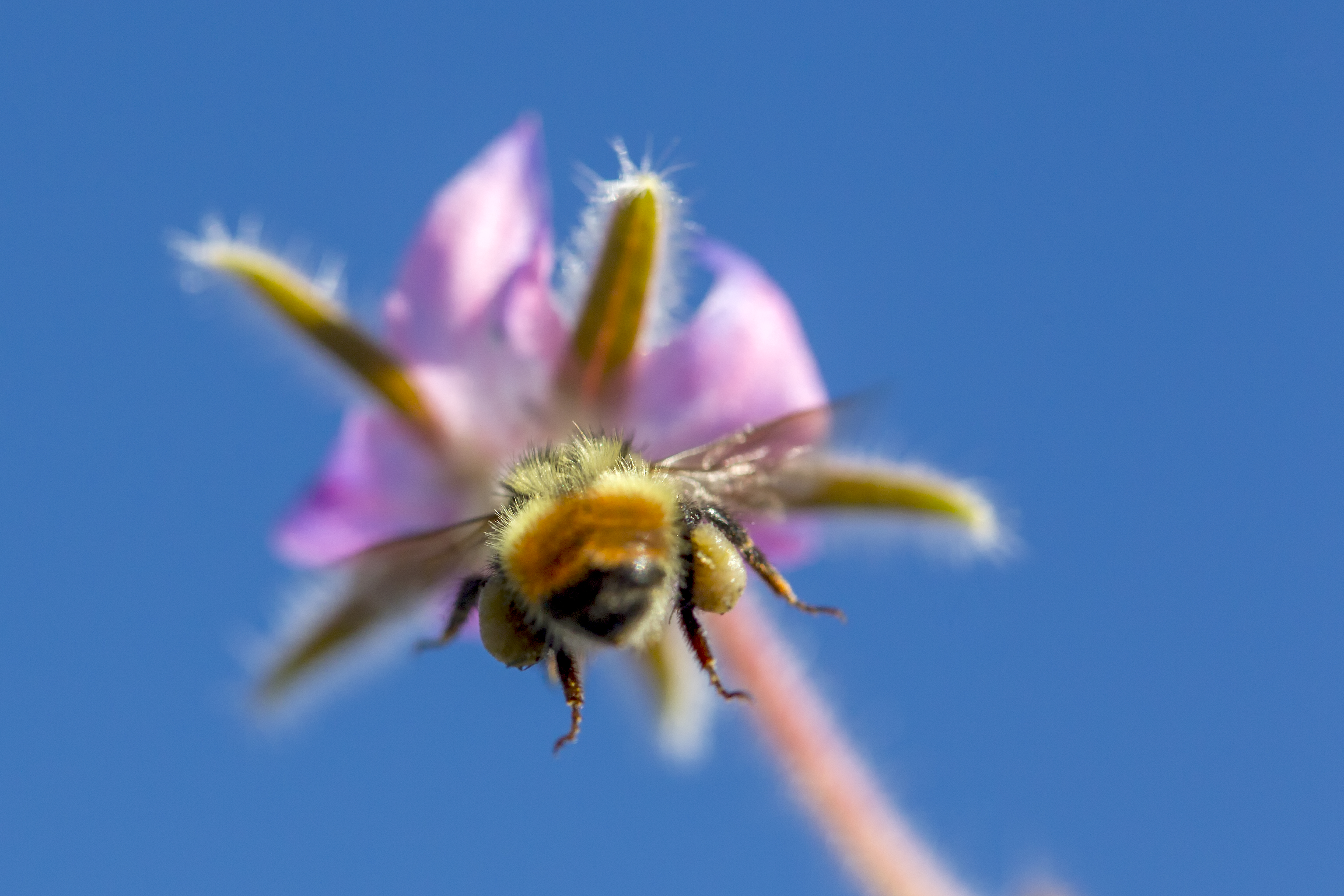
Life exploits vibration everywhere. In buzz pollination, bees contract thoracic muscles at ~200–400 Hz to shake pollen free; a bird’s syrinx vibrates membranes to sculpt song; plant cells sense mechanical oscillations (thigmo-responses) that influence growth direction. Even group movement carries a vibrational signature—tiny accelerations ripple across a flock or school as if the landscape were a drum. When many local oscillators entrain—matching frequency and phase—the system gains coherence: lower energetic cost, higher signal-to-noise, clearer pattern.
Vibration also links to field dynamics at large scales. Ocean swells beating against sand bars, katabatic winds pulsing through a valley, or auroral curtains shimmering along magnetic lines are all expressions of energy cycling in and out of storage with boundary conditions. These boundary-guided rhythms connect naturally to magnetism & polarity, where forces set the stage on which patterns play. What we perceive as beauty—regular spacing in ripples, the cadence of waves, the shimmer of wings—is often the visible score of underlying oscillators keeping time together.
In short: vibration is the universal verb. With the right medium it writes waves; with boundaries it sketches geometry; with matching frequencies it becomes resonance; and within living matter it organizes behavior toward coherence. The field hums first—form follows.





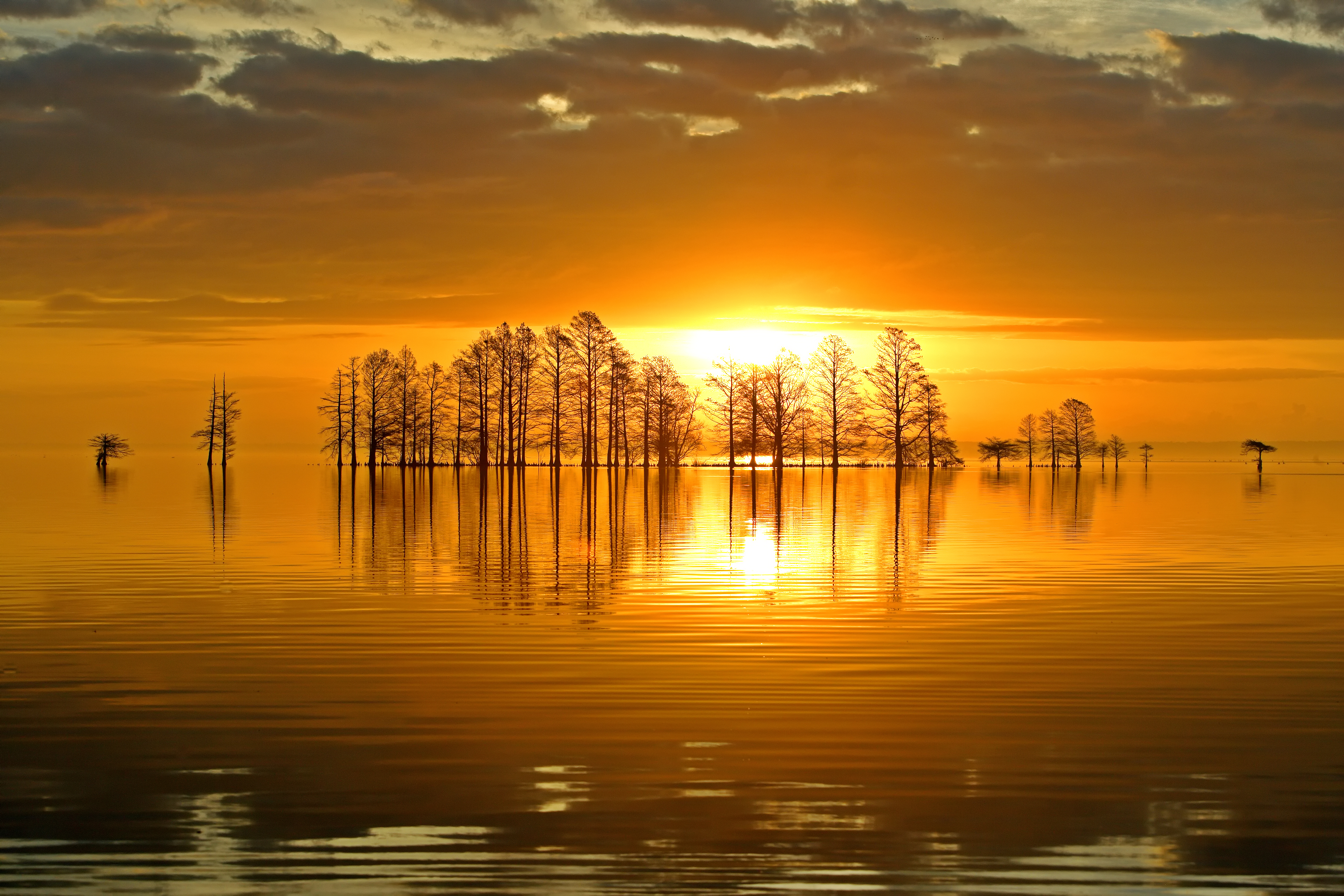 Landscape
 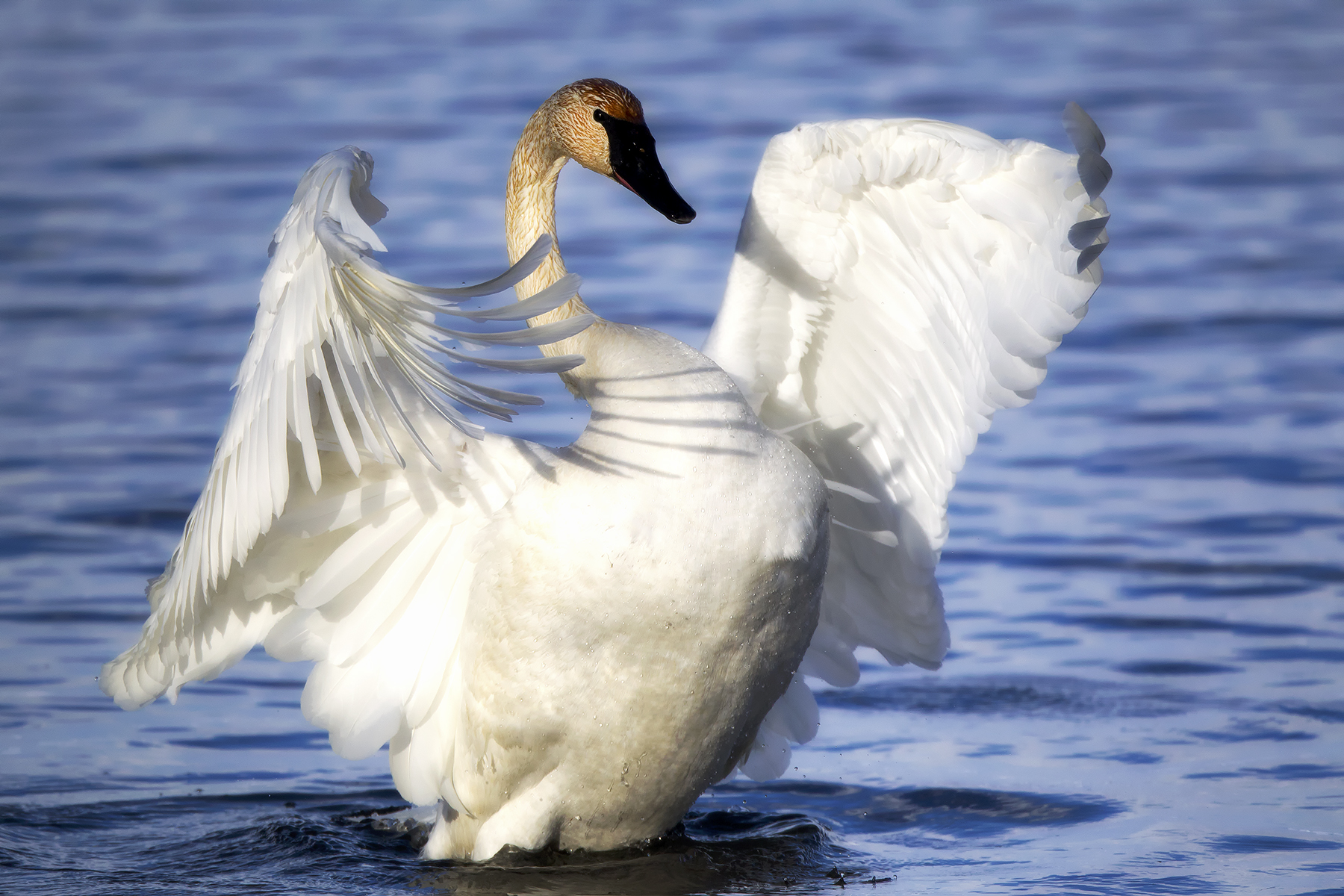 Wildlife