
Bobcat (Lynx rufus) Unveiled: The Wild Feline
The Bobcat in the Field: What You Notice When You Slow Down
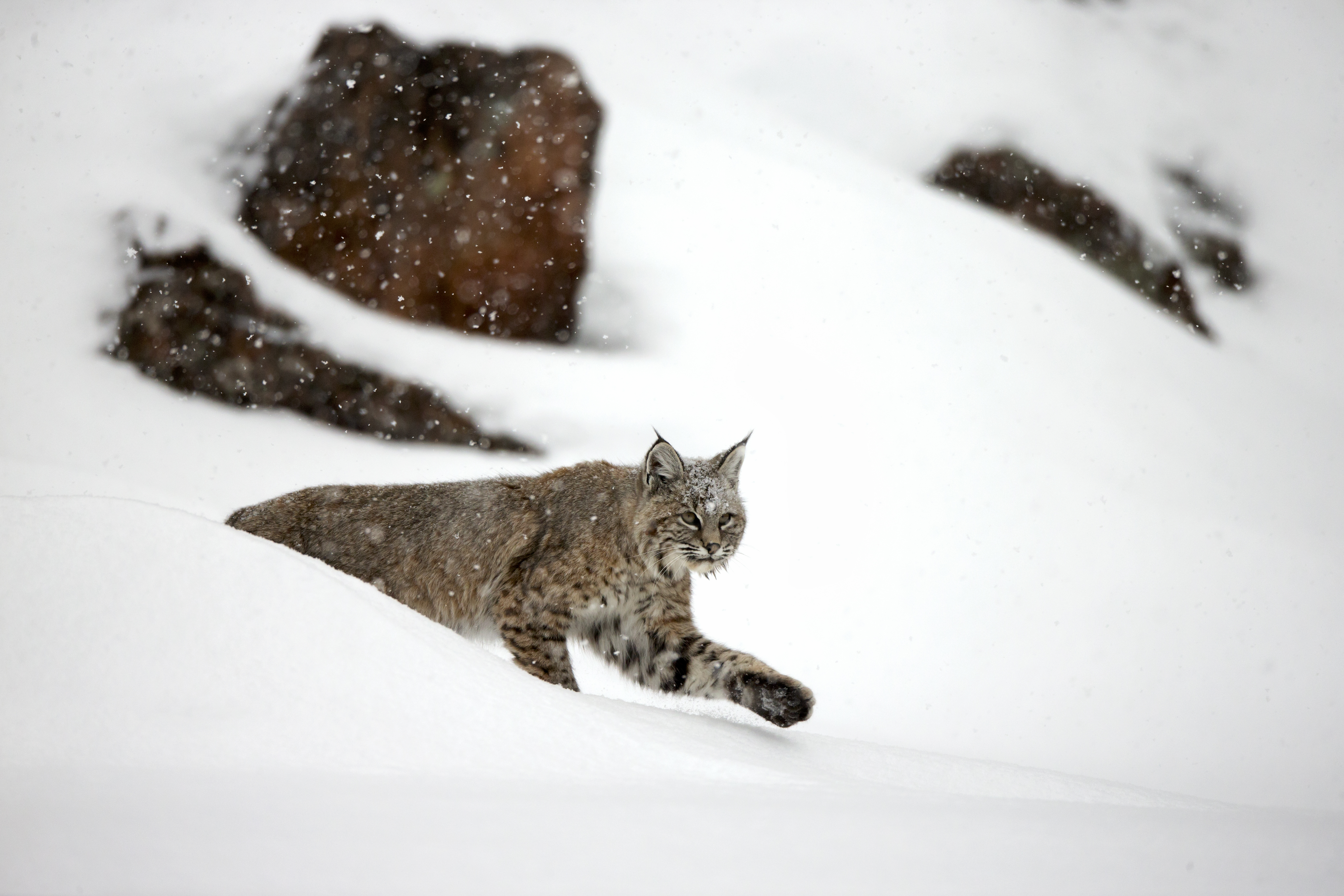
When I encounter a bobcat, it’s never loud, never dramatic. It’s subtle. A shift in the landscape. A shape that wasn’t there a second ago. And then suddenly, everything locks into place—the eyes, the posture, the stillness.
Bobcats don’t rely on speed the way larger predators do. They rely on timing. They move through edges—forest lines, riverbanks, broken terrain—places where visibility is fragmented and opportunity is constant. This is where they thrive, and it’s why they show up across such a wide range of habitats.
In places like Yellowstone, I’ve watched them follow game trails carved by elk and deer, using the structure of the landscape rather than fighting against it. That’s the pattern—bobcats don’t overpower systems. They align with them.
This is what makes them one of the most adaptable predators in North America. From remote wilderness to the edges of suburban neighborhoods, they operate within the same principle: stay unseen, stay efficient, and stay connected to the flow of the environment.
“The bobcat doesn’t dominate the landscape—it disappears into it. That’s its advantage.” — Robbie George
On This Page
Explore the bobcat through field observation, habitat, hunting strategy, seasonal behavior, conservation, and its place in the larger Naturepedia system.
Bobcat Behavior: Stealth, Timing, and Solitary Precision
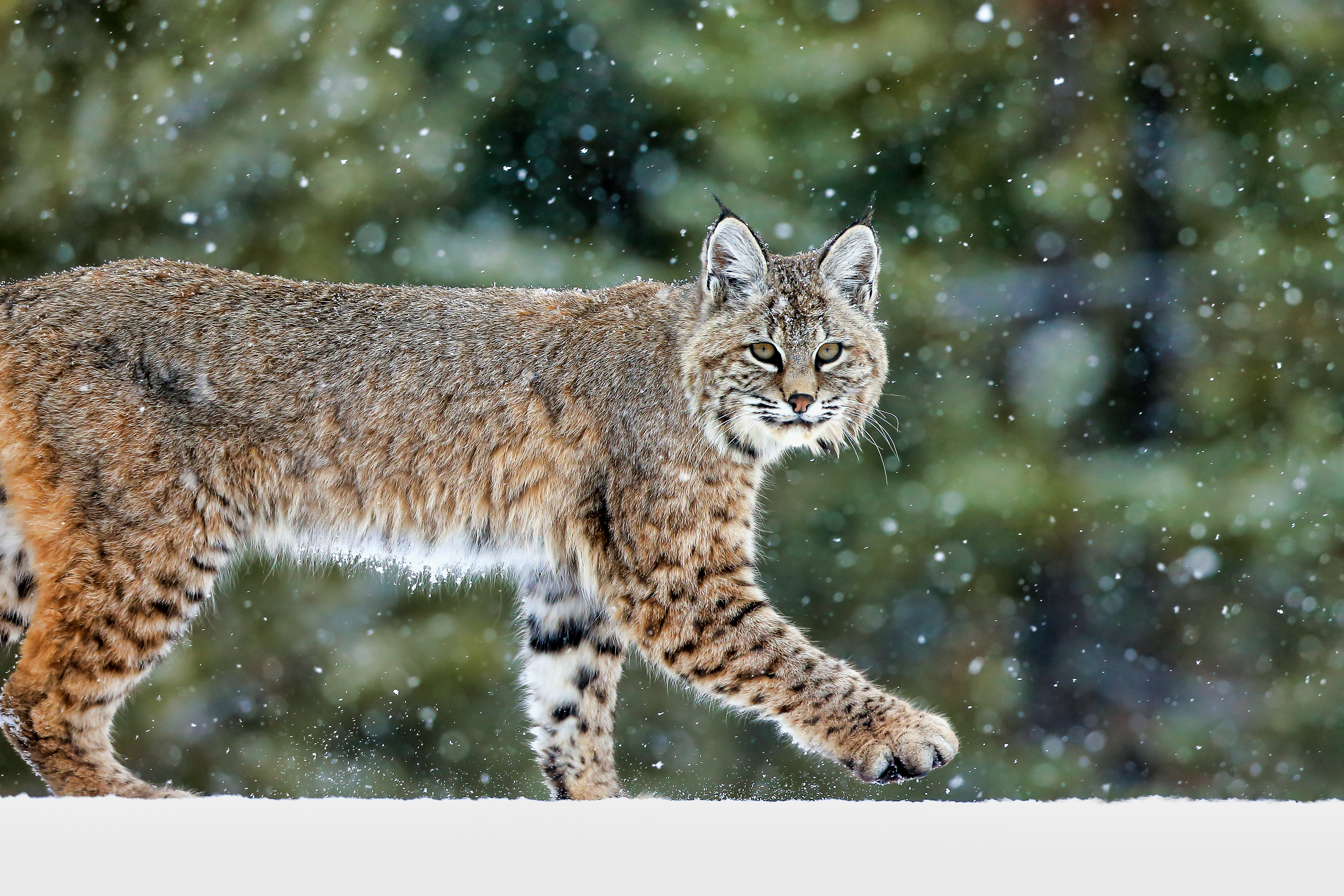
What stands out most to me about bobcats is not speed or aggression, but control. They move with restraint. A bobcat can pause for long stretches, study the terrain, and then make one clean decision. That economy of motion is part of what makes this species such an effective predator across so many different ecosystems.
Unlike more social carnivores, bobcats live mostly alone. They patrol, hunt, rest, and travel without the visible group dynamics you see in wolves or other pack-oriented predators. Their survival depends on reading cover, scent, sound, and distance with remarkable sensitivity. In the field, that means they often appear at the edge of perception first—half hidden in brush, snow, reeds, or broken timber.
Their behavior is also deeply tied to landscape structure. Bobcats prefer to work along margins: treelines, creek corridors, rocky shelves, brushy cuts, and game trails. These transition zones give them concealment, prey movement, and escape options all at once. That is why they fit so naturally into broader conversations about wildlife behavior and ecology—they are a species built around the intelligent use of edges.
When I photograph a bobcat, I’m always aware that I’m seeing only a brief surface moment of a much larger hidden life. Most of what makes this animal successful happens quietly: the route choices, the pauses, the listening, the invisibility. The bobcat survives not by overpowering the wild, but by staying perfectly tuned to it.
“The bobcat’s power is not in force. It is in knowing exactly when to move, and when not to.” — Robbie George
Bobcat Habitat: Living in the Edges of North America
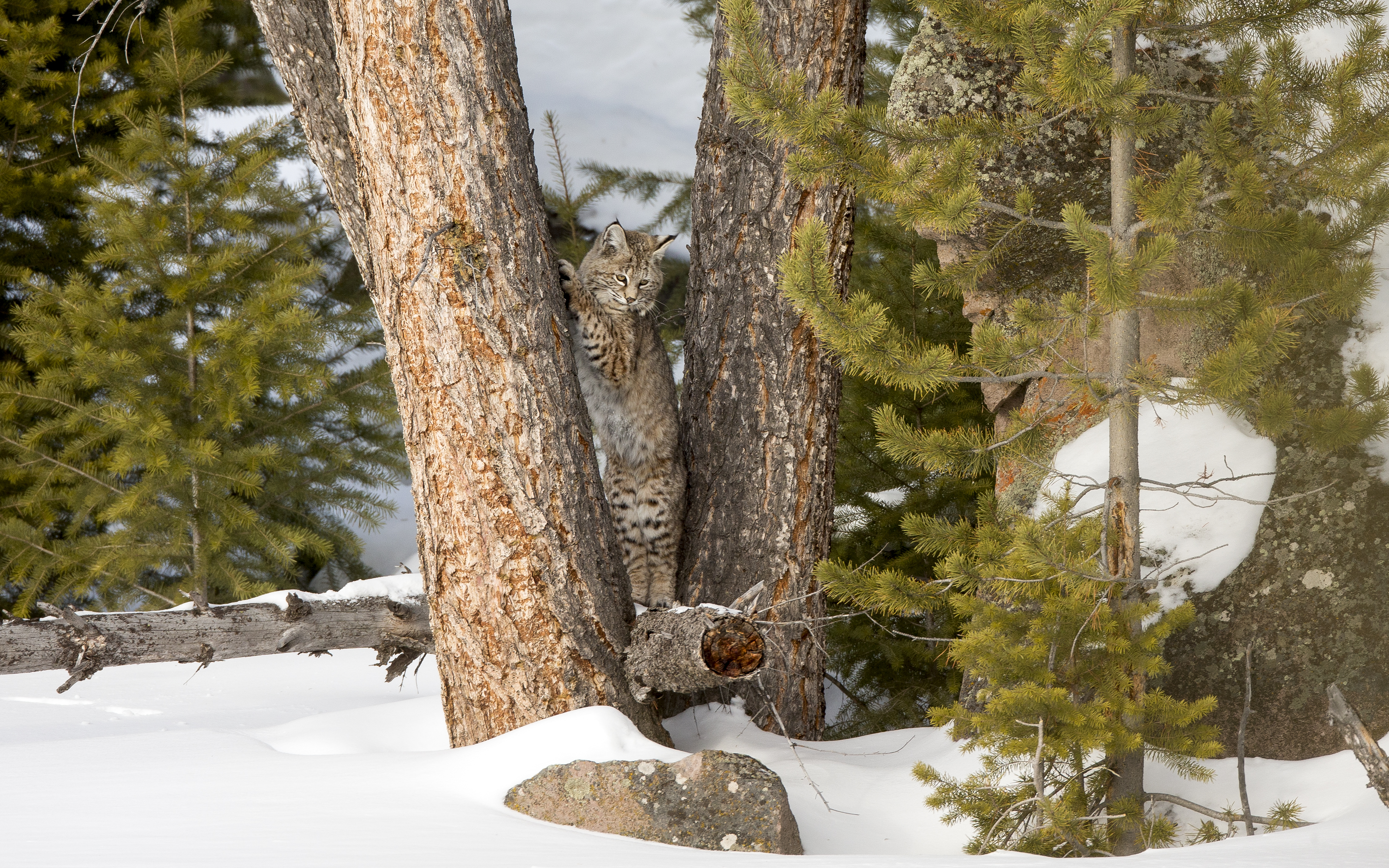
Bobcats don’t depend on one type of landscape—they depend on structure. What I’ve seen in the field is that they consistently choose places where cover, movement, and prey intersect. Forest edges, brushy corridors, rocky outcrops, wetlands, and transitional terrain all give them the advantage they need to remain unseen while staying close to opportunity.
Across North America, their range stretches from southern Canada to Mexico, but their true habitat isn’t defined by geography—it’s defined by how well the land breaks up visibility. Whether I’m tracking them through snow in Yellowstone or observing sign along wooded riverbanks in the East, the pattern is the same: bobcats use terrain that gives them control.
They thrive in environments that many larger predators struggle with—fragmented forests, mixed-use landscapes, and even the outer edges of suburban areas. This adaptability connects directly to broader habitat systems, where survival depends less on dominance and more on flexibility.
What matters most is access to prey and the ability to stay hidden while moving through the landscape. Dense understory, fallen timber, rock formations, and elevation changes all create the kind of layered environment bobcats rely on. In that sense, they are not just living in habitats—they are navigating living systems of concealment, movement, and timing.
“Where the landscape breaks, the bobcat appears. Not because it needs the land—but because it understands it.” — Robbie George
Bobcat Diet: Precision Hunting and Energy Efficiency
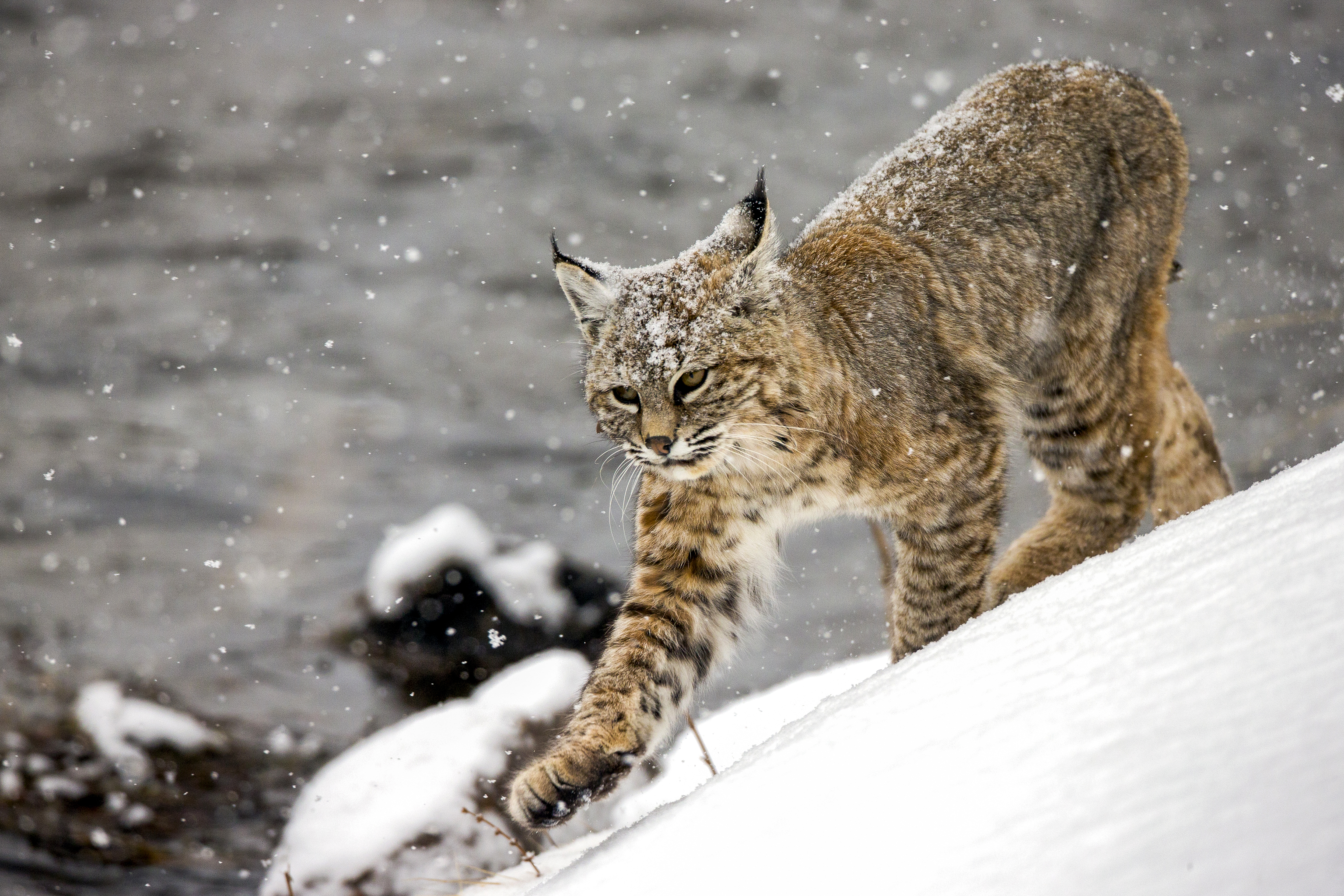
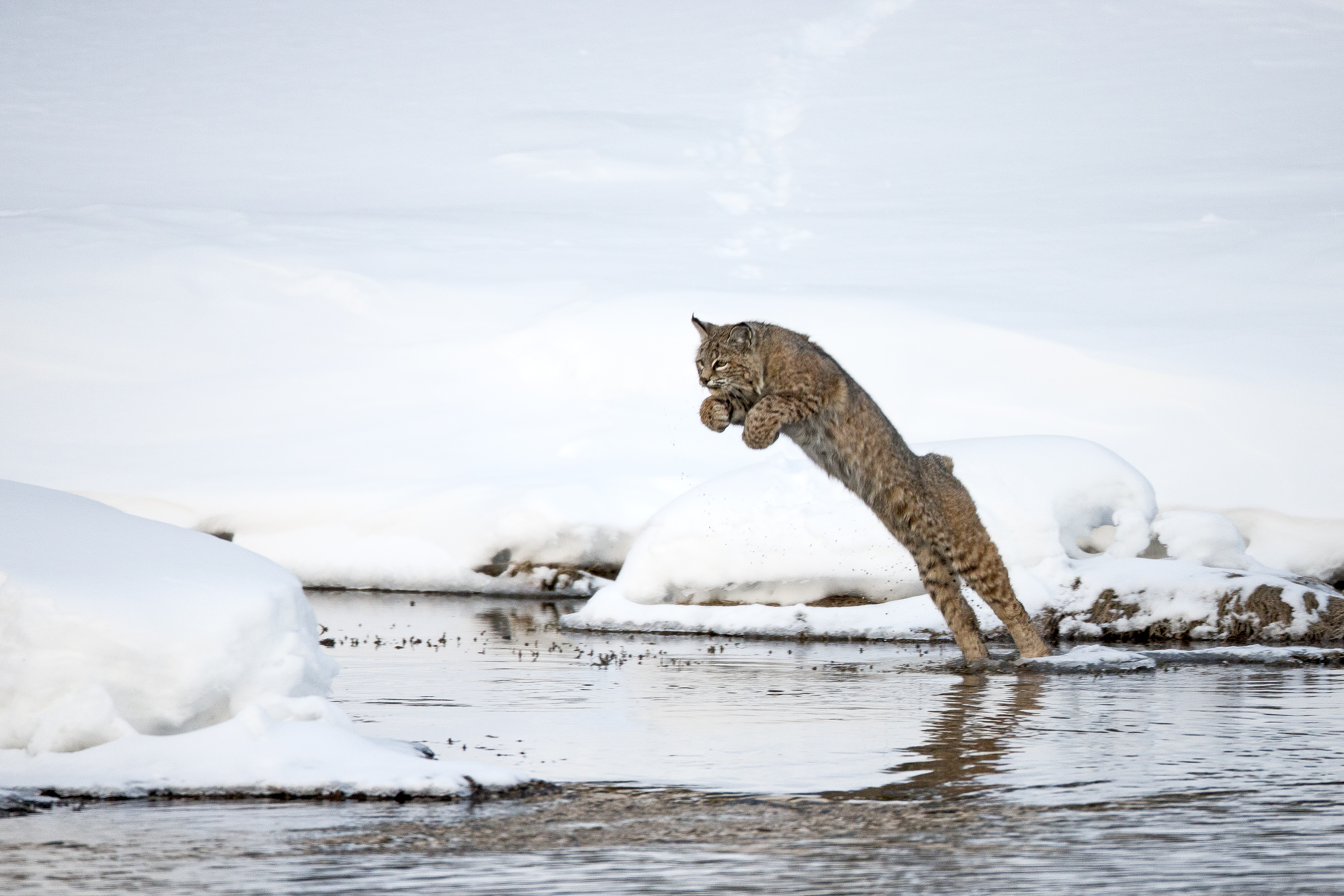
When I watch how a bobcat hunts, what stands out is efficiency. There’s no wasted motion, no unnecessary chase. Everything is built around one idea—get as close as possible before committing. That approach allows them to conserve energy while still being incredibly effective across a wide range of prey species.
Their primary food sources are small to medium-sized animals—rabbits, hares, rodents, birds, and occasionally reptiles. In some regions, especially where opportunity presents itself, they’ll also take down larger prey like deer fawns. This flexible feeding strategy ties directly into broader food web relationships, where predators must constantly adjust to availability.
Unlike endurance predators such as the grey wolf, bobcats rely on short bursts of power. They stalk, close distance, and strike—often within just a few seconds of movement. It’s a method built on patience rather than pursuit.
What I’ve observed in the field is that bobcats don’t just hunt prey—they hunt opportunity. They read movement patterns, terrain, and timing, often returning to the same productive zones. This behavior connects directly to behavioral ecology, where success depends on understanding both the landscape and the animals within it.
“A bobcat doesn’t chase food—it waits until food makes a mistake.” — Robbie George
Bobcat Life Cycle: From Hidden Dens to Solitary Survival
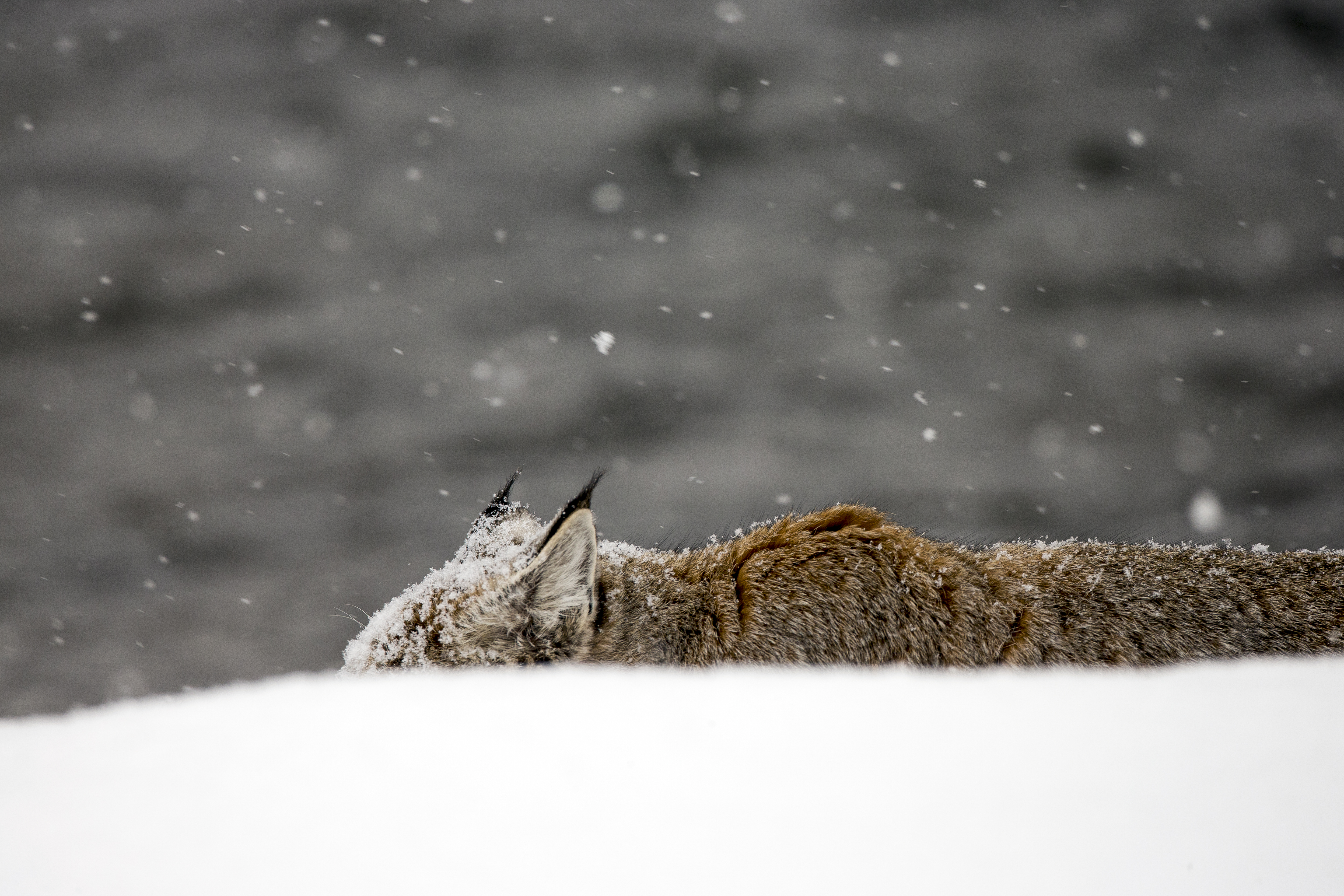
The bobcat’s life begins in complete concealment. Females choose den sites that are almost impossible to detect—hollow logs, dense thickets, rocky crevices—places where protection and invisibility come first. What I’ve learned in the field is that early survival isn’t about strength, it’s about staying unseen long enough to grow.
Kittens are typically born in spring, timed with increasing prey availability and improving conditions across the landscape. For the first few weeks, they are entirely dependent on their mother. As they develop, she begins introducing movement, awareness, and eventually the fundamentals of hunting—less through instruction, more through demonstration.
By late summer into fall, young bobcats begin to explore beyond the den. This is where the transition happens—from protection to independence. They start learning territory, testing boundaries, and developing the behaviors that will allow them to survive alone. This stage connects closely to broader patterns in adaptation and survival, where instinct and experience begin to merge.
Eventually, they disperse. Each bobcat becomes solitary, establishing its own range and repeating the same cycle. What continues to stand out to me is how little of this process is visible. Most of the bobcat’s life happens out of sight—quietly shaping the ecosystems they live within.
“The bobcat is born hidden, lives unseen, and survives by mastering both.” — Robbie George
Bobcat Ecology: A Predator Shaping the Quiet Balance of the Landscape
The bobcat may move alone, but it never lives in isolation from the rest of the system. Ecologically, it plays an important role as a mid-sized predator, helping regulate populations of rabbits, rodents, and other small prey. That pressure matters. When predators like bobcats remain active across a landscape, they influence movement, feeding patterns, and the overall balance of local food chains.
What I appreciate most about the bobcat is how precisely it fits into its ecological niche. It is not trying to dominate everything around it. It is occupying a specific role with extraordinary effectiveness. In this way, the species belongs naturally in broader discussions of food webs and ecological relationships, where even a quiet predator can have system-wide influence.
Bobcats also overlap with other predators, including coyotes and mountain lions, but they reduce conflict by using different terrain, prey sizes, and activity windows. That partitioning is part of what keeps ecosystems functioning. Not every predator needs the same space in the same way.
From my perspective, the bobcat is one of the clearest examples of how wild systems hold balance through subtlety. It doesn’t need to be abundant or obvious to matter. Its role is quiet, but its effect is real—woven into the structure of habitats, prey behavior, and the ongoing intelligence of the land itself.
“A bobcat rarely announces its importance, but the landscape feels its presence.” — Robbie George
Bobcat Conservation: Thriving, Yet Still Vulnerable at the Edges
Bobcats are often described as a conservation success story. Across much of North America, their populations remain stable, and in some regions they’ve even expanded. But what I’ve seen—and what matters most—is where that success starts to break down: at the edges.
As landscapes become more fragmented, the same qualities that make bobcats adaptable also put them into closer contact with roads, development, and human pressure. Habitat loss doesn’t always remove them completely—it compresses their range, forcing them into smaller, more dangerous spaces. This is where broader conservation and habitat efforts become critical.
One of the biggest threats isn’t direct conflict—it’s invisibility. Because bobcats are rarely seen, it’s easy to assume they’re unaffected. But road mortality, habitat fragmentation, and pressure on prey populations all add up over time. Maintaining connected landscapes through wildlife corridors and protected habitat is essential if bobcats are going to continue moving freely across their natural range.
What matters most is preserving the structure of the land they depend on—edges, cover, and movement pathways. When those systems remain intact, bobcats continue doing what they’ve always done: regulating prey, balancing ecosystems, and quietly reinforcing the resilience of the wild.
“The bobcat survives where the landscape still has room to breathe.” — Robbie George
Bobcat Seasonal Patterns: Movement, Timing, and Adaptation Through the Year
Bobcats don’t migrate in the traditional sense, but their behavior shifts noticeably with the seasons. What I’ve observed in the field is that their movement, hunting patterns, and visibility are all tied closely to changes in prey, weather, and landscape conditions.
In winter, bobcats often become easier to track, not because they are more active, but because the landscape reveals them. Snow holds their movement, exposing travel routes along riverbanks, ridgelines, and game trails. During this time, their hunting strategy leans even more heavily on efficiency, conserving energy while targeting predictable prey movement. This seasonal behavior aligns closely with broader migration and seasonal patterns across wildlife systems.
Spring marks a shift toward reproduction and increased prey availability. As small mammals become more active, bobcats adjust their hunting ranges and timing. This is also when females are raising young, making denning areas and nearby hunting grounds especially important.
Summer tends to be quieter in terms of visibility. Dense vegetation gives bobcats more cover, allowing them to move almost completely undetected. By fall, activity increases again as prey populations peak and young bobcats begin dispersing into new territories.
What becomes clear over time is that bobcats are not reacting randomly—they are moving with the rhythm of the year. Their behavior tracks closely with the cycles outlined in Nature’s Seasons, where light, temperature, and life cycles shape everything from movement to survival.
“The bobcat doesn’t follow the calendar—it follows the conditions.” — Robbie George
Naturepedia Connection — Understanding the Bobcat in the Larger System
The bobcat is not just a species—it’s a functional part of a much larger ecological system. Every movement it makes connects to habitat structure, prey availability, and the balance of predator-prey relationships across North America. What I’ve seen in the field is that you can’t fully understand a bobcat in isolation. You have to understand the system it moves through.
It operates within layered environments—edges, corridors, and transitional zones—where its role is to regulate prey and maintain balance. That places it directly inside the broader framework of ecosystems, behavior, habitat systems, and conservation.
This is how I’ve built my site—connecting individual species into a larger knowledge system where behavior, landscape, and time all intersect. The bobcat becomes more than a sighting. It becomes a reference point for how wild systems actually function.
To explore this deeper, continue into the Naturepedia system and follow how species, habitats, and ecological patterns connect across the landscape.
Bobcat FAQ: Field Questions About Lynx rufus
Where do bobcats live?
Bobcats live across most of North America—from southern Canada to Mexico. In my experience, they favor areas with broken terrain—forests, brushlands, wetlands, and rocky edges—where cover and prey overlap. You can explore these environments further in wildlife habitat systems.
Are bobcats dangerous to humans?
Bobcats are naturally elusive and avoid human contact. In the field, they almost always retreat before being seen. Encounters are rare, and attacks on humans are extremely uncommon. Most risks occur only if the animal is cornered or sick.
What do bobcats eat?
Their diet includes rabbits, rodents, birds, and occasionally larger prey like deer fawns. They hunt using short, precise bursts rather than long chases. This hunting strategy connects closely to food web dynamics.
When are bobcats most active?
Bobcats are typically crepuscular—most active at dawn and dusk. That said, I’ve seen movement at all times depending on season, pressure, and prey availability. Their activity patterns align closely with seasonal wildlife timing.
Are bobcats endangered?
No, bobcats are currently listed as a species of Least Concern. However, local populations can be impacted by habitat fragmentation and road mortality. Ongoing conservation efforts remain important.
About Robbie George
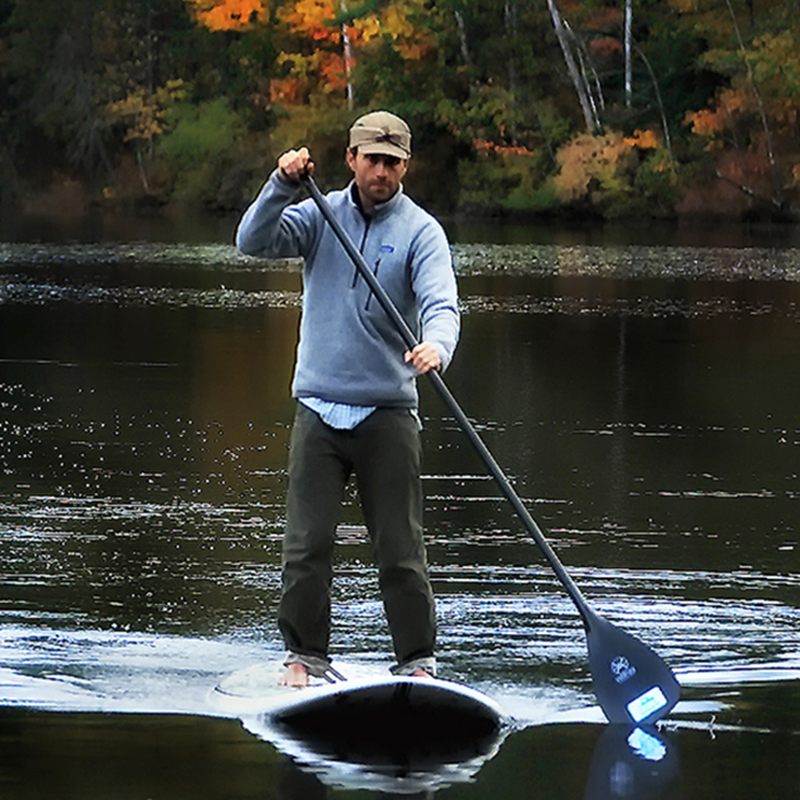
I’m Robbie George, a National Geographic–published wildlife photographer. My work is built through repeated time in the field—returning to the same landscapes across seasons to understand how animals move, hunt, and exist within the systems around them.
Bobcats are one of the most difficult species to truly observe. They don’t give you many chances. To photograph them, you have to understand edges—where cover meets movement, where prey patterns intersect with terrain, and where visibility breaks just enough for them to operate. That perspective is what shapes how I build the Naturepedia Wildlife Knowledge System.
You can explore more field-based work in the Wildlife Gallery, or plan your own time in the field using tools like the Seasonal Wildlife Calendar and Photography Maps.
“The bobcat teaches you that the less you force the moment, the more the wild reveals itself.”