Cadillac Mountain: The Ultimate Guide to Sunrise, Hiking, Photography, and History in Acadia National Park
What It Feels Like on Cadillac Before the Sun Breaks
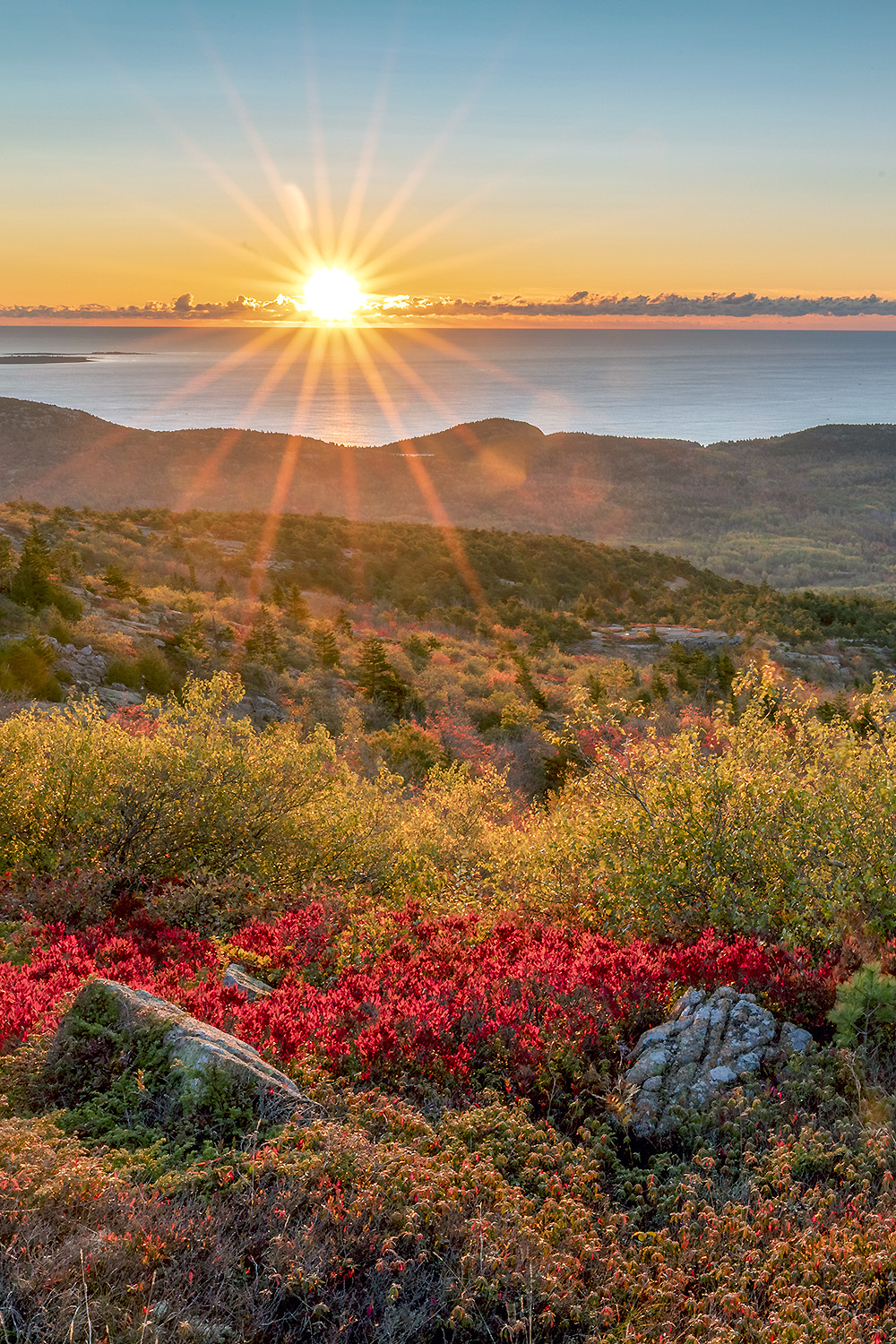
Cadillac Mountain begins before sunrise. It begins in the dark, with cold granite underfoot, wind moving across the summit, and people quietly taking their places along the eastern edge. Before the light arrives, the mountain is already teaching you how to pay attention.
From up here, the coastline doesn’t read as a single scene. You start to notice sequence—ocean first, then islands, then the ridges and forest below. On some mornings fog settles into the lower ground. On others the air stays clear and the horizon sharpens early. The summit never repeats itself exactly.
That’s what makes Cadillac such a powerful field location. The elevation gives you reach, but the real value is timing. You’re not just watching sunrise—you’re watching how light reveals structure, how weather changes depth, and how the landscape opens in layers.
For me, Cadillac works best when I stop treating it like a famous overlook and start reading it as a system: granite, wind, ocean, season, and first light all interacting at once. The photograph comes later. Observation comes first.
Explore This Cadillac Mountain Field Guide
Landscape System — How Cadillac Mountain Is Built
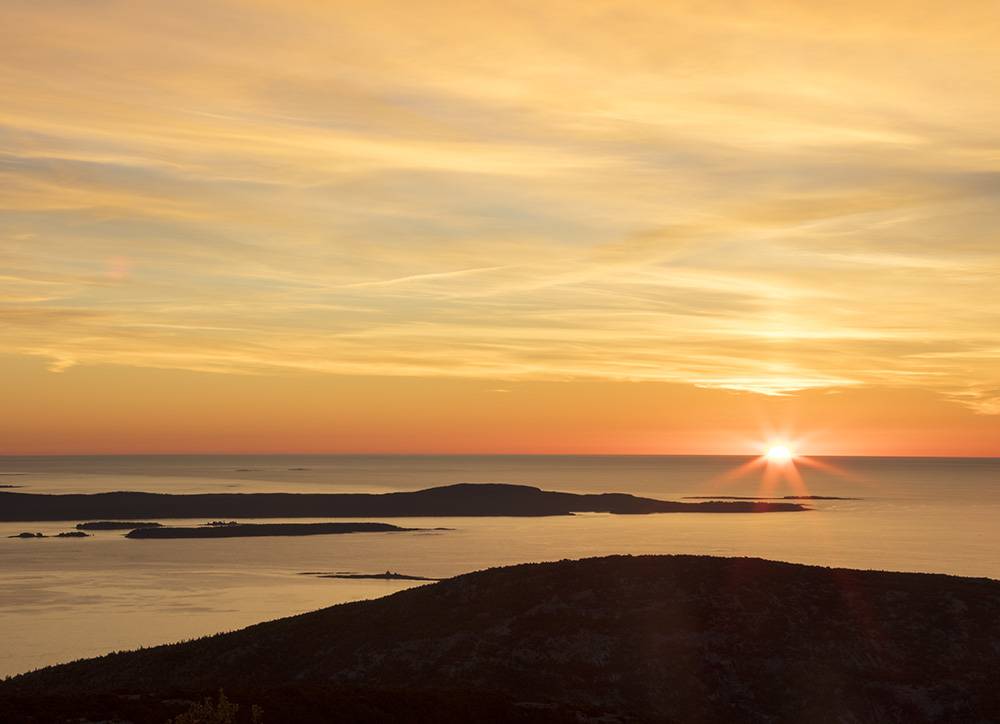
Cadillac Mountain works the way it does because of structure. The summit is built from ancient pink granite, lifted high enough above the surrounding coast to expose the full relationship between ocean, islands, forest, and sky. From up here, you are not looking at isolated features—you are looking at a connected coastal system laid open by elevation.
The granite itself matters. It absorbs and reflects light differently than forest or water, which is why the summit can hold warmth and color even before the lower landscape fully opens. At sunrise, those broad rock surfaces become part of the composition, not just foreground. They catch early light, define visual lines, and give the mountain its distinctive sense of form.
Glacial movement shaped much of what you see here. The mountain’s rounded forms, exposed ledges, and polished surfaces all carry that history. When you look closely, the summit feels less like a peak in the dramatic western sense and more like a weathered high platform—one that has been scraped, opened, and simplified over time.
That openness is what makes Cadillac such a powerful field location. There is very little visual obstruction at the top, so weather patterns, fog layers, and directional light become easier to read. You can watch atmosphere move across Frenchman Bay, see cloud shadow travel across the island, and understand how changing conditions alter depth from minute to minute.
Once you understand the mountain’s geology and elevation, the rest of the page starts to make more sense. Light behavior, seasonal timing, field positioning, and even wildlife use all begin with this structure. Cadillac is not just a lookout. It is a granite observation platform inside a larger living coast.
Light Behavior — How Sunrise Actually Unfolds
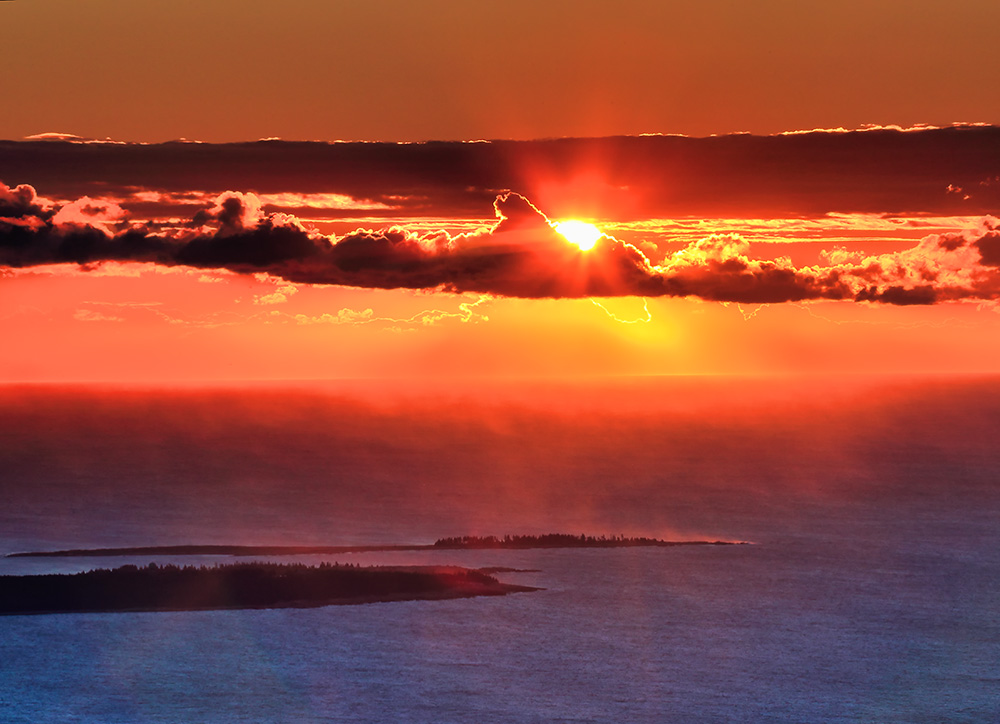
Sunrise on Cadillac Mountain doesn’t happen all at once. It unfolds in layers, and if you’re paying attention, you can see the order every time.
The first light reaches the horizon line over the Atlantic, long before it touches the summit. Then it begins to move inland—catching the outer islands, sliding across Frenchman Bay, and finally climbing into the ridges and forest behind you. The mountain itself is often not the first thing to light up.
That sequence is what you’re really photographing. Not just the sun—but the progression. The transition from cool tones to warm, from shadow to structure, from flat horizon to dimensional landscape.
Atmosphere changes everything. Fog can compress the scene into soft layers, reducing distance and isolating shapes. Clear air does the opposite—stretching visibility and emphasizing depth across miles of coastline. Cloud cover can either block the light completely or turn it into reflected color across the entire sky.
This is why Cadillac is less about “catching sunrise” and more about reading conditions. The best moments often happen before or after the sun breaks the horizon—when light is indirect, directional, and still evolving. If you’re only watching the sun, you’re missing the system.
Seasonal Timing — When Cadillac Behaves Differently
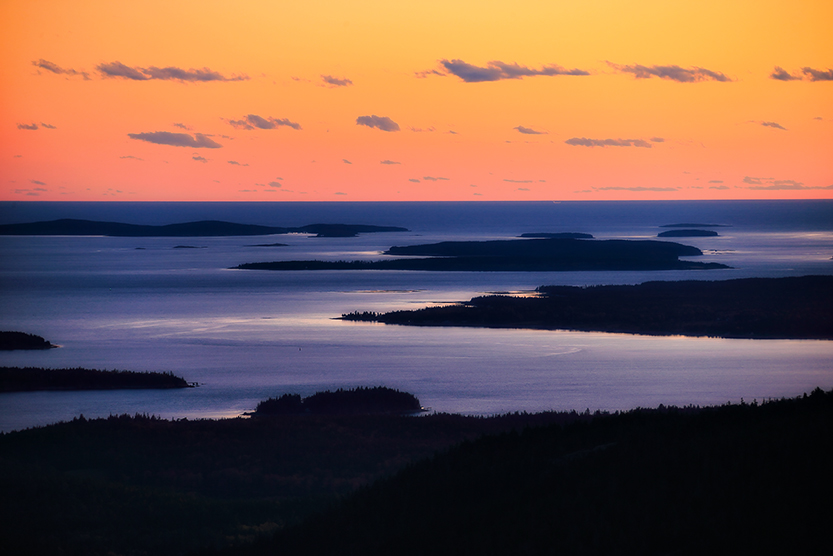
Cadillac Mountain doesn’t just change with the seasons—the entire behavior of light, atmosphere, and visibility shifts with it. The same sunrise location in July will not produce the same conditions in October or February.
In summer, the sun rises further northeast, extending daylight and stretching the window of usable light. Mornings tend to be clearer, but also more predictable. You gain time, but sometimes lose atmosphere.
In autumn, the system tightens. The sun shifts south, temperatures drop, and wind often calms at dawn. This is when Cadillac becomes most consistent for layered light—fog in the valleys, color in the forest, and clean horizon lines. It’s one of the strongest seasonal alignments on the entire mountain.
Winter simplifies everything. Snow reduces visual noise and reveals pure structure—granite, tree spacing, ridgelines. Light stays low and directional, but access becomes more limited and conditions more demanding.
Spring sits between systems. Fog becomes more frequent, moisture increases, and color begins to return slowly. It’s less predictable, but often more atmospheric—especially on mornings after rain.
If you want to plan effectively, track both season and light position. Tools like the Seasonal Wildlife Calendar and Golden Hour Planner help you match timing with conditions—not just dates.
Locations & Field Strategy — How to Position on Cadillac Mountain
Cadillac Mountain isn’t one location—it’s a series of positions. Where you stand determines what part of the system you see: horizon, islands, fog layers, or granite foreground. The difference between a good image and a strong one is often just a few steps.
The eastern edge of the summit is the most direct sunrise position. This is where you see the horizon line first, and where the sequence of light begins across the Atlantic. It’s the most crowded—but also the clearest view of how sunrise unfolds.
Moving slightly off the main edge—just 20 to 50 feet—often changes the composition completely. You can bring granite foreground into the frame, reduce crowd pressure, and control how the scene layers from front to back.
For quieter positioning, the South Ridge Trail provides elevated ledges before the summit. These locations give you similar directional light with fewer people and more control over foreground elements.
Use the map below to understand how these zones connect. It’s not just navigation—it’s a positioning tool for light, elevation, and timing across the mountain.
Can’t see the map? Open it directly: Cadillac Mountain Photo Map .
Planning & Field Ethics — How to Work Cadillac Mountain
Cadillac Mountain rewards preparation more than effort. The experience is shaped long before you arrive—by timing, positioning, and how you move once you’re on the summit.
Start with access. During peak season, a timed-entry reservation is required for summit road access. If you’re aiming for sunrise, your planning window is narrow—arrive early enough to settle into position before light begins to change.
Position matters, but so does presence. The summit concentrates people along the eastern edge, especially at sunrise. Moving just slightly away from the main cluster improves both your composition and the experience for everyone else. Cadillac works best when the space feels quiet—even when others are nearby.
Weather is part of the system, not a disruption. Wind, fog, and shifting cloud cover are often what create the strongest conditions. Instead of waiting for “perfect” weather, learn how to work with what the mountain is doing that morning.
Respect the surface. The summit’s granite supports fragile plant life—lichen, moss, and low vegetation that can take years to recover from a single step. Stay on durable surfaces and avoid disturbing natural features for composition.
If you want to refine your approach further, explore Wildlife Observation & Field Techniques and your Field Tools. Cadillac is one place—but the way you move through it applies everywhere.
Naturepedia Connection — Cadillac Mountain as a Light & Elevation System
Cadillac Mountain is best understood not just as a summit, but as a light-driven observation point within a larger coastal ecosystem. Its elevation, exposure, and granite structure allow you to see how atmosphere, ocean, land, and season interact in real time.
The mountain’s position along the Atlantic edge makes it one of the clearest places in North America to observe how light behaves across a landscape. Sunrise does not simply “happen” here—it moves through the system, revealing structure layer by layer across ocean, islands, forest, and ridge.
That same structure influences everything else. Wind patterns shape where fog settles. Elevation affects temperature and visibility. Granite surfaces store and reflect heat differently than surrounding vegetation. Even wildlife movement is influenced by exposure, shelter, and edge conditions created by the mountain itself.
Within Naturepedia, Cadillac Mountain connects directly to broader systems including coastal ecosystems, wildlife behavior, migration patterns, and conservation systems.
Seen this way, Cadillac is not just a destination for sunrise—it is a place where relationships become visible. Light revealing land. Atmosphere shaping depth. Season changing behavior. The photograph is simply the moment where those forces align.
Cadillac FAQ
What is the best season to photograph Cadillac Mountain?
Autumn is often the strongest overall season because cooler air, calmer dawn conditions, and foliage color can align with layered coastal light. Cadillac works year-round, but each season changes how the mountain behaves.
Where should I stand for sunrise on Cadillac Mountain?
The eastern edge of the summit gives the clearest view of the horizon, but moving slightly off the main cluster often improves composition by adding granite foreground and reducing crowd pressure. The exact position depends on whether you want direct horizon, layered islands, or foreground texture.
Do I need a reservation to drive up Cadillac Mountain?
During peak season, timed-entry vehicle reservations are required for summit road access. If you are planning for sunrise, access and arrival time matter just as much as camera setup.
What makes sunrise on Cadillac different from other locations?
Cadillac is powerful because sunrise unfolds in sequence across a coastal system. Light reaches the Atlantic horizon first, then outer islands, then the bay, then the forested ridges and granite around you. You are photographing progression, not just a single moment.
What gear is most useful on Cadillac Mountain?
A wide-angle lens, tripod, layered clothing, and weather protection are the core essentials. A telephoto lens helps isolate fog layers, islands, and compressed coastal light, while a polarizer or neutral density filter can help depending on conditions.
How does Cadillac Mountain connect to the larger Naturepedia system?
Cadillac functions as a light-and-elevation node within a larger coastal ecosystem. It connects naturally to Naturepedia, Ecosystems of North America, Wildlife Migration & Seasonal Patterns, and Wildlife Conservation & Habitat.
About Robbie George
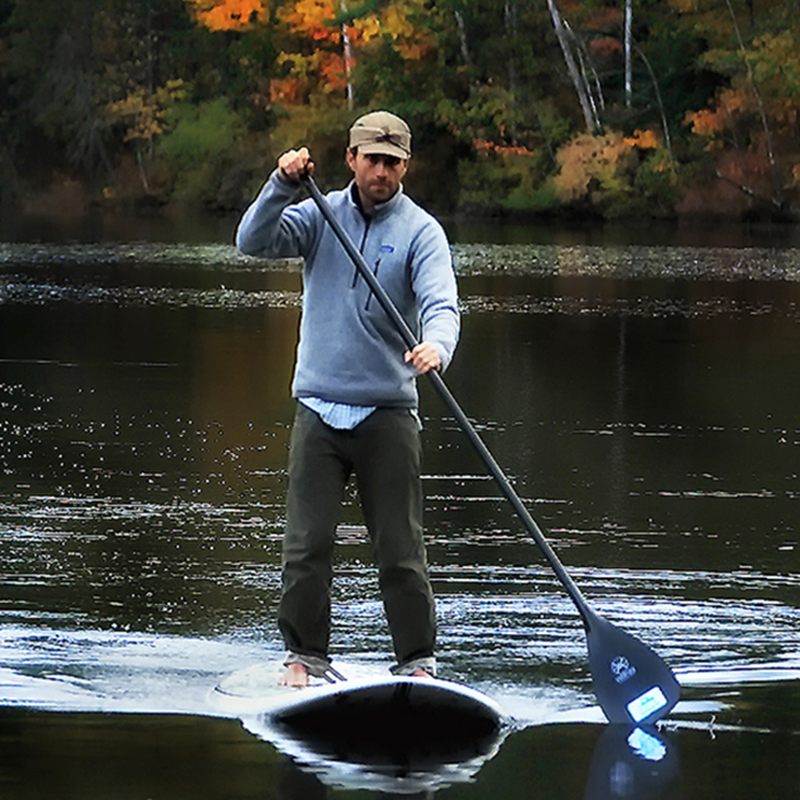
I’m Robbie George, a National Geographic–published nature photographer whose work is built from field time—returning to places under changing light, weather, and season, and learning how landscape behaves before making the image.
Cadillac Mountain matters to me because it reveals process so clearly. From the summit, you can watch sunrise move through the Atlantic edge of Acadia in sequence—ocean, islands, bay, ridge, granite. It’s one of the strongest places I know for studying how light interacts with structure.
My approach here is the same as everywhere else: field-first, observation-first. I’m less interested in collecting famous views than in understanding where the mountain opens, how weather changes depth, and what conditions are actually doing before the shutter clicks.
You can explore that larger system through Naturepedia, browse related work in Landscape Photography, Seascapes, and Wildlife Photography, or plan your next outing with the Field Tools and Photography Maps.
“Attention first, image second. The mountain teaches the photograph before the camera records it.”