


Cedar Waxwing | Bombycilla Cedrorum: A Comprehensive Guide to this Elegant Songbird
Cedar Waxwing — Movement, Light, and the Rhythm of Fruit
In my field experience, Cedar Waxwings rarely arrive quietly. One moment a tree stands still — the next it’s alive with motion. A flock drops in together, almost as if carried by a shared signal, and within seconds they’re feeding, passing berries, and shifting positions with a kind of effortless coordination.
What stands out most to me isn’t just their beauty — it’s their timing. Waxwings don’t move randomly. They move with fruit cycles, light conditions, and seasonal transitions. When I see them, I know I’m not just looking at a bird — I’m seeing a moment where habitat, food, and season have aligned perfectly.
That’s what makes them such a powerful subject in the field. They’re not isolated — they’re a signal. A living indicator of ecological timing across ecosystems, behavior, and seasonal movement.
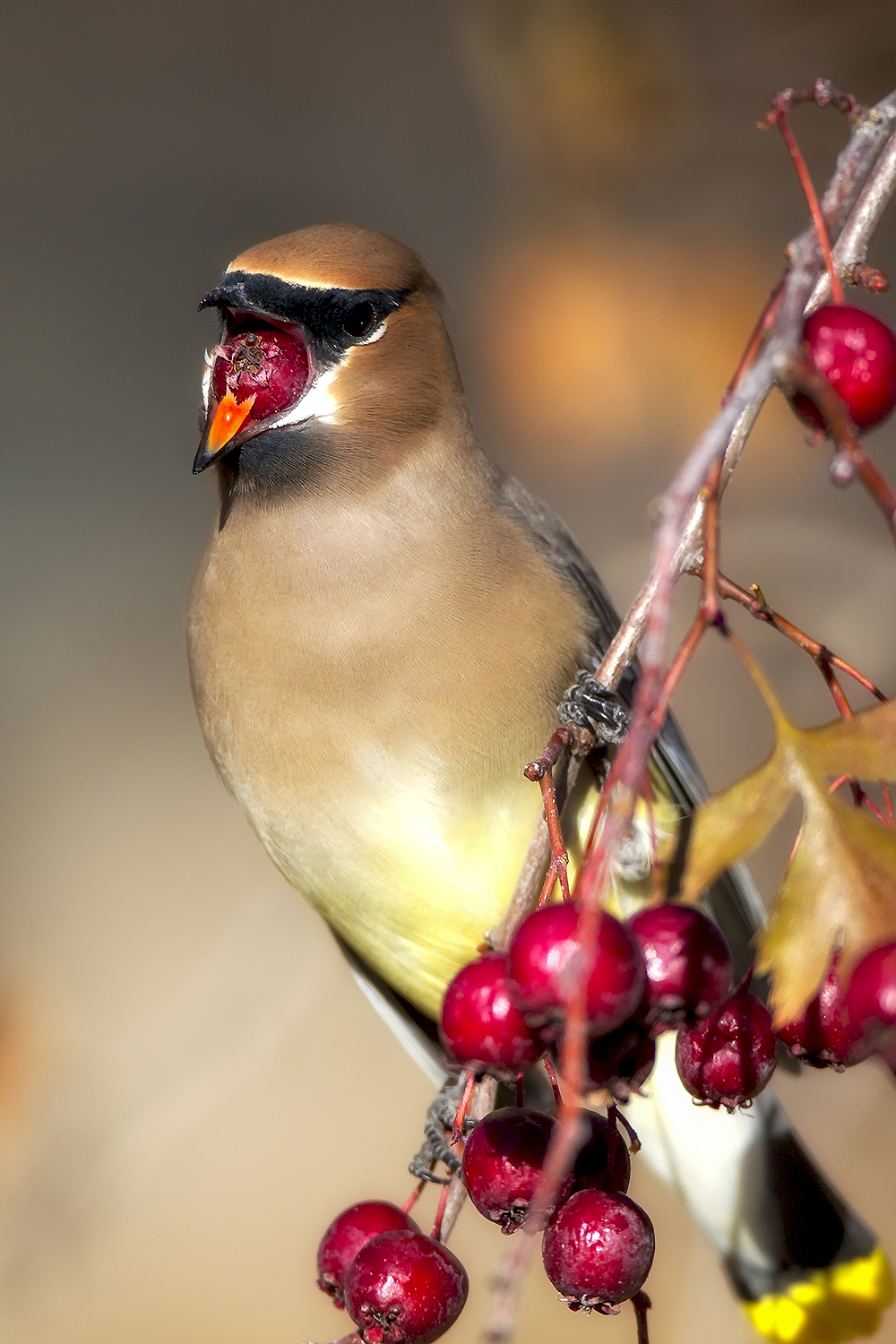
Behavior — Precision, Timing, and Shared Movement
In the field, Cedar Waxwings behave less like individuals and more like a coordinated system. When they arrive at a fruiting tree, they don’t compete aggressively — they rotate, feed, and reposition with a smooth rhythm that feels almost pre-arranged.
One of the most fascinating behaviors I’ve observed is berry passing. A Waxwing will pluck a berry, then pass it along to another bird — sometimes back and forth multiple times before it’s finally eaten. This isn’t random behavior — it’s part of bonding, coordination, and social structure.
Their flight mirrors this same pattern. Flocks lift, turn, and land together — not as chaos, but as synchronized motion. It’s one of the clearest examples of collective behavior you’ll see in North American songbirds.
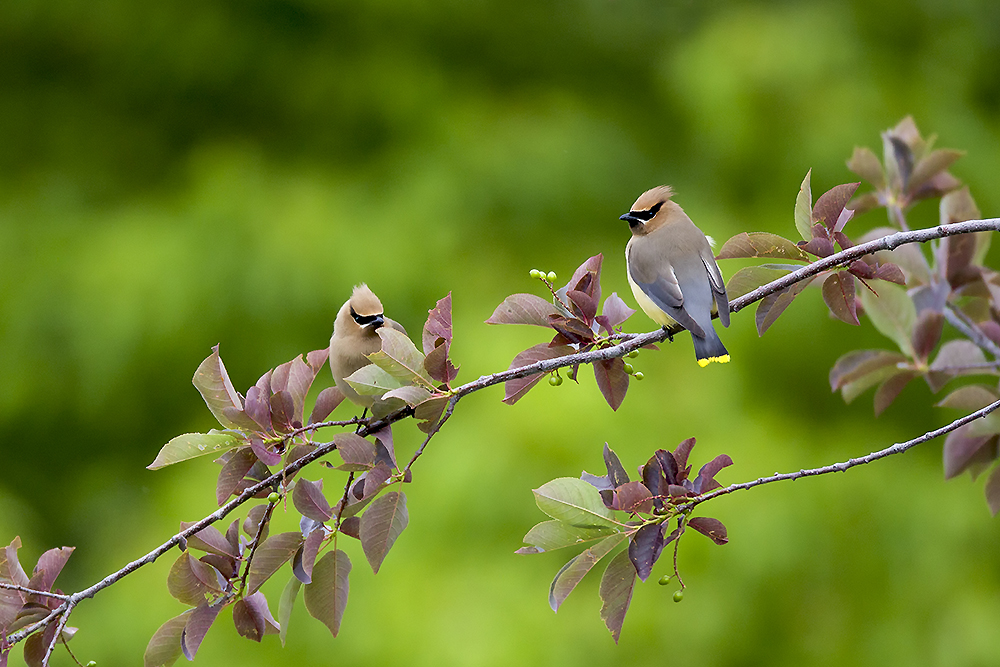
Habitat — Where Cedar Waxwings Follow Fruit, Edge, and Seasonal Opportunity
In my observations, Cedar Waxwings are most at home in places where food and structure come together. They favor edges rather than deep interiors — woodland margins, orchards, riparian corridors, shrubby field borders, neighborhood parks, and open areas lined with fruiting trees. When those places hold reliable berries and nearby cover, Waxwings can move through them with remarkable ease.
That makes them an excellent species for understanding how habitat really works. It isn’t just about trees. It’s about the right combination of perches, visibility, seasonal fruit, nesting cover, and access to water. I often think of Waxwings as birds of transition zones — species that thrive where one habitat blends into another. That places them naturally within broader habitat zones and the living patchwork of North American ecosystems.
During breeding season, they often nest in open woodlands, second-growth areas, and streamside trees where insects and fruit can both be found nearby. Outside the breeding season, they become more flexible, moving through suburban plantings, hedgerows, refuges, and winter berry sources wherever conditions line up. In that way, habitat for Cedar Waxwings is never static — it changes with the year, the crop, and the movement of the flock.
For photographers and birders, this means the best habitat is often habitat in motion: a fruiting tree on the edge of a field, a wetland border with dogwood and cedar, or a park where migrating birds pause to feed before moving on. These are exactly the kinds of patterns I try to connect across my field observation work, my seasonal wildlife calendar, and the larger Naturepedia system.
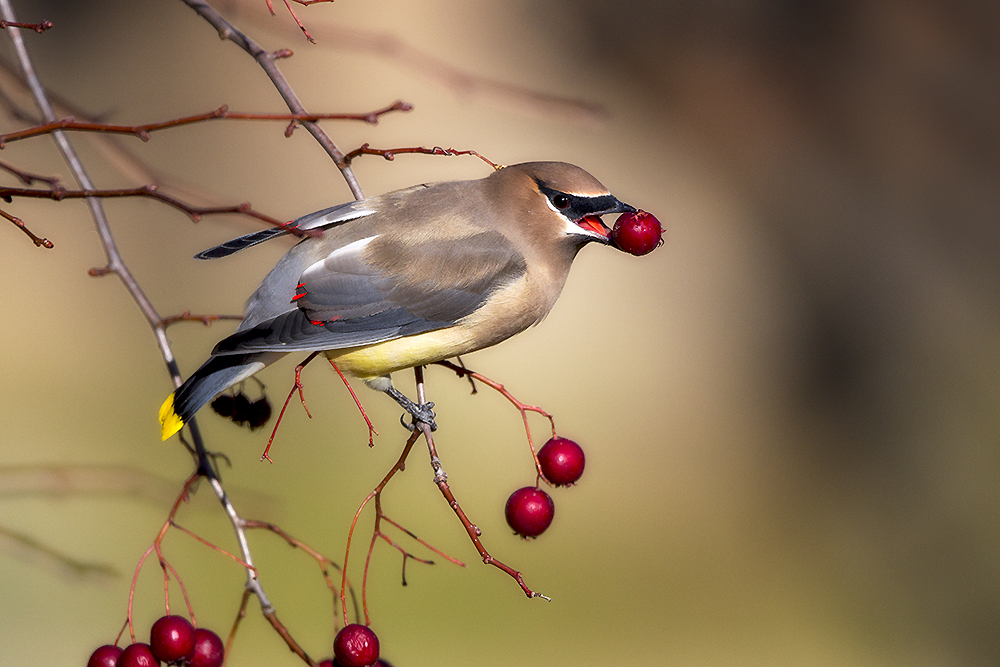
Diet — A Bird Built Around Fruit, Timing, and Precision Feeding
Cedar Waxwings are one of the clearest examples of a bird whose behavior is tightly shaped by food. In the field, I see them return again and again to fruiting shrubs and trees, often feeding in bursts as a flock moves through a landscape. Their relationship to berries is not incidental — it defines where they go, when they gather, and how they move across the seasons.
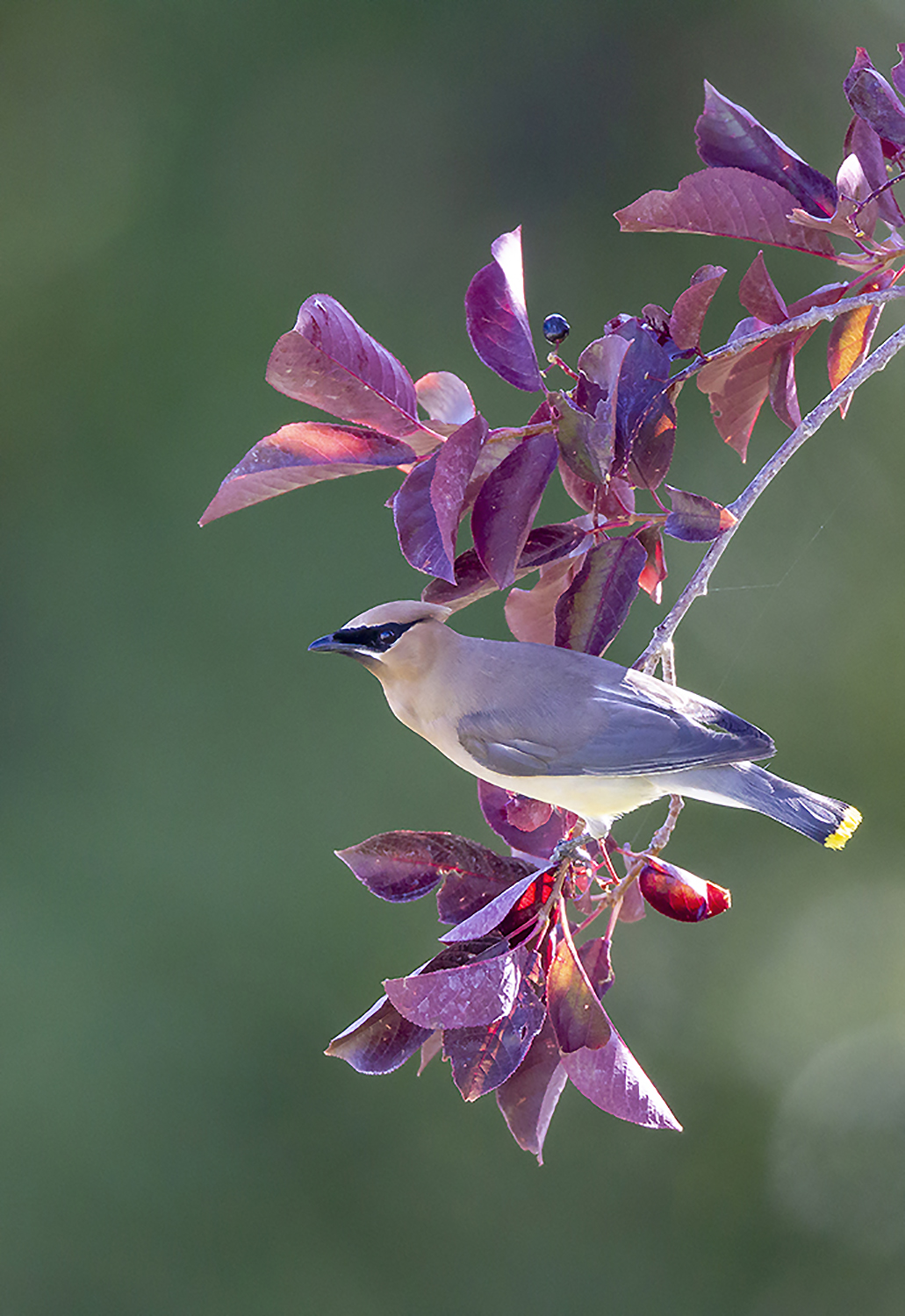
Much of their diet centers on soft fruits such as cedar berries, dogwood, serviceberry, hawthorn, juniper, chokecherry, crabapple, and other seasonal crops. They often swallow fruit whole, making them important participants in seed dispersal and plant regeneration. When Waxwings feed, they are not just sustaining themselves — they are helping move the next generation of berry-producing plants across the landscape, linking them directly to broader food webs and ecological relationships.
What makes them especially interesting is that their diet also shifts with season and life stage. During the breeding season, Waxwings add more insects to support nesting and growing young. That seasonal adjustment matters. It shows that even a highly fruit-centered species depends on a wider ecological base — healthy insect populations, intact edge habitat, and diverse plant communities all contribute to the survival of the flock.
One of the most striking details I’ve observed is how precisely they handle fruit. The Cedar Waxwing is not just eating berries — it is specialized for them. The way it grips, positions, and swallows fruit reveals a feeding strategy refined by repetition and adaptation. That’s part of what makes the species so compelling to watch: elegance on the outside, but also real functional design underneath, tied closely to adaptation and survival within the larger behavior and ecology of North American birds.
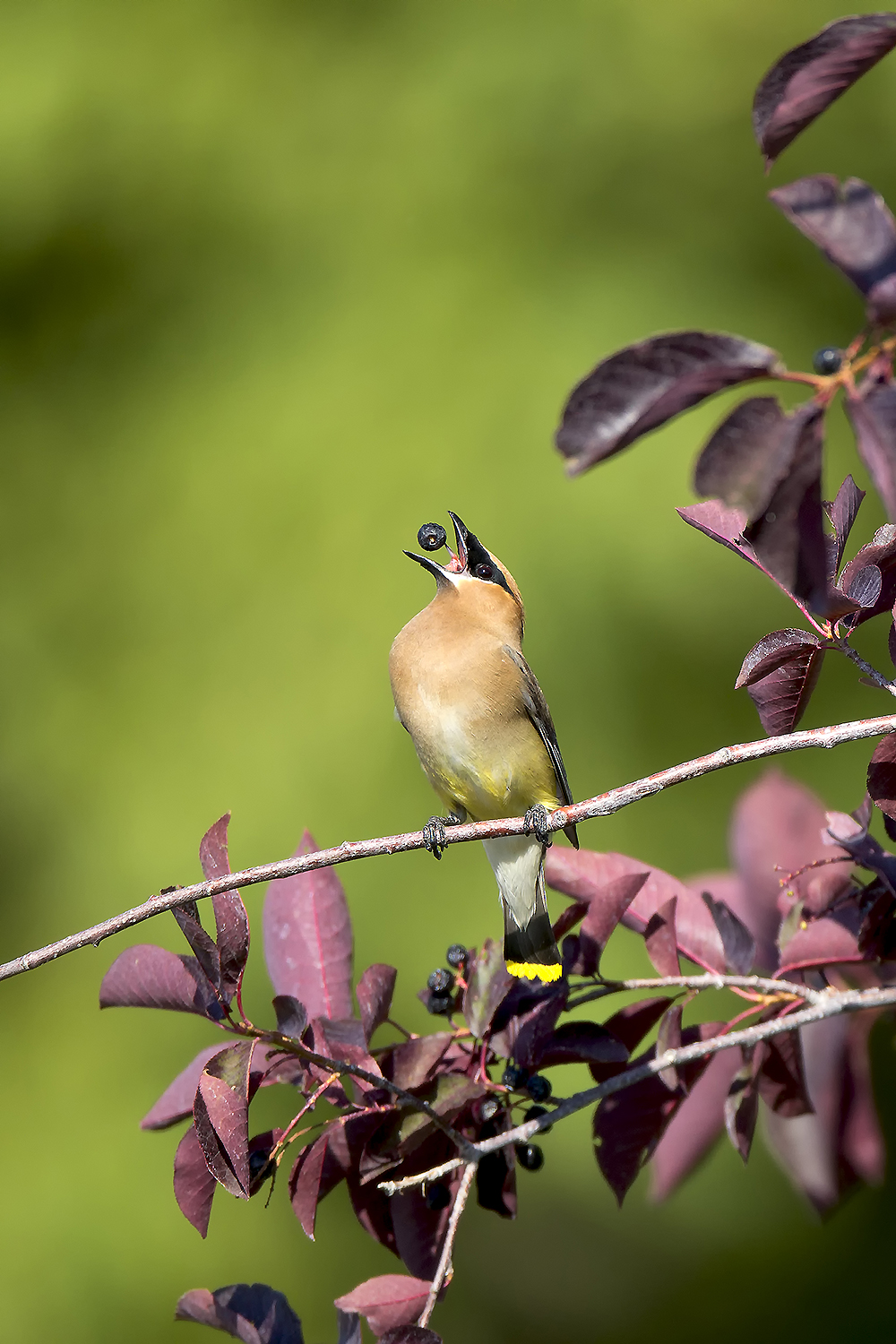
Life Cycle — Pairing, Nesting, and the Rhythm of Raising Young
One of the most memorable things I’ve witnessed with Cedar Waxwings is how quietly their life cycle unfolds. There’s no dramatic display or aggressive territorial behavior like you see in many other species. Instead, everything happens through subtle interaction — timing, proximity, and repeated behavior between individuals.
Courtship begins with a simple but powerful gesture: passing an object. A berry, a petal, or a small piece of vegetation is offered, received, and sometimes passed back again. I’ve watched this exchange go on for several cycles before one bird finally eats the offering. It’s a quiet form of communication — a way of establishing rhythm and trust before nesting even begins.
Once paired, Cedar Waxwings build their nests in trees or shrubs, often along edges where cover and food are both close at hand. The nests are carefully constructed from grasses, twigs, and fine plant material, positioned to provide both concealment and access. The female typically lays several pale blue eggs, while the male supports her by bringing food during incubation.
After hatching, both parents are actively involved in feeding the young. This is where their diet shifts again — insects become more important, supplying the protein needed for growth. As the chicks develop, the feeding becomes more frequent and coordinated, reinforcing the same cooperative patterns seen in adult flocks. This entire cycle — pairing, nesting, feeding, and fledging — is deeply tied to seasonal timing and resource availability, connecting directly to adaptation and survival and the broader wildlife systems ecology that supports them.
Conservation — A Stable Species Dependent on Seasonal Systems
In terms of population, Cedar Waxwings are currently considered stable. But in the field, what stands out to me is how dependent they are on conditions staying intact. They rely heavily on fruiting trees, seasonal timing, and safe movement between habitats. When those systems begin to break down, Waxwings feel it quickly.
Because their diet is so centered around berries, changes in plant communities directly affect them. Habitat loss, development, and the removal of native fruiting species reduce the availability of food across the year. Insect decline also plays a role, especially during the breeding season when protein becomes critical for raising young. These pressures connect directly to broader issues in wildlife conservation and habitat protection.
There are also more immediate risks. Waxwings are particularly vulnerable to window collisions, especially during migration when flocks move through unfamiliar environments. In colder months, fermented berries can lead to temporary disorientation, which increases the risk of impact or predation. These are small details, but they reflect how closely their survival is tied to both natural and human-influenced environments.
What makes Cedar Waxwings important is not just their beauty — it’s their role. As seed dispersers, they help regenerate the very systems they depend on. Protecting them means protecting the continuity of fruiting plants, seasonal cycles, and connected landscapes. It’s a reminder that conservation isn’t about a single species — it’s about maintaining the relationships that sustain entire ecosystem balances.
Seasonal Patterns — Movement Guided by Fruit, Not Maps
Cedar Waxwings don’t follow the kind of rigid migration patterns you see in many birds. In the field, their movement feels more fluid — less like a fixed route and more like a response to conditions. They go where the food is. When berries are abundant, they stay. When those resources disappear, they move on.
Through spring and summer, I typically find them in northern regions where nesting and insect availability align with breeding needs. As late summer transitions into fall, their behavior shifts. Flocks begin to form more consistently, and their movement becomes more noticeable as they track ripening fruit across the landscape.
By winter, they can appear far south — but not always in predictable places. Some years they’re abundant in one region, other years nearly absent. That variability reflects a deeper pattern tied to fruit production cycles, not geography alone. This is why Cedar Waxwings are often described as nomadic migrants rather than traditional ones.
For me, this makes them one of the most revealing species when it comes to understanding seasonal ecology. If you follow Waxwings, you’re really following the timing of fruit across nature’s seasons, the availability of resources, and the shifting structure of habitats throughout the year. It’s exactly the kind of pattern I track through my seasonal wildlife calendar and broader migration system.
Naturepedia Connection — Understanding the Cedar Waxwing in the Larger System
In my field work, Cedar Waxwings are one of the clearest examples of how a species connects across multiple layers of the natural world at once. Their behavior is not isolated — it is shaped directly by fruit cycles, habitat structure, seasonal timing, and movement across landscapes.
They link plant systems to animal systems through seed dispersal. They connect seasonal change to migration through their nomadic movement. And they reveal how cooperation, rather than competition, can define success within a species. When you watch Waxwings closely, you’re not just observing a bird — you’re watching a living intersection of ecology in motion.
This is exactly how I’ve built my work — not as separate pieces, but as connected layers of understanding. Species like the Cedar Waxwing sit within: bird categories, behavior and ecology, ecosystems, and conservation systems.
Each connection adds context. Each layer adds meaning. And together, they form a more complete understanding of how wildlife actually exists in the real world — not as isolated subjects, but as part of a continuous, interdependent system.
To explore this deeper, continue into the Naturepedia system.
Cedar Waxwing FAQs — Field Questions Answered
Where do Cedar Waxwings live?
In my experience, Cedar Waxwings are most often found in edge habitats — orchards, open woodlands, riparian zones, and suburban areas with fruiting trees. Wherever berries are abundant, they will appear.
What do Cedar Waxwings eat?
Their diet is heavily centered on fruit — especially berries like cedar, dogwood, serviceberry, and hawthorn. During the breeding season, they also rely on insects to support chick development.
Why do Cedar Waxwings travel in flocks?
They are highly social birds. Flocking helps them locate food, maintain safety, and coordinate movement. In the field, I often see entire groups feeding and moving together as a single unit.
Are Cedar Waxwings migratory?
Yes, but not in a fixed way. They are nomadic migrants, meaning they follow food sources rather than strict routes. Their presence in any given area can change year to year depending on fruit availability.
What makes Cedar Waxwings unique compared to other birds?
Their combination of social cooperation, fruit-based diet, and synchronized movement sets them apart. The berry-passing behavior is one of the most distinctive interactions I’ve observed in any bird species.
Are Cedar Waxwings endangered?
No, they are currently stable. However, they depend on intact habitats, healthy plant communities, and seasonal food sources — so environmental changes can still impact them over time.
Why do Cedar Waxwings sometimes appear suddenly?
Because they track fruit, not territory. When a tree or area reaches peak ripeness, a flock can arrive quickly, feed intensively, and then disappear just as fast once resources are depleted.
How can I attract Cedar Waxwings?
Plant native berry-producing trees and shrubs, provide water sources, and avoid pesticide use. If the habitat supports fruit cycles, Waxwings will eventually find it.
When is the best time to observe Cedar Waxwings?
Late summer through winter is often the most active period, especially when berries are abundant. Early morning and late afternoon provide the best light and feeding activity.
What role do Cedar Waxwings play in ecosystems?
They are important seed dispersers. By consuming and redistributing berries, they help regenerate plant communities and maintain ecological balance across habitats.
About the Author

I’m Robbie George, a National Geographic–published wildlife photographer. My work is built from time in the field — returning to the same locations through changing light, weather, and seasons to understand how animals move within their environment.
Rather than chasing isolated moments, I focus on patterns — how behavior connects to habitat, how species respond to seasonal change, and how those relationships form the larger structure of the natural world. Every image begins with observation, patience, and respect for the space the animal occupies.
This approach extends into the Naturepedia system, where I organize field knowledge across species, ecosystems, behavior, and time. It’s a way of building a clearer picture of nature — one that reflects how everything is actually connected.
If you're planning your own time in the field, you can explore tools like the Seasonal Wildlife Calendar, Photography Maps, and the Field Tools hub to better understand timing, light, and movement before you go.
“Attention first, image second. The photograph is what remains after you’ve understood the moment.”






Social Behavior — Flock Intelligence and Shared Movement
Cedar Waxwings are among the most socially cohesive birds I encounter in the field. Unlike many species that form loose aggregations, Waxwings operate as tightly connected groups. When they land, feed, and take off, they do so with a level of coordination that feels almost instantaneous — as if each bird is responding to the same internal signal.
What stands out most is the absence of conflict. Even in dense feeding situations, Waxwings rarely compete aggressively. Instead, they rotate positions, share space, and move fluidly along branches. The berry-passing behavior I’ve observed is just one expression of this — a visible sign of a deeper cooperative structure within the flock.
Their communication reflects this same subtlety. Rather than loud, complex songs, Waxwings use soft, high-pitched calls to maintain contact. These sounds are easy to overlook, but they play a critical role in keeping the flock synchronized during flight and feeding. It’s a quieter form of communication, but one that supports highly efficient group behavior.
In my experience, watching a flock of Cedar Waxwings is less about tracking individuals and more about observing a system in motion. Their behavior connects directly to broader patterns of wildlife behavior and ecology and highlights how cooperation — not competition — can define success in the natural world.