
Discover the Enchanting Wood Duck: A Visual Exploration
Wood Duck — A Forest Wetland Species Defined by Color, Behavior, and Habitat
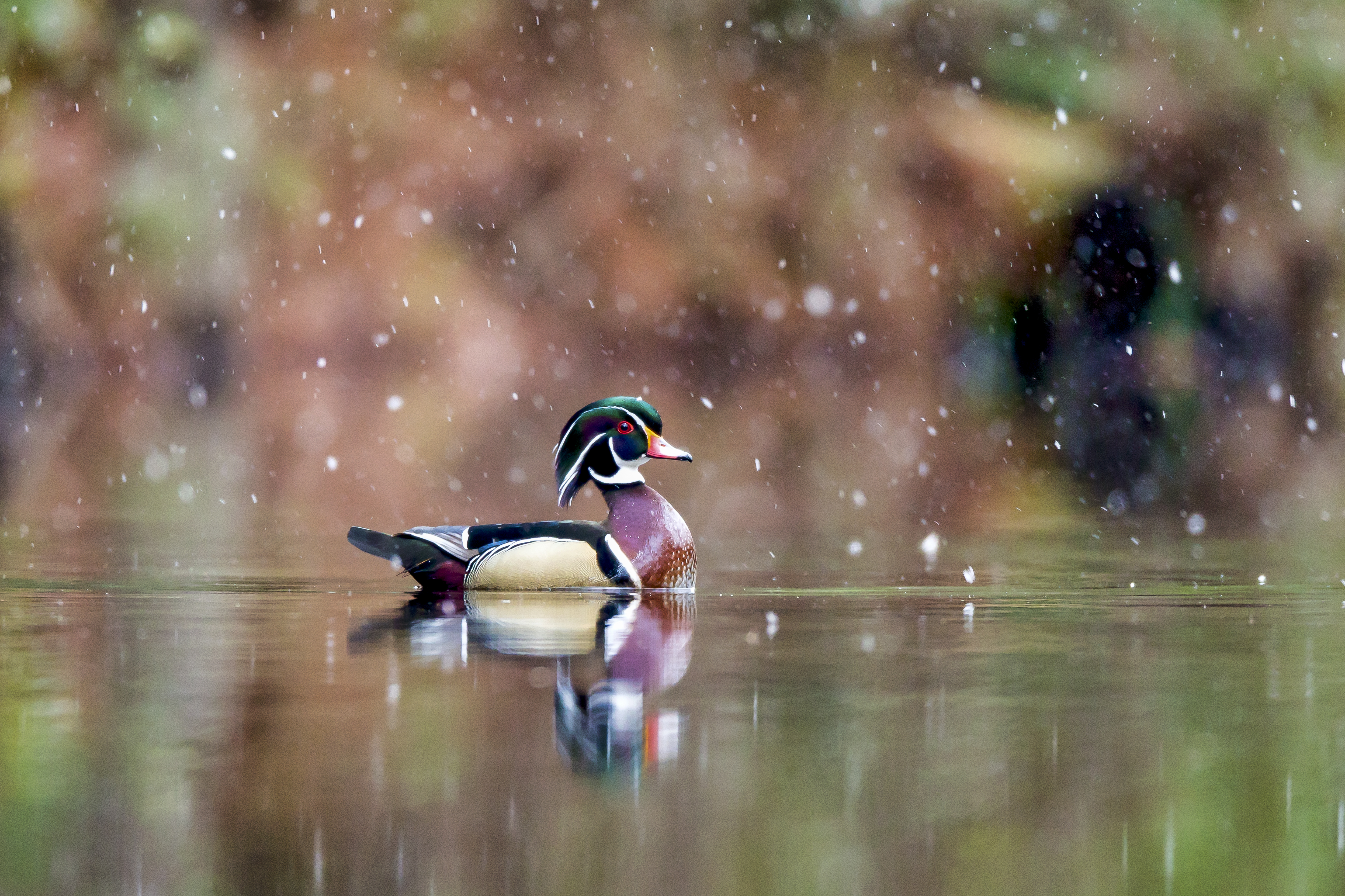
I’ve always thought of the Wood Duck as a species that reveals itself slowly. You don’t always notice it right away. It’s usually the movement first—a shape slipping through reflection—then the color begins to show as the light shifts. That experience is very different from open-water ducks. This is a bird tied to edges, shadows, and structure.
Wood Ducks sit firmly within my waterfowl and wetland birds page, but they behave differently than most. They rely on forested wetlands, tree cavities, and protected water rather than wide open lakes. That makes them a strong example of how behavior and habitat are always linked, which I explore further in wildlife behavior and ecology.
Ecologically, they connect directly into ecosystems of North America, especially freshwater wetlands where trees, water, and seasonal cycles intersect. Their nesting in tree cavities, their feeding along quiet edges, and their seasonal movement all depend on how intact those systems remain.
Timing matters with Wood Ducks as well. They show up differently depending on season, light, and water levels. That’s why I often connect them into my seasonal wildlife calendar and field tools, because knowing when to be in the right wetland is just as important as knowing where.
On This Page
Core Behavior — Quiet Movement Through Forested Wetlands
In the field, Wood Ducks rarely announce themselves the way larger open-water birds do. I usually notice them as movement first — a duck slipping out from the cover of branches, easing along the edge of a flooded woodland, or lifting suddenly through the trees with a burst of speed. Their core behavior is shaped by caution, cover, and precision rather than exposure.
That makes them very different from many other waterfowl. Wood Ducks are comfortable in wooded swamps, quiet backwaters, beaver ponds, and sheltered wetland edges where overhanging limbs, reflections, and vegetation create a more enclosed world. They feed, rest, and travel through these spaces with an alertness that feels almost secretive. Even when the plumage of a drake is brilliant, the bird’s behavior is still built around structure and concealment.
I often see this most clearly in how they move across water. Wood Ducks don’t just drift aimlessly. They use shoreline cover, pockets of vegetation, and shaded corridors in ways that make sense for a species tied to forest wetlands. When startled, they can explode upward with remarkable speed and agility, weaving through timber and tight openings in a way few ducks can match.
Their feeding behavior also fits this pattern. Rather than acting like deep-diving ducks or open-water grazers, they work the margins — dabbling, tipping, and picking through seeds, acorns, aquatic plants, and small invertebrates in protected shallows. That relationship between movement, habitat, and feeding is exactly why the Wood Duck belongs not just within waterfowl and wetland birds, but also within wildlife behavior and ecology.
The more time I spend around Wood Ducks, the more their beauty feels secondary to their behavior. What makes them memorable is not only the color, but the way that color moves through a living wetland system — careful, fast, alert, and perfectly matched to the hidden architecture of water and trees.
Habitat — Forested Wetlands, Quiet Water, and Tree Cavities
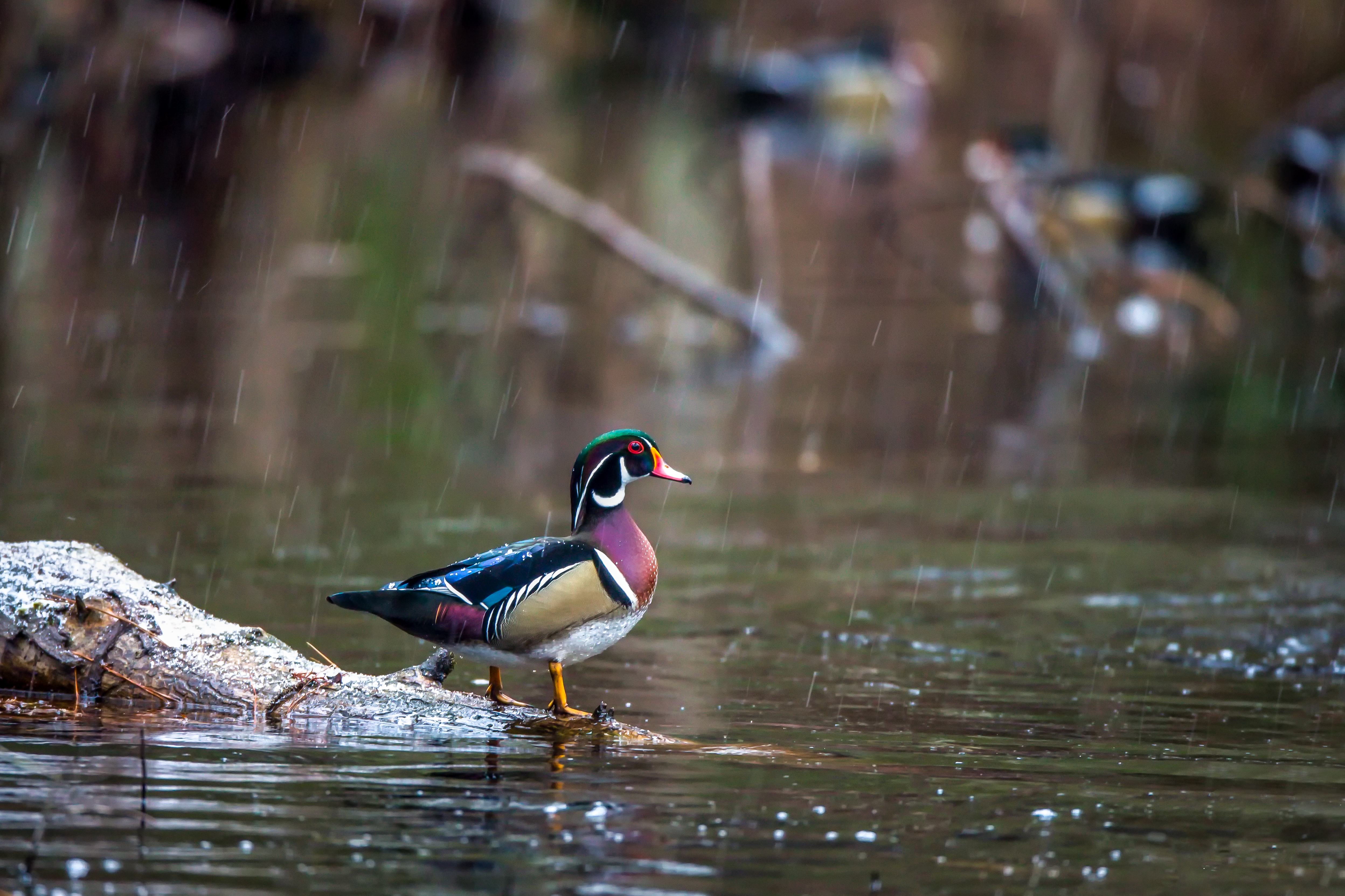
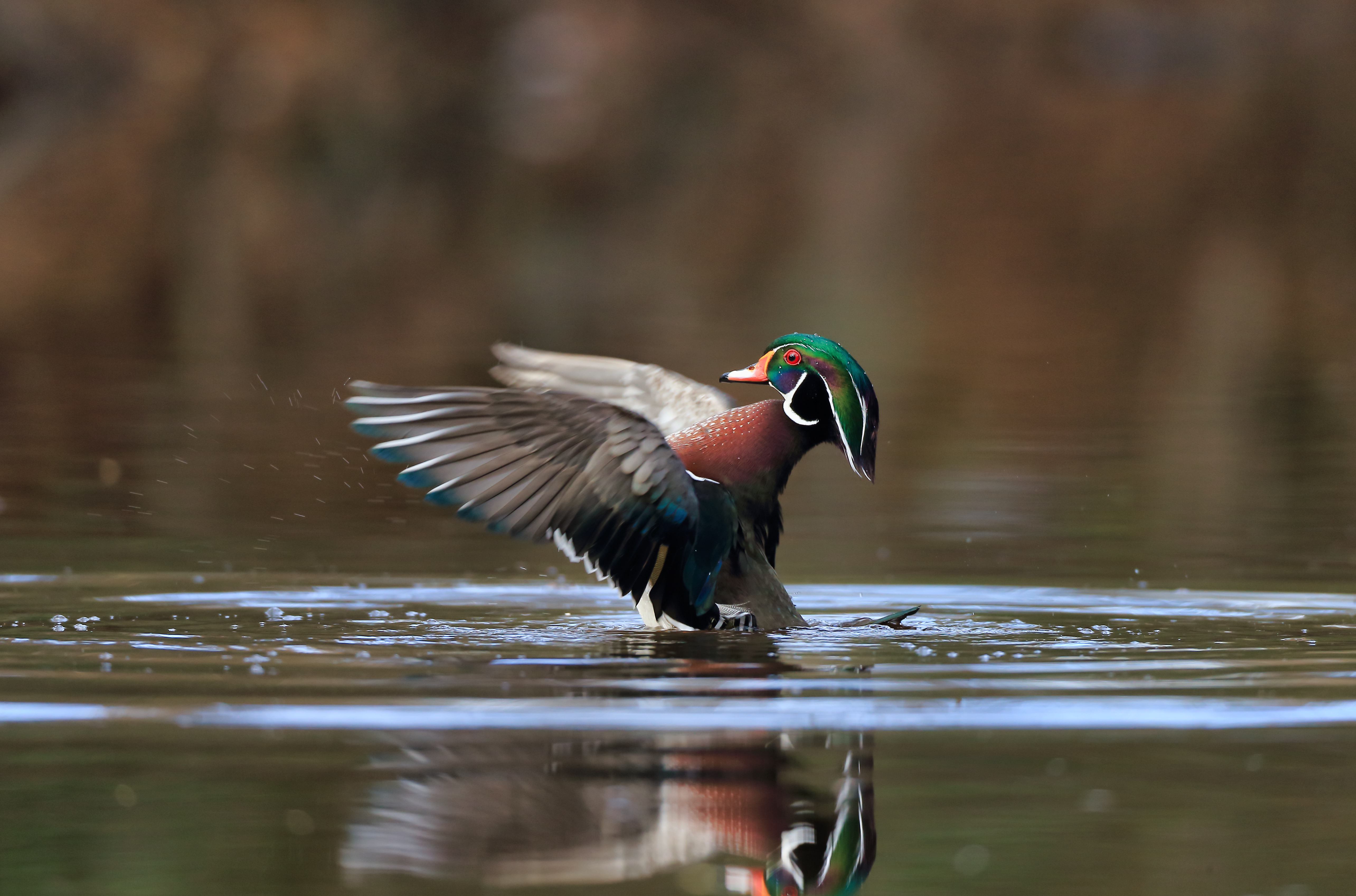
Wood Ducks are tightly linked to forested wetlands, and that connection shows up immediately in where you find them. Unlike many ducks that favor open water, they prefer quiet environments where trees, water, and cover overlap — wooded swamps, beaver ponds, slow rivers, and flooded timber where structure defines the space.
What makes this habitat unique is not just the presence of water, but the presence of trees. Wood Ducks are one of the few duck species that regularly nest in tree cavities. That single trait changes everything about how they use a landscape. A wetland without trees is rarely enough. They need both water and vertical structure — a combination that ties them directly into forested ecosystem zones.
I see this most clearly in places like Lake Mattamuskeet and other sheltered wetlands where wooded edges create pockets of calm water. These environments give Wood Ducks access to food, protection, and nesting sites all in one place. That overlap is exactly what makes a habitat “work” for the species.
This also connects directly into my broader pages on wildlife habitats and ecosystem zones and ecosystems of North America, where habitat is defined not just by location, but by how structure, water, and vegetation interact.
In the field, when those elements come together — still water, tree cover, and seasonal food — Wood Ducks don’t just pass through. They settle in. And when they do, the wetland starts to feel complete.
Diet — Feeding Along Edges, Water, and Forest Floor
The diet of a Wood Duck reflects the same pattern seen in its habitat and behavior — everything happens along the edges. They are not deep divers, and they are not built for open-water feeding. Instead, they work shallow water, flooded timber, and wetland margins where seeds, plant matter, and small invertebrates collect.
In the field, I often see them dabbling quietly near the surface or tipping forward to reach slightly deeper food. Their feeding areas tend to be calm and protected — places where acorns fall into the water, aquatic plants grow near the surface, and organic material gathers along the shoreline. That mix of water and forest input is what defines their feeding environment.
One of the most important food sources for Wood Ducks is mast — especially acorns. In forested wetlands, this becomes a major seasonal driver of movement and feeding behavior. When acorns are abundant, Wood Ducks concentrate in those areas, shifting their use of habitat based on availability. That connection between food and movement ties directly into broader ecological patterns explored in food webs and ecological relationships.
Beyond plant material, they also feed on insects, larvae, and small aquatic organisms, especially during breeding season when protein becomes more important. This seasonal flexibility allows them to adapt, but the core pattern remains the same — Wood Ducks depend on productive wetlands where both plant and animal food sources are available in close proximity.
What stands out to me is how grounded their feeding is in place. Unlike species that range widely for food, Wood Ducks often stay within small, productive pockets of habitat. When the food is right, they don’t need to go far — everything they need is already there.
Life Cycle — Nesting in Trees and Early Independence
The life cycle of a Wood Duck is one of the most distinctive among North American waterfowl, largely because of where it begins — not on the ground, but in trees. Unlike most ducks, Wood Ducks rely on natural cavities in mature trees or nest boxes placed near water. That single behavior defines how they reproduce and how they use their environment.
In early spring, pairs form and begin selecting nesting sites in forested wetlands where water and tree cover are both present. The female lays a clutch of eggs inside the cavity, lining the nest with down for insulation. During incubation, she remains largely concealed, relying on camouflage and location to protect the nest.
One of the most remarkable moments in their life cycle comes shortly after hatching. The ducklings leave the nest within a day or two — dropping from the tree cavity to the ground below and making their way to water under the guidance of the female. It’s a brief but critical transition, and it highlights how quickly independence begins in this species.
As the young grow, they move through a gradual development from soft, camouflaged down to more defined juvenile feathers. By the time they reach maturity, the difference between male and female becomes more pronounced, reflecting the roles they will play in breeding and survival. This progression connects directly into my broader pages on wildlife behavior and ecology and ecosystems of North America, where life stages are always tied to habitat conditions.
What stands out to me is how quickly the cycle moves. From nesting in a tree to swimming in open water within days, Wood Ducks transition through life stages with a speed that matches the seasonal rhythm of wetlands themselves.
Behavior — Movement, Alertness, and Life Along the Edges
Wood Duck behavior always feels intentional to me in the field. They don’t linger out in the open the way some waterfowl do. Instead, they stay close to structure — edges of trees, overhanging branches, and quiet pockets of water where visibility and escape routes are balanced.
One of the most noticeable traits is how quickly they respond to disturbance. Even a small shift in sound or movement can send them lifting off in a sudden burst, cutting through tight spaces with surprising speed. That agility is part of what allows them to live in wooded environments where other ducks would struggle to move.
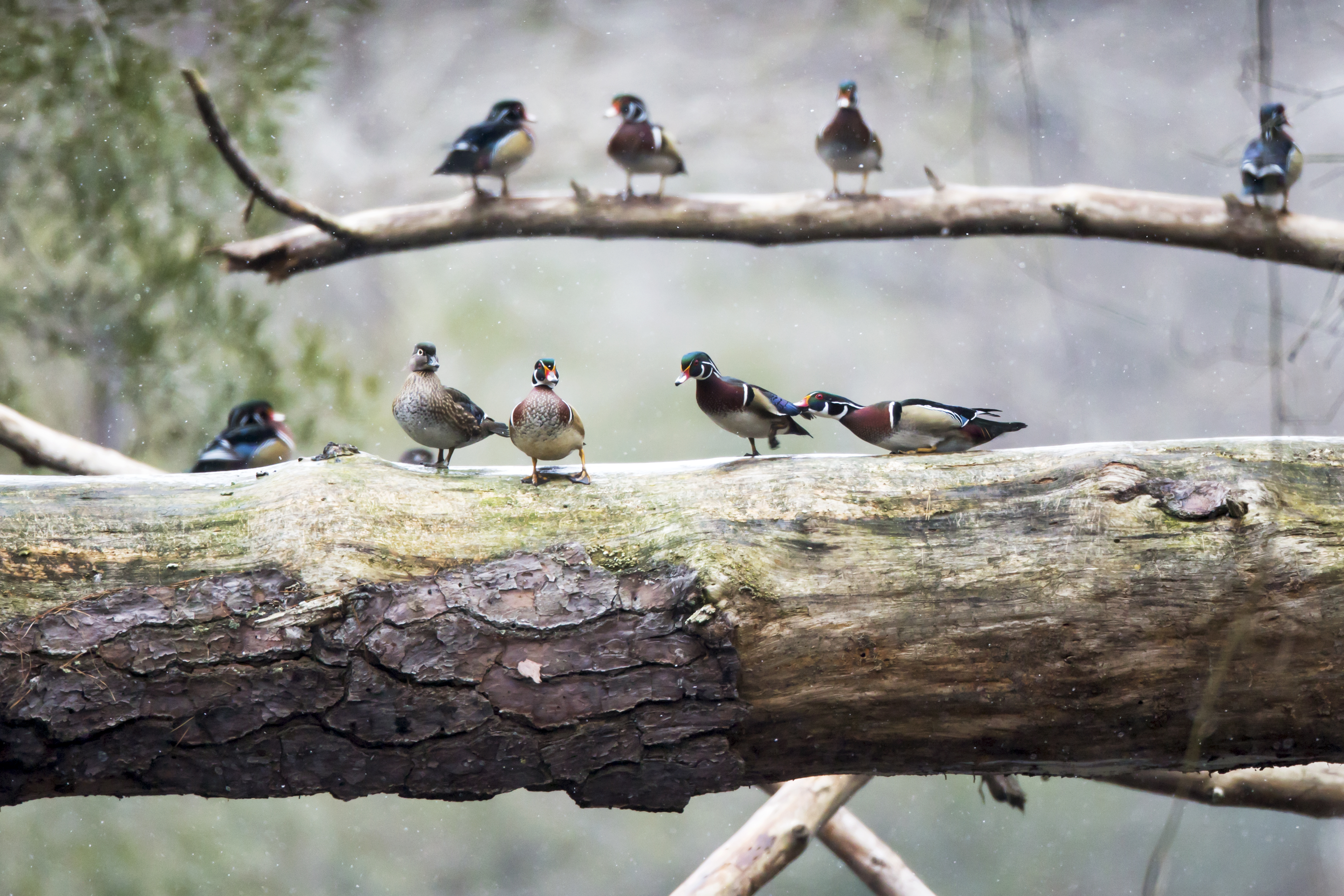
Socially, Wood Ducks are often seen in small groups or pairs rather than large flocks. Their spacing reflects the structure of the habitat — tighter, more contained, and shaped by the wetland itself. In those quieter settings, behavior becomes easier to read: subtle head movements, repositioning in the water, and brief interactions that maintain awareness without crowding.
I’ve also noticed how much their behavior shifts with light. Early morning and late afternoon tend to be the most active periods, when they move, feed, and interact more visibly. During brighter parts of the day, they often retreat deeper into cover. That rhythm connects directly into my seasonal wildlife calendar.
This behavior also ties into wildlife adaptation and survival, because everything about how Wood Ducks move reflects a species adapted to complexity rather than openness.
The more I watch them, the more it becomes clear that Wood Ducks are shaped by fine details — light, structure, sound, and movement all working together.
Conservation — A Recovery Story Tied to Habitat and Stewardship
The Wood Duck represents one of the more successful conservation recoveries in North American wildlife. Populations once declined sharply due to overhunting and the loss of forested wetlands, where both water and nesting trees were removed from the landscape.
Recovery came through a combination of protection and awareness. Hunting regulations helped stabilize populations, but one of the most important factors was the widespread use of nest boxes. Because Wood Ducks depend on tree cavities, providing artificial nesting sites allowed them to return to areas where natural cavities had disappeared.
Even today, their survival remains closely tied to habitat quality. Wetland loss, water pollution, and the removal of mature trees all affect where Wood Ducks can live and reproduce. Their dependence on both forest structure and water makes them especially sensitive to changes in the landscape.
This connection places them directly within wildlife conservation and habitat and biodiversity and ecosystem balance.
In the field, their presence often signals a healthy system. When Wood Ducks are consistently using a wetland, it usually means the balance between water, vegetation, and structure is still intact.
Their recovery shows what’s possible when habitat and species are protected together. Their future depends on whether that connection continues.
Seasonal Patterns — Movement, Timing, and Year-Round Presence
Wood Ducks don’t follow the long-distance migration patterns of many waterfowl. Instead, their movement is more regional and flexible, shifting with temperature, water conditions, and food availability.
In northern areas, they migrate south when wetlands freeze. In milder regions, they may remain year-round, adjusting locally rather than traveling across the continent. This makes them a strong example of how species respond to conditions rather than fixed routes.
Their seasonal cycle is closely tied to wetland function. Spring brings movement into breeding habitat with tree cavities and protected water. Summer centers on raising young. Fall shifts toward feeding, especially where acorns are abundant. Winter presence depends on whether water remains open and productive.
I track these patterns through my wildlife migration and seasonal patterns and seasonal wildlife calendar, because timing is often more important than location.
Unlike large, visible migrations, Wood Ducks shift quietly — appearing and disappearing with subtle changes in habitat. Their movement is less dramatic, but deeply connected to the rhythm of the wetland year.
Over time, it becomes clear that Wood Ducks are defined not by distance, but by timing — adjusting their presence to match the conditions around them.
From Field Observation to the Larger Wood Duck System
The more time I spend observing Wood Ducks, the more they reinforce a pattern I see across my work — species only fully make sense when you understand the system they belong to. Their behavior, their feeding, their nesting in tree cavities, and their seasonal movement all point back to one thing: the structure of the wetland itself.
That’s exactly how I’ve built my site. I don’t treat the Wood Duck as a standalone subject. I connect it to waterfowl and wetland birds, to behavior and ecology, to ecosystems, and to conservation and habitat. When those pieces come together, the species becomes clearer.
Wood Ducks are a strong example of how habitat defines behavior. They depend on tree cavities, protected water, seasonal food sources, and quiet structure. When those elements are present, they thrive. When they begin to disappear, the species responds quickly. That makes them both a beautiful subject and a meaningful indicator of wetland health.
This page is just one layer of that understanding. The deeper connection comes from seeing how Wood Ducks fit into the broader Naturepedia system — where species, habitat, timing, and observation all link together into one continuous structure.
Frequently Asked Questions About Wood Ducks
What do Wood Ducks eat?
Wood Ducks feed on a mix of plant and animal material, including acorns, seeds, aquatic vegetation, insects, and small invertebrates. They typically forage in shallow water and along wetland edges rather than diving deeply.
Where do Wood Ducks live?
Wood Ducks live in forested wetlands such as wooded swamps, beaver ponds, slow rivers, and marsh edges. They rely on both water and trees, especially for nesting in natural cavities.
Do Wood Ducks migrate?
Wood Ducks are partial migrants. Birds in northern regions migrate south during winter, while populations in milder climates may remain year-round, shifting locally based on water conditions and food availability.
How do Wood Ducks nest?
Wood Ducks nest in tree cavities near water. The female lays eggs inside the cavity and incubates them for about a month. After hatching, ducklings jump from the nest and follow the female to water.
Why are Wood Ducks so colorful?
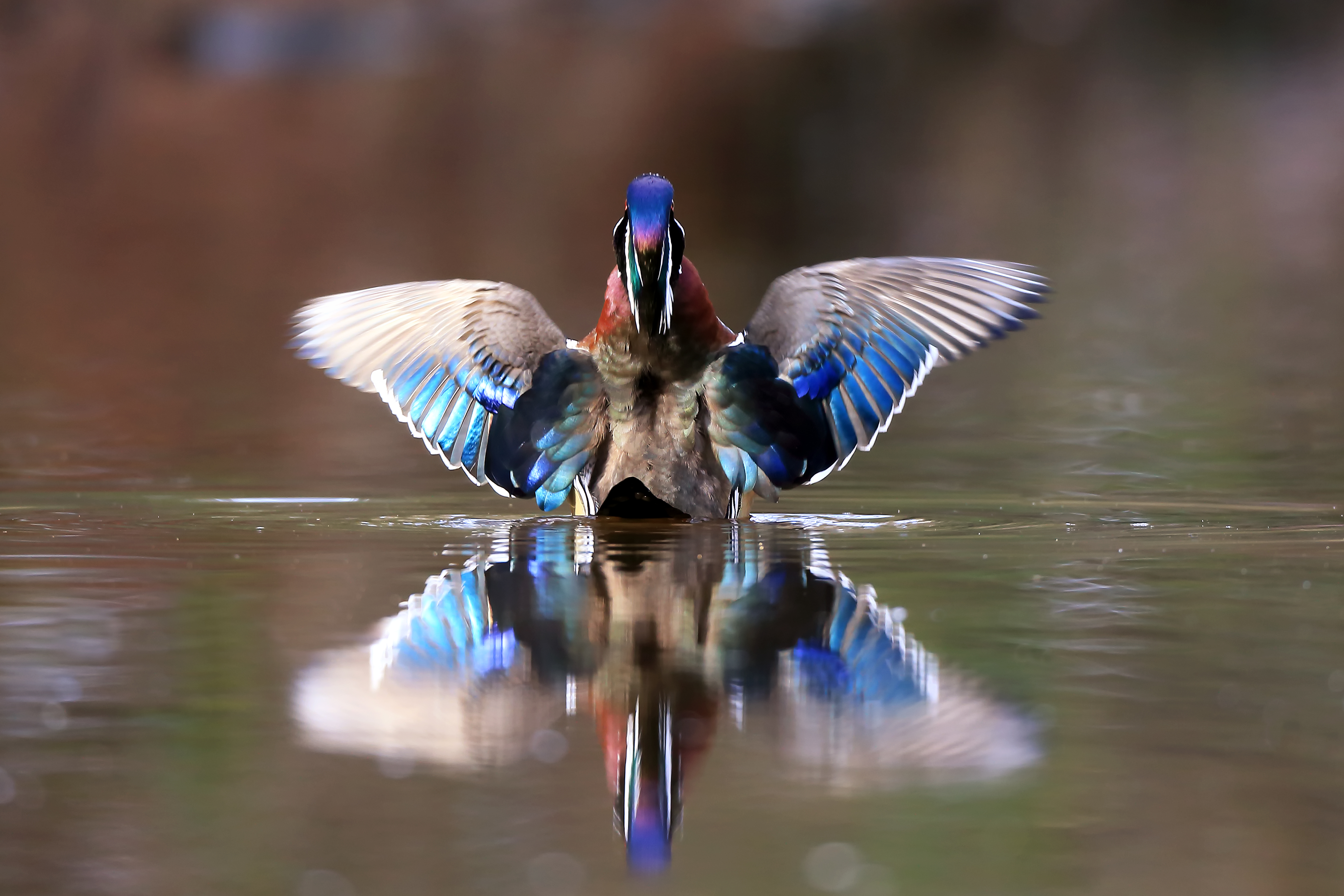
Male Wood Ducks have iridescent feathers that reflect light, creating vivid greens, purples, and chestnut tones. These colors are used in courtship and also help break up their outline in dappled wetland light.
Are Wood Ducks important for wetland ecosystems?
Yes. Wood Ducks play a role in seed dispersal and insect control, and their presence reflects healthy forested wetlands where water, vegetation, and tree structure are all functioning together.
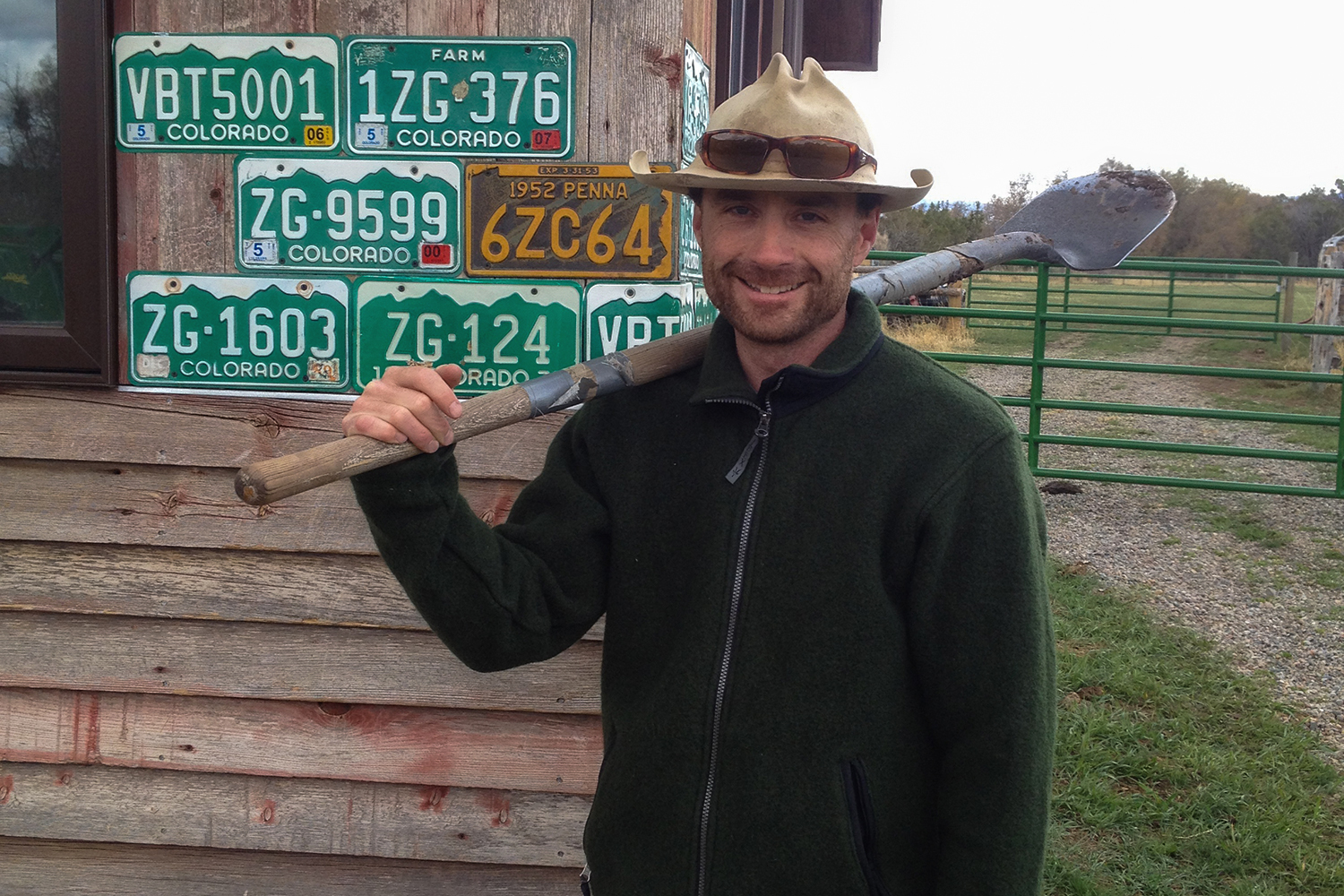
About the Photographer
I’m Robbie George, a National Geographic–published wildlife photographer. My work is built through time in the field — returning to wetlands, forests, and wild places across seasons, learning through observation how light, behavior, and habitat come together in real moments.
Wood Ducks have always stood out to me because they represent something deeper than color. They are a species defined by structure — trees, water, and timing all working together. When I photograph them, I’m not just capturing their plumage. I’m documenting a relationship between forest and wetland, between concealment and movement, between stillness and sudden flight.
That perspective is exactly how I’ve built my site. Each species connects outward — into Naturepedia, into ecosystems, behavior, migration, and conservation. My goal is to take what I experience in the field and organize it into a system that makes those connections clear.