
Exploring Nature Photography in Acadia National Park, Maine
What It Feels Like in the Field
The first thing you notice in Acadia isn’t the view—it’s the timing. Light arrives differently here. It comes across the ocean, not over land, and that changes everything about how the landscape reveals itself.
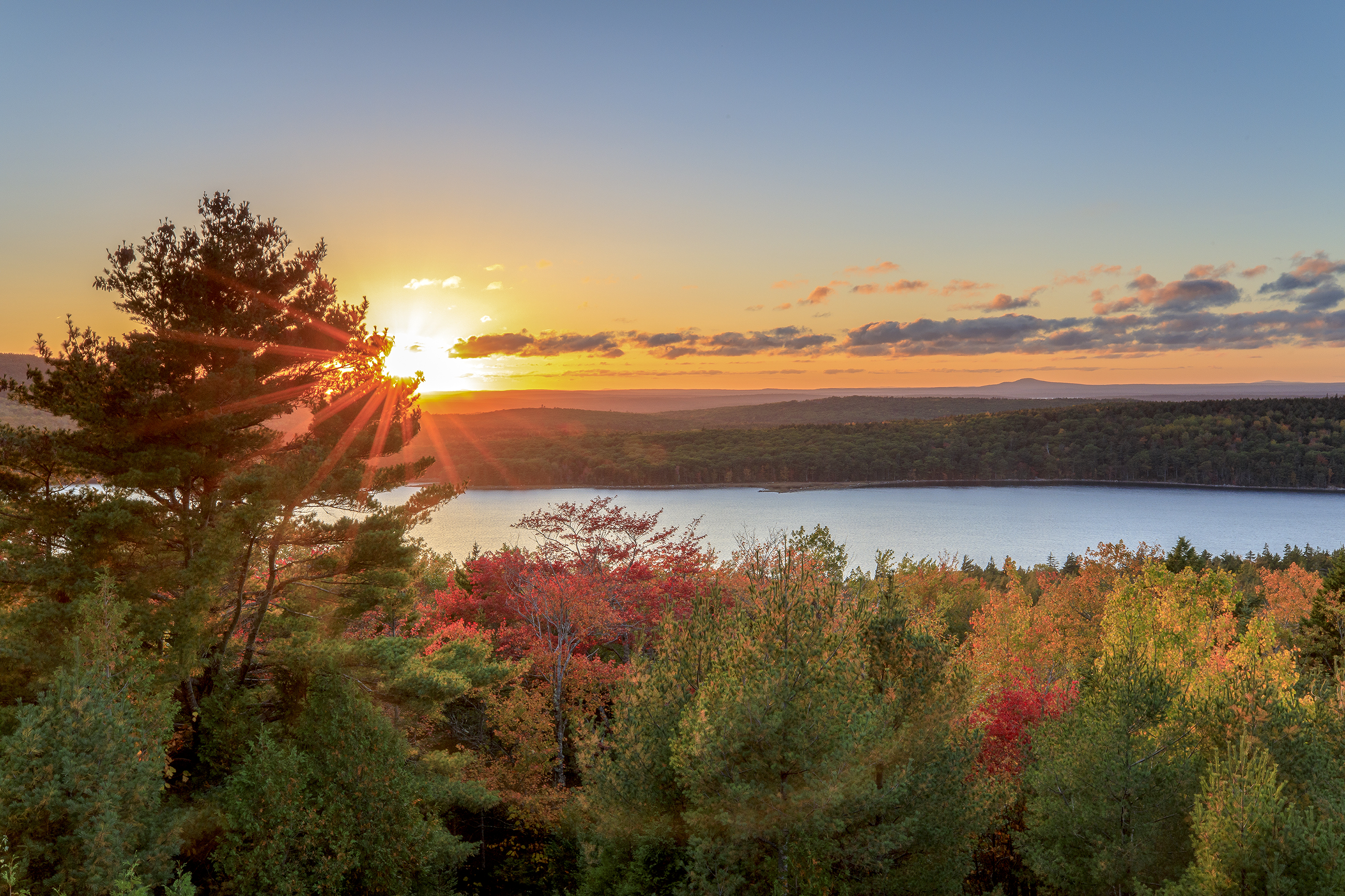
On calm mornings, places like Jordan Pond become perfectly reflective—not because they always are, but because wind, temperature, and timing align for a short window. If you miss it, the surface breaks and the moment disappears.
Higher up, near Cadillac Mountain, you start to understand how exposure works in real time. Light hits the ocean first, then the islands, then the forest behind you. It’s not a single scene—it’s a sequence.
That’s what defines photographing Acadia. You’re not just composing—you’re tracking change. Watching how fog lifts, how tides move, how animals respond, and how quickly conditions shift. The camera becomes secondary. Observation comes first.
Explore This Acadia Field Guide
Landscape System — How Acadia Is Built
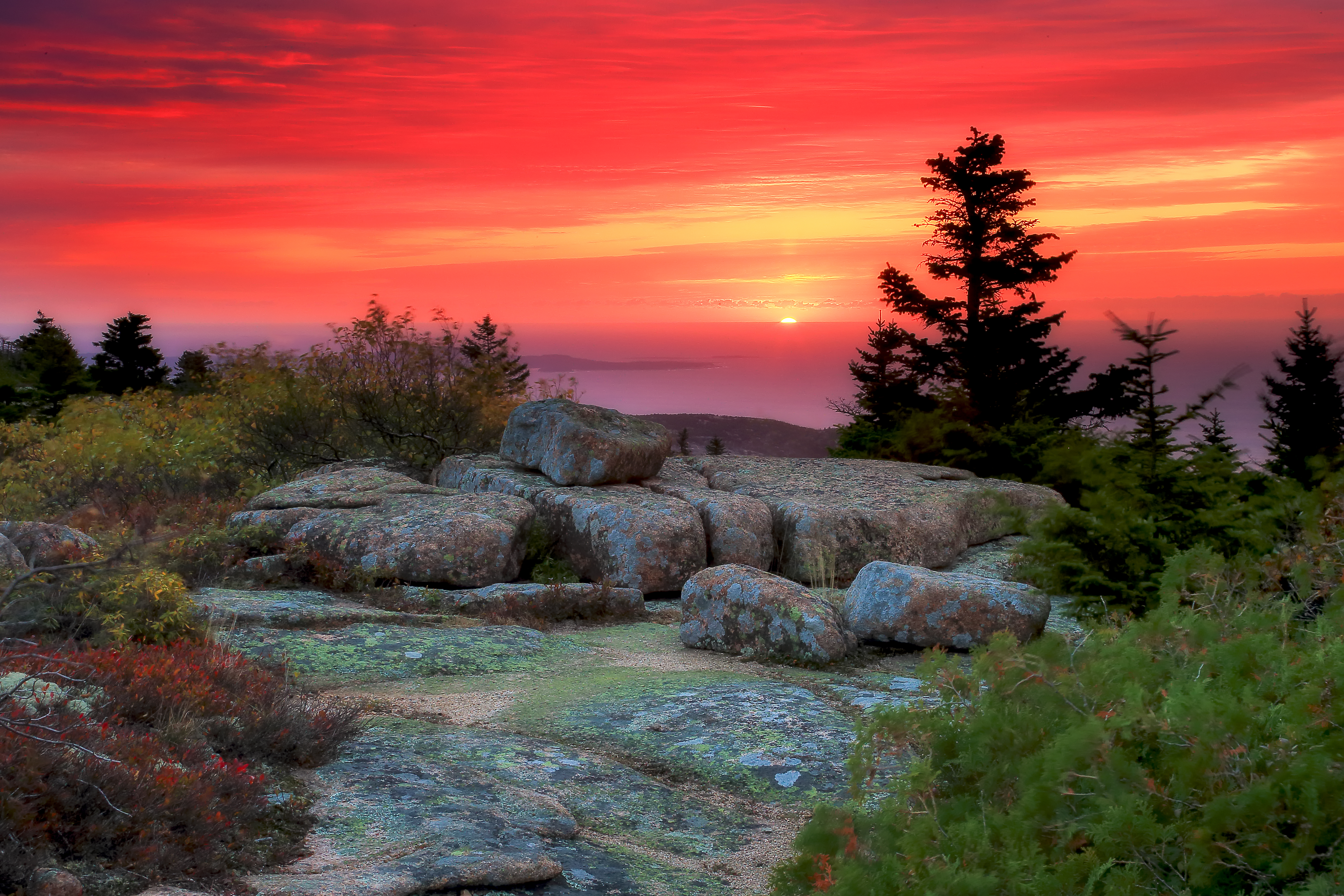
Acadia is shaped by collision—land meeting ocean, granite meeting weather, time meeting exposure. The foundation here is ancient granite, lifted, fractured, and carved by glacial movement, then constantly reworked by Atlantic force.
From higher elevations like Cadillac Mountain, you can see how the system lays itself out—glacial valleys filled with water, forested ridges running toward the coast, and islands scattered across the Atlantic like remnants of a larger structure.
At lower elevations, the structure changes. Shorelines fracture into tide pools, inlets, and channels. Places like Thunder Hole aren’t random—they’re pressure points where ocean energy is funneled into rock geometry. What looks dramatic is actually predictable once you understand the shape of the land.
Inland, areas like Jordan Pond hold a different expression of the same system. The water sits in a glacial basin, shielded from wind by surrounding terrain. That’s why reflections form here more consistently—it’s not luck, it’s structure.
Understanding Acadia starts with this: the landscape controls everything. Where light lands, where animals move, where reflections form, where fog settles. Once you see the structure, you stop searching for compositions—and start recognizing them.
Wildlife Behavior — How Animals Move Through Acadia
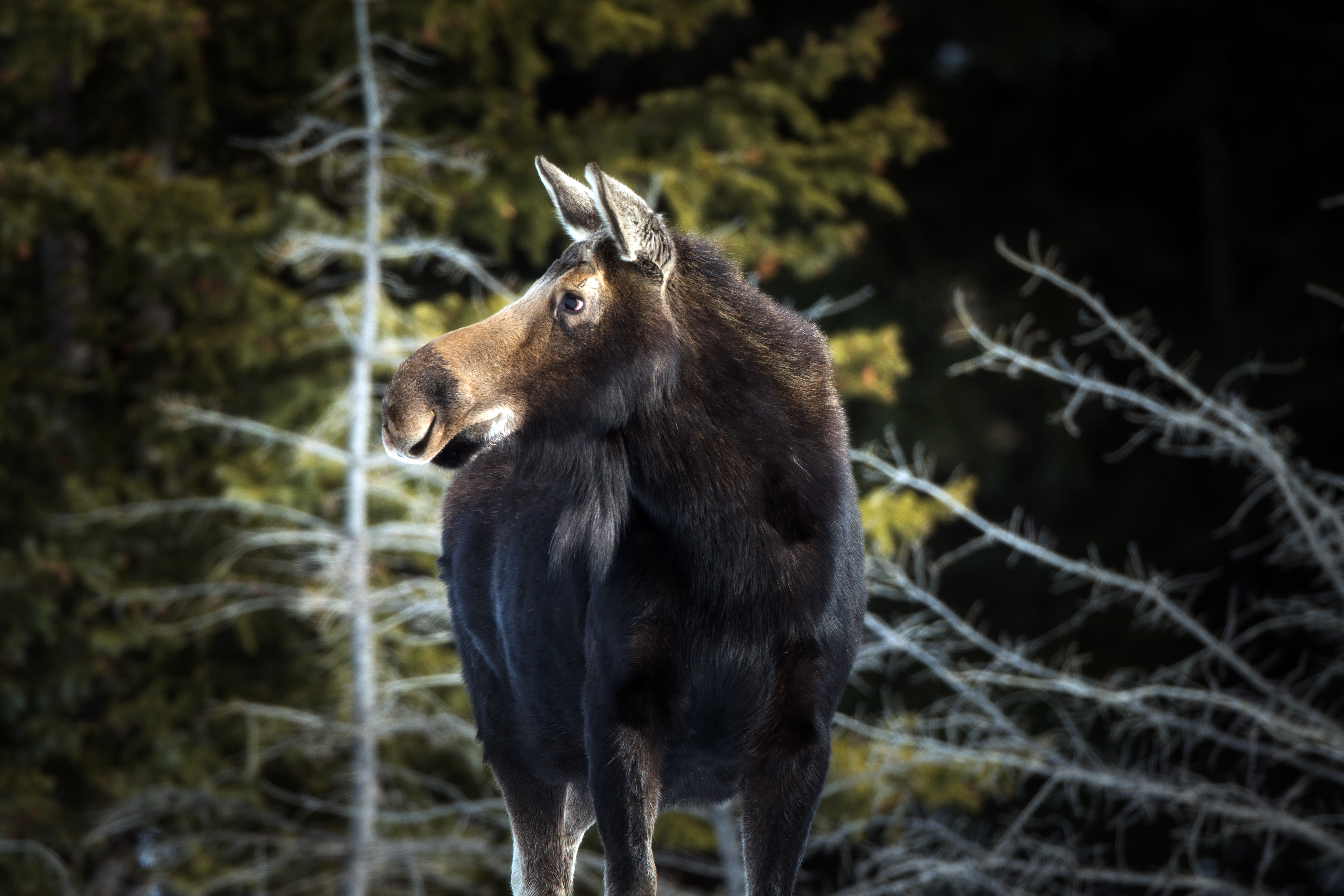
Wildlife in Acadia isn’t randomly distributed—it follows structure, light, and pressure. Once you understand how the landscape works, animal behavior starts to make sense.
Moose, for example, move along edges—wetland to forest, water to cover—especially during low light. Early morning and late evening aren’t just “good times” because of light; they’re when temperature drops, visibility softens, and movement becomes safer for them.
Along the coastline, bird activity follows wind and tide. Raptors ride thermals forming off warming rock faces, while seabirds adjust constantly to shifting air currents and wave patterns. What looks like flight is actually continuous adjustment to invisible forces.
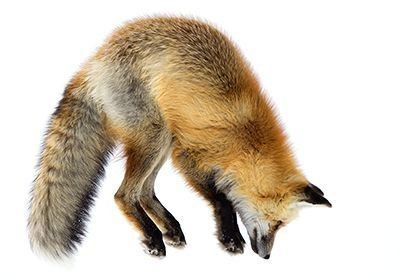
In quieter zones—woodland trails, marsh edges—you’ll occasionally encounter species like red fox. They don’t move randomly either. They track scent lines, terrain edges, and sound. If you stop moving, their behavior often continues as if you’re not there.
This is the shift that matters most in the field: you stop searching for animals, and start reading patterns. Movement, timing, direction, repetition. Wildlife photography becomes less about reaction—and more about anticipation.
Seasonal Timing — When the System Changes
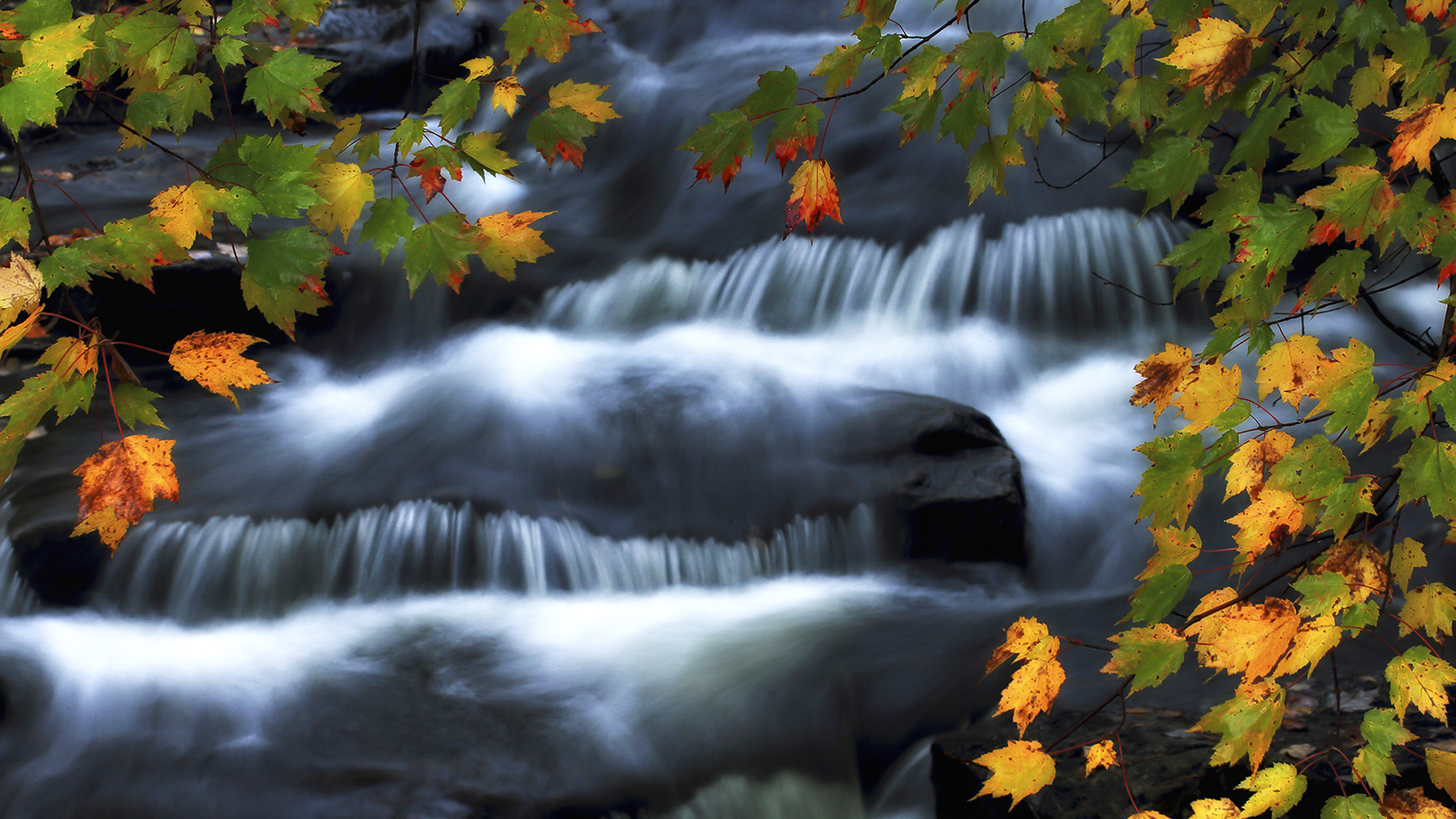
Acadia doesn’t repeat itself—it cycles. The same location behaves completely differently depending on season, temperature, light angle, and moisture. What works in October won’t exist in July. What forms in winter disappears by spring.
In fall, the system compresses into color. Forest canopies shift rapidly, and places like Jordan Pond become high-probability reflection zones as wind patterns settle and temperatures drop. This is when structure and color align most consistently.
Winter simplifies everything. Snow removes visual noise, exposing form—tree spacing, rock lines, elevation changes. Wildlife movement becomes easier to track, but harder to access. Light stays low, and days shorten, compressing your shooting window.
Spring reintroduces motion. Water levels rise, fog becomes more frequent, and early plant growth changes color balance across the frame. This is one of the best times to work quieter scenes—less crowd pressure, more atmospheric variation.
Summer expands the system outward. Wildlife activity increases, but so does human presence. Light becomes harsher mid-day, pushing photography into early and late hours again—but for different reasons than in colder months.
If you want to plan effectively, you’re not choosing a location—you’re choosing a moment inside a seasonal cycle. Tools like the Seasonal Wildlife Calendar and Nature’s Seasons help map that timing so you arrive when the system is actually doing something.
Locations & Field Strategy — Where Acadia Opens Up
Once you understand Acadia as a system, the next question isn’t simply where to go—it’s where to stand, when to arrive, and what each location is actually doing. Different parts of the park express different behaviors: elevation, reflection, surf energy, forest shelter, bird movement, and seasonal transition.
Cadillac Mountain is your elevation-and-light location. You come here for first light, changing weather, layered distance, and the sequence of dawn moving across ocean, islands, and forest.
Jordan Pond is your reflection-and-stillness location. This is where calm conditions matter more than spectacle. The right morning here is often quieter than people expect—and stronger because of it.
Thunder Hole and the surrounding coast are pressure-and-tide locations. You work them differently: watch wave interval, wind direction, ocean height, and footing. These are not just scenic stops—they’re dynamic edges where timing matters more than duration.
Schoodic Peninsula is one of the best places in the Acadia system for space, weather, and lower human pressure. It gives you room to read surf, rock, and sky more slowly. For many photographers, that changes the quality of the work.
Use the map below as a planning layer—not just for directions, but for understanding how locations connect across the larger field system. It pairs well with your Nature & Wildlife Photography Maps and the broader Wildlife Observation Locations hub.
Can’t see the map? Open it directly here: Acadia Photo Map.
Planning & Field Ethics — How to Move Through Acadia
Acadia rewards attention more than effort. You don’t need to cover more ground—you need to understand the ground you’re on. The best field days here usually come from slowing down, returning to the same place, and letting conditions develop.
Start with timing. Use tools like the Golden Hour & Moon Phase Planner and Sun & Moon Alignment to understand where light will land—not just when it rises or sets. In coastal environments, direction matters as much as time.
Weather is part of the composition. Fog, wind, and tide are not obstacles—they are the system revealing itself. Many of the strongest images in Acadia come from conditions that most people avoid.
Distance is non-negotiable. Whether you’re photographing moose, fox, or birds along the coast, your position should never change the animal’s behavior. A longer lens is not just a technical choice—it’s an ethical one. If the animal reacts to you, you’re too close.
Stay on trail where required, avoid fragile coastal edges, and don’t alter the landscape for composition. The scene already exists—you’re there to observe it, not improve it.
If you want to go deeper into this approach, explore Wildlife Observation & Field Techniques. It expands on how to read behavior, position ethically, and work within natural systems rather than against them.
Naturepedia Connection — Acadia as a Living System
Acadia National Park is more than a coastal landscape—it’s a functioning ecological system where geology, ocean, forest, wildlife, and season continuously interact. What you experience in the field is the visible surface of deeper relationships.
The granite structure of the park shapes drainage, elevation, and exposure. That structure determines where forests establish, where water collects, and where wind is reduced or amplified. These conditions directly influence animal movement and habitat use.
Species don’t exist separately from this system. Moose move along wetland edges created by glacial basins. Fox follow forest transitions and prey movement. Coastal birds adjust constantly to wind, tide, and thermal conditions. Behavior is always tied to environment.
Season adds another layer. Migration, breeding cycles, foliage change, and water levels all reshape how the system behaves across the year. The same location can function as entirely different habitat depending on timing.
This is the core idea behind Naturepedia: understanding nature as a connected system rather than isolated subjects. Acadia is one node in a larger network that includes ecosystems, wildlife behavior, migration patterns, and conservation systems.
When you photograph Acadia through this lens, you’re not just capturing a scene—you’re documenting relationships: land shaping life, time shaping behavior, and systems expressing themselves through place.
Acadia FAQ
What is the best season to photograph Acadia National Park?
Fall is often the strongest overall season for color, reflections, and cooler field conditions, but Acadia works year-round. Winter simplifies form, spring brings fog and fresh growth, and summer expands access while increasing crowd pressure.
Where are the best locations for photography in Acadia?
Cadillac Mountain is best for elevation and first light, Jordan Pond is best for reflections and calm structure, Thunder Hole is strongest for tide-driven energy, and Schoodic Peninsula offers more space, surf, and lower human pressure.
What wildlife can photographers look for in Acadia?
Depending on habitat and season, photographers may encounter moose, fox, deer, coastal birds, raptors, and migratory species. The key is to read edge habitat, low-light movement windows, and weather conditions rather than treating wildlife sightings as random.
What gear is most useful for photographing Acadia?
A wide-angle lens, telephoto lens, tripod, weather protection, and layered clothing cover most Acadia conditions. A polarizer is especially useful for water and glare control, and a longer lens helps maintain ethical distance with wildlife.
How should I photograph wildlife ethically in Acadia?
Keep enough distance that your presence does not change the animal’s behavior. Use longer focal lengths, stay on appropriate paths, never bait or call wildlife, and treat the photograph as secondary to the animal’s wellbeing and habitat.
How does Acadia connect to the larger Naturepedia system?
Acadia functions as a coastal ecosystem node where geology, forest, ocean, wildlife behavior, season, and conservation all interact. This is why it connects naturally to Naturepedia, Ecosystems of North America, and Wildlife Behavior & Ecology.
About Robbie George
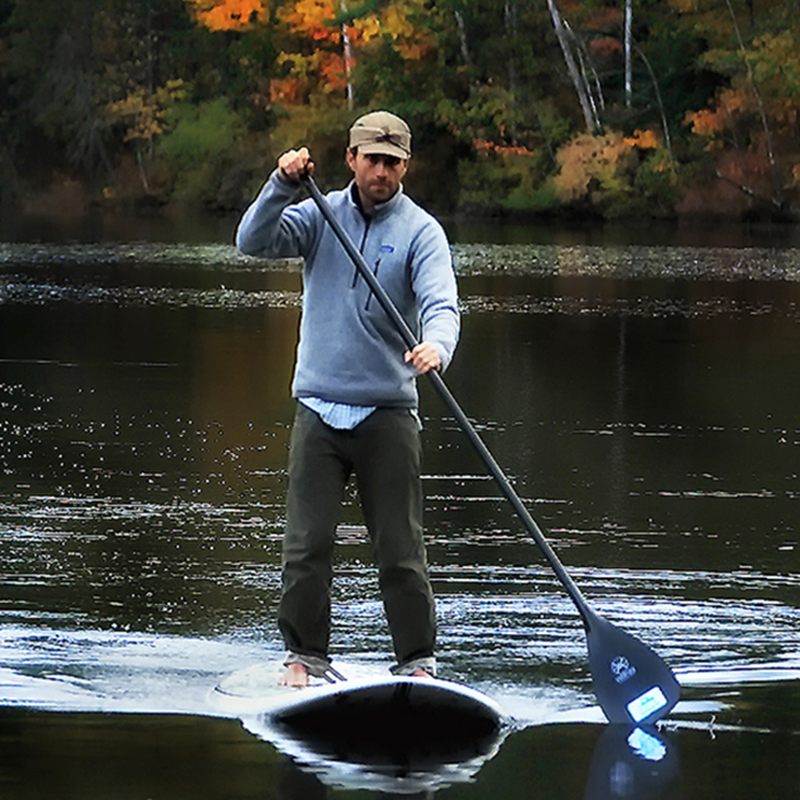
I’m Robbie George, a National Geographic–published nature photographer whose work grows out of time in the field—returning to places under changing light, weather, and season, and learning through observation, patience, and repeated experience.
Acadia matters to me because it reveals how much a landscape can change without moving at all. Tide, fog, wind, elevation, and season continually reshape the same coastline, which makes it one of the strongest places I know for studying how location, timing, and atmosphere work together.
My approach is field-first. I’m less interested in collecting views than in understanding how a place behaves—where reflection forms, how wildlife uses edges, how weather alters composition, and what the land is doing before the image is made.
You can explore that larger system through Naturepedia, browse the visual side through my Landscape Photography, Wildlife Photography, and Seascapes galleries, or plan future fieldwork with the Field Tools and Photography Maps.
“Attention first, image second. The photograph comes after the place has taught you how to see it.”