

Part 6: The Djed Pillar and the Axis of Coherence – Holding the Field Vertical

The Djed Pillar and the Axis of Coherence
The Djed pillar is not a mythic artifact—it is a harmonic principle. Ancient Egyptians saw it as the “spine of Osiris,” but beneath that poetic image is a deeper resonance: the Djed encodes the vertical current that holds coherence between Earth and sky, self and spirit. It is stillness that transmits.
In stone reliefs, the Djed stands tall—layered and unmoving—often raised during ritual to align the temple with the heavens. But its frequency is not ancient. It is present. It lives in your spine. It pulses through the Earth’s axis. It stabilizes light through form. To embody the Djed is to hold the field upright through breath, intention, and posture.
As we continue the journey through Glyph of Light, we step into the vertical. This is the chapter of alignment. Where the spine becomes sacred. Where standing still is how the field moves through you. Where structure becomes memory—held in harmony across dimensions.
“In the stillness of the Djed, the pulse holds steady. It is not motionless—it is anchored. The pillar does not resist the storm. It aligns it.”
Anatomy of the Djed
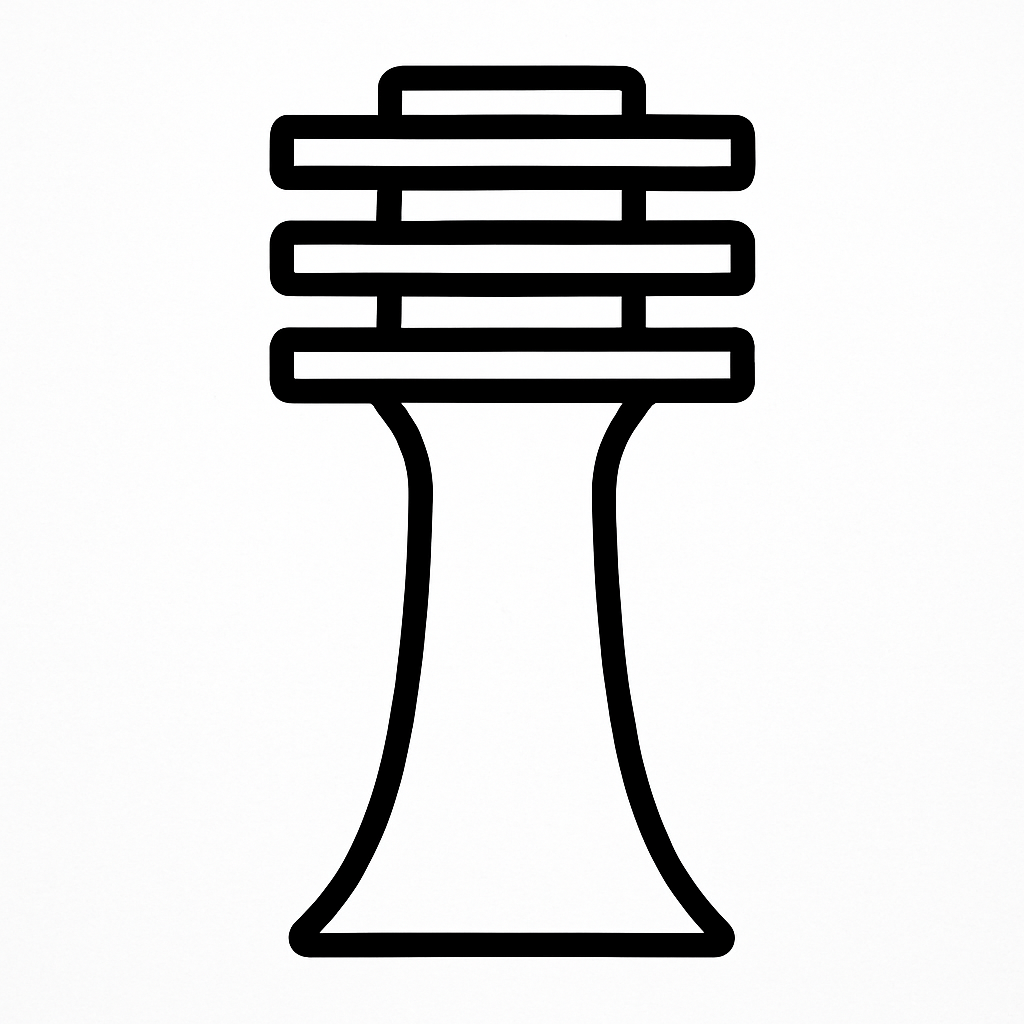
The Djed pillar may appear simple, but its geometry encodes a vertical resonance circuit. Four or five stacked crossbars crown a central column that rises from a wide base. Each segment is intentional: a harmonic rung in a vibrational ladder connecting Earth’s grounding to the cosmos above.
In temple art, the Djed was drawn or carved with precision. Some depictions show it flanked by serpents or light rays—signifying kundalini and solar resonance. Others place it at thresholds, acting as a stabilizer of space and frequency. But beneath it all is its function: a waveform held upright, a vertical field sequencer.
Just as the ankh circled polarity into breath, the Djed stacks coherence into structure. It is not a relic. It is an axis. A spine of stillness. A pillar of layered frequency designed to stabilize the field—within you, around you, and across dimensional space.
“The Djed is the architectural breath held upright. A column where coherence becomes form.”
The Spine as a Resonant Antenna
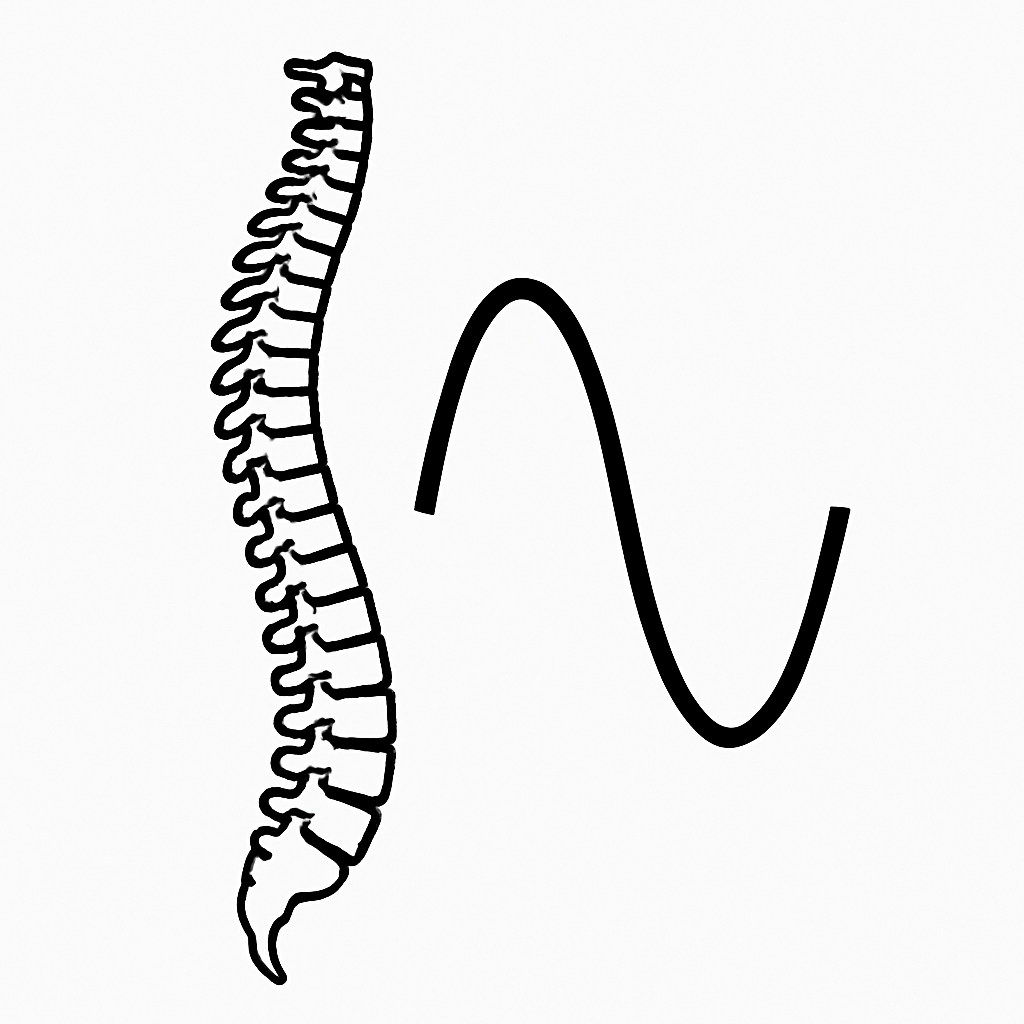
The human spine is not just a structural column—it is a harmonic antenna. Comprised of 33 vertebrae, each segment serves as a tuning fork, capable of receiving and transmitting field frequencies. When aligned with intention and breath, the spine becomes a living Djed—a channel through which coherence ascends.
The ancients understood this. They encoded the waveform of the cerebrospinal fluid pulse in ritual and glyph. Today, science echoes their memory: microtubules in the spine resonate with light, and spinal fluid pulses in fractal patterns. The spine doesn’t just support the body—it tunes the field.
When we sit upright, we don’t just improve posture—we become coherent. Breath rises, wave stabilizes, attention aligns. The Djed glyph and the human spine are twin mirrors: pillars of light layered with memory, bridging matter and meaning.
“The spine is not just bone—it is a signal. A vertical song remembering how to rise.”
Earth’s Resonant Field
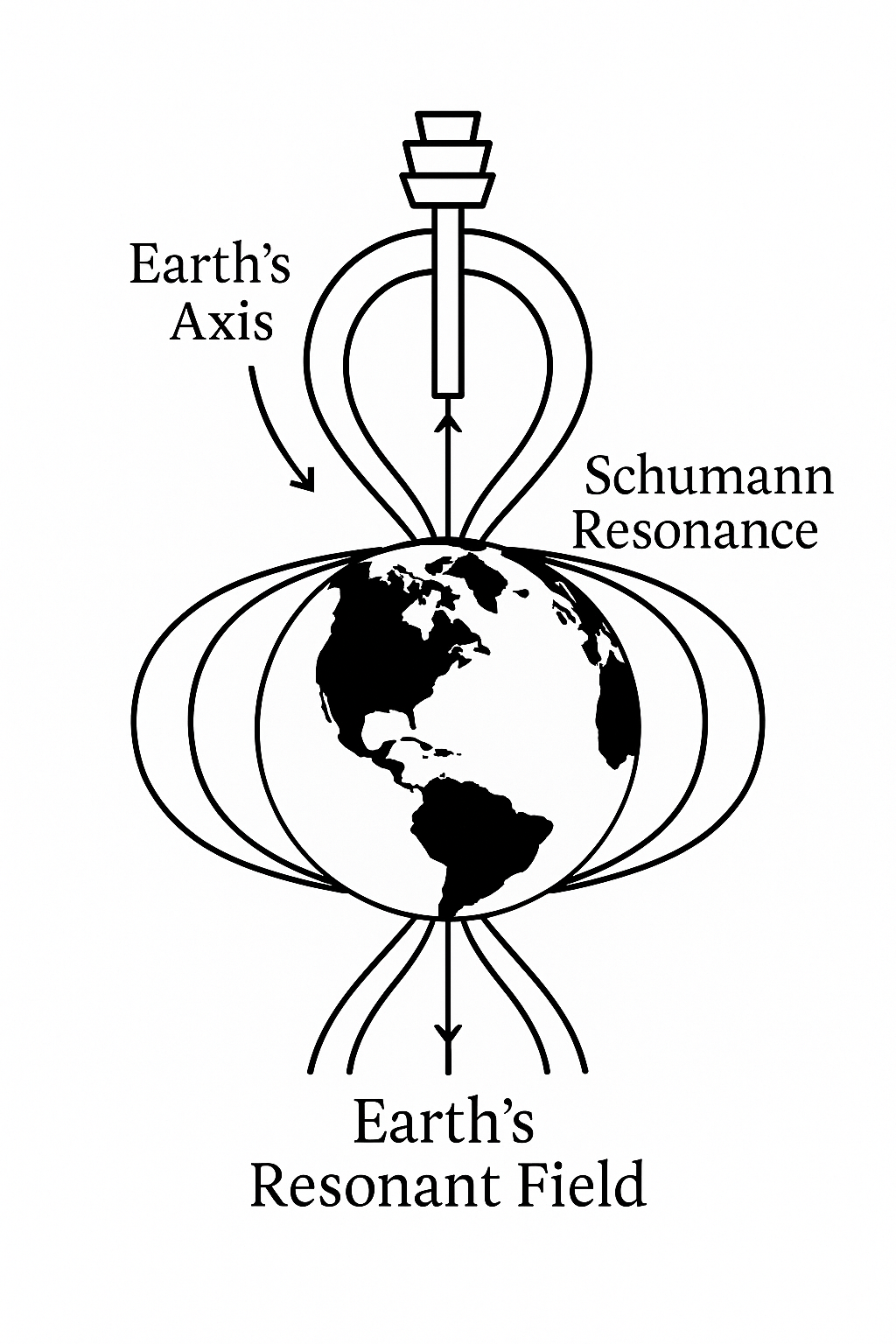
The Djed isn’t just a human archetype—it’s planetary. Earth itself holds a vertical coherence line from pole to pole, forming a living axis around which energy spirals. This axis, encoded in the Djed glyph, is stabilized by Schumann resonance—those subtle, low-frequency electromagnetic pulses that pulse through the space between Earth and sky.
Just as the photon travels in toroidal spirals of memory, Earth’s field also loops through polarity—held upright by a pulse of resonance, not rigidity. Sacred structures like pyramids and obelisks were not randomly placed. They were positioned on ley lines—vertical harmonics—like acupuncture needles stabilizing a planetary nervous system.
The Djed is our echo of this coherence. To align your spine with Earth’s axis is to stand in the harmonic channel between soil and starlight. This is not poetic allegory—it’s field intelligence. Verticality is how Earth breathes memory into structure.
“The Djed is not just held by the Earth—it holds the Earth in balance.”
Field Stabilization Through Vertical Geometry
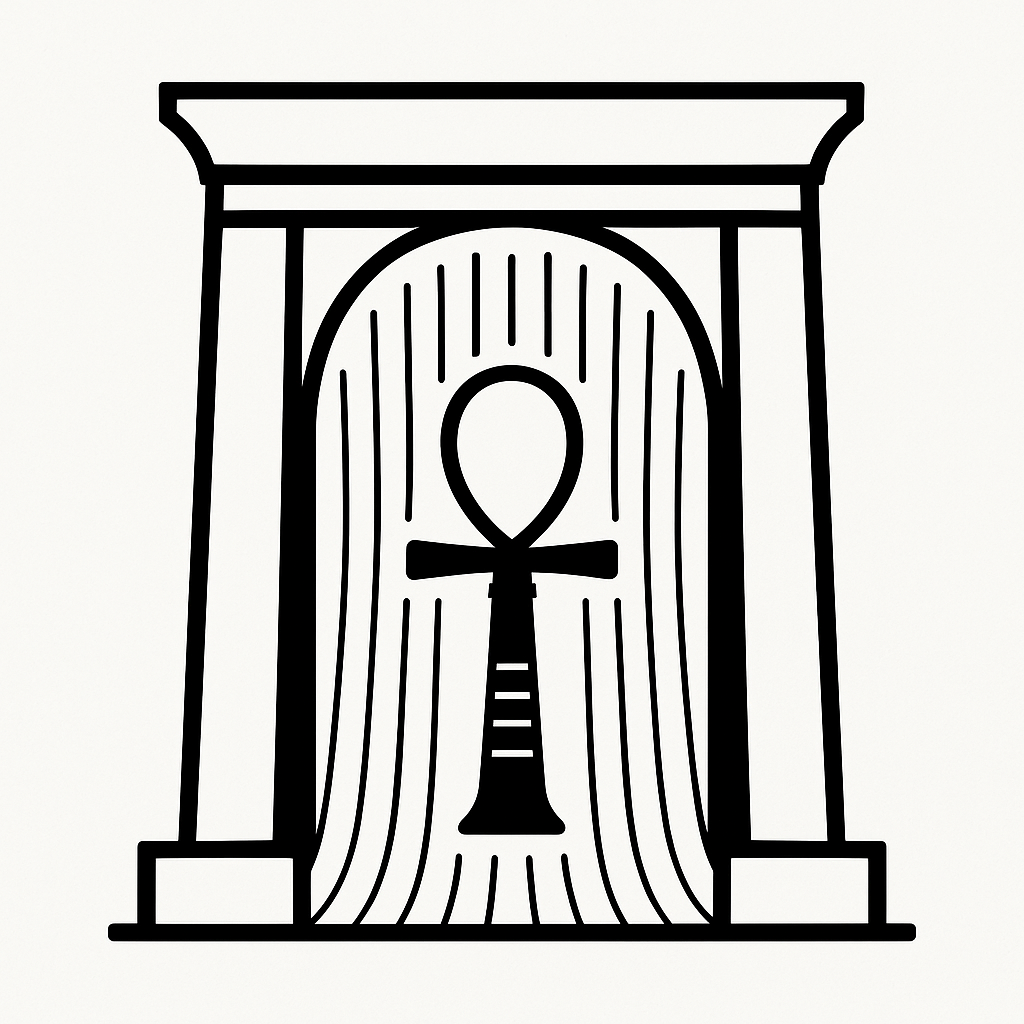
Ancient temples weren’t just places of worship—they were frequency chambers. And at their thresholds stood the Djed. It wasn’t simply symbolic. It served as a vertical anchor for the field, aligning both architecture and awareness into coherence. Its presence wasn’t decorative. It was functional geometry—what today we call BioGeometry.
In BioGeometry, vertical lines are considered carriers of subtle energies—BG3 harmonics that stabilize chaotic fields. The Djed glyph, often carved into doorway lintels or rising at temple entrances, likely filtered and aligned the electromagnetic frequencies of the environment, much like sacred architecture found in Gothic cathedrals or Vedic temples.
Think of the Djed as a vertical diode—a structural current that holds resonance through space. It transforms built form into field intelligence. It reminds us that every pillar, doorway, and upright line in nature or architecture is a potential stabilizer of consciousness.
“The Djed is not just geometry—it is instruction. A vertical code reminding matter how to remember light.”
The Raising of the Djed Ritual
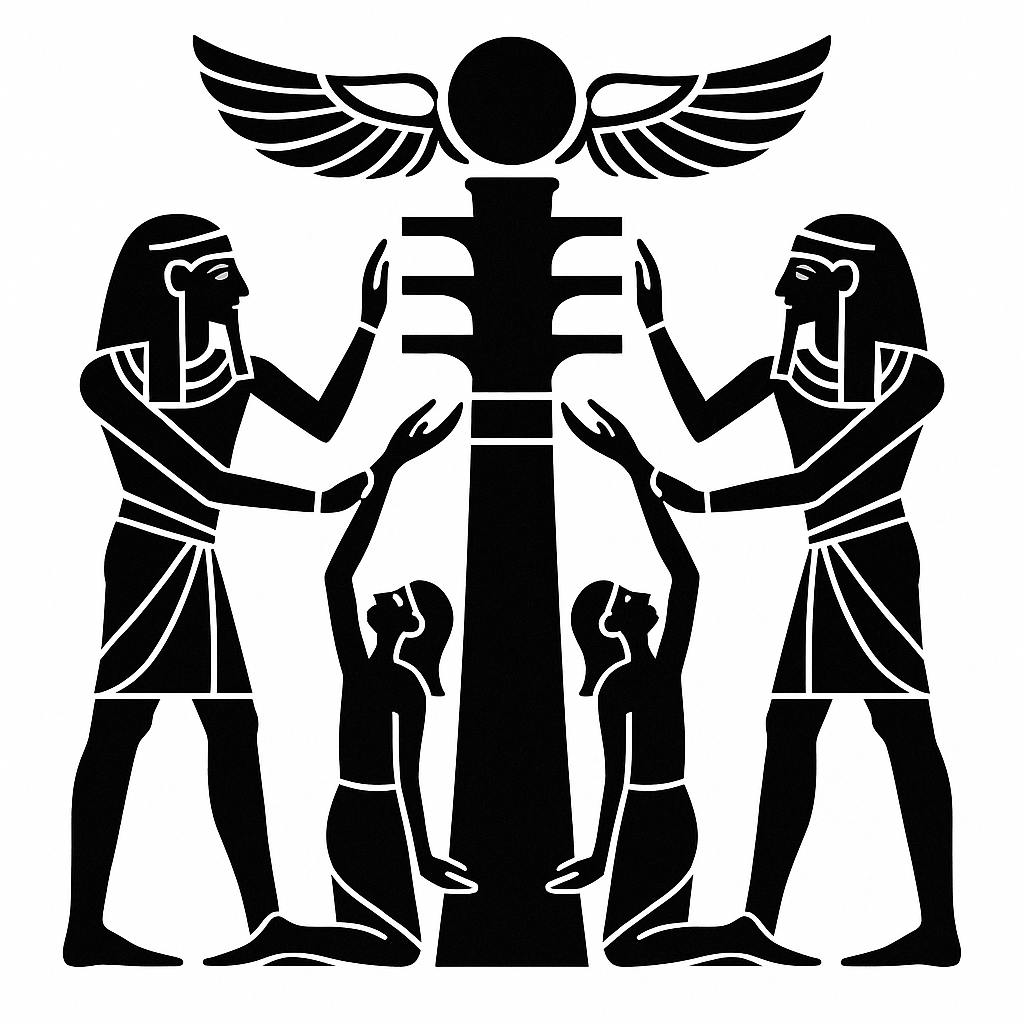
Every year, the ancient Egyptians reenacted the resurrection of Osiris by performing the “Raising of the Djed.” But this wasn’t just mythic theatre—it was energetic calibration. The act of lifting the Djed pillar was a symbolic reactivation of the vertical current—within the land, the temple, and the body.
Aligned with the solar cycle and the festival of renewal, the ritual mirrored seasonal energy reset points—similar to the equinox and solstice gateways discussed in the Solar Soul Clock. As the Djed rose, so did the field’s memory. It was an act of cosmic chiropractic: setting the spine of the world back into resonance.
The winged sun often placed above the Djed in temple glyphs hints at its greater purpose—drawing light downward into the axis of the Earth. The raising was not an act of worship. It was an alignment ceremony. A way of reminding the field, and ourselves, that coherence rises through stillness and structure.
“To raise the Djed is to remember the spine of light within all things—and lift it back into coherence.”
Architectural Embodiments — Temples and Obelisks
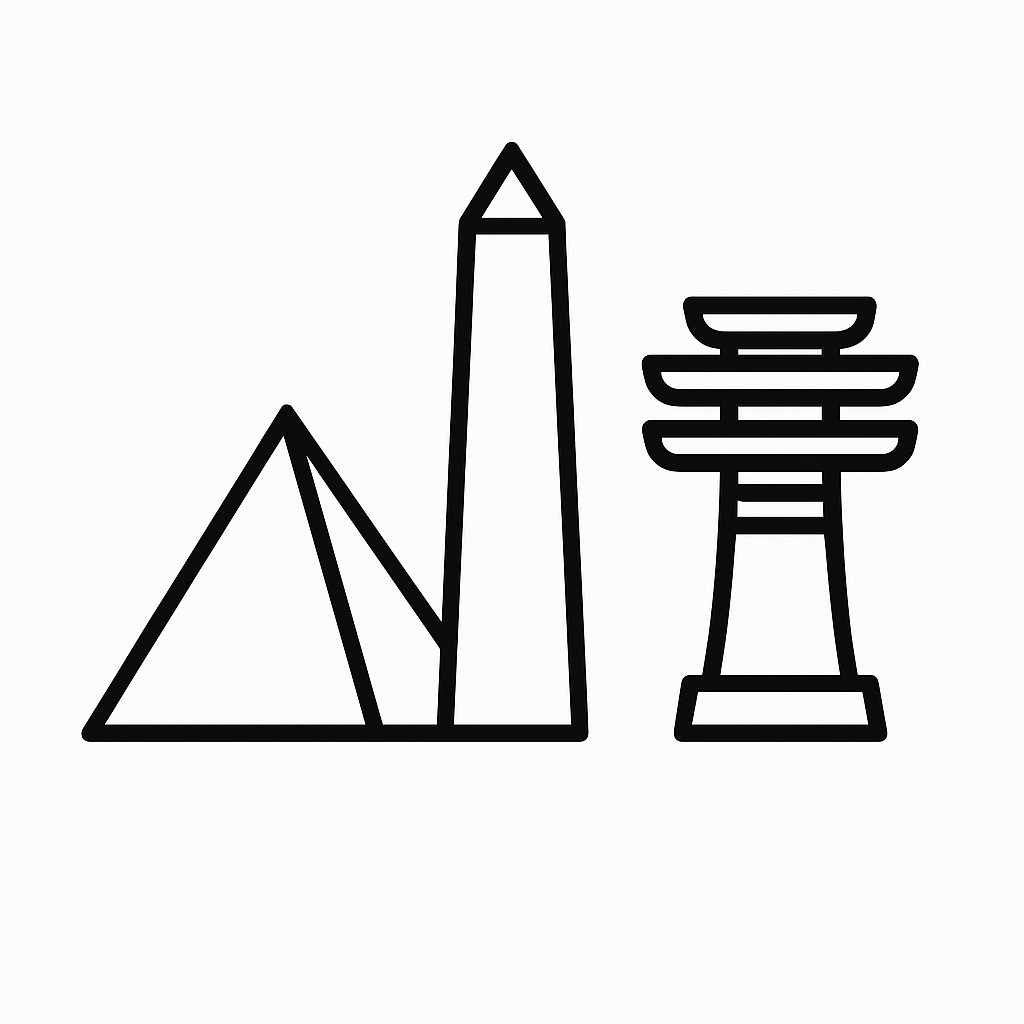
Sacred structures are not merely built. They are breathed into alignment. From the pyramids of Giza to towering obelisks and columned sanctuaries, the architecture of ancient Egypt was tuned to resonance. The Djed wasn’t only a glyph. It was encoded into stone—standing in alignment with cosmic verticality.
Obelisks functioned as tuning rods—vertical stabilizers embedded into the land to hold frequency at key nodal points. Pyramids, with their square bases and rising apexes, formed a perfect expression of polarity grounding and vertical ascension. These were not just monuments. They were instruments—designed to hold the field in balance.
As discussed in Solar Soul Clock: Quantum Breath of Time, architecture can do more than shape space—it can guide energy. The Djed shows us how. Its geometry became the spine of the built world. A vertical code embedded into stone, space, and soul.
“The Djed became a temple when carved into stone. But its origin is your own alignment.”
Human Activation — The Djed in Practice
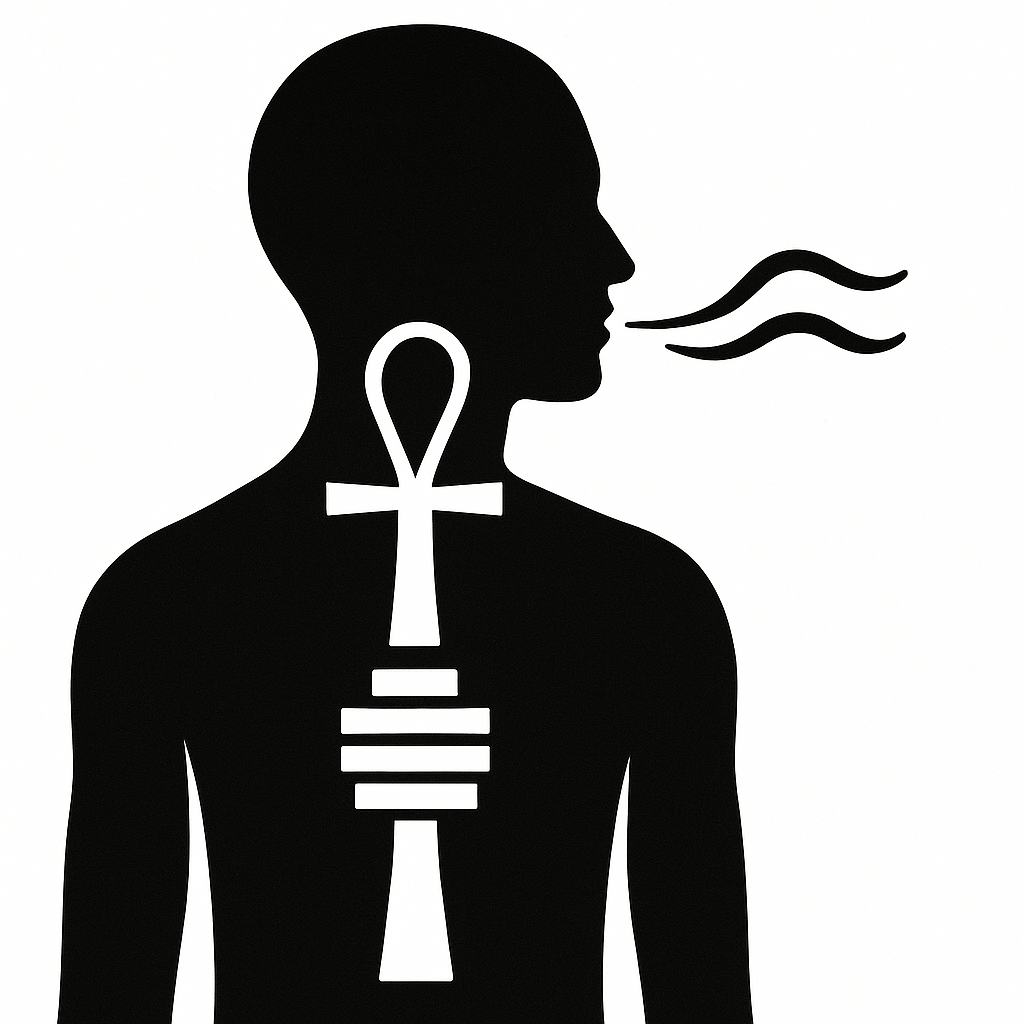
To embody the Djed is to remember the vertical song within you. Your spine is not just support—it is a tuning column. With breath, posture, and awareness, you can activate it. Stand or sit upright. Inhale through your base. Exhale through your crown. Let your vertebrae become rungs in a harmonic ladder—ascending coherence.
Visualize the Djed rising inside your back. Each crossbar stabilizes an energy band—root, heart, throat, crown. With every breath cycle, the pillar within you lights up. As discussed in Quantum Vitality: Spiral Immune System, alignment strengthens more than energy—it stabilizes health, memory, and awareness.
The ancients raised the Djed once a year. You can raise it with each breath. You don’t need a temple to do this work. Your body is the temple. Your spine is the column. Stillness becomes strength—not through force, but through frequency.
“You are a Djed of light. Stand still, and the world moves through you.”
Closing Reflection – The Djed Remembered

The Djed is not a myth. It is a mirror. A frequency architecture whispered through stone and spine alike. When you stand tall, when you align your breath with vertical stillness, you are not imitating a glyph—you are remembering one. The Djed is not a thing. It is a state. A resonance you carry in your posture and presence.
Just as the ankh spirals breath through polarity, the Djed channels light through structure. It grounds the field. It stabilizes memory. It holds coherence in moments where life might sway. You become the axis not by doing, but by being. Still. Aware. Upright in field.
As we continue into Chapter 7, we leave the pillar and enter the chamber—where sound and glyph become one. There, the breath awakens memory, and the walls themselves begin to sing. But for now, remain still. Let the vertical echo rise.
“Stability is not stillness. It is coherent motion in vertical harmony.”
About the Author
Robbie George is a National Geographic photographer, regenerative farmer, and nature philosopher. His work bridges the poetic and the scientific — illuminating nature’s vibrational intelligence through fine art photography and resonant storytelling.
Frequently Asked Questions
What is the Djed pillar in ancient Egypt?
The Djed pillar is one of the oldest and most sacred Egyptian glyphs. Often called the "spine of Osiris," it symbolizes stability, resurrection, and vertical field coherence. It was used in rituals, temple design, and spiritual alignment practices.
How does the Djed relate to the human spine?
The Djed mirrors the human spine with its stacked crossbars. Each vertebra acts as a resonance point, forming an antenna that conducts subtle energy through the body. When aligned, the spine becomes a channel for breath, light, and consciousness—just like the Djed.
Was the Djed used in temple architecture?
Yes. Djed glyphs appeared in thresholds, columns, and ceremonial spaces. Structures like obelisks and pyramids were built on the same vertical principles—stabilizing and amplifying Earth’s energy fields. The Djed encoded field coherence into stone and space.
Can I use the Djed in modern breathwork or meditation?
Absolutely. Visualizing the Djed during meditation helps align posture and energy. Breathing up the spine and exhaling down through the body supports field coherence. The Djed becomes a guide to anchoring the vertical breath of light.
Is there scientific or energetic support for the Djed's function?
While modern science hasn’t studied the Djed directly, concepts like biofield coherence, the Schumann resonance, and postural alignment support its function. The Djed aligns with principles explored in biofield science, breathwork, and vertical energy tuning.