

Part 1: The Living Word of Stone – Hieroglyphs as Frequency Maps

The Living Word of Stone
Before the alphabet, before written scrolls and printed ink, there were symbols carved in stone—etched not to be read, but to be felt. Ancient glyphs spoke not to the mind, but to the field.
In this first chapter of Glyph of Light, we begin with the premise that hieroglyphs are more than pictographs. They are resonance markers—encoded harmonics frozen in stone. When awakened by breath, voice, and intention, they act as field catalysts.
Reading the Field, Not the Letters
Hieroglyphs were carved with the precision of light engineers. Their shapes—loops, arcs, and intersecting lines—were not arbitrary. They were fractal geometries meant to resonate with specific energy frequencies in temples, tombs, and the subtle body.
These glyphs weren’t just visual. They were auditory and vibrational, meant to be activated by chants or tones. Like cymatics reveals form through frequency, these carved symbols held dormant patterns waiting to be sung into life. This echoes the science explored in The Quantum Symphony.
We must begin not with translation, but with attention—learning to listen with our biofield. Just as we align with the wisdom of cycles in Ancient Wisdom and Nature Code, here we align with the field language of stone.
“What was carved into stone was not meant to be preserved—it was meant to be remembered.”
The Forgotten Frequency of Form
In modern archaeology, Egyptian hieroglyphs are cataloged as pictographs—an alphabet of images representing sound, concept, and identity. But this reduction misses their original function. The glyphs were never merely symbols. They were geometric frequencies, carefully carved to stabilize and transmit resonance through time.
In The Nature Code, we saw how form and vibration are inseparable. Hieroglyphs live by the same law: all form is frequency. Each carved line is a harmonic stabilizer, like a tuning peg on a living instrument made of stone. Their forms encode polarity, breath, and sound—a vibrational script for those who still remember how to listen.
Observation as a Collapse of Resonance
In the quantum world, a photon does not become a particle until it is observed. In the famous double slit experiment, light behaves as a wave—until watched. Then, it collapses into form. What if hieroglyphs functioned the same way? What if the glyph only becomes real when someone with a tuned field stands before it?
Ancient temples were built to align with solar cycles. Light entered key chambers on solstices and equinoxes, striking specific glyphs with precision resonance. It’s likely that these glyphs were not passive—they were photosensitive activators. Carved in angles and arcs meant to interact with sunlight, they captured fossilized harmonics—encoded memory of the cosmos at a specific place and time.
In Let There Be Light, we explored how photons sculpt time and space. Here, they sculpted memory—etched into sandstone and limestone, ready to awaken at the intersection of field and attention.
“Hieroglyphs may be the fossilized light of an ancient harmonic consciousness.”
Hieroglyphs and the Architecture of Polarity
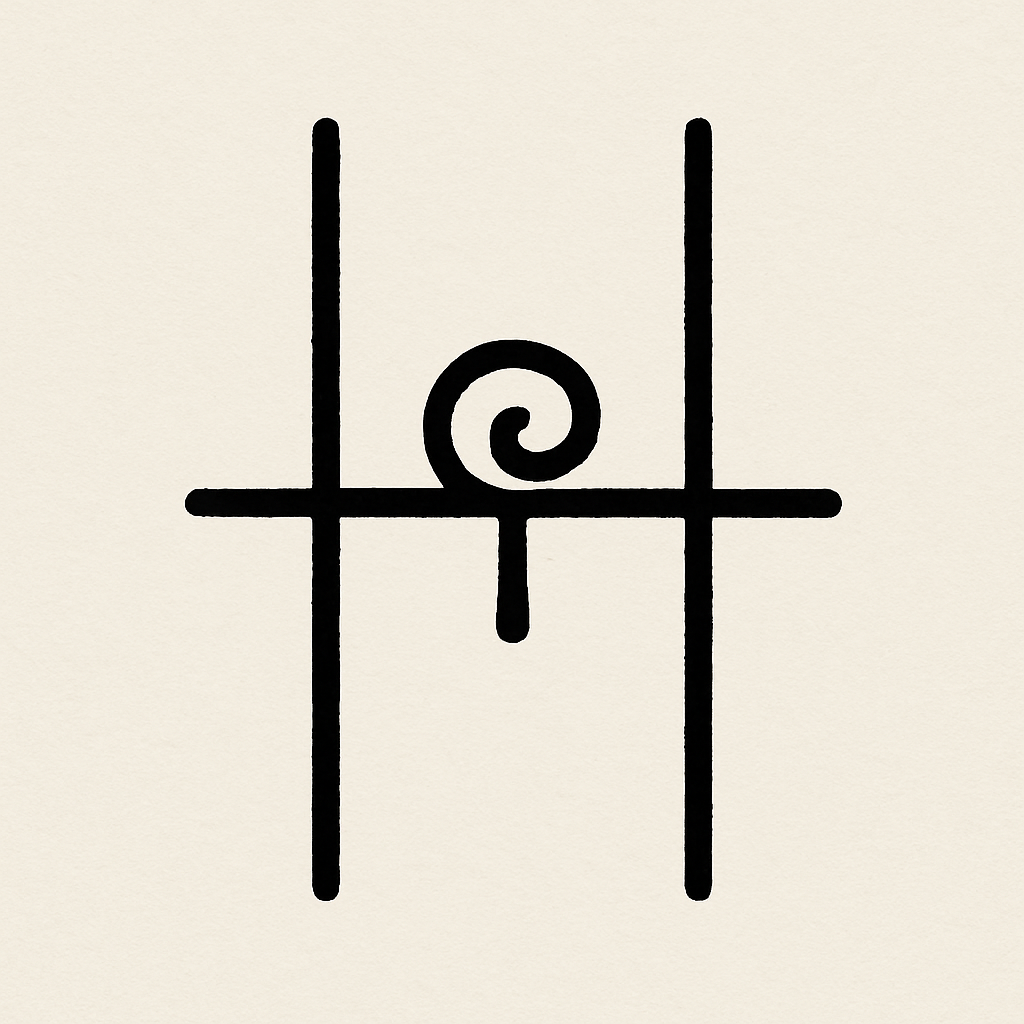
Egyptian glyphs were never flat—neither in form nor in meaning. Each stroke was a field charge. The glyph system encoded a complete duality structure, not unlike the binary rhythms of breath, heartbeat, and sunrise. Polarity wasn’t symbolic. It was structural.
The cosmology of Nut and Geb—sky arching over earth—is a glyphic polarity field. So is Ka and Ba—two halves of soul force. So is Upper and Lower Egypt, split by the river but united by resonance. These opposites weren’t conflicts. They were circuits. Each glyph is a pole on a vibrational map of consciousness.
The glyph of Ma’at, goddess of harmony and truth, holds symmetry, feather, and balance in perfect proportion. The Was scepter governs directional authority (horizontal will), while the Djed pillar anchors vertical stability (spinal axis). These are not just stories—they are harmonic stabilizers within the temple’s energetic design.
This echoes what we explored in The Living Code—that polarity is not opposition, but coherent oscillation. The ancients knew this. They wrote it into stone.
“Each glyph is a pole. Together, they hum the shape of balance.”
Geometry and Field Harmonics
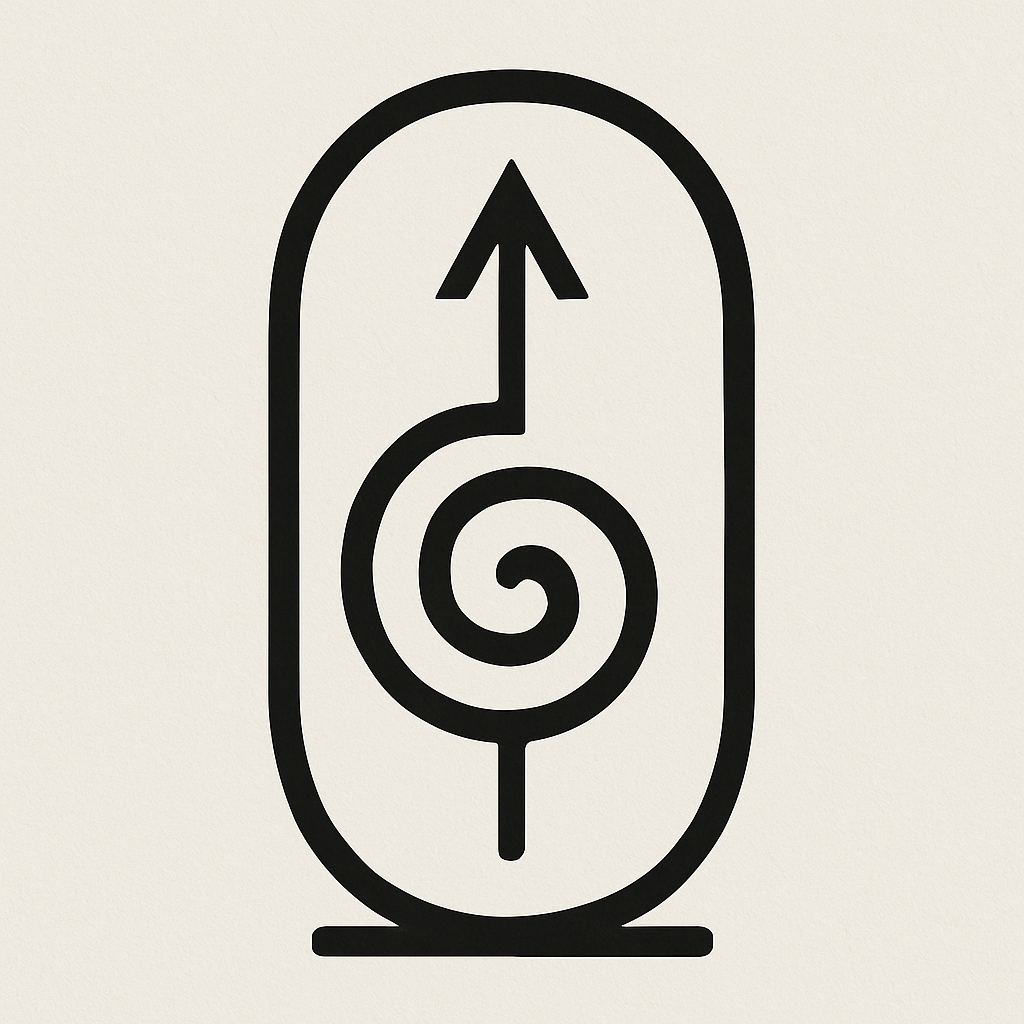
Every glyph carved into temple walls followed principles of sacred geometry. The spiral of the scarab reflects recursion and renewal. The loop of the Ankh mirrors toroidal breath and cyclical vitality. The cartouche’s oval ring is a containment field—an energetic boundary that holds memory in torsion.
These were not stylistic flourishes. They were field stabilizers, crafted to interact with solar light, sound resonance, and the observer’s subtle body. As explored in Harmony in Nature, the golden ratio wasn’t decoration—it was structure.
Modern resonance science confirms this. In BioGeometry, pioneered by Dr. Ibrahim Karim, the shape of an object can transmit BG3 energy—a subtle harmonic that balances biological fields. Specific ratios and angles in glyphs may have acted like resonant filters, tuning the energetic environment of temples just as cymatics tunes a sound plate.
The ancients may not have called it “BG3,” but they encoded it. Their glyphs were not illustrations. They were geometry-based field harmonizers—the original BioGeometry forms etched into limestone with crystalline intent.
“A glyph is not a picture. It is a tuning fork made of stone.”
The Field Activation Hypothesis
What if glyphs weren’t always “on”? What if they were dormant harmonics, waiting for the right spark? In Egypt’s temple design, glyphs were carved on walls that caught sunlight at specific angles. Many were placed near resonant chambers, designed for chant, drumming, and ritual breath. These weren’t mere carvings. They were activation points.
The observer’s intention—their internal coherence—may have been the missing key. Just as a tuning fork only vibrates when matched, glyphs may have only “sung” when encountered by the right vibrational match: a breath-aligned, heart-centered witness. This aligns with what we explored in The Body Is a Field.
Hieroglyphs were likely not passive messages. They were static waveguides—dormant until awakened by light, sound, or consciousness. The temple was the instrument. The priest was the tuner. The glyph was the field conductor.
The ancients carved resonance into stone not for beauty—but for continuity. They knew that form, when reawakened by intentional presence, could carry a frequency across millennia.
“A glyph does not speak until you stand before it in stillness. Then it remembers you.”
Interlude: Sound in Stone
Temples were not quiet. They breathed. They echoed. They hummed. The ancients understood that sound was a force of creation, not merely communication. Their architecture amplified it, shaped it, sculpted it. Stone was chosen not just for durability—but for resonance.
Limestone, abundant in Egypt, is not only easy to carve—it is a natural sound conductor. Chanting in a chamber carved from limestone produces subtle reverberation. When glyphs are etched onto these walls, they do not just sit—they receive. They vibrate. They hum back.
Could specific glyphs, placed in resonant “hot spots” of chambers, act as vibrational acupuncture points? Could a single vowel tone, properly intoned, cause a glyph to vibrate subtly—aligning the visitor’s field? This is not fantasy. It’s harmonic physics. It echoes what we explored in The Buzzing Symphony—that nature uses vibration as medicine.
You didn’t read a glyph. You entered its chamber. You sang to it. You let it sing back through the walls, through your bones, and into memory.
“Some glyphs were carved to be seen. Others were carved to be heard.”
Microtubules and the Reading Field
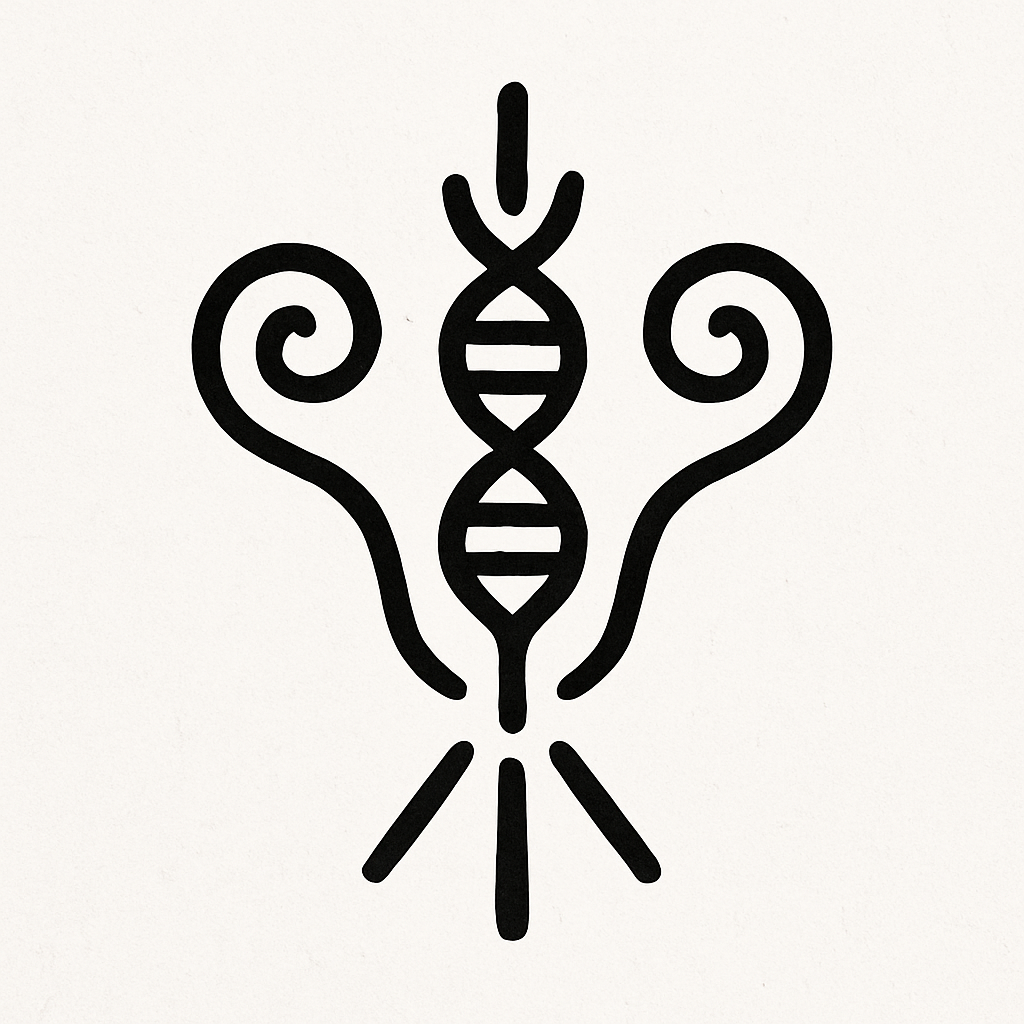
Glyphs don’t just interact with the eyes. They speak to the field of the body. Recent quantum biology reveals that structures inside our cells—microtubules—act as vibrational receivers. They’re shaped like cylindrical waveguides, capable of storing and transmitting frequency data at quantum scales.
What if microtubules respond to glyphic geometry the way tuning forks respond to pitch? What if sacred symbols trigger coherent cellular alignment, simply through form? You wouldn’t need to understand the glyph—your body would. It echoes what we explored in Hydrogen, Water, and the Memory of Life—that resonance is remembered, not read.
You don’t need to know Egyptian to feel a glyph. You need stillness, coherence, breath. The microtubules do the decoding. Geometry becomes knowing.
“The body may not read Egyptian, but it knows the language of resonance.”
Case Study: The Cartouche as a Field Loop
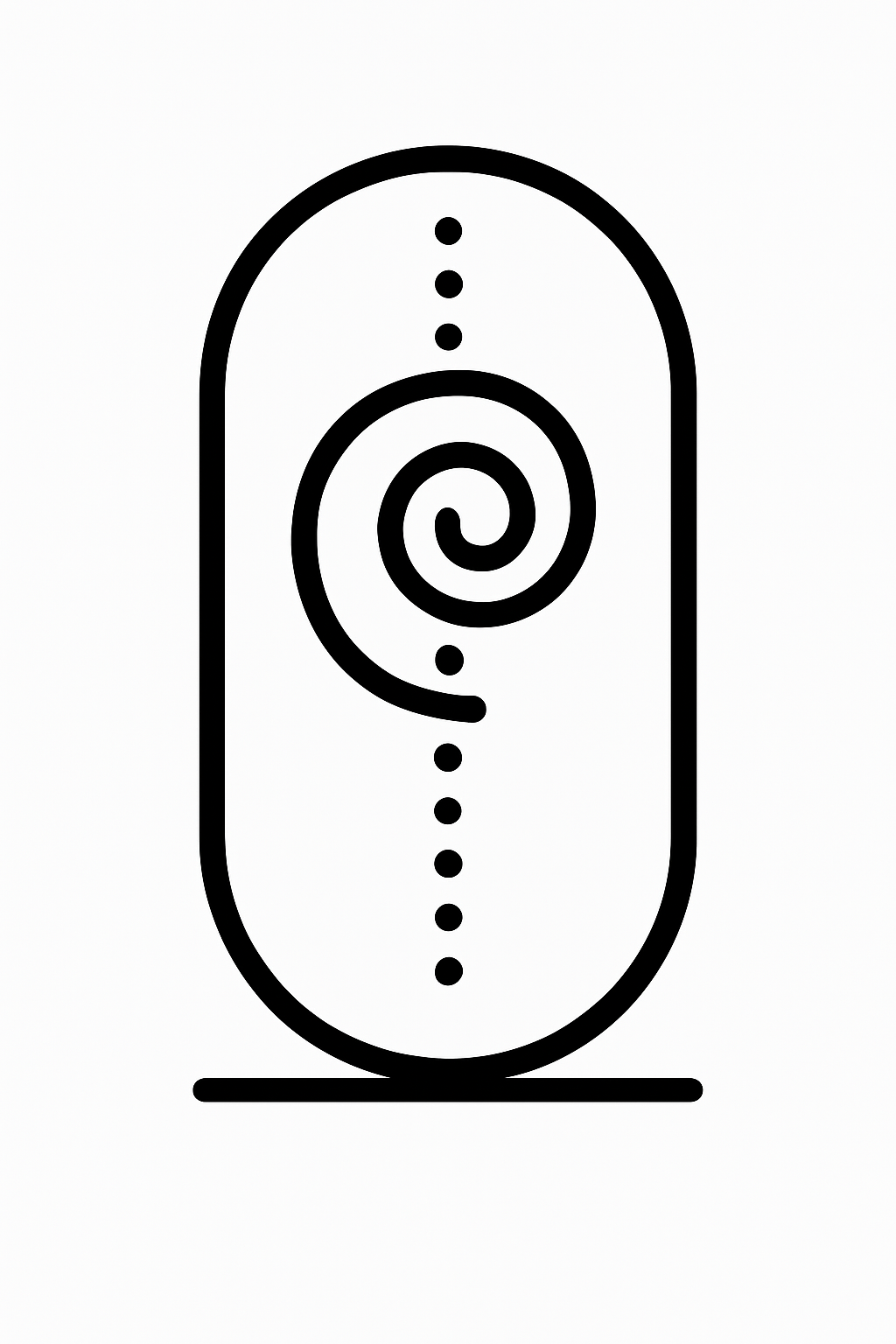
The cartouche is one of the most iconic elements in Egyptian glyph design. Traditionally understood as an oval ring enclosing the name of a pharaoh or deity, it served to distinguish divine identity from ordinary script. But what if the cartouche was not just a stylistic border—but a resonant containment field?
In physics, a torus is the most stable shape for circulating energy. It keeps the charge moving, looping back into itself. The cartouche may have been an early expression of this principle—a torsion field loop designed to hold a frequency intact across lifetimes, temples, and dimensions. Identity wasn’t just remembered. It was oscillated.
We see this echoed in your own work on The Cosmic Blueprint—that memory may not live in matter, but in spin and pattern. The cartouche could be read as an early resonance-preserving signature—a photonic envelope for the soul’s encoded spiral.
In that light, the cartouche becomes more than language. It becomes a geometric soul-lock—a glyphic key, toroidally encoded to hold one’s harmonic identity in place. A sacred version of what we explored in The Quantum Road: light spiraling back to remember itself.
“The cartouche was not drawn to honor the name. It was drawn to hold the frequency that made the name eternal.”
Closing Reflection
Hieroglyphs were never meant to be deciphered with logic alone. They were carved to anchor resonance, to preserve coherence, and to transmit energy—not information. In every spiral, feather, and arc, the ancients encoded more than myth. They encoded memory in waveform.
From the architecture of polarity to the harmonics of sacred geometry, from sound-carved limestone to the cellular microtubules inside our bodies—glyphs bridge worlds. They collapse light into memory. They awaken the field when met with breath, stillness, and intention.
In the next part of this journey—Geometry of Soul—we’ll explore how BioGeometry revives these ancient codes in modern form. And how the subtle shape of space itself—when tuned correctly—can restore balance, coherence, and remembrance in the living body.
“The ancients carved what they heard. Now it’s time we listen.”
About the Author
Robbie George is a National Geographic photographer, regenerative farmer, and nature philosopher. His work bridges the poetic and the scientific — illuminating nature’s vibrational intelligence through fine art photography and resonant storytelling.
Frequently Asked Questions
What are hieroglyphs in the context of this series?
In Glyph of Light, hieroglyphs are not treated as language or symbols alone. They are understood as resonant structures—encoded frequencies of light, geometry, and polarity, designed to be activated through sound, light, and conscious observation.
Did the Egyptians design glyphs to be activated?
Yes. Temples were aligned to seasonal light and built with acoustically responsive stone. Glyphs were placed intentionally to respond to chant, breath, and solar alignment. They acted as waveguides, awakening only when met with resonance.
How does the body respond to glyphs?
Through microtubules and the biofield. Modern science shows our cells can respond to subtle geometric forms. Sacred glyphs may activate coherent states in the body, not through thought—but through resonance recognition.
What is the purpose of the cartouche?
The cartouche is more than a nameplate. It’s a torsion field loop—a resonant vessel designed to hold identity in energetic coherence, preserving frequency across time and dimensions.
What comes next in the series?
Part 2: Geometry of Soul will explore how BioGeometry—a modern field of vibrational science—revives ancient forms and teaches us how to use shape, angle, and proportion to harmonize space and body alike.