

Part 7: Sonic Temples – Harmonic Chambers and the Architecture of Activation

Sonic Temples: Harmonic Chambers and the Architecture of Activation
The temple was never meant to be entered as space. It was meant to be entered as frequency. From the height of a ceiling to the thickness of a wall, from the mineral content of stone to the glyphs engraved within it—everything resonated in harmonic intention. The ancients built not for shelter, but for sound.
These spaces were designed to awaken memory—not from the mind, but from the field. When a chant was sung in the right chamber, it didn’t echo. It activated. The voice didn’t bounce—it was tuned. The body didn’t worship—it vibrated into alignment. As introduced in Chapter 6: The Djed Pillar, vertical coherence held the structure. Now, sound brings it to life.
This chapter explores temples as instruments—designed to generate standing waves, activate glyphs through tone, and awaken body intelligence through resonance. As we spiral deeper into the Glyph of Light, we enter not a building, but a waveform.
“The ancients did not speak in words—they spoke in waveforms. Their temples were tuning chambers, and the glyphs on the wall were not meant to be read, but sung awake.”
Cymatics and Sound-Form Memory
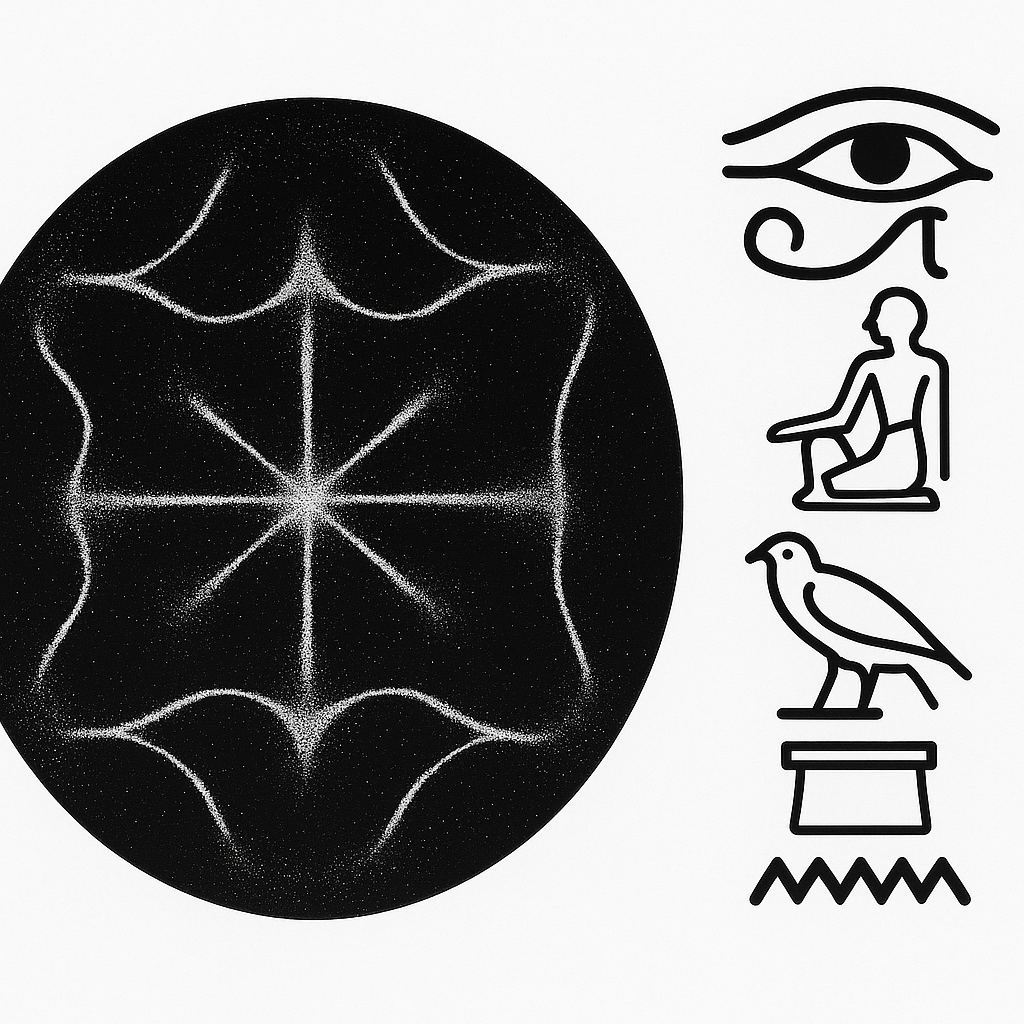
Cymatics reveals what the ancients already knew: that sound is not just heard—it is shaped. When sand or water is subjected to specific frequencies, it organizes itself into intricate geometric forms. These patterns are not random. They are memory made visible. And temples were built to amplify this memory.
Glyphs were not merely carved—they were encoded. Like cymatic figures on a stone plate, hieroglyphs may have vibrated when struck with sound, chant, or intention. As explored in Chapter 1: The Living Word of Stone, glyphs collapse waveform into form. Cymatics shows us how sound creates that form.
To speak inside a temple was to tune a chamber. To strike a glyph was to awaken its field. In this sense, every wall became a memory drum. Every carved symbol, a resonant key. The temple became a cymatic interface—one built not just to shelter light, but to vibrate it into being.
“The glyph was not written. It was struck. The chamber was not entered. It was tuned.”
The Role of Glyphs in Sonic Activation
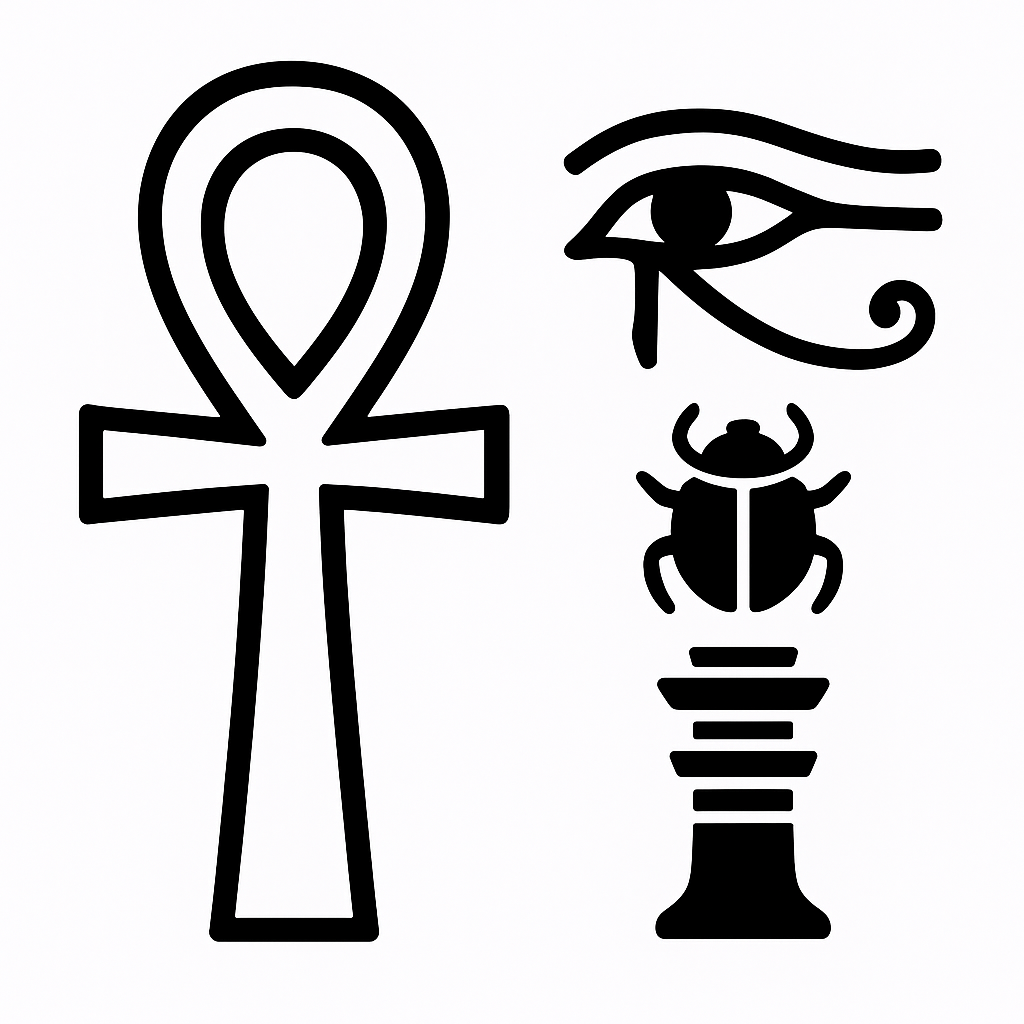
Glyphs were never silent. They were tuned. Each symbol etched into temple stone—whether Ankh, Scarab, Eye of Horus, or Djed—was not merely a visual cue but a sonic switch. These glyphs held charge. When met with chant, intention, or breath, they pulsed. They responded. They activated.
As we explored in The Ankh Circuit, the Ankh functions as a breath-loop device. The Scarab in Chapter 3 held recursion and resurrection. The Djed stabilized vertical harmonics. Each glyph was positioned precisely in space—at throat level, altar points, or columns—so that resonance could be invoked.
These weren’t visual messages. They were sonic frequencies collapsed into form. Chant was the ignition. The temple was the chamber. And glyphs were the memory embedded in stone—waiting to be reawakened with the voice of coherence.
“The glyph doesn’t speak—it vibrates. The temple doesn’t echo—it remembers.”
The Acoustics of Sacred Space

Ancient architects weren’t just builders—they were resonance engineers. Temples like the Great Pyramid, the Hypogeum of Ħal Saflieni, and the Temple of Hathor were not simply structures—they were sonic instruments. Every corridor, arch, and stone was placed to amplify a frequency, not just to reflect light, but to hold and tune sound.
The Djed Pillar offered vertical field coherence. Here, that coherence is charged with wave. The King’s Chamber resonates near 440 Hz. The Hypogeum’s Oracle Chamber hums at 111 Hz. The Temple of Hathor used curved walls, arches, and quartz-heavy stone to amplify harmonics through the bones of the worshiper.
Sound didn’t just travel in these spaces—it remembered. The walls retained the tone. And when chant returned, the field realigned. These weren’t halls of prayer. They were chambers of field restoration—where breath, frequency, and architecture became one waveform.
“The stones didn’t just reflect sound—they remembered it.”
The Human Voice as Tuning Fork

The voice is not a tool for communication—it’s an instrument of resonance. In sacred spaces, the priests and initiates didn’t just speak. They sang. They chanted. They intoned sounds not to be understood, but to tune. Every vowel, every breath, every syllable became a wave through which the glyphs awakened.
These chants were not random. They were matched to the chamber, the intention, and the glyph. The Crop Circle Codex reminds us that geometry carries resonance. Here, the voice becomes the spark. When the right frequency passed over the right glyph in the right space, the field did not just shift—it opened.
To chant was not to invoke—it was to activate. And the body, through breath and tone, became a resonance fork. The temples didn’t require understanding. They required vibration. The voice was the key. The glyph was the switch. And the field, the silent instrument being played.
“The voice was not speech. It was spark. The chant did not echo—it activated.”
Resonant Healing and Biofield Coherence
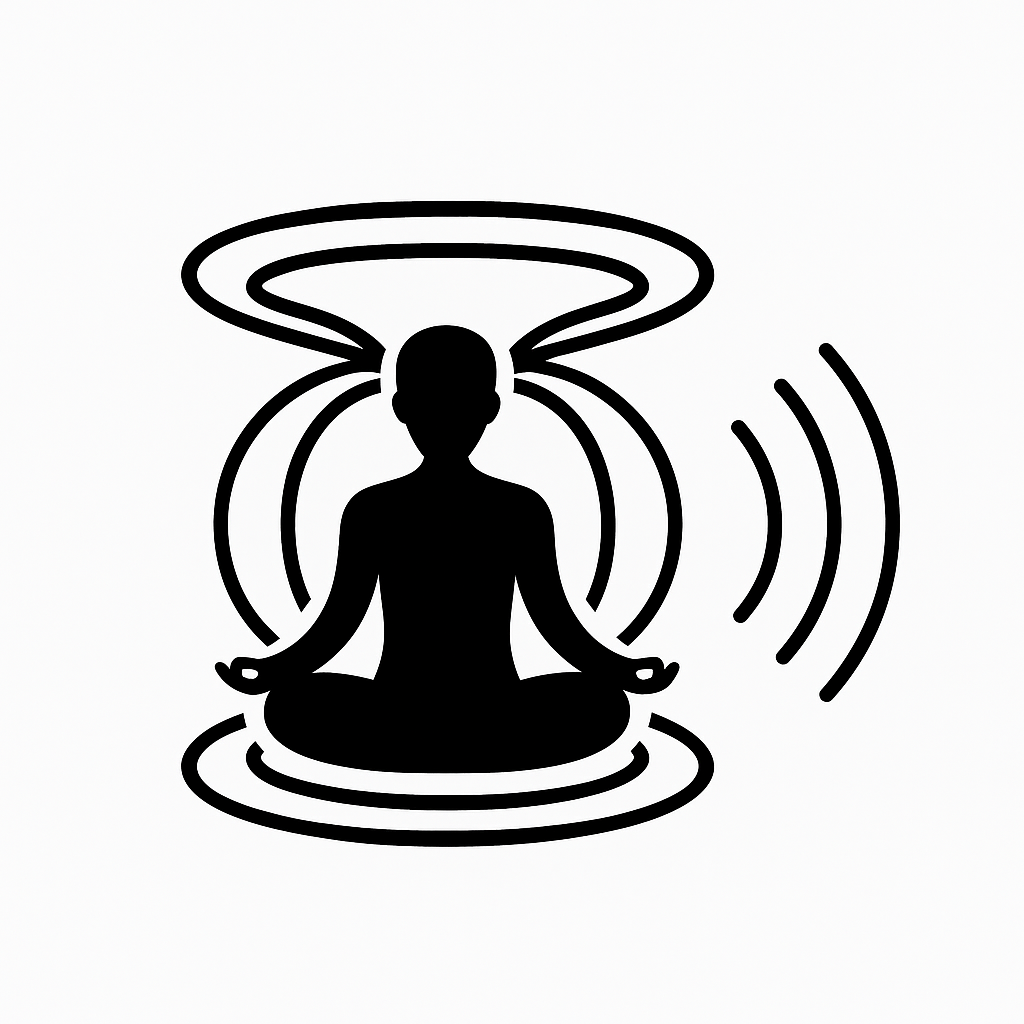
When sound enters a sacred space, it does not just echo—it organizes. It harmonizes brainwave states, synchronizes heart rhythms, and restores field coherence. Ancient temples were not passive—they actively tuned the human system. These chambers were frequency medicine long before modern science caught up.
Modern tools like Resonance Cards, tuning forks, and solfeggio tones are rediscovering what these ancient halls embodied: healing is not force—it is alignment. The body doesn't need to be fixed. It needs to be re-tuned. Through tone, form, and breath, the glyphs become guides, and the temple becomes a field.
When the voice strikes the glyph, and the space is aligned, healing emerges not from belief, but from resonance. The field doesn’t ask for understanding—it asks for vibration. This is how the ancients healed. Not through intervention. But through coherence.
“Healing was never delivered—it was remembered, through resonance.”
Stone as a Memory Medium
Stone does not forget. It absorbs. It remembers. In ancient temples, quartzite, limestone, granite—each chosen for its resonance profile—was used not for durability, but for conductivity. These stones weren’t just carriers of glyphs. They were memory fields. Frequency archives. Stillness encoded with sound.
When light from the sun entered a temple chamber, when a chant vibrated through the column, and when a glyph was observed with conscious breath, activation occurred. This triad—form, sound, and light—was not symbolic. It was functional. As we explored in The Living Word of Stone, the act of carving collapsed waveform into stillness. But when awakened, it moved again.
The Eye of Horus wasn’t drawn—it was charged. The glyph didn’t hold meaning. It held resonance. And that resonance, when paired with breath and light, activated the field. Stone, then, was not passive—it was a processor. A memory system of the living glyph.
“The glyph is not what you read—it is what the stone remembers when light and sound return.”
Global Connections – Sound Temples Around the World
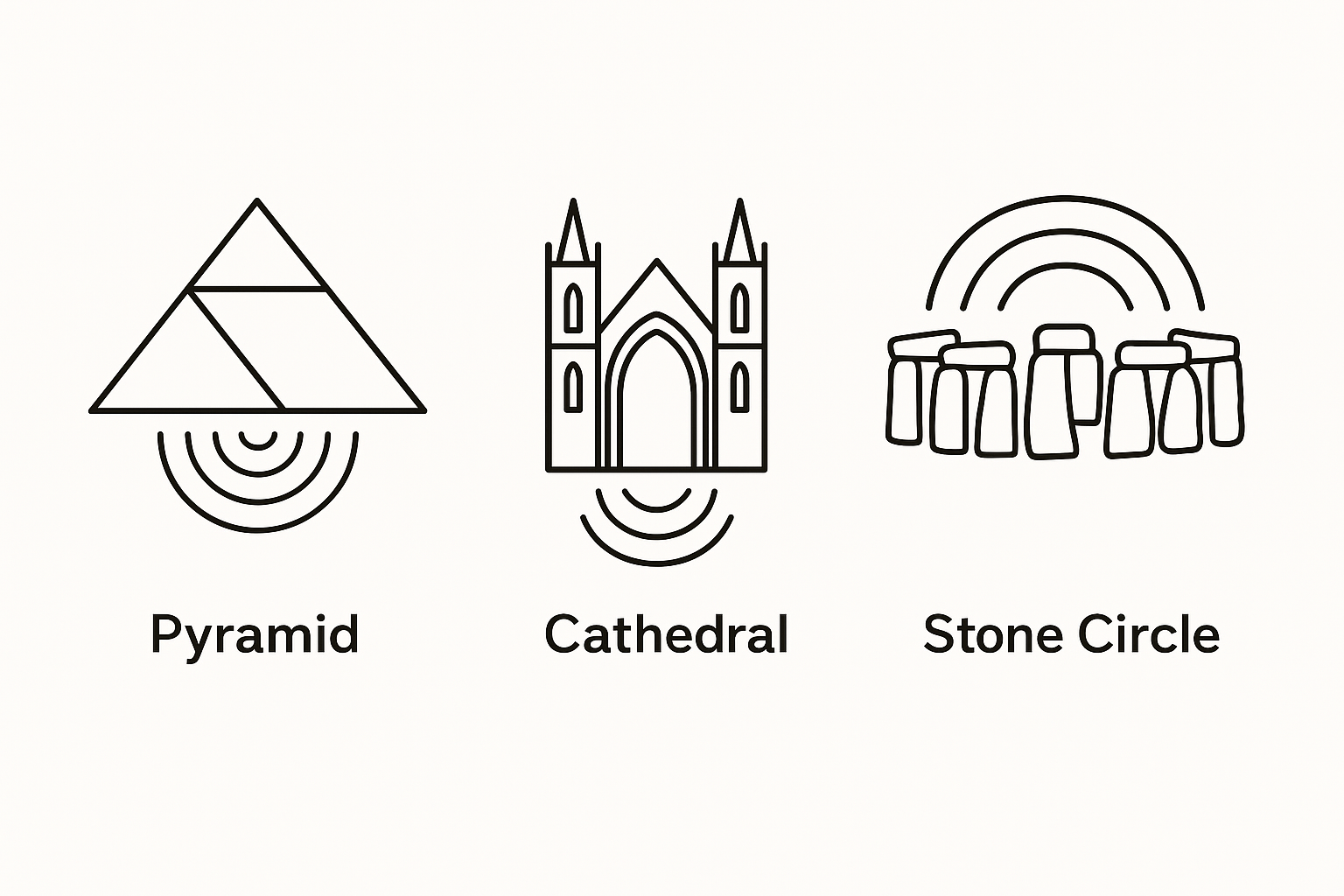
From the pyramids of Egypt to the cathedrals of Europe and stone circles of Britain, the Earth holds a harmonic map of sonic architecture. These were not isolated phenomena—they were globally encoded structures of vibrational coherence. Geometry, frequency, and stone were orchestrated across civilizations.
Mayan pyramids echo like serpents. Stonehenge reflects sound inward in spirals. Gothic cathedrals pulse with pipe organs tuned to sacred harmonics. These were not just spiritual sites—they were vibrational gateways. Each encoded the resonance of its landscape, culture, and sky—creating a global glyphic instrument.
This is not coincidence. It’s coherence. The ancients shared a memory of how to build with wave. What we explored in The Geometry of Soul now comes alive through sound. These were not just sacred places. They were field equations—vibrating across continents.
“Across time and space, the temple was never a place—it was a pitch.”
Closing Reflection – The Temple Remembered
The temple was never something to visit—it was something to become. The walls, the columns, the glyphs, the sound—they were blueprints, not just for buildings, but for bodies. The real chamber of resonance is within you. Your breath is the tuning fork. Your posture is the pillar. Your voice is the key.
As we explored in The Djed Pillar and The Ankh Circuit, resonance is not about understanding—it’s about embodiment. And now, as we leave the harmonic chamber, we take its frequency with us. You are the voice that reactivates the glyph. You are the pitch that sings memory back into stone.
In the next chapter, we turn fully inward. We no longer explore glyphs in stone or sound—but within the body itself. In Chapter 8, we reawaken the glyph through breath, movement, and modern embodiment. You are not just reading the code—you are becoming it.
“You were not meant to just read glyphs. You were meant to vibrate them into being.”
About the Author
Robbie George is a National Geographic photographer, regenerative farmer, and nature philosopher. His work bridges the poetic and the scientific — illuminating nature’s vibrational intelligence through fine art photography and resonant storytelling.
Frequently Asked Questions
Were ancient temples designed for sound?
Yes. Many ancient temples were acoustically tuned structures. From the 111 Hz resonance in the Hypogeum to the harmonic chambers of the Great Pyramid, sacred spaces were designed to amplify healing frequencies and vibrational coherence.
How did hieroglyphs interact with sound?
Glyphs weren’t static—they were frequency maps. When chant or breath passed over certain glyphs, their shape acted like a resonant switch, activating stored vibrational memory in the stone and the surrounding field.
Can sound really influence the biofield?
Yes. Studies in HeartMath, brainwave entrainment, and tuning fork therapy show that sound can harmonize the body’s biofield, improve coherence, and aid in energetic healing—exactly as ancient temples were designed to do.
What is cymatics and why does it matter?
Cymatics is the study of how sound shapes matter. It proves that frequency creates form—sand, water, and even cells arrange themselves based on sound vibration. Ancient architecture leveraged this to embed frequency into structure.
How can I experience sonic resonance today?
You can use chant, tuning forks, solfeggio frequencies, or simply your breath and intention in a quiet space. Your body becomes the temple. Your voice, the tuning fork. The glyph, your memory.