
Machias Seal Island - A Disputed Sanctuary for Atlantic Puffins
What It Feels Like to Step Onto Machias Seal Island
Landing here is controlled, deliberate, and quiet. You don’t wander—you’re guided. You don’t approach—you wait. The island immediately sets the terms. Birds move first. You follow their rhythm or you don’t belong.
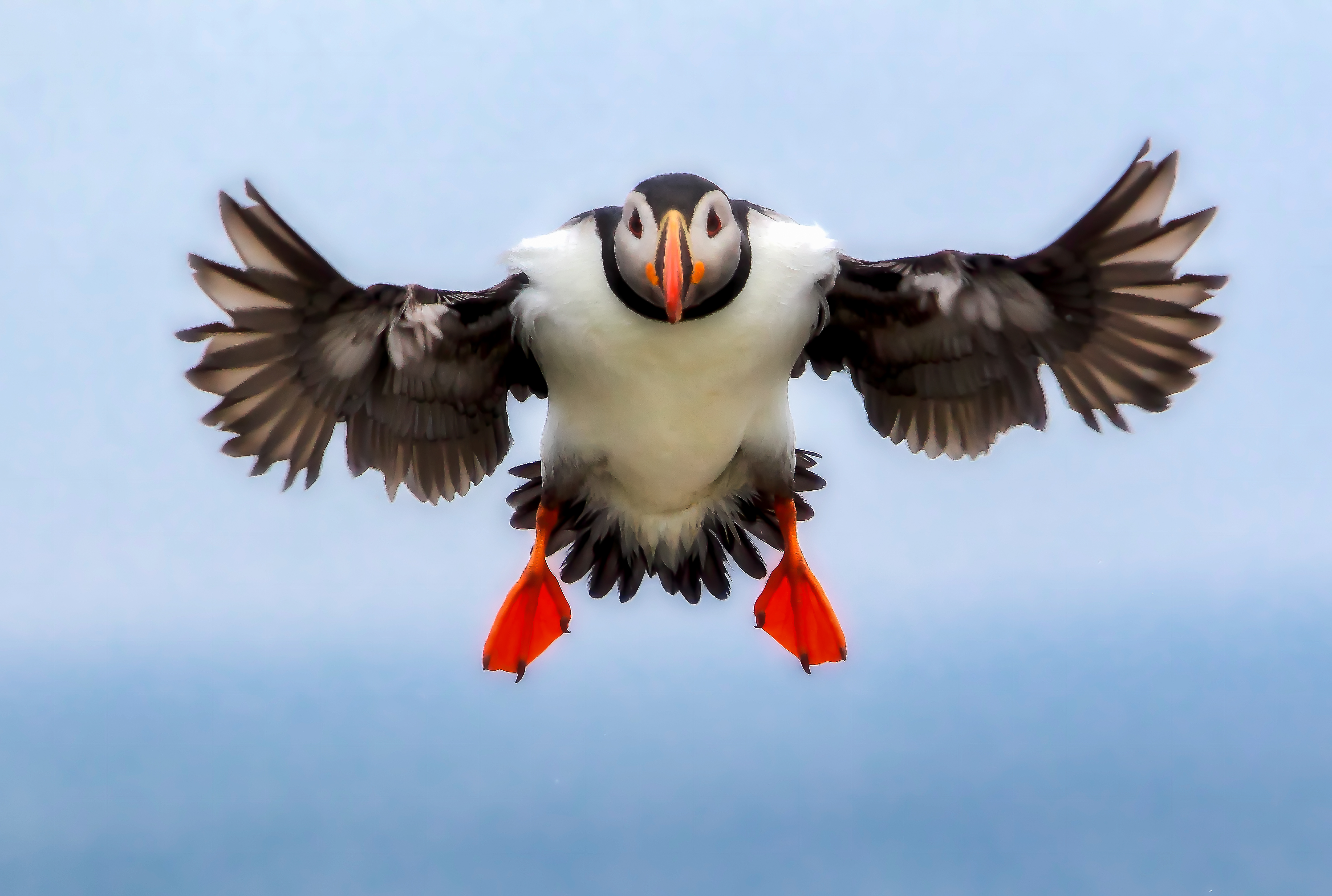
From the blinds, everything compresses into a narrow field of view—rock, grass, burrows, and constant motion. Puffins come in low over the water, wings beating fast before they stall and drop onto the ledges. Every landing is controlled chaos. Every takeoff is precise. There’s no wasted energy here.
What stands out most is how dense the life is. Thousands of birds operating in tight space, each one navigating territory, timing, and survival. This isn’t just a place to photograph birds—it’s a place to watch a system working at full capacity.
“Out here, nothing is random—every movement is timed to the ocean.” ~ Robbie George
The Island Structure — Granite, Fog, Burrows, and Edge
Machias Seal Island feels small when you first see it, but once I’m there, it opens into layers. Rock ledges, short grasses, shallow soils, exposed edges, and constant wind all work together to shape how life fits here. Nothing about the island is soft or excessive. It is compact, weathered, and efficient — exactly the kind of place where seabirds can turn narrow space into a functioning breeding system.
What makes the island so important is not size, but structure. The granite gives birds stable ledges and protected angles. The ground cover and burrow zones create nesting opportunities for puffins. The surrounding cold water brings the marine food web close enough to support constant movement between sea and colony. When I watch the island carefully, I’m not just looking at birds on rocks — I’m watching geology, weather, and ocean productivity hold the whole system together.
Fog matters here too. It changes distance, flattens the horizon, and makes the colony feel even more concentrated. Light can shift from silver to flat gray in minutes. That atmosphere is not separate from the ecology — it is part of it. The birds move through these conditions every day, and the island’s shape only makes sense when I see it as an edge habitat where sea, stone, air, and nesting behavior all meet at once.
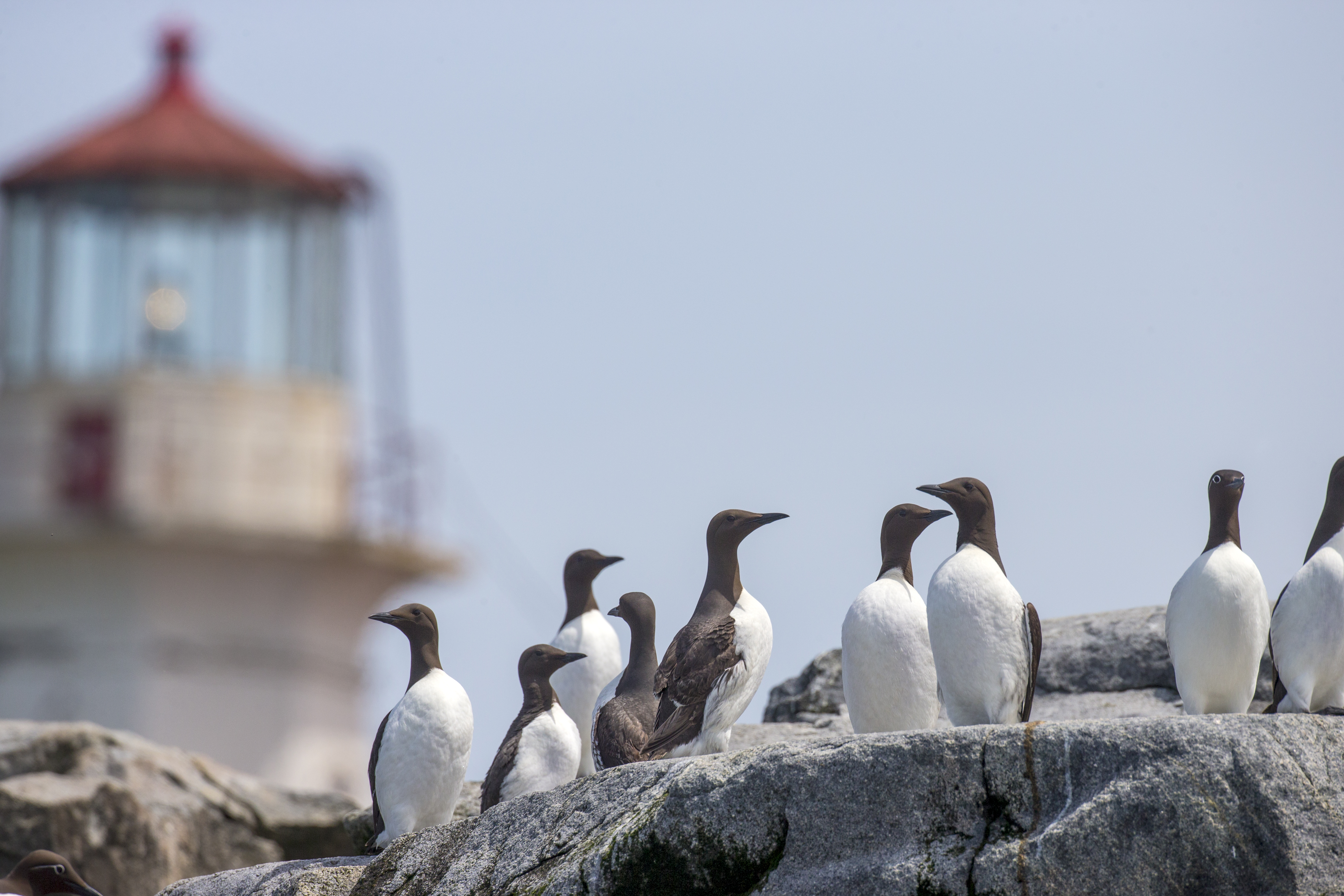
Dense murre ledges reveal how little unused space exists on Machias Seal Island during breeding season.
“On Machias, the habitat is all edge — and edge is exactly what makes the colony work.” ~ Robbie George
Wildlife & Behavior — A Colony in Constant Motion
What stands out immediately on Machias Seal Island is how little stillness there actually is. Even when a bird looks settled, the colony is moving—birds arriving from the water, trading places on ledges, carrying fish, defending space, calling, crouching, watching. Every part of the island is active, and every movement has a purpose.
Atlantic Puffins bring one rhythm to the island—fast, direct, and efficient. They come in low over the water, wings beating hard before dropping onto rock or disappearing into burrows. Common Murres operate differently, packed tightly along exposed ledges where space is limited and every position matters. Razorbills feel heavier and more grounded, but they’re working the same system—timing trips to sea, returning with food, and fitting their behavior into a narrow and competitive landscape.
What I’m seeing here isn’t just different species—it’s different strategies layered into the same space. Burrows, ledges, flight paths, feeding cycles—all overlapping, all working together. The island is small, but the behavior is dense. That’s what makes this place so powerful in the field.
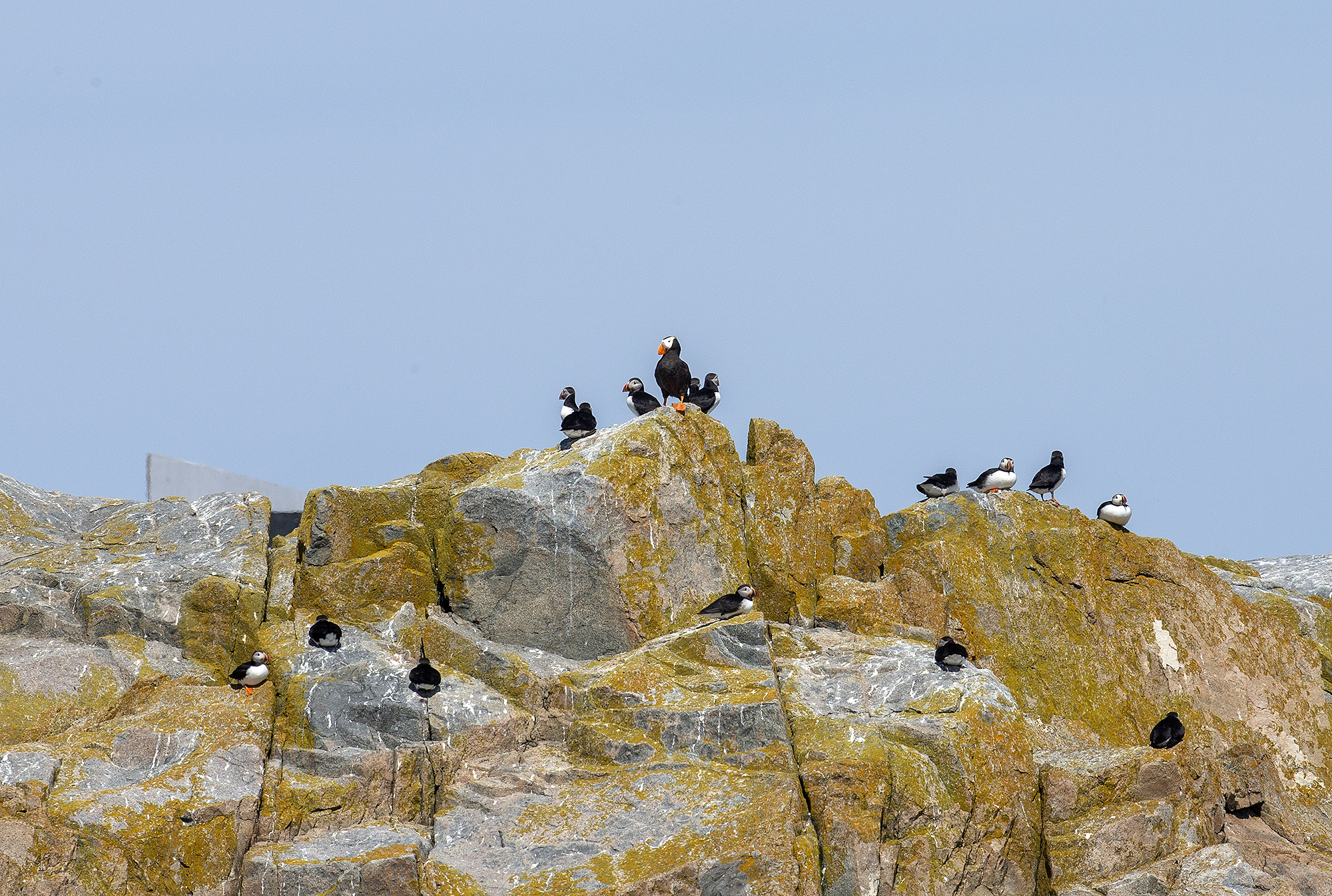
A rare Tufted Puffin on Machias Seal Island — an unexpected moment within a familiar seabird colony.
I came to Machias expecting Atlantic Puffins—their rhythm, their return, their predictable movement between sea and stone. But in the middle of that pattern, something didn’t fit. One bird stood out immediately. Darker. Different posture. A presence that felt just slightly off from everything around it.
It took a moment to register, but once it did, I knew exactly what I was looking at—a Tufted Puffin. A bird that belongs on the Pacific, not here in the North Atlantic. In all my time in the field, this was something I never expected to encounter in this place.
I didn’t move. I stayed locked in, letting the moment unfold naturally. The bird wasn’t acting differently—it was simply part of the island in that instant. But I knew what I was seeing was rare. One of those moments where awareness matters, because it can disappear just as quickly as it appears.
That encounter stayed with me long after I left. Not because it was unexpected—but because it reminded me that even in a place I thought I understood, the ocean still has more to reveal.
“Every once in a while, the ocean shows you something you weren’t meant to expect.” ~ Robbie George
Seasonal Timing — When the Island Comes Alive
Machias Seal Island doesn’t function the same way year-round. Everything I see here is tied to a narrow seasonal window. Outside of that window, the island feels quiet and exposed. But once late spring arrives, the entire system turns on — birds return, burrows reopen, ledges fill, and the air becomes constant movement.
From late May through early August, this is a full breeding colony. Puffins are commuting between sea and land with fish, murres are tightly packed on ledges, and terns are actively defending airspace. Timing matters here more than almost anywhere I’ve worked. If I arrive too early, the island hasn’t filled in yet. Too late, and the activity starts to drop as birds begin to leave.
Peak behavior happens in that middle stretch — when feeding is constant and chicks are being raised. That’s when the island feels most compressed, most active, and most revealing. It’s also when conditions can shift the fastest — fog rolling in, wind picking up, light flattening — all of which changes how the colony moves and how I have to work in the field.
This is why I always tie locations like this back to timing tools. Pages like Seasonal Wildlife Calendar and Nature’s Seasons exist for a reason — they help translate what I’m seeing in the field into predictable patterns. On Machias, those patterns are tight. Miss the window, and you miss the system.
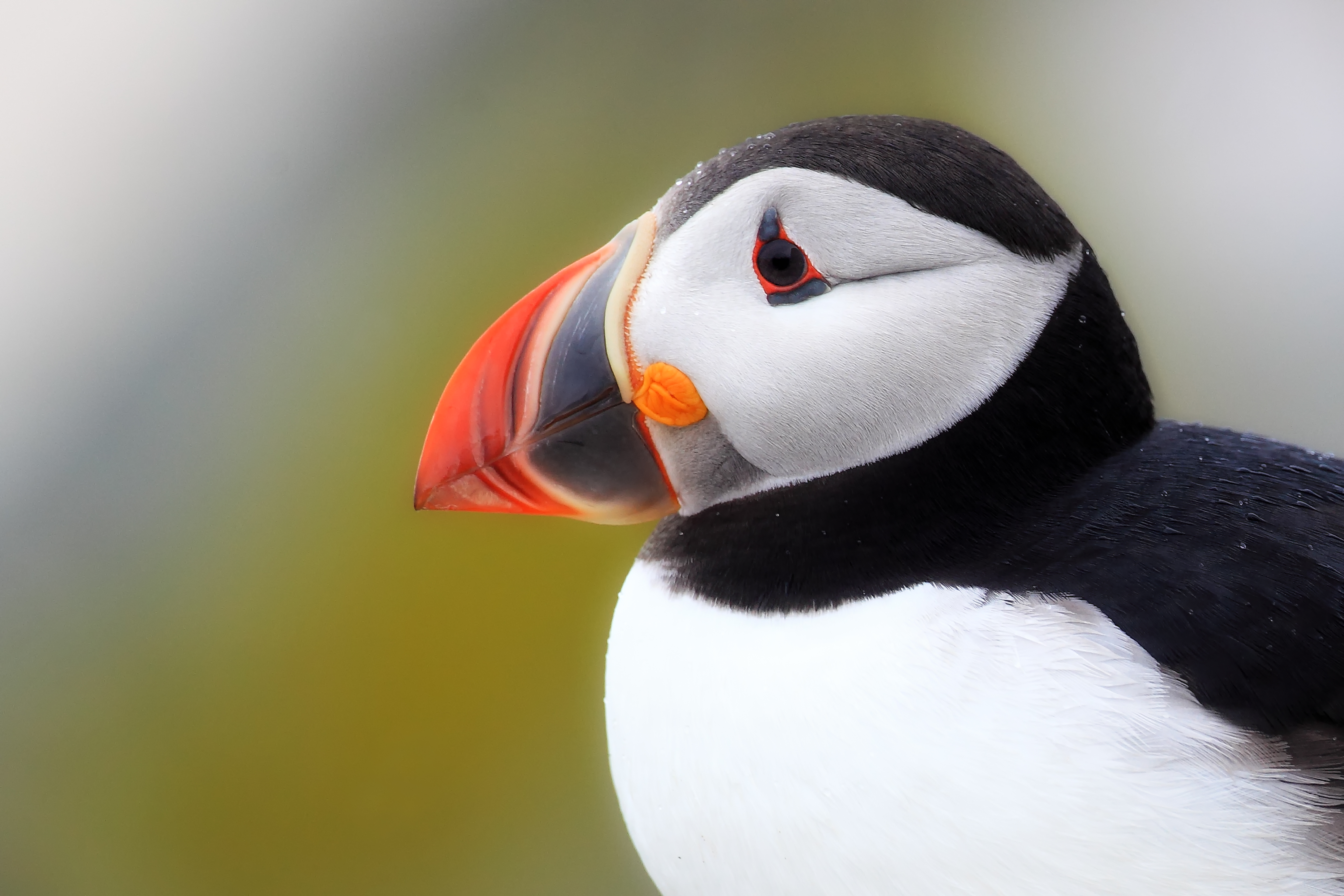
Breeding season defines the island — without it, Machias Seal Island becomes a completely different place.
“Timing isn’t just important here — it is the system.” ~ Robbie George
Locations & Field Strategy — How I Work the Island
Machias Seal Island isn’t a place where I move freely — it’s a place where I position carefully. Access is controlled, and once I’m on the island, everything happens from designated blinds and limited pathways. That constraint is actually what makes the experience stronger. Instead of chasing subjects, I let the behavior come to me.
From the blinds, I focus on patterns. Puffin flight paths, murre ledge density, and where birds are consistently landing or exiting. The key is not reacting to individual birds, but recognizing repeated movement. Once I see that pattern, I can anticipate where the next moment will happen instead of trying to catch up to it.
Distance matters here. I’m not trying to get closer — I’m trying to get clearer. Longer lenses, steady positioning, and patience allow the behavior to stay natural. If the birds adjust to me, I’ve already lost the shot.
To make this repeatable, I map everything. Where the blinds sit, where the most active ledges are, how light hits different parts of the island through the day. Tools like Photography Maps and Field Tools help translate a one-time experience into something I can understand and return to with purpose.
Field-tested locations including puffin blinds, murre ledges, and lighthouse positioning zones.
What this island teaches me is simple: positioning beats movement. If I understand where the system is strongest, I don’t need to chase anything. The wildlife comes through the frame on its own.
“On Machias, the best move is often no move at all.” ~ Robbie George
Planning & Field Ethics — Working Within the System
Machias Seal Island is not a place where I decide how the day goes. The system decides. Access is limited, time on the island is short, and conditions can change quickly. The only way to work here well is to prepare ahead of time and stay flexible once I arrive.
Before I ever step onto the island, I’m thinking about timing, weather windows, and seasonal behavior. Tools like the Golden Hour & Moon Phase Planner and Seasonal Wildlife Calendar help me align the trip with peak activity. But once I’m there, planning gives way to observation.
Ethics are not optional here — they’re built into how the island operates. I stay inside designated areas, use distance instead of approach, and keep movement and noise to a minimum. These birds are nesting, feeding, and raising young in a compressed space. Any disruption ripples through the entire colony.
Respecting that structure isn’t just about doing the right thing — it leads to better work. When I let the birds behave naturally, the images carry more truth. The behavior stays intact, and the story stays real.
Preparation gets me there. Discipline keeps me aligned. And patience is what allows the island to reveal itself.
“Respect the distance, and the behavior comes to you.” ~ Robbie George
Naturepedia Connection — Machias Seal Island as a Living System
When I step back and look at Machias Seal Island as a whole, it stops being a location and starts becoming a system. Everything here is connected — the rock structure, the surrounding ocean, the timing of fish movement, and the behavior of seabirds returning to breed. Nothing operates in isolation.
This is exactly how I think about places within Naturepedia. A location like Machias sits at the intersection of multiple layers:
- Habitat: Exposed granite island with limited soil and dense nesting zones
- Behavior: High-density breeding, feeding cycles, and territorial spacing
- Ecosystem: North Atlantic marine system supporting seabird populations
- Season: Narrow breeding window driving peak activity
- Conservation: Protected access maintaining long-term stability
If I follow those layers outward, Machias connects directly into broader system pages like Wildlife Behavior & Ecology, Ecosystems of North America, and Wildlife Conservation & Habitat.
It also ties directly into species-level understanding through birds like the Atlantic Puffin, where behavior, diet, and migration patterns become easier to understand when I see them anchored to a real place like this.
That’s the role of a location page in your system — not just to describe a place, but to connect it. Machias Seal Island becomes a node where habitat, behavior, season, and conservation all meet and reinforce each other.
“A place only makes sense when you see what it connects to.” ~ Robbie George
Machias Seal Island — Field FAQs
When is the best time to visit Machias Seal Island?
Late May through early August is the active breeding season. This is when puffins, murres, and other seabirds are fully present and behavior is at its peak.
What wildlife can I expect to see?
The island supports Atlantic Puffins, Common Murres, Razorbills, and Arctic Terns. During rare events, outliers like a Tufted Puffin can appear within the colony.
Can you freely explore the island?
No. Access is tightly controlled. Visitors are guided and restricted to specific areas and blinds to protect nesting birds and maintain colony stability.
What gear works best for photography here?
A telephoto lens is essential. You’re working at a distance, so longer focal lengths allow you to capture behavior without disturbing wildlife.
Why is this island important as a system?
Machias Seal Island compresses habitat, behavior, and timing into a small space. It shows how multiple seabird species share limited terrain through different nesting strategies and seasonal coordination.
How should I behave while visiting?
Stay within designated areas, minimize movement and noise, and never approach nesting birds. Respecting distance ensures the colony continues to function naturally.
About Robbie George
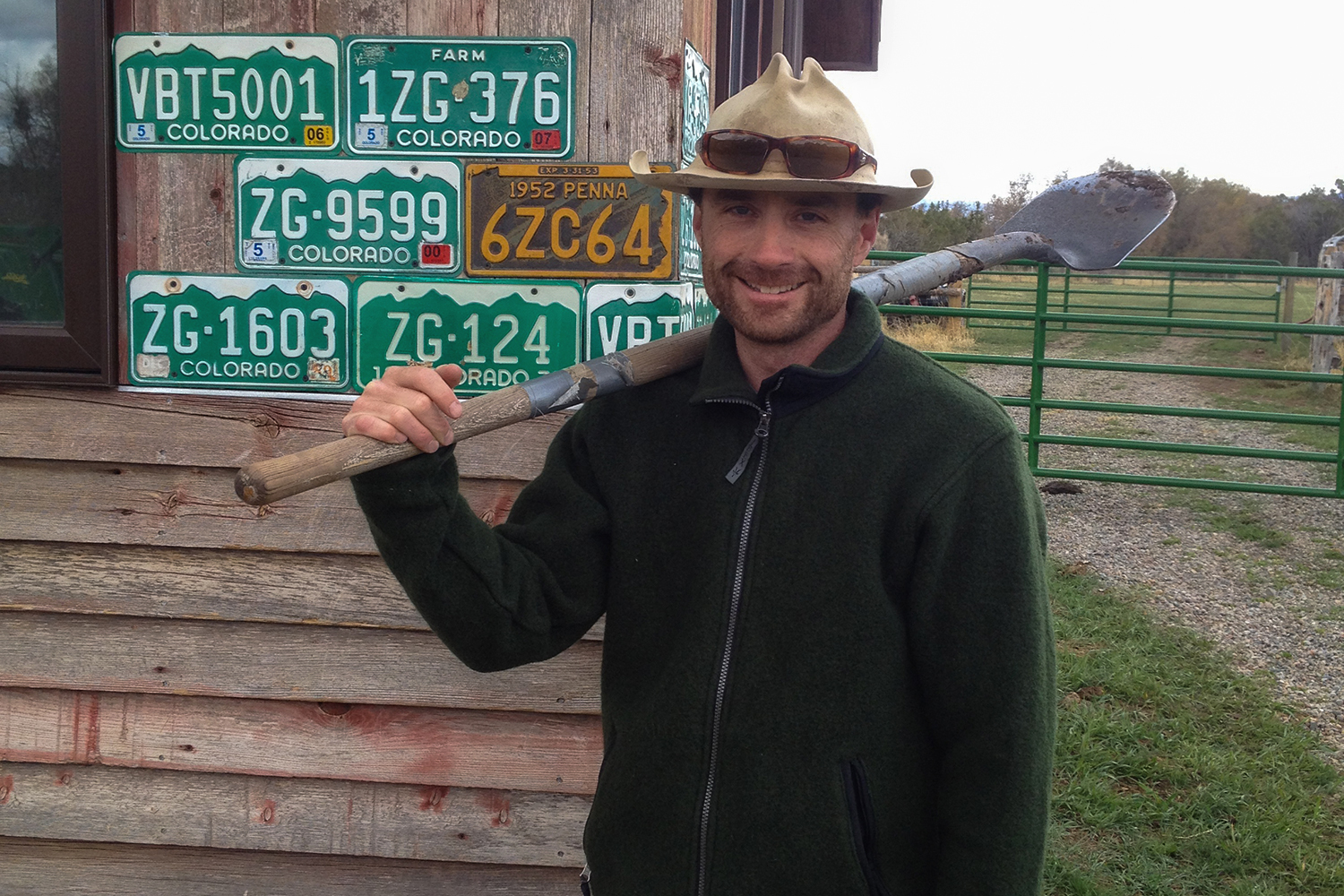
I’m Robbie George, a National Geographic–published nature photographer whose work is built through time in the field—returning to places under changing weather, light, and season, and learning how wildlife behavior is shaped by habitat.
Machias Seal Island matters to me because it makes the relationship between place and behavior impossible to miss. The island is small, exposed, and tightly structured, yet every ledge, burrow, and flight path is full of information. It’s one of those rare locations where seabird ecology, timing, and field discipline all come into focus at once.
My broader work connects images, field observation, and ecological understanding across the site through Naturepedia, species guides, wildlife location pages, and visual collections like Wildlife Photography. For planning and field preparation, I also maintain practical tools such as the Seasonal Wildlife Calendar and Field Tools.
“The more faithfully I watch a place, the more clearly it begins to explain itself.”