

From Platonic Shadows to E8: A Morphology Ladder of Light, Vortex, and Form
The Morphology Ladder: A Roadmap from Platonic Solids to E8
Before climbing into the details, it helps to see the entire morphology ladder at a glance. We begin with the familiar Platonic solids—the archetypes that ancient wisdom revered as elemental forms. From there, we expand outward into the Vector Equilibrium and UVG sphere, extend into the 4D polytopes of H₄ symmetry, witness quasicrystals and Penrose tilings, and finally arrive at the E8 lattice, the jewel of 8D geometry.
Each rung of this ladder reveals how light, resonance, and vortex motion project across dimensions. The journey mirrors what I describe in the Signature Series: ancient archetypes casting modern shadows, and nature’s living code weaving coherence from the smallest hydrogen qubit to the cosmic blueprint itself.
Think of this roadmap as a ladder of resonance: Platonic Solids → UVG Sphere → H₄ Symmetry → Quasicrystals → E8 → Nature → Unified Resonance. We’ll explore each step with the same curiosity I bring to photographing wildlife and landscapes: seeing not just the beauty before us, but the deeper philosophy of nature encoded in form.
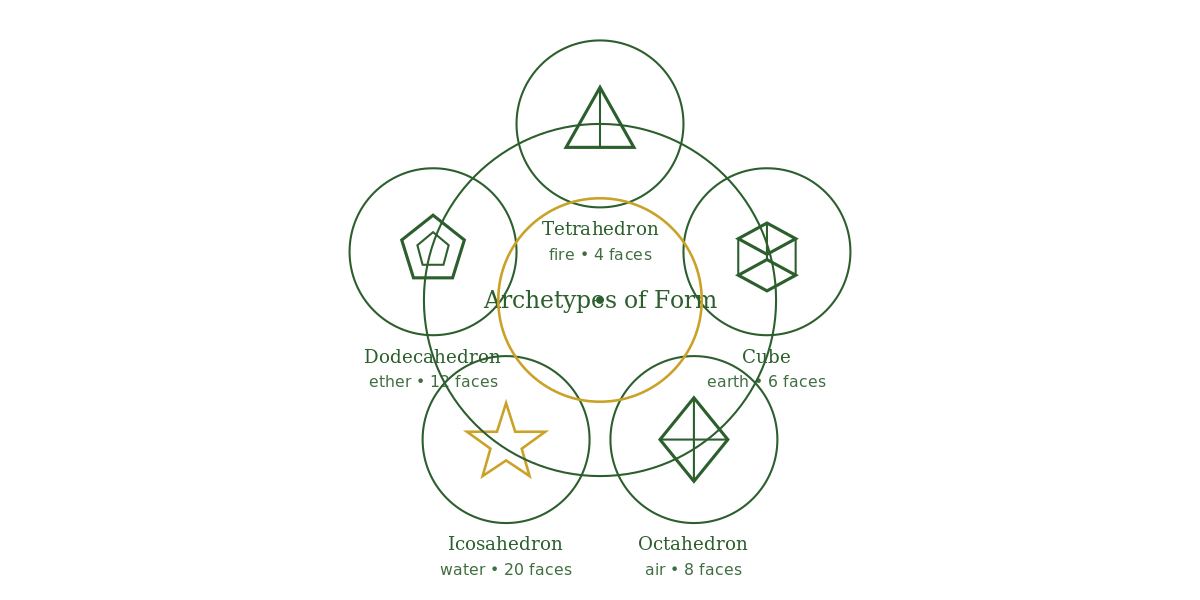
Rung 1 — Platonic Archetypes: The Stable Nodes of Form
We begin with the five Platonic solids—tetrahedron, cube, octahedron, icosahedron, and dodecahedron— classical “rest points” where vibration settles into perfect symmetry. In my framework, these are the stable resonance nodes: 3D shadows of higher-dimensional order. Their faces, edges, and angles embody the same harmonic intelligence you see throughout nature’s design—what I call the Nature Code.
If you’ve followed my writing on the golden ratio and Fibonacci/spiral growth, you’ve already met these archetypes in the wild: crystal lattices, snowflakes, pinecones, shells, even cloud geometries. The ancients intuited this connection—see Ancient Wisdom & Cosmic Patterns—and modern fieldwork keeps confirming it through the lens. These solids are the first rung on the ladder that climbs toward the E8 lattice later in this essay.
As we move to Rung 2, we’ll “lift” these forms onto the sphere via geodesic nets (UVG/VE) to trace how symmetry begins to flow. If you want the full arc now—from archetypes to hyper-symmetry—jump ahead to E8: Signature Series and the companion overview Unified Resonance. For the philosophy that underpins this journey, visit Nature Philosophy or explore the series hub, Signature Series: Nature • Science • Soul.
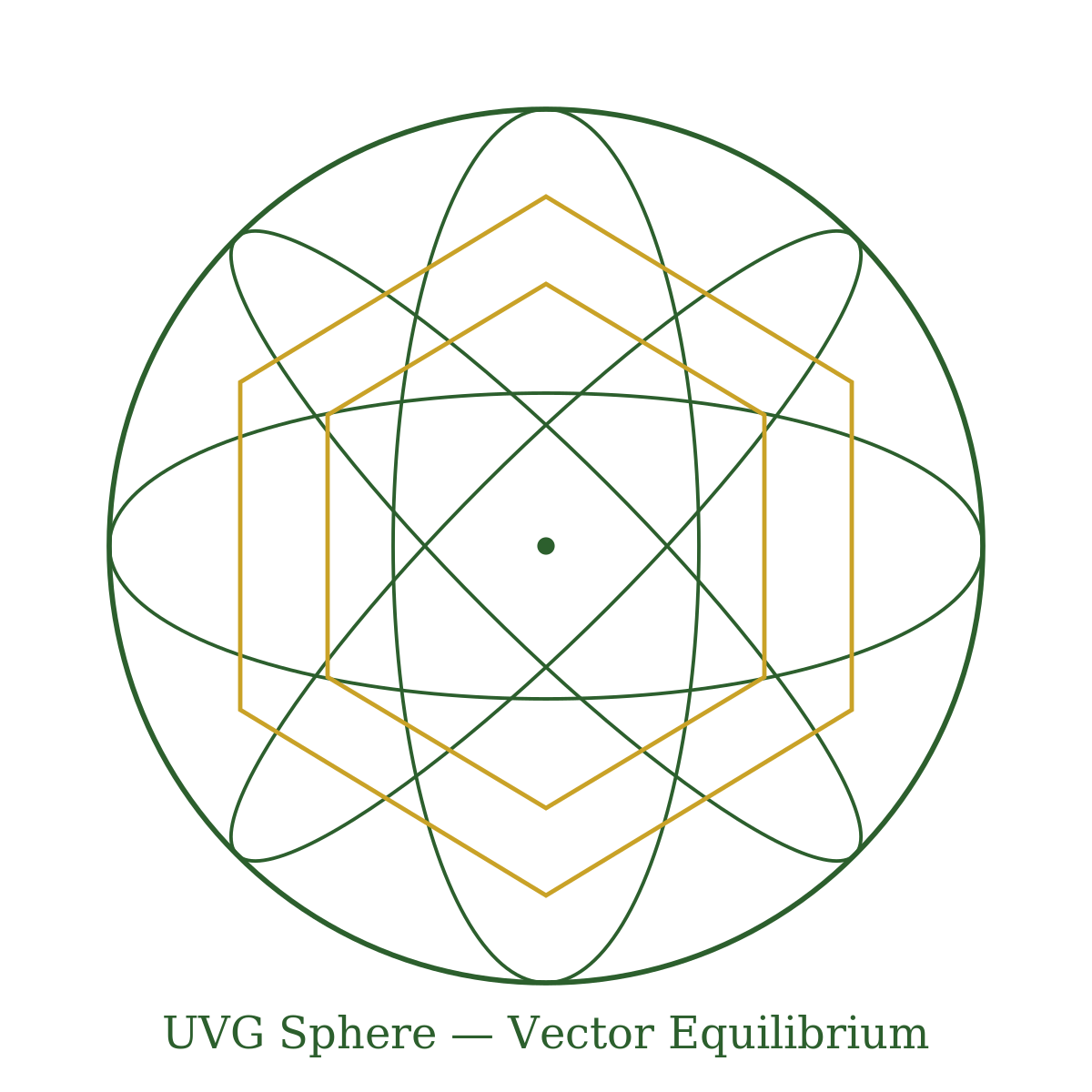
Rung 2 — Vector Equilibrium & the UVG Sphere: When Symmetry Begins to Flow
If the Platonic solids are stable nodes, the Vector Equilibrium (cuboctahedron) is the moment symmetry breathes. By “lifting” those solids onto a sphere of great-circle geodesics (the UVG sphere), edges become flow lines and faces become routes for energy. This is where the morphology ladder turns from static form to field dynamics—exactly the bridge I explore in Nature Code and the Signature Series.
The UVG’s net looks like the planet’s pulse: jet streams, ocean gyres, migratory flyways, and auroral curtains following coherent paths—a living “cartography of resonance.” I write about this mapping instinct in Codex Cartographia, and you can see its sky-scale timing in Solar Cycles & Polarity Flow. In the field, I chase these flows in my landscape and wildlife work—reading wind bands over mountain passes or the returning arcs of river bends as if they were geodesic lines on a drumhead of light.
Here’s the key: the cuboctahedron holds all vectors in balance—no edge is privileged—so motion can redistribute without tearing coherence. Think of it as the planet’s “rest state of flow.” From this spherical net, the ladder can legitimately step beyond 3D into H₄ symmetries (600-cell / 120-cell) next. If you prefer to skip ahead, the big picture is summarized in Unified Resonance and ultimately lands in the E8 overview E8: Signature Series.
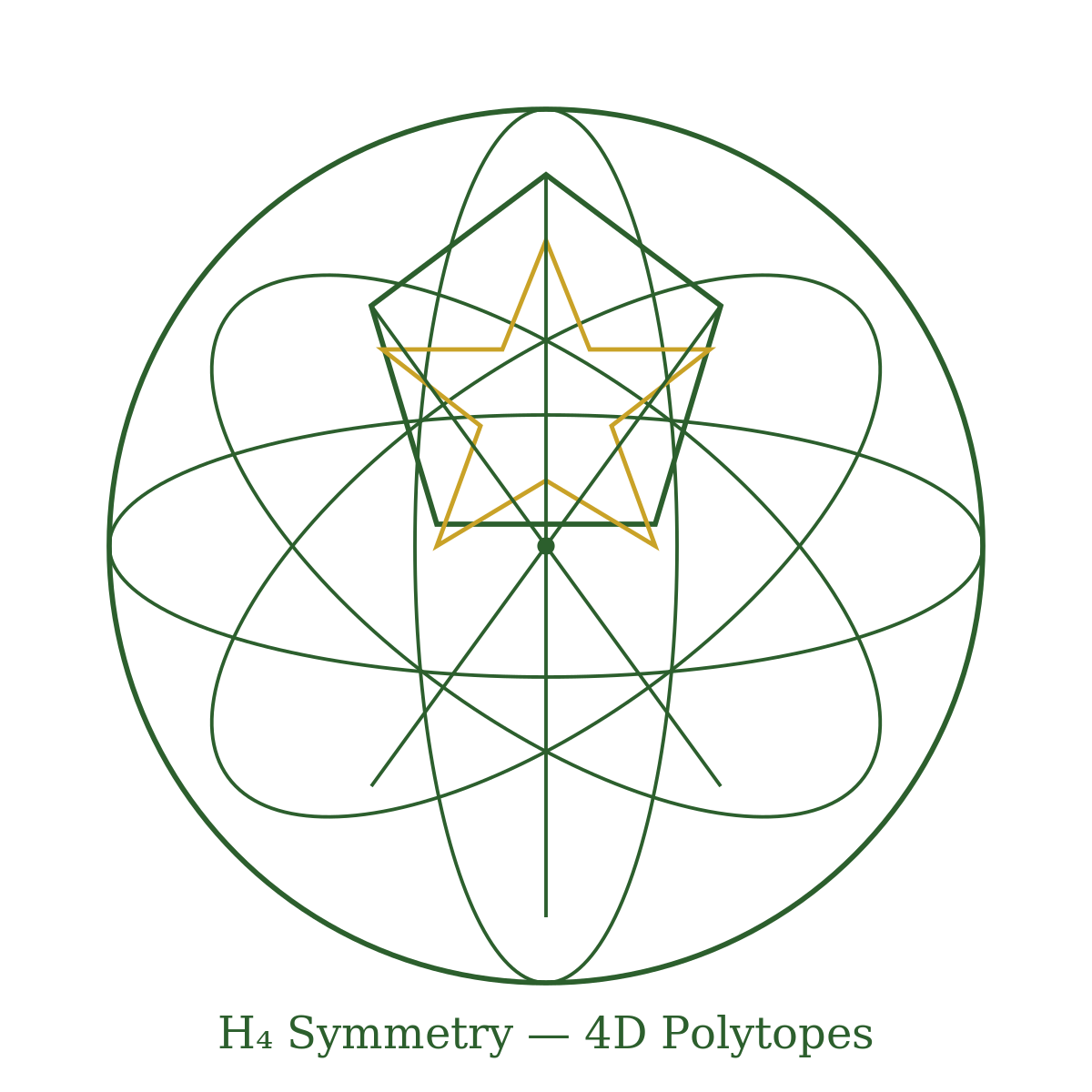
Rung 3 — Higher Symmetry in 4D: H₄, the 600-cell & 120-cell
Beyond the geodesic flow of the UVG sphere, the next rung lifts us into four dimensions. Here the duality of the icosahedron and dodecahedron blooms into H₄ symmetry, generating the celebrated 600-cell and 120-cell. These 4D polytopes preserve the golden ratio relationships so central to harmony in nature, but now woven across an unseen axis of recursion.
Think of this step as the geometry of potential—shapes that can only be hinted at in three dimensions, yet exist fully in four. Just as fractals reveal infinite depth in finite space, H₄ reveals hidden coherence in dimensional layers we cannot directly see. In my Nature Code essays, I often describe this as resonance folding: the field tucking information into higher orders of symmetry, awaiting projection into visible form.
As photographers of the wild, we sense this hidden coherence in wing lattices, crystal growth, and the recursive branching of rivers and trees—nature whispering its 4D memory into 3D landscapes. For me, this rung bridges the mystical ancient wisdom of sacred geometry with the living science of quantum biology. From here, the ladder leads naturally toward E8 symmetry—but first we’ll pause with the curious beauty of quasicrystals.
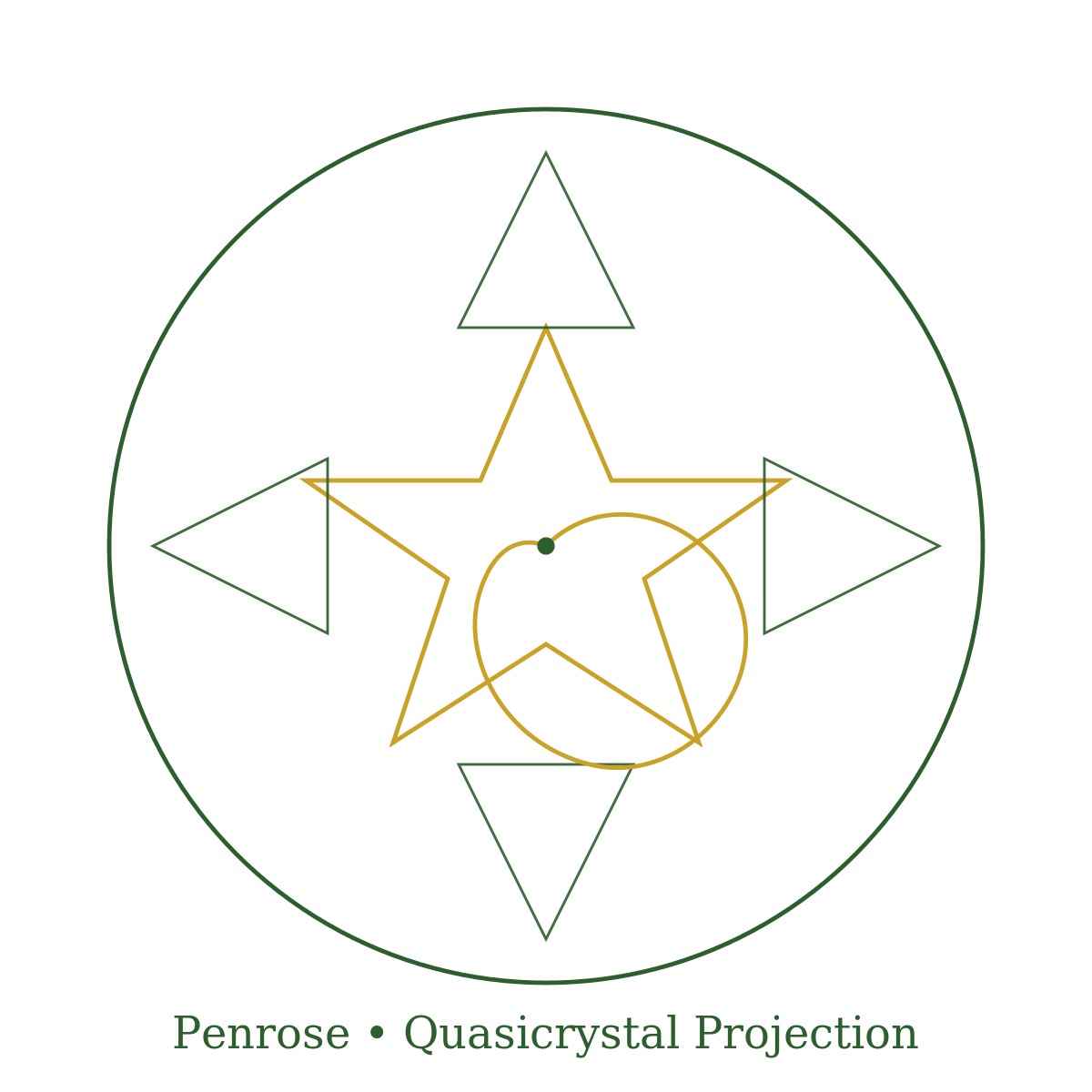
Rung 4 — Quasicrystals & Penrose Tilings: Order Beyond Repetition
Unlike the Platonic solids or even the balanced UVG sphere, quasicrystals are patterns that are ordered yet never repeating. This discovery first appeared in Penrose tilings—aperiodic arrangements of “kites” and “darts”—and was later confirmed in the atomic lattice of real materials. Nature had already whispered this secret: in the spirals of flowers, pinecones, and seed heads, where no two spirals are identical, yet all remain coherent.
The Fibonacci phyllotaxis of a sunflower or daisy provides a living bridge between golden ratio growth and quasicrystal projection. In my photography, these spirals become a field diary of resonance made visible—each petal or seed a node in a living coherence field. They reveal that order in nature is not rigid repetition, but fluid alignment with higher-dimensional symmetries.
This rung prepares the leap into the E8 lattice, where quasicrystals are recognized as 2D and 3D projections of 8D order. In other words, the spirals in a flower are not only beautiful— they may be echoes of the same unified resonance that binds hydrogen qubits, photons, and galaxies. The quasicrystal is nature’s way of saying: coherence is richer than repetition.
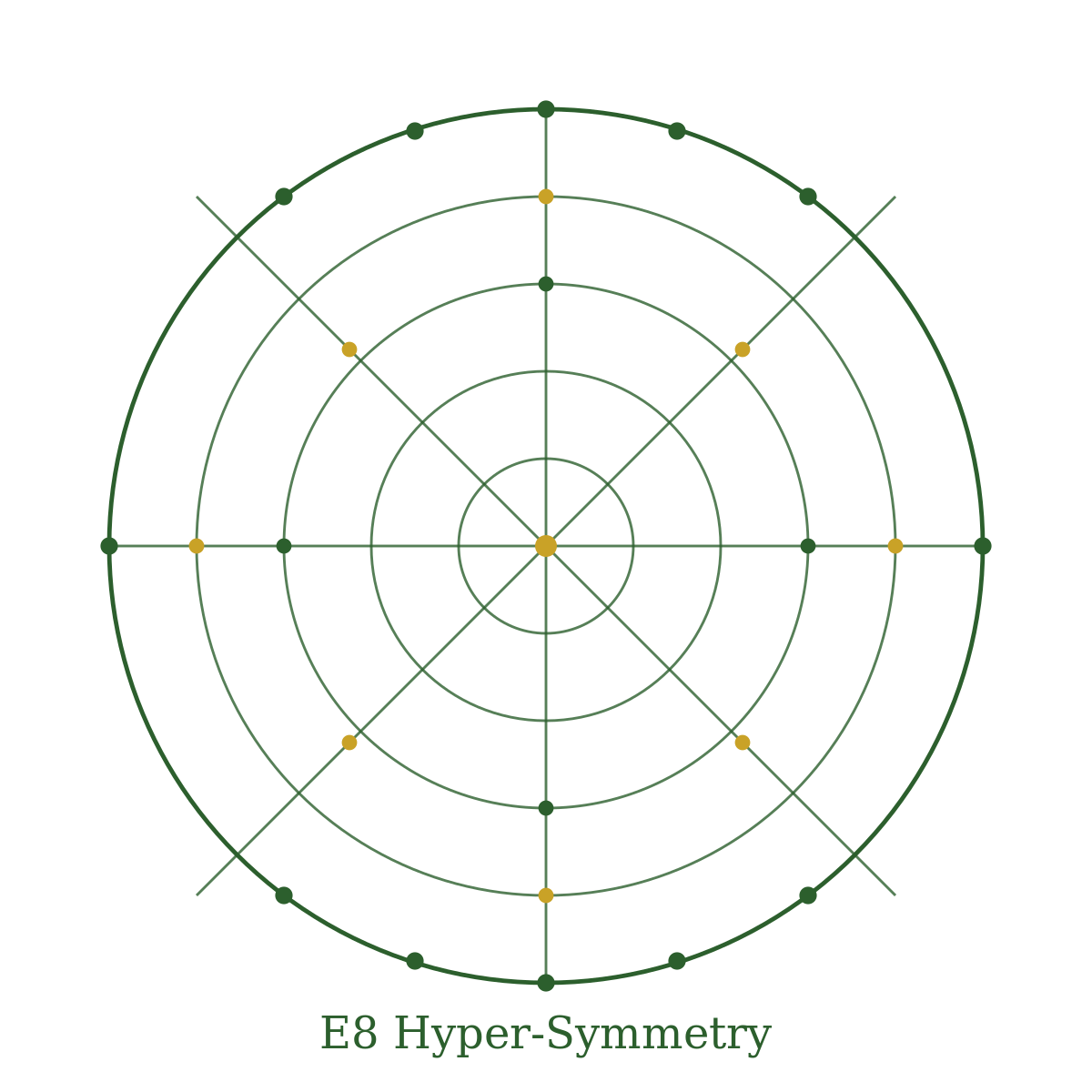
Rung 5 — The E8 Lattice: Hyper-Symmetry in Eight Dimensions
At the summit of the morphology ladder stands the E8 lattice—a jewel of mathematics, regarded as the densest symmetry in eight dimensions. Its 240 root vectors form a recursive, perfectly balanced structure that mathematicians describe as “exceptional.” In my lens, E8 is not abstract: it is the master resonance field, a living lattice that encodes polarity (+, –, 0), guides recursive light into coherence, and stores memory as harmonic alignment. I call this unified resonance.
Think of the Fibonacci spirals you see in a flower, or the vortexes of water winding through a river delta: each is a 2D or 3D shadow of E8’s hidden order. Quasicrystals, Penrose tilings, even phyllotaxis spirals are projections of this higher lattice. In this way, E8 becomes not only a mathematical symmetry but a Nature Code, projecting coherence into everything from snowflakes to galaxies.
Some physicists have speculated that E8 may hold the key to unifying all fundamental forces. In my framework, it also provides a language for resonance coherence: hydrogen qubits align within its geometry, photons travel its pathways, and dark matter may be understood as vortex memory hidden in its neutral nodes. This echoes what I explore in The Pyramid of Resonance, where coherence is the true scaffolding of the universe.
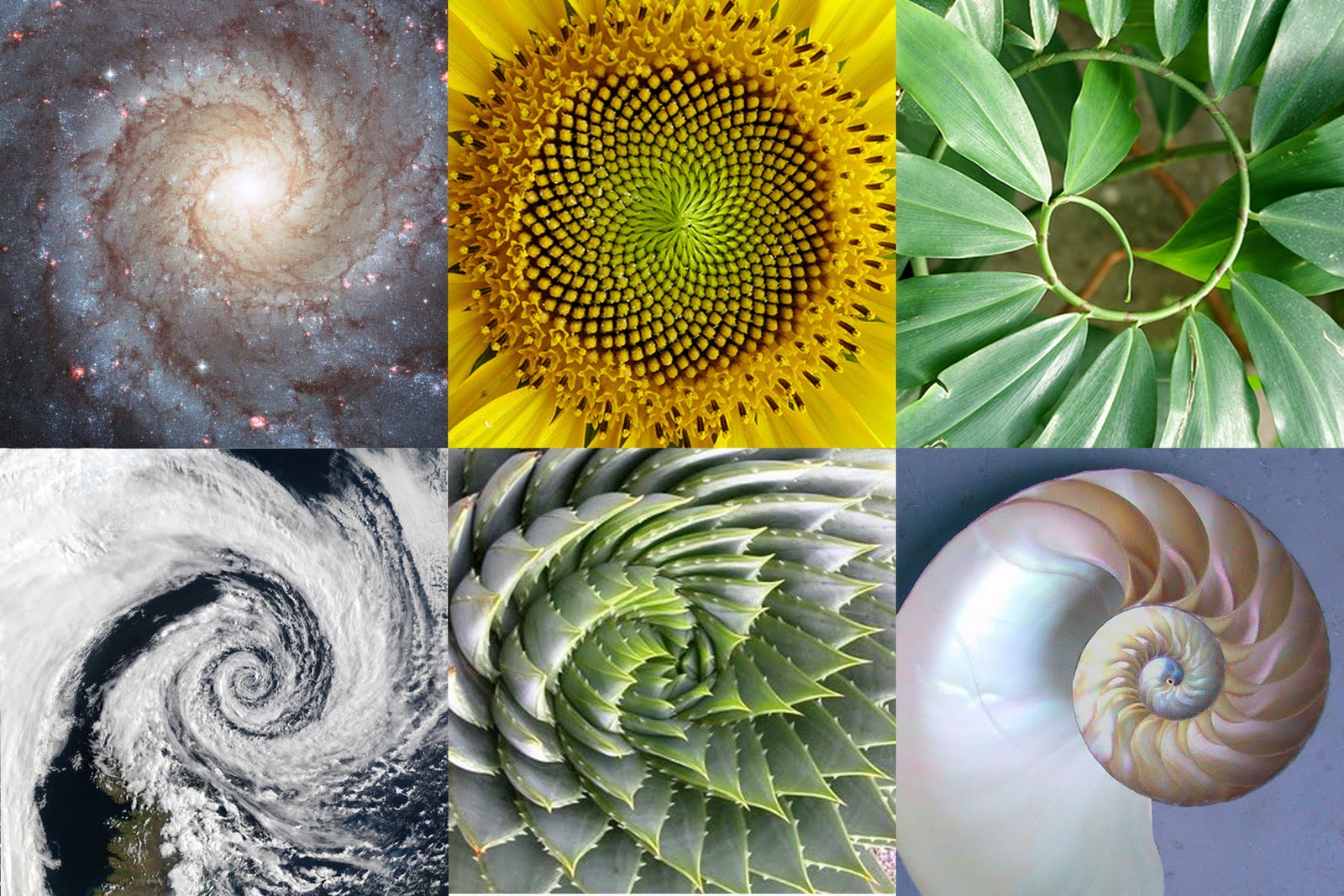
Rung 6 — Down-Projection into Nature: Spirals Across All Scales
The leap from E8 hyper-symmetry into the visible world arrives as spirals. From the arms of galaxies to the seeds of a sunflower, from hurricanes spinning in the sky to the whorls of seashells, nature writes resonance into form. These spirals are projections—shadows of higher-dimensional coherence stepping down into the material plane.
Each scale tells the same story. In the micro, the Fibonacci blueprint governs the phyllotaxis of leaves and the geometry of shells. In the macro, the vortexes of water and storms echo the same ratios. And beyond, spiraling galaxies mirror these forms at a cosmic scale. As I wrote in Nature’s Quantum Code, resonance coherence scales seamlessly across dimensions—linking hydrogen qubits, photons, and the universe itself.
These spirals remind us that we live inside a field of nested resonance. The same coherence that organizes a sunflower organizes the cosmos. To witness these patterns in the wild—whether photographing a storm front, a mountain wildflower, or the swirl of a river bend—is to glimpse the unified resonance that threads every scale of being.
🌿 Practice Seeing Spirals in Nature
Next time you step outside, look for spirals as echoes of resonance coherence. Try this:
- Find a pine cone or flower head and trace its counter-spirals with your finger.
- Watch the swirl of a storm cloud or ocean wave and note its vortex form.
- Look up at the Milky Way on a clear night and recognize the same spiral arms.
When you notice these spirals, pause for a breath. In that moment, you are sensing the same pattern that flows from Fibonacci growth to E8 symmetry—the universal spiral that unites micro and macro worlds.

Rung 7 — Unified Resonance: The Field of Coherence
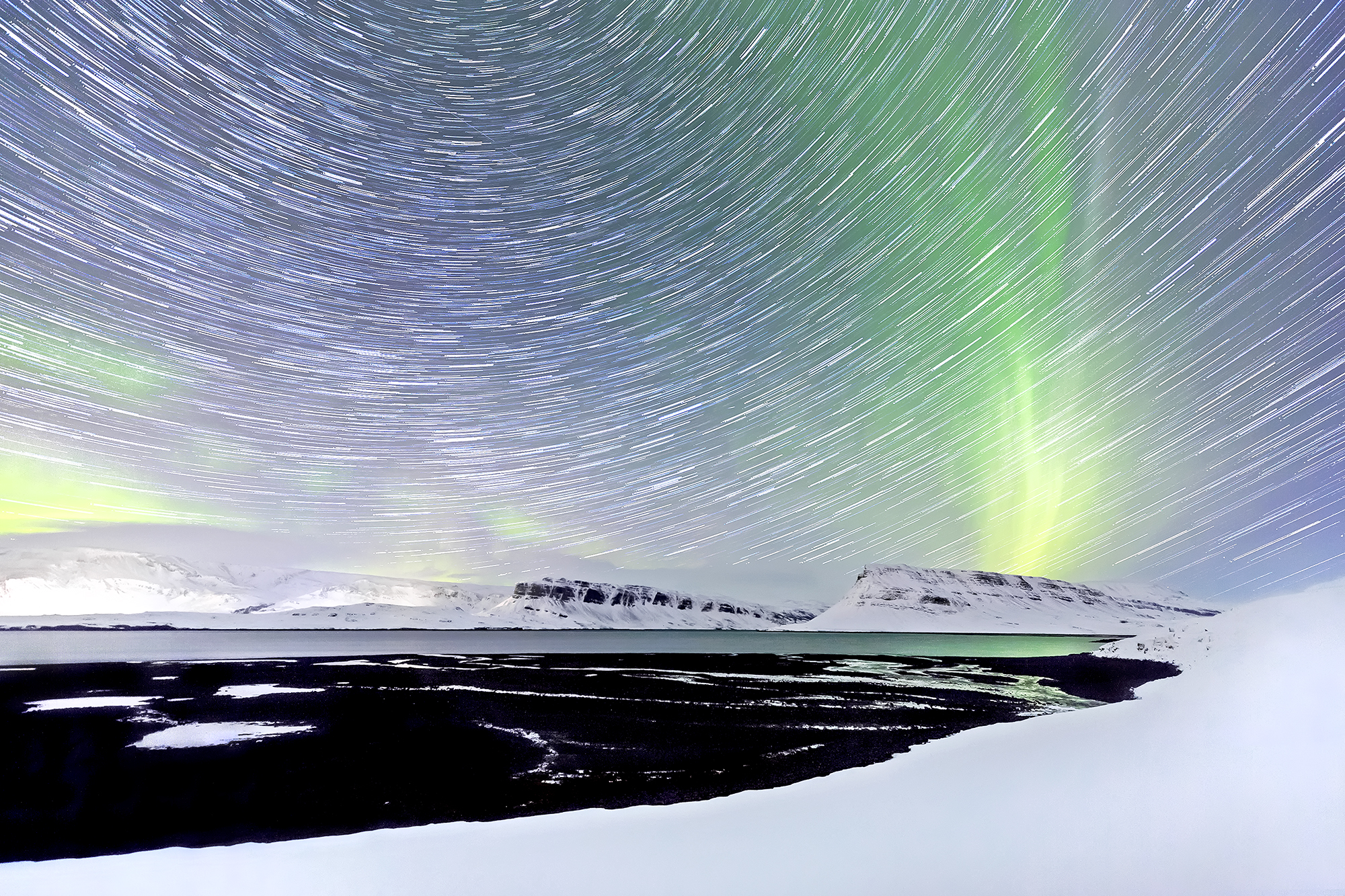
The aurora is a living glyph of unified resonance—solar winds meeting Earth’s magnetic field in a dance of light. It reminds us that coherence is not hidden in abstraction: it is visible whenever fields align. This is the culmination of the morphology ladder, where Platonic archetypes, geodesic flows, 4D polytopes, and E8 hyper-symmetry project themselves into the natural world and back into us.
In my Signature Series, I describe this as the field of resonance coherence: hydrogen qubits vibrating in polarity (+, –, 0), photons weaving memory into the lattice, and nature mirroring this process through spirals, cycles, and light itself. What physicists call “symmetry breaking” I see as resonance unfolding—a movement that connects hydrogen, photons, and the cosmic blueprint.
The aurora’s reflection in still water offers a final lesson: resonance is most visible when coherence is reached. Just as sky and Earth mirror each other, so too do matter and field, consciousness and cosmos. This is the essence of the Nature Code: light, polarity, and memory weaving one continuous field of being.
🌌 Practice Resonance Coherence
Try this exercise the next time you witness light in motion:
- Find a moment of reflection—water, glass, even a shadow on the ground.
- Observe how light organizes itself into patterns when the field is still.
- Breathe slowly and notice if your own body begins to feel more coherent, like your heart rhythm and breath are syncing with the scene.
In this practice, you are sensing the same resonance that moves through auroras, starfields, and your own heartbeat. This is light as the first language, teaching coherence through experience.
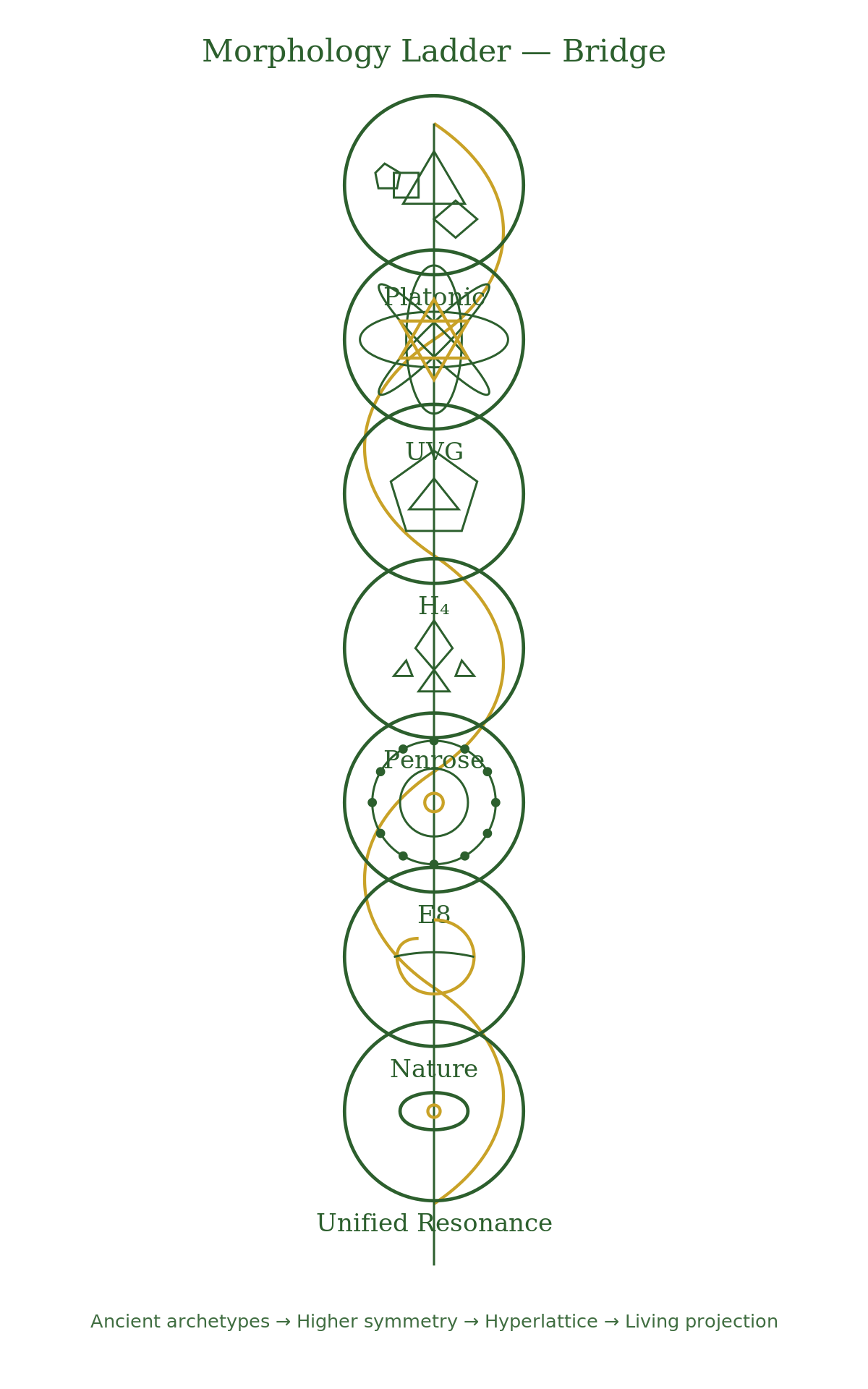
The Morphology Ladder — One Continuous Field
This seal summarizes the journey you’ve just taken: Platonic archetypes (stable nodes) rise to the UVG sphere where symmetry begins to flow, unfold into H₄ (600-/120-cell) harmony, cast Penrose/quasicrystal shadows, peak in E8 hyper-symmetry, and step back into nature’s spirals—all resolving as Unified Resonance. For deeper dives at each rung, see UVG / geodesic mapping, Fibonacci & fractals, and the capstone E8 lattice.
The golden spiral threading the nodes represents resonance coherence—light and polarity (+, 0, –) aligning to reduce entropy and store field memory, a theme developed in Unified Resonance. If you’re new to this series, start at the hub, Signature Series: Nature • Science • Soul, and the living framework in Nature Code.
Practically, this ladder is a field guide for seeing: when you recognize a spiral in a shell, a storm, or the Milky Way, you’re witnessing a lower-dimensional projection of higher order. Let this seal serve as your compass for future essays, images, and field notes.
::contentReference[oaicite:0]{index=0}
Field Notes — Resonance Seen in the Wild
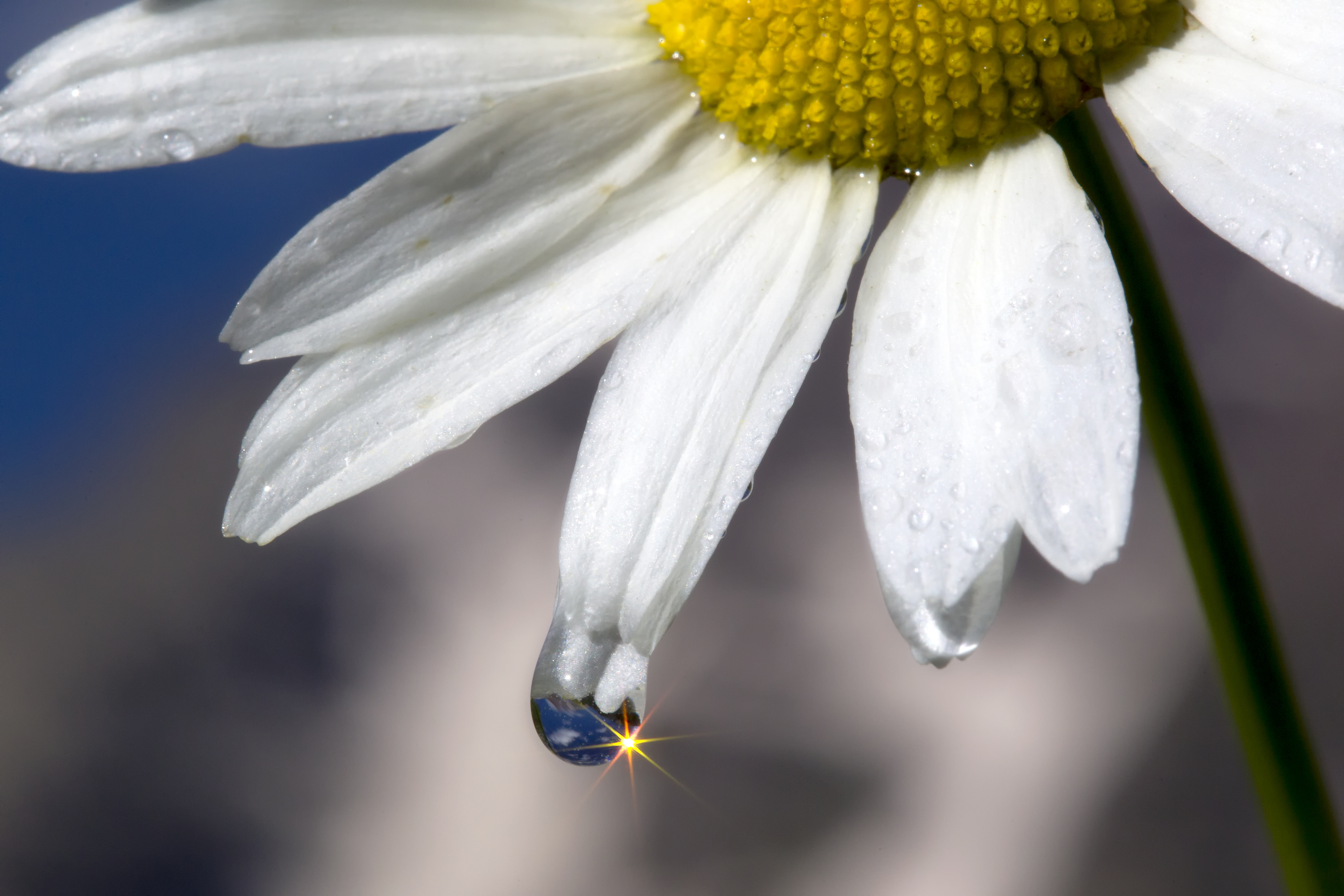
Every rung of the morphology ladder has appeared to me not just in study, but in the field. This daisy, for example, carries Fibonacci spirals in its seed head, water memory in the droplet, and a photon’s sparkle echoing the themes of light as messenger. In one frame, the entire arc from geometry to resonance coherence is alive.
These field notes remind me that unified resonance is not a theory, but a witness. The same ladder of forms we traced—Platonic archetypes, UVG nets, quasicrystals, E8, spirals—lives within every flower, storm, or starry night I photograph. Each image is part of the Nature Code—a diary of light, geometry, and memory unfolding in the wild.
How to Use This Lens: Practice in the Field
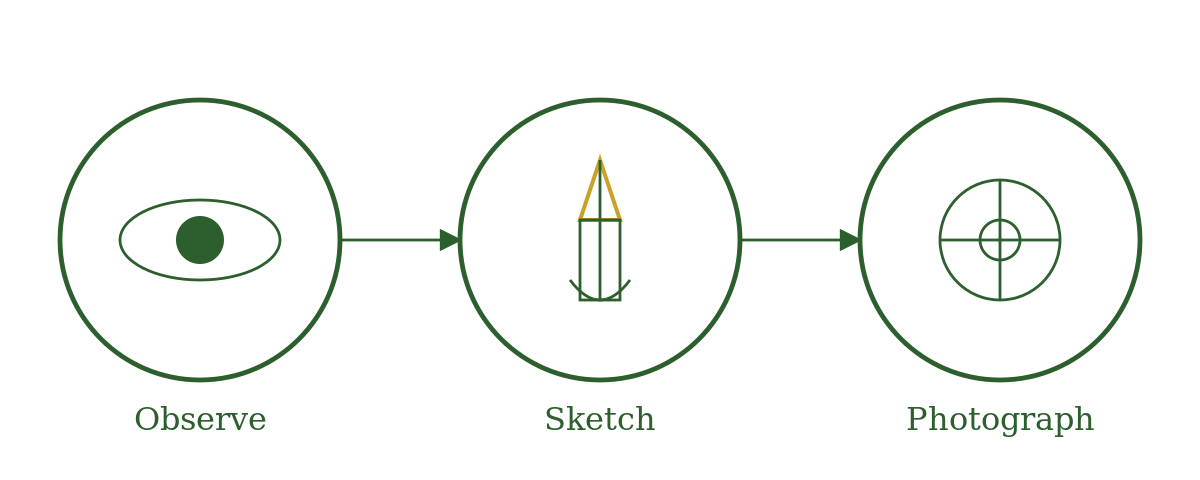
The morphology ladder is not only a framework to read about—it’s a way of seeing. You can bring it into your daily life with a simple three-step practice. Each step transforms resonance from theory into experience, just as I’ve explored in Witness in the Field and Cracking the Nature Code.
- Observe — Notice spirals, symmetry, or geodesic flows in your surroundings: a pine cone, a cloud system, or the arc of a river bend.
- Sketch — Make a loose drawing in a notebook. This isn’t art, but a way to train perception and anchor the resonance in memory.
- Photograph — Capture what you see, building your own set of field notes that mirror the universal ladder of form.
This practice helps you experience the Nature Code directly. What begins as a pine cone in your hand becomes a window into the same coherence found in E8 symmetry and the unified resonance that threads through all scales of life.

Gentle Caveats: Where Rigor Meets Wonder
All maps are partial, and all symbols are approximations. This ladder—from Platonic solids to E8 symmetry—is both mathematical and metaphorical. The geometries of Coxeter groups, quasicrystals, and hyperlattices are real and rigorously studied. Yet, when I connect them to spirals in flowers, the flow of auroras, or the coherence of consciousness, I step into poetry. Both lenses are valuable, but they are not the same.
My intention is not to conflate science with symbolism, but to invite dialogue. Mathematicians and physicists can push the rigor of holographic models; poets and photographers can keep watch for meaning at the edges of perception. In between lies the space I explore in Bridging Worlds and in my reflections on Nature Philosophy.
The mountain at dawn reminds me: humility is part of the practice. Just as light reveals a peak only for a moment before cloud and shadow reclaim it, so too does resonance offer glimpses rather than final answers. What matters is not claiming certainty, but living in coherence with the field.
Bring the Morphology Ladder to Life
If this journey from Platonic shadows to the E8 lattice resonated with you, explore more essays and fine-art prints that embody Nature Code and the Signature Series. Each image is a field note of resonance coherence.

About the Author
Robbie George is a National Geographic–affiliated photographer and nature philosopher whose work weaves field imagery with a unifying framework of resonance and polarity. His ongoing Nature Code and Living Code series explore how light, water, and hydrogen shape life across scales.
Discover more essays in the Signature Series, browse the latest wildlife and landscape prints, or say hello via the contact page.
Frequently Asked Questions
What is the “Morphology Ladder” in one sentence?
A visual/evidence-based path from Platonic solids → UVG sphere → H₄ (4D) → quasicrystals/Penrose → E8 → spirals in nature → Unified Resonance, explored throughout my Nature Code series.
How do quasicrystals relate to E8?
Penrose tilings and icosahedral quasicrystals can be viewed as projections (cut-and-project) of higher-dimensional lattices; in my framing, they are “shadows” of deeper order that culminates in the E8 lattice. See the bridge overview in Unified Resonance.
What’s the testable piece for readers?
- Photograph a spiral (pine cone, flower head).
- Overlay a simple Penrose/kite-dart grid in an app.
- Note whether perception, mood, or HRV (if you track it) shifts during slow, attentive viewing—an embodied readout of resonance coherence.
Where does metaphor end and science begin?
Coxeter groups, quasicrystals, and E8 are formal mathematics/physics; mapping them into spirals, auroras, and consciousness is my integrative interpretation. I keep this distinction clear in Nature Philosophy and Bridging Worlds.
How does hydrogen and light fit into this ladder?
Hydrogen acts as a fundamental resonator and water’s partner, while photons carry and write the field’s information. I develop this in Hydrogen Qubit and Photons: The Cosmic Messengers.
Where should I start if I’m new to this work?
Begin at the Signature Series hub, then read Fractals & Fibonacci, Vortex Field, and finally E8: Signature Series.
References & Further Reading
- Fractals & Fibonacci: Nature’s Blueprint — Robbie George.
- Unified Resonance: Light • Memory • Time — Robbie George.
- E8 Lattice — Signature Series Overview — Robbie George.
- The E8 Root System (overview) — arXiv.
- Aperiodic tilings & Penrose foundations — arXiv.