

Quantum Agriculture Part 4: The Soil–Plant Feedback Loop and Field Communication
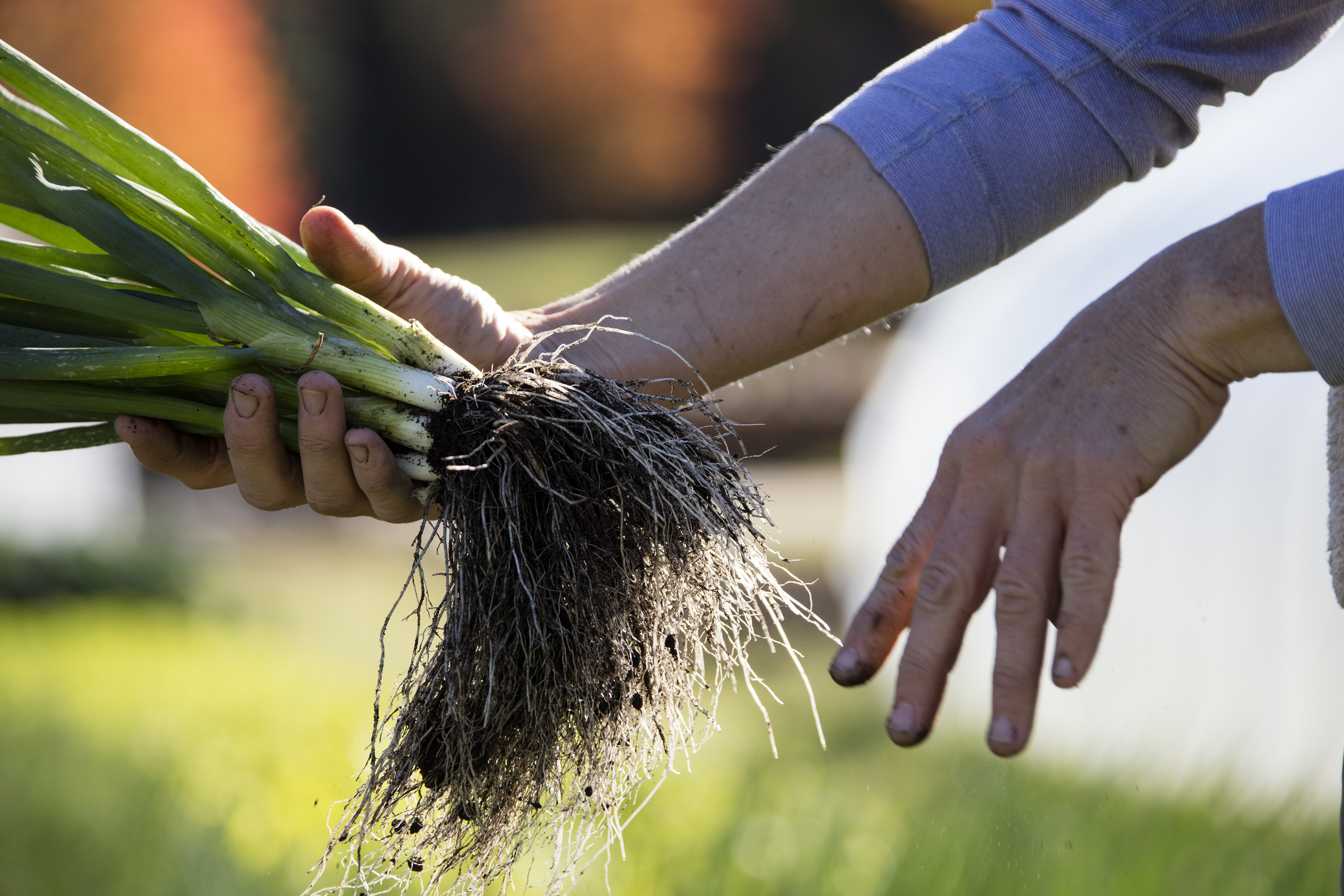
Root systems are not just anchors for plants—they are instruments tuned to the living frequencies of the soil beneath them.
The Quantum Soil–Plant Feedback Loop — How Life Communicates Through Fields
In conventional farming, soil and plants are often treated as isolated components—roots anchor, soil supplies, and the dialogue ends there. But through the lens of Quantum Agriculture, we discover a deeper truth: the soil and plants are entangled in constant, living conversation.
Light, electromagnetic fields, and biophotons become the words. Water, minerals, and root secretions become the breath. Together, they form a resonant feedback loop that governs vitality long before any visible growth appears above ground.
This dialogue is not mechanical—it is field-aware memory in action. To hear it, we must tune into the soil’s subtle song, just as we tune into the Wood Wide Web and the silent frequencies of Earth’s electromagnetic rhythms.
The dialogue between root and soil is not made of words—it is a dance of light, charge, and living memory.
🌱 Roots as Antennas: 3 Signals Soil and Plants Exchange
- Light Pulses (Biophotons): Roots and leaves emit subtle light signals to share health information across the soil network.
- Electromagnetic Fields: Plants and microbes generate overlapping EM fields to coordinate responses and adapt to stress in real time.
- Water Vibrations: Structured water waves transmit minerals and energetic memory through the rhizosphere.
Roots do not simply grow downward—they reach, listen, and respond through fields of light and resonance.
How Soil and Plants Communicate via Quantum Feedback Loops
Quantum Feedback: Beyond Chemistry
Beneath our feet, life communicates not only through nutrients and molecules, but through real-time quantum feedback loops. Plants and soil microbes emit and respond to biophotons and electromagnetic fields, creating a field-based network of adaptation, vitality, and exchange.
When a plant encounters stress—such as drought, disease, or nutrient deficiency—it instantly shifts its EM signature. Soil microbes and fungi detect these changes and respond before the plant shows any visible symptoms. This energy-first adaptation is faster and more efficient than chemistry alone.
- Continuous Exchange: Roots and microbes emit and interpret signals 24/7 through overlapping EM fields and light pulses.
- Energetic Adjustments: Electromagnetic field changes activate microbial responses in real time—no delay required.
This dynamic two-way communication mirrors the coherence described in the Unified Living Field Theory. Plants do not passively receive from the soil—they co-create the field, guiding its frequency with every photon they return to Earth.
Plants do not merely react to soil—they co-create the field with every photon they whisper back to the Earth.
🌿 Quantum Communication Map
- Plant Roots Emit: Light pulses (biophotons) and electromagnetic signals that reflect their internal state and needs.
- Soil Microbes Listen: Fungi and bacteria detect those signals and respond energetically and chemically.
- Feedback Adjusts: Microbial activity—such as nutrient release or water sharing—is modulated in real time.
- Field Resonance: A coherent memory field is formed, enhancing the system’s adaptability and resilience.
Communication in nature moves not by force—but by coherence, memory, and breath.
Biophotons in Action: Light as Information
The Quantum Language of Light
Plants are not passive absorbers of sunlight—they are active broadcasters of light. Each leaf and root tip emits biophotons—ultra-weak pulses of light that carry information about the plant’s health, needs, and stress signals.
These biophoton signals shift in intensity and rhythm based on environmental conditions. Neighboring plants, mycorrhizal fungi, and soil microbes detect these subtle light patterns and adjust their behavior accordingly. This is nature’s quantum internet—operating faster than chemical reactions and rooted in coherence.
- Nitrogen Deficiency: Plants emit erratic light pulses that signal microbial allies to release more nitrogen.
- Drought Stress: Photon patterns shift, triggering fungi to adjust water flow through hyphal networks.
- Pest Attack: Sudden light bursts activate early defense mechanisms and alert nearby plants to prepare.
This light-based feedback loop echoes themes from The Cosmic Blueprint and serves as a practical extension of the quantum language explored in Quantum Vitality: Light is the First Language.
Every pulse of light a plant sends into the soil is a whisper, a request, a song asking the Earth to dance in harmony once more.
🌿 Biophoton Language: How Plants Speak Through Light
- Healthy Plant: Emits a coherent, steady stream of biophotons, signaling vibrancy and balance to surrounding life forms.
- Nitrogen Deficiency: Light pulses become irregular, prompting soil microbes to assist in releasing nitrogen stores.
- Drought Stress: Photon patterns shift rapidly, signaling fungal networks to redirect water flow toward roots.
- Pest Attack: Intense light bursts trigger systemic defense responses and alert nearby plants via the fungal internet.
This form of communication is part of the living code—a natural expression of coherence discussed in The Living Code and directly supported by recent findings in Quantum Information Storage in Water.
Light is the living breath of plants—whispered across fields, roots, and memory.
Mycorrhizal Networks — The Internet of Soil
Fungal Feedback Systems
Beneath the surface, a silent network pulses with life—mycorrhizal fungi, weaving through soil like synapses in a living brain. These hyphal threads connect roots, microbes, minerals, and moisture into a coherent system of exchange and awareness.
This network doesn’t just deliver nutrients—it also relays signals, shares warnings, and redistributes resources across plant communities. In many ways, it mirrors the Wood Wide Web, functioning like Earth’s original internet—field-aware, self-regulating, and deeply intelligent.
- Defense Signals: A plant under insect attack sends alerts through the fungal network.
- Community Response: Nearby plants activate their defenses before the pest arrives.
- Resource Sharing: Fungi redirect nutrients and hydration to stressed plants in need.
These feedback systems resonate with the symbiotic intelligence described in The Soil Microbiome: The Lungs of Our Planet—a vision of soil not as dirt, but as a conscious matrix for regeneration.
Beneath the soil, life moves by unseen threads of light, memory, and whispered resilience.
🌿 Mycorrhizal Miracles: What the Networks Do
- Share Nutrients: Transport carbon, nitrogen, and water to the plants that need them most—across species lines.
- Relay Defense Signals: Warn surrounding plants of threats like insects, drought, or mechanical stress.
- Boost Immunity: Trigger root-level immune responses and promote plant-wide vitality via field resonance.
- Maintain Balance: Prevent dominance by any one species by redistributing energy throughout the ecosystem.
In the silent corridors of the soil, fungi weave resilience, wisdom, and vitality into the roots of life.
EM Fields and Fungal Networks
EM Field Coherence: The Vibrational Web
Recent research shows that fungi don’t just transfer nutrients—they generate low-frequency electromagnetic fields (EMFs) that resonate with plant root systems. These fields act as vibrational tuning forks, aligning the energy flow across soil and plant networks.
When fungal and plant fields are coherent, information, water, and nutrients move in synchrony—resulting in faster healing, stronger growth, and early activation of immune responses. This vibrational web is a living expression of the holographic resonance seen at both cosmic and biological scales.
- Faster Nutrient Pulses: Minerals move directly along EM-aligned channels, guided by root demand.
- Enhanced Stress Recovery: Roots adapt more quickly to drought, pH shifts, or heatwaves when in coherence.
- Stronger Root Architecture: Roots follow vibrational paths, deepening into memory-rich soils.
This coherence not only boosts individual plant health—it fortifies the entire ecosystem. In this way, soil becomes not just a substrate, but a memory field capable of regenerative intelligence.
When soil fields sing in coherence, plants no longer struggle for survival—they dance in resonance with the breath of the Earth.
🌿 How EM Field Coherence Strengthens the Field
- Nutrient Precision: Mineral delivery aligns with real-time plant demand through vibrational resonance.
- Immune System Boost: EM coherence enhances early immune signaling at the root and canopy levels.
- Water Efficiency: Coherent fields increase structured water retention and flow to key tissues.
- Root Depth & Strength: Roots grow deeper along coherent energy lines, improving drought resistance.
When roots, fungi, and soil vibrate in tune, the entire field becomes a living memory of resilience.
Coherence in Action: Synchronizing Soil and Plants
What is Electromagnetic Coherence?
Electromagnetic coherence arises when the fields of plants, fungi, microbes, and water align in rhythm. Like tuning forks resonating together, coherent systems amplify energy, reduce resistance, and increase the speed and intelligence of biological responses.
In coherent soils, nutrient pulses synchronize with root uptake, stress signals travel faster than symptoms, and energy is conserved—not wasted. This mirrors the principles discussed in Quantum Vitality: The Body is a Field and The Quantum Blueprint.
- Improved Nutrient Uptake: Charged minerals follow field lines directly to plant demand centers.
- Faster Water Absorption: Structured water flows through coherent channels toward roots.
- Earlier Stress Detection: Electromagnetic shifts precede physical symptoms of pest or drought stress.
Achieving Soil–Plant Coherence
Coherence doesn’t require advanced technology—it requires reverence. Farmers can cultivate coherence by reducing field interference and honoring nature’s own signal systems.
- Minimal Disturbance: No-till or low-till farming preserves fungal networks and EM field integrity.
- Timed Planting: Aligning sowing with moon cycles or seasonal solstices enhances resonance.
- Living Mulches: Organic matter feeds microbes and stabilizes the vibrational pulse of the soil.
- Reducing Chemical Inputs: Less interference means stronger coherence across plant–microbe networks.
In a field tuned to coherence, plants don’t merely grow—they remember, adapt, and thrive with the same elegance found in music, light, and the universe itself.
When soil and root breathe in rhythm, a silent orchestra awakens—the Earth remembering how to heal, how to thrive, how to sing.
🌿 Simple Ways to Boost Coherence in Your Garden
- Lay Down Straw Mulch: Retains moisture, nourishes microbes, and supports fungal EM networks.
- Plant with the Waxing Moon: Align your crops with nature’s gravitational and photonic rhythms.
- Use Compost Teas: Introduce microbial symbionts while energizing the field with living memory.
- Avoid Synthetic Fertilizers: Preserve the subtle communication channels in your soil’s frequency field.
Coherence begins not with control—but with listening. When the soil is heard, it remembers how to thrive.
🌿 Chapter Summary: The Quantum Soil–Plant Feedback Loop
Beneath every thriving field lies a living conversation—spoken not in words, but in light, charge, and resonance. The quantum soil–plant feedback loop is nature’s original operating system, guiding nutrients, water, energy, and healing across unseen networks.
We’ve seen how biophotons carry signals, how fungi act as field architects, and how coherence—not chemical force—unlocks the full potential of the land. This is the science of aliveness. And it’s already here beneath your feet.
- Communication moves through light and field, not just chemistry.
- Fungal and root networks build living memory into soil structure.
- Electromagnetic coherence increases resilience, adaptability, and vitality.
- The field remembers. The field responds.
As we continue this journey through Quantum Agriculture, we are not just studying farming. We are rediscovering the symphony of life. When we plant in rhythm with memory, we farm not just the soil—we farm the field.
The soil sings. The roots listen. The field remembers. And through their quiet music, life awakens once again.
🌿 What’s Next: Field-Aware Technology
In this chapter, we explored how roots, fungi, and photons form a living memory field that tunes the land into balance.
Now, we move into the future—where farmers use quantum sensors, field coherence monitors, and resonance-based technologies to collaborate with the living field. Not to dominate nature, but to listen with greater precision.
The next generation of regenerative farming won’t rely on control—it will depend on resonant awareness.
➔ Read Part 5: Field-Aware Technology🌿 Spiral Breathing Practice: Rooted in Coherence
Sit quietly. Inhale slowly, spiraling your breath downward through your body, as if sinking a root into the Earth. Pause. Exhale gently, drawing that breath upward—carrying nutrients of calm, awareness, and coherence. Repeat five times, allowing your inner rhythm to synchronize with the silent memory of the soil.
Naturepedia Connections — How Soil, Plants, and Fungi Form a Living Field
This chapter of Quantum Agriculture shows how roots, fungi, light, water, and soil do not operate as isolated parts. They function as a living field of feedback, memory, and exchange. In Naturepedia terms, this is one of the clearest below-ground examples of how communication, resilience, and ecological balance emerge through connected systems.
Quantum Agriculture
Return to the main series page connecting living soil, regenerative farming, field awareness, and the intelligence of biological systems.
Hydrogen, Water & Soil Systems
Explore how water, soil, and biology function as a connected system through hydrogen, polarity, and field-based relationships observable in real ecosystems.
Soil Microbiome
See how microbial life supports nutrient flow, root communication, plant health, and resilience across the whole field.
Wood Wide Web
Connect this chapter to the broader fungal communication layer where roots and mycorrhizal networks exchange signals across ecosystems.
Food Webs & Ecological Relationships
Below-ground feedback loops shape the larger ecological relationships that structure productivity, biodiversity, and stability above ground.
Biodiversity & Ecosystem Balance
Healthy soil-plant communication strengthens biodiversity by stabilizing nutrient exchange, defense signaling, and ecosystem resilience.
Seasonal Timing
Soil moisture, light, temperature, and biological signaling all shift through seasonal cycles that shape plant growth and timing.
Conservation & Habitat
Restoring fungal networks, soil life, and plant coherence is also a habitat and conservation strategy at ecosystem scale.
About the Author

Robbie George is a National Geographic–published photographer, writer, and field-based observer whose work connects wildlife, ecosystems, regenerative farming, and the deeper patterns of the living world.
Through photography, Naturepedia, and the Quantum Agriculture series, he explores how soil, plants, water, light, and biological relationships form real systems that can be observed in the field and understood through living pattern.
Explore more at Naturepedia, visit the Signature Series, or connect on Instagram and LinkedIn.
🌿 Frequently Asked Questions: The Quantum Soil–Plant Feedback Loop
1. What is the quantum soil–plant feedback loop?
It’s the continuous exchange of light, electromagnetic fields, and energy between soil and plants—allowing real-time regulation of nutrients, stress responses, and vitality without relying solely on chemistry.
2. How do plants use biophotons to communicate?
Plants emit biophotons—subtle pulses of light that convey their needs or stress conditions. Soil microbes, fungi, and nearby plants detect these signals and respond instantly.
3. What role do mycorrhizal fungi play in coherence?
Mycorrhizal networks relay messages, distribute nutrients, and maintain energetic balance—creating an intelligent fungal internet beneath every healthy field.
4. What is electromagnetic field coherence?
EM field coherence is when soil and plant energies resonate together, enhancing communication, nutrient precision, and stress recovery through alignment rather than force.
5. How can I boost coherence in my garden?
Use mulch, plant with the moon, minimize tillage, and reduce synthetic inputs. These practices preserve and amplify nature’s frequency-based memory systems.