
Reclaiming Our Connection to Nature: "I Sustain, Therefore You Are”
A System Shift — From Participation to Separation
When I look at Descartes’ influence, I don’t see it as just philosophy—I see it as a system shift. A move from living inside nature to observing it from the outside. That shift changed how we understand everything: land, wildlife, food, health, and even ourselves.
Before that separation, humans operated as part of ecological systems. Survival, learning, and awareness all came directly from interaction with the environment. After it, nature became something to measure, control, and extract from rather than something to participate in.
You can still see that divide today in how systems are structured—especially in areas like conservation, ecosystems, and wildlife behavior. The more we treat these as separate systems, the harder it becomes to understand how they actually function together.
From my perspective, this is the core issue: we shifted from being inside the system to thinking we were outside of it.
“The moment we treat nature as separate, we stop understanding how it works—and how we fit inside it.”
~ Robbie George
What Changed — The Rise of a Controlled World
Once that separation took hold, it didn’t stay philosophical—it moved into how we built the modern world. Systems became more controlled, more predictable, and more disconnected from natural variability.
The Enlightenment accelerated this. It prioritized logic, measurement, and control—valuable tools, but incomplete on their own. Nature was reframed as something to be studied piece by piece, rather than experienced as a whole system.
You can see the result clearly today:
→ ecosystems simplified into resource systems
→ agriculture reduced to monocultures
→ medicine focused on parts instead of systems
→ environments designed for control instead of interaction
I see this most clearly when comparing intact environments to controlled ones. In natural systems, everything adjusts—light, movement, behavior, timing. In controlled systems, variability is removed. And when variability disappears, so does a large part of how living systems function.
This is the consequence of that original shift: we built a world that is easier to control—but harder to live inside as a biological system.
A System Reframe — From “I Think” to “I Sustain”
When I step back and look at this shift, it becomes clear that the problem isn’t thinking—it’s where thinking is placed in the system. Descartes made thought the foundation of existence. But in reality, thought sits on top of something much deeper.
Every time I’m in the field, that hierarchy becomes obvious. Before thought, there is air, water, soil, light, and living systems interacting in real time. Those systems support the body. The body supports perception. And only then does thought emerge.
That’s where the reframe comes from:
“I sustain, therefore you are.”
It’s not just a philosophical reversal—it’s a correction of the system. It places life-supporting processes back at the foundation. It recognizes that human existence depends on what nature provides, not the other way around.
You can see this clearly when you connect it to real systems:
→ sunlight driving energy into ecosystems
→ soil microbiomes supporting plant life
→ water cycles regulating environments
→ biodiversity stabilizing entire landscapes
From that perspective, thought is not the starting point—it’s an outcome. And when we reverse that order, we start to rebuild a worldview that aligns with how systems actually function.
“The mind doesn’t create life. It arises from it. And when we remember that, everything begins to realign.”
~ Robbie George
System Consequences — How Separation Shaped the Modern World
Once the idea took hold that humans were separate from nature, it didn’t stay philosophical—it became structural. You can see it clearly in how modern systems were built. Not around relationship, but around control.
In agriculture, this shows up as monoculture—fields simplified into single outputs, disconnected from soil health, biodiversity, and long-term stability. What was once a living system becomes a production system.
In medicine, the same pattern appears. The body is treated as a collection of parts instead of an integrated system. Symptoms are isolated rather than understood within the larger biological context that created them.
In science, reduction becomes the default approach—breaking systems into pieces to understand them. That works to a point, but it often loses the relationships that actually make the system function.
And in industry, the same logic scales up. Forests become timber. Rivers become resources. Landscapes become units of extraction. The system is no longer something to participate in—it becomes something to use.
I connect this directly to how ecosystems actually behave. When you look at intact ecosystems or biodiversity systems, nothing operates in isolation. Everything depends on everything else.
That’s the core mismatch: we built systems based on separation, but we live inside systems that only work through connection.
“The more we isolate parts, the more we lose the system that makes those parts work.”
~ Robbie George
Reconnection — Returning to Intuition and Direct Observation
One of the things that gets lost when we separate ourselves from nature is intuition—not as something abstract, but as a way of reading the environment. In the field, intuition isn’t guessing. It’s pattern recognition built through direct experience.
You see it when you start noticing how animals move before you see them. How light shifts before weather changes. How a landscape feels different when something in the system is off. These aren’t learned through instruction—they come from time inside the system.
When thinking becomes dominant and experience becomes secondary, that ability weakens. We rely more on analysis and less on awareness. The system is still there—but we stop reading it directly.
I’ve seen a clear contrast between knowledge gained through observation and knowledge gained through abstraction. In intact environments, you don’t need to explain everything. You watch, adjust, and learn through interaction. That’s how systems teach.
This is why I see alignment with traditions that never separated humans from nature in the first place. Many Indigenous knowledge systems are built on observation, relationship, and long-term awareness of place—not control of it.
From my perspective, this is what reconnection actually looks like: not abandoning knowledge, but grounding it again in direct experience with real systems.
“The more time you spend inside a system, the less you have to think about it—you start to understand it.”
~ Robbie George
System in Practice — What “I Sustain, Therefore You Are” Actually Looks Like
For me, this idea only matters if it shows up in reality. Not as a concept—but as a way of interacting with systems day to day. Once you see how everything connects, the question becomes simple: are your actions supporting the system, or pulling from it?
You can see the difference clearly in land use. In regenerative systems, soil is built, biodiversity increases, and the environment becomes more stable over time. In extractive systems, the opposite happens—soil degrades, diversity drops, and the system becomes more fragile.
The same applies across other layers. In soil systems, in water cycles, and even in how we move through landscapes. Small decisions—where we walk, how we interact, what we support—feed back into the system.
I’ve come to see this as less about large-scale change and more about alignment. When your actions match how systems actually function, things tend to stabilize. When they don’t, instability shows up quickly—whether that’s in ecosystems, food systems, or even human well-being.
Photography fits into this the same way for me. It’s not about taking from a place—it’s about observing it without disrupting it. Letting behavior unfold. Working within the system instead of imposing on it.
That’s what this shift comes down to: moving from extracting value from systems to participating in how they sustain themselves.
“When your actions support the system, the system supports you back. That’s where stability comes from.”
~ Robbie George
Consequences — What Happens When We Step Outside the System
Once you understand how these systems are supposed to function, the consequences of separation become easier to see. They’re not isolated problems—they’re system-level responses.
I’ve seen this most clearly in landscapes over time. When ecosystems are intact, they regulate themselves—water cycles stabilize, biodiversity holds balance, and behavior patterns stay consistent. When those systems are disrupted, everything begins to shift.
What we call environmental issues—habitat loss, biodiversity decline, unstable weather patterns—are not separate problems. They’re signals. Indicators that the system is no longer functioning as a connected whole.
The same pattern shows up at smaller scales too. Soil loses structure. Water systems degrade. Wildlife behavior changes. Each one points back to the same thing—disconnection from the processes that maintain stability.
This is why I always connect this back to biodiversity balance and habitat systems. When those break down, everything that depends on them becomes less stable—including human systems.
From where I stand, the pattern is consistent: when we move outside the system, the system doesn’t collapse immediately—it degrades until it can’t support what depends on it anymore.
“Break the relationships, and the system holds for a while—then it starts to give way.”
~ Robbie George
A Shift in Perspective — Seeing the System Again
At a certain point, this stops being about philosophy and becomes about perception. How you see the world determines how you interact with it. If you see yourself as separate from nature, your actions follow that assumption. If you see yourself inside the system, your behavior changes automatically.
I’ve noticed this shift happens most clearly in the field. The longer you spend time in one place, the more the system reveals itself—patterns, relationships, timing. You stop thinking about individual pieces and start seeing how everything connects.
That’s what’s missing in the separation model. It trains us to look at parts instead of relationships. But in real systems, nothing operates independently. Everything is tied to something else—directly or indirectly.
This is where I see alignment with the broader system I’m building through
Naturepedia.
The goal isn’t to simplify nature—it’s to understand how its layers connect:
species → behavior → habitat → ecosystem → geography → time → conservation
From that perspective, the shift is straightforward: we don’t need a new system—we need to see the one that’s already there.
“The system doesn’t need to be rebuilt. It needs to be recognized.”
~ Robbie George
Practical Reconnection — How You Start Seeing the System Again
Reconnection doesn’t happen through theory—it happens through exposure. The more time you spend in real environments, the easier it becomes to recognize patterns and relationships without having to think through them.
I’ve found that it usually starts with simple things. Paying attention to movement instead of just looking. Noticing how light changes throughout the day. Watching how animals respond to presence. These are small shifts, but they change how you experience a place.
It’s the same process I use when photographing. Instead of trying to force a result, I wait and observe. I let the system reveal what it’s doing. Over time, that builds a kind of awareness that doesn’t rely on analysis—it comes from repetition and direct experience.
You don’t need a remote location to start. Local environments work just as well—parks, shorelines, wooded areas. What matters is consistency. Returning to the same place and noticing what changes and what stays the same.
Tools can help with this too. Things like your Seasonal Wildlife Calendar or Golden Hour & Moon Planner don’t replace observation—they reinforce it by helping you understand timing and pattern.
From my perspective, it comes down to this: the more time you spend inside real systems, the easier it becomes to understand them without needing to explain them.
“Understanding starts with attention. The more you give it, the more the system gives back.”
~ Robbie George
Frequently Asked Questions — Descartes, Nature, and System Thinking
What did René Descartes mean by “I think, therefore I am”?
Descartes used this statement to place human thought at the center of existence. It established a foundation for modern philosophy—but also contributed to separating humans from the natural systems they depend on.
How did Descartes influence our relationship with nature?
His philosophy reinforced the idea that humans are separate from nature. Over time, this influenced science, agriculture, and industry to treat nature as something to control rather than participate in.
What is meant by “I sustain, therefore you are”?
It’s a system-based reframing that recognizes life depends on ecological processes. Instead of thought being primary, it places nature’s sustaining systems—air, water, soil, and biodiversity—as the foundation of existence.
Why is separation from nature a problem?
When systems are treated as separate, their relationships break down. This leads to instability—seen in ecosystems, biodiversity loss, and even human health and attention.
Can modern science work with a nature-based perspective?
Yes. Fields like biomimicry and systems ecology are already moving in this direction—studying how natural systems function as integrated wholes rather than isolated parts.
How can someone reconnect with natural systems?
Start with direct observation. Spend time in one place, repeatedly. Watch patterns—light, movement, behavior. Over time, understanding comes from experience rather than explanation.
About Robbie George
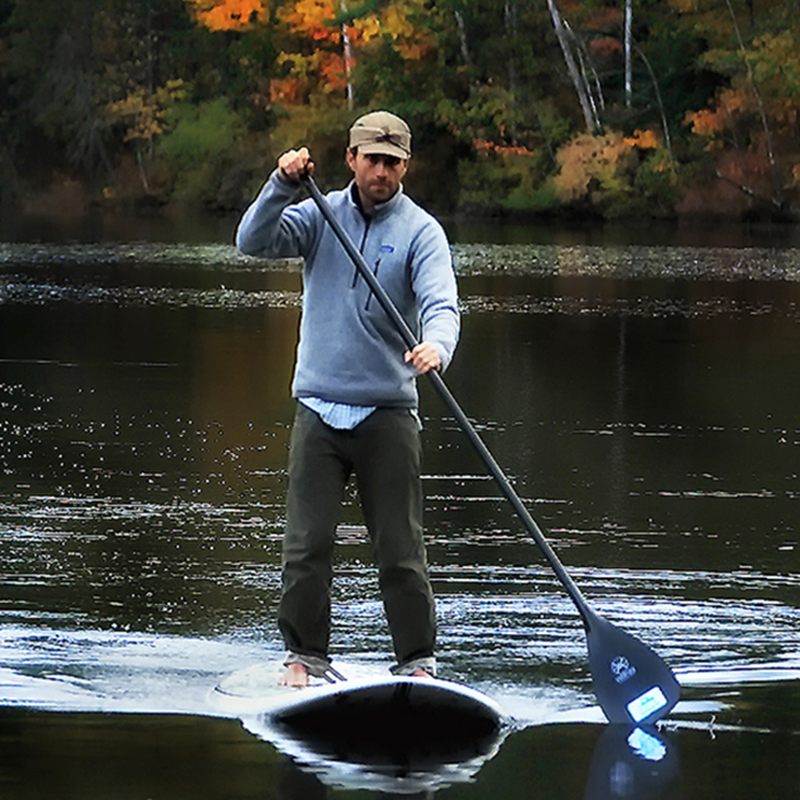
I’m Robbie George, a National Geographic–published photographer focused on long-term observation of natural systems—how wildlife, landscapes, light, and seasonal timing interact over time.
My work extends beyond photography into building Naturepedia—a connected system that maps species, ecosystems, geography, and behavior into a clearer understanding of how nature actually functions.
This page reflects that same approach—looking at philosophy not as theory, but as something that shapes real-world systems. The goal is simple: to reconnect observation, understanding, and the natural systems we’re already part of.
“The more clearly you see the system, the harder it becomes to believe you were ever separate from it.”