
Snow Goose, Anser Caerulescens: Facts, Behavior, Migration & More!
Snow Goose: Movement, Memory, and the Power of the Flock
On This Page
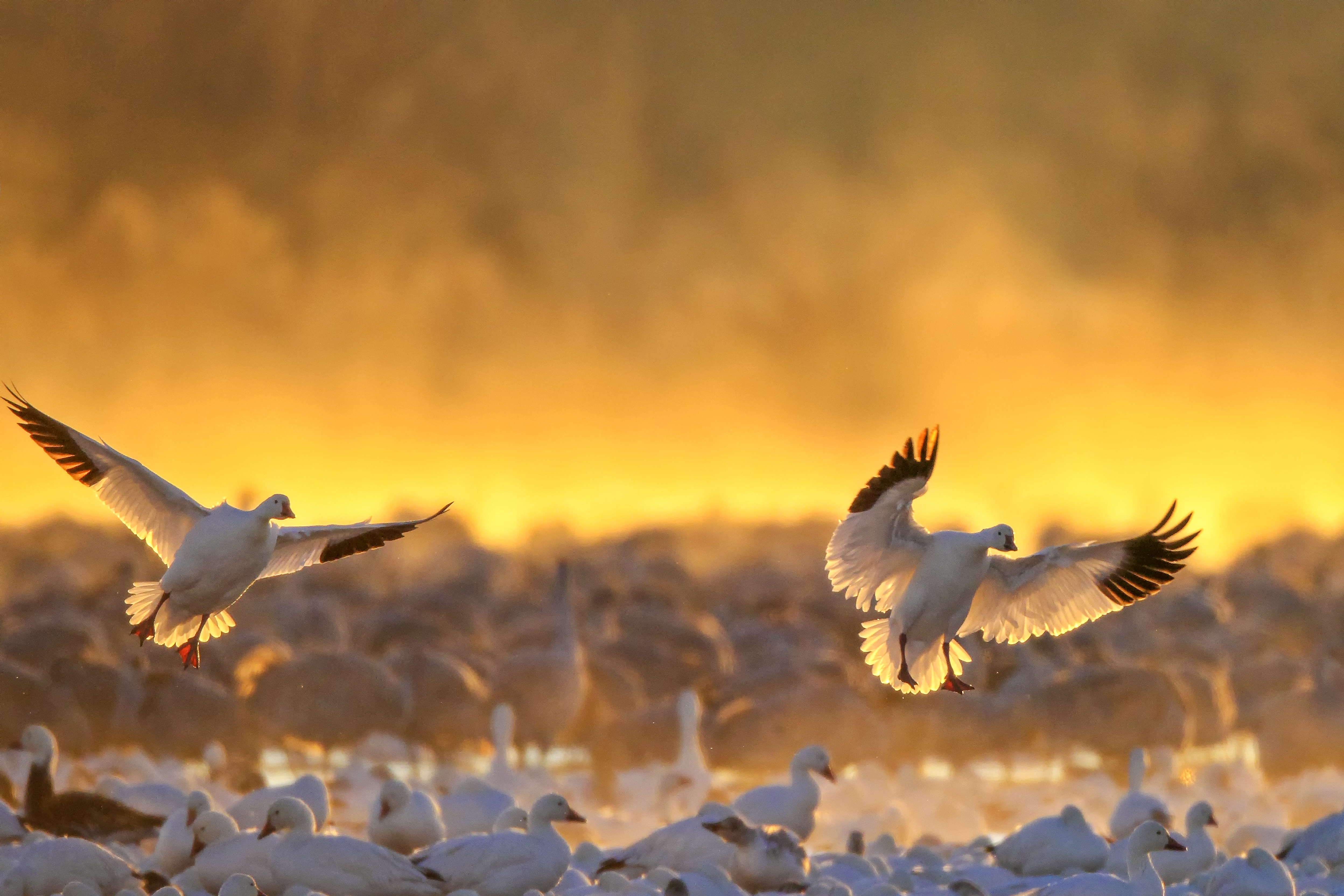
Few wildlife experiences match the sound and motion of a large snow goose flock rising from a marsh. The first impression is scale — not just the number of birds, but the way they move together. Wings catch light, black primaries flash against white bodies, and the whole sky seems to organize around the rhythm of the flock.
Snow geese are among the most recognizable migratory waterfowl in North America, but their importance goes far beyond visual spectacle. They are deeply tied to Arctic breeding habitat, wetland stopovers, agricultural landscapes, and coastal wintering systems. Their annual movements reveal how species depend on continuity across place and season — a pattern at the heart of migration ecology.
In the field, snow geese also teach scale in another sense: ecological impact. Their flocks can enrich landscapes, reshape vegetation, pressure habitats, and challenge wildlife managers to balance species recovery with ecosystem health. That makes them a strong fit within your broader system of Waterfowl & Wetland Birds, Wildlife Migration & Seasonal Patterns, and Food Webs & Ecological Relationships.
The snow goose is not just a bird of flight. It is a species that connects tundra, marsh, field, estuary, season, and sound into one moving system. To watch them well is to see migration as structure, not just movement.
“A flock of snow geese turns migration into architecture — motion shaped by memory, season, and the land beneath it.” — Robbie George
Habitat: From Arctic Tundra to Coastal Marsh
The snow goose occupies one of the most expansive habitat ranges of any North American waterfowl. Its life cycle spans continents — beginning in the Arctic tundra, passing through inland wetlands and agricultural landscapes, and ending in coastal marshes and southern wintering grounds.
During the breeding season, snow geese rely on remote tundra environments across northern Canada and Alaska. These landscapes provide isolation, long daylight hours, and seasonal plant growth that supports nesting colonies and rapid development of goslings. Nesting often occurs in dense colonies, where thousands of birds share the same landscape.
As migration begins, habitat shifts dramatically. Snow geese depend on a chain of wetlands, lakes, flooded fields, and river systems across the Central, Mississippi, and Atlantic Flyways. These stopover locations are critical for feeding and rest, allowing birds to build energy reserves for the next stage of their journey.
This range highlights a core principle in your system: Ecosystems of North America and Wildlife Habitats & Ecosystem Zones. Snow geese are not tied to a single place — they are tied to a sequence of functioning habitats that must remain connected across space and time.
“A migratory species does not belong to one place — it belongs to every place that still works.” — Robbie George
Identification: White Morph, Blue Morph, and Field Recognition
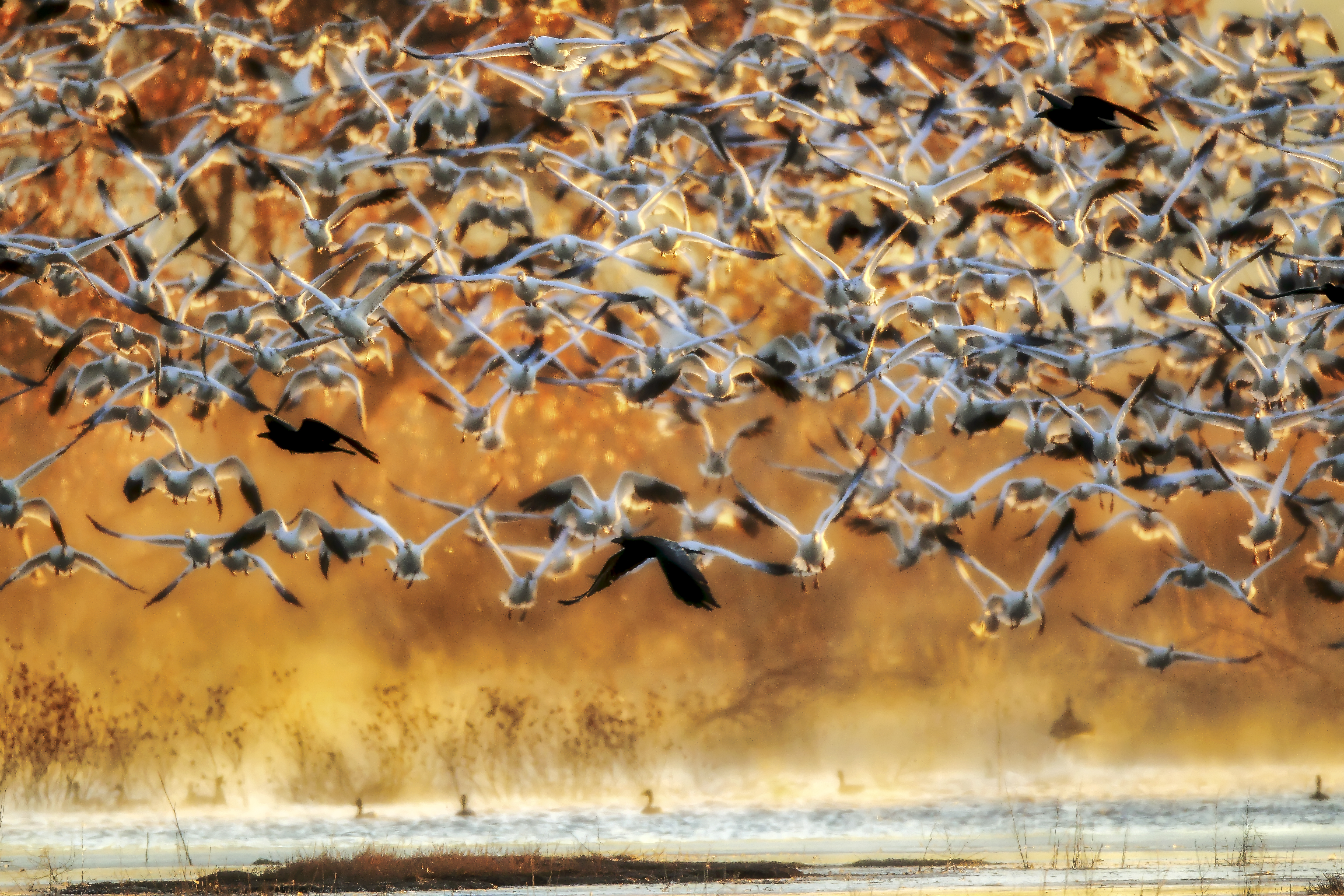
The snow goose is one of the most recognizable waterfowl species in North America, especially in flight. The classic form — known as the white morph — features a bright white body contrasted by bold black primary feathers that become highly visible when the wings are extended.
A second variation, the blue morph, displays a darker slate-gray body with a white head. Both morphs belong to the same species and often occur within the same flock, creating a striking mix of tones across the sky or landscape.
In addition to plumage, snow geese can be identified by their pinkish bill and legs, along with a distinctive dark line along the edge of the bill known as the “grinning patch.” This feature becomes especially noticeable at closer range and helps distinguish them from similar species.
Juveniles appear more muted, with grayish-brown feathers that gradually transition into adult coloration. This progression reflects both age and adaptation, allowing younger birds to remain less conspicuous during early life stages in exposed environments.
“In a single flock, snow geese show how variation and unity can exist at the same time.” — Robbie George
Behavior: Flocking, Communication, and Collective Intelligence
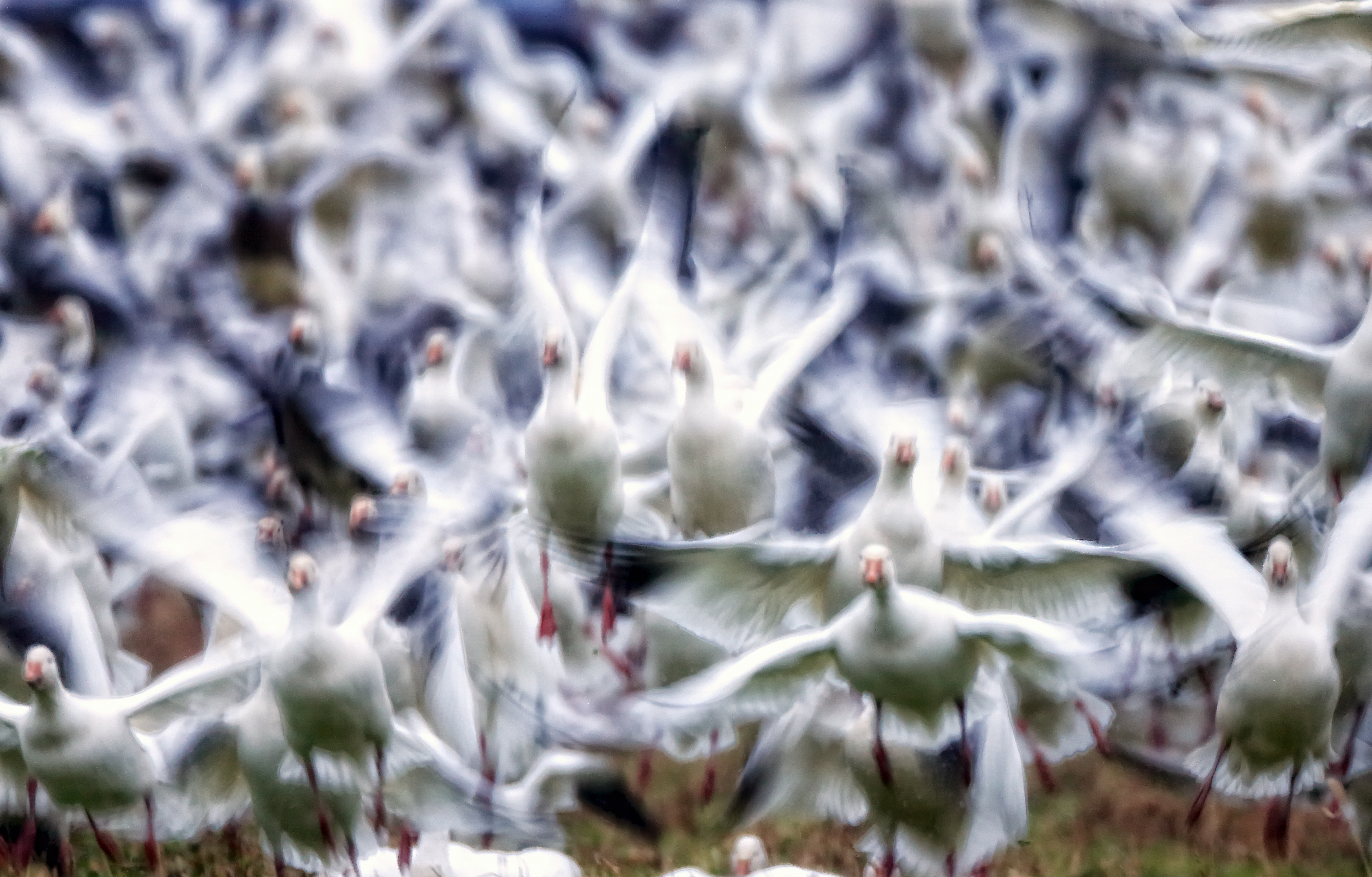
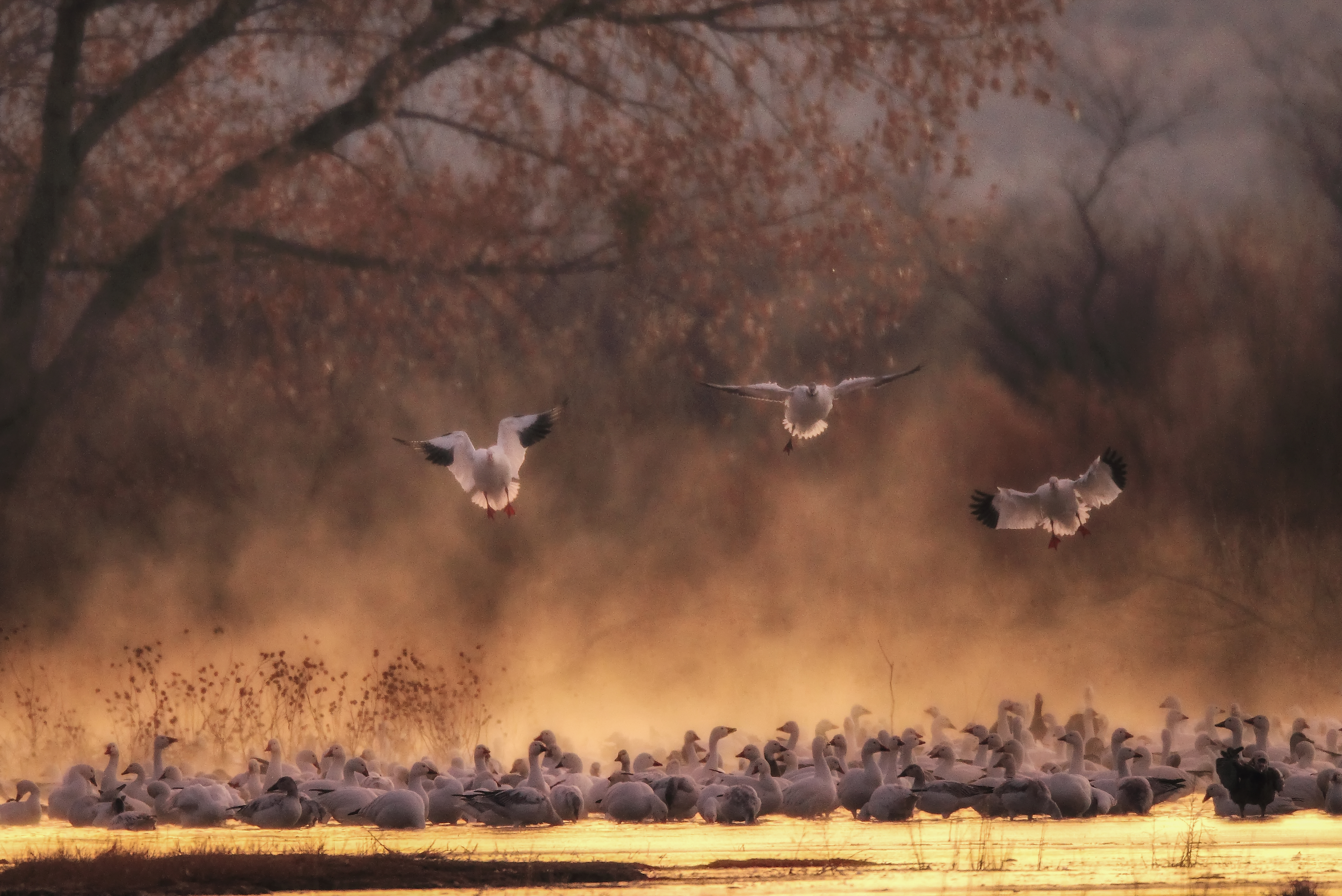
The defining behavior of the snow goose is its relationship to the flock. Unlike many species that operate in small groups, snow geese move, feed, and migrate in massive aggregations that can number in the tens of thousands. These flocks are not chaotic — they are highly organized systems driven by communication, spacing, and shared movement.
Within these groups, individuals maintain awareness through constant vocalization. Honks, clucks, and calls travel across the flock, helping coordinate direction, warn of threats, and maintain cohesion during flight. This constant exchange of sound creates a living network where information moves as quickly as the birds themselves.
Social structure also plays a role. Mated pairs remain close together, and family groups stay connected during migration. Younger birds learn movement patterns, feeding behavior, and timing from experienced individuals — reinforcing continuity across generations.
This behavior aligns directly with your Wildlife Behavior & Ecology system. Snow geese demonstrate how group dynamics, communication, and environmental awareness form a kind of ecological intelligence — one that allows large populations to move as a single adaptive unit.
“A flock is not just many birds — it is a system learning how to move together.” — Robbie George
Life Cycle: Breeding in the Arctic and Learning the Flyway
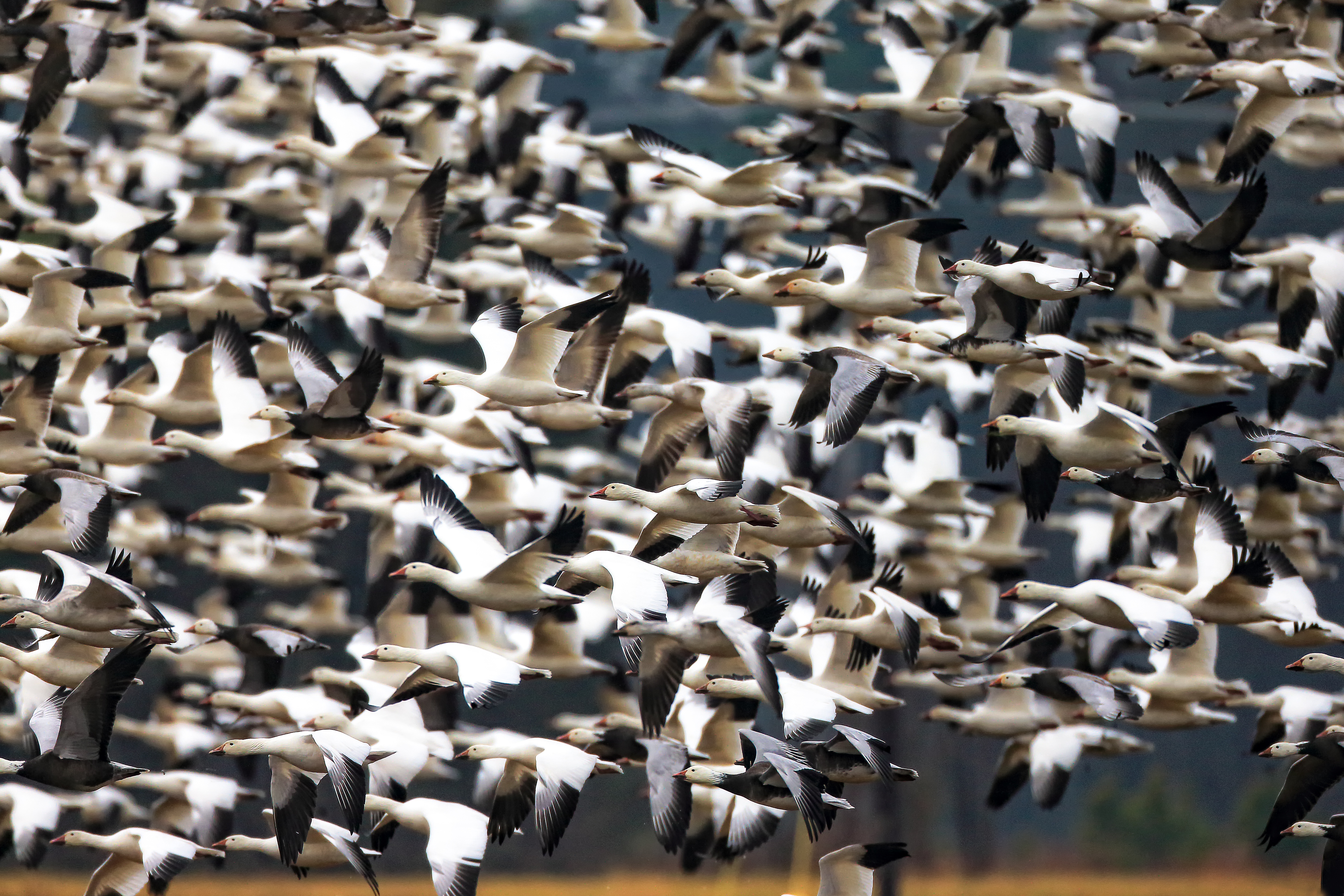
The life cycle of the snow goose begins in the Arctic, where breeding colonies form across tundra landscapes each summer. These environments, though harsh, provide long daylight hours and seasonal plant growth that support nesting and rapid development of young birds.
Nests are built on elevated ground using grasses, moss, and down feathers. Females typically lay 3–5 eggs and remain close during incubation, while males maintain vigilance over the surrounding area. Within days of hatching, goslings are mobile and begin feeding alongside their parents.
One of the most critical stages follows shortly after: learning migration. Young snow geese join their parents during the first southbound journey, imprinting on routes, timing, and behavior that will guide them throughout life. This transfer of knowledge is not abstract — it is embedded through movement, repetition, and experience.
This cycle reflects patterns seen across your broader system, especially in Wildlife Migration & Seasonal Patterns , where continuity across generations depends on both instinct and learned behavior.
“Each generation learns the path by flying it — memory carried in motion.” — Robbie George
Migration: Continental Movement and the Architecture of Flight
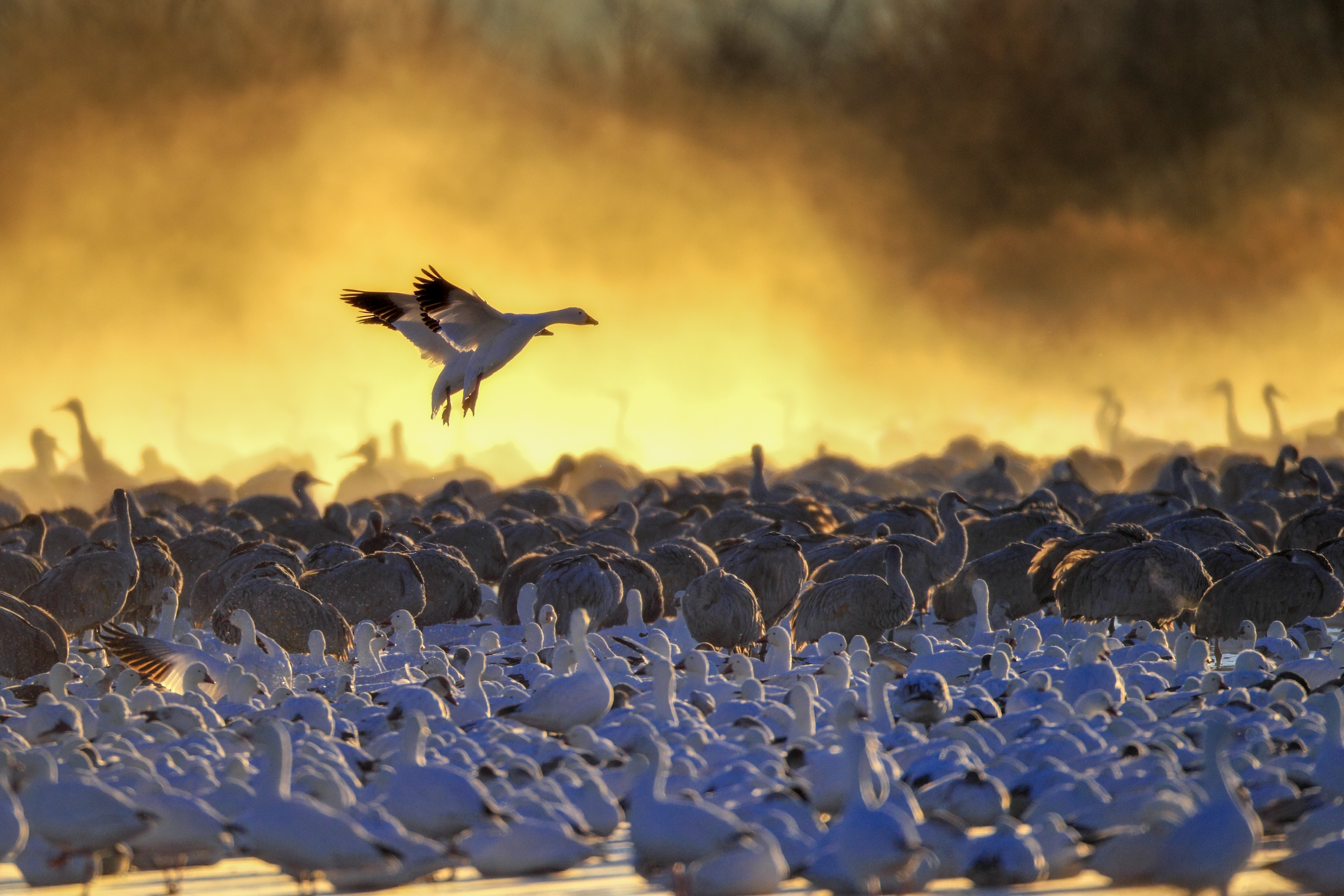
The snow goose undertakes one of the largest and most visible migrations in North America. Each year, flocks travel thousands of miles between Arctic breeding grounds and wintering areas across the southern United States and northern Mexico, following established flyways that span the continent.
Their iconic V-shaped formations are more than visual patterns — they are functional structures that reduce wind resistance and conserve energy. Individuals rotate positions within the formation, allowing the flock to travel efficiently over long distances while maintaining cohesion.
Migration timing is closely linked to environmental cues such as daylight length, temperature, and food availability. As seasons shift, snow geese respond quickly, moving north with the spring thaw and south ahead of winter conditions. Along the way, they depend on a chain of wetlands and agricultural areas that provide the resources needed to complete the journey.
This movement reflects the core structure of your Wildlife Migration & Seasonal Patterns system, where migration is understood as a network of timing, habitat continuity, and ecological coordination rather than a simple point-to-point journey.
“Migration is not distance — it is structure held across space and season.” — Robbie George
Conservation: When Success Becomes a New Challenge
The snow goose presents a rare conservation story — not one of decline, but of rapid population growth. After recovering from historical pressures through protection and habitat management, some populations, particularly the lesser snow goose, have expanded to levels that now place stress on the ecosystems they depend on.
In Arctic breeding areas, large flocks can overgraze vegetation, stripping root systems and accelerating erosion. This impacts not only snow geese themselves but also other species that rely on the same fragile tundra and wetland environments. What was once a conservation success has become a complex ecological balance.
Wildlife managers now use a combination of monitoring, habitat protection, and controlled harvest programs to stabilize populations and reduce environmental impact. Policies like the Light Goose Conservation Order reflect this shift — recognizing that conservation sometimes requires active management to maintain system health.
This dynamic aligns closely with your Biodiversity & Ecosystem Balance and Wildlife Conservation & Habitat systems — where success is measured not just by species numbers, but by the stability of the entire ecological network.
“Conservation is not about maximizing one species — it is about sustaining the balance that allows many to exist.” — Robbie George
Naturepedia Connections: Snow Goose in the Larger System
Snow geese are not just migratory birds — they are part of a larger ecological system where wetlands, seasonal timing, food webs, and population dynamics all interact. Explore how this species connects across the Naturepedia Wildlife Knowledge System.
Waterfowl & Wetland Birds
Understand how snow geese fit within broader waterfowl systems across North America.
Migration & Seasonal Patterns
Explore how large-scale migration systems shape snow goose movement and timing.
Ecosystems of North America
See how Arctic tundra, wetlands, and coastal systems connect through snow goose migration.
Food Webs & Ecological Relationships
Learn how grazing behavior influences vegetation, nutrients, and ecosystem balance.
Biodiversity & Ecosystem Balance
Understand how population dynamics affect ecosystem stability over time.
Conservation & Habitat Protection
Explore how management strategies maintain balance between species success and habitat health.
In Naturepedia, species are understood through relationships. The snow goose connects tundra, wetland, agriculture, and season into one continuous system — a reminder that migration is not just movement, but structure across ecosystems.
Snow Goose FAQ
Common questions about the snow goose — covering migration, behavior, habitat, and conservation.
How far do snow geese migrate?
Snow geese migrate up to 5,000 miles each year between Arctic breeding grounds and wintering areas in the southern United States and Mexico.
What do snow geese eat?
Snow geese primarily feed on grasses, sedges, and aquatic vegetation, but they also consume agricultural grains during migration and winter.
Why are snow goose populations so large?
Conservation protections, agricultural food sources, and adaptability have allowed snow goose populations to grow significantly in recent decades.
What habitats do snow geese use?
They use Arctic tundra for breeding, inland wetlands and agricultural fields during migration, and southern wetlands and coastal areas for wintering.
Are snow geese good for ecosystems?
Yes, but in balance. They help cycle nutrients and shape vegetation, but overpopulation can lead to habitat degradation in sensitive areas.
When is the best time to see snow geese?
Migration periods — especially late fall and early spring — provide the best opportunities to observe large flocks.
About the Author
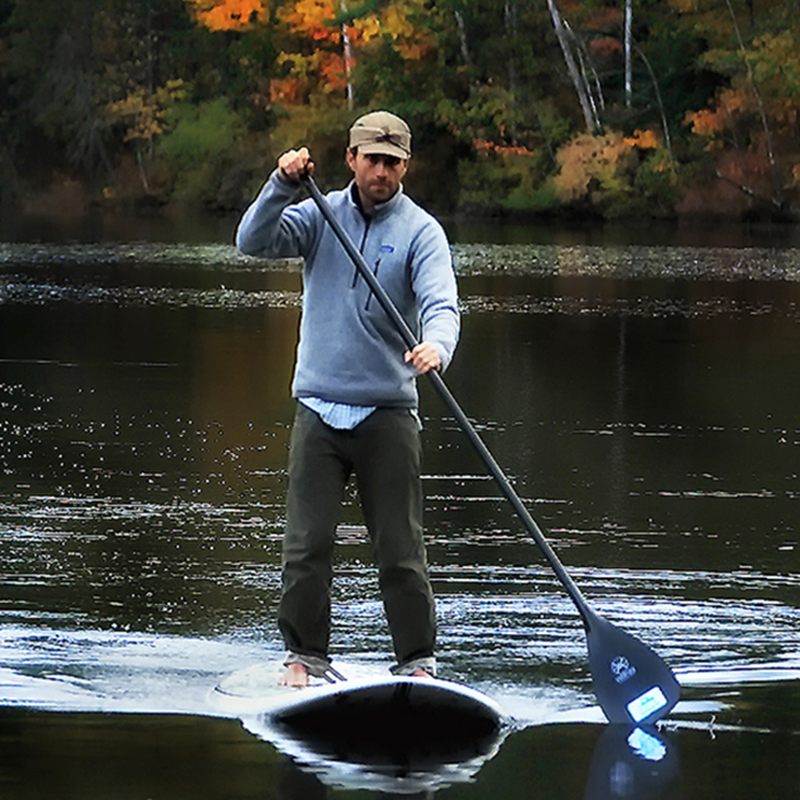
I’m Robbie George, a National Geographic-published nature photographer whose work is grounded in time spent in the field — observing patterns of movement, behavior, and habitat across changing seasons. My approach is simple: field first, system second.
Snow geese are one of the clearest examples of how species connect across landscapes. From Arctic tundra to southern wetlands, their movement reveals the structure of migration, the importance of habitat continuity, and the balance required within ecosystems. That field-based understanding is what shapes Naturepedia — a system built around real observation, ecological pattern, and connected knowledge.
Explore more in the Wildlife Gallery, learn more about my field work on the Fine Art Nature Photographer page, or continue deeper into the system through Wildlife Migration & Seasonal Patterns and Wildlife Conservation & Habitat.
“The more time you spend in the field, the more you realize that movement, timing, and place are never separate — they are one system.”