
The Biophilia Hypothesis: Understanding Our Innate Affinity for Nature

What This Connection Actually Is
The connection we feel in nature is not abstract—it’s structural.
It exists because humans evolved inside ecosystems, not outside of them. Our perception, nervous system, and behavioral instincts were shaped by reading landscapes—water sources, vegetation, animal movement, light cycles, and seasonal change.
This is what the Biophilia Hypothesis attempts to describe: an inherited relationship between humans and living systems.
But in practice, it’s more than affinity—it’s participation in a larger ecological network. The same system that supports wildlife, regulates climate, and cycles nutrients also shapes human cognition, health, and behavior.
This is why understanding ecosystems matters. It’s not separate from us—it’s foundational. I break this down further in Ecosystems of North America and Wildlife Behavior & Ecology, where you can see how species, habitats, and environmental pressures are all connected.
When that connection weakens—through urbanization, fragmentation, or disconnection from the field—it doesn’t just affect how we feel.
It changes how entire systems function.
“Biophilia isn’t preference—it’s participation in a living system.” — Robbie George
Jump Navigation
Explore this page section by section.
The Ecological Role of Human Connection to Nature
Why This Relationship Exists — and What It Supports
Human connection to nature is not separate from ecology—it is part of it.
For most of human history, survival depended on reading the landscape. Water, vegetation, animal movement, seasonal shifts—these weren’t abstract concepts. They were signals. And our bodies adapted to interpret them.
That relationship still exists today. The same systems that regulate wildlife behavior, migration, and ecosystem balance also influence human health, cognition, and emotional stability.
This is why ecosystems matter beyond conservation—they are functional systems that support life across species. You can see this clearly in Wildlife Systems & Ecology and Biodiversity & Ecosystem Balance, where species interactions shape the stability of entire environments.
But this connection flows both ways.
When humans remain connected to nature, behavior tends to align with the system—slower movement, deeper observation, and more sustainable interaction. When that connection weakens, the relationship shifts from participation to extraction.
This is visible across species and habitats—from migratory birds responding to seasonal cues to large mammals adapting to fragmented landscapes. These patterns are explored further in Wildlife Migration & Seasonal Patterns and Wildlife Habitats & Ecosystem Zones.
The human-nature connection is not just emotional—it is regulatory. It influences how we move through landscapes, how we use resources, and whether ecosystems remain balanced or begin to degrade.
“When we lose connection to nature, we don’t just lose peace—we lose alignment with the system that sustains life.” — Robbie George
What Is Changing
How Disconnection Scales from the Individual to the Ecosystem
The human connection to nature has not disappeared—but it has been disrupted.
Modern life increasingly places people inside controlled environments: artificial light, constant noise, sealed interiors, screens, pavement, and speed. What once trained attention through weather, wildlife, water, season, and changing light is now often replaced by systems that ask us to override our senses instead of trust them.
That shift affects more than mood. It changes behavior. When people are separated from living systems, nature becomes easier to ignore, simplify, consume, or manage as scenery rather than understand as habitat. I’ve explored this human-side breakdown in Nature-Deficit Disorder and in my reflections on reconnecting with nature through Richard Louv’s work.
At the ecological level, the same pattern shows up as fragmentation, pressure, and loss of relationship. Habitats become isolated. Seasonal timing gets disrupted. Wildlife is pushed into narrower margins. The deeper the disconnect, the easier it becomes for ecosystems to be treated as resources without memory, instead of living systems with structure, timing, and consequence.
You can see this across the broader Naturepedia system—in Wildlife Conservation & Habitat, Ecosystems of North America, and Wildlife Observation & Field Techniques, where the quality of our relationship to place directly affects what remains visible, stable, and alive.
This is why the loss of connection matters. It is not only personal disorientation. It is a systems problem. The less we recognize ourselves as participants in the field, the easier it becomes to tolerate damaged wetlands, simplified forests, degraded soil, disconnected corridors, and cities built with no ecological memory at all.
“When the relationship weakens, the system doesn’t stop speaking—it simply starts breaking in ways we no longer know how to read.” — Robbie George
What this disruption looks like in practice
- At the personal level: less stillness, less sensory awareness, more stress, and weaker daily contact with living systems.
- At the landscape level: fragmented habitat, simplified spaces, and fewer places where ecological rhythms can unfold naturally.
- At the wildlife level: more pressure on movement, breeding, feeding, and seasonal behavior.
- At the cultural level: nature is treated as backdrop, product, or escape instead of relationship, responsibility, and home.
Human Impact on the System
Where Disconnection Becomes Pressure on the Natural World
Disconnection from nature doesn’t stay internal—it reshapes how we build, move, and use the land.
When people no longer feel part of ecosystems, decisions begin to prioritize efficiency, speed, and control over relationship, timing, and balance. Landscapes are simplified. Systems are optimized for short-term output rather than long-term stability.
This shows up across multiple layers of the natural world:
- Development & Expansion: Roads, housing, and infrastructure fragment habitat, limiting wildlife movement and breaking migration pathways.
- Agriculture & Land Use: Large-scale systems often prioritize yield over soil health, reducing biodiversity and weakening ecological resilience—something explored deeply in Soil Microbiome.
- Tourism & Recreation Pressure: Increased visitation to wild places—national parks, refuges, and coastlines—can disrupt animal behavior and degrade sensitive environments when not managed carefully.
- Urban Design: Cities built without ecological awareness remove access to green space, natural light cycles, and environmental feedback systems.
- Resource Extraction: Water systems, forests, and land are often treated as commodities rather than interconnected living systems.
These pressures are not isolated—they compound across systems. Habitat fragmentation affects migration. Migration affects breeding success. Breeding success affects population stability. This interconnected chain is explored across Food Webs & Ecological Relationships and Keystone Species & Trophic Cascades.
In the field, this isn’t theoretical. You see it in quieter mornings where wildlife doesn’t return, in altered movement patterns, in landscapes that feel intact but function differently beneath the surface.
The more disconnected we become, the more these impacts accelerate—often without being noticed until the system is already unstable.
“Impact doesn’t begin with destruction—it begins with disconnection.” — Robbie George
Why this matters at scale
Small changes in behavior scale into large ecological consequences.
- Less connection → less awareness
- Less awareness → weaker protection
- Weaker protection → system degradation
This is how personal disconnection becomes ecological impact.
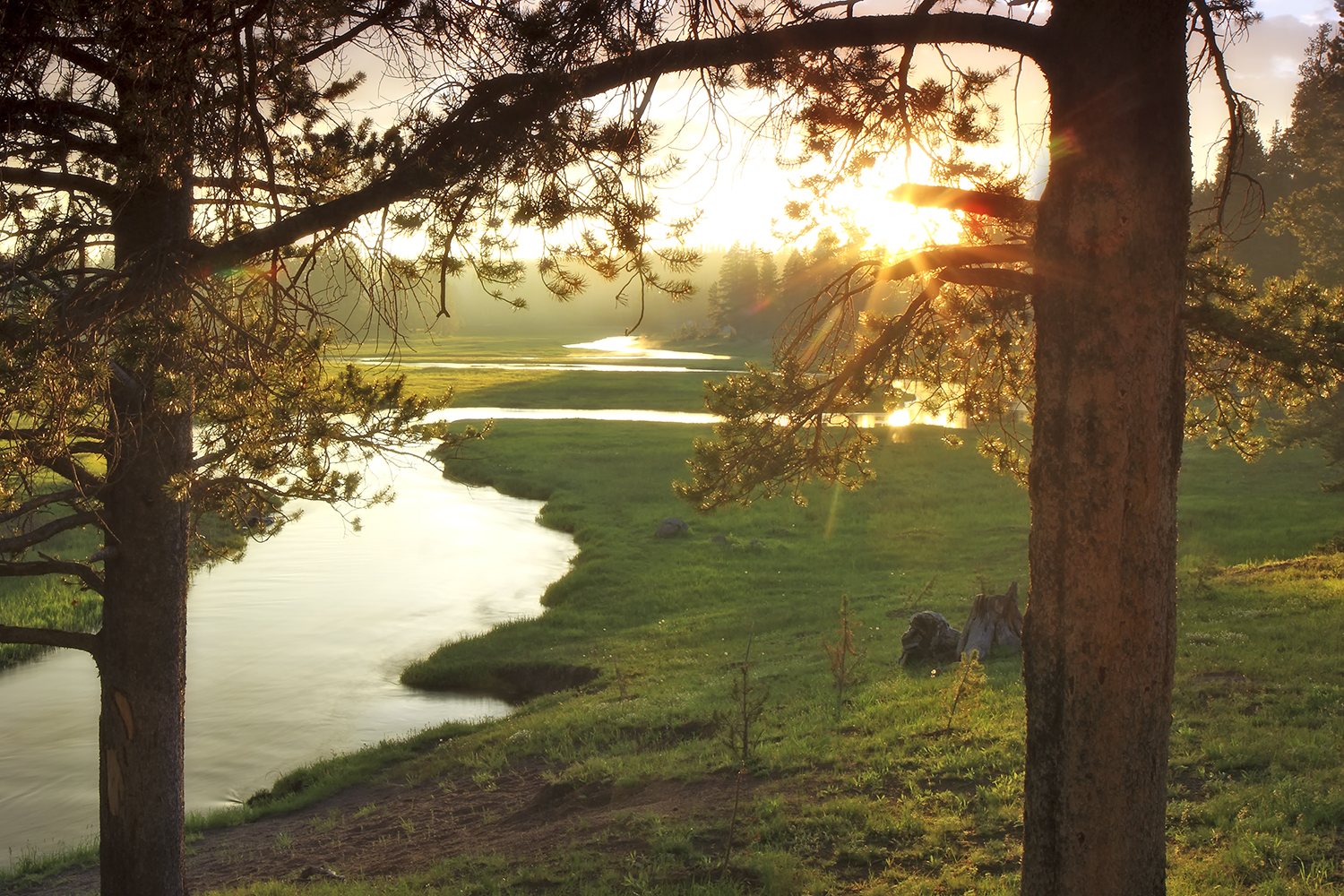
“Gibbon River, Yellowstone” — when systems are intact, flow doesn’t need to be managed
Conservation Response
What Actually Protects the System — and Why It Works
Standing in a place like this, you don’t feel intervention—you feel continuity.
Water moves the way it should. Vegetation follows natural patterns. Wildlife uses the corridor without disruption. The system regulates itself because the conditions for it to function still exist.
This is what effective conservation actually looks like:
Protect the system, not just the pieces.
- Protecting Whole Landscapes: Large, connected areas—like those explored in National Parks & Wildlife Refuges—allow ecosystems to operate without constant interruption.
- Maintaining Natural Flow: Rivers, migration routes, and seasonal cycles must remain uninterrupted for systems to stay balanced.
- Restoring Damaged Systems: Wetlands, forests, and soils can recover—but only when pressure is reduced and function is allowed to return, as seen in Wildlife Conservation & Habitat.
- Supporting Biodiversity: Diverse systems are more stable, resilient, and adaptive—core to Biodiversity & Ecosystem Balance.
- Changing Human Behavior: Conservation is reinforced by how people move through landscapes—distance, awareness, and respect matter.
When these elements align, systems stabilize. Food webs reconnect. Migration patterns recover. Water, soil, and life begin to regulate again—something you can trace through Food Webs & Ecological Relationships.
In the field, conservation rarely looks dramatic. It looks like absence—of pressure, of noise, of interruption. It looks like systems doing what they were designed to do.
And when that happens, the need for control disappears.
“Conservation works when we stop trying to control the system—and start protecting its ability to function.” — Robbie George
What this reveals
- Healthy systems regulate themselves
- Damaged systems require intervention
- Conservation is the transition back to self-regulation
This is where connection becomes responsibility—and responsibility becomes action.
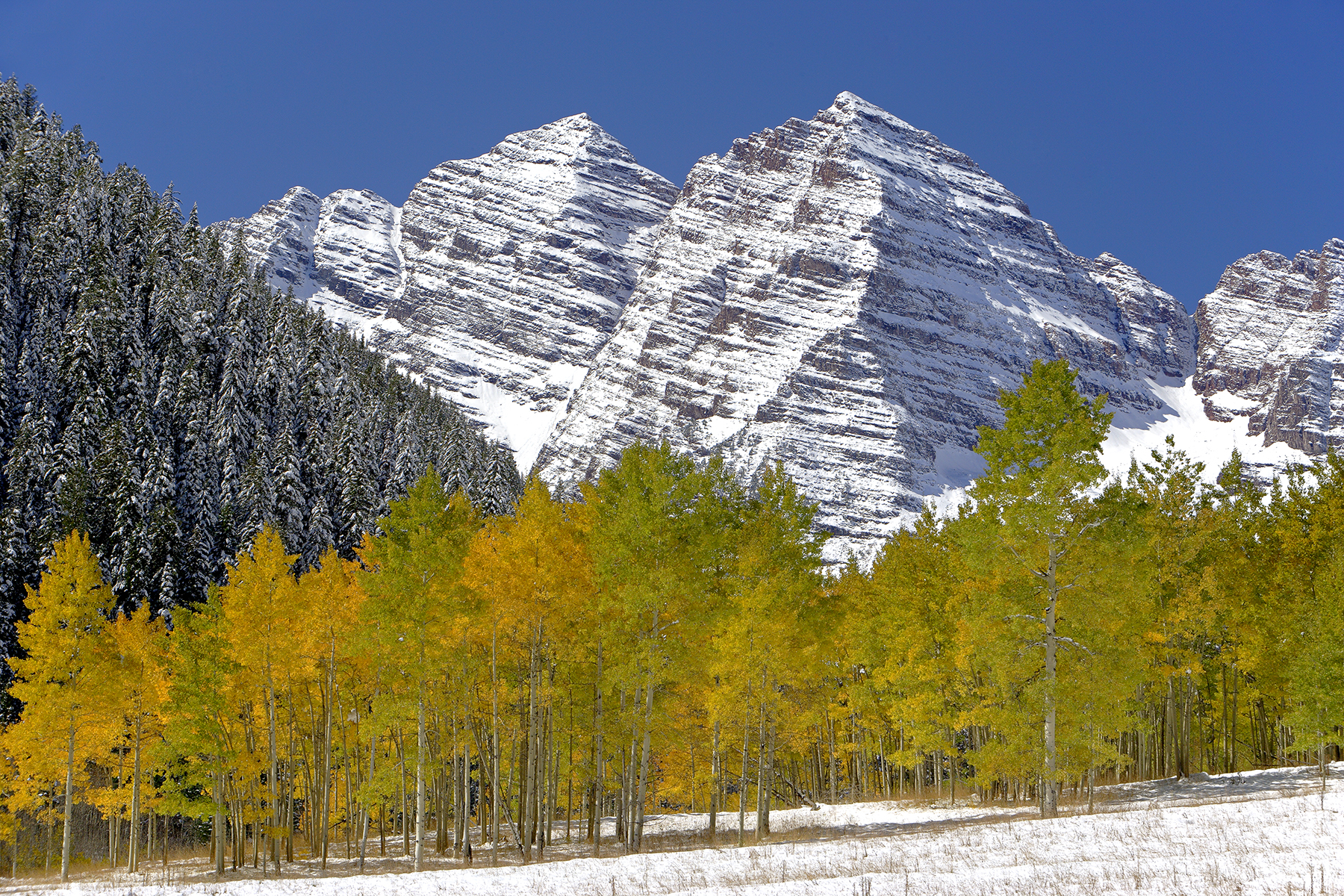
“Maroon Bells, Colorado” — returning to the same kinds of places is how relationship deepens
Field Observation
What I’ve Seen in the Field — and What Repetition Teaches
This is where the idea of connection stops being theoretical for me.
Over time, the field teaches you that nature does not reveal itself all at once. You return in different weather, different light, different seasons, and slowly begin to understand that what looks still is actually full of timing, pattern, and relationship.
Places like the Maroon Bells have taught me that observation changes with repetition. The first visit gives you beauty. Later visits begin to show you structure—how light moves through the basin, how weather compresses the landscape, how human presence shifts the experience, and how quickly a place can lose its quiet when pressure rises.
That same principle applies across wildlife and habitat. The more time you spend outside, the more you notice that healthy systems have rhythm. Birds follow timing. Mammals use edges and corridors with intent. Water reflects recent weather, snowpack, and season. Nothing is random for long when you keep returning.
This is one reason I place so much value on Slow Knowledge and on careful field practice. Observation is not just seeing more. It is learning how to read what the system is already saying.
I’ve also learned that disturbance is often subtle before it becomes obvious. A place may still look beautiful while functioning differently underneath—less wildlife tolerance, altered timing, compressed behavior, less room for stillness. That is why field observation matters so much. It helps you notice change before the system fully breaks.
“The field rewards repetition. The longer you stay in relationship with a place, the more it teaches you how life is actually working there.” — Robbie George
What repeated observation reveals
- Timing: Light, season, and weather shape behavior and visibility.
- Pressure: Increased human presence changes how landscapes and wildlife feel long before that change is formally measured.
- Pattern: Healthy systems repeat in readable ways; disrupted systems become harder to interpret.
- Responsibility: The more clearly you see a place, the harder it becomes to treat it casually.
That is the deeper value of connection: not just calm, but attention. And attention is where protection begins.
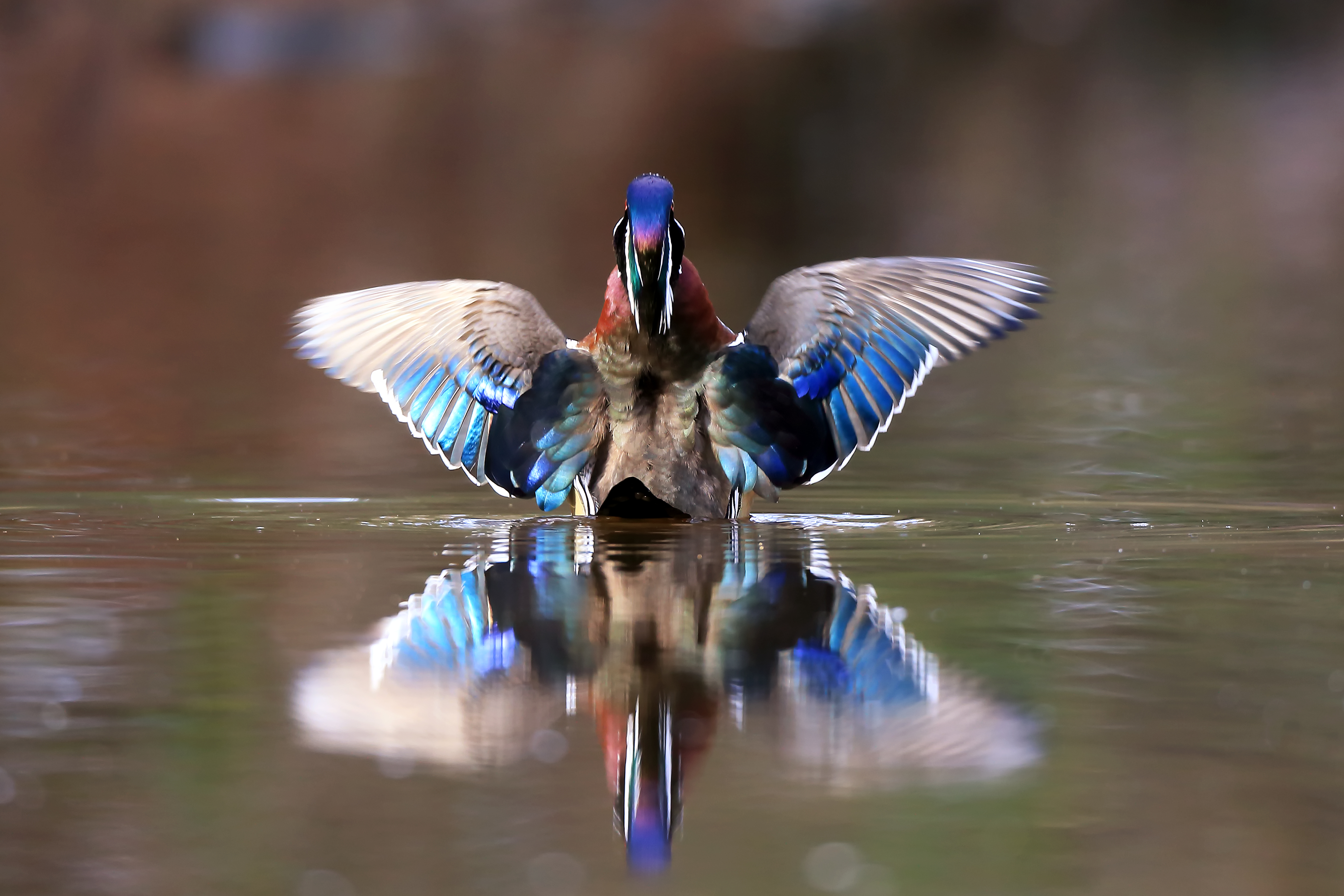
“Wood Duck” — connection becomes visible when you understand the system behind the moment
Naturepedia Connection
How Connection Expands into a Full Ecological System
What feels like a simple moment—like a wood duck resting on calm water—is actually the result of multiple systems working together.
The bird depends on wetland habitat. The wetland depends on water cycles and vegetation. The vegetation depends on soil systems and seasonal timing. And all of it is shaped by geography, climate, and human impact.
This is the core idea behind Naturepedia—nothing exists in isolation. Every observation connects across layers.
The Living System Behind a Single Moment
- Species: Wood duck behavior, feeding, nesting — part of Waterfowl & Wetland Birds
- Behavior: Movement, stillness, seasonal patterns — explored in Wildlife Behavior & Ecology
- Habitat: Wetlands, ponds, riparian systems — connected to Habitat & Ecosystem Zones
- Ecosystem: Biodiversity, food webs, water systems — see Ecosystems of North America
- Geography: Specific locations where these systems hold — explore Wildlife Observation Locations
- Time: Seasonal timing, migration, breeding cycles — see Seasonal Wildlife Calendar
- Conservation: Habitat protection and restoration — connected to Conservation & Habitat
This is what deeper connection reveals:
You are not just seeing a moment—you are seeing the result of an entire system functioning correctly.
“Every image is not a subject—it’s a system revealing itself.” — Robbie George
Why this matters
- Connection leads to awareness
- Awareness leads to understanding
- Understanding leads to protection
This is how observation becomes conservation.
Frequently Asked Questions — Human Connection to Nature
What is the Biophilia Hypothesis?
The Biophilia Hypothesis, introduced by E.O. Wilson, suggests that humans have an innate biological connection to nature. It reflects our evolutionary relationship with ecosystems, landscapes, and living systems.
Why does connection to nature matter?
Connection influences both personal well-being and ecological behavior. When people feel connected to nature, they tend to observe more carefully, move more intentionally, and support systems that protect habitat and biodiversity.
How does disconnection affect ecosystems?
Disconnection often leads to simplified land use, habitat fragmentation, and reduced awareness of ecological impact. Over time, this contributes to system instability across species, habitats, and food webs.
What are simple ways to reconnect with nature?
Spend consistent time outside, observe without distraction, return to the same places, and pay attention to patterns like light, season, and behavior. Even small daily exposure helps rebuild awareness.
How does nature photography help build connection?
Photography slows perception and encourages attention. It shifts focus from consuming a place to observing it, helping reveal patterns, relationships, and ecological structure.
What is the role of conservation in this connection?
Conservation protects the conditions that allow ecosystems to function. It preserves habitat, supports biodiversity, and maintains the natural processes that both wildlife and humans depend on.
How does this connect to Naturepedia?
Naturepedia organizes knowledge across species, behavior, habitat, ecosystems, geography, and time. It shows how individual observations connect to larger systems and why those systems matter.
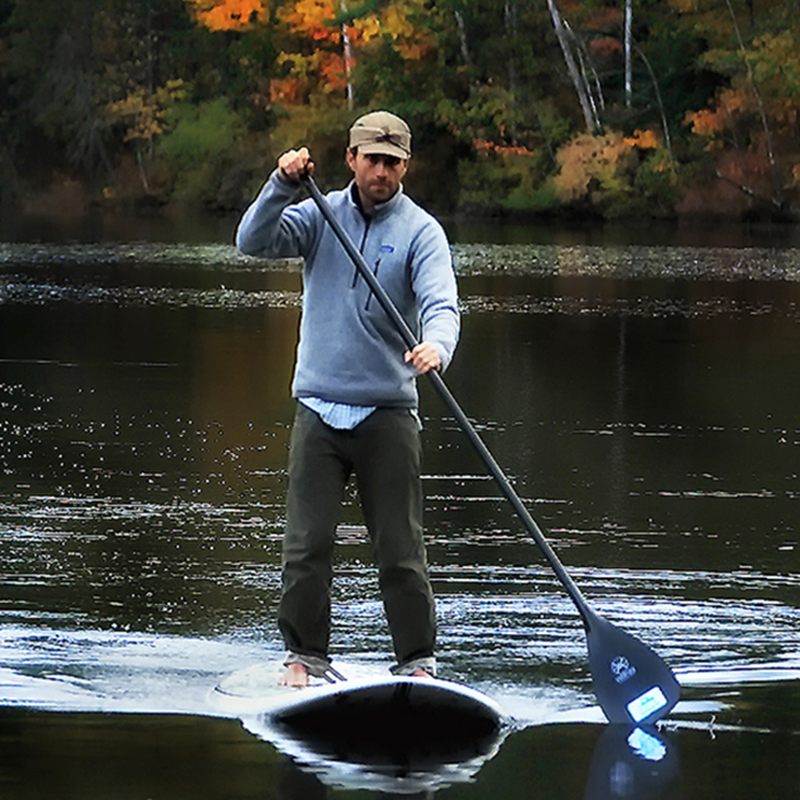
About the Author
Robbie George is a National Geographic–published nature photographer whose work is built on long-term observation in the field—returning to the same landscapes across changing light, weather, and season to understand how natural systems actually function.
His approach is grounded in what he calls Slow Knowledge—learning through repetition, presence, and direct relationship with ecosystems rather than surface-level observation.
Through Naturepedia, he organizes that field experience into a structured system connecting species, behavior, habitat, ecosystems, geography, and time—helping translate individual moments in nature into a deeper ecological understanding.
His photography and writing focus on a simple idea: connection to nature is not just emotional—it is functional. The more clearly we see how systems operate, the more naturally our behavior aligns with protecting them.
“Attention is the beginning of relationship—and relationship is what keeps systems intact.” — Robbie George