
The Ultimate Guide to Mountain Goats (Oreamnos americanus) by Robbie George Photography
A Life Built on the Edge
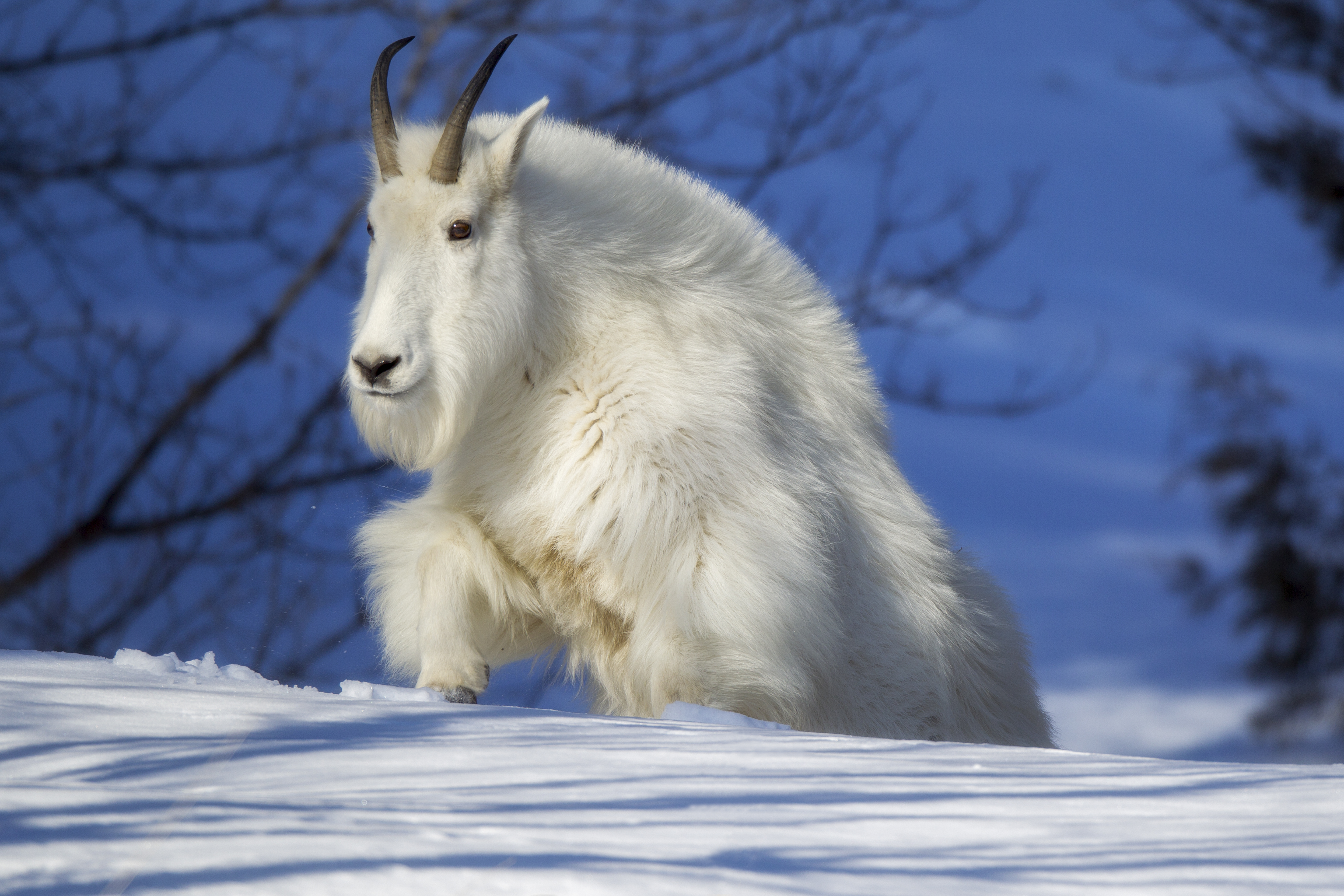
The first time I watched a mountain goat through my lens, it wasn’t the animal that struck me—it was the terrain. A near-vertical wall of rock, broken only by thin seams of snow and shadow. And there it was, moving through it like it belonged there.
That’s the key to understanding mountain goats. They are not just surviving the alpine—they are part of it. Their movement, their stillness, even where they choose to stand is shaped by the same forces that built the mountain itself.
In the broader wildlife behavior and ecology system, mountain goats represent one of the clearest examples of specialization. Everything about them—hooves, muscle, balance, instinct—is tuned to steep, exposed terrain where predators struggle to follow.
You’ll find them across the high country of the Rockies, Cascades, and northern ranges—often in the same regions that define your best wildlife observation locations. But unlike most species, access isn’t the challenge. Perspective is.
“The mountain goat doesn’t climb the mountain. It lives where the mountain becomes the only option.”
On This Page
Behavior & Adaptations — Built for Vertical Survival
When I watch mountain goats in the field, what stands out isn’t speed or power—it’s precision. Every step is deliberate. Every movement is calculated. They don’t rush the mountain. They read it.
Their entire survival strategy is built around terrain. While predators like wolves and mountain lions dominate open ground, mountain goats move into places where pursuit becomes nearly impossible. The cliff is not an obstacle—it’s protection.
Hoof Design — The Foundation of Everything
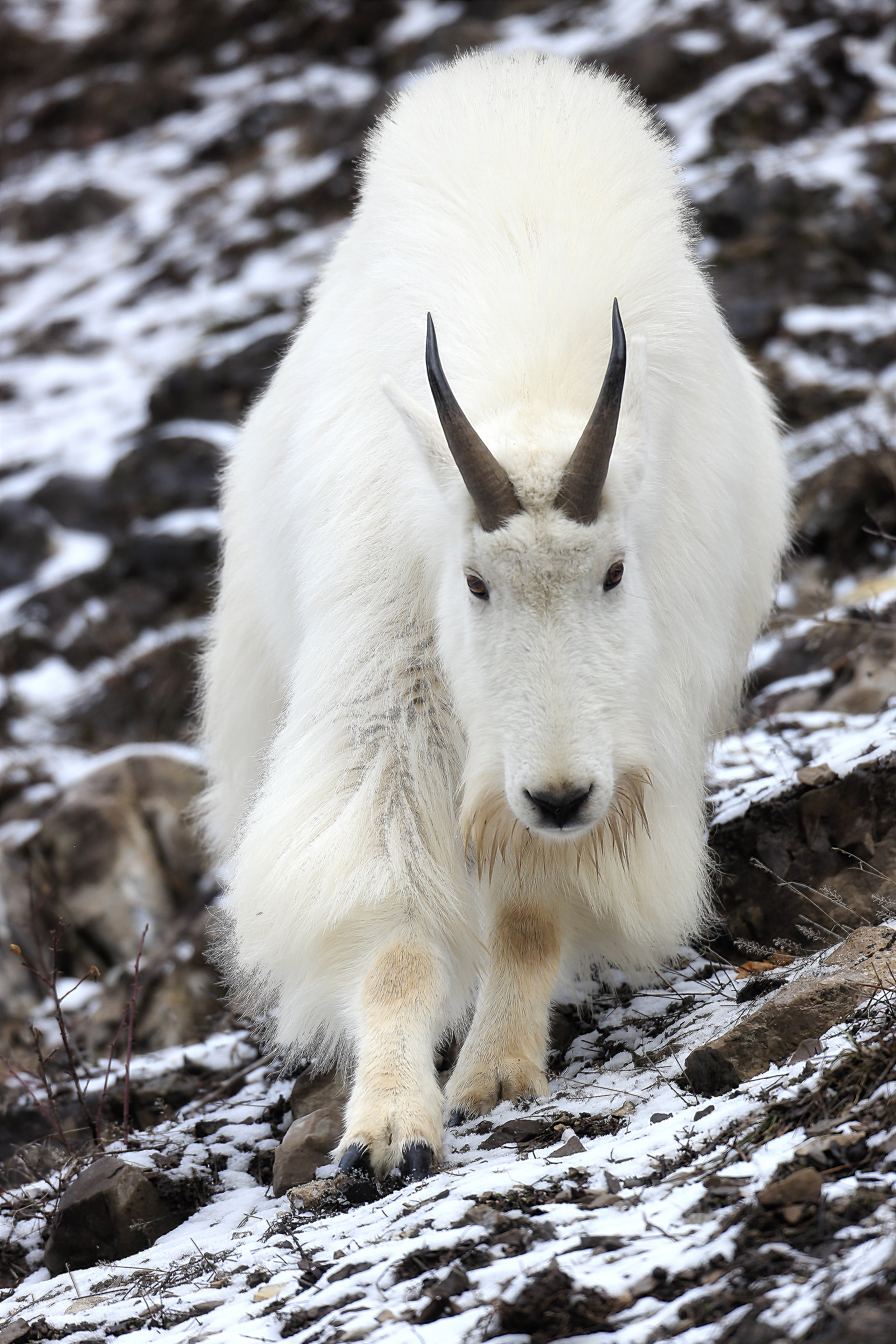
Their hooves are one of the most refined adaptations in North American wildlife. A hard outer rim grips the smallest edges of rock, while a soft, rubber-like inner pad conforms to uneven surfaces. This combination allows them to balance on ledges barely wider than their body.
In the broader adaptation and survival system, this is a perfect example of specialization—form matching environment with almost no excess.
Thermal Adaptation — Surviving the Cold Edge
At elevation, wind and cold become constant pressures. Mountain goats carry a double-layered coat—dense insulating underfur beneath long hollow guard hairs that repel moisture and trap heat. I’ve watched snow accumulate on their backs without melting, a clear sign of how efficiently they retain warmth.
Social Behavior — Quiet Structure in Harsh Terrain
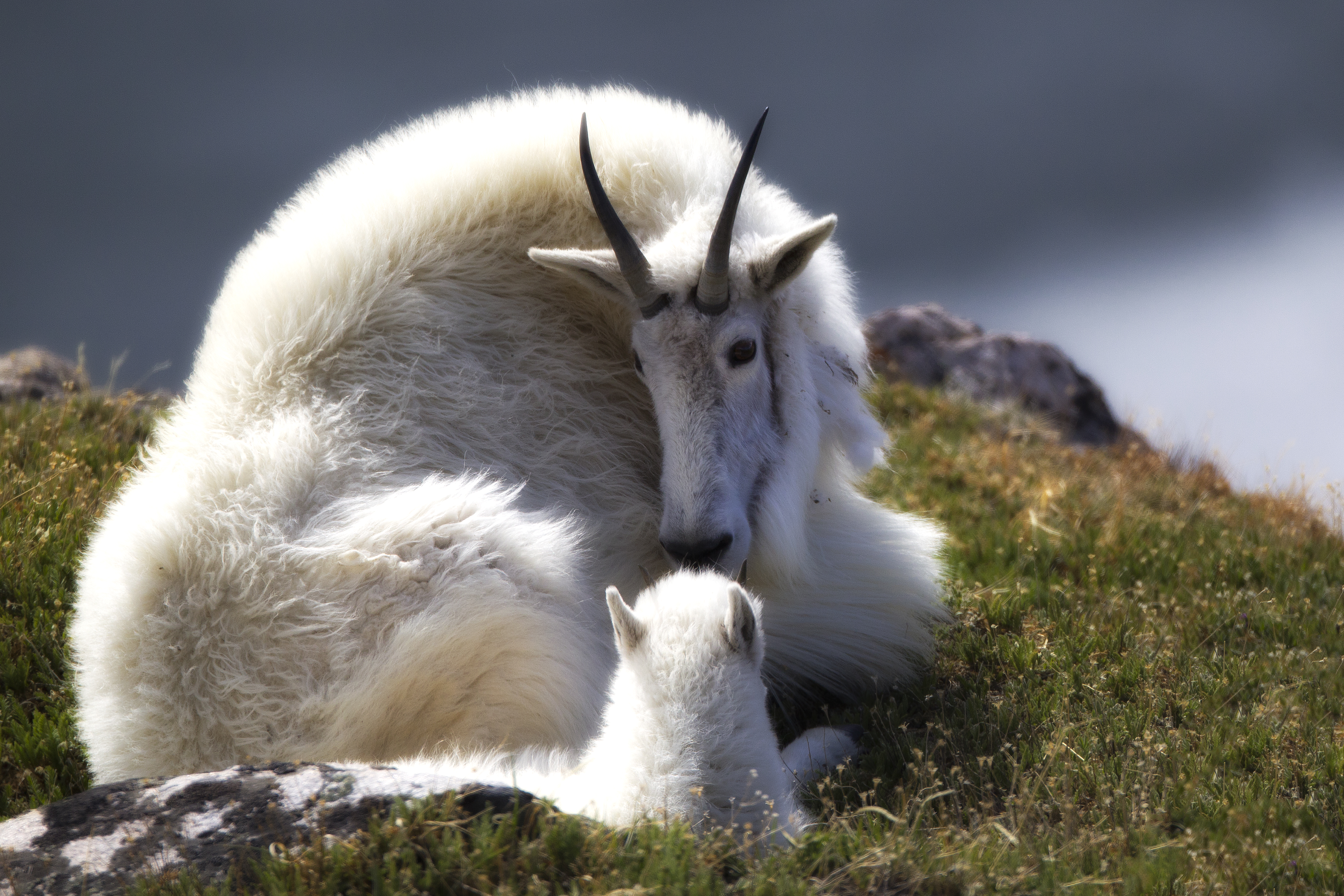
Mountain goats are not chaotic animals. Their social structure is calm, ordered, and often led by experienced females. Nannies guide their young through complex terrain, teaching them where to step, where to rest, and how to read the mountain.
Kids are climbing within days of birth. That’s not just instinct—it’s necessity. In this environment, hesitation doesn’t last long.
Behavior as Strategy — Terrain Over Speed
Unlike many species that rely on speed or strength, mountain goats rely on position. They choose terrain that gives them the advantage before danger even arrives. It’s a pattern you see across the food web and ecological relationships—survival often comes down to where you stand, not how fast you run.
“They don’t escape the mountain—they become the part of it that cannot be reached.”
Habitat & Range — Life Above the Tree Line
Mountain goats live in a part of the landscape most animals avoid—the alpine. Above the tree line, where wind strips the terrain down to rock, snow, and sparse vegetation, conditions are harsh, exposed, and constantly shifting. But this is exactly where they thrive.
In my field experience, you rarely find mountain goats in easy terrain. Even when lower elevations are available, they stay close to steep escape routes—cliffs, ledges, and broken rock faces that give them immediate protection. Habitat, for them, is not just about food. It’s about positioning.
Geographic Range
Mountain goats are found across the rugged western spine of North America—from Alaska and western Canada down through the Rocky Mountain ecosystems, the Cascades, and into parts of the northern United States.
They typically occupy elevations between 4,000 and 13,000 feet, though I’ve seen them push even higher in extreme terrain. Elevation alone doesn’t define their range—steepness does.
Alpine Environment — A Natural Filter
The alpine environment acts as a filter. Thin soils, short growing seasons, intense weather, and limited forage mean only highly specialized species can survive here. Mountain goats are one of the few large mammals that have fully adapted to this space.
This is why they connect so strongly into the habitats and ecosystem zones system—they are not just residents of the alpine, they are indicators of its health and stability.
Seasonal Movement Within Elevation Bands
Mountain goats don’t migrate long distances like many species, but they do shift vertically with the seasons. In summer, they move higher to access fresh alpine vegetation. In winter, they often descend slightly to find wind-blown ridges where snow is thinner and forage is more accessible.
These movements tie directly into seasonal wildlife patterns—not migration across land, but migration across elevation.
“Their range isn’t measured in miles—it’s measured in vertical decisions.”
Diet & Foraging — Living on What the Mountain Provides
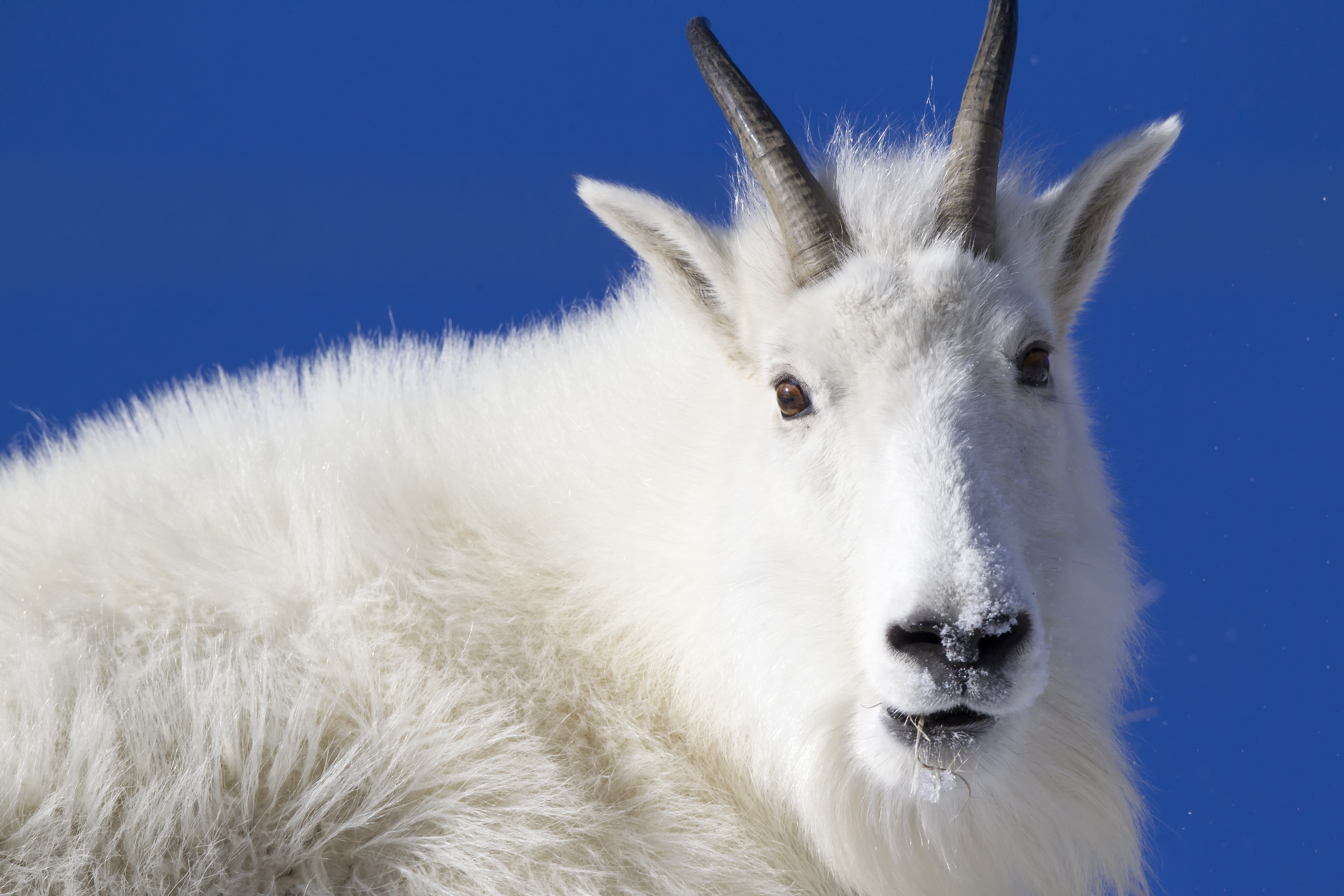
Mountain goats don’t have the luxury of abundant food. Everything they eat is earned—pulled from thin soils, wind-scoured ridges, and short alpine growing seasons. When I watch them feed, it’s never rushed. It’s selective, intentional, and efficient.
They are herbivores, feeding on a wide range of alpine vegetation—grasses, sedges, mosses, lichens, and low-growing shrubs. In summer, they take advantage of fresh growth in high meadows. In winter, they dig through snow or move to exposed ridges to access whatever remains.
Foraging Strategy — Efficiency Over Abundance
In the alpine, food is scattered and seasonal. Mountain goats rely on memory and movement patterns to return to productive feeding zones. They often follow the same ridgelines and slopes year after year—tracking where vegetation emerges first and lasts longest.
This behavior connects directly into the behavior and ecology system, where feeding patterns are shaped not just by availability, but by terrain, weather, and risk.
Mineral Needs — The Search for Salt
One of the most fascinating things I’ve seen is their drive for minerals—especially salt. Mountain goats will travel across steep terrain to reach natural mineral licks, and in some cases, they’re drawn to human-made sources like trails, campsites, or even gear.
This isn’t curiosity—it’s biological necessity. Sodium and other minerals are limited in alpine plants, and goats must actively seek them out to maintain muscle and nerve function.
Digestive Efficiency — Surviving Sparse Resources
Like other members of the herbivore food web, mountain goats are ruminants. Their multi-chambered stomach allows them to break down tough plant material and extract maximum nutrition from minimal resources.
“They don’t eat where food is easy—they eat where food is enough.”
Life Cycle — Born Into the Climb
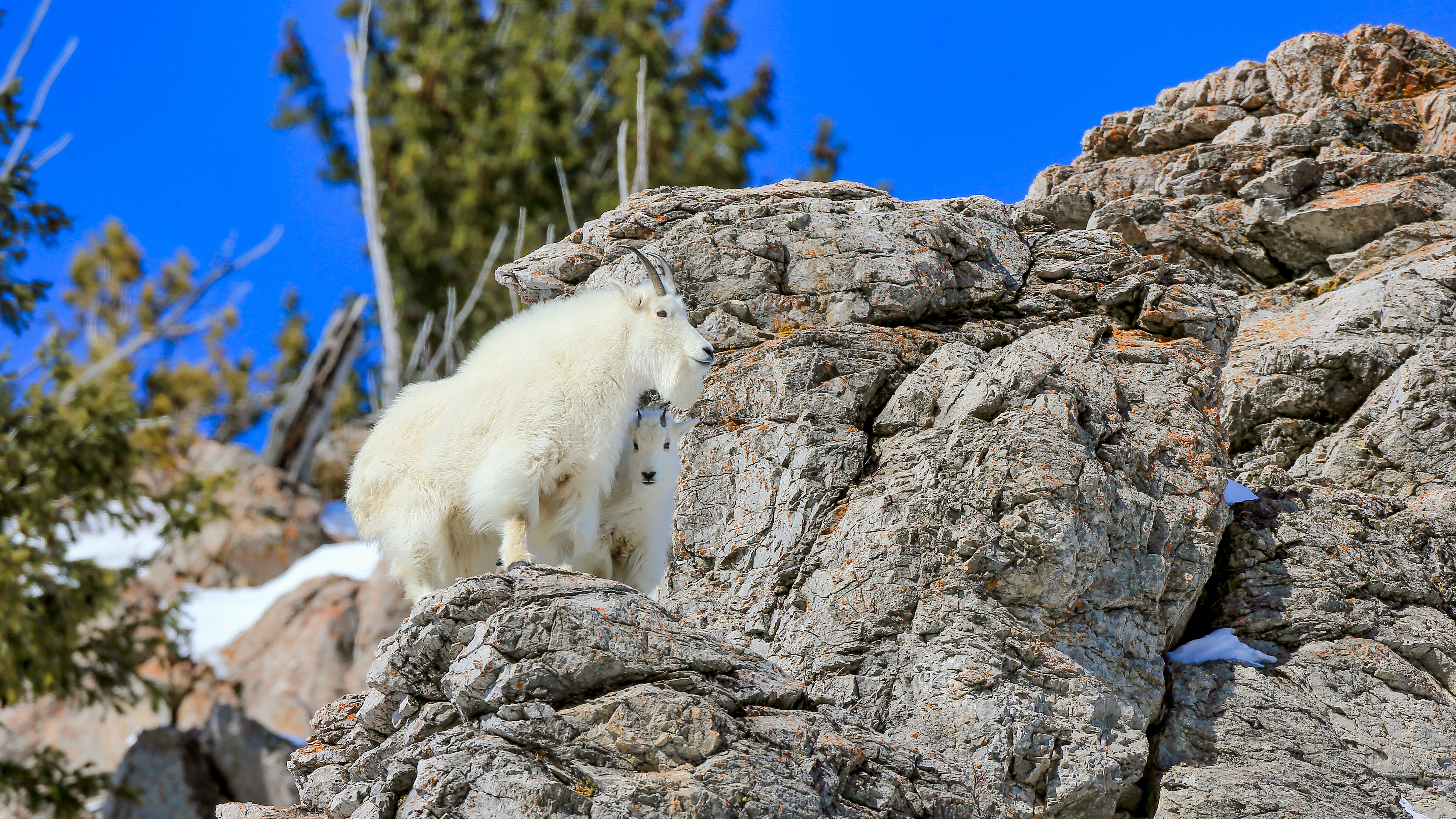
Mountain goats don’t ease into life—they begin at the edge. Kids are born in late spring on steep, isolated ledges where predators struggle to reach. From the first moment, survival is tied to terrain.
In my experience observing them, what stands out most is how quickly they adapt. Within hours, kids are standing. Within days, they are climbing. There is no long period of vulnerability—the mountain demands readiness immediately.
Birth & Early Development
Females (nannies) typically give birth to a single kid after a gestation period of about six months. Birth sites are chosen carefully—high, remote, and difficult to access. This positioning is one of the most important survival strategies in the species.
The bond between mother and kid is immediate and strong. Nannies guide their young through terrain, teaching them movement patterns, feeding areas, and safe routes. This early learning phase is critical and connects directly into the field observation system, where behavior is passed through experience, not instinct alone.
Juvenile Growth & Survival
Through summer and early fall, young goats grow quickly, building strength and coordination. This is a critical window where they must learn to navigate cliffs with precision and identify safe feeding areas.
Mortality is highest during this stage. Falls, weather exposure, and predation all play a role. Only those that fully adapt to the terrain continue forward.
Adulthood & Longevity
As adults, mountain goats settle into established movement patterns across their home range. Females remain in small groups, while males (billies) often live more solitary lives outside of breeding season.
Most mountain goats live between 10 and 15 years in the wild, though some individuals reach closer to 18–20 years under stable conditions. Longevity here is not about comfort—it’s about consistency. The ability to make the right decisions, step after step, year after year.
“They are not raised for the mountain—they are raised by it.”
Behavior — Movement, Hierarchy, and Survival Decisions
If you spend enough time watching mountain goats, you start to notice a pattern—they don’t waste movement. Every step has purpose. Every pause has awareness. Their behavior isn’t reactive. It’s pre-positioned.
In the broader wildlife behavior and ecology system, mountain goats represent a strategy built around terrain control. They choose locations that minimize risk before it ever arrives.
Daily Movement Patterns
Mountain goats follow consistent daily rhythms. They feed during early morning and late afternoon, resting during the harshest parts of the day. Movement is often tied to light, temperature, and visibility—factors that influence both forage access and predator detection.
Unlike migratory species, their movement is localized but precise—shifting across ridges, ledges, and elevation bands in ways that maximize safety and efficiency.
Social Structure & Hierarchy
Female-led groups are the core of mountain goat society. Nannies establish dominance hierarchies that determine access to food and positioning on the landscape. These hierarchies reduce conflict and create stability within the group.
Males operate differently. Billies are often solitary or loosely grouped, coming together primarily during the breeding season. When they do interact, behavior shifts—displaying strength, posture, and controlled aggression.
Rut Behavior — Controlled Conflict
During the rut in late fall, males engage in head-to-head clashes. These encounters can look violent, but they are structured and purposeful—tests of strength and endurance rather than chaotic fights.
Even here, terrain plays a role. Battles often occur in areas where footing is secure enough to withstand impact—another example of how behavior is shaped by environment.
Risk Awareness — Always One Step Ahead
Mountain goats are constantly assessing risk. They position themselves with escape routes in mind, often feeding within a few seconds’ reach of steep terrain. This behavior ties directly into the adaptation and survival framework, where anticipation is more valuable than reaction.
“They don’t react to danger—they live where danger loses its advantage.”
Conservation — Protecting Life at the Edge
From a distance, mountain goats can look untouchable—living high above roads, trails, and most human activity. But in reality, their world is more fragile than it appears. When a species depends on such a narrow band of habitat, even small changes can have outsized effects.
Within the wildlife conservation and habitat system, mountain goats represent a species where protection is less about rescue—and more about maintaining balance in a highly specific environment.
Climate Pressure — Shrinking Alpine Space
As temperatures rise, alpine ecosystems are shifting upward. Tree lines move higher, vegetation patterns change, and snowpack becomes less predictable. For mountain goats, this means their habitat is slowly compressing into smaller and more fragmented zones.
Unlike species that can relocate across wide landscapes, mountain goats are limited by terrain. They can only move where cliffs and escape routes exist—making adaptation to climate change especially complex.
Human Interaction — Subtle but Significant
Even in remote environments, human presence has an impact. Increased hiking traffic, backcountry camping, and alpine tourism can alter goat behavior—especially when animals become habituated to people.
I’ve seen situations where goats approach humans for salt, drawn to sweat, gear, or campsites. While it may seem harmless, this behavior increases the risk of conflict and can ultimately lead to relocation or removal.
Population Management & Reintroduction
In some regions, conservation efforts focus on relocation—moving goats from overpopulated or non-native areas back into suitable habitat. These efforts are carefully managed and reflect a growing understanding of how species fit within biodiversity and ecosystem balance.
Successful conservation here isn’t about increasing numbers everywhere—it’s about placing animals where the system can support them long-term.
What Responsible Observation Looks Like
If you encounter mountain goats in the wild, distance is everything. Use a telephoto lens, avoid altering their movement, and never feed or approach them. Ethical observation is a core part of the field techniques system—because how we observe wildlife directly affects how it survives.
“Protecting the mountain goat isn’t about reaching them—it’s about respecting the space they’ve already claimed.”
Seasonal Patterns — Life Across Elevation and Time
Mountain goats don’t migrate across continents—but they do move with the seasons in a different way. Their world shifts vertically. Elevation replaces distance. Timing replaces travel.
Through the lens of the migration and seasonal patterns system, mountain goats are a perfect example of micro-movement—small changes in position that align with larger environmental cycles.
Spring — Birth on the Edge
Late spring marks the arrival of new life. Nannies isolate themselves on steep cliffs to give birth, choosing terrain that minimizes predator access. Snow is still present at elevation, and conditions remain harsh—but timing is everything.
This season aligns with early plant emergence, providing the nutrition needed for lactation and rapid growth in young goats.
Summer — High Elevation Feeding
In summer, mountain goats move higher into alpine meadows where vegetation is most abundant. This is the most productive feeding period of the year, allowing them to build strength and energy reserves.
It’s also one of the best times for observation and photography, especially when paired with tools like the Golden Hour & Moon Planner to align light and movement.
Autumn — Rut and Transition
As temperatures drop, behavior shifts. The rut begins in late autumn, bringing increased movement and interaction between males. Energy becomes focused on reproduction, while feeding continues in preparation for winter.
This is a transitional season—less about abundance, more about preparation.
Winter — Survival and Efficiency
Winter is the true test. Food is scarce, temperatures drop, and movement becomes more limited. Mountain goats often descend slightly to wind-exposed ridges where snow is thinner, conserving energy while maintaining access to forage.
Everything slows down. Movement, feeding, interaction—all reduced to what is necessary. In the alpine, winter is not a season you endure. It’s a season you manage.
“They don’t chase the seasons—they adjust to them, one elevation at a time.”
Naturepedia Connection — Understanding the Mountain Goat in the Larger System
The mountain goat is not just a species—it’s a signal of how life adapts to extreme environments. When you follow its behavior closely, you start to see the full system emerge: terrain shaping movement, movement shaping survival, and survival shaping the ecosystem itself.
In alpine environments, everything is connected through limitation. Short growing seasons, thin soils, steep terrain, and harsh weather create a system where only highly specialized species can persist. The mountain goat sits at the center of this balance—linking vegetation, predator dynamics, and nutrient flow across elevations.
This is how I’ve built my work—connecting individual species into a larger structure of understanding: species classification, behavior and ecology, ecosystems, and conservation.
When you understand the mountain goat, you’re not just learning about one animal—you’re learning how entire alpine systems function.
To go deeper, explore the full Naturepedia system and see how these connections expand across species, habitats, and time.
Frequently Asked Questions — Mountain Goats
What makes mountain goats such skilled climbers?
Mountain goats have specialized hooves with a hard outer edge for grip and a soft inner pad for traction. Combined with strong muscles and balance, this allows them to move across extremely steep terrain with precision.
Where do mountain goats live?
They live in high-elevation alpine and subalpine environments across western North America, especially in the Rockies, Cascades, and northern ranges. Their habitat is defined more by steep terrain than by elevation alone.
What do mountain goats eat?
Mountain goats are herbivores that feed on grasses, sedges, mosses, lichens, and shrubs. They adapt their diet seasonally, digging through snow or moving to exposed ridges in winter to find food.
Do mountain goats migrate?
They don’t migrate long distances, but they do move vertically with the seasons—climbing higher in summer for fresh vegetation and descending slightly in winter to access food.
Are mountain goats dangerous?
Mountain goats are generally not aggressive, but they can become dangerous if habituated to humans or seeking salt. It’s important to maintain distance and avoid feeding or approaching them.
How long do mountain goats live?
Most mountain goats live between 10 and 15 years in the wild, though some individuals can reach closer to 20 years under stable conditions.
Why are mountain goats important to ecosystems?
They influence alpine vegetation through grazing and contribute to nutrient cycling. They also support predator populations and play a key role in maintaining balance within alpine ecosystems.
Where is the best place to observe mountain goats?
High-elevation regions like the Rocky Mountains and Cascade Range offer strong opportunities. You can explore specific locations through the wildlife observation locations guide.
About Robbie George
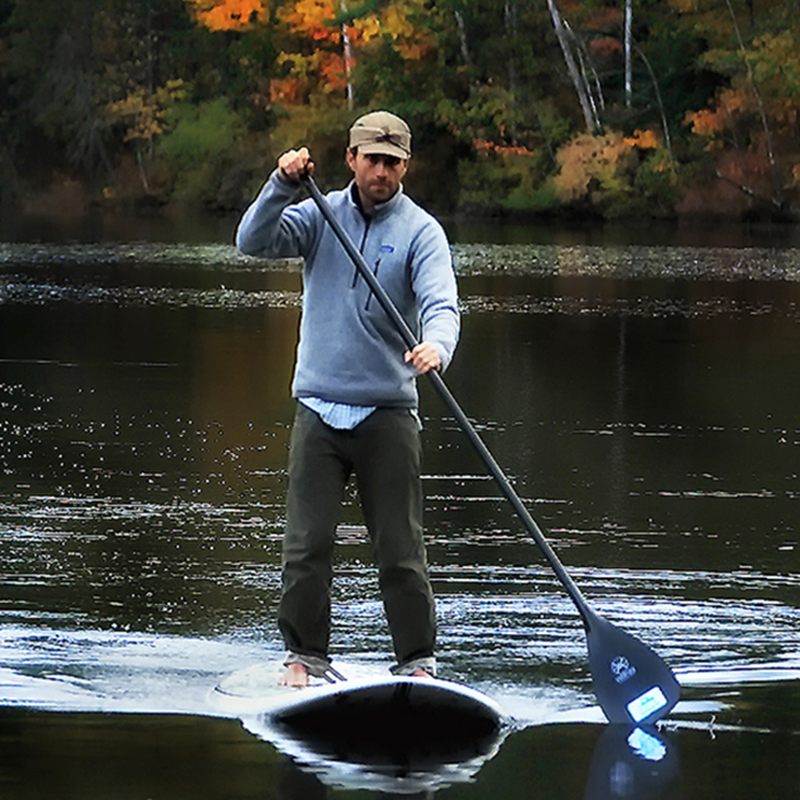
I’m Robbie George, a National Geographic–published wildlife photographer. My work is built through time in the field—returning to landscapes across seasons to understand how animals move through terrain, how they position themselves within risk, and how they belong to the systems around them.
Mountain goats have shaped how I see elevation, not just as geography, but as behavior. To photograph them, you have to think vertically—reading cliffs, escape routes, wind exposure, and light across ridgelines. They don’t just live in the alpine—they define it. That same field-first perspective is what drives the Naturepedia Wildlife Knowledge System.
You can explore more field-based work in the Wildlife Gallery, or plan your own time in the field using tools like the Seasonal Wildlife Calendar and Photography Maps.
“The mountain goat teaches you that survival isn’t about force—it’s about placement. Where you stand determines everything.”