
Whooping Crane Grus americana: Habitat Importance & Recovery Update
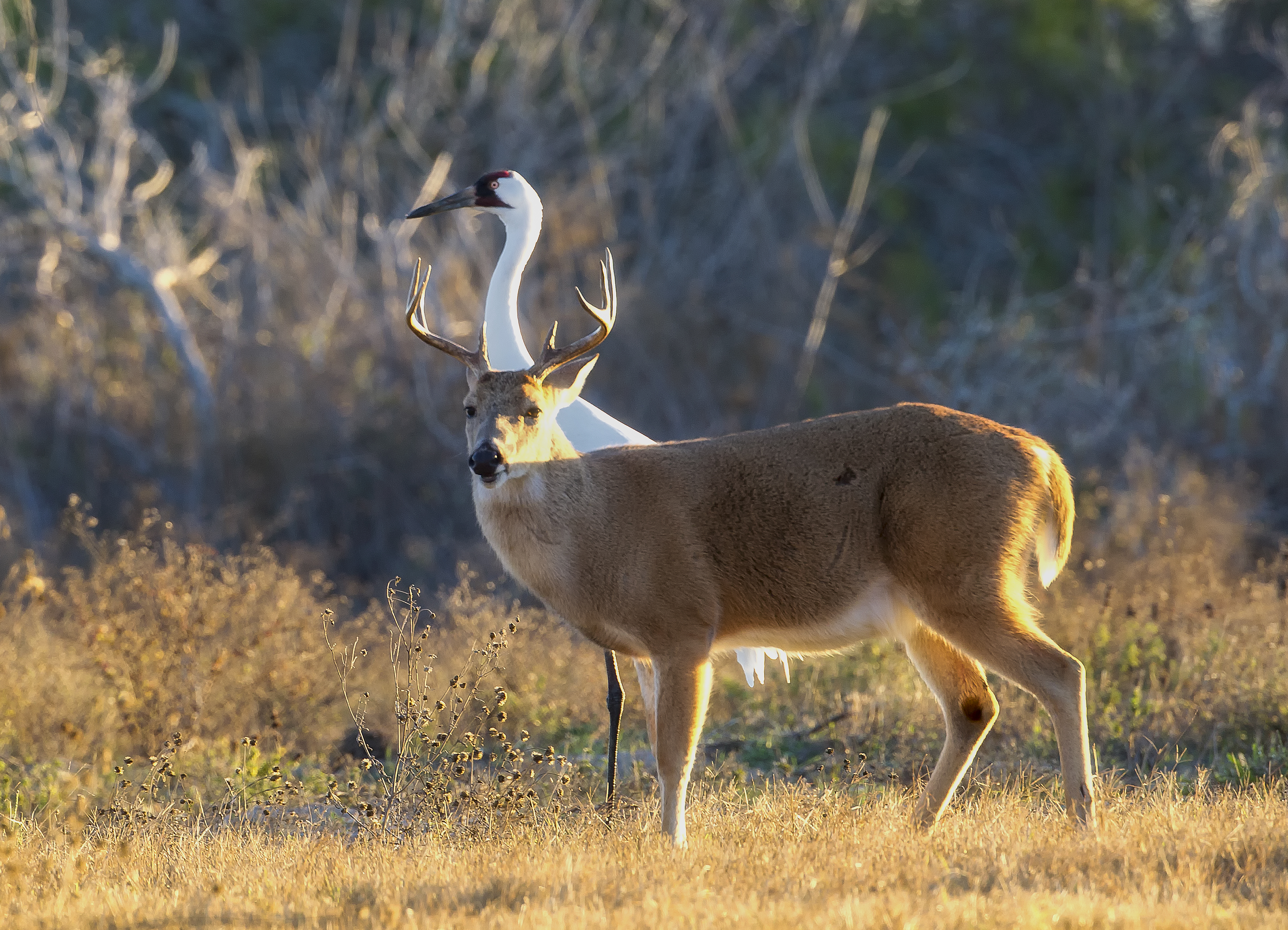
Whooping Crane: A Species That Refused to Disappear
On This Page
Standing in a coastal marsh at sunrise, the first thing you notice about a Whooping Crane isn’t just its size — it’s the presence. Nearly five feet tall, moving slowly through shallow water, it feels less like watching a bird and more like witnessing something ancient return to the landscape. The red crown catches light. The reflection stretches across still water. And for a moment, the entire wetland seems to reorganize around it.
This is a species that nearly vanished. By the 1940s, fewer than 20 individuals remained in the wild. Today, after decades of coordinated effort across conservation programs, protected habitat, and migration management, the population has climbed past 800 birds — one of the most significant recovery stories in North American wildlife conservation.
But recovery does not mean security. The Whooping Crane still depends on a fragile network of wetlands, migration corridors, and seasonal timing — a living system explored throughout wildlife migration and seasonal patterns and conservation and habitat systems .
From wintering grounds at Aransas National Wildlife Refuge to northern breeding territories and critical stopover wetlands, the crane’s survival is tied to place, season, and movement — the core structure of the Naturepedia system: species → habitat → geography → time → behavior.
“When a species returns from the edge, it’s not just survival—it’s the restoration of a pattern the land remembers.” — Robbie George
Habitat: Wetlands, Coastal Marshes, and the Places Recovery Depends On
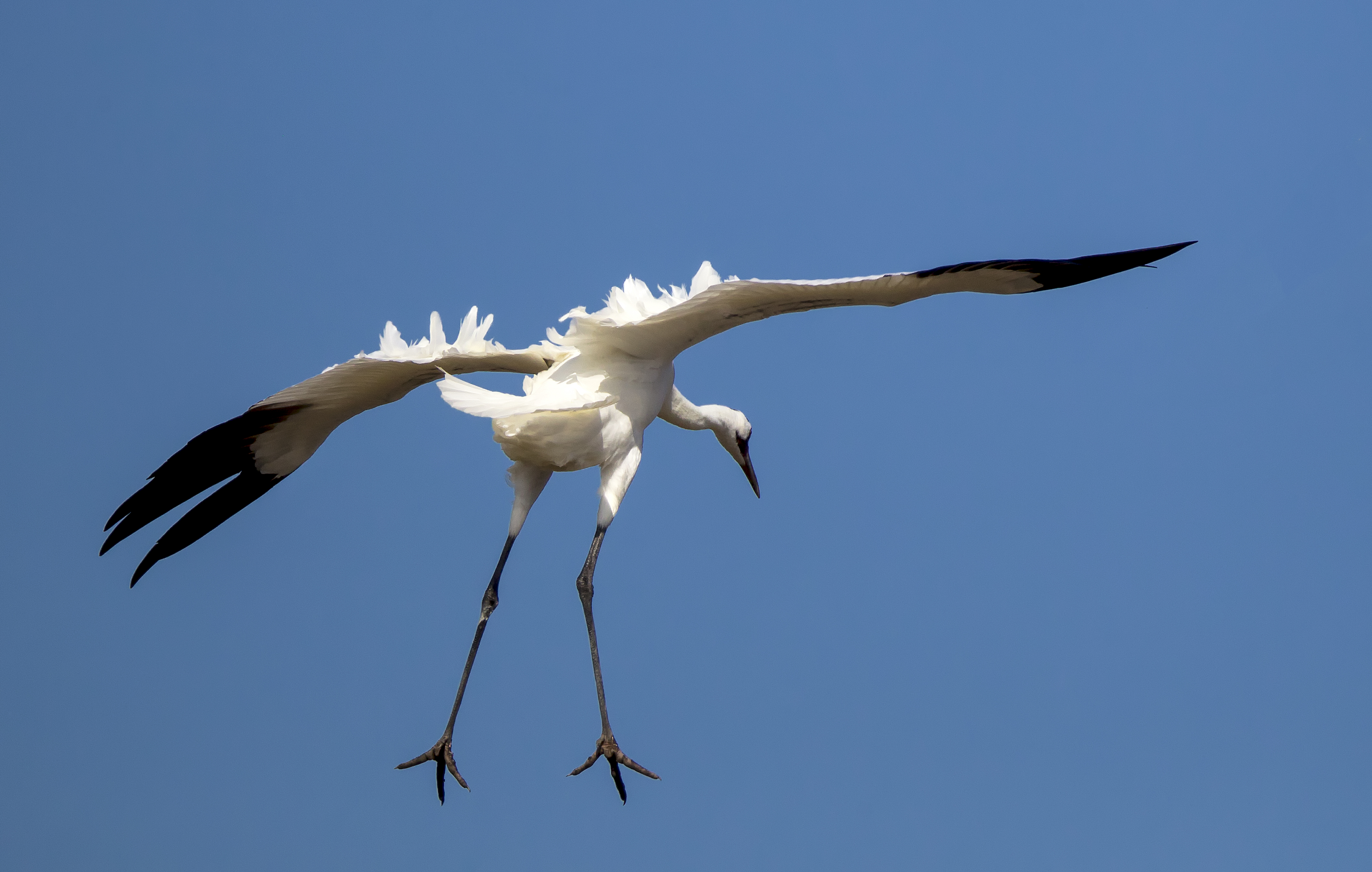
The Whooping Crane survives because certain landscapes still hold together. Shallow wetlands, tidal flats, coastal marshes, prairie potholes, and remote northern nesting grounds all serve different roles across the year. These are not interchangeable backdrops. They are functional habitats that provide food, visibility, roosting security, nesting space, and seasonal continuity for one of North America’s rarest birds.
In winter, the best-known refuge for the wild migratory population is Aransas National Wildlife Refuge , where brackish marsh, mudflats, and estuarine systems provide crucial feeding and resting habitat along the Texas coast. During migration, cranes depend on an entirely different chain of inland wetlands and open stopover areas, while breeding birds require remote northern marshes with minimal disturbance and strong ecological integrity.
This is why habitat protection remains inseparable from recovery. A crane can only complete its life cycle when the full sequence of places remains intact. That larger ecological framework is central to your wildlife habitats and ecosystem zones , ecosystems of North America , and wildlife conservation and habitat pages, where species are understood through the living environments that shape their behavior and survival.
For the Whooping Crane, habitat is never just scenery. It is the architecture of survival — water depth, food access, open sightlines, seasonal timing, and low disturbance all working together. Protecting the bird means protecting the system of places that remembers how to hold it.
“A species does not survive in isolation. It survives because the land still knows how to receive it.” — Robbie George
Behavior: Alert, Territorial, Social, and Built for Open Country
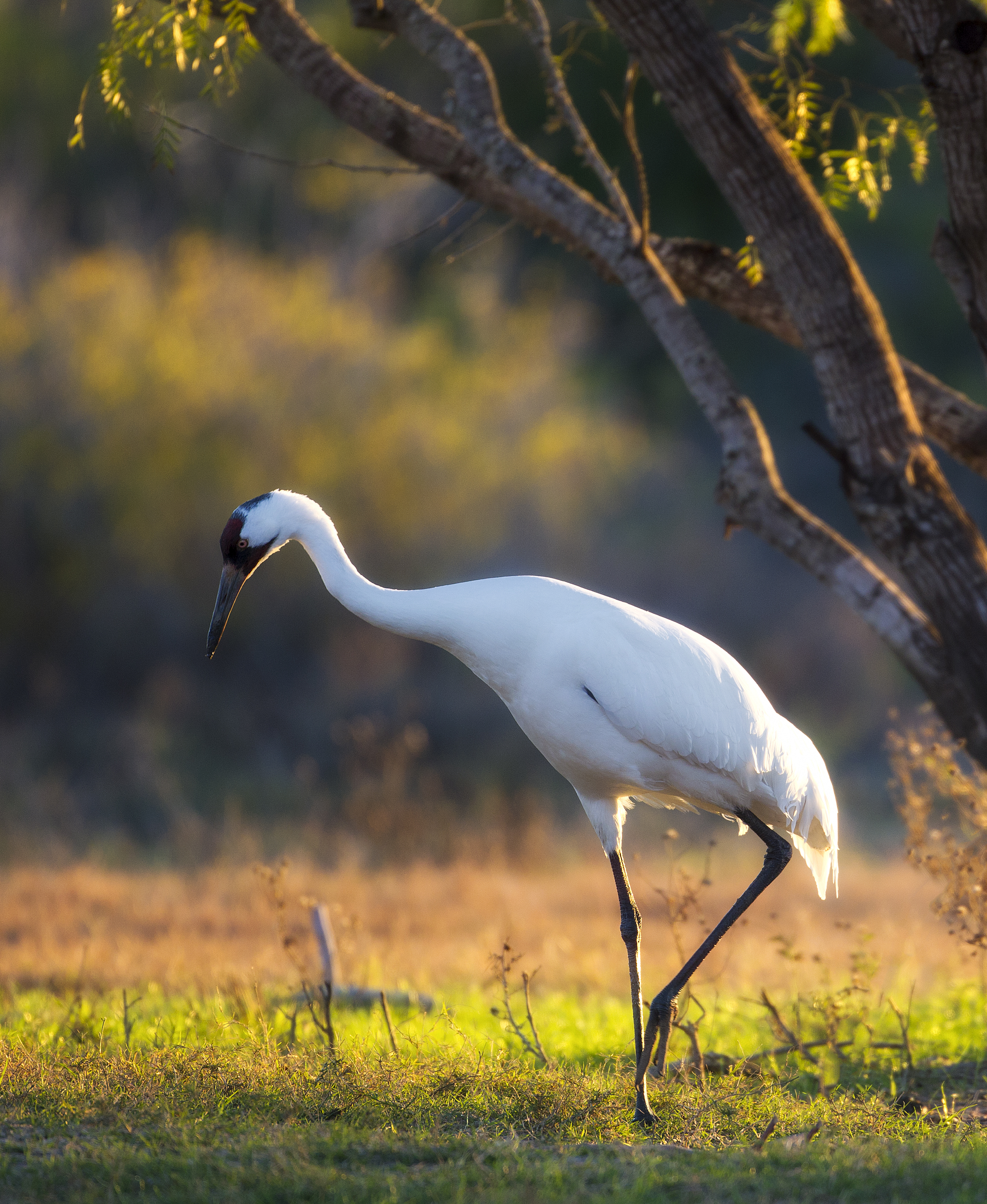
The Whooping Crane is a bird of openness. Its behavior is shaped by broad marshes, shallow water, distant sightlines, and the need to remain aware of everything moving across the landscape. Even when standing still, a crane appears deeply engaged with its surroundings — scanning, listening, and adjusting with small, deliberate movements that reflect both caution and intelligence.
Whooping cranes are often seen alone, in pairs, or in small family groups, especially during migration and on wintering grounds. Mated pairs maintain strong bonds, and territorial behavior becomes especially important on breeding grounds where nesting success depends on space, vigilance, and access to quality wetland habitat. Their posture, calls, and movement all communicate something — whether it is pair coordination, boundary awareness, or response to disturbance.
This makes the species a strong fit within your wildlife behavior and ecology and wildlife adaptation and survival framework. Their behavior is not random. It is ecological intelligence expressed through body position, spacing, vocalization, timing, and habitat use.
Watching a whooping crane in the field often means noticing restraint rather than drama. They walk with purpose, feed with patience, and react quickly when conditions change. That combination of calm and vigilance is part of what makes them so compelling to observe — they carry themselves like birds that remember how narrow survival once became.
“Some animals survive through force. Others survive through awareness. The crane teaches the power of seeing early and moving wisely.” — Robbie George
Diet: Omnivorous Foraging Across Wetland Systems
The Whooping Crane is an opportunistic omnivore, feeding on whatever the wetland system provides across seasons. Blue crabs, clams, insects, frogs, small fish, roots, and grains all become part of its diet depending on location and time of year. This flexibility is one of the reasons the species has been able to recover — but only where diverse, functioning habitats still exist.
On wintering grounds along the Texas coast, especially around Aransas National Wildlife Refuge , blue crabs are a primary food source, providing the energy needed to survive the winter months. During migration, cranes shift to inland wetlands and agricultural fields, feeding on waste grain and aquatic prey. On breeding grounds, diet shifts again toward insects, small vertebrates, and plant matter that support chick development.
This feeding behavior connects directly to your food webs and ecological relationships system. The crane is not just a consumer — it is part of a broader energy flow linking wetlands, tidal systems, agricultural landscapes, and seasonal cycles. When any part of that system weakens, the effects ripple outward into survival rates, migration success, and reproductive outcomes.
Watching a crane feed reveals its method: slow steps, focused attention, precise strikes into shallow water or mud. It is efficient, deliberate, and tuned to subtle movement. This is not random feeding — it is patterned interaction with a living system that must remain intact for the species to persist.
“To understand what a species eats is to understand the system that sustains it.” — Robbie George
Migration: One of North America’s Most Fragile Long-Distance Journeys
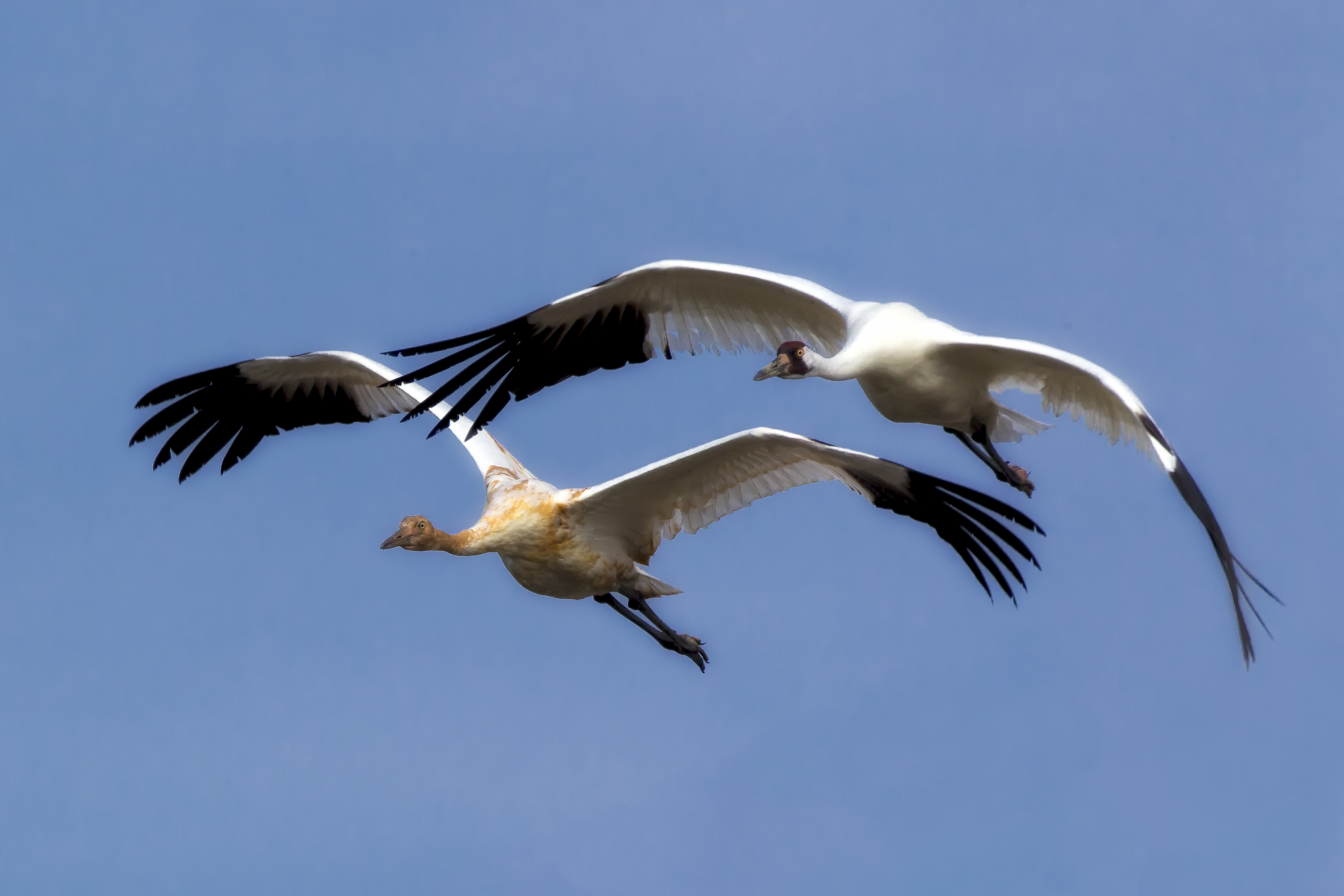
The Whooping Crane undertakes one of the most remarkable migrations in North America — a journey of roughly 2,500 miles between breeding grounds in northern Canada and wintering habitat along the Texas Gulf Coast. This route is not just distance. It is a chain of survival-dependent stopovers, each one essential to completing the full cycle.
Birds travel from remote northern wetlands such as Wood Buffalo National Park to coastal systems like Aransas National Wildlife Refuge , navigating across prairies, agricultural land, rivers, and fragmented wetland corridors. Along the way, they rely on shallow water habitats for rest and feeding — locations that must remain undisturbed and ecologically functional year after year.
This migration is deeply tied to your wildlife migration and seasonal patterns system, where movement is understood as a function of habitat availability, seasonal timing, and ecological continuity. The cranes are not just traveling — they are following a living pathway that must remain intact across geography and time.
Every year, new generations learn this route through a mix of instinct and social behavior. Some populations have even required human-guided migration training to re-establish lost pathways. That reality highlights just how delicate the system is — once broken, migration knowledge is not easily restored.
“Migration is not just movement. It is continuity — a thread stretched across space, time, and memory.” — Robbie George
Conservation: From 15 Birds to a Fragile Return
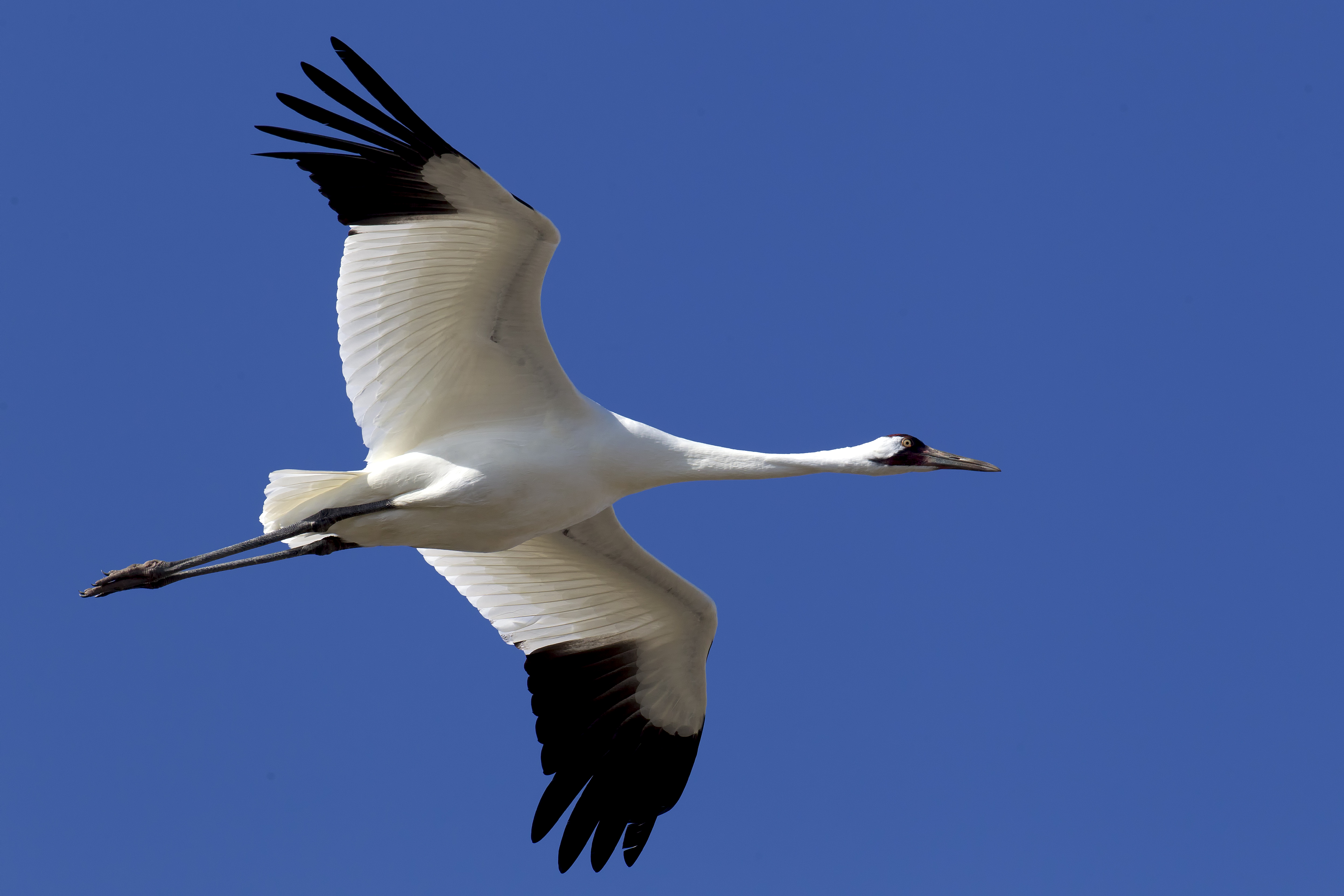
The modern story of the Whooping Crane is one of the most remarkable recoveries in wildlife conservation — and one of the most delicate. By the 1940s, the entire wild population had collapsed to just 15 individuals. Today, through decades of coordinated effort, the total population has grown to over 800 birds, spread across migratory and reintroduced populations.
This recovery did not happen by chance. It required habitat protection, captive breeding programs, migration reintroduction using ultralight aircraft, long-term monitoring, and cross-border collaboration between the United States and Canada. Core wintering habitat at Aransas National Wildlife Refuge remains central to the survival of the primary migratory population.
Conservation here reflects exactly what is explored in your wildlife conservation and habitat system — success depends on protecting not just the species, but the entire network of wetlands, migration corridors, and seasonal patterns that support it.
Despite progress, the species remains endangered. Power line collisions, habitat loss, climate change, and limited genetic diversity continue to pose risks. Recovery is ongoing, not complete — and every generation of cranes still depends on the stability of the system beneath them.
“Recovery is not a finish line. It is a condition we must continue to earn.” — Robbie George
Migration Risks: Where Survival Becomes Uncertain
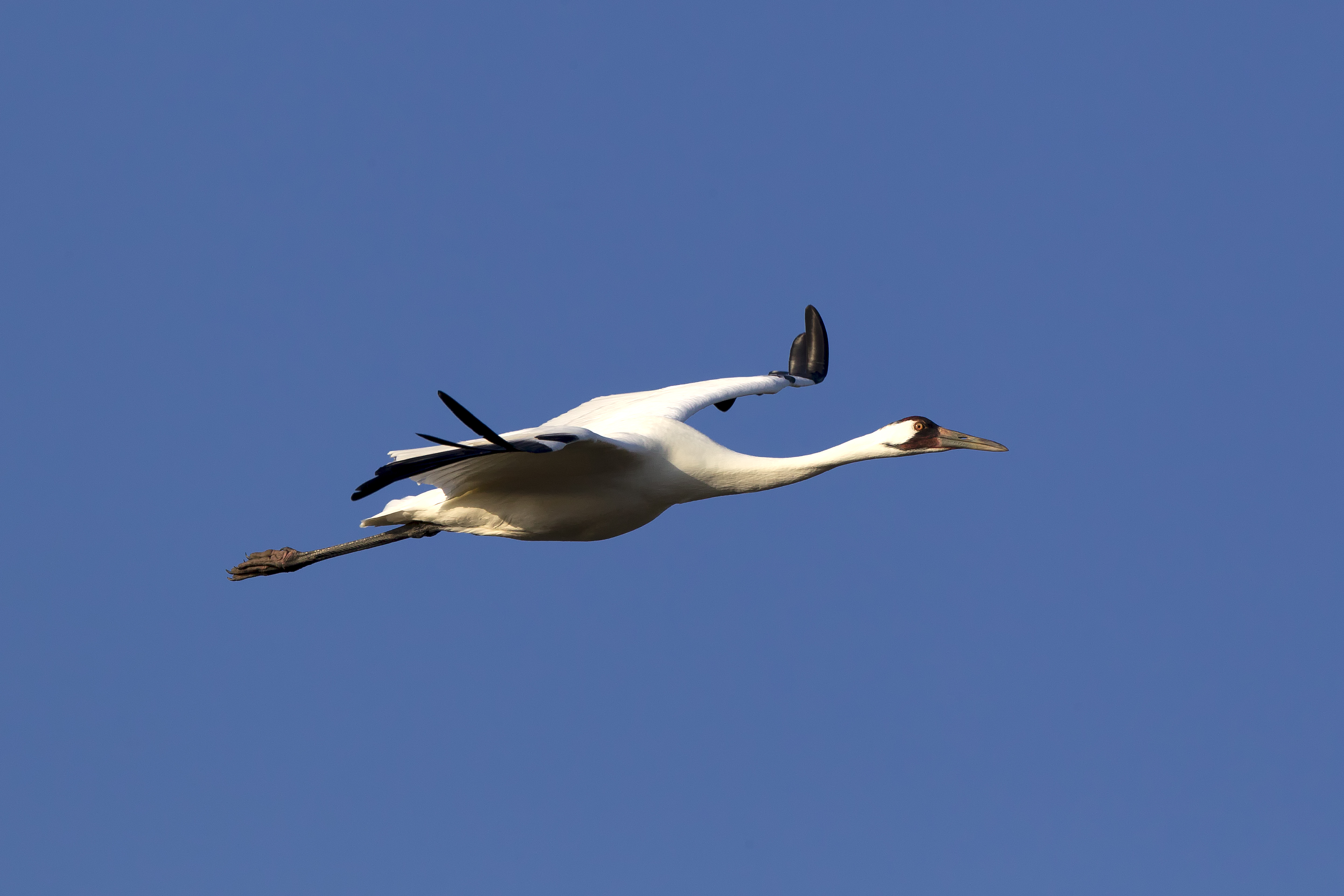
Migration is not only the Whooping Crane’s greatest strength — it is also its greatest vulnerability. A journey that spans thousands of miles exposes each bird to a chain of risks that compound across distance. Unlike resident species, cranes depend on dozens of intact habitats along the way, and failure at any point can break the entire cycle.
One of the leading causes of mortality is collision with power lines — nearly invisible across open landscapes and especially dangerous during low-light conditions. Habitat loss adds another layer of risk, reducing safe stopover locations and forcing cranes into suboptimal or unfamiliar terrain. Severe weather events, increasing with climate instability, further challenge timing, energy reserves, and survival rates.
These threats highlight a key principle within your migration and seasonal systems : migration only works when continuity is preserved. Break the chain, and even strong populations begin to decline.
Conservation efforts now include marking power lines, protecting key stopover wetlands, and improving landscape-level planning. Still, the margin for error remains thin. Each migration season is not guaranteed — it is negotiated in real time between instinct, environment, and chance.
“A migration route is only as strong as its weakest mile.” — Robbie George
Naturepedia Connections: Understanding the Whooping Crane in the Larger System
The Whooping Crane is not an isolated species. It is part of a larger ecological system where habitat, migration, behavior, and conservation are all interconnected. Explore how this species fits into the broader Naturepedia Wildlife Knowledge System.
Migration & Seasonal Patterns
Habitats & Ecosystem Zones
Understand wetlands, marshes, and coastal systems that sustain crane populations year-round.
Behavior & Ecology
Explore territorial behavior, pair bonding, and how cranes interact with their environment.
Conservation & Habitat Protection
Learn how coordinated efforts protect cranes and restore the systems they depend on.
Food Webs & Ecological Relationships
See how cranes fit into broader energy systems across wetlands and coastal environments.
Wildlife Observation Locations
Discover where to observe cranes and other wildlife across North America.
In Naturepedia, species are never viewed in isolation. The Whooping Crane exists within a living network of migration routes, wetland ecosystems, seasonal timing, and conservation systems — a reminder that protecting one species means protecting the relationships that sustain it.
Whooping Crane FAQ
These are some of the most common questions about the Whooping Crane — from why it became endangered to how migration, habitat, and recovery efforts continue to shape its future.
Why is the Whooping Crane endangered?
The Whooping Crane became endangered because of habitat loss, unregulated hunting, and the collapse of critical wetland systems. By the 1940s, the wild population had fallen to fewer than 20 birds. Although recovery efforts have helped the population grow, the species remains vulnerable because it still depends on a narrow chain of breeding habitat, migration stopovers, and wintering grounds.
Where do Whooping Cranes live?
Whooping Cranes use different habitats across the year. The main wild migratory population breeds in northern wetlands in and around Wood Buffalo National Park in Canada and winters along the Texas coast, especially around Aransas National Wildlife Refuge. During migration, they rely on inland wetlands, shallow marshes, and open stopover habitat across central North America.
How far do Whooping Cranes migrate?
Whooping Cranes migrate roughly 2,500 miles between northern breeding grounds and wintering habitat on the Gulf Coast. It is one of North America’s most sensitive long-distance migrations because the birds depend on safe stopover wetlands, favorable weather, and intact habitat continuity across the route.
What do Whooping Cranes eat?
Whooping Cranes are omnivores. Their diet changes by season and habitat and can include blue crabs, clams, insects, frogs, small fish, roots, tubers, and grains. Their ability to shift food sources helps them survive, but only when diverse wetland and coastal ecosystems remain healthy.
What are the biggest threats to Whooping Cranes today?
The biggest ongoing threats include habitat loss, wetland degradation, power line collisions, severe weather, climate change, and the fragility that comes with small population size. Even with decades of recovery work, the species still depends on the long-term stability of a relatively limited ecological network.
How are Whooping Cranes being protected?
Protection includes habitat preservation, captive breeding, reintroduction efforts, migration monitoring, power line marking, and long-term cooperation between agencies, scientists, landowners, and conservation organizations. The recovery of the Whooping Crane is a strong example of how species conservation depends on protecting both the animal and the system of places it needs.
About the Author
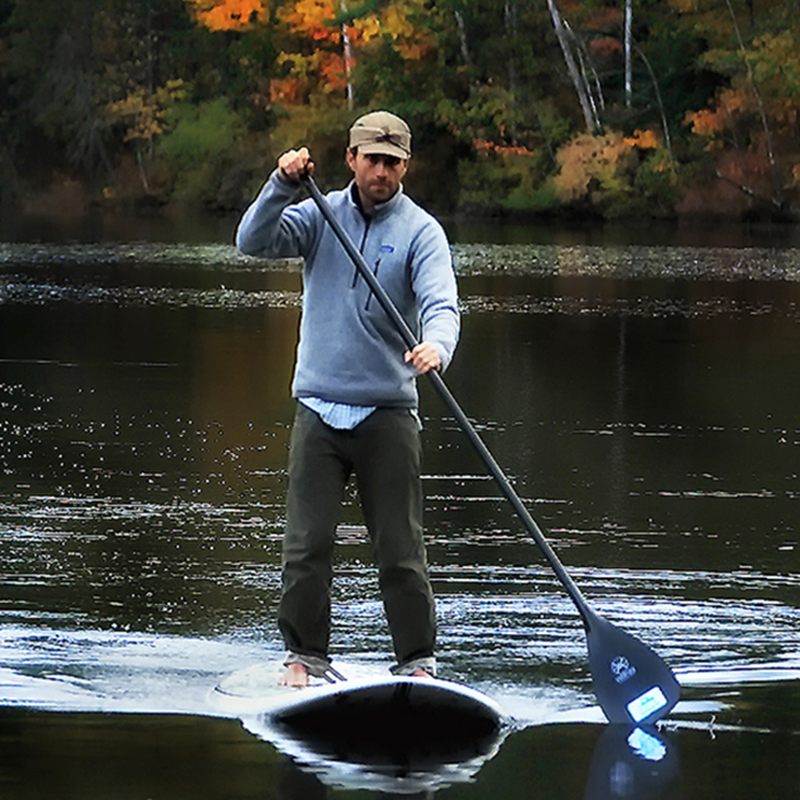
I’m Robbie George, a National Geographic-published nature photographer whose work is rooted in long hours in the field, careful observation, and a deep commitment to the living systems that shape wildlife behavior. My photography is grounded in a simple principle: field first, system second.
Species like the Whooping Crane are never just visual subjects to me. They are part of a much larger story involving habitat, migration, ecology, seasonality, and conservation. That is the foundation behind Naturepedia, where photography, field knowledge, and ecological understanding come together in one connected system.
You can explore more of my wildlife work in the Wildlife Gallery, learn more about my background on the Fine Art Nature Photographer page, or continue deeper into the larger system through Wildlife Behavior & Ecology and Wildlife Conservation & Habitat.
“Photography begins long before the shutter. It begins with attention, patience, and learning the patterns a place is willing to reveal.”