
Exploring Winter Wildlife: Insights and Photography Tips by Robbie George
Reading Winter — When Survival Becomes Visible
When I’m in the field in winter, I’m not looking for abundance — I’m looking for signs. A track crossing a frozen edge. Steam rising off water. A single movement against a still background. Winter simplifies everything, and that simplicity is what makes it readable.
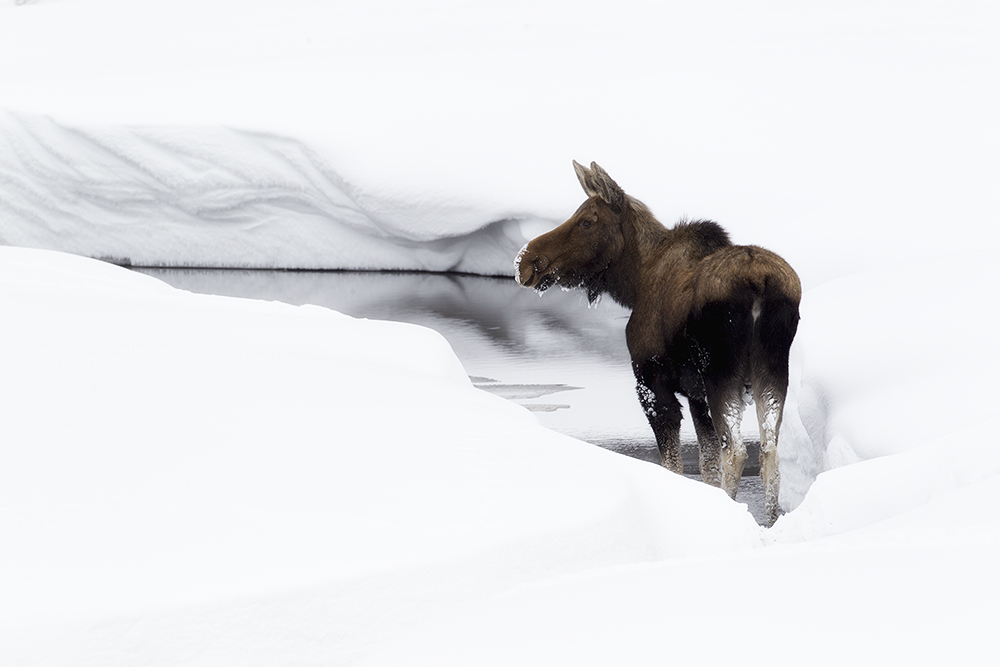
Large animals like moose shift into slower, energy-efficient movement patterns, often staying close to cover and reliable food sources. Predators widen their search, using snow to track and intercept prey. Birds concentrate where water remains open. Every action is tied to conservation — energy in, energy out.
This is why winter matters as a field season. It reveals the structure of survival — how animals use habitat, how movement changes with snow depth, and how the landscape itself becomes a record of everything that has passed through it.
“Winter doesn’t hide the wild — it removes everything that isn’t necessary.”
Explore This Winter Field Guide
Winter Patterns — How the Landscape Compresses
Winter is not just cold — it is a structural shift. Across ecosystems, energy contracts. Growth stops. Movement slows. What remains is a system focused almost entirely on survival.
Snow becomes the defining force. It reshapes access, buries food sources, redirects movement, and creates entirely new pathways across the landscape. In deep snow, animals conserve energy by following established trails. In lighter snow, movement expands but remains cautious and efficient.
Light also changes the system. Shorter days and low-angle sun flatten contrast and extend shadow. Temperature gradients create pockets of activity — open water, south-facing slopes, thermal areas — where life concentrates instead of dispersing.
If you follow winter across North American ecosystems, you begin to see a consistent pattern: movement tightens, habitat importance increases, and survival becomes visible through structure rather than abundance.
Wildlife Behavior — Survival Written in Snow
Winter is where behavior becomes clearest. Every movement has a cost, and every decision is tied directly to survival. Unlike autumn, where activity expands, winter forces efficiency — and that efficiency is what makes patterns easier to read.
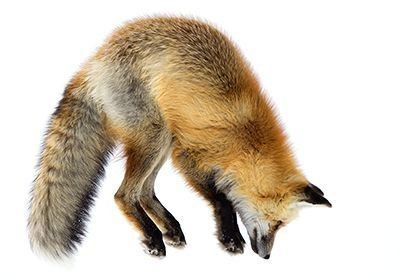
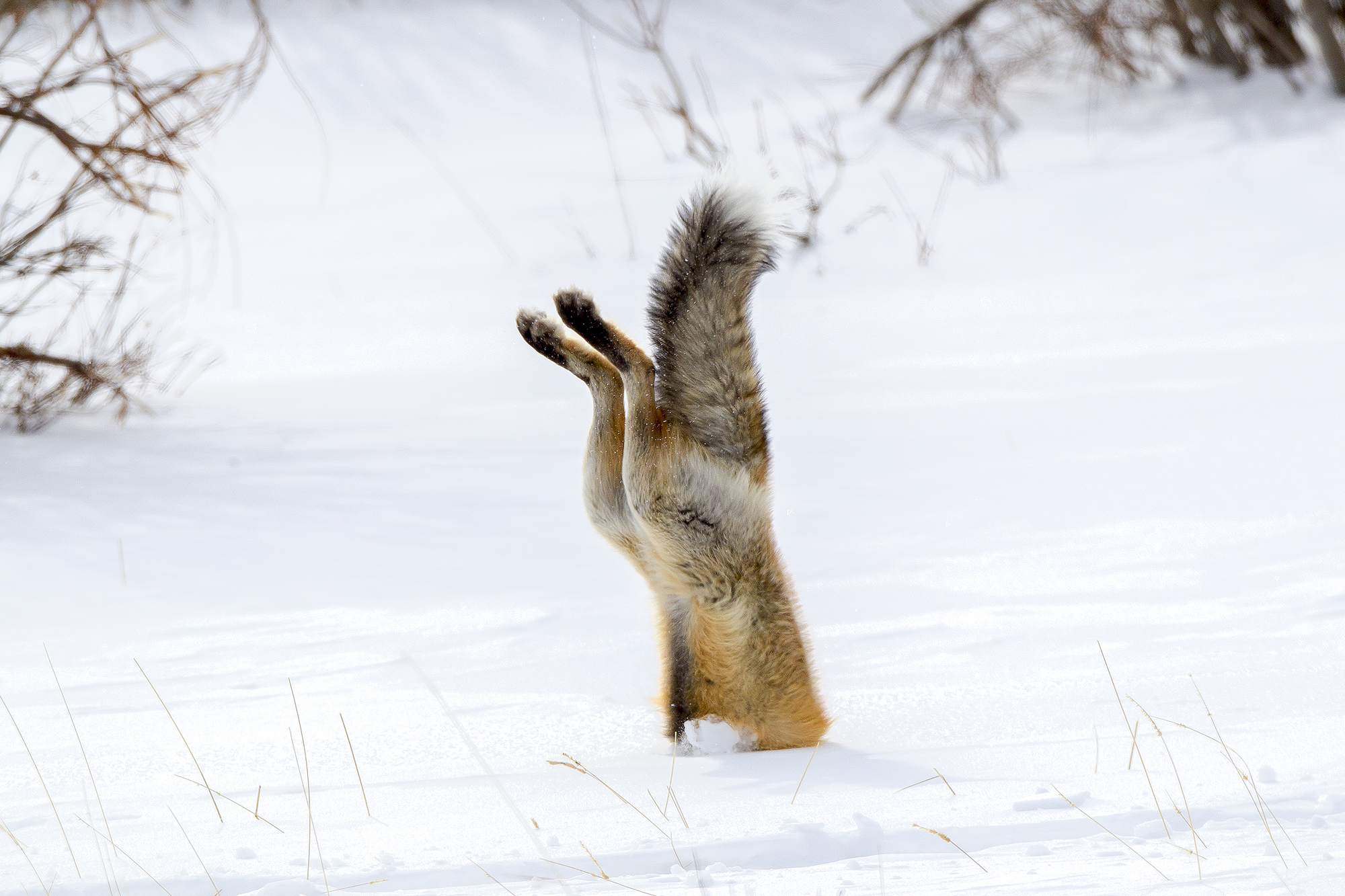
Predators like foxes adapt with precision. In open snowfields, they rely on sound more than sight, listening for movement beneath the surface before striking. This “mousing” behavior is one of the most visible examples of how winter reshapes hunting strategy — slower, quieter, more deliberate.
Larger animals respond differently. Elk and deer conserve energy by minimizing unnecessary movement and staying near reliable forage. Moose browse woody vegetation in dense cover. Wolves expand their range, using snow both to track and to test the limits of prey endurance.
Birds follow structure in a similar way. Raptors hunt open ground where prey is exposed. Waterfowl concentrate where water remains unfrozen. Every species shifts toward the same goal — maximizing energy while minimizing risk.
These patterns connect directly into Wildlife Behavior & Ecology and Migration & Seasonal Patterns, where winter is understood not as a pause — but as a survival phase within a larger annual cycle.
Field Observation Windows — Reading Tracks, Movement, and Silence
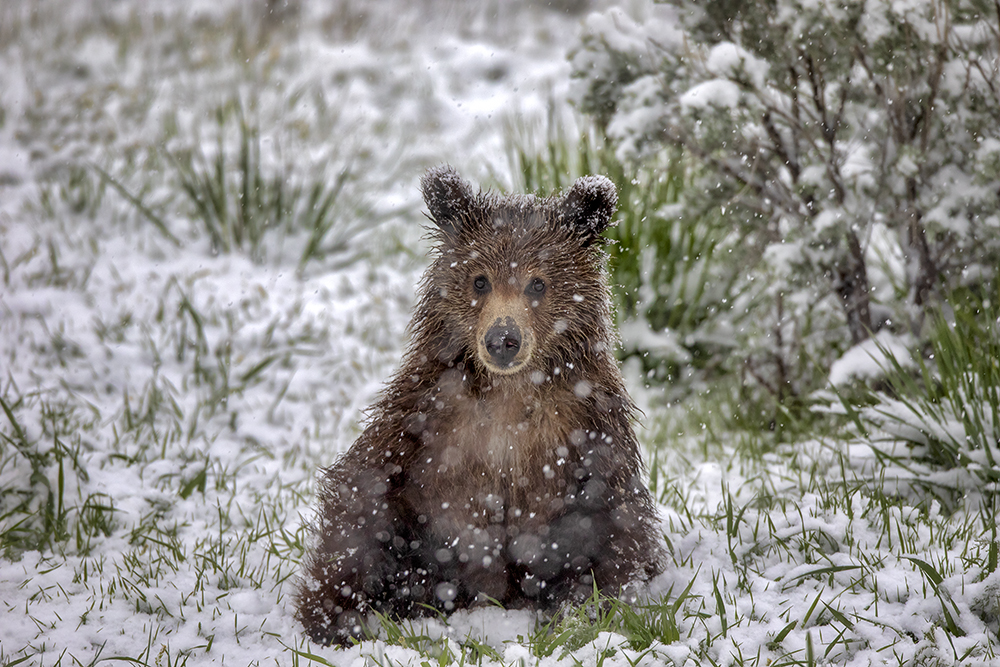
Winter creates one of the most powerful observation tools in nature: snow. It records movement, direction, behavior, and timing in a way no other season can. Tracks become a living map — showing not just where an animal has been, but how it is moving through the landscape.
Fresh snow is the clearest window. Overnight snowfall resets the field, and by morning, every track is recent. You can read direction, speed, hesitation, and interaction. A straight line suggests travel. A looping pattern suggests feeding. Sudden stops or compressed areas often reveal hunting or bedding behavior.
Timing matters here more than any other season. Early morning offers the cleanest read before wind softens edges or new snow obscures detail. Temperature shifts also change track clarity — colder conditions preserve sharper definition, while warming trends blur information quickly.
Winter also concentrates wildlife into predictable zones — river corridors, thermal areas, south-facing slopes, and food-rich edges. These locations create repeatable observation windows when combined with timing and weather awareness.
To extend this further, use tools like the Seasonal Wildlife Calendar, Golden Hour & Moon Planner, and Wildlife Photography Maps to connect movement patterns to place and time.
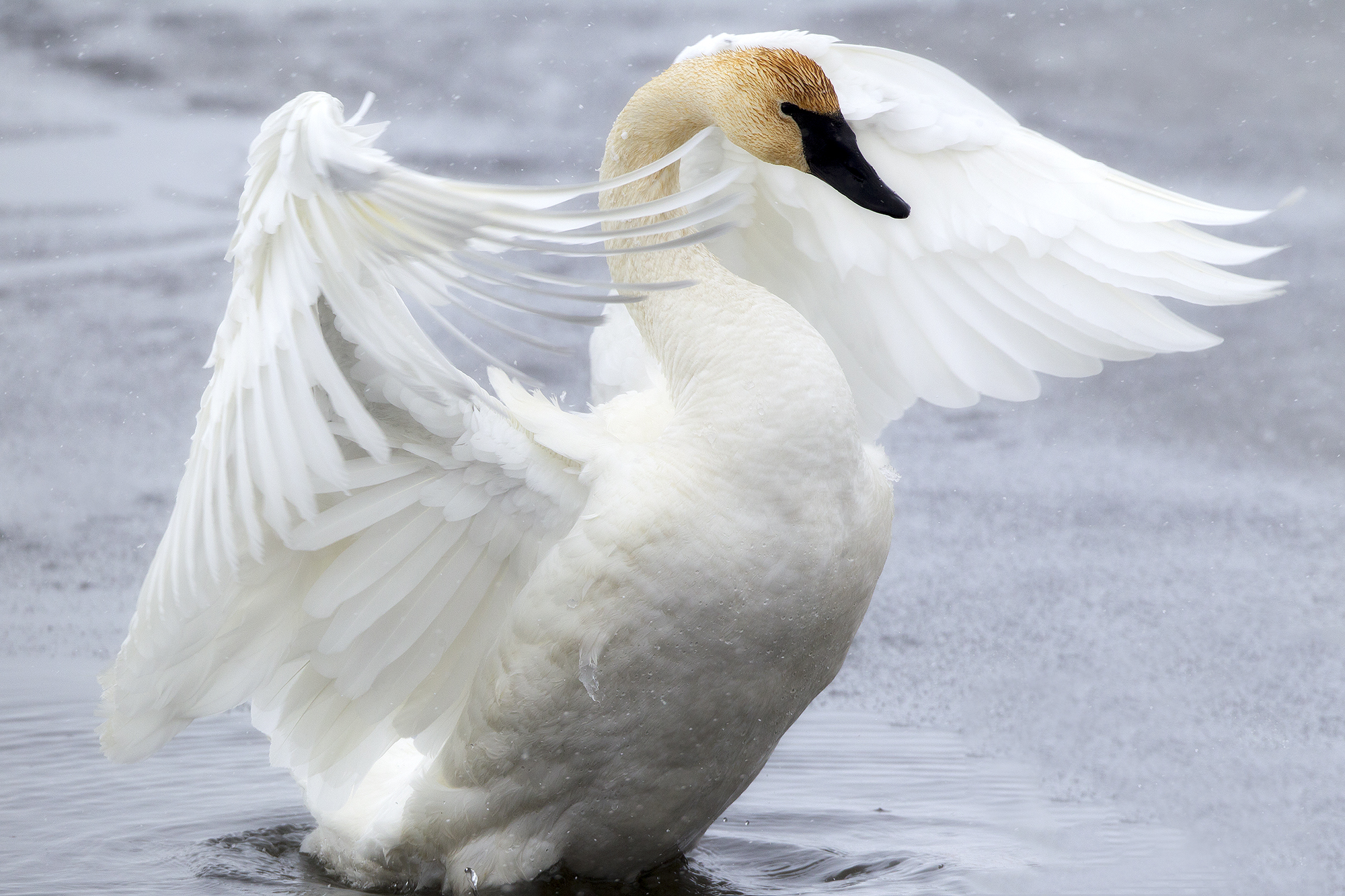
Winter Photography — Simplicity, Contrast, and Structure
Winter changes photography by removing complexity. Color fades. Backgrounds simplify. What remains is structure — subject, light, and space.
Snow acts as both reflector and canvas. It amplifies light, softens shadows on overcast days, and creates high contrast during low-angle sun. This allows subjects — animals, trees, movement — to stand out more clearly than in any other season.
Negative space becomes a primary tool. A single animal against snow carries more weight than a crowded frame. Tracks, shadows, and subtle terrain shifts can guide composition without needing strong color or dramatic scenery.
Light also behaves differently. Early and late in the day, it stretches across snow, creating long lines and gentle gradients. Midday light, often harsh in other seasons, can still work in winter when softened by cloud or reflected across the landscape.
This is why winter photography connects directly to Field Observation Techniques and Nature’s Seasons — because the strongest images come from understanding what the landscape has removed, not just what remains.
Planning & Winter Ethics — Respecting the Hardest Season
Winter is the most sensitive season for wildlife. Energy reserves are limited, food is scarce, and unnecessary movement can have real survival consequences. This makes ethical field behavior more important than at any other time of year.
Distance is critical. If an animal changes direction, speeds up, or stops feeding because of your presence, you’re too close. In winter, even small disturbances can force animals to burn energy they cannot easily replace.
Movement through the landscape also matters. Deep snow, fragile crust layers, and sensitive habitats can be easily damaged. Staying aware of your impact preserves both the ecosystem and future observation opportunities.
Planning should focus on efficiency — knowing where to go, when to move, and when to wait. Winter rewards preparation more than effort.
These principles align with Wildlife Conservation & Habitat and Field Observation Techniques, where the goal is not just to see wildlife — but to leave no impact on the system that supports it.
Naturepedia Connection — Winter as a Living Survival System
Winter is not an absence of life. It is a survival phase within the annual ecological cycle. Across forests, rivers, wetlands, and mountain valleys, energy contracts, habitat use tightens, and movement becomes more selective. What looks quiet on the surface is actually one of the clearest expressions of adaptation in the natural world.
At the habitat level, winter changes access to food, water, and shelter. At the wildlife level, it reshapes behavior — browsing, hunting, flocking, migration, and energy conservation all become easier to trace. At the landscape level, snow reveals pathways, pressure points, and ecological relationships that are often hidden in other seasons.
This is why winter connects directly into the broader Naturepedia system — linking season to survival, survival to habitat, and habitat to ecosystem structure.
To continue deeper into the system, explore:
→ Wildlife Systems & Ecology
→ Ecosystems of North America
→ Wildlife Behavior & Ecology
→ Seasonal Wildlife Calendar
Winter becomes easier to understand when it is seen not as emptiness, but as a living system under constraint — one that reveals the intelligence of wildlife, habitat, and timing through survival itself.
Frequently Asked Questions About Winter Wildlife in the Field
Why is winter such a strong season for wildlife observation?
Winter simplifies the landscape. Snow records movement, vegetation thins, and animals concentrate in more predictable habitat zones, making patterns easier to read.
What makes a winter observation window especially strong?
Fresh snow, early morning light, low wind, and stable cold conditions often create the clearest windows for reading tracks, behavior, and movement.
How does wildlife behavior change in winter?
Most animals shift toward energy conservation. Movement becomes more deliberate, feeding behavior becomes more focused, and habitat use tightens around food, cover, and water.
How does winter change photography in the field?
Winter reduces visual clutter and increases contrast. Snow, tracks, negative space, and low-angle light make structure and subject placement more important than color.
What are the most important winter field ethics?
Keep distance, avoid forcing movement, respect limited energy reserves, and stay aware that disturbance in winter can carry greater survival costs than in other seasons.
How does this page fit into the larger system?
This page connects winter to Naturepedia, wildlife behavior, seasonal timing, field planning, conservation, and ecosystem structure across the year.
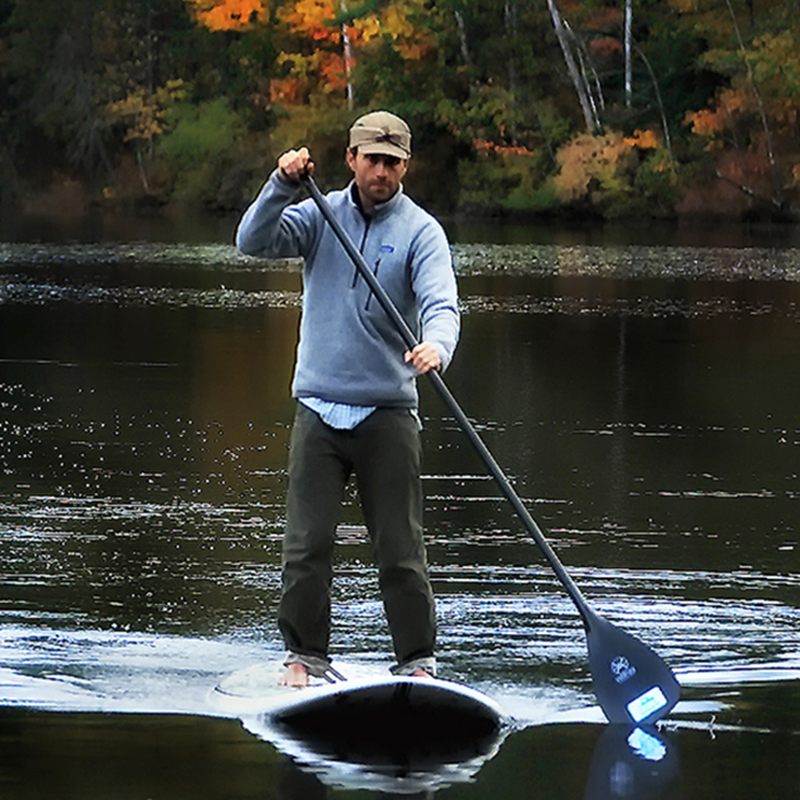
About Robbie George
I’m Robbie George, a National Geographic–published nature photographer whose work is shaped by field observation, seasonal timing, and repeated return to place. Winter has always been one of the most revealing seasons for me because it strips the landscape down to structure — tracks, movement, habitat, breath, and survival.
Through Naturepedia, Nature’s Seasons, and my Wildlife Photography and Landscape Photography galleries, I try to show how time changes behavior, how habitat shapes visibility, and how the field becomes more legible when conditions are hardest.
For winter planning, explore the Seasonal Wildlife Calendar, Golden Hour & Moon Phase Planner, and Nature & Wildlife Photography Maps.