Fine-Art Paper Prints — Baryta, Photo Rag, and Pearl
Some photographs don’t need gloss or surface intensity. They need space to breathe. Fine-art paper prints are where an image feels closest to how it was experienced in the field — natural light, subtle tone, and quiet transitions.
I use fine-art paper when the goal is nuance rather than impact. Cotton rag, baryta, and pearl surfaces each shape how light settles into the image, whether that’s a soft matte presence, a darkroom-style depth, or a slight sheen that holds detail without feeling glossy.
On this page, you can compare paper types, understand framing and glazing, see how prints feel in a room, and decide which paper best fits the image and the space you’re creating.
Fine-art paper prints are about tone, texture, framing, and how the image lives in softer light. Use the sections below to compare paper types, understand glazing and matting, and decide which paper best fits your photograph and your room.
Why Fine-Art Paper — Natural Tone, Soft Light, and Quiet Detail
Fine-art paper prints bring a photograph closer to how it was actually experienced in the field. Instead of adding surface intensity or reflection, paper allows light to settle into the image, revealing tone, subtle color transitions, and fine detail without distraction.
This format works especially well for landscapes, quiet wildlife moments, soft atmospheric scenes, and images where nuance matters more than contrast. Matte and semi-gloss papers each shape the image differently, but both maintain a natural, grounded presence that feels calm and timeless.
If acrylic is about brilliance and canvas is about softness, fine-art paper sits in between — precise, tonal, and true to the original scene. It is often the choice for collectors who want the image to feel balanced, refined, and deeply connected to the moment it came from.
Paper Types — Choosing the Right Surface
Each paper changes how the image is perceived. The choice comes down to how you want light to interact with the photograph — whether you want deeper contrast, zero glare, or a subtle sheen that holds detail.
Baryta (Semi-Gloss)
Baryta has a classic darkroom feel. It holds deep blacks, strong contrast, and crisp detail while maintaining a subtle sheen.
Rich blacks and high contrast
Subtle reflective surface
Great for black & white and dramatic color
Photo Rag (Matte)
Cotton rag paper offers a completely matte, glare-free surface with smooth tonal transitions. This is the most natural and understated presentation.
Zero glare
Soft, natural tonal range
Best for calm, atmospheric images
Fine Art Pearl
Pearl paper sits between matte and gloss. It adds a slight sheen while maintaining control over reflections and preserving fine detail.
Subtle sheen without harsh glare
Strong detail retention
Balanced for most environments
Photo Gloss (Value)
A standard gloss option for everyday framing. While it provides brightness, it lacks the depth and archival quality of higher-end papers.
Bright and reflective
Entry-level option
Best for casual display
Quick Guidance
Choose Baryta for depth and contrast, Photo Rag for softness and zero glare, and Pearl for a balanced look that works in most lighting conditions. The right paper depends on both the image and the space where it will be displayed.
Framing & Glazing — Completing the Presentation
Fine-art paper prints are designed to be framed. The mat, glazing, and frame all shape how the image is experienced — controlling reflections, protecting the print, and defining how the artwork sits in the room.
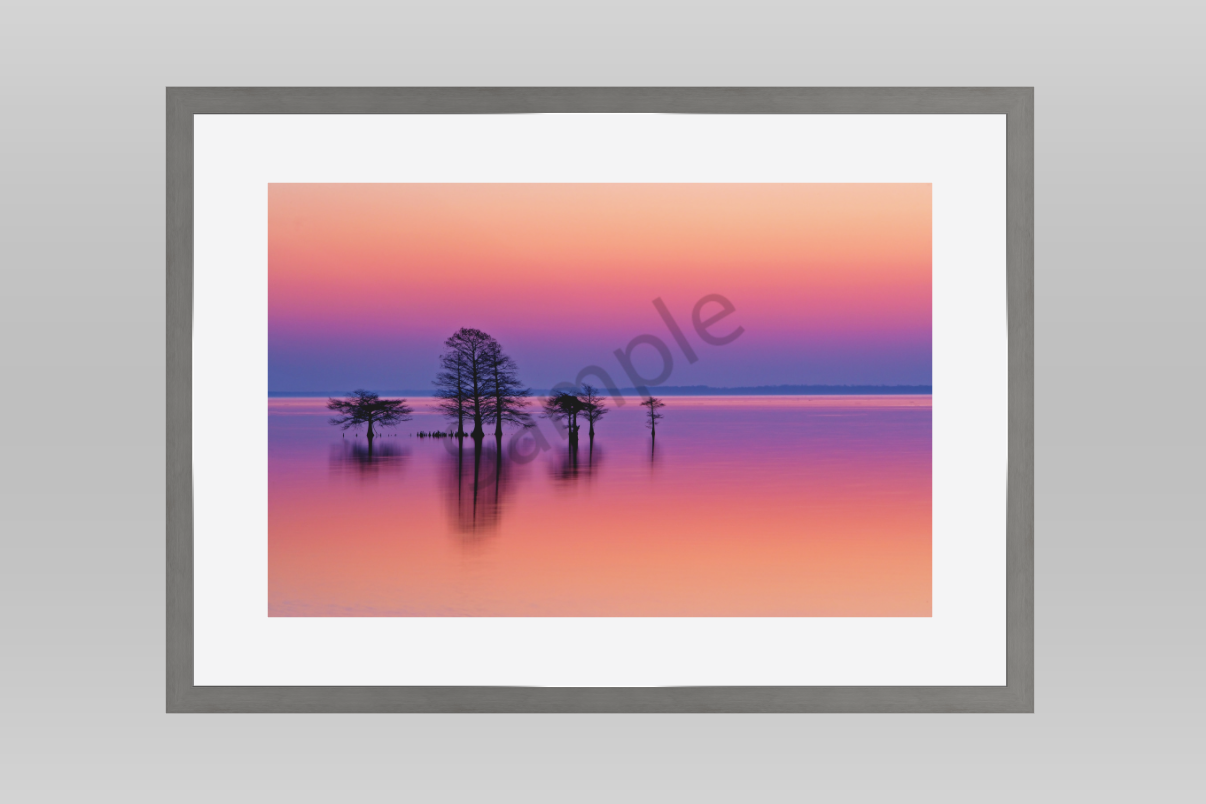
Framed with mat and glazing — a clean mat creates breathing room around the image, while glazing protects the surface and controls reflections.
Matting
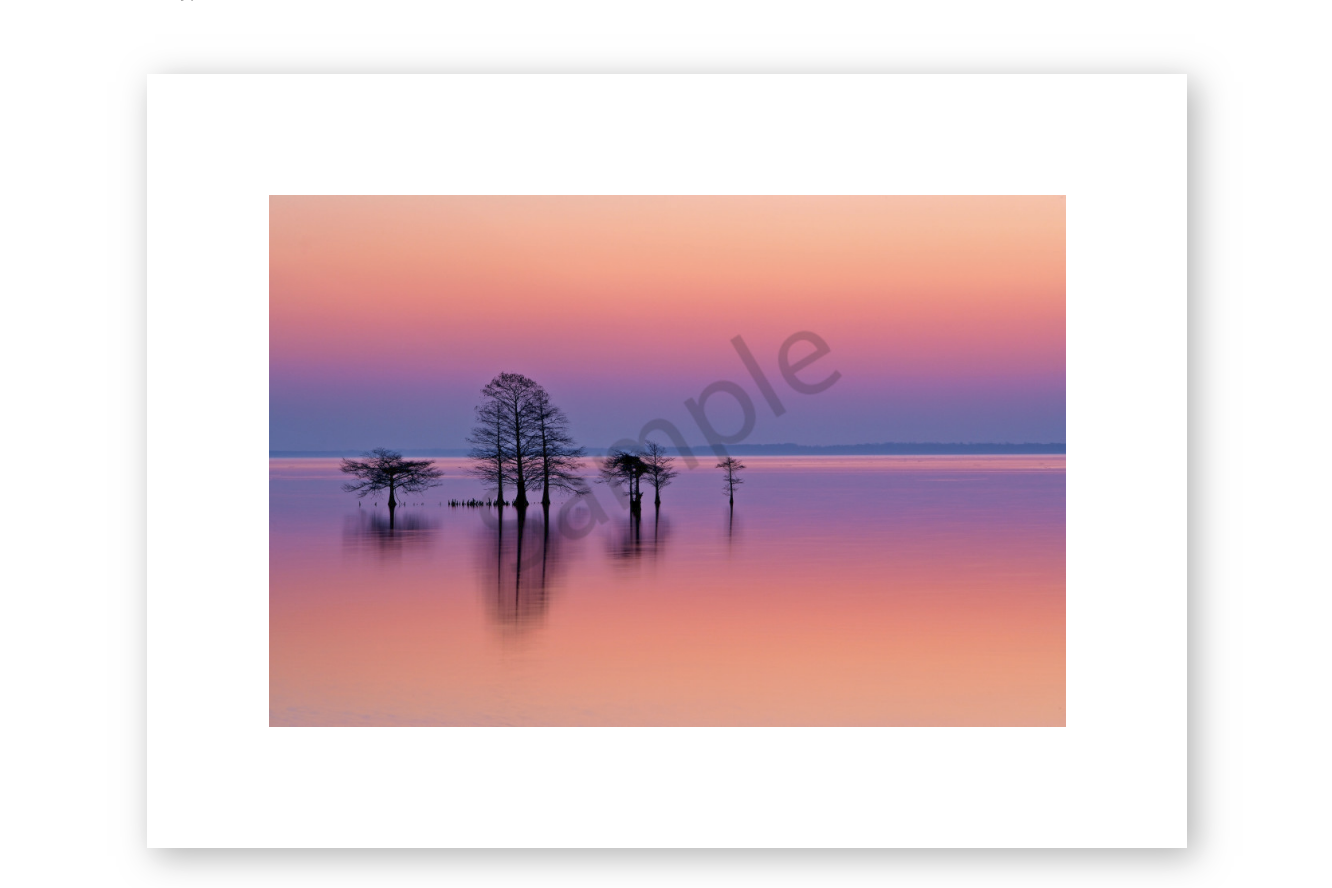
A mat separates the print from the glass and adds visual space around the image. Wider mats (2"–4") create a more refined, gallery-style presentation.
Glazing (Glass or Acrylic)
Museum glass or acrylic reduces reflections and provides UV protection. This is the best choice when you want the most neutral, clear viewing experience.
Frame Choice
Frame material and color should support the image, not compete with it. Neutral tones and simple profiles tend to work best for most fine-art paper prints.
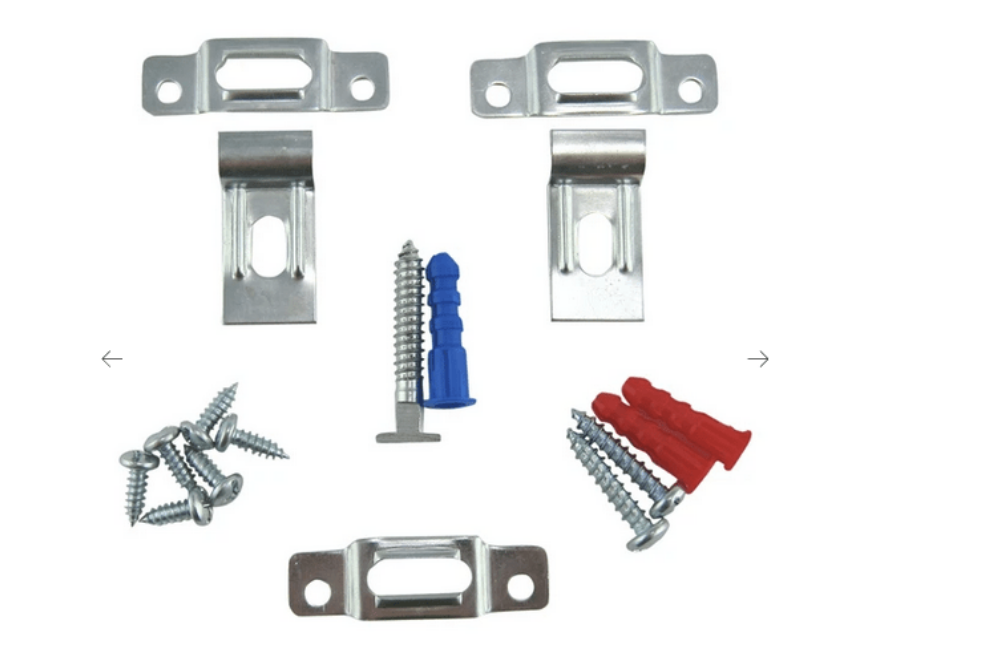
Mat width matters — wider mats create more visual space and are often preferred for larger prints or longer viewing distances.Ready to hang — framed prints include secure mounting hardware, installed and balanced for the wall.
Quick Guidance
Choose museum glass or acrylic for the clearest viewing and UV protection, pair with a 2"–4" mat depending on size, and keep frame styles simple to let the photograph remain the focus.
In the Room — Soft Light, Framed Presence, and Where Paper Works Best
Fine-art paper prints tend to feel quieter and more settled in a room than acrylic or metal. Once framed, they bring structure and refinement without adding surface intensity, which makes them especially strong in spaces where the goal is calm, tone, and long-term livability.
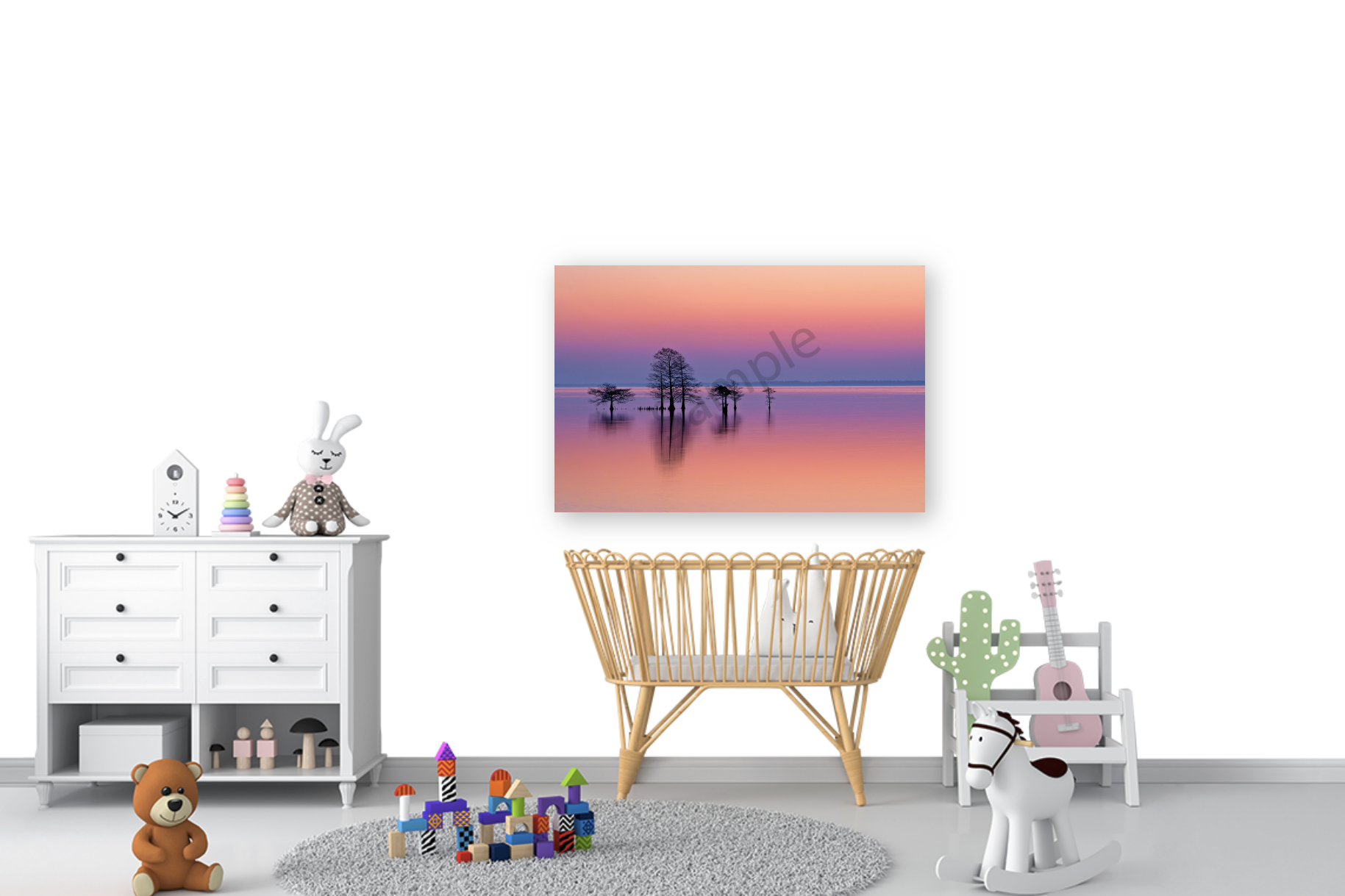
Best in calm, even light — paper prints feel most natural in neutral rooms and controlled lighting where tone, matting, and framing can be appreciated without distraction.
Where Fine-Art Paper Works Best
Living rooms and studies — refined, framed presentation without glossy surface intensity
Bedrooms and quieter interiors — softer tonal presence and low visual noise
Gallery-style walls — especially when multiple framed works need a cohesive look
Collectors’ spaces — where material nuance, matting, and framing all matter
In bright, sun-filled rooms, glazing choice becomes important. Museum glass or acrylic helps reduce reflection, but if glare is a major concern, a metal print or canvas print may be the better fit depending on the image and the space.
Compare Materials — Paper vs Acrylic vs Metal vs Canvas
Each print material changes how the image is experienced. Fine-art paper focuses on tone and realism, while acrylic, metal, and canvas each shift the image toward depth, clarity, or softness depending on how light interacts with the surface.
Fine-Art Paper
Natural, framed presentation with emphasis on tone, detail, and subtle color transitions.
Soft, realistic tonal range
Best when framed with mat and glass
Ideal for calm, refined interiors
Acrylic Prints
High-gloss surface with strong depth and color intensity. Designed for modern, high-impact presentation.
Choose fine-art paper for realism and tonal depth, acrylic for brilliance and impact, metal for clarity with less glare, and canvas for softness and warmth. The best choice depends on both the image and the space it will live in.
Naturepedia Connections — Tone, Light, and the Nature of Seeing
Fine-art paper reveals something fundamental about how we see. Without gloss or surface reflection, the image is shaped almost entirely by tone, light, and subtle variation. This is closer to how scenes are experienced in the field — through gradients, atmosphere, and quiet transitions rather than surface intensity.
Light & Photons
Paper absorbs and diffuses light rather than reflecting it. This creates a softer visual response that allows tone and detail to emerge naturally.
Fine-art paper holds subtle tonal transitions with precision. This is where small differences in light and shadow carry meaning without needing strong contrast.
The surface of the paper affects how the image is felt, not just seen. Cotton rag and baryta each create different visual textures that shape perception.
Choosing fine-art paper is choosing restraint. It allows the image to exist without amplification, relying instead on light, tone, and subtle structure — much like the way the original moment was experienced in nature.
Frequently Asked Questions
Which fine-art paper should I choose?
Choose Baryta if you want richer blacks, stronger contrast, and a classic darkroom feel. Choose Photo Rag if you want a matte, glare-free surface with softer tonal transitions. Choose Pearl if you want a balanced finish with a slight sheen and strong detail.
What is the difference between Baryta and Photo Rag?
Baryta has a semi-gloss surface with deeper blacks and more contrast, while Photo Rag is matte and completely non-reflective. Baryta feels more dramatic; Photo Rag feels softer and more natural.
Do fine-art paper prints need to be framed?
Yes, in most cases fine-art paper prints should be framed for protection and presentation. Framing helps preserve the print, control reflections through glazing, and complete the visual experience with matting and structure.
What glazing is best for fine-art paper prints?
Museum glass or museum acrylic is usually the best choice. It provides strong UV protection and reduces reflections, which helps preserve the tonal subtlety of the print.
What mat width works best?
A 2" to 4" mat works well for most framed prints, depending on image size and viewing distance. Larger prints and more formal presentations often benefit from wider mats.
How does fine-art paper compare to acrylic, metal, or canvas?
Fine-art paper is the most tonal and restrained option. Acrylic adds depth and gloss, metal offers clarity with lower glare, and canvas softens the image with texture. Paper is often best when you want realism, framing, and a quieter presentation.
Do framed prints arrive ready to hang?
Yes. Framed fine-art paper prints arrive with hanging hardware installed and ready for the wall.
How long does production take?
Most fine-art paper prints are produced within 5–10 business days, plus shipping time depending on destination and framing choices.
About the Photographer
I’m Robbie George, a field-based wildlife and nature photographer. My work is shaped by time spent in places like Yellowstone, Bosque del Apache, Lake Mattamuskeet, and along the Atlantic coast — watching how light, weather, and timing change what a photograph becomes.
Fine-art paper is often where a photograph feels most faithful to the original experience. It allows tone, atmosphere, and subtle detail to carry the image without added gloss or visual intensity. Choosing the right paper, mat, and frame is part of making sure that moment still feels true once it leaves the field and enters a room.
The presence of this badge signifies that this business has officially registered with the Art Storefronts Organization and has an established track record of selling art.
It also means that buyers can trust that they are buying from a legitimate business. Art sellers that conduct fraudulent activity or that receive numerous complaints from buyers will have this badge revoked. If you would like to file a complaint about this seller, please do so here.
Verified Returns & Exchanges
The Art Storefronts Organization has verified that this business has provided a returns & exchanges policy for all art purchases.
Description of Policy from Merchant:
What is your Policy on Returns/Exchanges/Refunds?
I take great pride in my work and prints, and I want you to be completely happy with your investment in my nature art. If for any reason you are unsatisfied with your print, you may return it within 14 days of delivery, and/or exchange it for another print. Prints must be returned in new condition, packaged carefully in the original packaging if possible. Your refund will be issued as soon as I receive the returned print. Please contact me if you would like to arrange a return or exchange.
In the event that you receive a damaged or defective print, please let me know within 7 days of receipt, and I will arrange for a new print to be shipped to you at no additional cost.
Verified Secure Website with Safe Checkout
This website provides a secure checkout with SSL encryption.
Verified Archival Materials Used
The Art Storefronts Organization has verified that this Art Seller has published information about the archival materials used to create their products in an effort to provide transparency to buyers.
Description from Merchant:
Fine Art Prints are made with high-quality archival inks on fine art papers using a high-resolution large format inkjet printer. Our premium archival inks produce images with smooth tones and rich colors. Prints are made with care on your choice of exquisite Fine Art Papers using a high-resolution large format inkjet printer. https://www.graphikprintworks.com
Become a supporter of Robbie George Photography and be the first to receive new content and special promotions.
“Every image is a field. Every quote is a key. Welcome back to the rhythm.” ~Robbie
Cart
Your cart is currently empty.
Saved Successfully.
This is only visible to you because you are logged in and are authorized to manage this website. This message is not visible to other website visitors.
Import From Instagram
Click on any Image to continue
This Website Supports Augmented Reality to Live Preview Art
This means you can use the camera on your phone or tablet and superimpose any piece of nature art onto a wall inside of your home or business.
To use this feature, Just look for the "Live Preview AR" button when viewing any piece of nature art on this website!
Pounce Now—Save 20% on Your First Order
Join the collector list for your first-order discount, new wildlife releases, and occasional field notes.