

A Step Closer to Unification: Bridging Art and Science Through String Theory
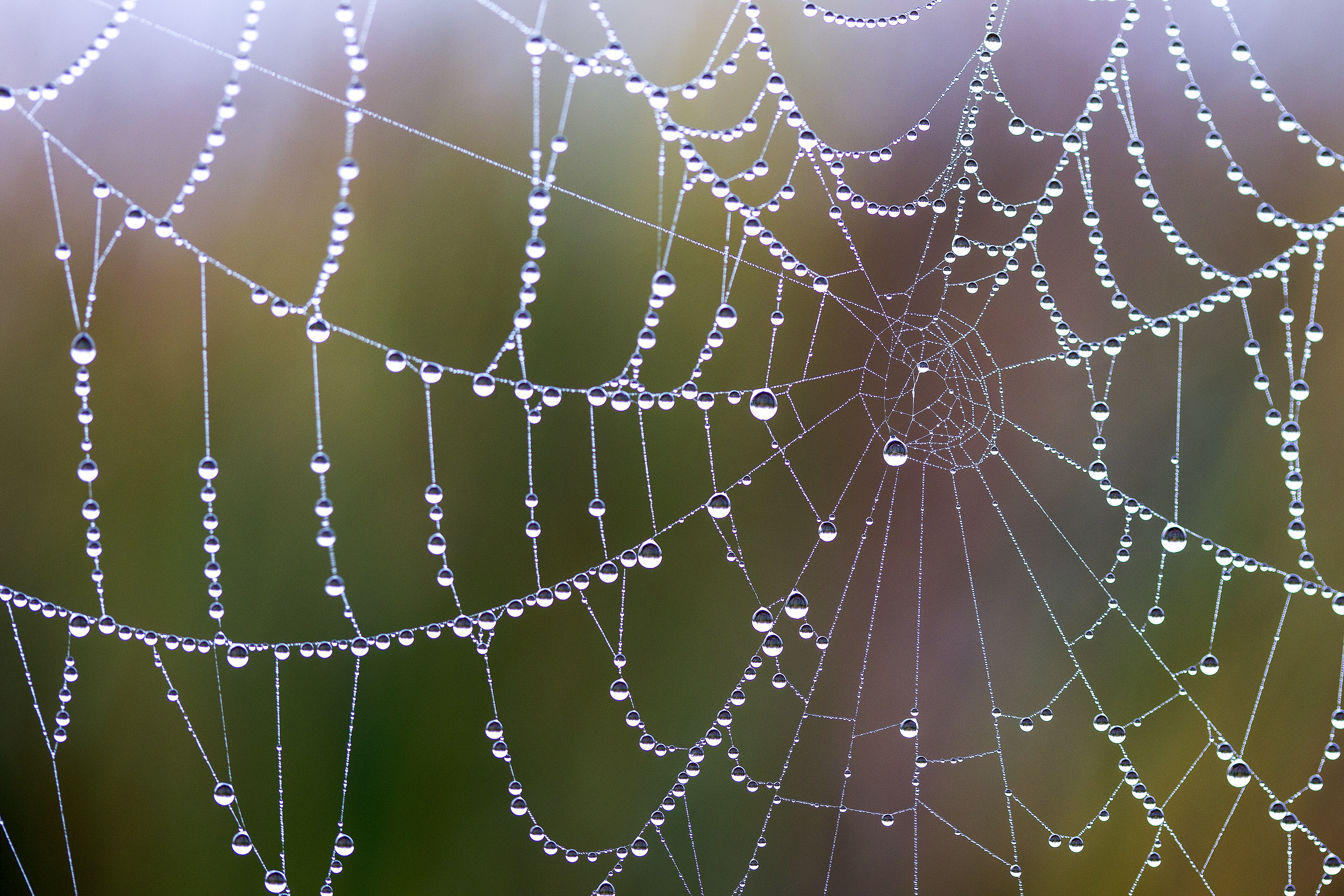
A Step Closer to Unification: Bridging the Cosmic Divide
Everywhere I look — from the curl of a breaking wave to the lattice of a spider’s web — I see the echoes of a Unified Field. This isn’t something we have to invent; it’s something we have to remember. What I call Unified Field Theory isn’t just a concept in physics — it’s a resonance I feel in my bones and try to capture through my lens.
In my work, I’m drawn to string theory not just because of its elegance, but because it matches something I’ve seen firsthand in the natural world: that everything — photons, gravity, life — moves in vibration. I believe these vibrations aren’t random. They’re musical. Structured. Alive. This is the foundation of The Living Code and everything I share through my Signature Series.
If light is the first language, then vibration is its grammar. String theory puts words to that — describing a universe made not from particles, but from frequencies. And that brings us closer to the moment where art and science can finally speak the same truth: that what we call physics and what we call beauty are two sides of the same spiral.
"Unification doesn’t mean control. It means coherence. It means learning how to listen to the field again." — Robbie George
String Theory Basics – Vibrations of the Universe
Why I Believe the Universe Is a Symphony
When I first read about string theory, it didn’t feel like learning something new — it felt like remembering something ancient. The idea that everything in the universe is made of vibrating strings makes perfect sense to me. I’ve seen those frequencies in the movement of water, the spiral of galaxies, and the silence of a grizzly holding his breath.
Instead of treating particles like tiny, disconnected points, string theory says they are vibrational expressions. A photon is one vibration. A graviton is another. It’s not about matter — it’s about movement. And when I photograph a reflection or a ripple, that’s what I’m really trying to capture: the resonance that gives the world its shape.
This framework isn’t just theoretical — it mirrors what I explore in The Living Code. In that series, I look at how nature organizes itself through spirals, fractals, and polarity. These are not just aesthetic forms — they’re field instructions. They’re what the vibration of strings looks like when made visible.
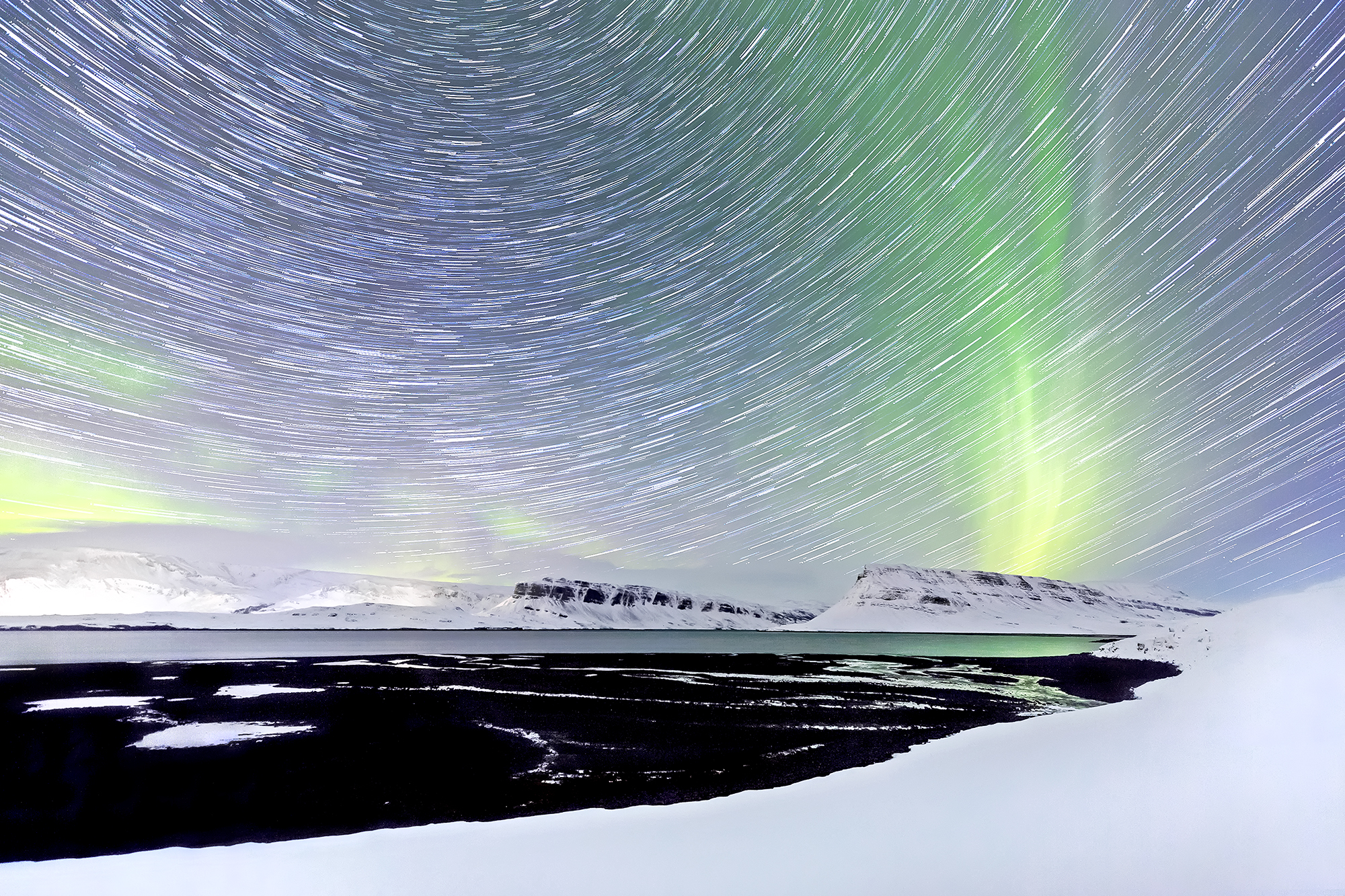
“Northern Lights Over Iceland” — A Visible Expression of Vibration and Light
"Particles are not things. They’re notes. And the universe is not a machine — it’s music." — Robbie George
🎼 Key Concepts I Resonate With in String Theory
- One-Dimensional Strings: All particles arise from different vibrational modes of the same basic string.
- Open vs. Closed Strings: Open strings form light (photons); closed loops form gravity (gravitons).
- Vibration Over Matter: What something is depends not on what it's made of — but how it moves.
- Visual Analogy: A cello string can play multiple notes. So can the string of the universe.
I explore these harmonies further in S(P + G) = UFT.
Unification Goal — Bringing Forces Together
Why I Believe the Universe Is One Breath
The ultimate goal of everything I explore — from nature photography to gravitational theory — is unification. I’m not just chasing a Unified Field Theory because it solves equations — I’m drawn to it because it describes something I feel in every photo I take: connection. Whether it’s a water droplet or a collapsing star, I sense it’s all part of the same breath.
Right now, we use different models to explain different forces: General Relativity for gravity, the Standard Model for electromagnetism and the nuclear forces. But in my view — and in the framework of The Matrix Engine — these are not separate systems. They are interwoven vibrations. And string theory may be the most promising language we have to describe that harmony.
In my symbolic equation S(P + G) = UFT, the act of unification is not about compression — it’s about coherence. Photons (P) and gravitons (G) are opposites in motion, but they’re also complementary. When they spiral in sync — through string theory’s “S” — we arrive at the field. The unified one.
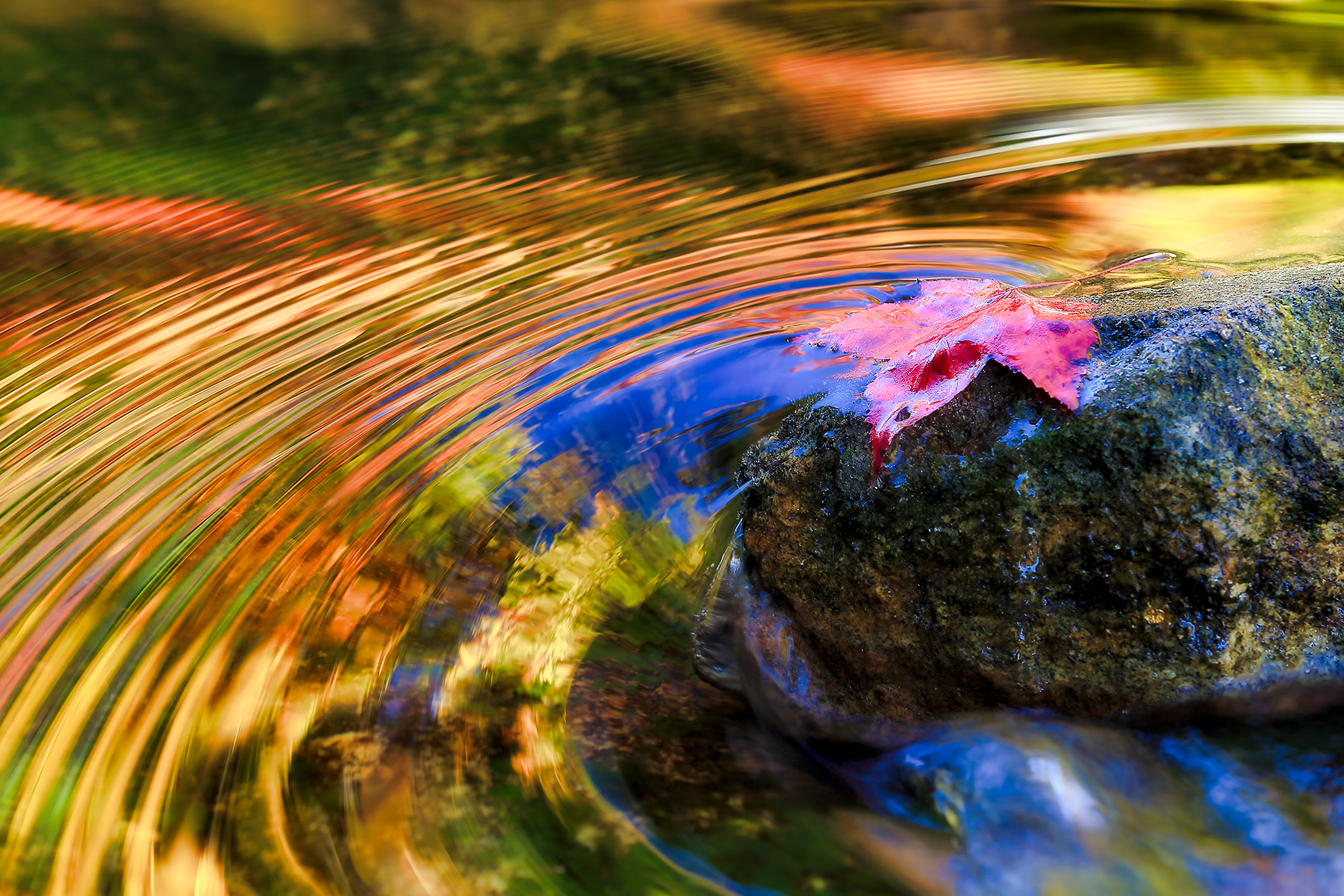
“Falling Leaves in Water” — Spiraled Balance, Where Gravity and Flow Unify
"Unifying the field doesn’t mean finding one formula. It means recognizing one rhythm beneath all forces." — Robbie George
🔭 What Unification Means to Me
- Not reduction — revelation: The goal is not to simplify, but to hear the harmony underneath complexity.
- Gravity and light are siblings: One binds; the other expresses. Both spiral in the same field.
- Art is proof of coherence: The beauty we capture is a byproduct of unified vibration.
- S(P + G) = UFT: My symbolic map of how string theory bridges form and motion.
For more on how light and gravity work in partnership, see Let There Be Light & Let There Be Life.
Analogies for Clarity – The Cosmic Orchestra
Where Physics Becomes Music
When I try to describe string theory to others, I often fall back on music. The universe isn’t just made of matter — it’s made of movement. And that movement has rhythm, tonality, and depth. Just like a cello string can hum different notes, each vibration of the cosmic string gives rise to a different particle — photon, electron, graviton, and more.
Imagine the four fundamental forces — gravity, electromagnetism, the strong nuclear force, and the weak nuclear force — as sections of an orchestra. Gravity is the cello: deep, anchoring. Electromagnetism is the violin: bright and expressive. The nuclear forces? Brass and percussion — powerful, bold, short-range. String theory becomes the sheet music that brings them together into one symphonic breath.
That’s why I use nature photography as a form of scorekeeping. When I capture spirals, ripples, and stillness, I’m not just documenting nature — I’m listening to the arrangement of the field. This is the heart of my Signature Series. Photography becomes a tuning fork for the Unified Field.

“Columbine Wildflower” — Visual Harmony as a Natural Scale
"The universe doesn’t speak in words — it sings in strings. And we are just beginning to hear the melody." — Robbie George
🎼 Strings as Musical Metaphors
- Open Strings = Light: Like violin notes, photons express energy across space.
- Closed Strings = Gravity: Like a cello’s depth, gravitons create structure and form.
- String Theory = Score: It maps the interplay between vibration and manifestation.
- Photography = Tuning Fork: I use light and stillness to locate the key signature of the field.
See how these concepts form the basis of Quantum Vitality and The Living Code.
Introducing Key Equations – Vibrational Foundations of Reality
Equations That Echo What I See in the Field
I’ve always said: equations are visualizations we haven’t seen yet. They’re not just numbers — they’re resonance patterns waiting to take form. In my work, whether I’m studying a black hole or photographing the arc of a sunbeam, I look for where these patterns show up in the wild.
Below are a few of the foundational equations I return to often in my Unified Field Theory explorations. These aren’t meant to be intimidating — they’re field signatures. Just as a spiral or a fractal holds a code, so do these expressions of motion and memory.
🧩 The Equations as Field Markers
- Nambu–Goto Action: Describes the motion of a vibrating string — the root of all resonance in string theory.
- String Mass Spectrum: Explains how vibration gives particles their mass and form.
- Einstein Field Equations: Show how gravity curves spacetime — the field memory of matter.
- Dirac Equation: Connects quantum particles to the unified spin of the field.
🎼 Nambu–Goto Action (String Movement)
S = - (T / 2) ∫ dτ dσ √(–γ)
This is the vibrational equation of a string’s worldsheet. For me, it’s like reading the tempo and rhythm of the universe. In Quantum Vitality, I explore how this equation mirrors what happens inside every cell and seed: vibration organizing coherence.
🎵 String Mass Spectrum
m² = (4 / α′) (N – 1)
This one gives me chills. It means the mass of a particle isn’t inherent — it’s determined by its vibration. Mass, then, is just field music slowed down. What I photograph in motion — wind on water, birds in flight — feels like the visual equivalent of this math.
🌌 Einstein Field Equations (Gravity and Curvature)
Rμν – (1/2) R gμν = (8πG / c⁴) Tμν
These equations define how matter shapes the field. But in my view, they also show how memory lives in space itself. A tree’s root system, a canyon’s curve, a black hole’s silhouette — all of them are gravitational echoes of energy in form.
⚛️ Dirac Equation (Quantum Spin and Life)
(iγμ ∂μ – m) ψ = 0
This equation is the bridge between quantum mechanics and relativity. To me, it’s also a poetic portal: the moment where the smallest vibrations generate something that thinks, grows, remembers. Spin is life’s axis — it’s the field’s way of knowing itself.
"The most important equations aren’t just formulas — they’re frequencies. They’re field breath made visible." — Robbie George
Robbie George Photography’s Contribution
Where the Field Speaks Through Image
Every image I take is a fragment of resonance. Whether I’m photographing the arc of an aurora or the symmetry of a wildflower, I’m not just looking at form — I’m listening for frequency. My photography is more than visual storytelling — it’s a way to trace the Unified Field as it makes itself visible, one moment at a time.
That’s why I created the Signature Series. It’s my attempt to bridge the spirals of science with the poetics of perception. Through it, I explore the resonance between photons, gravitons, and the hidden architecture of reality.
When I think about equations like the Nambu–Goto Action or Einstein’s field equations, I see them in the natural world. I see them in spider webs, dew trails, tidal flows, and bird wings. These aren’t just metaphors — they’re field patterns. Photography is how I record them.

“Supermoon Over Capitol Peak” — Visual Gravity and Curved Space
"My camera isn’t a tool. It’s a tuning fork — listening for coherence in the field." — Robbie George
🎨 How My Photography Reflects the Unified Field
- Spirals and Fractals: I photograph the same geometries echoed in The Living Code.
- Light and Structure: Every image captures photon flow interacting with graviton form.
- Stillness: I seek the pause between breath — where field coherence becomes visible.
- Resonance in Motion: From tidal motion to fog's embrace, the field is always whispering.
Explore more moments of field memory in Quantum Vitality.
Conclusion: Listening to the Unified Field
I didn’t begin this journey as a physicist. I began it as a listener. First to the forest, then to the stars, and eventually to the space between things — where resonance lives. As I’ve grown closer to string theory, I’ve come to believe that unification isn’t just an outcome in science — it’s an invitation in consciousness.
When I write about Unified Field Theory, I’m not just trying to explain it. I’m trying to feel it. To frame it. To show where it lives in the stillness between raindrops or the silence just before the moon rises. That’s where I find it — the invisible spiral we’re all made of.
We may never reduce the cosmos to a single equation, but I do believe we can remember its rhythm. And when we align our perception with that resonance, every moment — every photon — becomes a doorway into understanding.
"The Unified Field isn’t out there. It’s in here — pulsing between every breath, whispering: we are already one." — Robbie George
Continue the Journey — Explore the Living Field
If this post sparked something in you — a question, a pattern, a pulse — there’s more to discover. Below are portals to deeper layers of resonance in my work.
- 🌀 The Living Code – Fractals, Polarity, and the Spiral Memory of Nature
- 🌌 Quantum Vitality – Where Light, Breath, and Biology Meet
- ⚛️ Unified Field Theory – A Living Spiral of Coherence
- 🎧 The Matrix Engine – Recursive Light, Collapse, and Field Resonance
You can also reach out here or follow me on Instagram where I post new field moments and visual field notes.
Explore Fine-Art Prints
Bring the season home—browse Wildlife, Landscapes, and Seascapes by National Geographic–published photographer Robbie George. See framing, editions, and care on the Collectors page.
 Landscape
  Wildlife
  Seascapes
About Robbie George
Robbie George is a National Geographic–published photographer and resonant naturalist. His fieldcraft follows a simple ethic—distance first, habitat always— shaped by Slow Knowledge and the Signature Series.
Explore calm, undisturbed behavior in the Wildlife Gallery or plan your next trip with the Seasonal Wildlife Calendar, Golden Hour & Moon, and Photography Maps.
“Attention first, image second. The shutter is the period at the end of a sentence you learned by walking.”
FAQs: A Step Closer to Unification
What is string theory and why does it resonate with your work?
To me, string theory isn’t just math — it’s music. It suggests that all particles are made of vibration. That’s what I photograph: light, structure, stillness — all vibrating into coherence. It’s a theory that matches the way nature speaks.
How does string theory lead to a Unified Field Theory?
String theory offers a way to unify all the forces — gravity, electromagnetism, and the nuclear forces — through the vibration of one-dimensional strings. It turns separate equations into a shared language. I explore that visually through what I call the field’s rhythm.
What is your symbolic equation S(P + G) = UFT?
It’s my poetic shorthand for the Unified Field. S is the string/spin that connects all things. P is the photon (light), G is the graviton (gravity). When those two harmonize through S, we don’t just get unification — we get understanding.
How does your photography connect to these theories?
I use my camera like a tuning fork. I look for coherence in light and form — spirals, stillness, and symmetry that mirror the invisible architecture of the field. In many ways, I see each image as an equation in visual form.
What’s your vision for the future of science and art?
I believe science and art will continue to merge — not just in theory, but in practice. My hope is that more of us will learn to read the field — not just through numbers, but through resonance. Through how it feels. Through how it moves.