
American Kestrel Hover Hunting: How This Small Falcon Hunts with Precision
The Hovering Hunter — Inside the American Kestrel’s Mid-Air Hunting Strategy
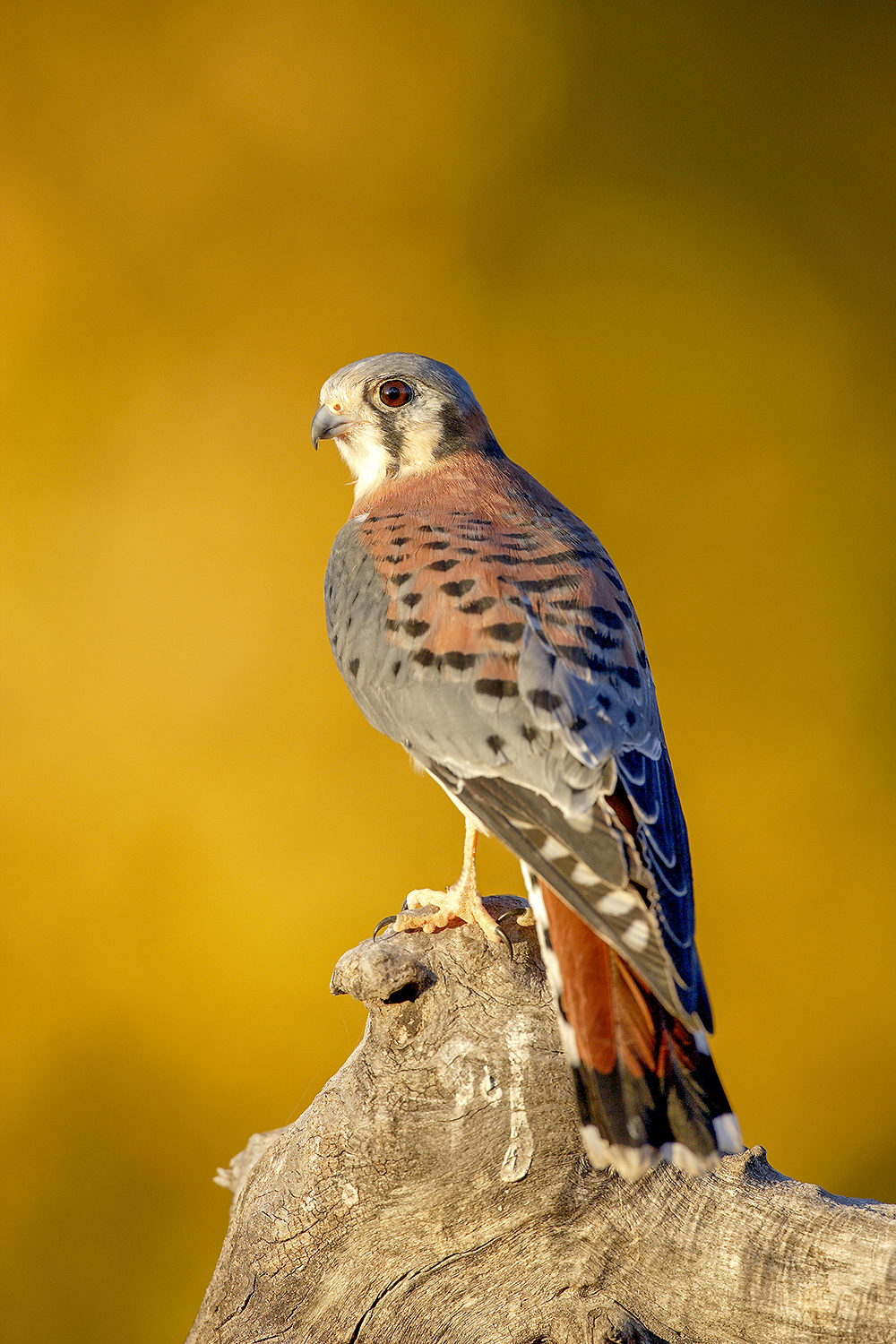
Over an open field, the American kestrel faces into the wind and begins to hover. Its wings beat rapidly while its body remains nearly still, suspended above the ground as it studies movement below. For a few seconds, everything holds—then it drops, fast and direct, toward its target.
This behavior defines the kestrel as one of North America’s most precise small predators. Unlike larger birds of prey that rely on soaring or ambush, the kestrel uses controlled hovering to hunt insects, small mammals, and birds. It turns wind into an advantage, holding position long enough to judge distance, timing, and movement before committing to the strike.
Across grasslands, farmland, coastal edges, and open landscapes, this mid-air hunting strategy connects directly to habitat structure and prey behavior. To explore how kestrels fit within broader patterns of wildlife behavior and ecology and the environments they depend on, visit the Ecosystems of North America guide.
American Kestrel Hunting Behavior
The American kestrel hunts in a way that feels almost suspended outside of time. In the field, you’ll often see it facing into the wind, wings beating rapidly while its head remains completely still. In that moment, the bird is not moving through the landscape — it is holding position within it, waiting for the right signal to strike.
This hovering behavior sets the kestrel apart from most other birds of prey. Where hawks rely on perches and falcons often depend on speed, the kestrel uses controlled flight to maintain a fixed point in the air. By working directly against the wind, it stabilizes its body and gains the precision needed to track movement below.
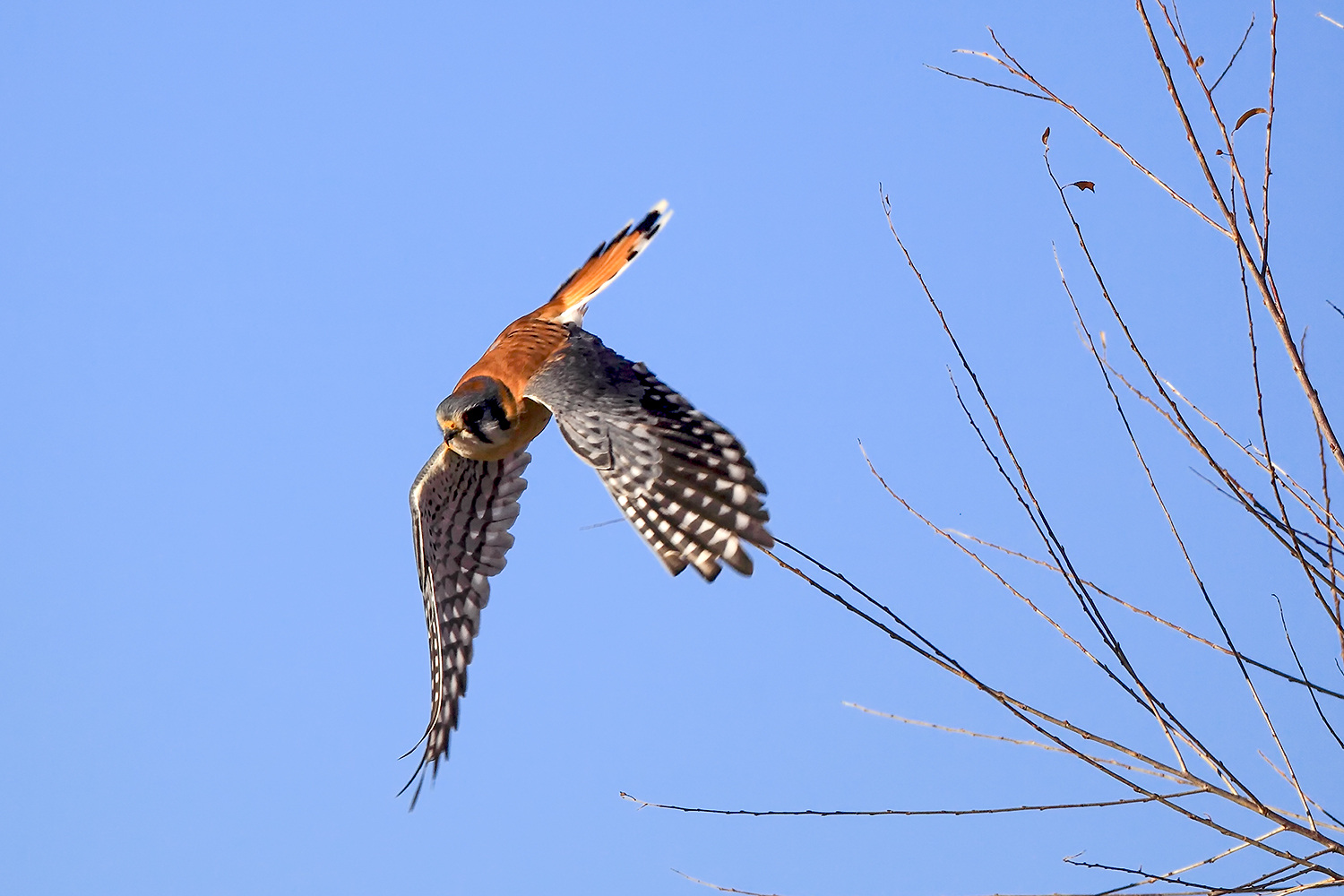
From this position, the kestrel scans for insects, small mammals, and occasionally birds moving through grass or open ground. Once a target is identified, it breaks the hover and drops quickly in a short, efficient strike. The entire sequence — hover, lock, drop — happens in seconds, but depends on constant adjustment and fine control.
Wind, light, and terrain all shape how this behavior plays out. Kestrels tend to choose open landscapes where visibility is high and wind conditions allow stable hovering. Fields, grasslands, coastal edges, and roadside corridors all create the conditions needed for this style of hunting.
This pattern connects directly to broader systems explored in wildlife behavior and ecology, where movement, energy, and environment combine to define how a species survives.
American Kestrel Habitat
American kestrels favor open landscapes where they can see the ground clearly and move freely through the air. In the field, this means grasslands, agricultural fields, meadows, pasture edges, coastal margins, and lightly developed rural areas — places where visibility and airspace are as important as the ground itself.
Unlike forest raptors that depend on cover, kestrels depend on openness. They need to see movement below while maintaining the ability to hover or shift quickly into a short strike. This makes habitat structure critical: open ground for hunting, paired with just enough vertical elements to support observation.
Perches are a defining feature of kestrel habitat. Fence posts, utility lines, isolated trees, dead snags, and branches all provide elevated positions for scanning. From these vantage points, kestrels conserve energy, track prey movement, and decide when to transition into flight or hover.
Kestrels are also cavity nesters, using old woodpecker holes, natural cavities, or nest boxes. This adds another layer to habitat requirements — not just open hunting ground, but enough structural diversity to support breeding. Landscapes that retain trees, edges, and variation tend to support kestrels most consistently.
This pattern connects directly to broader relationships explored in Ecosystems of North America and Wildlife Behavior & Ecology, where habitat structure defines how species move, hunt, and survive.
American Kestrel Diet
The American kestrel feeds on a wide range of small prey, which is one of the reasons it remains so adaptable across North America. Unlike highly specialized raptors, kestrels shift their diet based on season, habitat, and prey availability, allowing them to hunt successfully in many different open landscapes.
Insects make up a major part of the kestrel’s diet, especially during warmer months. Grasshoppers, beetles, dragonflies, and other large insects are commonly taken, often spotted from a hover or from a perch before a quick drop to the ground. This insect-based feeding is one of the strongest reasons kestrels are so closely tied to grasslands, field edges, and open country.
Kestrels also hunt small mammals such as mice, voles, and shrews, along with small birds and occasionally reptiles. Their ability to shift between prey types gives them flexibility as conditions change across the year. When insect numbers decline, kestrels rely more heavily on vertebrate prey, adjusting both their diet and hunting behavior to match the season.
This flexible feeding pattern connects directly to broader ecological relationships explored in food webs and ecological relationships. The kestrel operates across multiple layers of the ecosystem — as an insect predator, small mammal hunter, and occasional bird hunter — linking ground-level prey activity to aerial predation.
Because the kestrel responds quickly to changes in prey abundance, its diet also reveals something about habitat health. Shifts in insect populations, land use, pesticide pressure, or habitat structure can all affect how and where kestrels feed. In that way, diet becomes more than a list of prey — it becomes a measure of how well open-land ecosystems are functioning.
Unique Traits
The American kestrel stands apart from other North American birds of prey because of how much control it has over its movement in the air. It is the smallest falcon on the continent, yet it combines speed, precision, and stability in a way that allows it to operate efficiently in open environments.
One of its most defining traits is its ability to hover. By facing directly into the wind and beating its wings rapidly, the kestrel can hold a nearly fixed position in the air while scanning the ground below. This requires constant adjustment — small shifts in wing angle, tail position, and body alignment — all happening in real time to maintain stability.
Unlike larger falcons known for high-speed pursuits, kestrels move fluidly between hunting strategies. They can hover, hunt from perches, or make short, direct strikes depending on conditions. This versatility allows them to respond quickly to changes in prey movement, wind, and terrain.
Their body structure reflects this balance between speed and control. Long, pointed wings support efficient flight, while a compact body allows for rapid adjustments during hovering and short-distance attacks. This combination gives the kestrel a broader range of movement than its size might suggest.
Visually, the kestrel is one of the most striking raptors in North America. Males display slate-blue wings with rich rufous tones, while both sexes show bold facial markings and a compact, upright posture. These features make them highly recognizable in open landscapes, where shape, color, and movement all contribute to detection.
Together, these traits form a complete system — one where form, movement, and environment are tightly linked. The kestrel’s ability to hover, adjust, and strike with precision reflects patterns explored in Wildlife Behavior & Ecology, where efficiency emerges from the alignment of structure and function.
Where to See American Kestrels
American kestrels are one of the most accessible raptors in North America once you understand what defines their habitat. The key is not just location, but structure — open ground, clear visibility, and elevated perches all working together in the same place.
In the field, kestrels are most often found in open landscapes such as grasslands, agricultural fields, meadows, and coastal edges. These environments support the insects and small mammals that make up the core of their diet, while also providing the airspace needed for hovering and short hunting flights.
Roadsides are among the most reliable places to spot kestrels. Fence posts, utility wires, and isolated trees create ideal vantage points, allowing the bird to scan for movement below before dropping into a strike. Even when not actively hovering, kestrels often reveal themselves through posture — upright, alert, and focused on the ground.
Some of the best observation opportunities occur in landscapes where field meets edge — areas that combine open hunting zones with enough structure for perching and nesting. Wildlife refuges, agricultural regions, and transitional habitats often concentrate kestrel activity, especially during the breeding season.
Timing also plays a role. Early morning and late afternoon tend to produce the most consistent activity, when light improves visibility and prey movement increases. To align location with timing more precisely, tools like the Wildlife Observation Locations hub, Wildlife Photography Maps, and the Seasonal Wildlife Calendar help turn observation into repeatable field experience.
Seasonal Patterns
American kestrels show clear seasonal patterns shaped by prey availability, breeding cycles, and regional movement. In many parts of North America, they are partially migratory, with northern populations moving south in fall while others remain year-round in milder climates.
Spring marks the beginning of their most active period. Kestrels establish territories, locate nesting cavities, and increase hunting frequency as they prepare to raise young. During this time, hovering behavior becomes more visible as adults work continuously to secure food.
Through summer, activity remains high as kestrels feed growing chicks. Open fields, grasslands, and agricultural edges often become focal hunting areas, with repeated passes over the same ground. Young kestrels begin practicing flight and hunting behavior later in the season, gradually learning to hover and strike with precision.
By fall, behavior begins to shift. Some kestrels migrate, while others remain and adapt their hunting patterns to changing prey availability. Insect populations decline, and kestrels rely more heavily on small mammals and birds. Hunting becomes more perch-based, with less frequent hovering depending on wind and conditions.
Winter behavior varies by region. In colder northern areas, kestrels may be absent, while southern populations continue to hunt in open habitats throughout the season. Across all regions, seasonal change reflects a continuous adjustment between prey, weather, and landscape.
These patterns connect directly to broader systems explored in Wildlife Migration & Seasonal Patterns. To plan field observation more effectively, the Seasonal Wildlife Calendar helps align behavior, timing, and location across the year.
Naturepedia Connection — Understanding the American Kestrel in the Larger System
The American kestrel reveals how a species can be shaped by the interaction between air, ground, and movement. Its hovering behavior, perch hunting, and quick strikes are not isolated actions — they are direct responses to wind, visibility, prey activity, and habitat structure working together.
Watching a kestrel hold position in the air shows how energy, balance, and timing align within open landscapes. Fields, roadsides, grasslands, and coastal edges all influence how the bird hunts, where it moves, and how it survives across the seasons. In that sense, the kestrel is not just a small falcon — it is a visible connection between predator behavior and open-land ecosystem function.
This is how I build the larger structure of the site. The kestrel connects naturally to the Birds of Prey hub, broader patterns in Wildlife Behavior & Ecology, the environments explored in Ecosystems of North America, and seasonal timing through the Seasonal Wildlife Calendar.
Seen this way, the kestrel becomes more than a subject to observe. It becomes a species that helps explain how wind, prey, landscape, and seasonal change connect across a larger living system.
To explore this deeper, continue into the Naturepedia system.
American Kestrel FAQ
What do American kestrels eat?
American kestrels eat a mix of insects, small mammals, birds, and occasionally reptiles. Insects such as grasshoppers and beetles make up a large portion of their diet, especially during warmer months.
How do kestrels hunt?
Kestrels hunt by hovering into the wind while scanning the ground below. Once they identify prey, they drop quickly from the hover or launch from a perch to strike with precision.
Where do American kestrels live?
American kestrels live in open habitats such as grasslands, farmland, meadows, deserts, and coastal areas. They are commonly found near roadsides, fields, and areas with scattered perches.
Are American kestrels migratory?
Some American kestrels migrate while others remain year-round. Northern populations typically move south in winter, while kestrels in milder climates may stay in the same region throughout the year.
Why do kestrels hover in place?
Kestrels hover to maintain a fixed position in the air while scanning for prey. By facing into the wind, they stabilize their flight and gain the precision needed to track movement below before striking.
When is the best time to see American kestrels?
Spring and summer are the best times to observe kestrels, especially during breeding season when hunting activity is high. Early morning and late afternoon are often the most active times of day.
About the Author
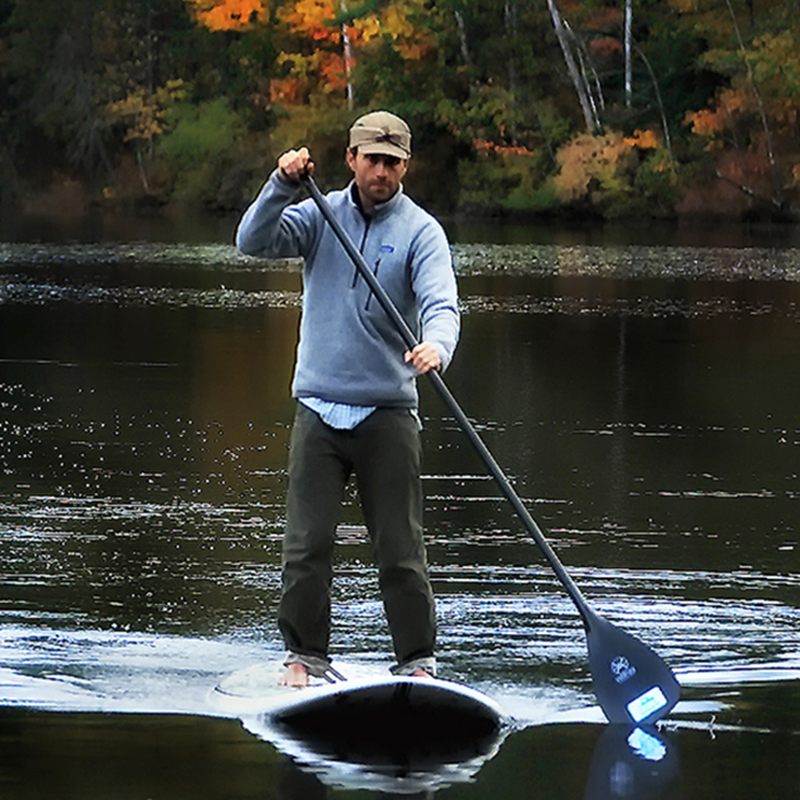
Robbie George is a nature photographer, writer, and field-based observer whose work focuses on understanding how wildlife behavior emerges from real conditions—light, wind, habitat, and timing.
That perspective shapes this American kestrel page from the ground up. Rather than isolating the bird, Robbie follows the conditions that create the moment—how wind supports hovering, how open landscapes shape hunting, and how small shifts in timing reveal entirely different behaviors.
Through that process, photography becomes a way of mapping behavior into a larger system—connecting species pages, habitat patterns, seasonal timing, and field tools into one continuous Naturepedia knowledge framework built from observation.