Atlantic Puffin: Behavior, Diet, and Conservation
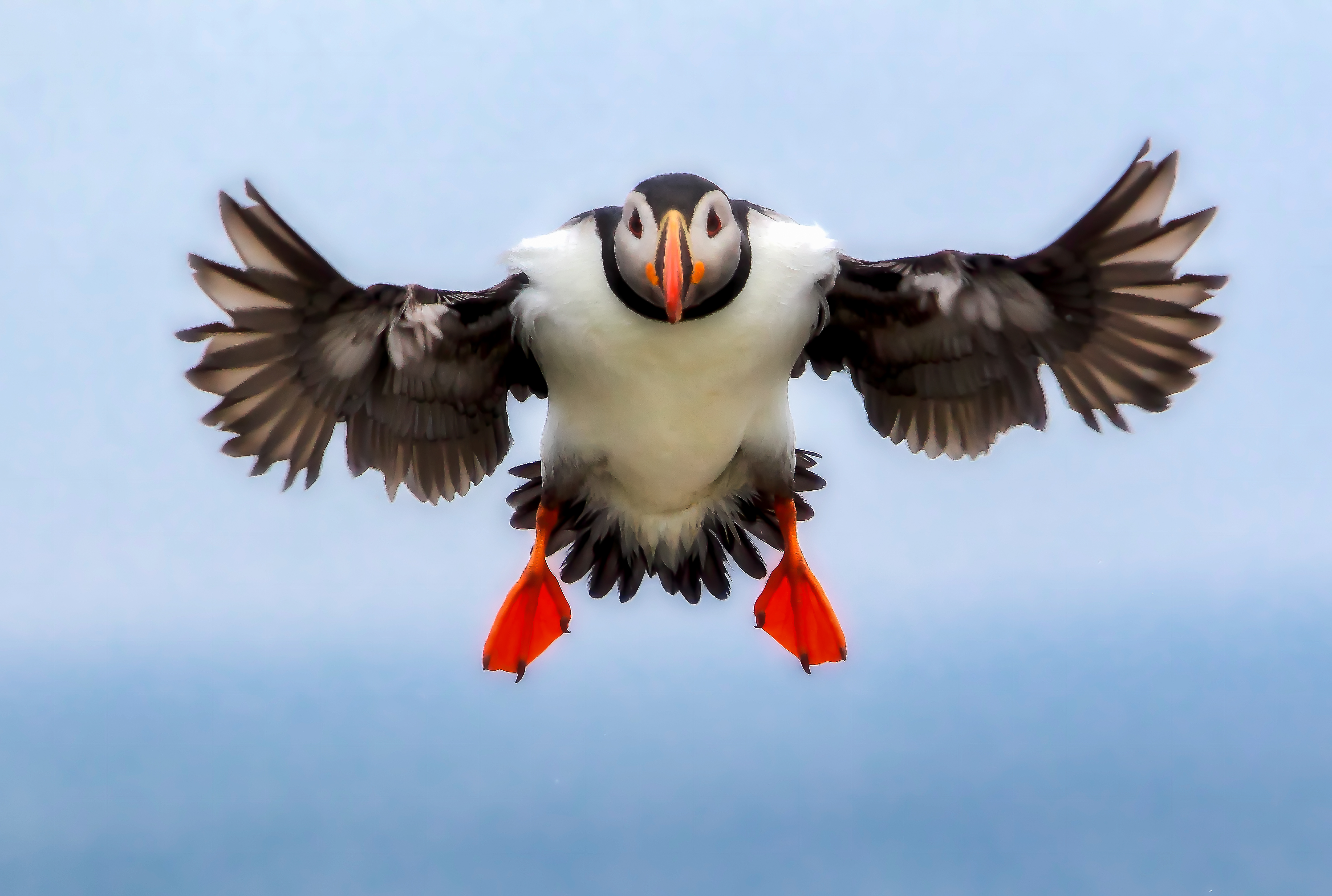
Atlantic Puffin landing in coastal wind

Atlantic Puffin Overview: A Seabird Defined by Two Worlds

The Atlantic Puffin is a species built around dual environments. On land, it nests in dense colonies along cliffs and island slopes. At sea, it becomes a highly efficient diver, capable of traveling long distances and hunting fish beneath the surface. This split life—coastal breeding and pelagic existence—defines nearly every aspect of its behavior.

Puffins are most visible during the breeding season, when they return to colonies across Maine, Iceland, and the North Atlantic. Outside of that window, they spend most of their lives offshore, rarely seen. This makes them one of the clearest examples of how species are shaped by habitat structure, food systems, and seasonal timing.

Species Snapshot

Common name: Atlantic Puffin
Scientific name: Fratercula arctica
Group: Seabird / Auk family
Primary biome: Coastal marine ecosystems

What Makes It Unique

A seabird that flies, swims, and dives with equal efficiency—capable of carrying multiple fish at once and living most of its life far offshore.

System Connections

Connects strongly to coastal ecosystems, behavior & ecology, and marine food webs.

Explore the Atlantic Puffin Guide

This guide follows the full Naturepedia structure—connecting species to habitat, behavior, marine food systems, migration, coastal ecology, and conservation.

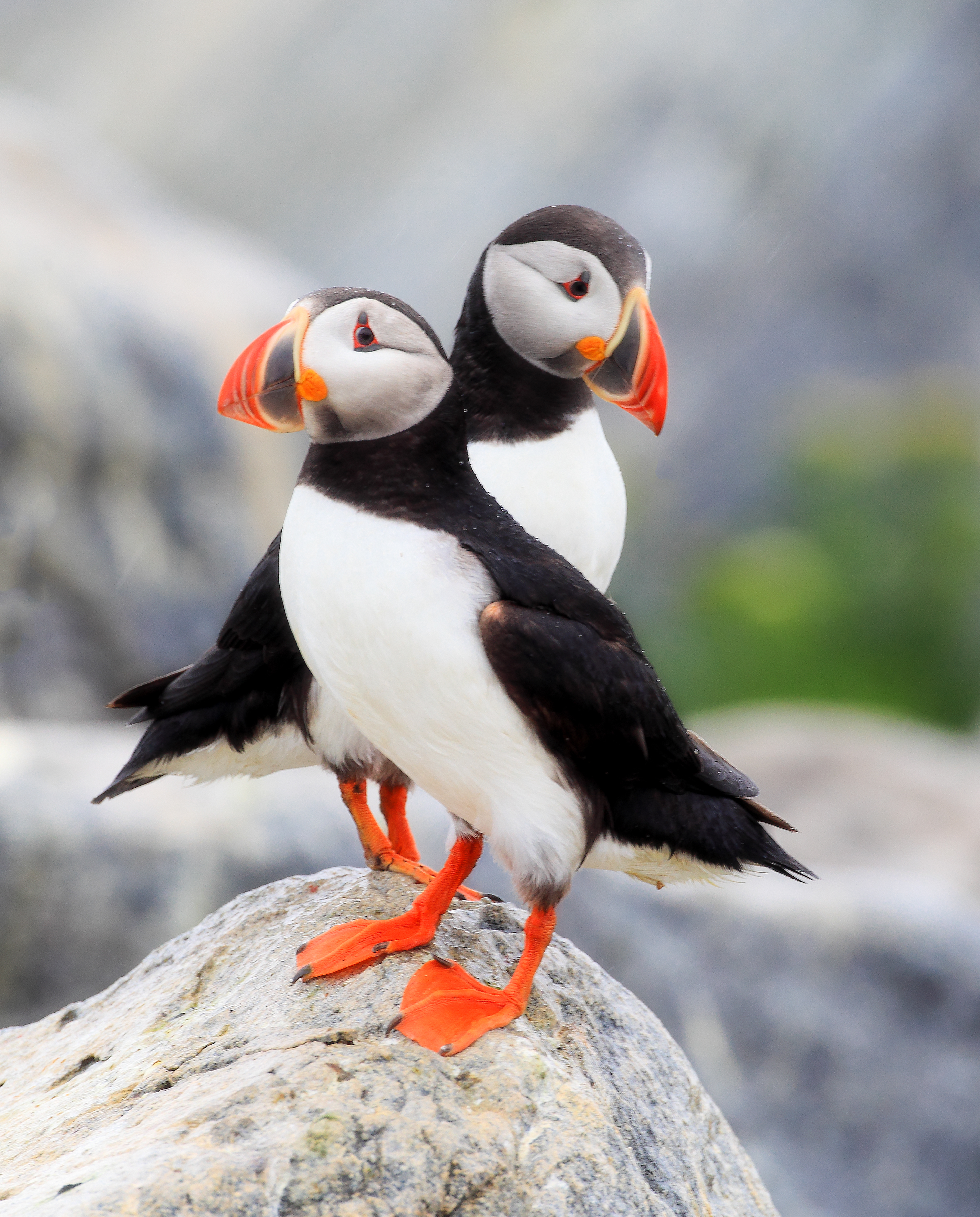
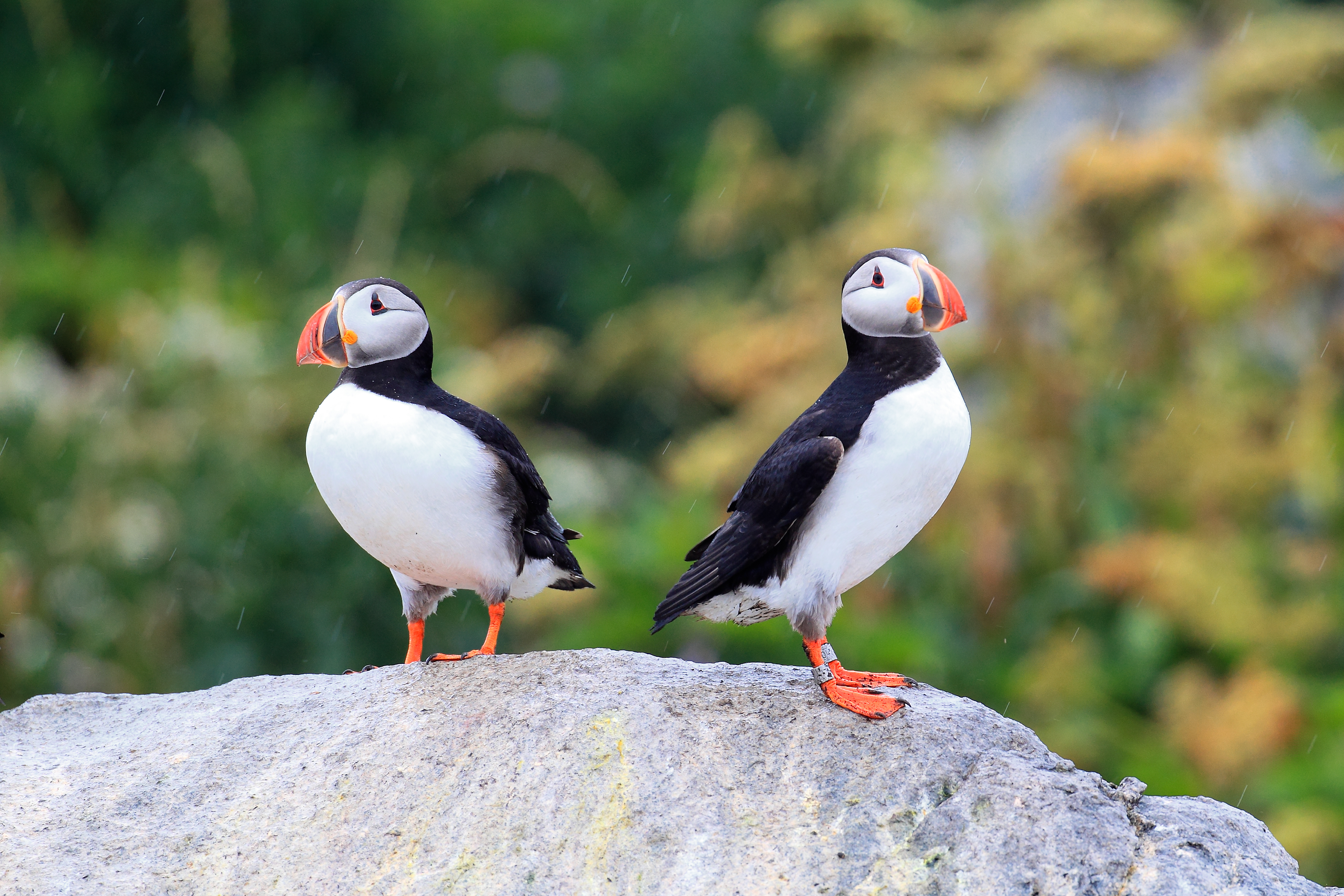
Two Atlantic Puffins perched together on a rocky island by Robbie George

Habitat & Range: Where Puffins Belong

Atlantic Puffins belong to the cold, productive waters of the North Atlantic. During the breeding season, they return to remote islands, grassy slopes, rocky headlands, and offshore cliff systems where they can nest in burrows or sheltered crevices above the sea. These places are not incidental—they are essential. Puffins need safe nesting ground close to rich marine feeding zones, which is why breeding colonies are so often tied to rugged islands and current-driven coastal waters.

In North America, Maine represents the southern edge of the Atlantic Puffin’s breeding range. That makes sites like Machias Seal Island especially important—not only for observation, but for understanding how seabird colonies function under shifting environmental pressure. Beyond Maine, puffins breed across eastern Canada, Iceland, Greenland, the British Isles, Norway, and other parts of the North Atlantic world.

These nesting landscapes connect directly to larger systems of ecosystems and habitat zones. Puffins depend on the meeting point between marine productivity and protected coastal terrain. Their range is not simply a map—it is a pattern shaped by fish distribution, sea temperature, colony safety, and seasonal return.

Breeding Habitat

Offshore islands, grassy slopes, rocky crevices, and cliff systems provide nesting space with reduced predator pressure and quick access to feeding waters.

Marine Dependence

Puffins require cold, fish-rich marine ecosystems, especially areas that support sand lance, herring, and other small schooling prey.

Maine as Edge Habitat

Maine colonies matter because they sit at the southern limit of the breeding range, making them especially sensitive indicators of change.

Life at Sea Beyond the Colony

Outside the breeding season, puffins spend most of their lives far from land. This pelagic phase is easy to forget because it happens out of sight, but it is central to the species. For much of the year, Atlantic Puffins are ocean birds first—resting on open water, traveling long distances, and feeding across wide marine zones shaped by current, weather, and forage fish availability.

Understanding puffin habitat means understanding both halves of the story: the colony and the sea. That dual life is what makes the species such a strong bridge into broader themes of coastal ecology, seasonal timing, and marine food systems.

Atlantic Puffin in Maine coastal light by Robbie George

Behavior & Breeding: Life in the Colony

The Atlantic Puffin’s most visible life unfolds during the breeding season, when thousands of birds gather in dense coastal colonies. These colonies are not chaotic gatherings—they are structured systems shaped by territory, pair bonds, nesting space, and timing. Every movement, call, and interaction plays a role in maintaining order within a crowded environment where space is limited and survival depends on coordination.

Puffins are strongly site-faithful, returning to the same colony year after year. Many pairs reunite seasonally, reinforcing long-term bonds that guide breeding success. This behavior connects directly to broader patterns of behavior and ecology, where memory, location, and environmental conditions all influence reproductive outcomes.

Colony Living

Puffins nest in dense colonies where spacing, burrow location, and neighbor awareness all shape daily behavior.

Pair Bonding

Puffins often form long-term pairs, reinforced through seasonal return, synchronized behavior, and repeated interaction.

Burrow Nesting

Nests are dug into soil or placed in rock crevices, providing protection from predators and harsh coastal weather.

Courtship & Communication

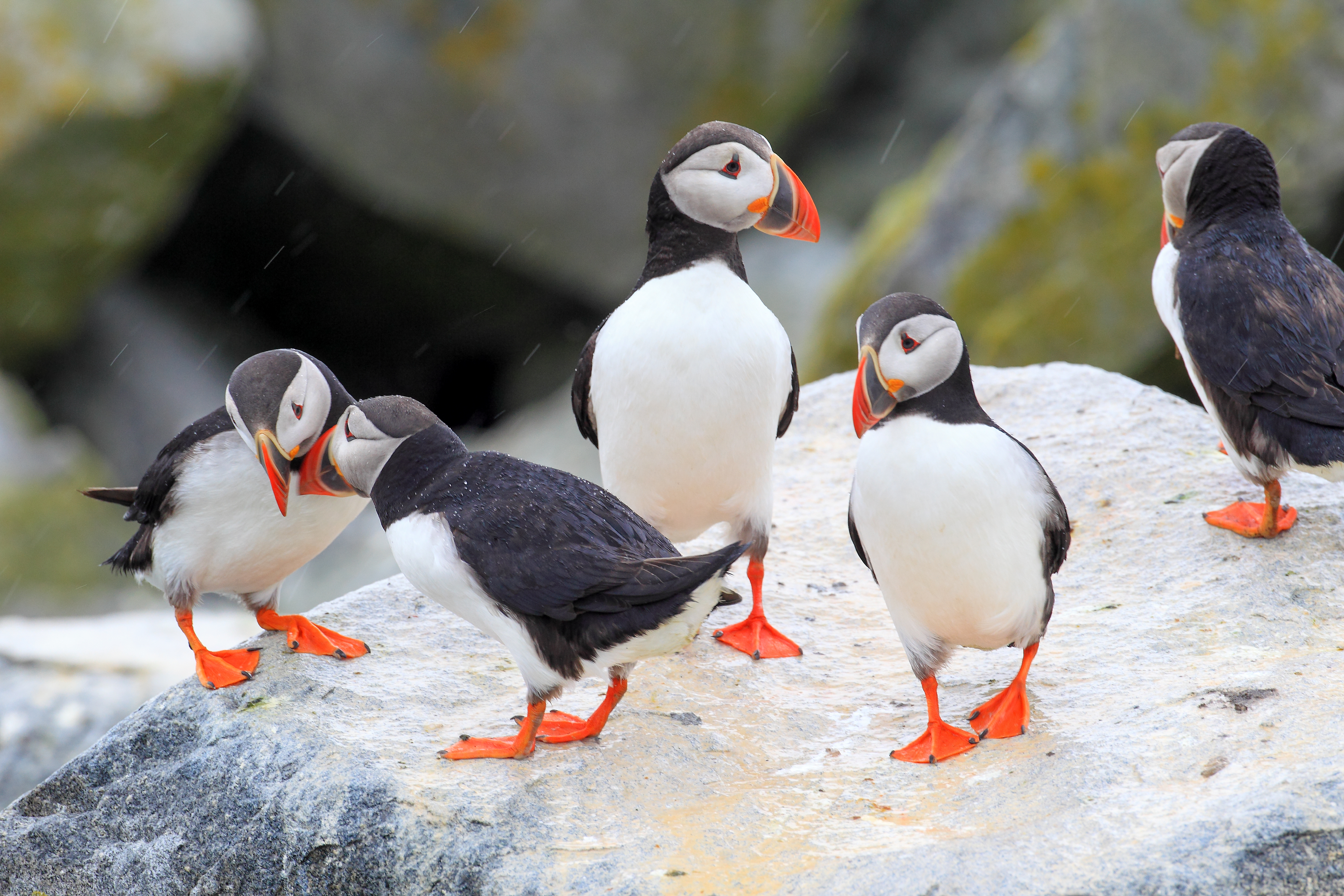
One of the most recognizable puffin behaviors is “billing,” where two birds tap their beaks together in a rhythmic motion. This is not random—it reinforces pair bonds and helps maintain recognition within crowded colonies. Vocalizations, posture, and movement all contribute to communication, allowing individuals to navigate a complex social environment with limited space and constant activity.

Their calls—often described as growls or low purrs—carry meaning tied to territory, pairing, and proximity. These communication systems reflect how behavior evolves within constraints, aligning with patterns seen across adaptation and survival in high-density environments.

Raising a Chick in a Coastal System

Each puffin pair typically raises a single chick per season. This strategy reflects the energetic limits of their environment—feeding a chick requires repeated trips to sea, diving for fish, and returning safely through wind and waves. Both parents contribute, alternating between foraging and guarding the burrow.

Chick survival depends heavily on fish availability and environmental stability. In years when prey is abundant, more chicks fledge successfully. In years when food is scarce, fewer survive. This direct connection between breeding success and food supply makes puffins a clear example of how reproduction is governed by food web dynamics rather than fixed biological schedules.

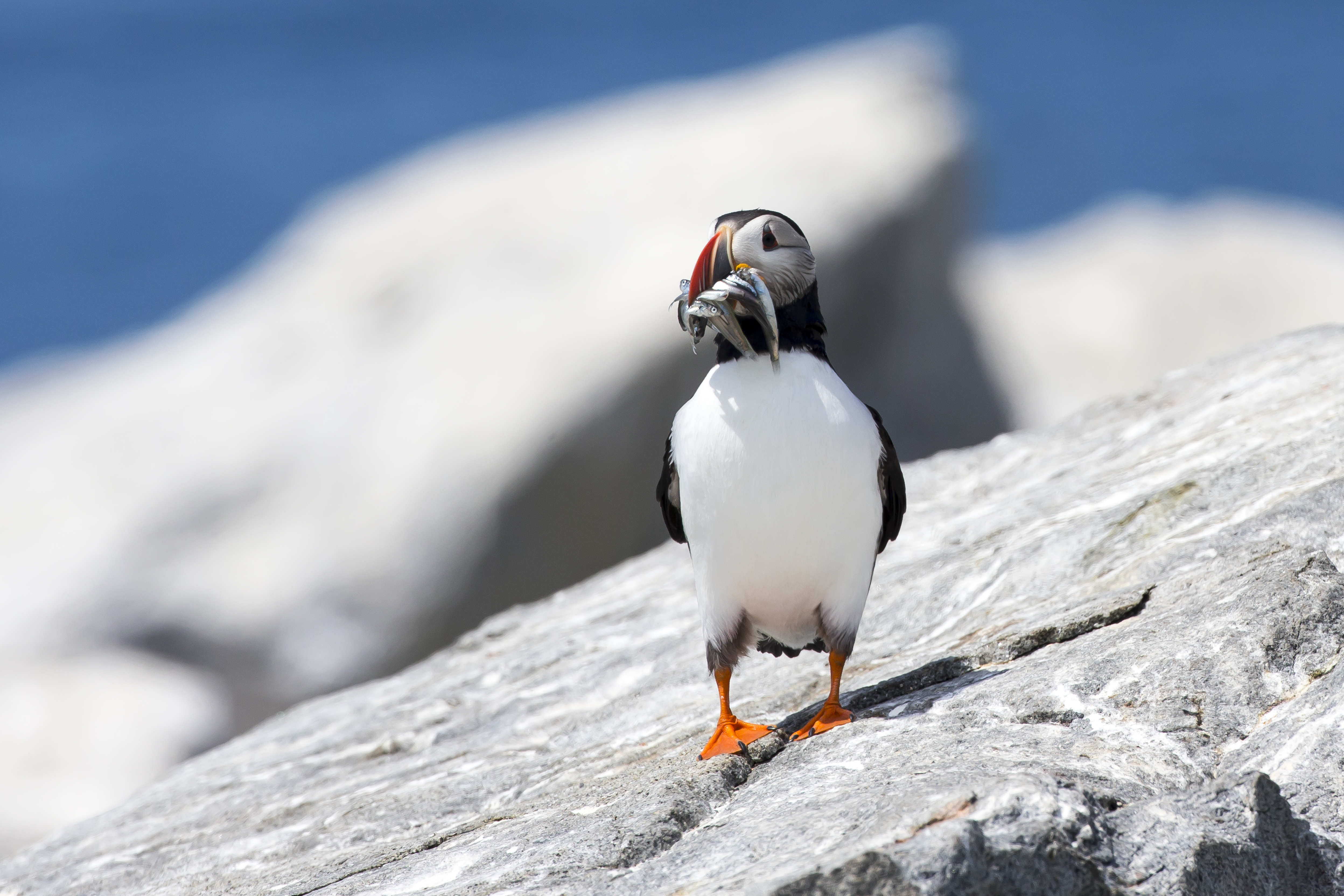
Atlantic Puffin carrying fish by Robbie George

Diet & Feeding: Energy from Sea to Colony

Atlantic Puffins are diving seabirds that depend on small schooling fish to fuel nearly every part of their breeding cycle. Sand lance, herring, capelin, and similar prey species provide the energy that supports courtship, chick rearing, adult survival, and successful fledging. Because puffins must repeatedly travel between colony and feeding grounds, food availability is not just important—it is central to the entire system.

Puffins are highly efficient underwater hunters. They use their wings to “fly” through the water, steering and accelerating below the surface in pursuit of fish. This dual-use wing system—airborne over ocean, propulsive beneath it—is one of the species’ defining adaptations and ties directly into broader patterns of adaptation and survival.

Primary Prey

Puffins rely mainly on small forage fish such as sand lance, herring, and capelin—species that link lower ocean productivity to seabird survival.

Underwater Flight

Instead of paddling like many waterbirds, puffins use their wings to pursue fish underwater with speed, control, and precision.

Multiple Fish Carry

Puffins can carry several fish crosswise in the beak at once, allowing them to maximize each foraging trip back to the burrow.

A Specialized Feeding System

One of the puffin’s most remarkable feeding adaptations is its ability to hold multiple fish at the same time. Backward-facing spines in the mouth and a specialized tongue allow the bird to secure earlier catches while continuing to hunt. This is why puffins are so often photographed with a line of fish held neatly in the bill—a visual sign of extreme feeding efficiency.

That efficiency matters most during chick-rearing season, when adults may need to make repeated trips from burrow to sea. Each successful return represents a transfer of marine energy back to land. In that sense, puffins are not only consumers within the ocean—they are active participants in food webs and ecological relationships that connect marine prey, seabird colonies, and coastal ecosystems.

Why Diet Matters for Conservation

Puffin breeding success rises and falls with prey availability. When forage fish are abundant and accessible, adults can feed chicks consistently and colonies perform well. When fish stocks shift, decline, or move farther offshore, chick survival can drop quickly. This is one reason puffins are such valuable indicators of ocean health.

To understand what puffins eat is to understand something larger: the condition of the sea itself. Their diet becomes a readable signal of marine productivity, warming waters, and the health of the food systems they depend on.

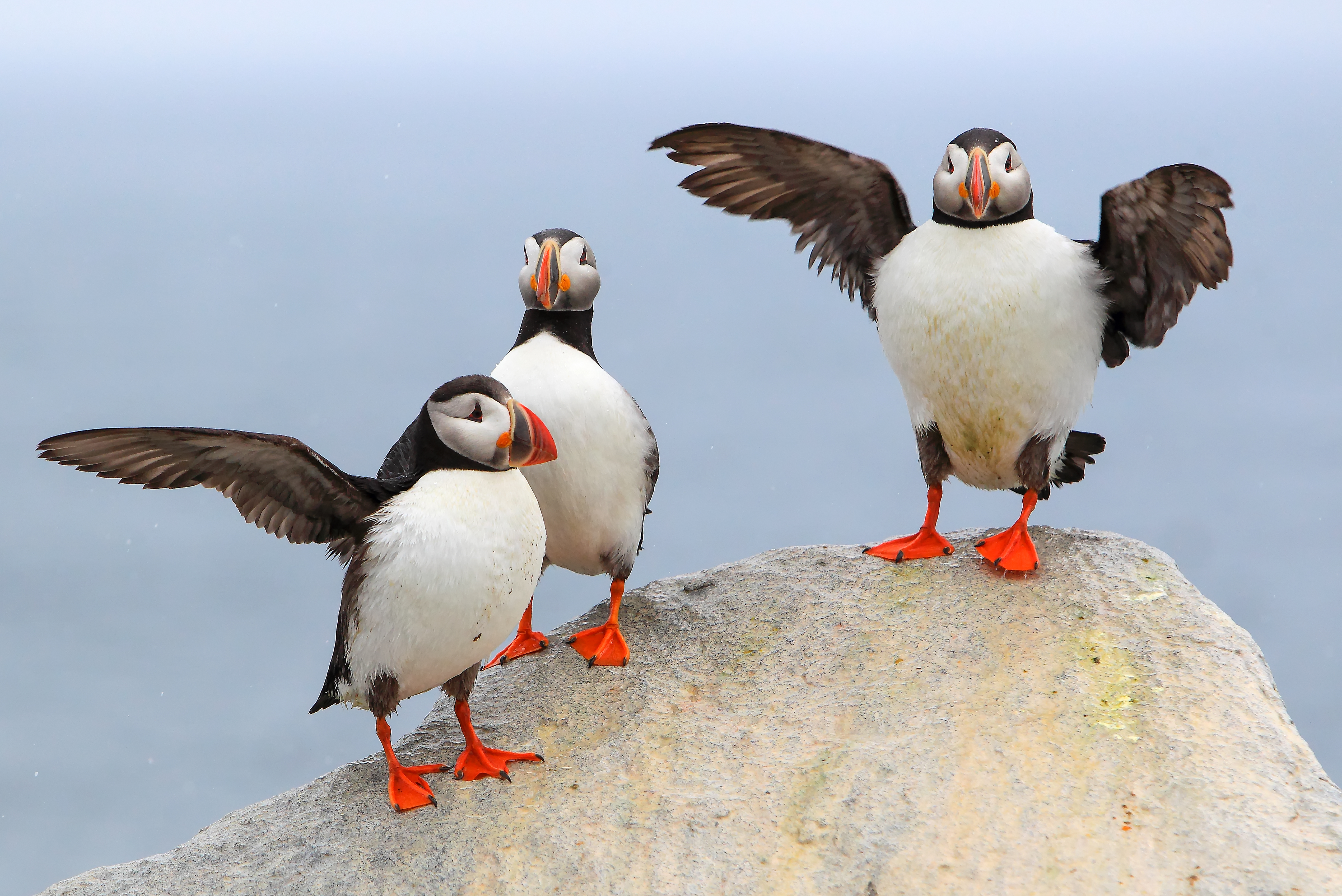
Pair of Atlantic Puffins on a rocky coastal ledge by Robbie George

Migration & Ecology: A Seabird of Seasonal Return

Atlantic Puffins are birds of return. Each breeding season, they come back to the same coastal colonies, often to the same islands and in some cases to the same nesting burrows. But outside that visible chapter of their lives, they become birds of the open ocean—spending much of the year far offshore, scattered across the North Atlantic and largely out of sight.

This seasonal pattern makes puffins one of the clearest examples of how a species can belong fully to both place and movement. Their ecology cannot be understood by looking only at the breeding colony. It also depends on pelagic habitat, marine weather, ocean currents, prey distribution, and seasonal shifts in productivity. That is why the species fits so naturally within your larger pages on migration and seasonal patterns and ecosystems.

Seasonal Return

Puffins return to breeding colonies in spring and summer, linking reproduction to a narrow seasonal window of food and coastal stability.

Pelagic Life

Outside breeding season, puffins live far offshore, making them true ocean birds for much of the year rather than simply coastal birds.

Ecological Indicator

Puffin success reflects changes in fish availability, water temperature, and marine system balance across the North Atlantic.

From Colony Bird to Ocean Bird

When people think of puffins, they usually think of summer colonies—birds standing on grassy slopes or rocky ledges with fish in their bills. But that is only the most visible part of the story. For much of the year, Atlantic Puffins are dispersed over open water, where they feed, rest, molt, and survive far beyond human view. This offshore phase is central to their ecology and helps explain why colony health can change even when nesting habitat appears intact.

Their movements are tied to prey and water conditions rather than fixed human boundaries. In that sense, puffins belong to systems of flow—currents, forage fish movements, and seasonal marine productivity. They demonstrate how migration can be less about a visible route and more about a shifting relationship between place, food, and time.

Puffins in the Coastal Food Web

Ecologically, puffins are more than consumers of fish. They are also nutrient carriers between sea and land. By bringing marine prey back to colonies, they transfer ocean productivity into coastal breeding systems. Their nesting presence can influence surrounding vegetation and local nutrient cycles, making them participants in a broader pattern of exchange between marine and terrestrial environments.

This is one reason puffins matter so much beyond their visual appeal. They are not just iconic seabirds—they are active parts of the living coastal system, revealing whether the sea is still producing enough life to support the return.

Atlantic Puffins on Machias Seal Island by Robbie George

Conservation & Threats: What Puffins Tell Us About the Sea

Atlantic Puffins are among the clearest seabird indicators of marine ecosystem change. Their breeding success depends on prey availability, ocean temperature, nesting safety, and the stability of coastal colonies. When puffin numbers decline or chicks fail to fledge, the problem is often larger than the species itself. Puffins reveal what the sea is doing.

This makes them an important bridge into broader themes of wildlife conservation and habitat protection and biodiversity and ecosystem balance. Protecting puffins means protecting more than cliffs and burrows. It means maintaining functioning forage-fish systems, reducing marine pollution, and preserving the coastal breeding landscapes that allow colonies to persist.

Prey Shortage

When sand lance, herring, or other forage fish decline or shift offshore, puffins may struggle to feed chicks successfully during breeding season.

Climate Pressure

Warming waters can alter fish distribution and timing, disrupting the match between breeding colonies and the food resources they depend on.

Colony Vulnerability

Nesting islands can be threatened by invasive predators, human disturbance, erosion, and storm impacts that reduce breeding success.

Marine Threats and Coastal Consequences

Puffins face a combination of pressures at sea and on land. In the marine environment, overfishing, warming waters, and shifting prey distribution can reduce the food available during the breeding season. In coastal colonies, invasive mammals, human disturbance, and severe storms can affect nesting success and chick survival. These are not isolated problems. They interact.

Pollution adds another layer of risk. Marine plastics, oil contamination, and chemical stressors do not always appear immediately in a colony photograph, but they can influence the wider food web puffins depend on. That is why puffin conservation is ultimately a systems question. The colony only thrives when the sea still works.

Why Puffins Matter in Conservation

Puffins matter because they translate ocean change into something visible. A seabird returning with fewer fish, a failed chick year, or a shrinking colony becomes an understandable signal of deeper marine imbalance. Very few species make the connection between ocean productivity, coastal breeding success, and public awareness so clearly.

To protect puffins is to protect the continuity between open water and breeding ground—the full cycle that allows return, nesting, feeding, and fledging to happen again. Their conservation story is not just about saving a charismatic bird. It is about keeping a working relationship intact between sea, shore, and season.

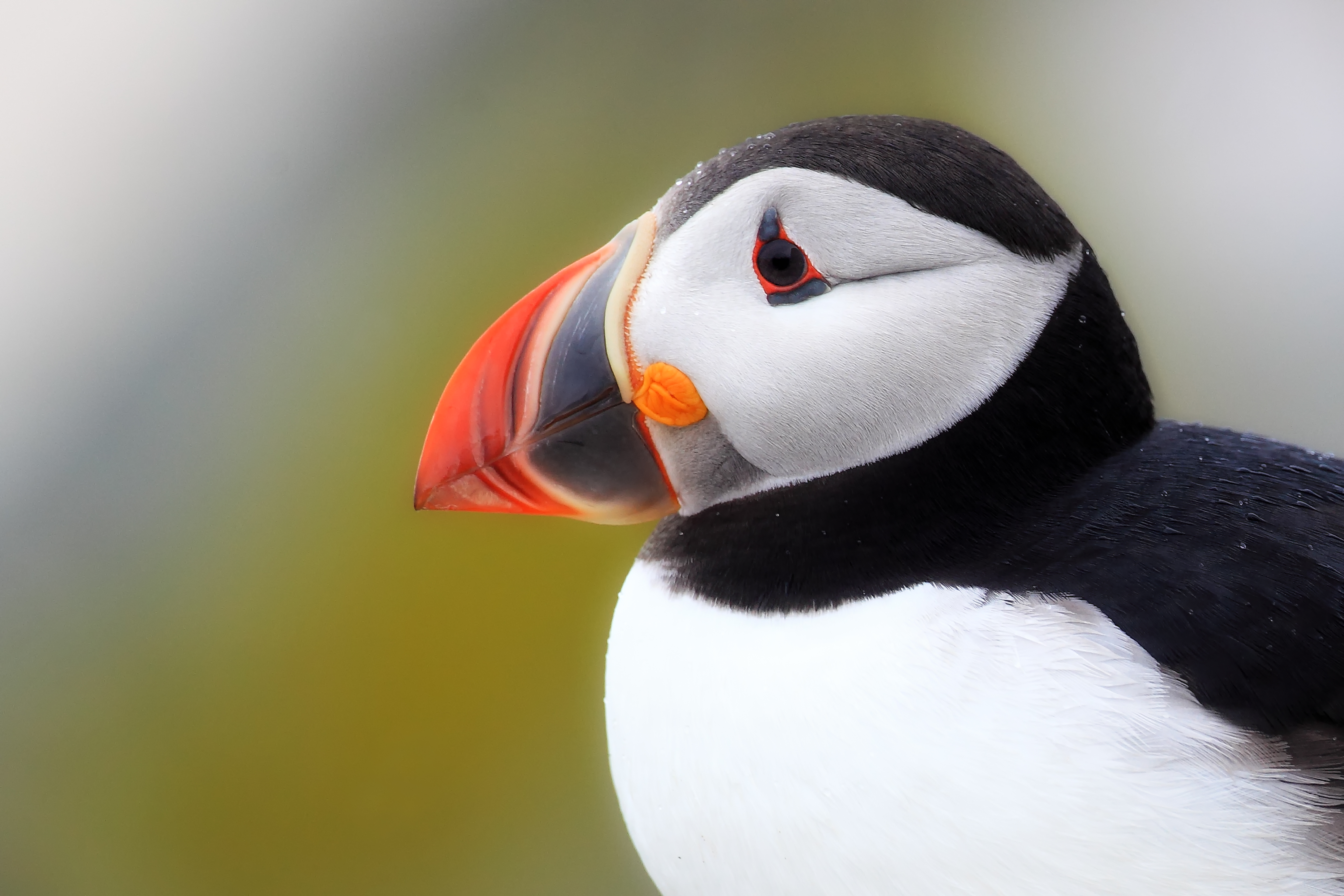
Atlantic Puffin close-up portrait by Robbie George

Photographing Atlantic Puffins: Wind, Distance, and Timing

Photographing Atlantic Puffins is as much about reading place as it is about photographing a bird. Puffins live in exposed coastal environments where wind, cliff angle, colony behavior, and light all shape the encounter. The strongest images usually come when the photographer understands the rhythm of the colony—where birds land, how they move along the slope, when they pause, and how the weather changes the scene.

These birds can look approachable, but good puffin photography still depends on restraint. The goal is not to push closer, but to let the bird remain natural within its space. That approach fits your broader field ethic of distance first, habitat always, and it aligns directly with wildlife observation field techniques.

Work with the Landing Zones

Puffins often reuse the same approach lines and landing areas, especially near colony edges, grassy slopes, and rock perches.

Let Behavior Set the Frame

Billing, fish carries, takeoffs, and alert pauses all tell more of the story than a static portrait alone.

Use Coastal Light Well

Overcast skies, marine haze, and angled morning or evening light can all help reveal feather detail and color without harsh contrast.

Timing Matters

Puffin photography is highly seasonal. Breeding season offers the best opportunities because birds are visible on land, commuting with fish, defending burrows, and interacting with mates. Outside of that narrow window, puffins spend most of their lives offshore, making close field observation far more difficult. That is why pages like your Seasonal Wildlife Calendar and Wildlife Photography Maps are so useful for planning.

Wind is also part of the equation. Puffins often use headwinds for landing and takeoff, which can create ideal moments for flight images if you position yourself carefully and wait for repeated behavior patterns to emerge.

Portraits, Place, and Story

Puffins are visually striking enough to support close portrait work, but some of the strongest images also include habitat—grasses, sea cliffs, colony slopes, fog, or ocean beyond. Those details remind the viewer that this is not just a colorful bird; it is a seabird shaped by exposure, weather, and edge habitat.

The best puffin photographs hold both beauty and ecology at once. They show the bird clearly, but they also preserve the feeling of the place that made the bird possible.

Naturepedia Connections: Atlantic Puffin

The Atlantic Puffin connects marine ecosystems, coastal breeding systems, and seasonal migration patterns. Use these links to explore how puffins fit into the broader wildlife and Naturepedia framework.

From Field Observation to the Larger Coastal & Seabird System

Watching an Atlantic Puffin on a colony ledge or returning with fish reveals much more than a colorful seabird. It shows how marine prey, nesting habitat, seasonal timing, and coastal weather all work together in one tightly linked system. Puffins make that system visible. Their breeding success, food deliveries, colony behavior, and seasonal return all reflect the condition of the surrounding sea.

That is where this species connects naturally to the broader structure of your site. The Atlantic Puffin belongs within Songbirds, Seabirds, and Other Birds, while its ecological role connects directly to Wildlife Behavior & Ecology, Ecosystems of North America, and Food Webs & Ecological Relationships. For where this species is best understood in the field, Machias Seal Island is one of the most important geography connections in the system.

The next step in the buildout is the dedicated Atlantic Puffin Naturepedia species page, where habitat, breeding systems, marine food dependence, migration, conservation, and field observation guidance can live in a more structured long-form entry.

Frequently Asked Questions: Atlantic Puffin (Fratercula arctica)

Where do Atlantic Puffins live?

Atlantic Puffins live across the cold waters of the North Atlantic. They breed on offshore islands and coastal cliffs in places such as Maine, eastern Canada, Iceland, Greenland, Norway, and the British Isles, then spend much of the rest of the year far offshore.

What do Atlantic Puffins eat?

Atlantic Puffins mainly eat small schooling fish such as sand lance, herring, and capelin. During breeding season, adults carry these fish back to the colony to feed their chick.

Why can puffins carry several fish at once?

Puffins have specialized spines in the mouth and a tongue structure that helps hold fish in place while they continue hunting. This allows them to bring multiple fish back to the burrow in a single trip.

Where can I see Atlantic Puffins in North America?

One of the best-known places to see Atlantic Puffins in North America is Machias Seal Island, along with other protected breeding islands off the coast of Maine.

What are the biggest threats to Atlantic Puffins?

Major threats include warming ocean temperatures, shifting prey fish distribution, overfishing, marine pollution, invasive predators at nesting colonies, and severe coastal storms.

Why are Atlantic Puffins important to marine ecosystems?

Puffins are important because they reflect the health of marine food systems. Their breeding success depends on abundant forage fish, so changes in puffin colonies often reveal larger ecological shifts in the North Atlantic.

About the Author
Robbie George nature photographer

Robbie George is a nature photographer, writer, and field-based observer whose work is rooted in watching how wildlife behaves within real habitats, real weather, and changing seasonal systems.

Atlantic puffins are a powerful example of that field-first perspective. Observing them means paying attention not only to the bird, but to the colony, the wind, the sea state, the fish they carry, and the coastal ecology that makes their return possible. This page follows that same approach—treating the puffin as part of a larger living system rather than as an isolated subject.

Through that process, photography becomes more than an image. It becomes a way of connecting seabirds, marine ecosystems, migration patterns, field locations, and Naturepedia into a larger wildlife knowledge system built from direct observation and experience in the field.