
Golden Eagle: Majestic Birds of Prey and Their Habitat
Golden Eagle Behavior, Habitat & Life Cycle — A Field Guide to One of North America’s Most Powerful Raptors
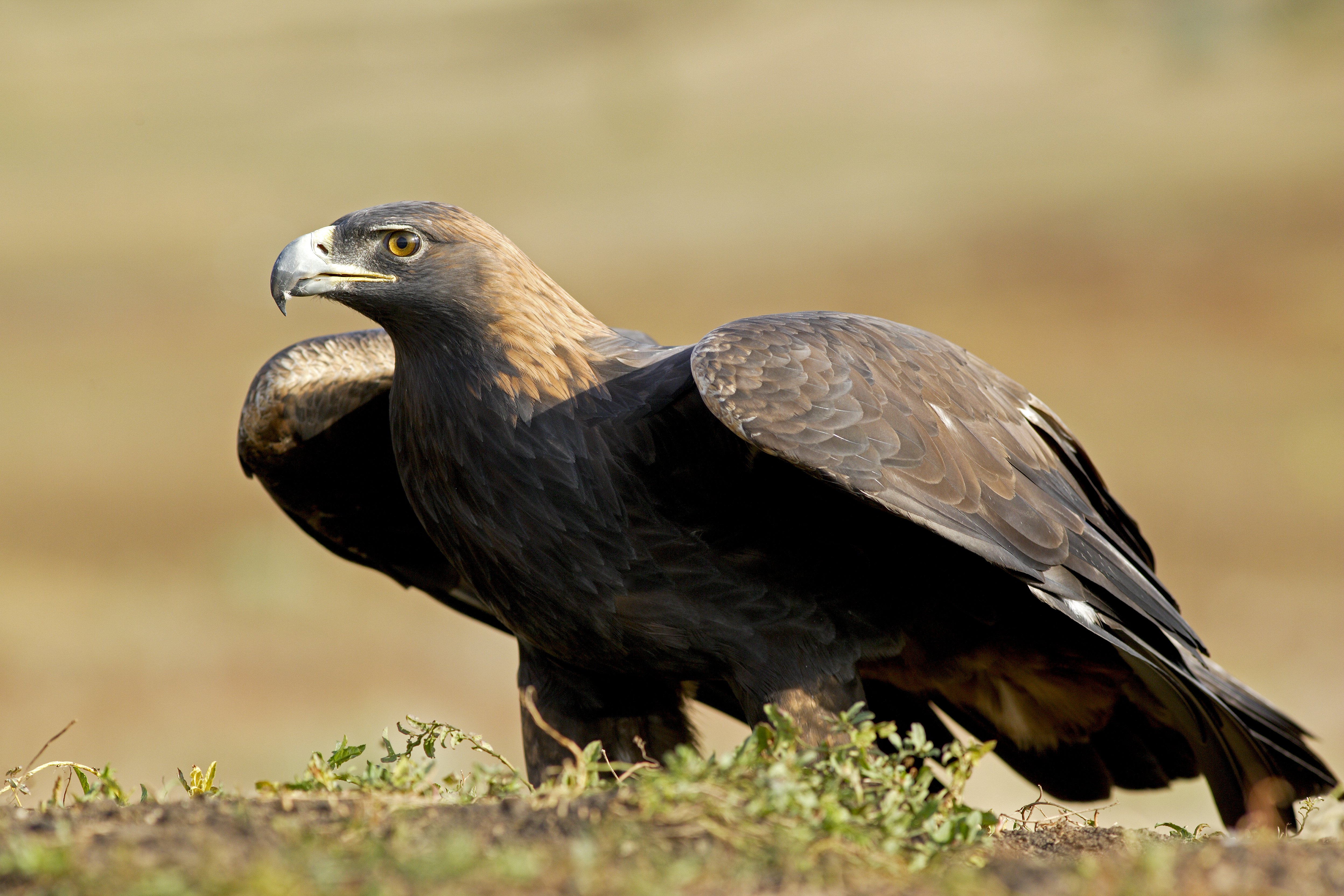
In the field, golden eagles always feel tied to open space. I usually see them where the landscape gives them room to work—mountain ridges, high desert, open grasslands, and broad valleys where wind, elevation, and visibility all come together. They don’t move with the stop-and-start rhythm of smaller raptors. They hold space, read terrain, and use the shape of the land as part of the hunt.
As one of the most formidable members of my Birds of Prey system, the golden eagle stands out for its combination of power, range, and restraint. Its behavior connects directly into my Wildlife Behavior & Ecology work, where hunting style, energy conservation, territorial use, and environmental awareness all shape how a species survives.
Golden eagles are also deeply tied to the structure of Ecosystems of North America. Unlike fish-focused raptors such as the bald eagle or osprey, golden eagles are more often linked to uplands, mountain systems, open country, and prey-rich landscapes where rabbits, ground squirrels, and other mammals support top-level predation. Their presence reveals not only wildness, but ecological function across large intact territories.
Season and movement matter here too. Some populations remain closely tied to territory year-round, while others shift with weather, prey availability, and latitude. To understand when and where these patterns become visible in the field, I connect species pages like this one to my Seasonal Wildlife Calendar and broader migration work, where timing becomes part of how I read the landscape.
On This Page
Golden Eagle Hunting Behavior
When I watch golden eagles in the field, what stands out most is how closely their hunting is tied to terrain. Unlike water-focused raptors, they don’t rely on surface visibility. Instead, they use elevation, contours, and wind to control approach. Mountain ridges, slopes, and open valleys become part of the hunt itself.
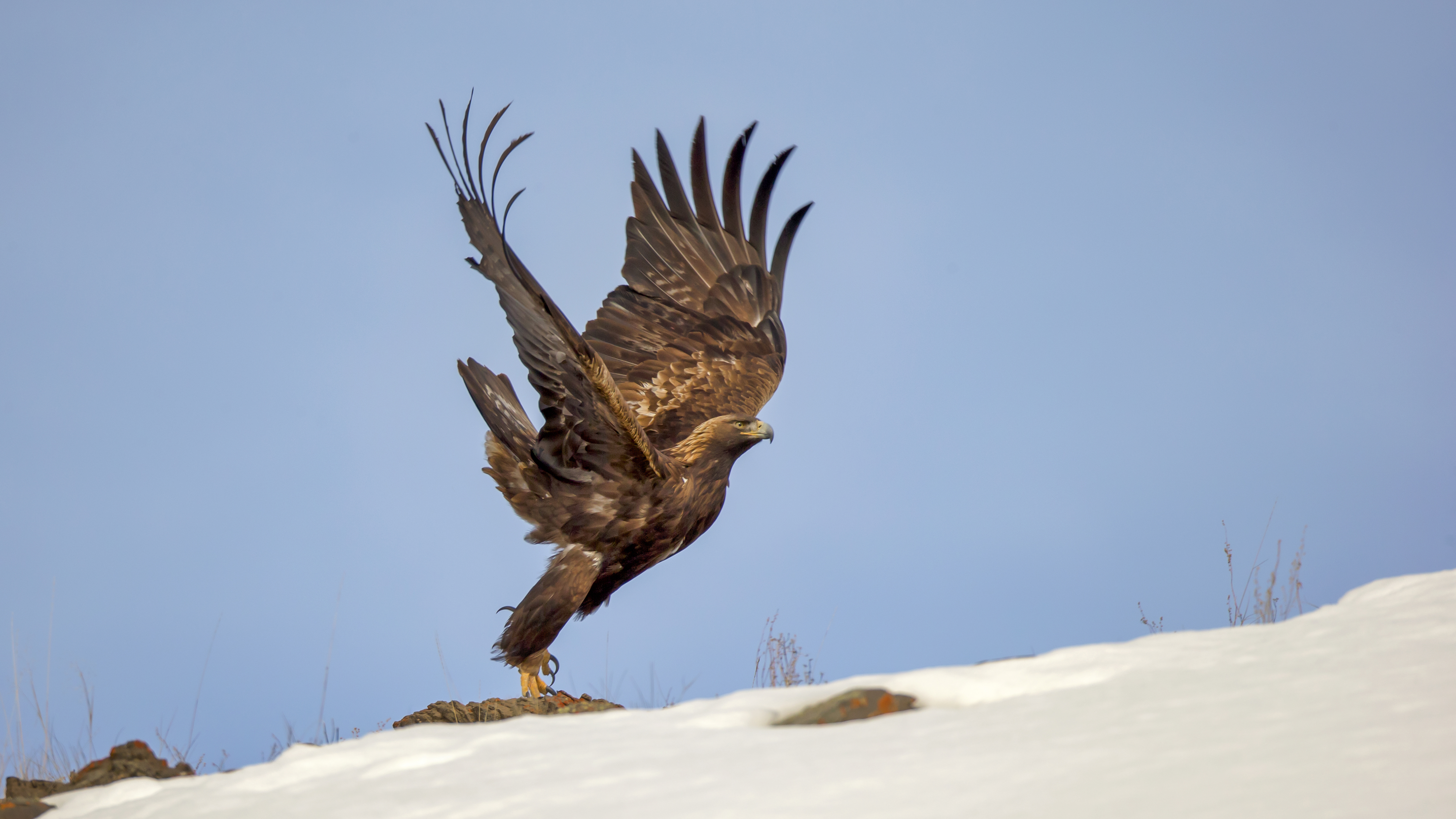
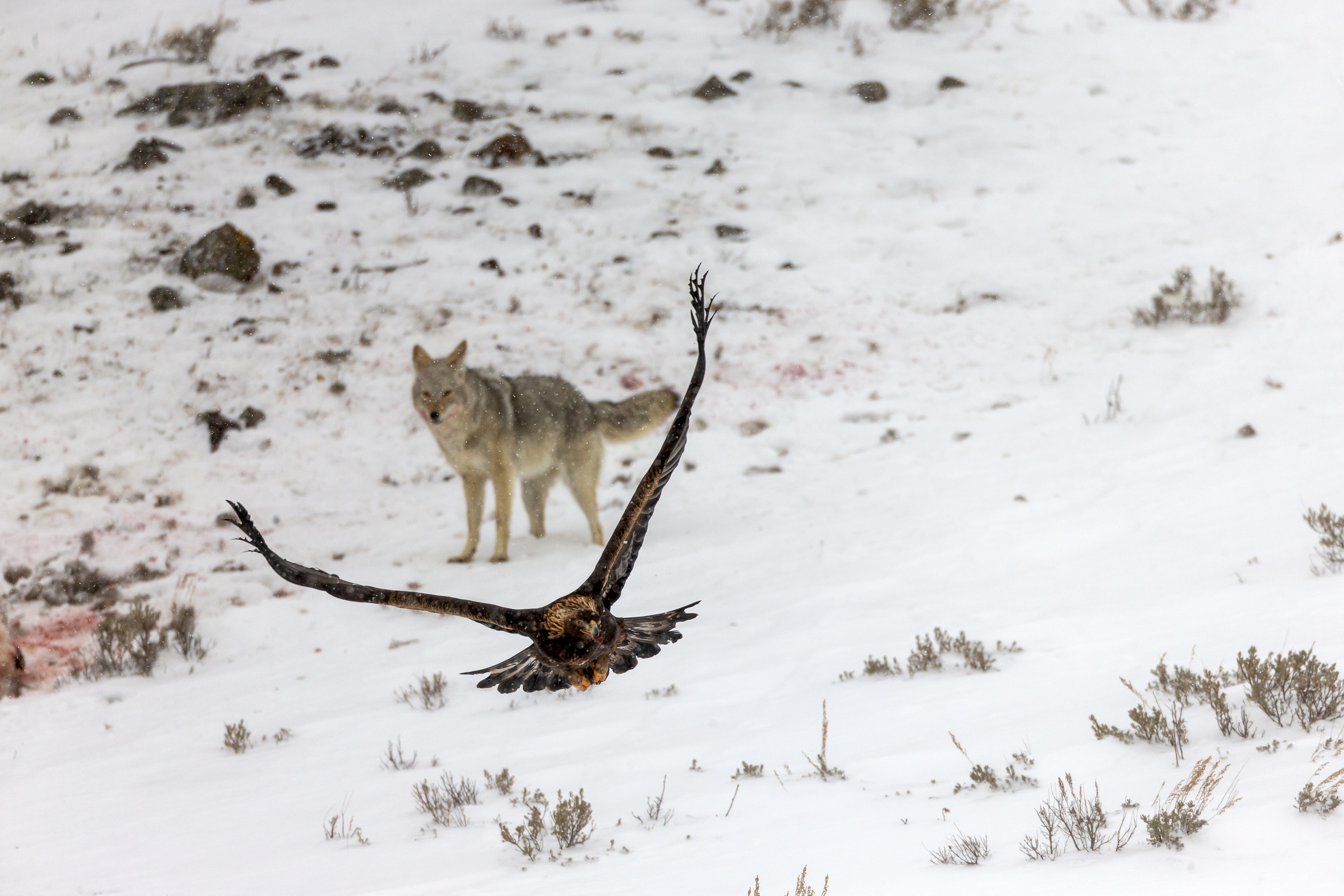
A golden eagle will often begin from height—either soaring or perched along a ridgeline—scanning the ground below. Once it identifies movement, it commits quickly. The descent is fast and controlled, sometimes following the shape of the land to stay hidden before the final strike. That use of landscape gives the eagle a major advantage, especially in open environments where prey would otherwise detect movement early.
This is one of the defining differences between golden eagles and other birds of prey. Their hunting is less about hovering or surface reading, and more about positioning, speed, and angle. They often use gravity and wind together, minimizing effort while maximizing impact.
In many cases, golden eagles hunt mammals such as rabbits, hares, and ground squirrels. But what makes them especially powerful is their ability to take larger prey when conditions allow. I’ve seen them use terrain and momentum to overwhelm animals that would otherwise seem too large—another example of how behavior and environment work together in real time.
Their hunting style fits directly into the patterns I explore in Wildlife Behavior & Ecology, where success is shaped by energy efficiency, spatial awareness, and adaptation to specific environments. It also reflects the structure of North American ecosystems, particularly in open country and mountainous regions where predator-prey dynamics are strongly influenced by terrain.
More than anything, golden eagle hunting shows how power and restraint work together. They don’t chase unnecessarily. They wait, position, and act with precision. It’s a pattern I’ve come to recognize across multiple locations—when the landscape is open and the wind is working, the eagle is already calculating the next move.
Golden Eagle Habitat
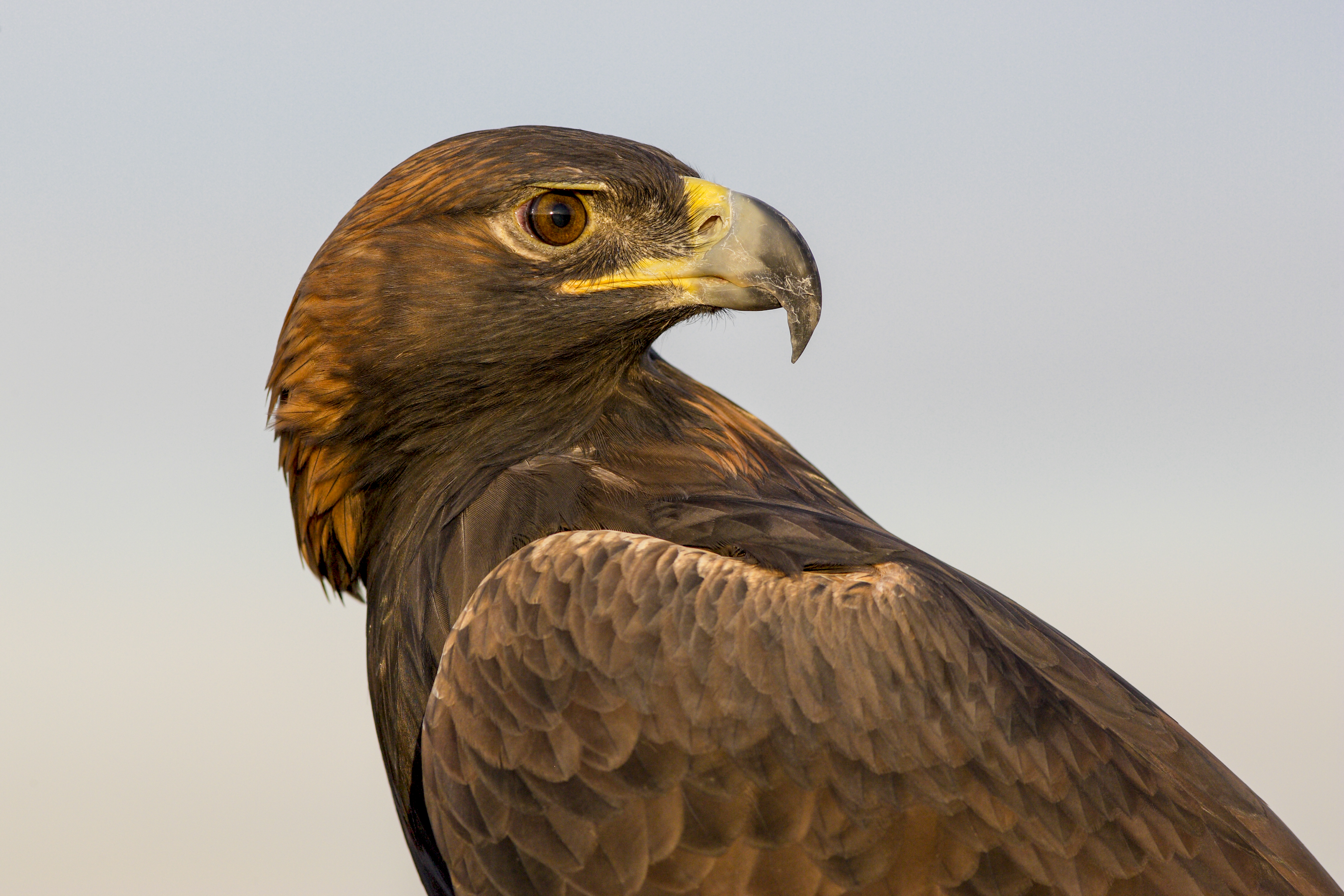
Golden eagles are birds of open country. In my experience, the best habitat for them is not dense forest or closed terrain, but wide landscapes where they can see, soar, and hunt with space around them. Mountain ranges, foothills, canyons, high desert, grasslands, and open shrub-steppe all provide the kind of conditions this species depends on.
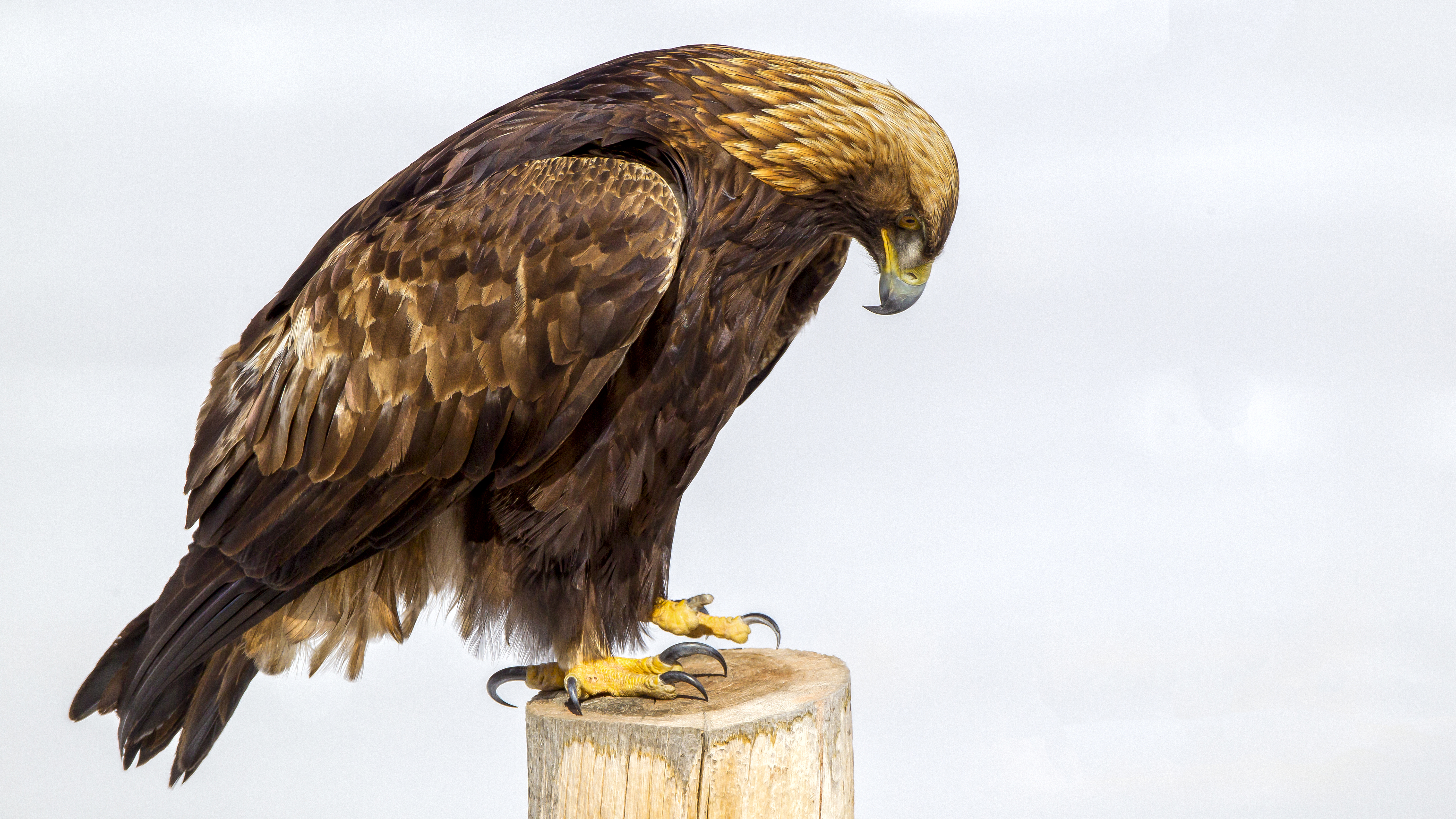
What matters most is visibility and structure. Golden eagles need room to move, strong air currents to ride, and enough elevation to survey the ground below. Cliffs, ridgelines, rocky outcrops, and tall perches all give them advantages for both nesting and hunting. In these places, the habitat is doing more than holding the bird—it is actively shaping the way the bird lives.
This is why golden eagles fit so naturally into my Ecosystems of North America framework. Their habitat is tied to upland systems, mountain corridors, open basins, and dry country where predator-prey relationships can unfold across long sightlines and large territories.
Some of the best places to think about golden eagle habitat are landscapes like Yellowstone, Grand Teton, and other western environments where slope, elevation, and open terrain create ideal hunting and nesting conditions. Even where I don’t see the bird directly, the habitat often tells me it belongs there.
Golden eagles also need prey-rich ground. Rabbits, hares, ground squirrels, prairie dogs, and other medium-sized mammals are part of what makes open country viable. So the habitat is never just cliffs or sky—it’s the entire system below, from vegetation and prey to weather and topography. That broader relationship connects directly into my Wildlife Habitats & Ecosystem Zones work.
For field observation, I look for edges within open country: a ridge above a valley, a cliff above grassland, or a basin where thermals begin to build. Those transition zones often reveal how the eagle is using the land. They also connect cleanly into my broader Wildlife Observation Locations system, where species, place, and repeatable field knowledge come together.
Golden Eagle Diet
Golden eagles feed primarily on medium-sized mammals, and in much of the West that often means rabbits, hares, ground squirrels, prairie dogs, and similar prey that live in open country. Their diet reflects the same landscapes they depend on for hunting—places where prey is visible from height and where speed, angle, and surprise can be used effectively.
What I find especially revealing about golden eagle diet is how closely it mirrors habitat. In mountain and high desert systems, prey tends to be terrestrial rather than aquatic, so the eagle’s feeding ecology is tied directly to upland food webs. That makes this species very different from fish-focused raptors. It also means that if prey populations shift, the eagle feels that change immediately.
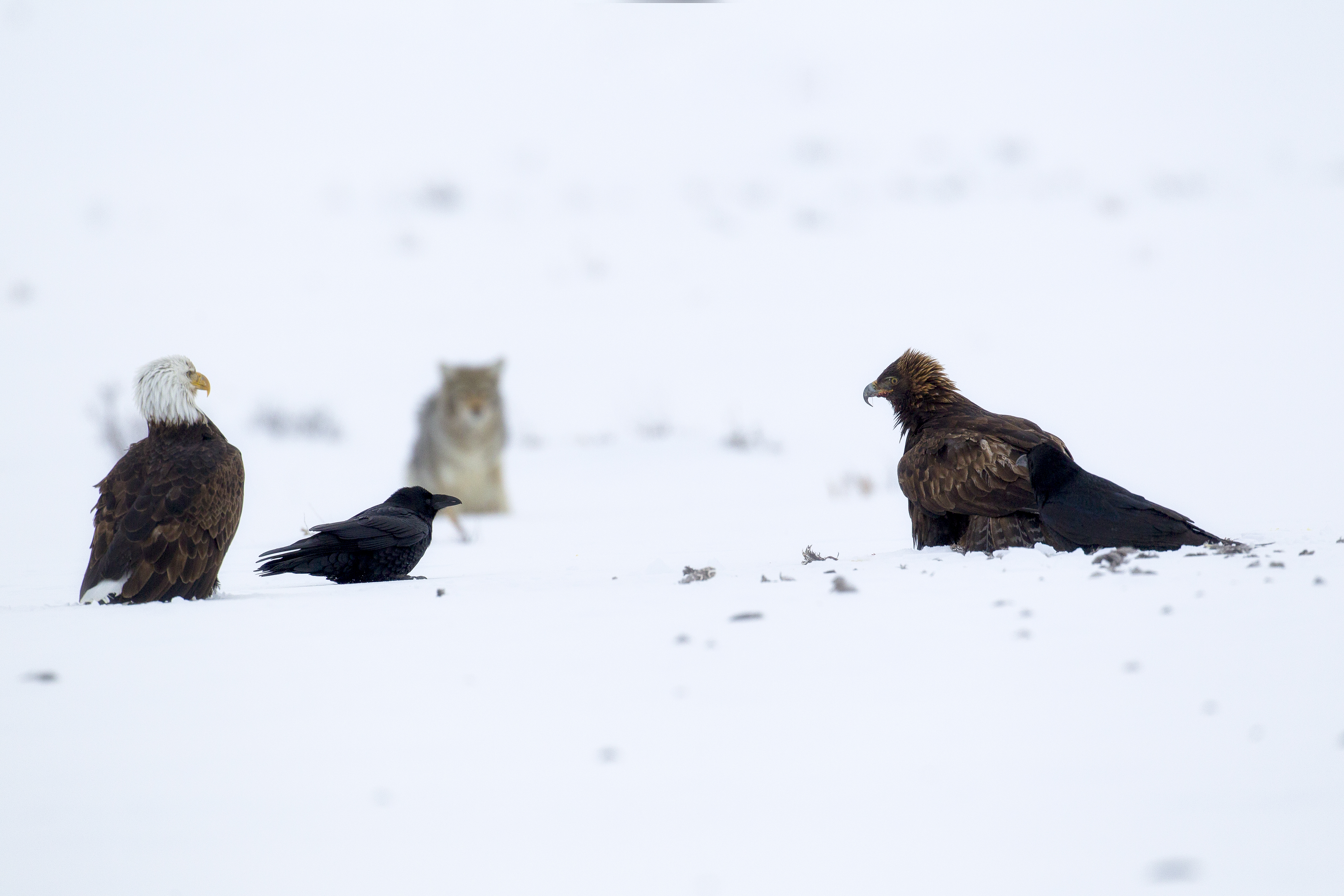
Golden eagles are powerful enough to take a surprising range of animals when conditions allow. In addition to the mammals that make up most of their diet, they may also prey on birds, reptiles, and occasionally larger animals when terrain and opportunity align. They will also scavenge carrion, especially during harder seasons or when energy conservation becomes more important than pursuit.
That flexibility is one reason they remain such effective predators across broad regions. Their diet is specialized enough to reflect open-country hunting, but adaptable enough to respond to changing conditions. This fits directly into the relationships I explore in Food Webs & Ecological Relationships, where predators are best understood through the systems they help regulate.
Because golden eagles feed high in the food chain, their diet also makes them useful ecological indicators. A healthy golden eagle landscape usually means more than just the presence of cliffs or open sky—it means prey populations are functioning, habitat remains intact, and the wider ecosystem still has enough structure to support an apex raptor.
Golden Eagle Life Cycle
The golden eagle life cycle begins in some of the most exposed and elevated nesting sites in North America. In my experience, these nests—called eyries—are often placed on cliffs, ridgelines, or tall structures where the surrounding landscape can be monitored easily. That placement reflects everything about the species: visibility, control, and access to open hunting ground.
Golden eagles form strong pair bonds and typically return to the same territory year after year. Once breeding begins, the female usually lays one to three eggs, and both adults share responsibility for incubation and protection. The timing of this stage is closely tied to season, prey availability, and weather patterns across the territory.
After hatching, eaglets remain in the nest for several weeks, growing quickly under the constant care of both parents. During this period, adult hunting activity becomes more intense, as prey must be delivered consistently to support rapid development. The nest becomes a central point in the landscape, with repeated flight paths connecting hunting areas back to the young.
Fledging occurs at around 10 to 12 weeks, but like many large raptors, golden eagles are not immediately independent. Juveniles spend extended time learning how to fly efficiently, how to use wind and terrain, and how to recognize prey. This learning phase is critical, especially in open environments where mistakes can be costly.
One of the defining features of the golden eagle life cycle is its slow maturation. Juveniles do not resemble adults right away. Instead, they carry darker plumage for several years before developing the golden nape and more uniform adult coloration. This extended development period reflects a broader pattern I see across apex predators—skill, control, and efficiency take time to build.
This life cycle connects directly to the patterns I explore in Wildlife Behavior & Ecology, where territory, learning, and long-term pair bonding shape survival. It also reinforces how dependent the species is on stable habitat across North American ecosystems, especially in regions where nesting sites and prey must remain consistent over time.
Golden Eagle Behavior
In the field, golden eagle behavior is defined by control and efficiency. They don’t move constantly. Instead, they spend long periods either perched or soaring, reading the landscape before acting. When they do move, it’s usually with purpose—using wind, elevation, and terrain rather than relying on repeated flapping.
Soaring is one of the most recognizable behaviors. Golden eagles use thermals rising from the ground to gain altitude with minimal effort, often circling slowly before gliding across large distances. This allows them to cover expansive territories while conserving energy, something that becomes especially important in the wide, open environments they inhabit.
Juvenile behavior looks very different. Younger birds tend to range more widely and show less precision in flight. They experiment more, make more adjustments, and take longer to settle into the kind of efficient movement seen in adults. Watching that transition over time is one of the clearest ways I can see learning happening in real environments.
Territorial behavior is strong, especially during breeding season. Pairs maintain large ranges and return to the same general nesting areas year after year. Instead of constant conflict, boundaries are often maintained through presence, flight patterns, and occasional aerial displays rather than direct physical encounters.
Pair behavior is also a defining part of the species. Mated golden eagles often move through their territory in coordinated ways—sharing hunting responsibilities, returning to nest sites, and responding to each other’s position in the landscape. This coordination becomes most visible during breeding season, but it continues at a lower level throughout the year.
All of this fits directly into the broader patterns I track in Wildlife Behavior & Ecology, where movement, energy use, and territory are tied to environmental conditions. In golden eagles, behavior is not separate from the landscape—it is shaped by it at every level.

Golden Eagle Conservation
Golden eagles remain one of the most powerful predators in North America, but like many large raptors, they depend on conditions that are increasingly under pressure. What I see in the field is not just a species tied to habitat—it’s a species tied to space. Large, open territories, stable prey populations, and undisturbed nesting areas are all essential to how golden eagles survive.
One of the biggest challenges for golden eagles is habitat fragmentation. As development expands into open landscapes, the large continuous territories they depend on become broken apart. This affects not only where they can nest, but also how effectively they can hunt across the terrain.
Collisions with infrastructure, especially wind turbines in open country, have become another major issue in parts of the West. Because golden eagles rely on the same wind corridors used for energy development, their movement patterns can overlap directly with these structures. Lead poisoning from ammunition and loss of prey base in some regions also contribute to long-term pressure on populations.
This is why I place golden eagles directly within my Wildlife Conservation & Habitat system. Their presence reflects more than just survival—it reflects whether large-scale ecosystems are still functioning. When golden eagles are stable, it usually means the broader structure beneath them is still intact.
They also connect strongly to Biodiversity & Ecosystem Balance. As apex predators, they help regulate prey populations and influence how energy moves through upland systems. Their absence would signal a deeper imbalance across those landscapes.
In the field, conservation starts with awareness. Keeping distance from nesting areas, understanding seasonal sensitivity, and respecting the scale of their territory all matter. Golden eagles don’t adapt well to constant disturbance, and their success depends on maintaining the kind of open, quiet landscapes where their behavior can remain undisturbed.
Golden Eagle Migration
Golden eagle migration is more variable than many people expect. In the field, I don’t think of them as a species locked into one fixed pattern. Some golden eagles remain closely tied to territory year-round, especially where prey stays available and winter conditions are manageable. Others move seasonally, shifting south or downslope as weather, snow cover, and food availability change.
That flexibility is one of the most important things to understand about the species. In northern latitudes and harsher mountain environments, younger birds and some breeding populations are more likely to migrate. In milder regions, especially where open country continues to support prey through winter, golden eagles may hold their range for much longer or remain resident altogether.
When migration does happen, golden eagles move through the landscape the same way they hunt within it—by using topography and air movement to their advantage. Ridges, mountain fronts, open valleys, and thermal corridors all help guide travel. Rather than constant flapping, they rely heavily on soaring and gliding, covering long distances with remarkable efficiency.
I see this as part of a much larger pattern that connects directly into my Wildlife Migration & Seasonal Patterns work. Golden eagle movement is shaped by season, but also by prey cycles, snowpack, wind, and elevation. Their migration is not just a route on a map—it is a living response to environmental conditions across large regions.
This is also where timing becomes critical for field observation. Fall and winter can be especially productive in places where birds concentrate along ridgelines, open basins, or migration corridors. To plan for those periods, I connect species pages like this one into my Seasonal Wildlife Calendar, where movement, behavior, and time of year can be understood together.
In the end, golden eagle migration reinforces the same truth I see throughout the species: they are shaped by open space, terrain, and changing conditions. Whether a bird stays loyal to one territory or moves across a wider range, the pattern is always tied back to the land itself. That is what makes watching them so compelling—their movement always reveals something larger about the structure of the landscape they inhabit.
From Field Observation to the Larger Golden Eagle System
When I watch a golden eagle in the field, I’m never just watching a single bird. I’m watching a whole system come into view at once—terrain, prey movement, wind, elevation, season, and the decisions the bird makes within that structure. The eagle becomes a way of reading the landscape itself.
That is exactly how I’ve built this site. The golden eagle belongs inside my Birds of Prey system, but it also connects directly into Wildlife Behavior & Ecology, Ecosystems of North America, Wildlife Habitats & Ecosystem Zones, and Wildlife Conservation & Habitat. Each of those layers helps explain why the species lives where it does and how it functions across large western landscapes.
Golden eagles also connect strongly to place and time. Habitat ties them to mountain ranges, open basins, desert systems, and ridgelines. Seasonal movement ties them to changing prey availability, weather, and elevation. When I put those pieces together, the species becomes more than a subject—it becomes part of a larger ecological network that can be observed, understood, and revisited through field experience.
This is also where the blog connects into Naturepedia. The purpose of this page is to show the golden eagle in motion—how it hunts, moves, matures, and holds territory across real landscapes. The next step is the structured species entry, where behavior, habitat, diet, migration, ecology, and observation guidance are organized into a permanent reference system.
Golden Eagle FAQ
What do golden eagles eat?
Golden eagles primarily feed on medium-sized mammals such as rabbits, hares, ground squirrels, and prairie dogs. Depending on conditions, they may also hunt birds or reptiles and will scavenge carrion when it provides an easier source of energy.
Where do golden eagles live?
Golden eagles live across open landscapes including mountains, grasslands, deserts, and high-elevation terrain. They prefer areas with wide visibility, strong air currents, and enough space to hunt and move efficiently.
Do golden eagles migrate?
Some golden eagles migrate seasonally, especially in colder northern regions, while others remain year-round in areas where prey and habitat conditions remain stable. Their movement is flexible and depends on environment rather than a single fixed route.
How large is a golden eagle’s wingspan?
Golden eagles typically have a wingspan between 6 and 7 feet, making them one of the largest and most powerful raptors in North America.
Do golden eagles mate for life?
Golden eagles often form long-term pair bonds and return to the same nesting territory year after year. When habitat remains stable and breeding is successful, pairs can remain together for many seasons.
Why are golden eagles important to ecosystems?
As apex predators, golden eagles help regulate prey populations and maintain ecological balance across large landscapes. Their presence often reflects the health of open-country ecosystems and the stability of the food web beneath them.
About the Author

Robbie George is a nature photographer, writer, and field-based observer whose work is rooted in watching how wildlife behaves within real habitats, shifting light, and seasonal change.
My experience with golden eagles comes from time spent in open country—mountain ranges, high desert, and wide landscapes where terrain plays a direct role in how these birds live. What draws me to them is not just their size or power, but how precisely they use the land, the wind, and the moment to move and hunt.
Through that field-first approach, my goal is to connect observation to understanding. Each species page becomes part of a larger system linking behavior, habitat, ecosystems, and real-world locations—what I’ve built as Naturepedia. The golden eagle is one of the clearest examples of how those connections come together across large, intact landscapes.