
Osprey Diving & Fishing Behavior: How This Raptor Hunts with Precision
The Precision Hunter of Water — Inside the Osprey’s Diving and Fishing Strategy
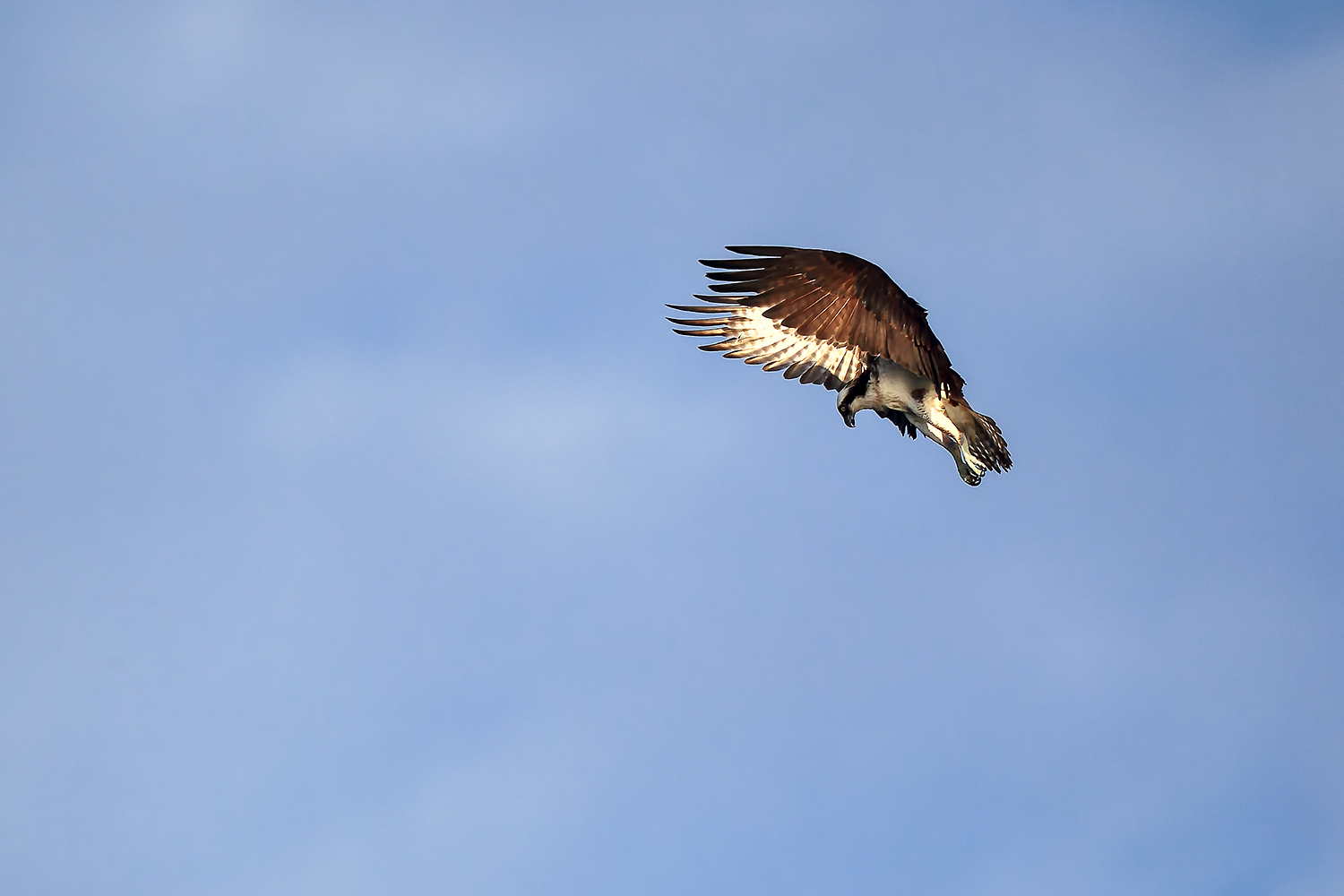
Over open water, the osprey slows into a hover, wings beating against the air as it fixes its gaze below. For a moment it appears suspended — reading the surface, adjusting its position, waiting for alignment. Then it drops, feet first, breaking the water with force and precision before rising again with a fish locked in its talons.
In the field, this sequence is unmistakable. It’s not just a dramatic moment — it’s a system playing out in real time. Every part of the osprey is built around this interaction: vision tuned to water, feet designed for grip, wings built for lift under load. This is a bird shaped almost entirely by one task — catching fish.
That specialization connects the osprey directly to aquatic environments across North America. Lakes, rivers, marshes, and coastlines are not just places it visits — they define how it moves, hunts, and survives. To understand where this species fits within the larger structure, explore the Birds of Prey hub, patterns within Wildlife Behavior & Ecology, and the environments that shape it in Ecosystems of North America.
Osprey Hunting Behavior
Few hunting sequences in North American birdlife are as recognizable as an osprey working over water. In the field, the pattern is consistent: the bird circles or glides above a lake, river, marsh, or coastal edge, then slows into a hover as it studies the surface below.
For a brief moment, it appears suspended in place — making subtle adjustments with its wings and tail as it reads movement beneath the water. Then everything changes. The wings pull inward, the body angles downward, and the osprey drops feet-first toward the surface.
What looks dramatic from a distance is actually a highly controlled and repeatable sequence shaped by water, light, and timing. Ospreys are not just reacting — they are interpreting. Angle, glare, depth perception, and fish movement all influence when and how they commit to the dive.
Unlike many birds of prey, which strike horizontally or from cover, the osprey is built for vertical entry into water. They can submerge more deeply than most people expect, using momentum and leg strength to seize fish below the surface before lifting back into the air.
After the catch, another key behavior follows. The osprey often repositions the fish so that it faces headfirst in flight. This reduces drag and stabilizes the load — a small but critical adjustment that shows how tightly hunting behavior, anatomy, and physics are connected.
This entire sequence — hover, drop, submerge, lift, and reorient — is one of the clearest examples of behavior shaped directly by environment. It fits naturally within broader patterns explored in wildlife behavior and ecology and the structure of North American ecosystems.
Osprey Habitat
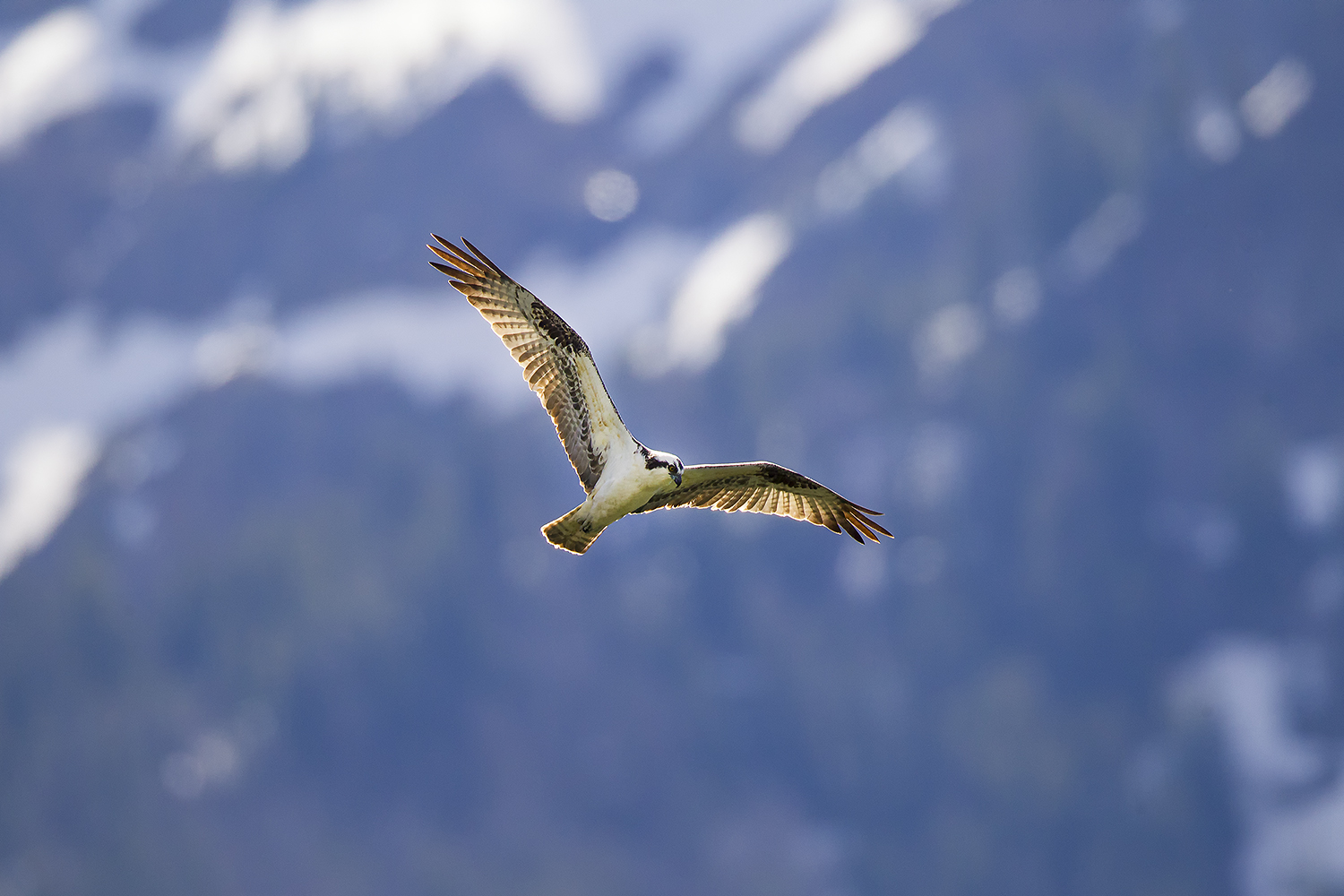
Ospreys live where fish are available and where open water can be hunted efficiently. Lakes, reservoirs, large rivers, marshes, estuaries, coastal bays, and shorelines all provide the kind of habitat this raptor depends on. Unlike woodland hunters that rely on cover or surprise, the osprey needs visibility. It hunts by watching the water from above, so broad sightlines and relatively open approach paths matter.
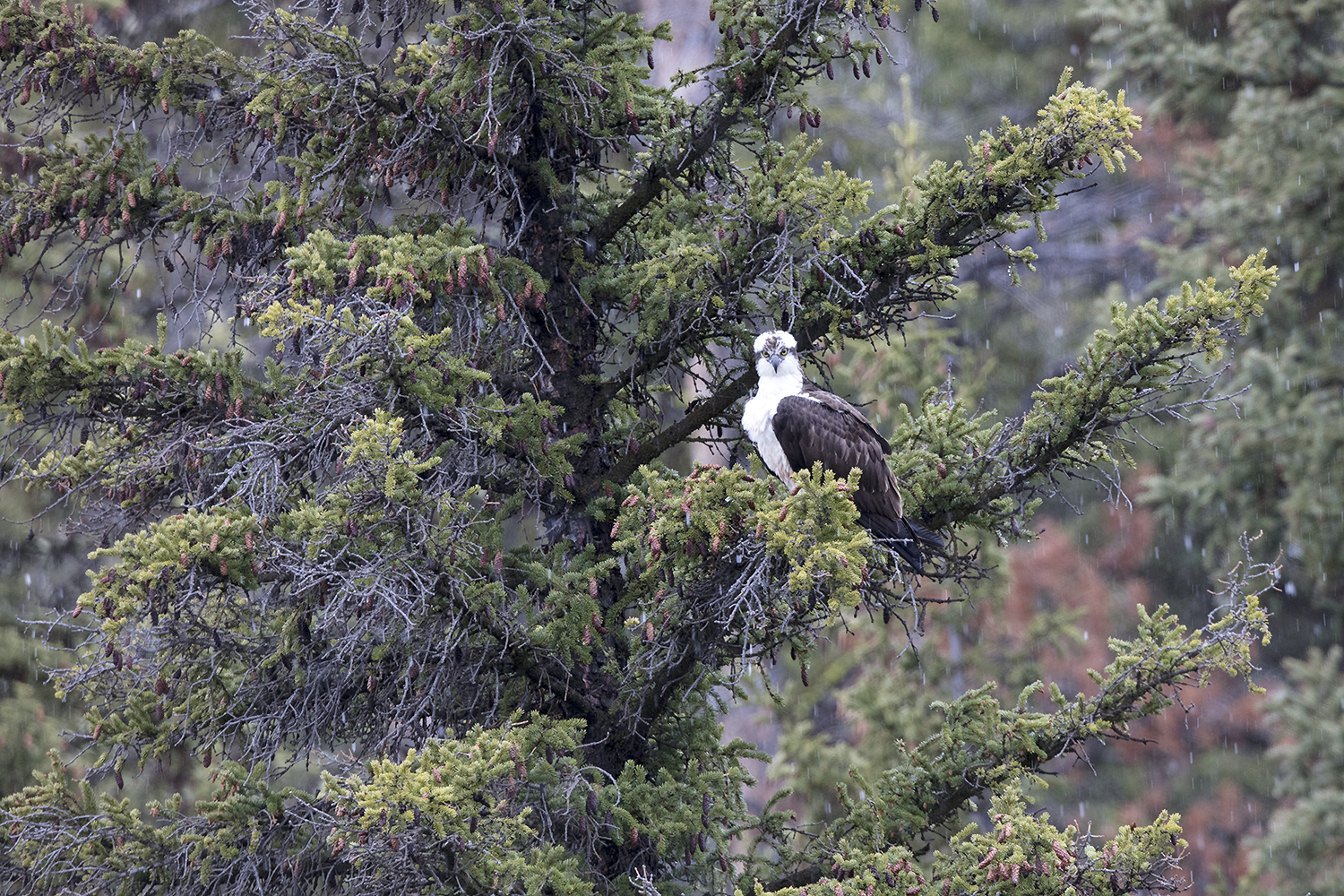
Perches are another important part of osprey habitat. Dead trees, snags, shoreline pines, utility structures, channel markers, and nest platforms all give the bird places to rest, scan, feed, and defend territory. In many landscapes, the most productive osprey habitat is not just water alone, but water paired with elevated vantage points and enough surrounding space for takeoff and landing.
Because they are so closely tied to aquatic environments, ospreys become strong indicators of healthy fish-bearing systems. Their presence links raptor behavior directly to the wider structure of North American ecosystems, especially wetlands, river corridors, and coastal zones. They also fit naturally within broader habitat discussions on wildlife behavior and ecology, where landscape structure shapes how animals move, hunt, and breed.
For wildlife watchers and photographers, the best osprey habitat is often edge habitat — places where water meets forest, marsh meets open sky, or river channels pass close to nesting trees and poles. These transition zones concentrate movement and make osprey behavior easier to observe. They also connect well with your broader site architecture through the Wildlife Observation Locations of North America hub, where habitat, species, and place all come together.
Osprey Diet
The osprey’s diet is built almost entirely around fish. While many raptors are opportunistic and take a wider range of prey, the osprey is one of North America’s most specialized predators. Its feeding strategy depends on aquatic systems, surface visibility, and fish movement close enough to strike from above.
Common prey includes bass, trout, perch, mullet, and other medium-sized fish swimming near the surface. Ospreys typically target fish they can lift and carry efficiently, balancing size with control in flight. Larger fish may be attempted, but success depends on whether the bird can stabilize the catch and gain enough lift to carry it away from the water.
That narrow diet explains why the species is so tightly connected to habitat quality. Water clarity, fish abundance, and the structure of lakes, rivers, marshes, and coastal systems all shape feeding success. An osprey is not just hunting in water — it is reading an entire aquatic environment to locate prey at the right depth, angle, and moment.
Unlike many birds of prey, the osprey rarely hunts mammals or birds. Its anatomy reflects that specialization: long curved talons for holding slippery prey, rough spicules on the foot pads for traction, and a reversible outer toe that creates a stronger grip during lift and flight.
After capture, the osprey often carries its prey to a nearby perch, nest, or feeding site, where it tears the fish into manageable pieces with its hooked beak. This behavior ties directly into broader patterns in food webs and ecological relationships, where predators like the osprey reflect the health and structure of the aquatic systems they depend on.
Because their diet is so specialized, ospreys function as more than hunters. They are indicators. When ospreys are feeding successfully, nesting consistently, and returning to the same waters, it often signals that the fish-bearing ecosystem beneath them is still functioning well.
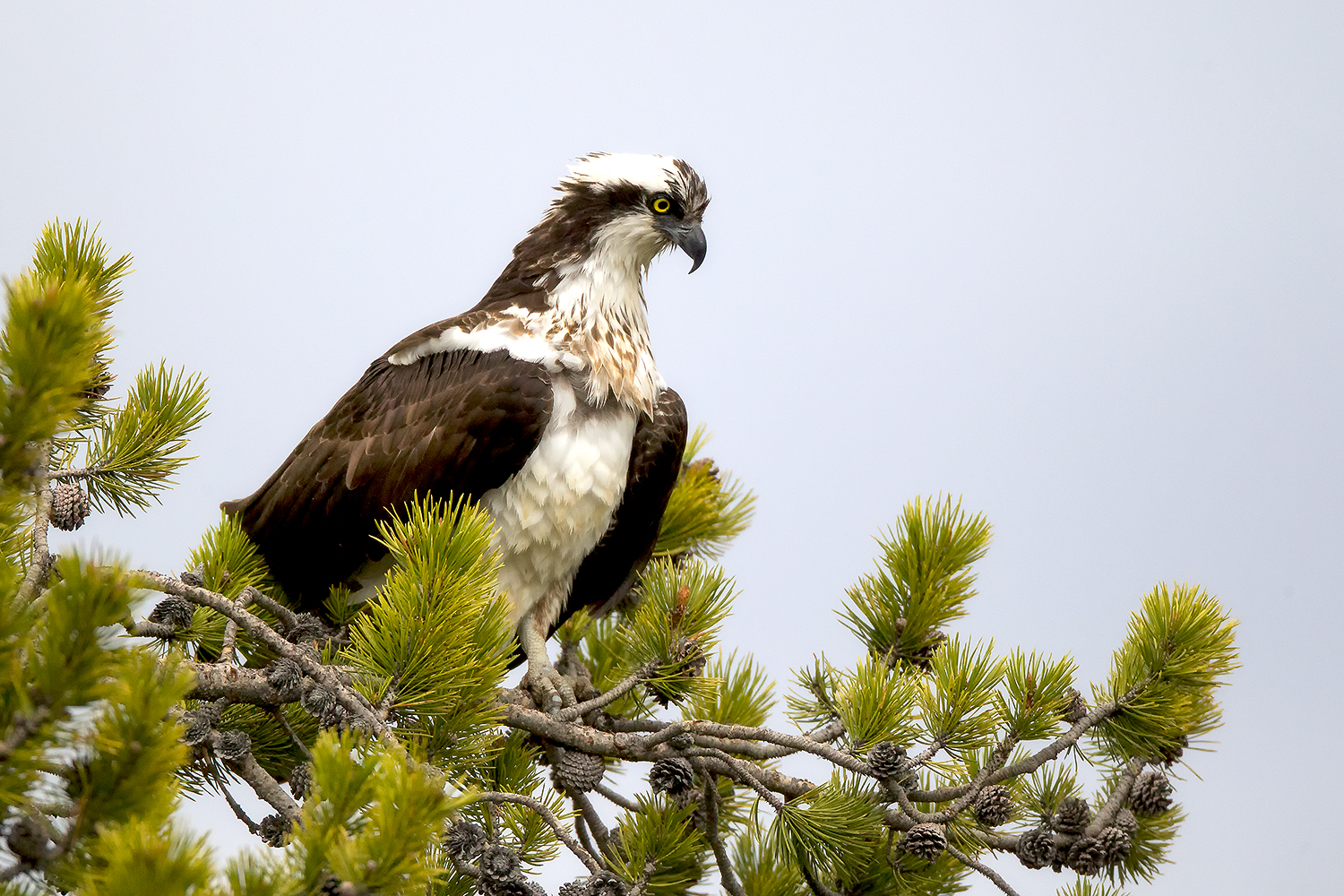
Unique Traits — Built for Water, Precision, and Control
The osprey stands apart from nearly every other raptor in North America because of how specifically it is built to hunt fish. While many birds of prey rely on speed or ambush, the osprey relies on precision, grip, and control over water. Its anatomy reflects that specialization from head to talons.
One of the most distinctive features is its reversible outer toe. Unlike most raptors, which have three toes forward and one back, the osprey can rotate one toe to create a two-forward, two-back grip. This allows it to clamp down more effectively on slippery fish and maintain stability during flight.
The bottoms of its feet are covered in rough, spiny structures called spicules. These act like natural traction pads, helping the bird hold onto fish even when they are twisting or trying to escape. Combined with long, curved talons, this gives the osprey one of the most secure grips of any hunting bird.
Another defining behavior appears immediately after a successful catch. Once airborne, the osprey often rotates the fish so that it faces headfirst. This reduces air resistance and makes flight more efficient, especially over longer distances back to a perch or nest.
Even its feathers are adapted to its lifestyle. Dense, water-resistant plumage allows the osprey to shed water quickly after a dive, preventing excess weight and helping it regain lift. This is critical because, unlike most raptors, the osprey regularly enters the water as part of its hunting strategy.
Together, these traits form a complete system — one where anatomy, behavior, and environment are tightly linked. It’s a clear example of how adaptation unfolds within wildlife behavior and ecology, where structure evolves directly in response to function.
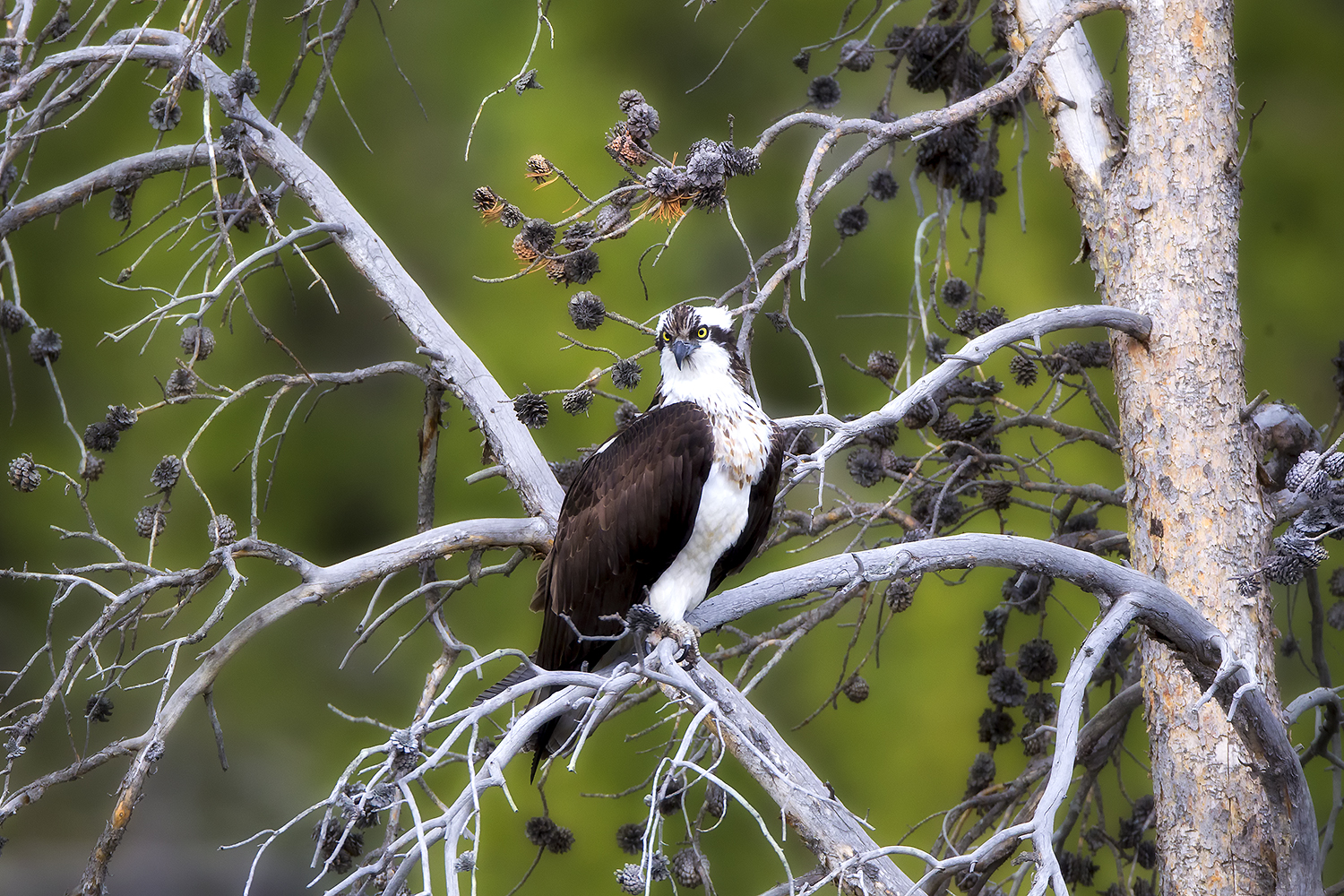
Where to See Osprey
Ospreys are one of the most widespread and observable raptors in North America, especially once you understand what defines their habitat. The key is not just geography, but structure — water, visibility, and elevated perches all working together in the same place.
In the field, I consistently find ospreys near fish-bearing waters: coastal bays, estuaries, marshes, lakes, reservoirs, and major river systems. These environments provide both the prey base and the open sightlines the bird depends on to hunt effectively.
Some of the most reliable locations are places where these conditions are protected and concentrated. Areas like Chincoteague National Wildlife Refuge and Blackwater National Wildlife Refuge offer a combination of water, nesting structures, and protected habitat that support consistent osprey activity throughout the season.
Beyond major refuges, smaller-scale locations can be just as productive. Shorelines with standing dead trees, rivers with open bends, and reservoirs with nesting platforms often hold active pairs. The pattern is consistent: where fish are accessible and perches are available, ospreys will use the area.
Timing also plays a major role. Early morning and late afternoon provide the best conditions for observation, when light improves visibility into the water and fish move closer to the surface. During spring and summer, activity increases as ospreys hunt frequently to feed themselves and their young.
To connect location, timing, and behavior more precisely, tools like the Wildlife Observation Locations hub, Wildlife Photography Maps, and the Seasonal Wildlife Calendar help align where to go with when to be there.
Seasonal Patterns
Osprey behavior shifts throughout the year in direct response to migration, breeding cycles, and fish availability. In most of North America, they are migratory, arriving in spring as waters warm and fish move closer to the surface. That return marks the beginning of their most active and visible season.
Spring and early summer are defined by nesting and territory establishment. During this time, hunting activity increases significantly, as adults must provide a steady supply of fish for both mates and growing chicks. Repeated dives, frequent flights, and consistent use of feeding areas make this one of the best periods to observe osprey behavior in detail.
By late summer, young ospreys begin developing their own hunting ability. You can often see them practicing dives, adjusting flight angles, and learning to judge distance over water. Activity remains high, but begins to shift toward preparation for migration.
As temperatures drop, many ospreys move south toward Central and South America, following changes in fish behavior and availability. In northern regions, their presence declines quickly. In contrast, some southern coastal areas support year-round populations where conditions remain stable.
This seasonal movement connects directly to broader patterns explored in Wildlife Migration & Seasonal Patterns. For planning field observation, aligning location and timing is critical. The Seasonal Wildlife Calendar helps identify when osprey activity will be most consistent in a given region.
Naturepedia Connection — Understanding the Osprey in the Larger System
The osprey is one of the clearest examples of how a species can reveal an entire ecological system through behavior alone. Its dive, grip, lift, and flight are not isolated actions — they are direct expressions of habitat structure, fish availability, seasonal timing, and evolutionary adaptation.
Watching an osprey hunt shows how anatomy and environment work together in real time. Open water, clear visibility, elevated perches, prey movement, and migration patterns all shape what the bird can do and when it can do it. In that sense, the osprey is not just a raptor over water — it is a visible link between predator behavior and aquatic ecosystem health.
This is how I build the larger structure of my site. A species like the osprey connects naturally to the Birds of Prey hub, broader patterns in Wildlife Behavior & Ecology, the environments explored in Ecosystems of North America, and timing patterns tracked through the Seasonal Wildlife Calendar.
Seen this way, the osprey becomes more than a subject to observe. It becomes a species that helps explain how water, prey, migration, and adaptation connect across the larger living system.
To explore this deeper, continue into the Naturepedia system.
Osprey FAQ
What do ospreys eat?
Ospreys eat mostly fish. They are one of North America’s most specialized raptors, with a hunting strategy built almost entirely around catching fish near the water’s surface.
How do ospreys catch fish?
Ospreys search over open water, hover or glide while watching below, then dive feet first to seize fish with their curved talons. After the catch, they often turn the fish headfirst in flight to reduce drag.
Where do ospreys live?
Ospreys live near fish-bearing water such as lakes, rivers, marshes, reservoirs, estuaries, and coastal shorelines. They do best where open water, clear visibility, and elevated perches come together.
Are ospreys migratory?
Many ospreys in North America are migratory. They typically arrive in spring, breed through the warmer months, and move south in fall, although some populations remain year-round in milder coastal regions.
What makes an osprey different from other birds of prey?
The osprey is unusually specialized for fishing. It has a reversible outer toe, rough spicules on its foot pads, sharply curved talons, and water-shedding plumage that help it catch and carry slippery prey.
When is the best time to observe ospreys?
Spring and summer are usually the best seasons to observe ospreys, especially during nesting and active feeding periods. Early morning and late afternoon are often the most productive times of day.
About the Author
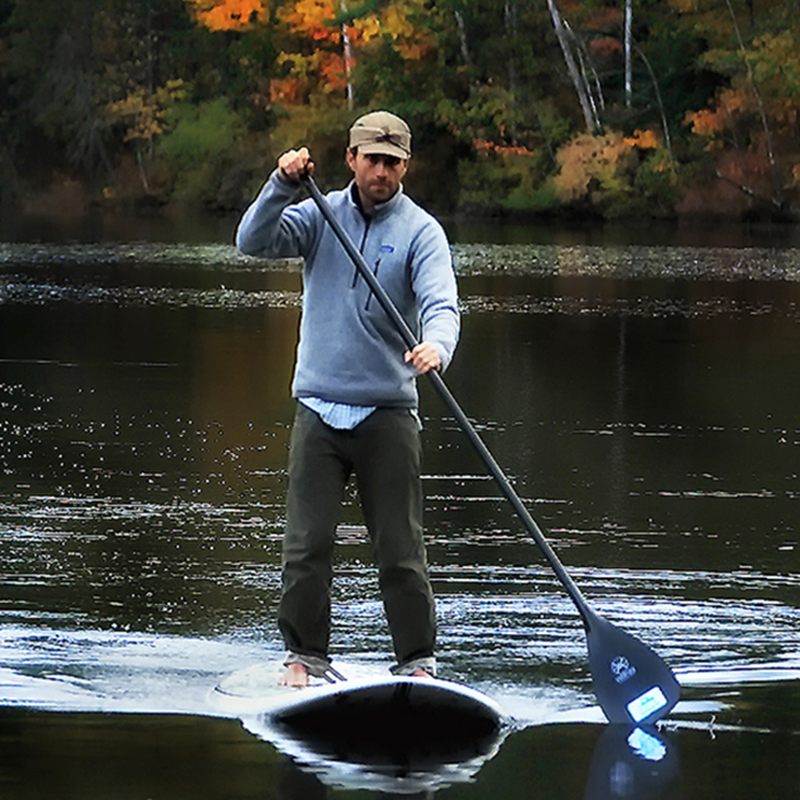
Robbie George is a nature photographer, writer, and field-based observer whose work is rooted in watching how wildlife behaves within real habitats, real light, and changing seasonal conditions.
That field-first perspective shapes this osprey page from beginning to end. Rather than treating the bird as a static subject, Robbie approaches wildlife photography as a form of close observation—following behavior, habitat, timing, and ecology until the moment reveals how the species truly lives.
Through that process, photography becomes more than an image. It becomes a way of connecting species pages, behavior studies, ecosystems, field tools, and Naturepedia into one larger wildlife knowledge system built from experience in the field.